What Is Toulouse Famous For
Toulouse, the pink-brick city on the Garonne in the Occitanie region of southwestern France, is famous for five things above all: the color of its buildings, the aircraft built here, the UNESCO-listed Canal du Midi, the pilgrimage basilica of Saint-Sernin, and a bean-and-sausage casserole called cassoulet.
Short answer
Toulouse is famous as La Ville Rose, the pink city of southwestern France, for its rose-colored brick architecture, the Airbus aircraft industry, the UNESCO-listed Canal du Midi and Basilica of Saint-Sernin, and its signature dish cassoulet.
Toulouse, the pink-brick city on the Garonne in the Occitanie region of southwestern France, answers to one nickname above all: La Ville Rose. The commune counted 514,819 inhabitants at the last INSEE figure, and it sits inland, roughly 100 km north of the Pyrenees, with no sea and no coast anywhere near it. What made it famous is a combination of color, industry and food: rose-toned brick buildings, aircraft assembled here for Airbus, a UNESCO-listed canal that begins at its edge, a pilgrimage basilica on the road to Santiago de Compostela, and a slow-cooked casserole called cassoulet. This guide walks through each of them, with the prices, dates and figures that the official sources actually publish.
Why Is Toulouse Called The Pink City?
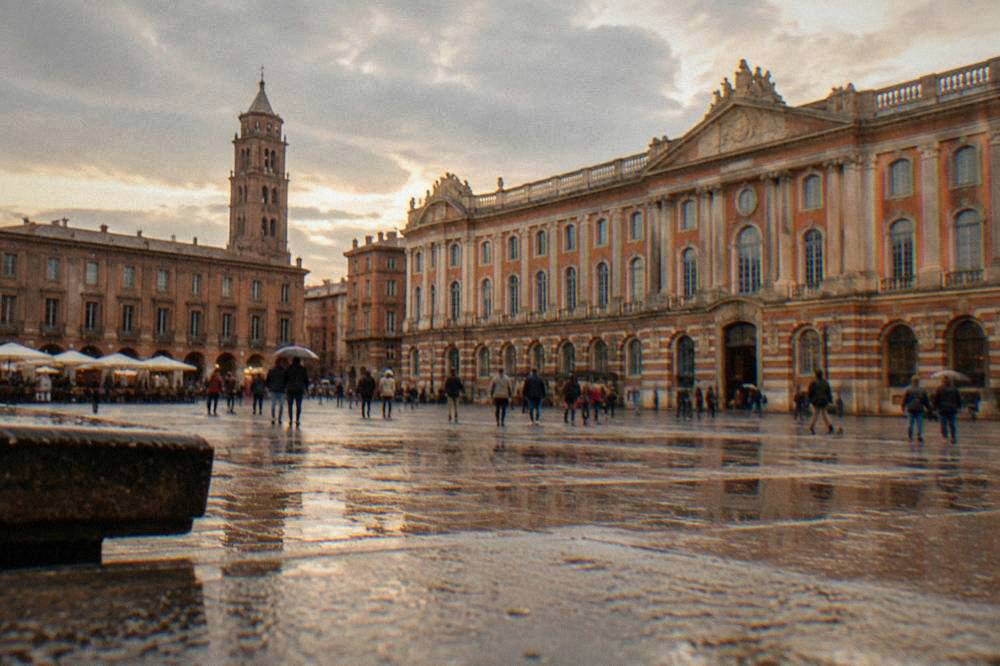
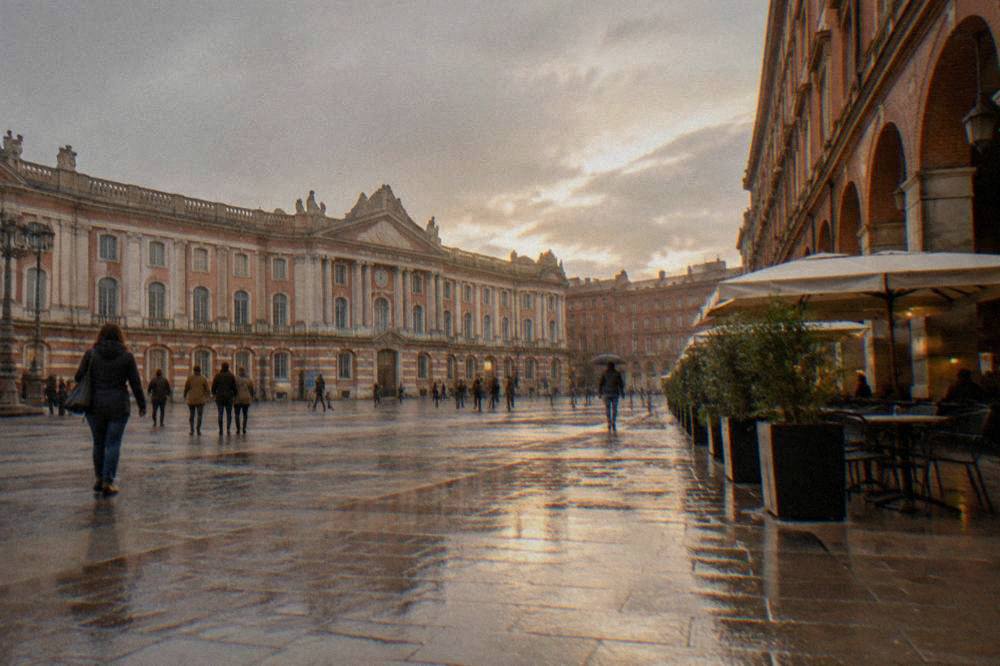
Toulouse is called La Ville Rose because its historic buildings are built from a local rose-colored brick that shifts from pale pink to deep orange as the sun moves across the day. The nickname is well established and appears on the city's own tourism materials, though no verified source pins the brick to a single century or quarry, so this guide states the color and not a dated explanation.
The brick is the first thing a visitor registers. Whole streets around the Capitole and the Carmes district are faced in it, and the evening light turns the facades a deep salmon shade. The city's tourism office leans into the nickname openly, and one of the free GuruWalk walks listed on this site, Inside "la Ville Rose", is named after it. If you want the fuller story of the color and where to see it at its best, the site's dedicated page on why Toulouse is the pink city goes deeper.
The color also explains why so many photographers plan their visits around golden hour. The pink reads flat at midday and richest in the hour before sunset, when the low sun catches the facades facing west. For framing ideas, the photography spots guide lists the viewpoints that work, from riverside banks to tower platforms that put the rooftops in one frame.
What Is The Most Famous Thing To See In Toulouse?
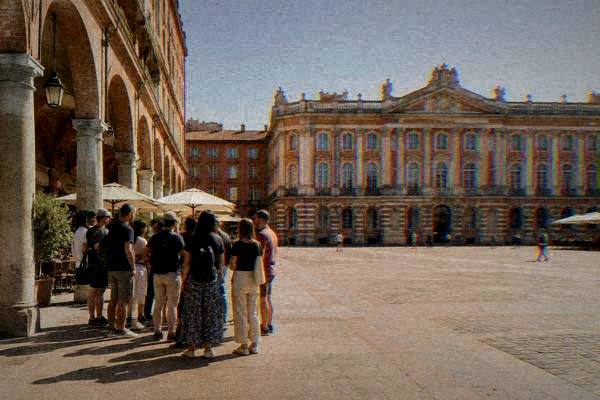
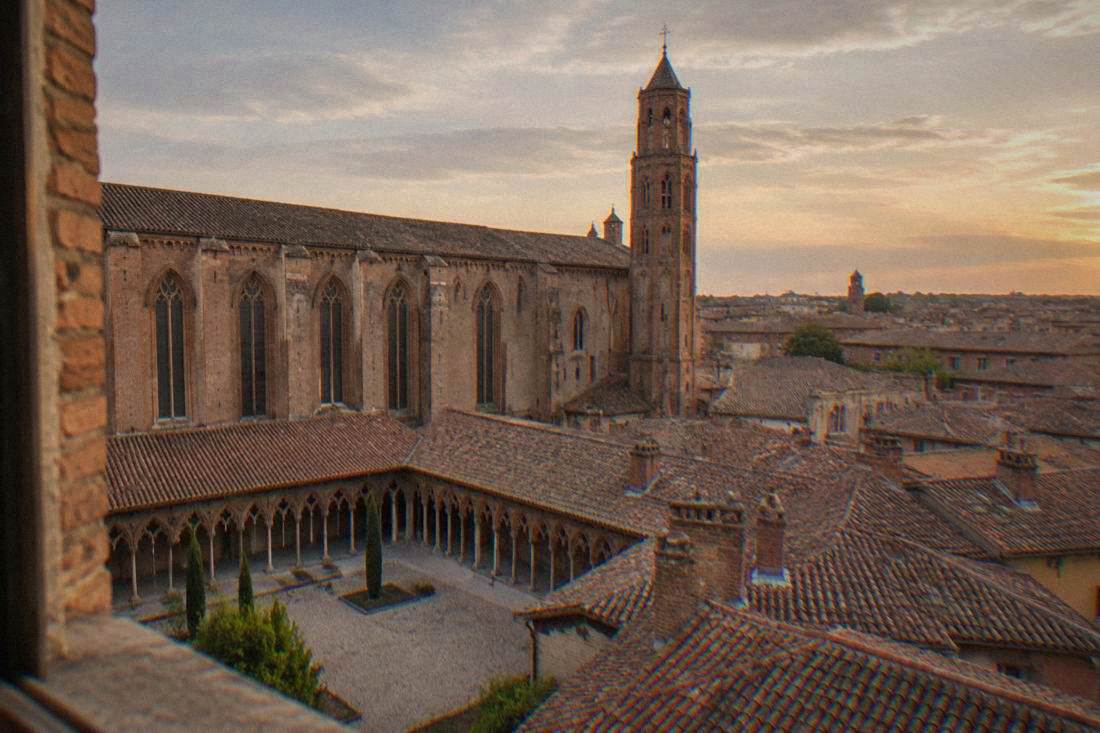
The Capitole is the most famous single sight in Toulouse: the city hall and opera house on Place du Capitole, whose frontage and bell tower define the main square. Close behind it come the Basilica of Saint-Sernin, a UNESCO-listed stop on the Santiago pilgrimage route, and the Jacobins convent, whose palm-tree vault is the signature image of southern Gothic architecture.
The Capitole gives the city its central address, the Place du Capitole, which also hosts the Christmas market from 26 November to 27 December 2026 according to the Metropole's markets page. The basilica of Saint-Sernin carries the heavier historical weight: it is listed as part of the "Routes of Santiago de Compostela in France", a UNESCO World Heritage property inscribed in 1998, and the Metropole's own page describes it as a major stop on the Via Tolosana, one of the four French pilgrimage roads. The site's Basilica of Saint-Sernin guide covers visiting it in full.
A guided walk is the efficient way to connect these in one loop. The Toulouse Must-see Walking Tour covers the must-see sights with a live guide, and its operator's listing carries the current price and availability:
Why Is Toulouse Famous For Airbus And Aerospace?
Toulouse is famous as the European capital of aircraft manufacturing: Airbus assembles wide-body jets here, and the city's aerospace cluster also runs the Aeroscopia aviation museum and guided factory tours of the A350 and A321 production lines. The Manatour operator lists both factory visits at EUR 18 for adults, and Aeroscopia's own practical page prices its admission at EUR 16 for an adult.
The factory tours are the industrial half of the city's fame. Manatour's page states that the Airbus A350 and A321 visits each last 1h30, that an original passport or ID card is required with no photocopy or phone image accepted, that visitors must arrive 30 minutes early, and that cameras and pets are not allowed. Aeroscopia, the museum next door, is open daily 9:30-18:00 with last entry at 17:00, closed 25 December, 1 January and 7 May 2026, and its exhibition hall is not heated or air-conditioned, a detail worth knowing in winter. The site's Airbus factory tour page and Aeroscopia guide cover both in depth.
Beyond the factories, the aerospace identity reaches the Cite de l'espace, the space theme park on the city's eastern edge. Its homepage lists tickets from EUR 22.50, and the tourist office's rate table gives the normal adult rate as EUR 29. The Cite de l'espace guide explains what a ticket covers, from the planetarium sessions to the full-scale rocket and space station exhibits standing in its gardens.
| Aerospace site | Adult price | Source detail |
|---|---|---|
| Aeroscopia museum | EUR 16 | Reduced EUR 13, annual pass EUR 26, family pass EUR 80 |
| Airbus factory tour (Manatour) | EUR 18 | Reduced EUR 15, free under 6, 1h30 per visit |
| Cite de l'espace | EUR 29 normal adult rate | Tickets from EUR 22.50 on the park's homepage |
Is The Canal Du Midi UNESCO-Listed, And Does It Start In Toulouse?
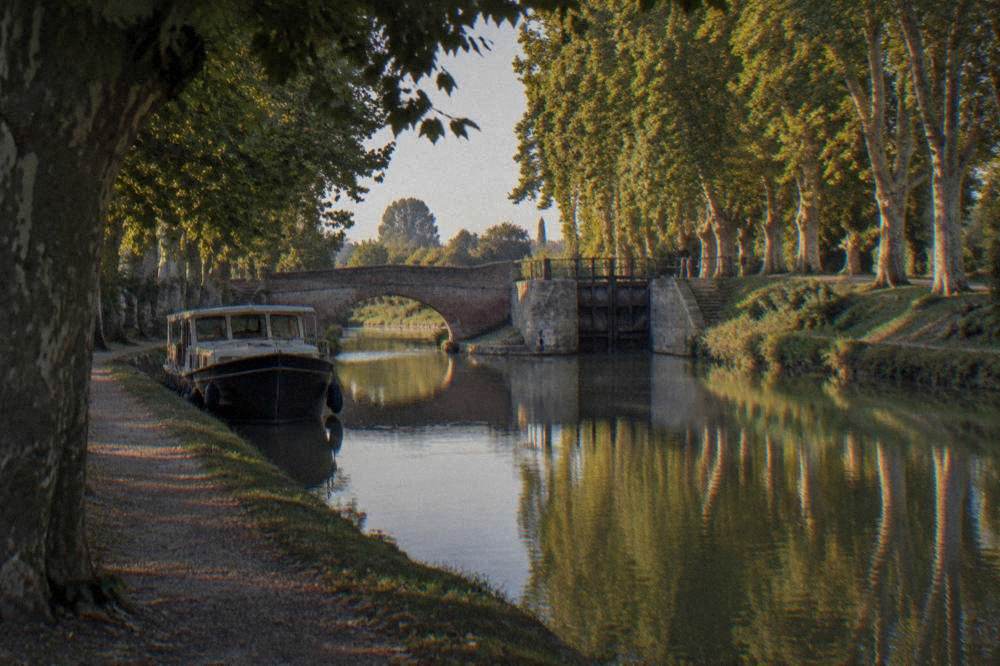
The Canal du Midi is UNESCO-listed, inscribed in 1996 under criteria i, ii, iv and vi, and it begins at Toulouse, where it meets the Garonne and links the Atlantic to the Mediterranean. The city's canal port, the Port Saint-Etienne basin by the Matabiau side of the center, is where the waterway's course eastward starts, and boat trips run from the city itself.
The UNESCO inscription covers 2,007 hectares of the canal property, and it is the reason the waterway draws visitors who otherwise come only for the city. Cruise products run on the canal from Toulouse, including a narrated cruise on the UNESCO-listed stretch, and the Canal du Midi guide plus the canal boat trips page cover the options, from short commentated crossings to multi-day bike-and-boat plans on the canal by bike.
The canal is also the city's flat, tree-lined cycling corridor, and the towpath makes the practical link between sightseeing and the countryside. For the question visitors ask next, the site's answer page on why the Canal du Midi is famous gives the short version of the waterway's history and engineering.
What Food Is Toulouse Famous For?
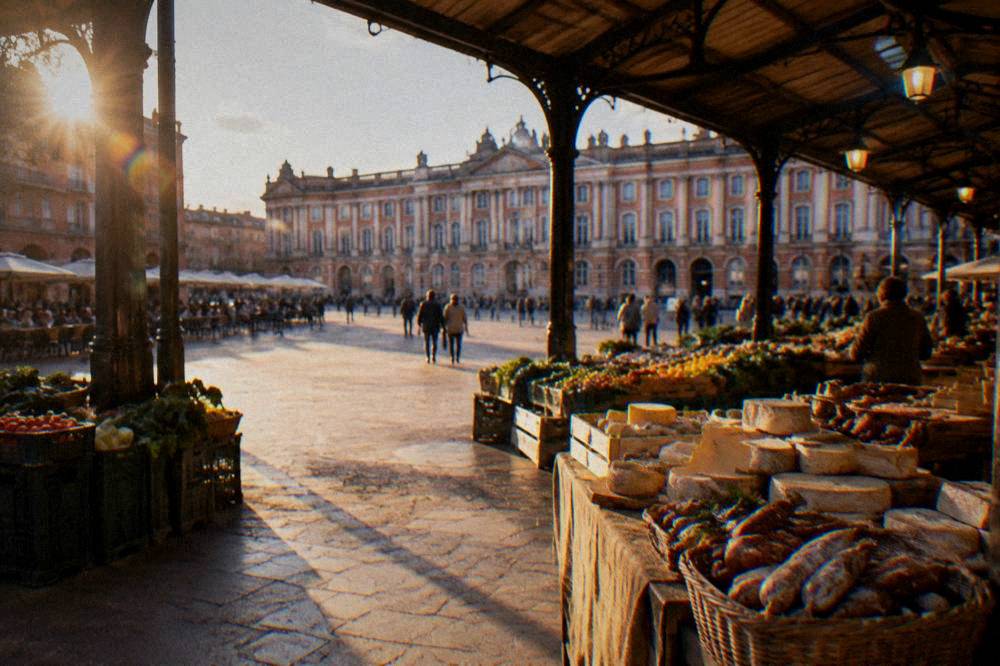
Toulouse is famous for cassoulet, the slow-cooked casserole of white beans, Toulouse sausage and confit that the city claims as its own, alongside its namesake sausage, violets turned into sweets and liqueurs, and the wines of the surrounding Fronton and Gaillac regions. The Victor Hugo market is the food landmark in the center, and the city's restaurant culture is built around the southwest French larder.
Cassoulet is the dish that travels. The cassoulet guide explains what goes into the Toulouse version and why the sausage matters, and the Toulouse sausage page covers the coarse, garlic-scented link that carries the city's name. The food guide maps the rest of the plate: violet products, the markets where locals shop, and the desserts that follow. For the drinking side, the answer page on what drink Toulouse is famous for names the local pour.
The Victor Hugo market hall is the single best address for all of it, a covered market where the stallholders sell the region's raw materials. The market guide covers how it works and when to go, and the restaurants guide picks the neighborhoods where the cassoulet is taken seriously. Guided food tours also run from the market, and the trio below includes the walking tour plus two ways to spend a day beyond the city.
What Is Toulouse Famous For Beyond The City: Carcassonne, Albi And The Pyrenees?
Toulouse is famous as a base for the fortified city of Carcassonne, the Albi cathedral town linked to painter Toulouse-Lautrec's family name, and the Pyrenees roughly 100 km to the south. Coach and small-group day trips run from the city to all three, and the direct rail line toward Carcassonne makes the walled city practical even without a tour.
Carcassonne is the biggest single draw outside the city, a double-walled medieval citadel that the Carcassonne guide covers in full and the answer page why Carcassonne is so famous summarizes. Albi, with its brick cathedral and the Toulouse-Lautrec museum, is covered in the Albi guide, and the painter himself in the Toulouse-Lautrec page. The mountains belong on the Pyrenees day-trip page, and the full list of options sits in day trips from Toulouse.
The Carcassonne trip with transfer and free time is the most booked day out on this site's roster, and the operator's listing carries the current price and departure details. Its product page on this site, reachable through the card below, sets out the itinerary, the free time in the citadel and the meeting point in the center.
| Day trip destination | What it is famous for | Site guide |
|---|---|---|
| Carcassonne | Double-walled medieval citadel | /guides/carcassonne/ |
| Albi | Brick cathedral, Toulouse-Lautrec museum | /guides/albi/ |
| Cordes-sur-Ciel | Hilltop medieval bastide town | /guides/cordes-sur-ciel/ |
| Pyrenees | Mountain valleys roughly 100 km south | /guides/pyrenees/ |
| Lourdes | Major pilgrimage sanctuary | /guides/lourdes/ |
What Is The Best Way To See All The Famous Sights In Toulouse?
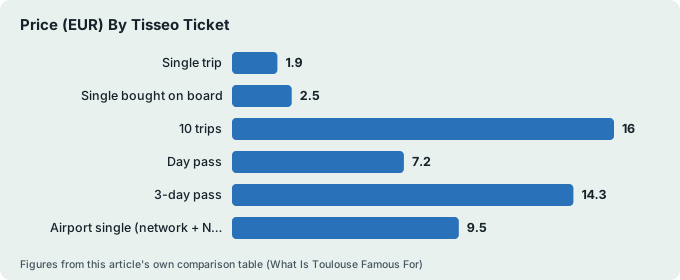
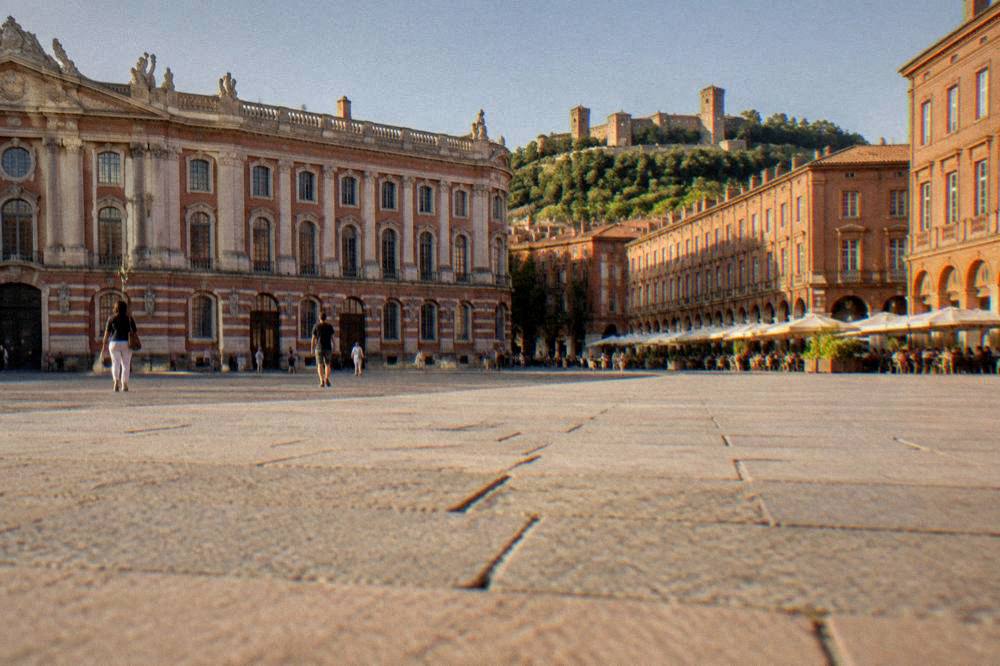
The best way to see Toulouse's famous sights is on foot between the Capitole, Saint-Sernin, the Jacobins and the Garonne banks, all of which sit within a compact center, with the Tisseo metro and tram covering longer hops at EUR 1.90 a single trip. A guided must-see walking tour connects the highlights in one loop, and the tourist office's Pass Tourisme at EUR 26 bundles museums with a free guided tour.
The center rewards walking. The getting around guide covers the transport system in full, and the official Tisseo catalogue prices the options: a single trip at EUR 1.90, a day pass at EUR 7.20, ten trips at EUR 16.00 and a 3-day pass at EUR 14.30, with no 2-day pass listed. The Pass Tourisme guide works out when the EUR 26 pass pays off, which the tourist office says is from the third activity.
| Tisseo ticket | Price (EUR) |
|---|---|
| Single trip | 1.90 |
| Single bought on board | 2.50 |
| 10 trips | 16.00 |
| Day pass | 7.20 |
| 3-day pass | 14.30 |
| Airport single (network + Navette) | 9.50 |
The museums inside the pass are a large part of what the city is known for culturally. The tourist office's rate table lists the normal prices that the pass waives:
| Museum or monument | Normal adult rate (EUR) |
|---|---|
| Fondation Bemberg | 12 |
| Museum de Toulouse | 12 |
| Les Abattoirs | 12 |
| Musee des Augustins | 5 |
| Couvent des Jacobins | 5 |
Two status notes matter for planners. The Musee des Augustins is temporarily closed from 21 September to 2 October 2026 for great-cloister works, with its Gothic halls reopening on 3 October 2026 from 10:00. The Couvent des Jacobins is free on the first Sunday of the month except when a temporary exhibition is on, a rule its own page states for that site alone.
When Should You Visit Toulouse To See It At Its Famous Best?
The best months to visit Toulouse are May, June and September, when the Meteo-France 1991-2020 normals show warm means, long sunshine and manageable rain, though May is in fact the city's wettest month at 73.6 mm. July is the sunniest at 258.6 hours with only 40.1 mm of rain, and the city records 2,075.1 hours of sun across the year, so the famous pink brick photographs well from spring well into autumn.
The climate surprises people. The wettest month is not in winter but in May, at 73.6 mm against February's 37.2 mm, and April (65.2 mm) and June (64.2 mm) follow it. The weather guide carries the full monthly table, and the best time to visit page matches the seasons to the events calendar.
| Month | Mean temp (C) | Rain (mm) | Sunshine (hours) |
|---|---|---|---|
| January | 6.3 | 52.5 | 89.1 |
| April | 12.7 | 65.2 | 188.5 |
| May | 16.4 | 73.6 | 212.3 |
| July | 22.6 | 40.1 | 258.6 |
| September | 19.3 | 45.7 | 210.1 |
| December | 7.0 | 49.3 | 89.7 |
The events calendar adds reasons to time a trip. Piano aux Jacobins runs 8 to 30 September 2026, Toulouse les Orgues holds its 31st edition from 7 to 18 October 2026 with the opening concert at Notre-Dame de la Daurade, the Christmas markets run 26 November to 27 December 2026, and Rio Loco returns 9 to 13 June 2027 with the theme "Noctiluca". The events guide lists the rest.
| Event | Dates | Source detail |
|---|---|---|
| Piano aux Jacobins | 8-30 September 2026 | Concerts at the Couvent des Jacobins |
| Toulouse les Orgues | 7-18 October 2026 | 31st edition, opening concert at Notre-Dame de la Daurade |
| Christmas markets | 26 November-27 December 2026 | Place du Capitole, allees Jean-Jaures, square Charles-de-Gaulle |
| Rio Loco | 9-13 June 2027 | Theme "Noctiluca", Prairie des Filtres |
Can You See The Famous City From Above?
Yes, and the view from above is the one angle that shows why the pink city earned its name: a private sightseeing flight over Toulouse and the Pyrenees lets you read the brick color of the center and the line of the mountains in a single trip. The flight is bookable as a private product, with the operator's listing carrying the current per-group price, and it is the most unusual item on this site's roster.
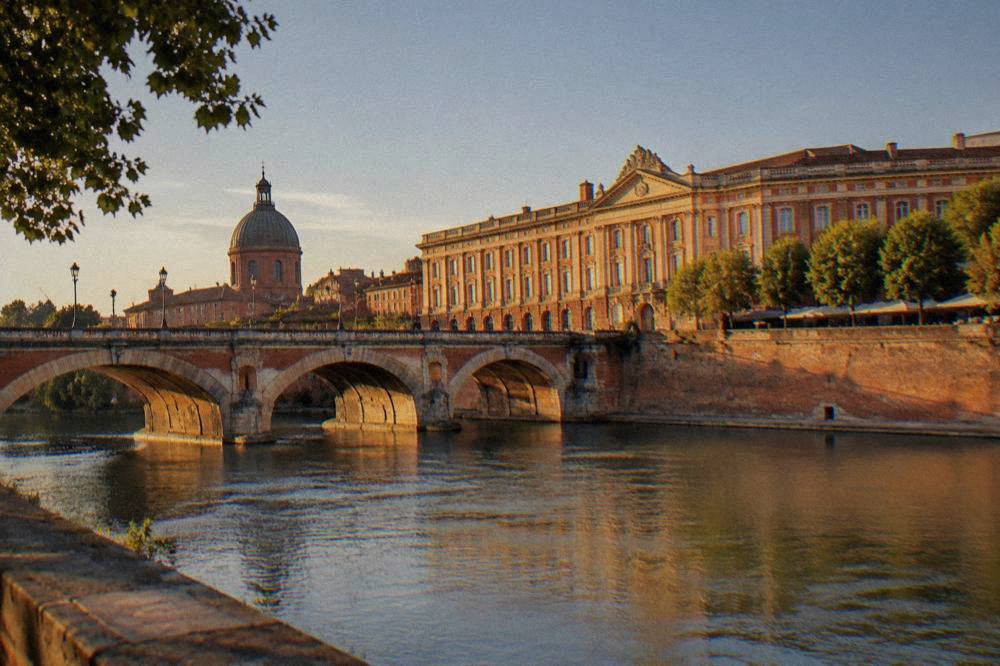
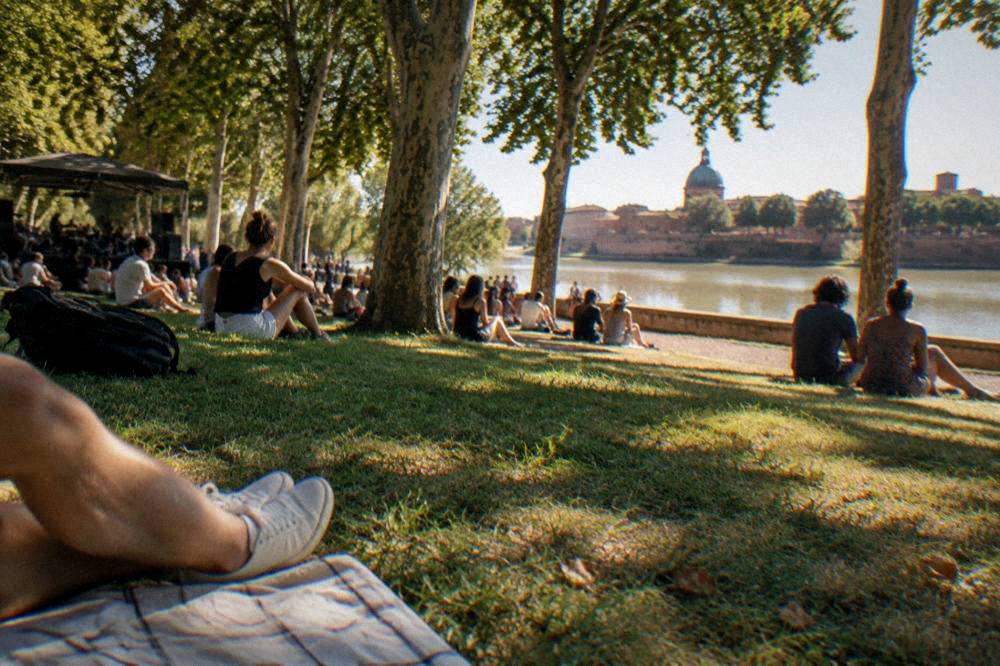
Short of a light aircraft, the rooftop and tower viewpoints inside the city do the same work at street scale. The photography spots page lists the elevated angles, and the riverside walk across the Pont Neuf, covered in the Pont Neuf guide, gives the classic low view of the Garonne with the pink facades behind it.
The flight itself is the splurge option, and its listing carries the group pricing and duration options, which vary with the package chosen. The product card below renders the live figures from the operator's data.
How Many Days Do You Need For The Famous Toulouse?
Two days cover the famous core of Toulouse: the Capitole, Saint-Sernin, the Jacobins, the Garonne banks and one market or museum day, with a third day for the aerospace cluster or a canal cruise. The site's itinerary pages lay out one, two and three day plans, and the answer page on how many days is enough concludes that the compact center makes a short stay efficient.
The itineraries are already written. Start with one day in Toulouse, extend to 2 days in Toulouse or 3 days in Toulouse, and pick a base with the where to stay guide. If the aerospace half of the city's fame is the priority, the aerospace guide builds a full day around Aeroscopia, the factory tours and the Cite de l'espace.
Ready to settle on a base for your stay? Book a hotel in Toulouse here.
For the questions planners ask most before booking, the short answers sit on the answer pages: why is Toulouse so famous, what is the most famous town in the Pyrenees, what is Albi famous for and what is the famous castle near Toulouse. The second set of featured tours below covers the guided core of the city and the two most distinctive splurges.
Common Questions About What Toulouse Is Famous For
Quick answers to what planners ask most about the city's fame.
What is Toulouse most famous for?
Toulouse is most famous as La Ville Rose, the pink-brick city of southwestern France, for its rose-colored architecture, the Airbus aircraft industry, the UNESCO-listed Canal du Midi, the pilgrimage Basilica of Saint-Sernin and the dish cassoulet.
Why is Toulouse called the pink city?
Toulouse is called La Ville Rose because its historic buildings are faced in a local rose-colored brick that deepens to orange in evening light. The nickname is well established in the city's own tourism materials; no verified source gives a dated explanation of the brick's origin.
Is the Canal du Midi in Toulouse UNESCO-listed?
Yes. The Canal du Midi was inscribed on the UNESCO World Heritage list in 1996 under criteria i, ii, iv and vi, and the canal begins at Toulouse, where it meets the Garonne.
What food is Toulouse famous for?
Cassoulet, the bean casserole with Toulouse sausage and confit, is the signature dish, along with the Toulouse sausage itself, violet sweets and the wines of the nearby Fronton and Gaillac regions.
Can you visit the Airbus factory in Toulouse?
Yes. Manatour runs guided tours of the Airbus A350 and A321 lines, each listed at 1h30, with adult admission at EUR 18 and an original passport or ID card required. The Aeroscopia museum next door is open daily 9:30-18:00 with adult admission at EUR 16.
How far are the Pyrenees from Toulouse?
The Pyrenees are roughly 100 km to the south of Toulouse, which makes the mountains a day trip rather than a city sight. The site's Pyrenees day-trip guide covers the reachable valleys and towns.
From the brick that gave the city its name to the jets built beside its runway, what Toulouse is famous for is unusually concentrated: one color, one industry, one canal, one basilica and one dish, all reachable from a compact center that rewards planning. The Toulouse Travel Guide homepage collects the city's sightseeing options in one place to start building the trip around them.