Cassoulet
Cassoulet is the signature dish of Toulouse, the pink-brick city on the Garonne in southwestern France. This guide covers what the Toulouse version contains, how it differs from its rivals, where to look for it, and how to build a whole food day around it.
Short answer
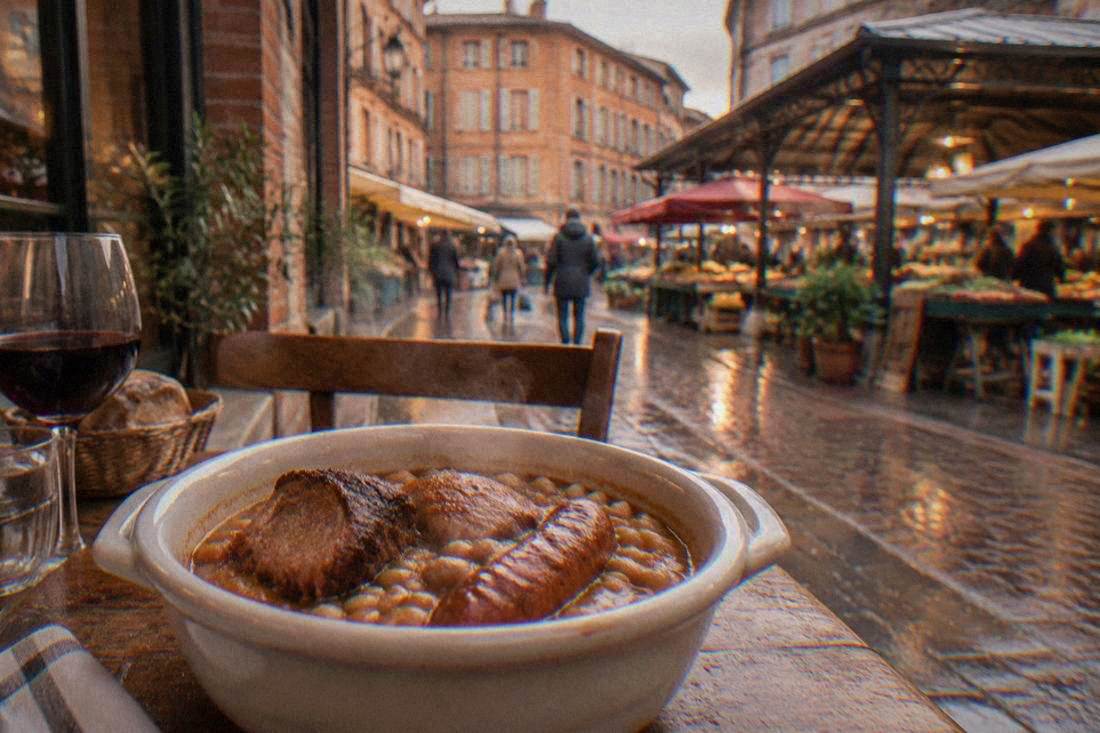
Cassoulet is a slow-baked casserole of white beans, duck or goose confit, Toulouse sausage and pork, and the Toulouse version is the richest of the three classic regional variants. It is a full meal rather than a side, it pairs with local red wine, and it anchors the city's food identity.
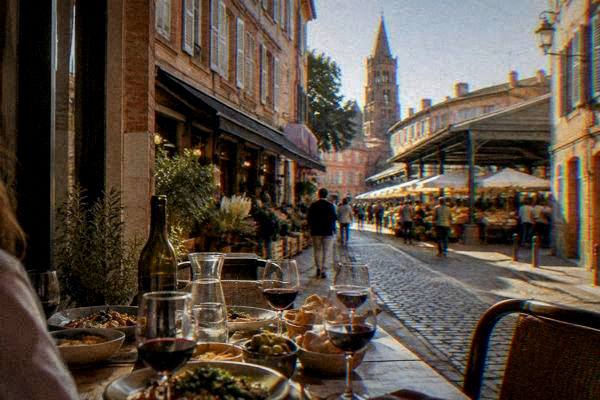
Cassoulet is the signature dish of Toulouse, the pink-brick "La Ville Rose" on the Garonne in southwestern France. No other plate is tied to the city's name the way this one is: a slow-baked casserole of white beans and preserved meat, served in the deep earthenware dish that gives the recipe its name. This guide covers what the Toulouse version actually contains, how it differs from its two famous rivals down the road, where to look for it in the city, what to pour alongside it, and how to fold it into a full food-focused visit.
What Is Cassoulet And Why Is It The Signature Dish Of Toulouse?
Cassoulet is a slow-cooked casserole of white haricot beans baked with duck or goose confit, Toulouse sausage and pork, and it takes its name from the cassole, the glazed clay dish it is traditionally cooked and served in. Toulouse treats its version as the definitive one, and the dish is as much a part of the city's identity as the pink brick itself.
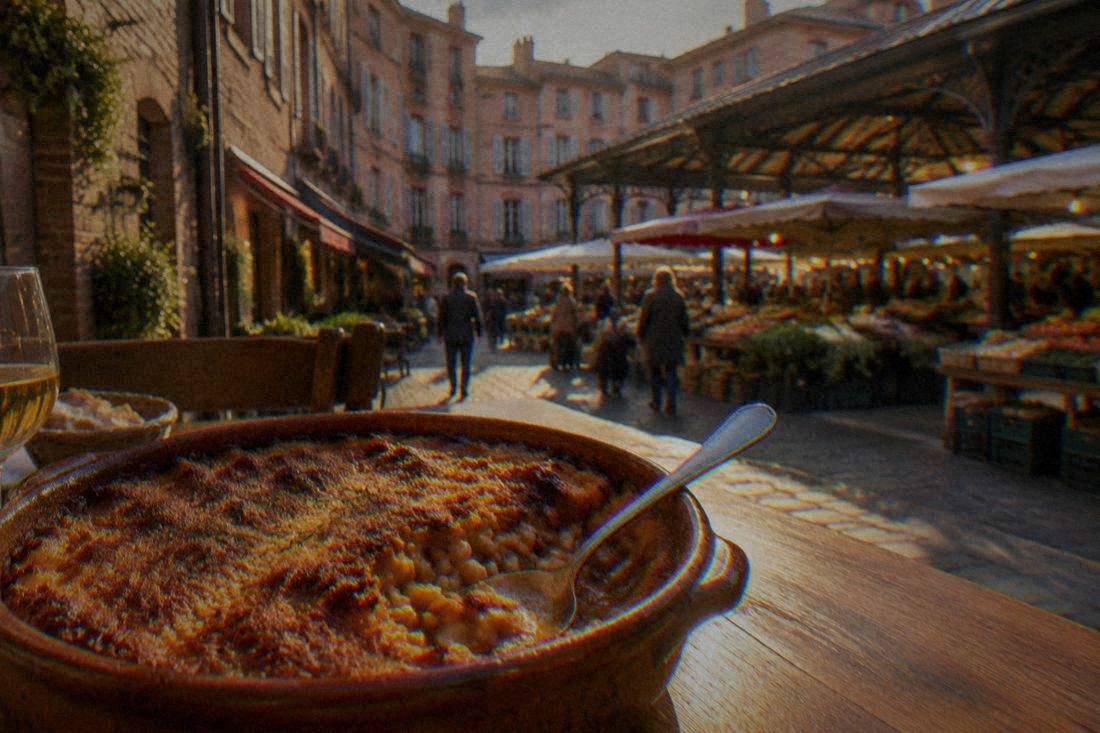
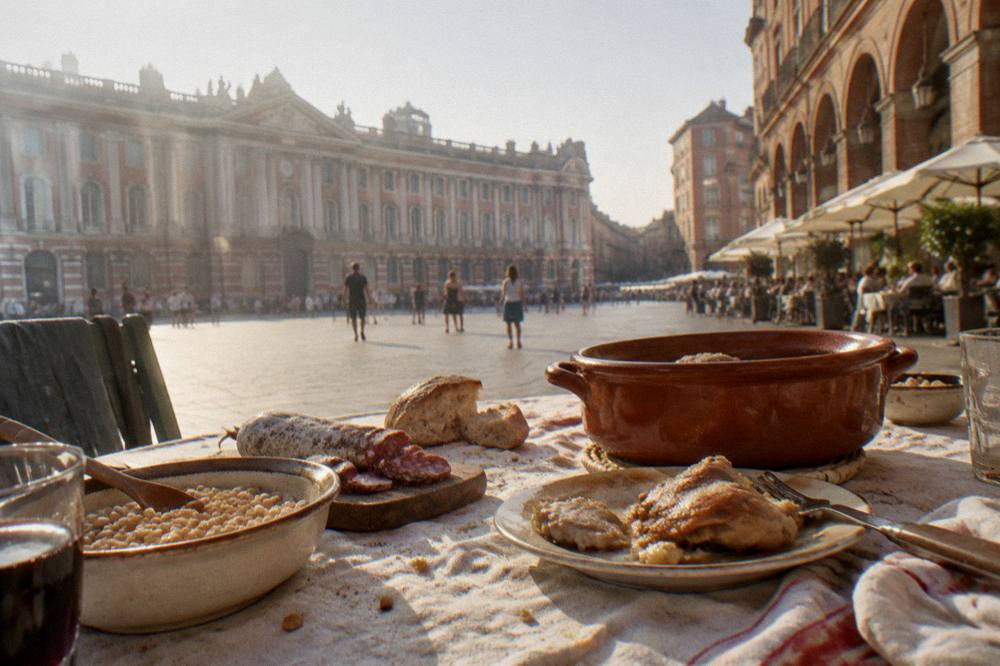
The name is the first thing to understand. The cassole is the wide, deep earthenware pot made in the region, and the recipe belongs to the pot: baked in a cassole, it is cassoulet, and the crust that forms on top as the beans bake is the texture the whole dish is built around. A proper serving arrives still bubbling in the dish it was cooked in.
The second thing to understand is that this is a meal, not a side. Beans, confit and sausage together make a complete plate, the kind of food the region built for cold-weather appetite. Ordering it as one course among several is a beginner's move; restaurants that serve it well will warn you off over-ordering.
Toulouse's claim on the dish is part of a friendly and long-running regional rivalry. Castelnaudary and Carcassonne, both within reach of the city, each defend their own version, and the three towns disagree about ingredients as seriously as neighbors can. For a fuller breakdown of the dish itself, see the companion answer on what exactly a cassoulet is.
What Goes Into A Cassoulet Made The Toulouse Way?
The Toulouse version is built on white beans, duck or goose confit, a fresh Toulouse sausage and pork pieces, and it is the only one of the three classic variants that includes both confit and Toulouse sausage together with a piece of salted pork or couenne. Castelnaudary's is simpler and pork-led, while Carcassonne sits between the two, sometimes with mutton.
The beans come first, because they are more than half the dish. The classic choice is a white haricot bean that holds its shape through a long bake, turning creamy inside without collapsing into mush. The beans are cooked, layered with the meats and cooking fat, and then baked slowly so a crust forms on top.
The meats are where the three towns part ways. The table below sets out the differences as each version is generally described in the region.
| Version | Confirmed core ingredients | Character |
|---|---|---|
| Toulouse | White beans, duck or goose confit, fresh Toulouse sausage, pork, couenne (rind) | The richest of the three; confit and sausage together |
| Castelnaudary | White beans, pork shoulder, couenne, fresh pork skin | The simplest and most pork-led; the town claims the dish's origin |
| Carcassonne | White beans, confit, sausage, sometimes mutton or partridge | Sits between the other two; varies more from kitchen to kitchen |
The Toulouse sausage deserves its own sentence. It is a fresh, coarse-ground pork sausage, herbed and unsmoked, and it is a market ingredient in its own right; the city's covered markets sell it by the coil. The sausage has its own companion page on Toulouse sausage if you want to go deeper on it.
The confit is the other pillar. Duck or goose legs preserved in their own fat are the historical reason the dish exists at all: confit was how the region stored meat through winter, and cassoulet was how it got eaten. The fat from the confit seasons the beans as they bake, which is why a good cassoulet tastes of the meat all the way down.
The technique matters as much as the shopping list. The dish is baked long and slowly, and the crust on top is traditionally encouraged rather than avoided: breaking the crust and letting it reform is part of the ritual, and the baked crust is what separates a cassole from a pan of stew. For the craft side, the companion answer on the secret to a good cassoulet goes into the method.
If you would rather have a local walk you through the city's food culture than decode it alone, a guided tasting route is the efficient way in. The food-tour selection below is drawn from the city's current roster:
If a guided route through the market stalls sounds appealing, book a Victor Hugo Market tasting tour here.
Where To Look For Cassoulet In Toulouse?
Look for cassoulet on the menus of traditional Toulouse restaurants, especially around the Capitole and Saint-Etienne quarters, and on market days at the city's covered markets, where the ingredients themselves are sold. No single establishment is verified here as the best, so treat any shortlist you read elsewhere with caution and let the cassole on the table be the judge.
The honest position first: this site has verified no restaurant's price, hours or ranking, so this section is about where the dish lives rather than which address wins. What can be said firmly is that cassoulet belongs to the city's traditional brasserie and bistro cooking, and that the quarters around the Capitole, Saint-Etienne and Saint-Aubin are where that cooking concentrates.
The markets are the other half of the answer. The Marche Victor Hugo, the city's best-known covered market, is the place to see the raw materials: sausage coils, confit legs in fat, and the beans by the sack. Our companion page on the Marche Victor Hugo covers the market itself, and the wider Toulouse food guide places the dish in its context.
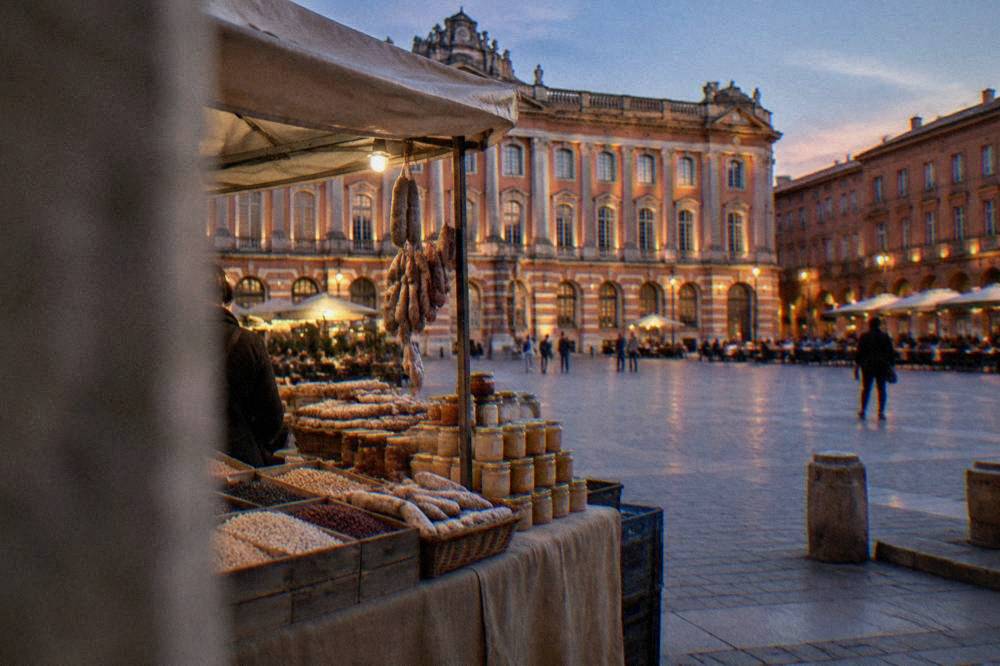
Timing your table matters. This is a lunch dish as much as a dinner dish, and a long slow cassoulet at midday is the classic regional pattern; dinner service in Toulouse runs late, and a heavy baked cassole sits better with a full afternoon ahead of it than with a short walk home. The companion answer on what time people eat dinner in Toulouse is wrong-slug; see instead the guide to Toulouse restaurants for how service works.
Getting to the eating quarters is simple on the city's network. The Tisseo catalogue gives the fares below, from the official e-boutique listing.
| Tisseo ticket | Price |
|---|---|
| Single trip | EUR 1.90 |
| Single trip bought last-minute on board | EUR 2.50 |
| 10 trips | EUR 16.00 |
| Day pass ("Journee") | EUR 7.20 |
| 3-day pass | EUR 14.30 |
| Airport single (network plus Navette aeroport) | EUR 9.50 |
If you plan to walk the food quarters with a guide's commentary rather than alone, a self-guided audio route is a flexible option, and this one covers the old center at your own pace:
One planning note if you are pairing your food days with sightseeing: the tourist office's Pass Tourisme costs EUR 26 for stays of one to three days, pays off from the third activity, and includes a free guided tour from the office; adding EUR 10 adds ten public-transport trips. The museums it covers are listed on the Toulouse Pass Tourisme page.
What Wine Do You Drink With Cassoulet In Toulouse?
The classic pairing for cassoulet in Toulouse is a sturdy local red: the region's own wines, Gaillac and Fronton, are the traditional answers, both made from grape varieties that stand up to confit fat and beans. A full-bodied red from the wider southwest of France is the fallback, and white wine drinkers should look for something with body rather than something light.
The logic is fat. A dish built on confit and sausage needs a wine with enough tannin and fruit to cut through it, and the local appellations were, in effect, bred for the job. Gaillac, whose vineyards sit within day-trip range of the city, is the historic regional red; Fronton, north of Toulouse, is the other local name and has its own devoted following. The companion answer on what wine you drink with cassoulet covers the pairing in detail.
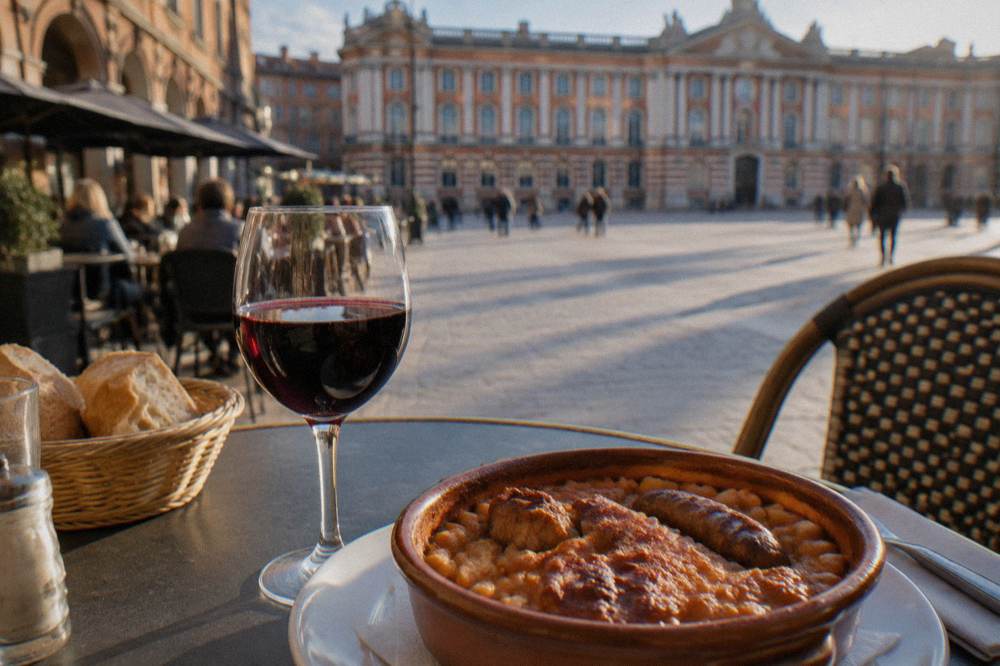
If the pairing interests you more than the plate, the vineyards themselves are reachable. The Gaillac wine route runs through hill country east of the city, and a day tour that combines Albi, Cordes-sur-Ciel and the Gaillac vineyards is the site's featured pick for exactly this itinerary. The tour is described on the Gaillac wine route page, and you can see current dates and availability directly:
For travelers who want the wine without the driving, the city also runs wine-bar tasting walks led by local experts, which let you taste the regional reds against each other before committing to a bottle. And if your trip is as much about the region's spiritual sites as its tables, the Lourdes day tour below covers the sanctuary at Grotto and Basilica with a guide, for a day out of the city between food evenings:
When Is The Best Time Of Year To Eat Cassoulet In Toulouse?
Cassoulet is a cold-months dish, and the best window in Toulouse runs roughly from October through March, when the city's restaurant cooking turns to confit, beans and slow bakes. That said, the dish is served year-round in a city this attached to it, and the shoulder seasons combine comfortable eating weather with the city's strongest event calendar.
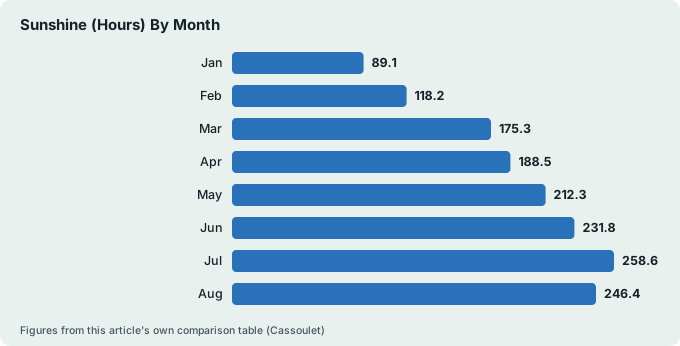
The climate data explains the season. Meteo-France's 1991-2020 normals for Toulouse-Blagnac show the year's eating weather at a glance: July is the sunniest month at 258.6 hours, May is the wettest at 73.6 mm, and the annual total is 627 mm of rain over 95.8 rain days. A cool, damp February evening is precisely what the dish was built for.
| Month | Mean temperature (C) | Rain (mm) | Sunshine (hours) |
|---|---|---|---|
| Jan | 6.3 | 52.5 | 89.1 |
| Feb | 7.1 | 37.2 | 118.2 |
| Mar | 10.3 | 45.3 | 175.3 |
| Apr | 12.7 | 65.2 | 188.5 |
| May | 16.4 | 73.6 | 212.3 |
| Jun | 20.3 | 64.2 | 231.8 |
| Jul | 22.6 | 40.1 | 258.6 |
| Aug | 22.8 | 44.6 | 246.4 |
| Sep | 19.3 | 45.7 | 210.1 |
| Oct | 15.3 | 54.3 | 155.2 |
| Nov | 9.9 | 55.0 | 99.9 |
| Dec | 7.0 | 49.3 | 89.7 |
The events calendar gives the cold months extra weight. The verified dates below are the city's own listings, and they make a good skeleton for an autumn or winter food trip.
| Event | Verified dates | Venue |
|---|---|---|
| Piano aux Jacobins | 8 to 30 September 2026 | Couvent des Jacobins and other venues |
| Toulouse les Orgues (31st edition) | 7 to 18 October 2026 | Multiple venues; opening concert at Notre-Dame de la Daurade |
| Christmas markets | 26 November to 27 December 2026 | Place du Capitole, allees Jean-Jaures, square Charles-de-Gaulle |
| Rio Loco | 9 to 13 June 2027 | Prairie des Filtres |
The Christmas-market window is the single best cassoulet fortnight of the year: cold air, market stalls on the Place du Capitole, and every traditional kitchen in the old center running its winter menu. The Toulouse Christmas market guide covers that window, and the wider best time to visit Toulouse page weighs the seasons against each other.
How Do You Build A Food Day Around Cassoulet In Toulouse?
A good cassoulet day in Toulouse starts at a covered market in the morning, walks off the shopping through the old center past the Capitole and Saint-Sernin, sits down to the cassole at lunch, and finishes with a wine-bar evening tasting the local reds. The city is compact enough that the whole loop is walkable, and the market-to-table arc is the most efficient way to understand the dish.
Start at the market. Seeing the sausage, the confit and the beans as raw ingredients first changes how the finished plate reads, and the Marche Victor Hugo puts all three under one roof. Our Toulouse markets guide maps the options, including the neighborhood markets that run on set days.
Walk next, because the old center earns it. The route from the market to the Capitole and on toward Saint-Sernin passes through the quarters where the city's traditional cooking lives, and the walk between the two monuments is covered on the Capitole and Saint-Sernin page. The pink-brick streets between them are the city's most photographed stretch, and the Toulouse photography spots guide points out the angles.
Lunch is the cassoulet. Order the cassole, not three courses, and give it the time it deserves. If you are traveling with a guide's help, the city's food walks that include tastings are listed on the Toulouse walking tours page, and a guided food tour with tastings is a way to cover several of the city's specialties in one afternoon without doing the research yourself.
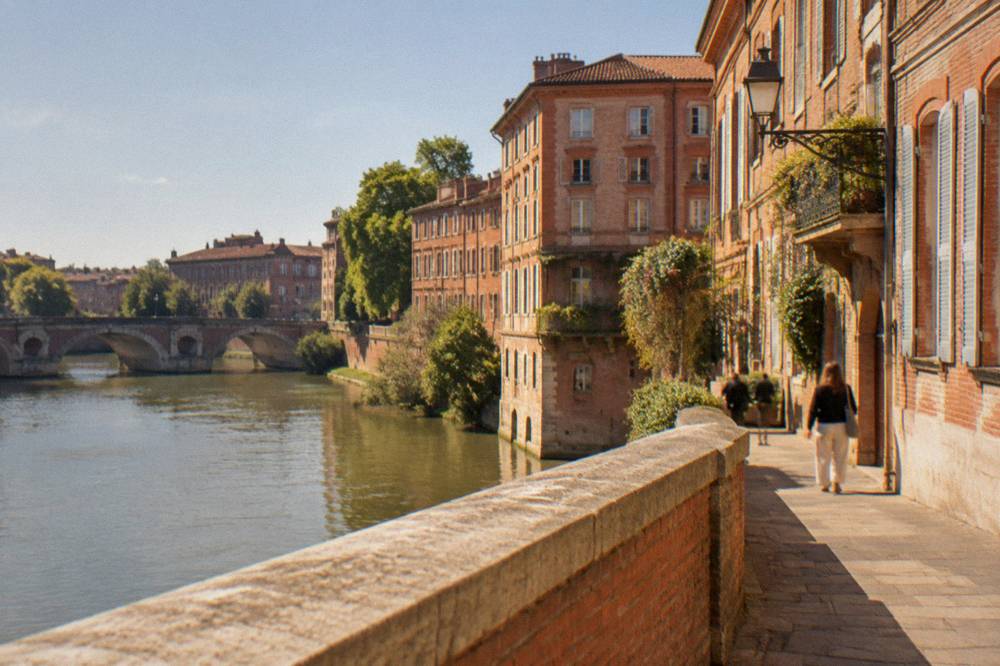
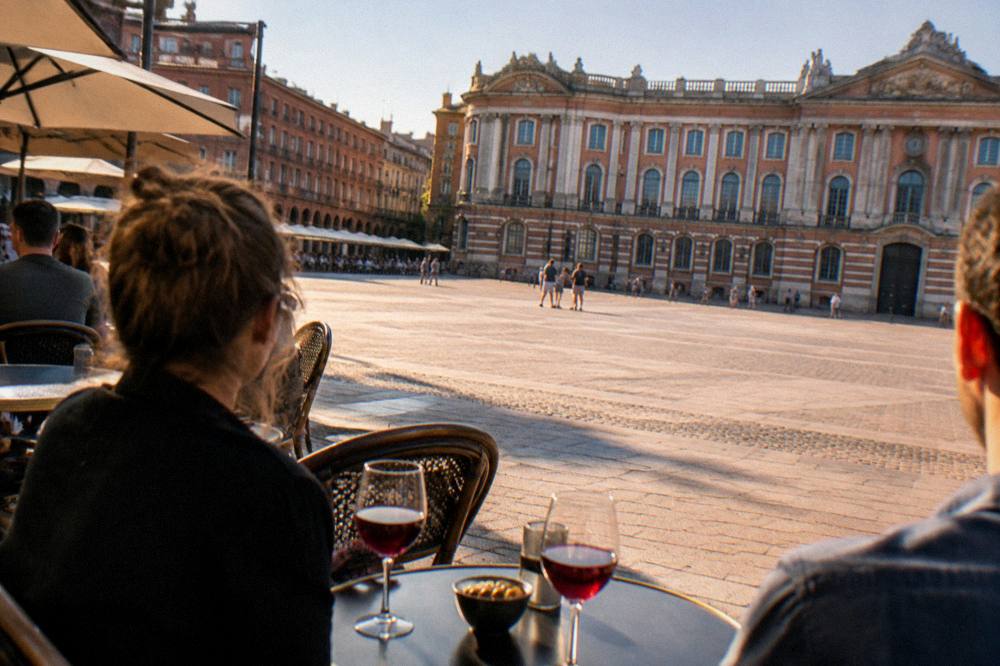
The afternoon is for walking it off, and the evening is for wine. The Garonne riverside is the city's best slow walk, and the Garonne riverside guide covers the banks from the Pont Neuf down. A wine-bar evening in Saint-Etienne or the Carmes quarter closes the loop: taste a Gaillac and a Fronton side by side, and you will understand the plate you ate at noon.
If one food day turns into a food weekend, extend the theme. The Toulouse desserts and sweets and Toulouse violets pages cover the other things the city is famous for eating, and the violet, in candied form, is the classic end to a local meal.
For travelers who want the region's tables and vineyards in a single outing, the wine-country day tours below are the strongest fits from the current roster:
Can You Cook Cassoulet At Home After Visiting Toulouse?
Yes, and the city's markets are set up for exactly that: the sausage, the confit and the beans all travel well, and the cassole itself is sold as a souvenir. The honest caveat is that the dish rewards patience over shortcuts, and the crust-forming bake cannot be rushed, so plan a full afternoon at home for a faithful version.
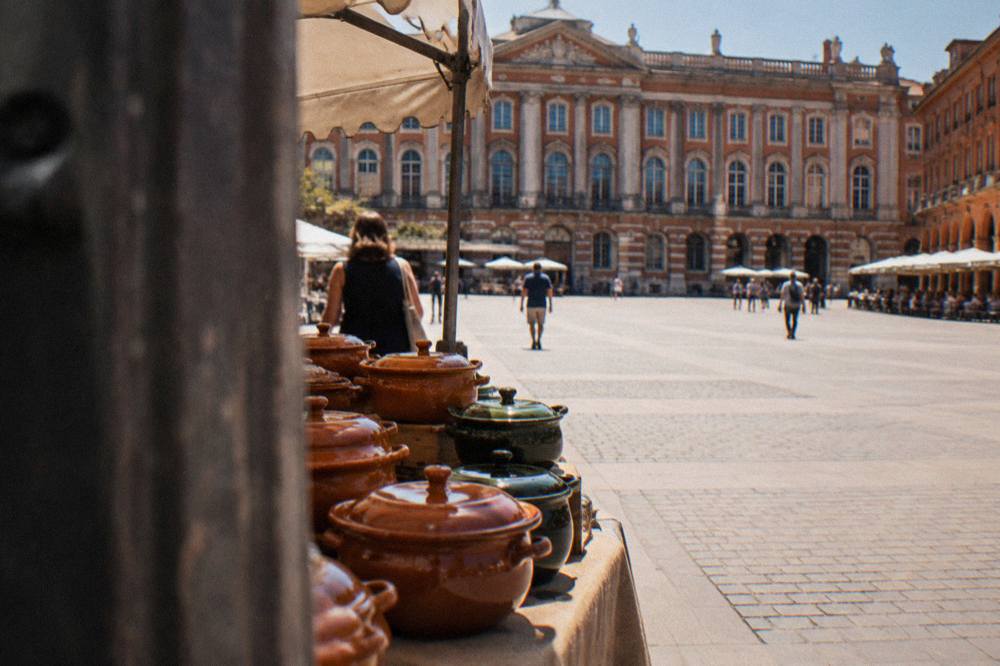
The shopping list is the easy part. Everything in a Toulouse cassoulet can be bought in the city's covered markets and carried home: the sausage is fresh but freezes, the confit keeps in its fat by design, and the dried beans are shelf-stable. The pot is the fun purchase, and kitchenware stalls around the markets sell cassoles in sizes from single-serving to family.
The cooking is the craft. The method is layered rather than mixed, the bake is long, and the crust is coaxed and reformed. The companion answers on the secret to a good cassoulet and on what the French eat with cassoulet cover the technique and the table-setting questions, and they are the pages to read before you commit a Sunday to it.
One last pairing note for the home version: whatever red you brought back from Gaillac or Fronton is the right answer, and the Toulouse wine guide explains what to look for on the label if you are buying at distance.
Common Questions About Cassoulet In Toulouse
Quick answers to what planners ask most about the city's signature dish.
What exactly is a cassoulet?
A slow-baked casserole of white beans, duck or goose confit, Toulouse sausage and pork, cooked and served in the cassole, the glazed clay pot that gives the dish its name. The full answer is on the page what exactly a cassoulet is.
What is the secret to a good cassoulet?
Patience in the bake and quality in the confit: the beans must hold their shape, the crust must form and reform, and the fat from the confit seasons everything. The technique is covered on the page about the secret to a good cassoulet.
What wine do you drink with cassoulet?
A sturdy local red: Gaillac or Fronton are the traditional regional answers, both with enough body to stand up to confit fat and beans. Details are on the page about what wine to drink with cassoulet.
What do the French eat with cassoulet?
Mostly nothing else: it is a complete meal, and the traditional accompaniment is bread, a green salad afterward and a local red alongside. The table-setting answer is on the page about what the French eat with cassoulet.
Is cassoulet the same everywhere in the region?
No. Toulouse, Castelnaudary and Carcassonne each defend a different version: the Toulouse one carries confit and Toulouse sausage together, Castelnaudary's is pork-led and simpler, and Carcassonne's sits between them.
When is cassoulet season in Toulouse?
The dish belongs to the cold months, roughly October through March, and the Christmas-market window from 26 November to 27 December 2026 is the best fortnight to combine it with the city's winter atmosphere. It is served year-round regardless.
A final word from the Toulouse Travel Guide editorial desk: order the cassole once, properly, at a slow lunch, and the city's food culture will make sense for the rest of your trip.