Canal Du Midi
The Canal du Midi is the UNESCO-listed waterway that begins in Toulouse, and this guide covers what to do on and beside it: cruises with commentary, towpath cycling, costs, the best months, and the sights within walking distance of the water.
Short answer
The Canal du Midi is a UNESCO World Heritage canal that meets the Garonne river in Toulouse, in southwestern France. Inscribed in 1996, it can be explored from the city by commented cruise, on foot along the towpath, or by bike, with a single Tisseo trip costing EUR 1.90 to reach the central stretches.
Toulouse, the pink-brick "La Ville Rose" on the Garonne in the Occitanie region of southwestern France, is the city where the Canal du Midi meets the river. The canal is one of the two UNESCO inscriptions that touch this city of 514,819 residents, and it is the only one that you can ride, walk and cycle along. This guide covers what the canal is, where it meets Toulouse, what you can do on and beside the water, what a cruise costs, and how the climate, the museums and the transit network shape a visit.
What Is The Canal Du Midi And Why Is It UNESCO Listed?
The Canal du Midi is the UNESCO-listed canal that reaches the Garonne river at Toulouse, inscribed on the World Heritage list in 1996 under criteria (i), (ii), (iv) and (vi), for a protected property of 2,007 hectares. It is the waterway that gives Toulouse its second UNESCO connection, and the canal's Toulouse end is where the city's river and canal identities meet.
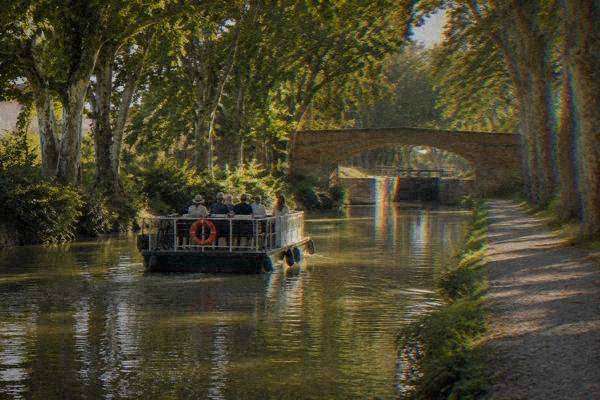
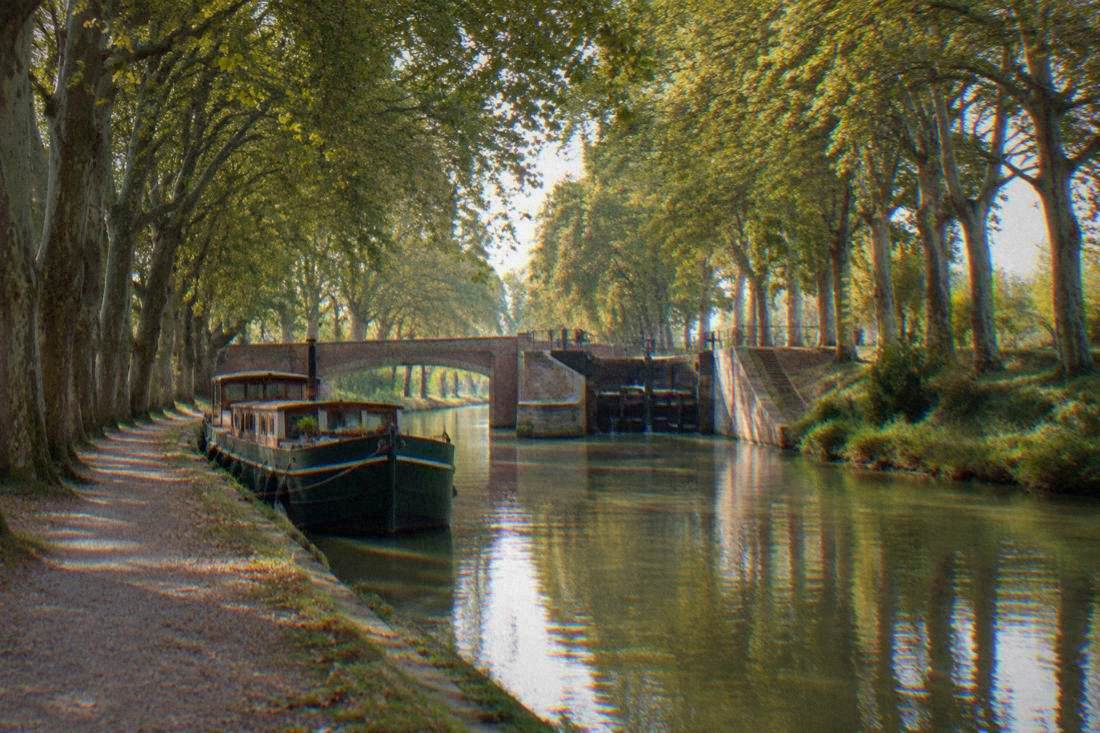
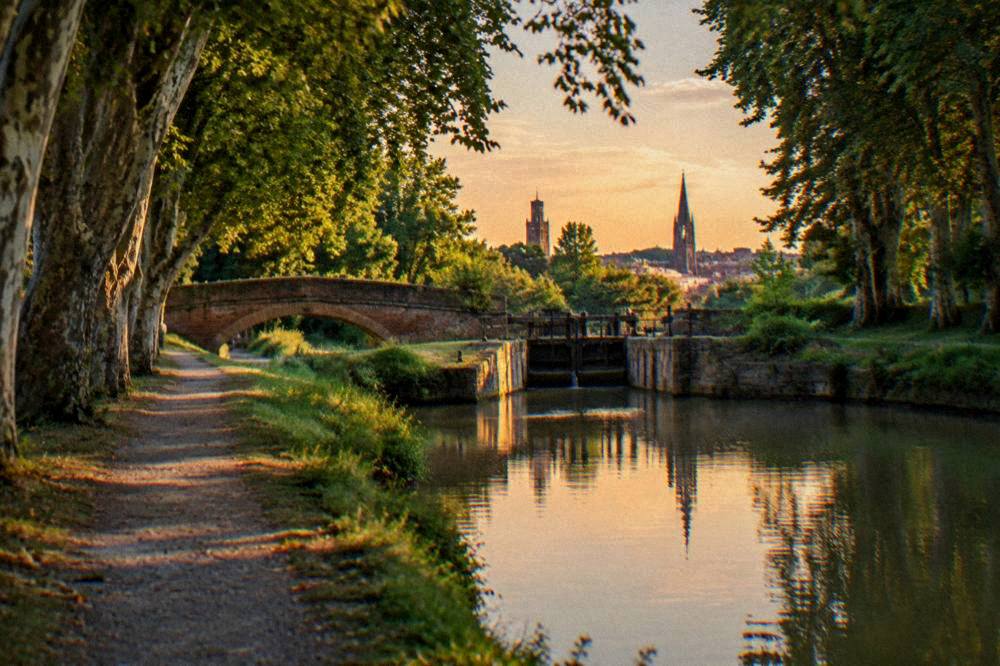
The inscription dates from 1996, and the World Heritage Center's listing carries the criteria and the property area. That is the whole of what the listing verifies, and it is enough to explain the canal's standing: this is a working, navigable monument, not a theme-park attraction. Boats still move along it, walkers still follow its banks, and the plane trees that line much of the waterway shape how the canal looks in every season.
Toulouse's other UNESCO connection is separate and easy to confuse with the canal's. The Basilique Saint-Sernin, a major stop on the Via Tolosana pilgrimage route, is listed as a component of the "Routes of Santiago de Compostela in France", inscribed in 1998. That listing belongs to the basilica, not to the canal. The canal's inscription stands on its own, and no other Toulouse site, the Capitole, the Jacobins and the Garonne included, carries the UNESCO label.
| Fact | Detail |
|---|---|
| Inscription year | 1996 |
| Criteria | (i), (ii), (iv), (vi) |
| Property area | 2,007 hectares |
| Separate Toulouse UNESCO site | Basilique Saint-Sernin, part of the Routes of Santiago de Compostela in France, inscribed 1998 |
Where Does The Canal Du Midi Meet Toulouse?
The canal meets the Garonne river inside Toulouse, within walking distance of the Pont-Neuf and the Capitole, so the canal-side stretches sit in the historic center rather than on the edge of town. The water and the river frame the same walkable district, which is why a canal visit and a city visit in Toulouse are effectively the same trip.
The meeting of canal and river is the geographic fact that made Toulouse the canal's city. The Garonne riverside and the Pont-Neuf sit at the point where the two waters come together, and from there the canal-side paths run out of the dense center into greener stretches. The Capitole de Toulouse, the city hall at the heart of the pink-brick center, is the natural landmark to navigate by, and the whole of this district is compact enough to cover on foot.
That compactness matters for planning. A morning on the water, an afternoon in the museums and an evening on the riverside all fit inside one district, without a car and without more than a couple of transit rides. The canal is not a day trip out of Toulouse; it runs through the city, and this Toulouse Travel Guide treats it as a central attraction in the same family as the basilica and the Capitole.
What Can You Do On The Canal Du Midi In Toulouse?
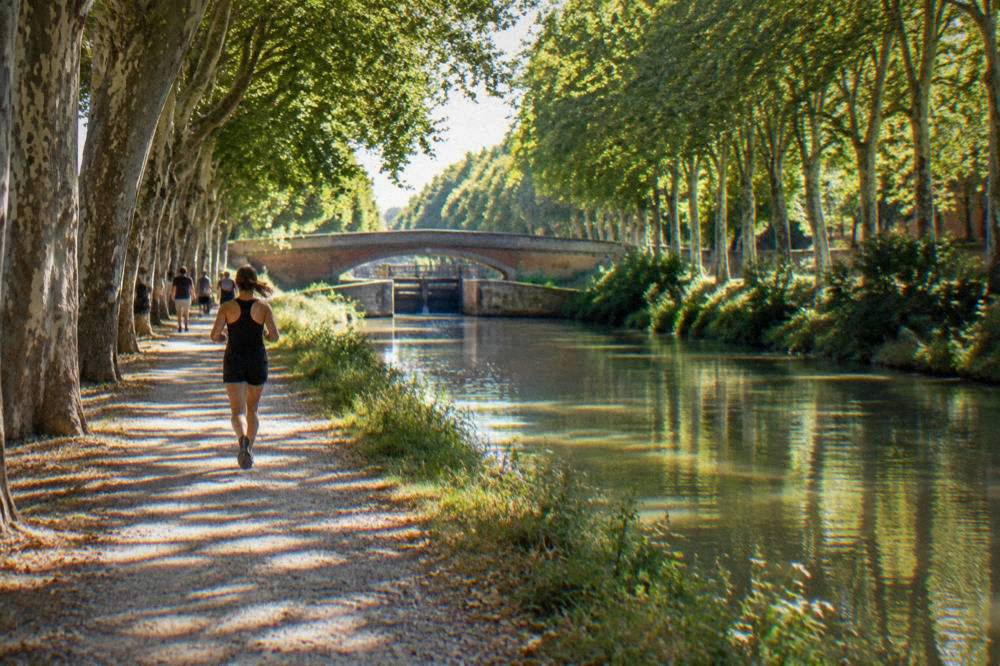
On the Toulouse stretch of the Canal du Midi you can take a cruise with live commentary, walk or cycle the towpath, and use the waterway as a green route into the historic center. Cruises depart from the city, bike tours follow the canal-side paths, and the canal links directly to the riverside district around the Pont-Neuf and the Capitole.
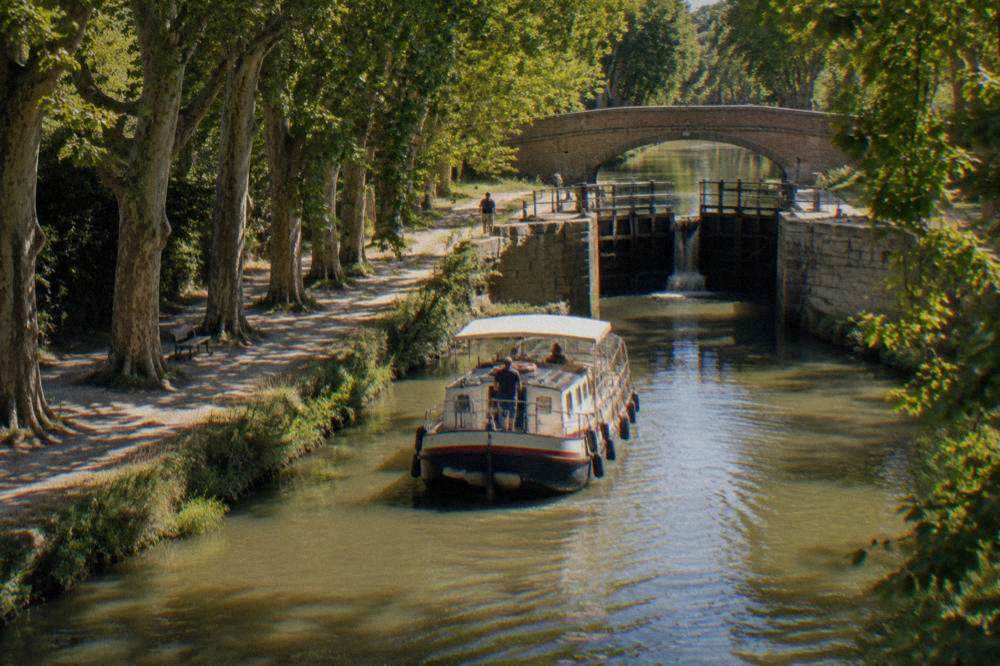
The cruise is the headline activity. A commented canal cruise puts you on the water with a guide explaining what you pass, and the UNESCO-listed Canal du Midi cruise tour with commentary is the product this site features for exactly that reason. The dedicated boat-trips guide covers the cruise options in depth, including what commentary covers and how departures work from the city.
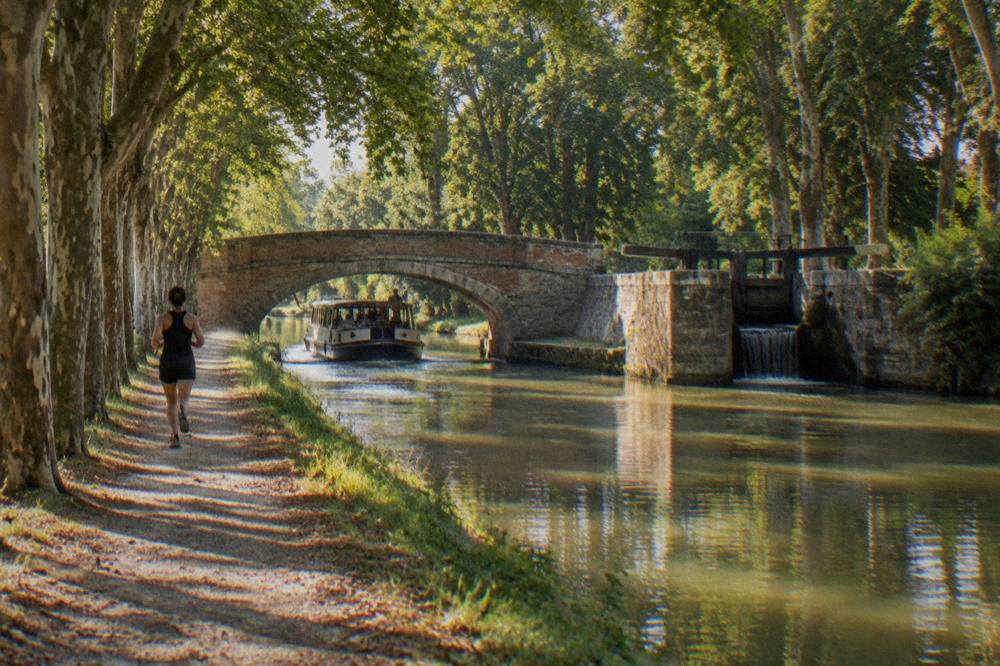
Between the water and the museums, the canal also works as a walking route. The towpath is level, shaded for much of its length, and continuous with the riverside walks, which makes it one of the few places in a mid-sized French city where a long walk stays entirely off traffic. Cyclists use the same corridor, and the bike angle has its own page: the Canal du Midi by bike guide covers routes, bike options and what the towpath ride involves.
How Much Does A Canal Du Midi Cruise Cost?
The current price of a Canal du Midi cruise from Toulouse is carried on the operator's live listing, and it changes with season and departure type, so this guide does not print a figure. The listing states the from-price, the duration and what is included, and it is the source to check before booking; free cancellation terms appear there too.
Fares for canal cruises move with the season, the boat and the length of the trip, which is why a printed number in a guide goes stale fast. The honest answer is the one the listing gives. The featured cruise's own listing carries its price and availability, and the how much is the Canal du Midi cruise answer page on this site explains the same point: the live listing, not a guide, is where the number lives.
If the cruise price fits your budget, booking early in your planning makes sense, because departure times on a city canal are finite. If it does not, the towpath costs nothing, and the walks along the Garonne are free as well. Check the current fare and the next departures before you build the rest of your day around the water.
Can You Walk Or Cycle Along The Canal Du Midi?
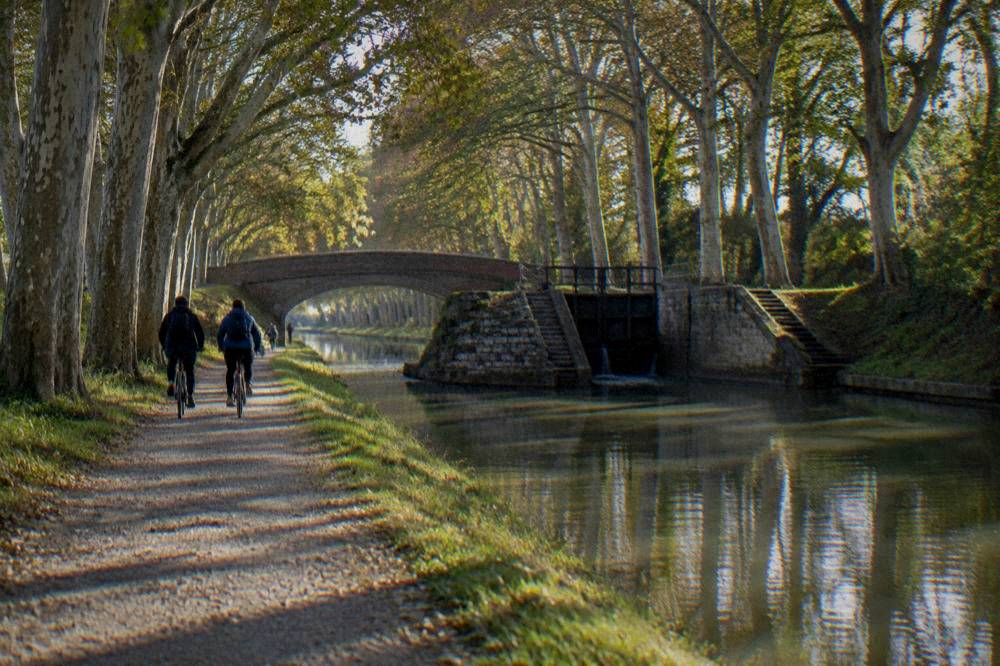
Yes, the canal's towpath can be walked and cycled from Toulouse, and the route is level, shaded and continuous with the riverside paths along the Garonne. The city's bike-tour operators use the canal corridor as a car-free route, and a dedicated guide on this site covers the towpath ride in detail, including what the path surface and the distances involve.
Walking the towpath needs no equipment and no booking. The path follows the water out of the center, and the plane trees that line the canal make the walk practical even in the warmer months, since shade is continuous for much of the route. The Canal du Midi by bike guide is the reference for cycling: it covers the route, the bike options and how the towpath connects with longer rides out of the city.
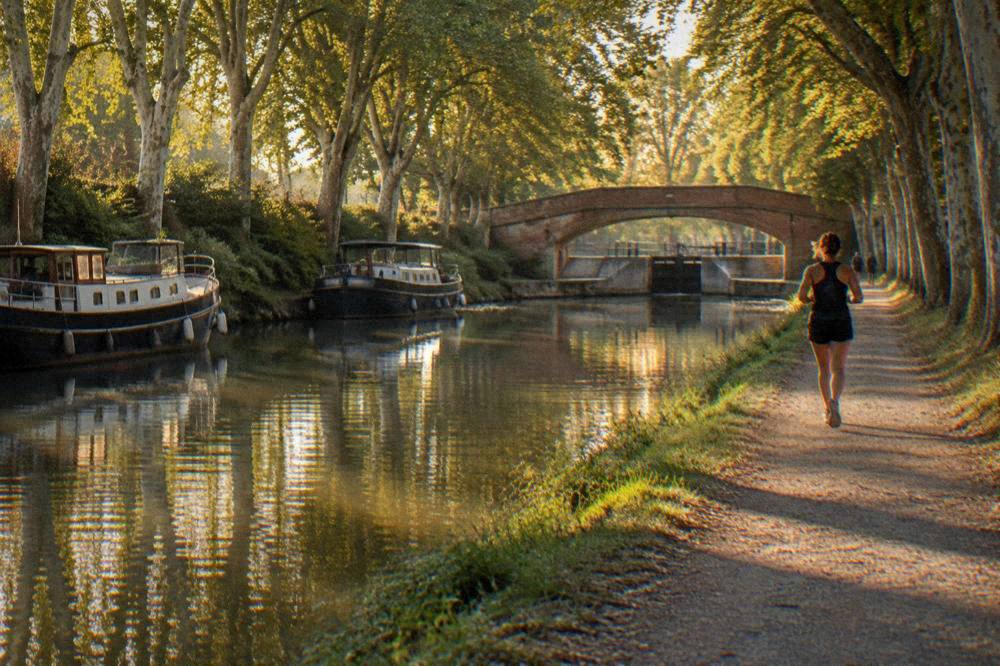
Cycling the canal with a group has advantages over going alone. A guided ride handles the route-finding, and the guides on the city's bike tours know which stretches are closed or awkward. The towpath is also the backbone of several running and walking loops that locals use, so expect company on fine weekends, and expect the path to be busiest where it passes closest to the center.
One question that comes up often deserves a direct answer here: swimming. The canal is a navigable waterway, not a bathing site, and the can you swim in the Canal du Midi answer page covers the question fully. The short version is that the canal is for boats, walkers and cyclists, and the city's swimming options are elsewhere.
When Is The Best Time To Visit The Canal Du Midi?
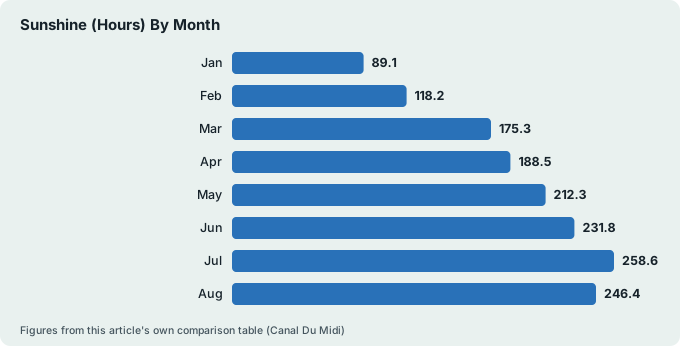
The best months for the Canal du Midi in Toulouse are June through September, because July is the sunniest month at 258.6 hours of sunshine with only 40.1 mm of rain, and the towpath shade makes summer walking bearable. May is actually the wettest month of the year in Toulouse at 73.6 mm, so late spring is not the dry season visitors assume.
That May figure surprises people, and it comes straight from the official record. Meteo-France's 1991-2020 climate normals for the Toulouse-Blagnac station show May at 73.6 mm of rain, the wettest month of the year, with April at 65.2 mm and June at 64.2 mm close behind. February, at 37.2 mm, is the driest month. The tap then turns off: July gets just 40.1 mm, and the same month averages 11.5 days a year above 30C, the highest of any month.
| Month | Mean temp (C) | Rain (mm) | Sunshine (hours) |
|---|---|---|---|
| Jan | 6.3 | 52.5 | 89.1 |
| Feb | 7.1 | 37.2 | 118.2 |
| Mar | 10.3 | 45.3 | 175.3 |
| Apr | 12.7 | 65.2 | 188.5 |
| May | 16.4 | 73.6 | 212.3 |
| Jun | 20.3 | 64.2 | 231.8 |
| Jul | 22.6 | 40.1 | 258.6 |
| Aug | 22.8 | 44.6 | 246.4 |
| Sep | 19.3 | 45.7 | 210.1 |
| Oct | 15.3 | 54.3 | 155.2 |
| Nov | 9.9 | 55.0 | 99.9 |
| Dec | 7.0 | 49.3 | 89.7 |
The events calendar gives the shoulder seasons their own pull. The piano festival Piano aux Jacobins runs 8 to 30 September 2026, and Toulouse les Orgues, the international organ festival, runs 7 to 18 October 2026 with its opening concert on 7 October at Notre-Dame de la Daurade. The Christmas markets on Place du Capitole, the allees Jean-Jaures and square Charles-de-Gaulle run 26 November to 27 December 2026, and Rio Loco, the riverside music festival, returns 9 to 13 June 2027 with the theme "Noctiluca".
| Event | Verified dates |
|---|---|
| Piano aux Jacobins | 8 to 30 September 2026 |
| Toulouse les Orgues (31st edition) | 7 to 18 October 2026 |
| Christmas markets (Capitole, allees Jean-Jaures, square Charles-de-Gaulle) | 26 November to 27 December 2026 |
| Rio Loco | 9 to 13 June 2027 |
What Else Is Near The Canal Du Midi In Toulouse?
Around the canal in central Toulouse you can reach the Couvent des Jacobins, the Musee des Augustins, the Fondation Bemberg, Les Abattoirs and the Capitole, all of which the tourist office lists on its Pass Tourisme page. The pass costs EUR 26 for a stay of one to three days and pays off from the third activity, which makes a canal-plus-museums day easy to plan and easy to price.
The tourist office's Pass Tourisme page gives the normal admission rates the pass waives: the Fondation Bemberg at EUR 12, the Museum at EUR 12, Les Abattoirs at EUR 12, the Musee des Augustins at EUR 5 and the Couvent des Jacobins at EUR 5. The Cite de l'espace, at a normal rate of EUR 29, is discounted rather than free with the pass. Two or three of those museums plus a paid activity is where the pass starts to pay for itself, per the office's own guidance.
| Sight | Normal adult rate (tourist office) | With the Pass Tourisme |
|---|---|---|
| Fondation Bemberg | EUR 12 | Free |
| Museum de Toulouse | EUR 12 | Free |
| Les Abattoirs | EUR 12 | Free |
| Musee des Augustins | EUR 5 | Free |
| Couvent des Jacobins | EUR 5 | Free |
| Cite de l'espace | EUR 29 | Discounted |
Two timing notes matter for museum planning. The Musee des Augustins is temporarily closed from 21 September to 2 October 2026 for great-cloister works, and its Gothic halls, the sacristy, the Notre-Dame de Pitie hall and the chapter house, reopen on 3 October 2026 from 10:00. The Couvent des Jacobins is free on the first Sunday of the month except when a temporary exhibition is on, and its church roof restoration is under way while the convent stays open to visitors.
| Pass Tourisme detail | Figure |
|---|---|
| Price | EUR 26 |
| Validity | 1 to 3 days |
| Transport add-on | +EUR 10 for 10 trips (metro, bus, tram) |
| Break-even point | From the 3rd activity |
| Included extra | A free guided tour from the tourist office |
The sights themselves need no hard sell. The Basilique Saint-Sernin is the UNESCO-listed stop on the Via Tolosana; the Couvent des Jacobins and the Musee des Augustins sit in the medieval center; the Fondation Bemberg and Les Abattoirs carry the art collections; and the Victor Hugo market is where the food stop happens. All of them sit within the same walkable district the canal borders.
For visitors who would rather see the canal and the city from a vehicle than from the water, the electric tuk-tuk option covers both in one loop, with photo stops along the canal-side stretches and an audio commentary tying the pink-brick center to the waterway that borders it.
How Do You Get Around Toulouse To Reach The Canal?
Toulouse's Tisseo network reaches the canal cheaply: a single trip costs EUR 1.90, a day pass EUR 7.20 and a three-day pass EUR 14.30, per the official e-boutique catalogue. The metro, buses and trams serve the historic center where the canal meets the Garonne, so a canal visit needs no car, and a ticket bought on board costs EUR 2.50 rather than EUR 1.90.
Those fares come from the Tisseo e-boutique catalogue, and they are the numbers to plan with. There is no two-day pass in the catalogue; the choice is a single trip at EUR 1.90, ten trips at EUR 16.00, a day pass at EUR 7.20 or the three-day pass at EUR 14.30. For a stay built around the canal, the museums and the riverside, the three-day pass and the Pass Tourisme's EUR 10 transport add-on are the two options worth comparing.
| Tisseo ticket | Price |
|---|---|
| Single trip | EUR 1.90 |
| Single trip bought on board | EUR 2.50 |
| 10 trips | EUR 16.00 |
| Day pass | EUR 7.20 |
| 3-day pass | EUR 14.30 |
Visitors arriving by air should know one thing before they plan: the tram line T2 to Toulouse-Blagnac airport has been closed since 5 June 2023 and stays closed until the end of 2026. The Navette aeroport bus is the replacement, with one departure every 15 minutes and a journey of 20 to 40 minutes to the center; the navette to the Matabiau bus station takes about 25 minutes, and buses 30 and 31 take about 45 minutes to the Capitole with changes. The airport single, covering the Tisseo network plus the navette, costs EUR 9.50.
| Airport option | Detail |
|---|---|
| Tram T2 to the airport | Closed since 5 June 2023, until the end of 2026 |
| Navette aeroport | Every 15 minutes, 20 to 40 minutes to the center |
| Navette to Matabiau bus station | About 25 minutes |
| Buses 30 and 31 | About 45 minutes to the Capitole, with changes |
| Airport single ticket | EUR 9.50 |
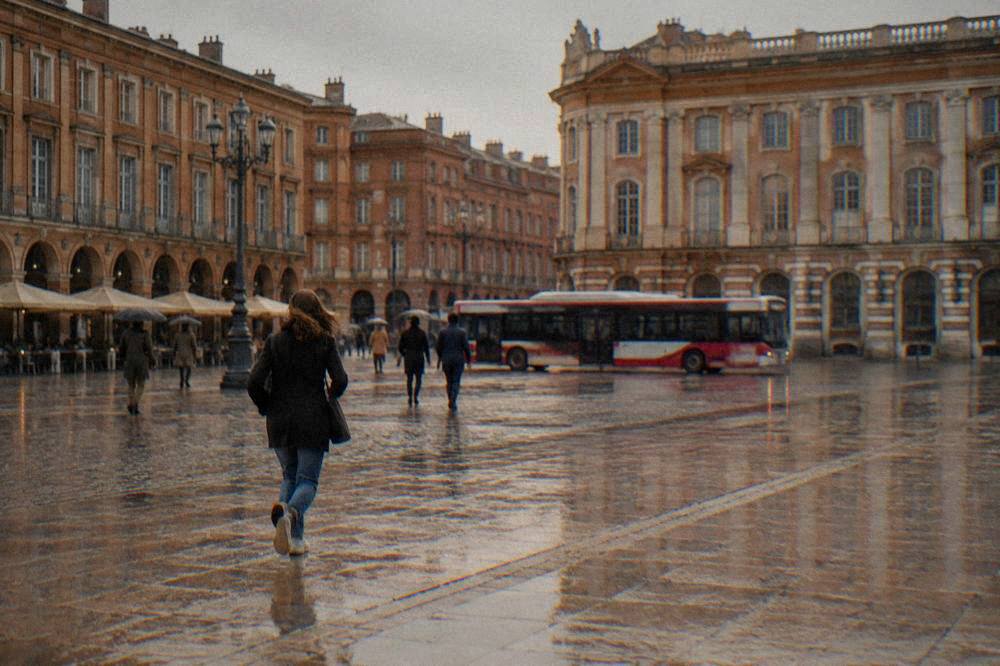
Once you are in the center, everything on this page is walkable. The canal, the Garonne, the Capitole and the museums form one continuous district, and the transit network exists for the airport, the station and the outer neighborhoods rather than for the canal itself. A single map of the riverside, the canal basin and the medieval streets is genuinely all the navigation a canal visit requires.
Common Questions About The Canal Du Midi
Why is the Canal du Midi famous?
The Canal du Midi is famous as a UNESCO World Heritage canal, inscribed in 1996 under criteria (i), (ii), (iv) and (vi) for a 2,007-hectare property. It is a working navigable waterway lined with plane trees, and it meets the Garonne river at Toulouse, which makes the pink-brick city its western anchor.
How much is the Canal du Midi cruise?
The current cruise price is carried on the operator's live listing, because fares change with season and departure type. The listing states the from-price, the duration and the inclusions, and it is the source to check before booking. The towpath, by contrast, costs nothing to walk or cycle.
What is the most beautiful part of the Canal du Midi?
Beauty on the canal is a matter of taste, and no official body ranks the stretches. From Toulouse, the shaded towpath near the city and the plane-tree corridors heading out of town are the sections most easily reached, and the cruise commentary describes what each stretch passes.
Can you swim in the Canal du Midi?
No. The canal is a navigable waterway for boats, walkers and cyclists, not a bathing site. Toulouse is an inland city with no sea and no beach, and the city's swimming options sit elsewhere, away from the working water.
What is the best canal trip in France?
That question is answered in depth on this site's dedicated page comparing canal trips, but the honest short answer is that "best" depends on what you want: a short city cruise with commentary, a multi-day boat hire or a long-distance bike ride. The Canal du Midi from Toulouse is the option that combines a UNESCO inscription with a city departure.
How many days are enough for Toulouse and the canal?
A stay of two to three days covers the canal, the riverside and the main museums comfortably. The Pass Tourisme is built for exactly that window, valid for one to three days, and it pays off from the third activity.