Canal Du Midi Cycling From Toulouse: Routes, Seasons And Planning
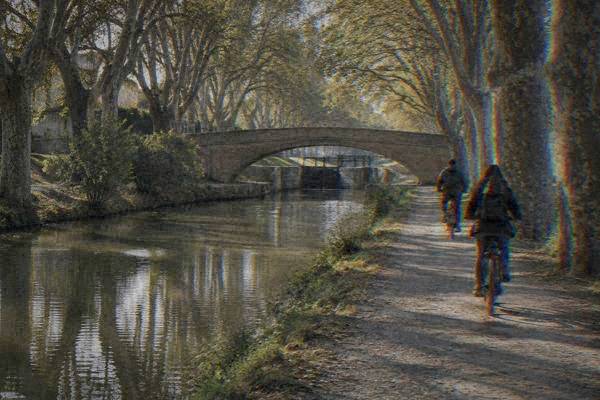
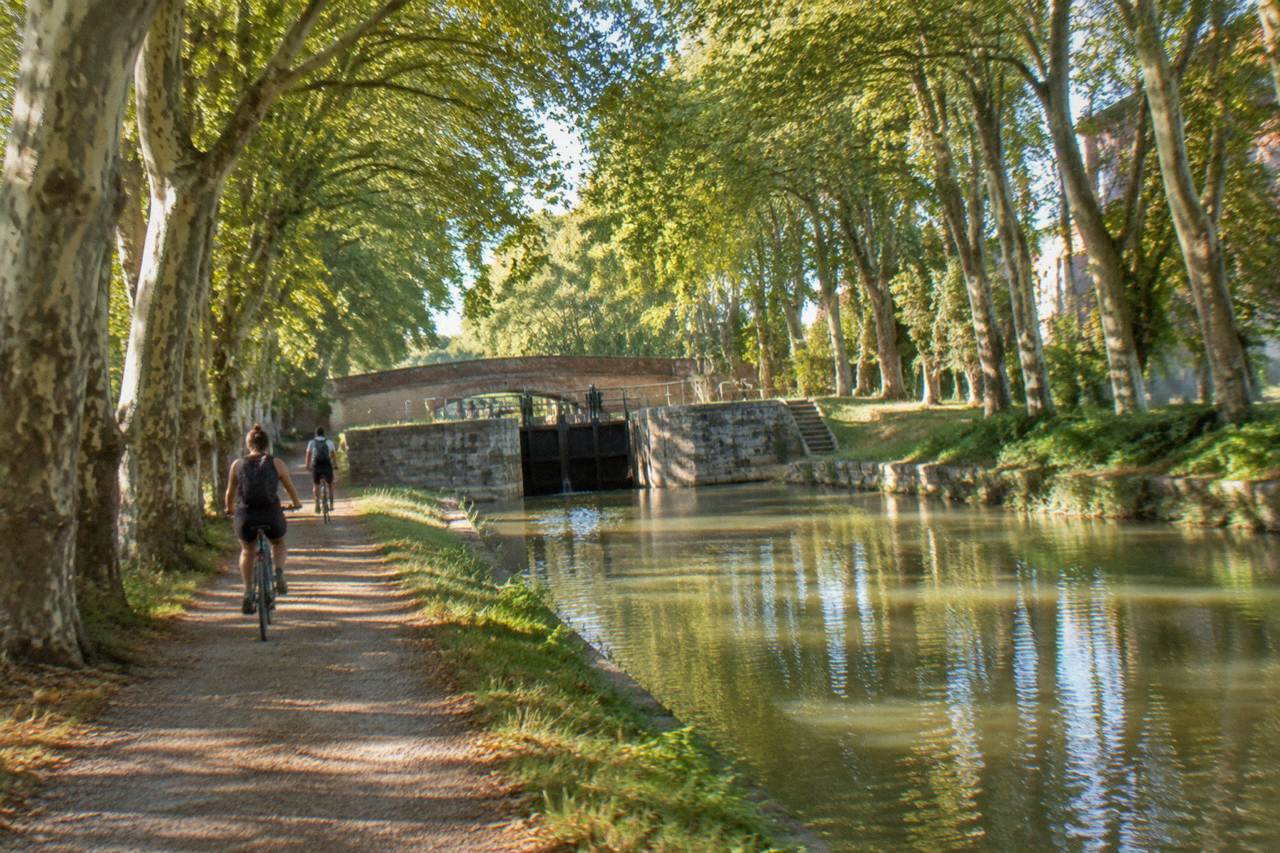
The Canal du Midi leaves Toulouse heading for the Mediterranean, and its tree-shaded towpath is one of the most enjoyable ways to spend a day on two wheels in southwestern France.
Short answer
The Canal du Midi starts in Toulouse, a UNESCO World Heritage site since 1996, and its towpath can be cycled from the city. A Tisseo day pass costs EUR 7.20, the tourist office's Pass Tourisme costs EUR 26, and May is the wettest month while July is the sunniest, so late summer and early autumn suit a cycling day best.
Toulouse, the pink-brick "La Ville Rose" on the Garonne river in the Occitanie region of southwestern France, is where the Canal du Midi begins its run toward the Mediterranean. The commune counted 514,819 inhabitants in 2023 according to INSEE, and the canal is stitched into the city's western and southern edges, which makes it one of the few French cities where a UNESCO-listed waterway sits within easy reach of the center. Cycling the towpath is the classic way to meet it, and this guide from Toulouse Travel Guide covers the seasons, the fares, the passes and the tours that shape a good day out.
Why Cycle The Canal Du Midi From Toulouse?
The Canal du Midi was inscribed by UNESCO in 1996 under criteria i, ii, iv and vi, and Toulouse is its inland starting point, so a cyclist leaving the city is riding the very first stretch of a World Heritage waterway. The basilica of Saint-Sernin carries a separate UNESCO listing as part of the Routes of Santiago de Compostela in France, inscribed in 1998, which means the city holds two distinct UNESCO connections within a short ride of each other.
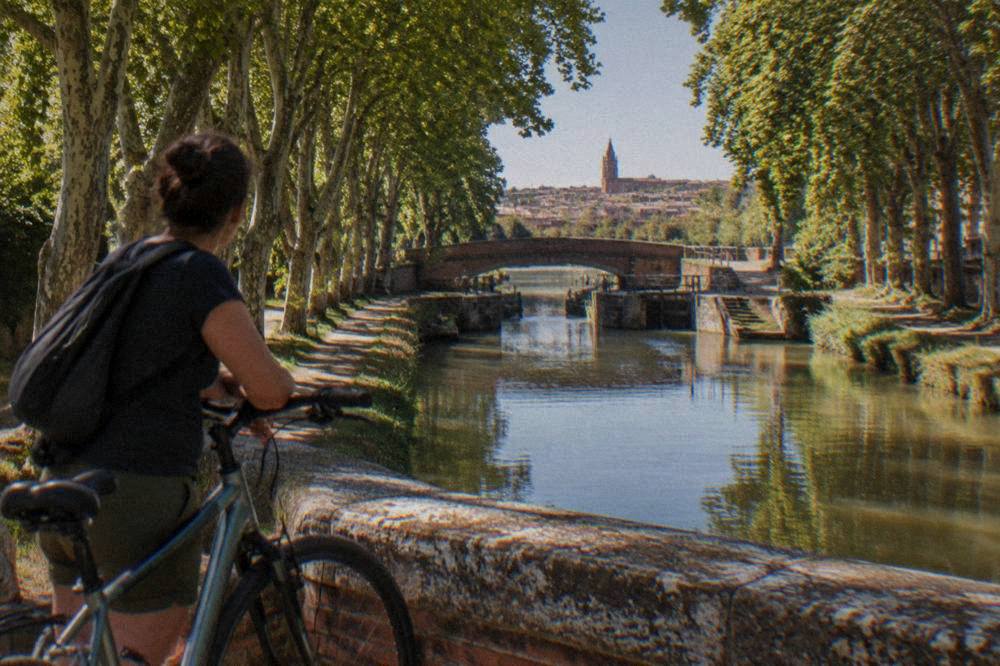
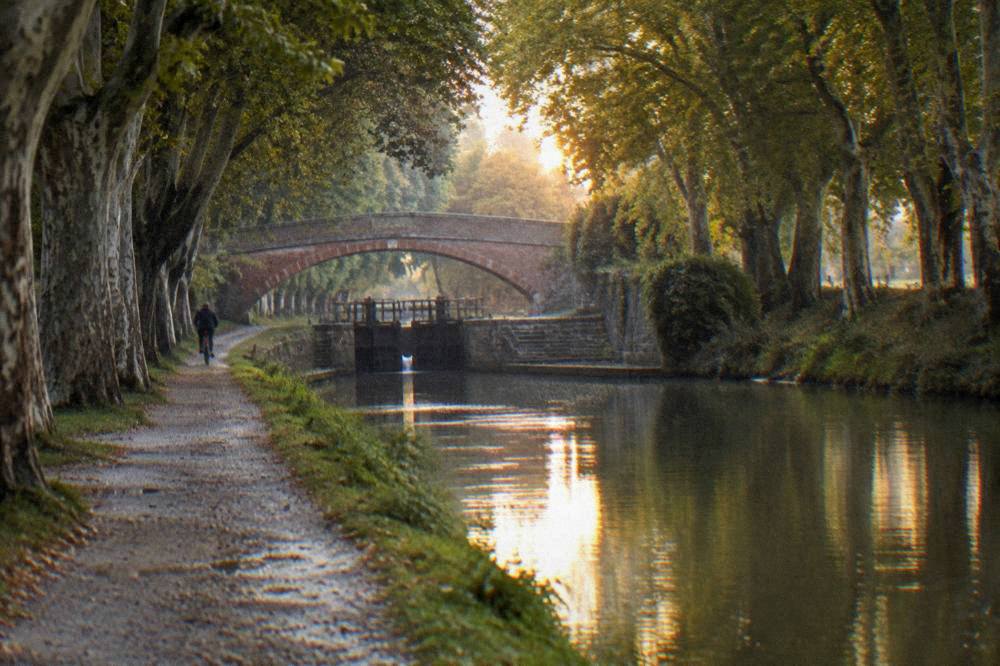
That double listing matters for planning. The canal itself is the headline: 2,007 hectares of protected property, recognized for the engineering achievement it represents. The answers page on why the canal is famous unpacks the listing in detail, and the attraction guide to the Canal du Midi covers the waterway as a sight in its own right. For a cyclist, the appeal is simpler. The trees that line the banks give shade through the hot months, the water runs level beside the path, and the route leaves the city noise behind without ever putting the rider far from a tram stop or a cafe.
The canal also connects to a wider network of day trips. The day trips from Toulouse guide lists the destinations that sit along or near the canal corridor, from Carcassonne to Albi, and several of them can be reached by combining a ride with a train or a coach. But the ride itself is the point for visitors: a slow, flat, shaded corridor that behaves the same way in October as in June, give or take the temperature.
| UNESCO listing | Year inscribed | What it covers |
|---|---|---|
| Canal du Midi | 1996 | The canal itself, 2,007 hectares, criteria i, ii, iv, vi |
| Routes of Santiago de Compostela in France | 1998 | A serial property; the Basilique Saint-Sernin in Toulouse is a listed component and a major stop on the Via Tolosana |
No other Toulouse monument carries a UNESCO label. The Capitole, the Jacobins and the Garonne are all fine sights, but none of them is on the World Heritage list, and any guide that says otherwise is guessing.
Where Does The Canal Meet Toulouse, And Which Way Should You Ride?
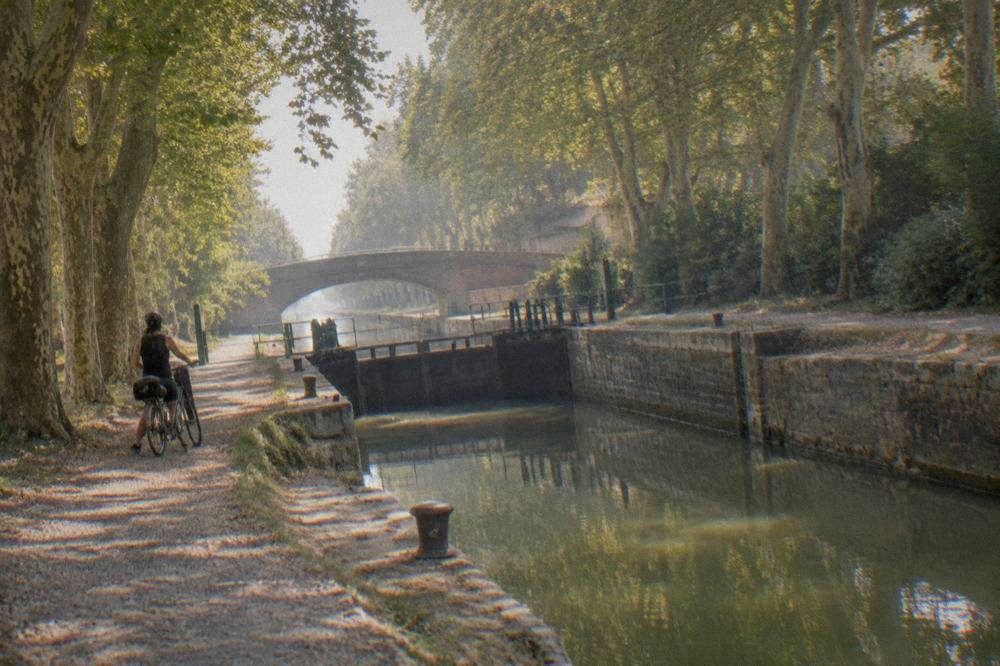
The Canal du Midi meets the Garonne in Toulouse, and from that junction the towpath runs out of the city toward the southeast, so a rider can leave the riverbank and be on canal-side path within minutes of the center. The direction toward the Mediterranean is the one the canal was built to serve, and it is the direction where the plane-tree cover thickens and the suburbs thin out. There is no single mandated starting point; you simply pick up the towpath where it crosses your route.
Ready to ride the towpath out of the city? Book a bike rental here.
Because the canal was built to link the Garonne to the Atlantic trade with the Mediterranean, its geometry is fixed: it follows the water, and the water is level. That has a practical consequence for cyclists of every ability. There are no climbs to speak of, no traffic once you are off the city streets, and the surface stays beside the water the whole way. Riders who want a shorter loop can turn back at any point, and riders who want to keep going can hand the day over to the towpath entirely.
The question of which stretch is the most beautiful comes up often, and the answers page on the most beautiful part of the canal addresses it directly. What can be said here is honest and simple: the first stretch out of Toulouse is the most accessible, and it is the stretch you can reach without a car. Anyone planning to ride further afield should read the car hire guide first, since the canal runs for a long way and a bike rack or a rental at the far end changes what is possible in a day.
One warning worth repeating: swimming is not what the canal is for, and the answers page on swimming in the Canal du Midi gives the short version. The towpath is for walking, riding and watching boats, not for getting in.
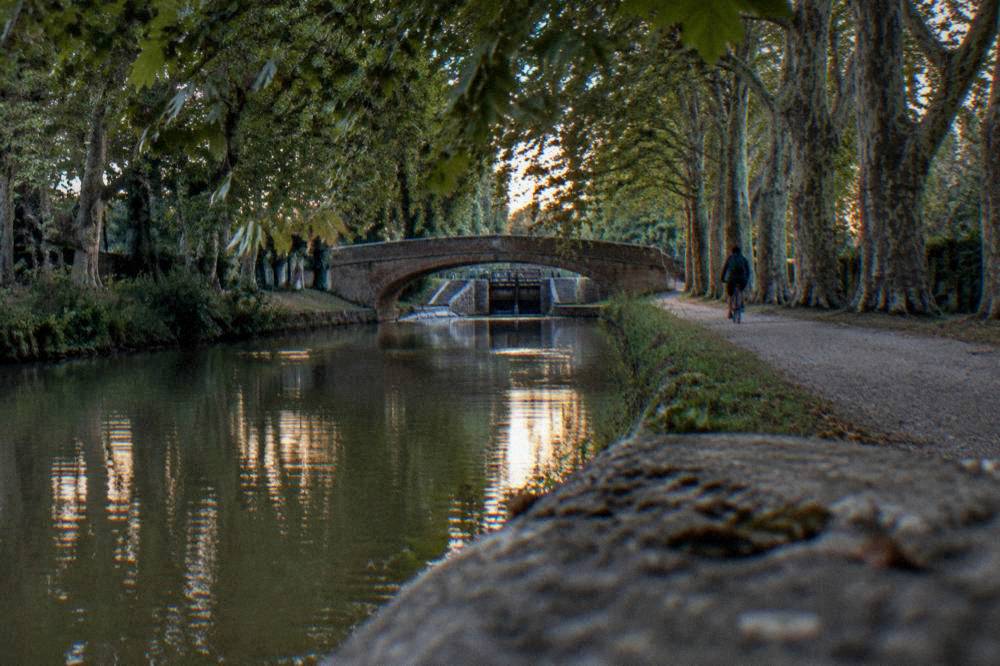
When Is The Best Season For Canal Du Midi Cycling?
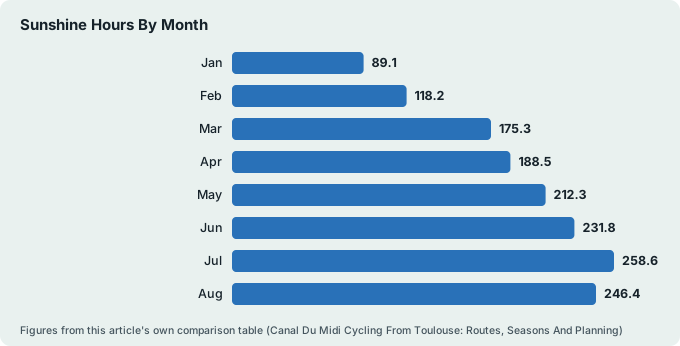
Meteo-France's 1991-2020 climate normals for the Toulouse-Blagnac station show that July is the sunniest month at 258.6 hours of sunshine with only 40.1 mm of rain, while May is the wettest month at 73.6 mm, so the best cycling window runs from late June through September, when rain is lighter and sunshine hours stay high. August is the warmest month at a 22.8 C mean, with 11.3 days a year at or above 30 C.
The surprise in the data catches out many first-time planners: the wettest month in Toulouse is not in winter. May averages 73.6 mm of rain across the 1991-2020 normals, nearly double February's 37.2 mm, and April (65.2 mm) and June (64.2 mm) sit just behind it. Then the tap turns off. July gets 40.1 mm and the most sunshine of any month, and the pattern holds into September, which still averages 210.1 hours of sun against 45.7 mm of rain. A cyclist who picks a date by the wrong assumption, that Mediterranean France is dry in spring and wet in autumn, will plan backwards.
| Month | Mean temp C | Rain mm | Sunshine hours |
|---|---|---|---|
| Jan | 6.3 | 52.5 | 89.1 |
| Feb | 7.1 | 37.2 | 118.2 |
| Mar | 10.3 | 45.3 | 175.3 |
| Apr | 12.7 | 65.2 | 188.5 |
| May | 16.4 | 73.6 | 212.3 |
| Jun | 20.3 | 64.2 | 231.8 |
| Jul | 22.6 | 40.1 | 258.6 |
| Aug | 22.8 | 44.6 | 246.4 |
| Sep | 19.3 | 45.7 | 210.1 |
| Oct | 15.3 | 54.3 | 155.2 |
| Nov | 9.9 | 55.0 | 99.9 |
| Dec | 7.0 | 49.3 | 89.7 |
The record extremes frame the range. The Meteo-France fiche for the station, covering records from 1947 to June 2025, lists a record high of 42.4 C on 23 August 2023 and a record low of -19.2 C on 15 February 1956. Neither is a cycling day. The useful planning window sits between them, and the Toulouse weather guide and the best time to visit guide break the year down month by month for the city as a whole.
| Season snapshot | Mean daily max C | Mean daily min C | Rain mm |
|---|---|---|---|
| February (driest winter month) | 11.2 | 3.1 | 37.2 |
| May (wettest month of the year) | 21.4 | 11.4 | 73.6 |
| July (sunniest month of the year) | 28.2 | 17.0 | 40.1 |
| September (early autumn riding) | 24.8 | 13.9 | 45.7 |
For packing, the same normals give the number of days at or above 30 C: 11.5 in July and 11.3 in August, against 6 in June and 3.5 in September. That argues for morning starts in high summer and for carrying more water than feels necessary, because the plane trees shade the path but the air above it does not cool.
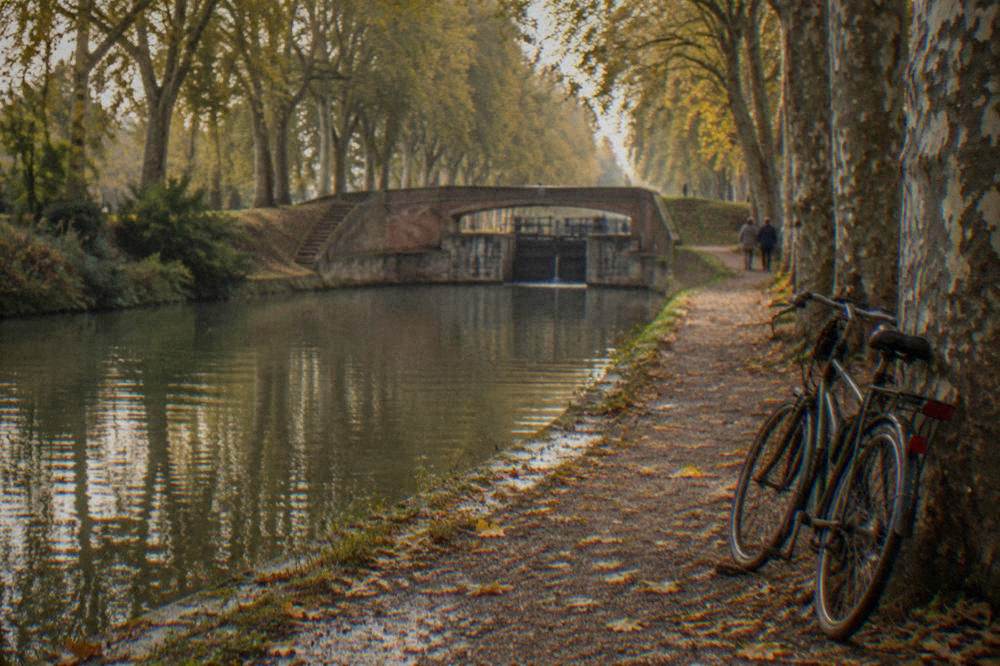
How Do You Get To The Canal, And What Does Local Transport Cost?
The Tisseo e-boutique catalogue lists a single trip at EUR 1.90, a day pass at EUR 7.20 and a 3-day pass at EUR 14.30, with no 2-day pass offered, so a visitor staying several days and planning more than four rides in a day breaks even on the day pass and saves on the 3-day pass. A single bought last-minute on board costs EUR 2.50, and the airport single covering the Tisseo network plus the Navette aeroport is EUR 9.50.
Those fares matter to a cyclist for one reason: the canal crosses the city's transport network at several points, and a rider who wants to ride out and tram back can do so for the price of a single ticket. The full fare picture from the official catalogue:
| Tisseo ticket | Price |
|---|---|
| Single trip | EUR 1.90 |
| Single trip bought on board | EUR 2.50 |
| 10 trips | EUR 16.00 |
| Day pass | EUR 7.20 |
| 3-day pass | EUR 14.30 |
| Airport single (network plus Navette aeroport) | EUR 9.50 |
Two transport facts deserve a flag before you plan an arrival around them. Tram T2 to Toulouse-Blagnac airport has been closed since 5 June 2023 and stays closed until the end of 2026 because of the Line C metro works, so the airport link is the Navette, which runs one departure every 15 minutes and takes 20 to 40 minutes to the center. The Navette to the Matabiau bus station takes about 25 minutes. Anyone telling you to take the tram to the airport is working from an old timetable. The airport guide and the airport to city center guide cover the arrival in full.
The other big transport story is future-facing: metro Line C, 27 km with 21 stations running Colomiers, Blagnac, Toulouse and Labege, opens at the end of 2028. Until then, the existing network is what you ride, and the fares above are what you pay. For a cyclist with a bike, checking the operator's own rules for carriage on board is the honest advice; the practical details live on Tisseo's pages, not in a guide's memory.
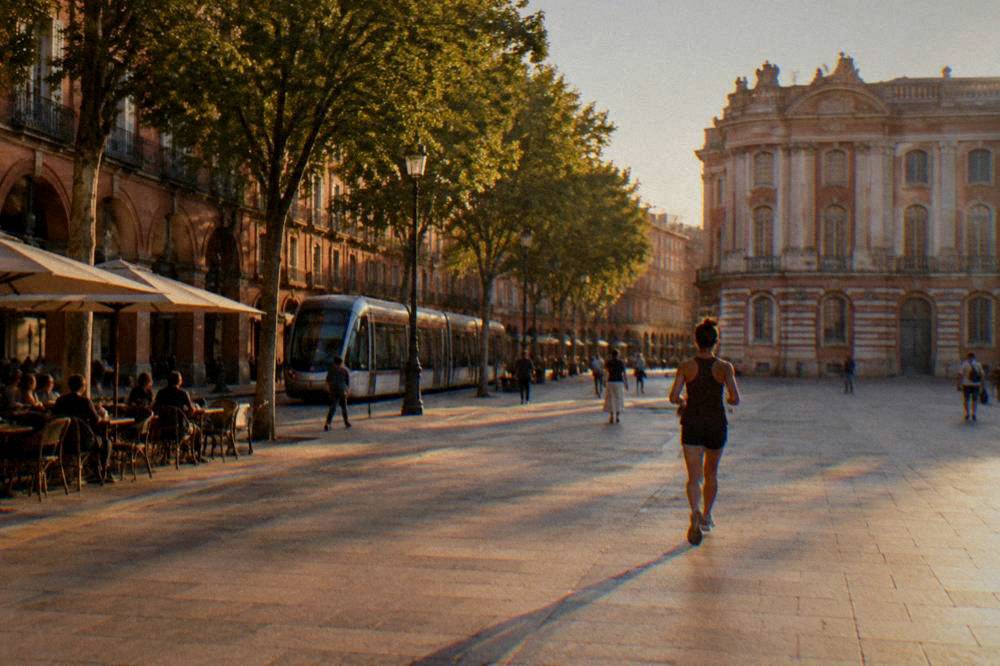
Can You Swap The Saddle For A Boat: Cruises On The Canal?
Yes, and the cruise option is the natural companion to a cycling day, because the same water the towpath follows can be ridden on a boat with commentary instead. The tourist office's Pass Tourisme page lists a free guided tour from the office among the pass inclusions, and a narrated cruise on the UNESCO-listed canal runs from Toulouse as a bookable product, so a rider can cycle out and cruise back, or skip the saddle entirely on a rest day.
The cruise question is really a cost question, and the answers page on how much the Canal du Midi cruise costs covers it, while the boat trips guide compares the options on the water. For this page the useful comparison is between riding and floating: the towpath gives you the trees at eye level and the freedom to stop, while a cruise gives you the lock passages and the commentary without any effort at all. Families with small children, riders in the August heat and anyone nursing tired legs all tend toward the boat on day two.
The featured cruise on this site is the narrated cruise on the UNESCO-listed Canal du Midi with commentary, which you can check on the operator's live listing: Check availability. The answers page on the best canal trip in France puts the Toulouse stretch in the wider national context.
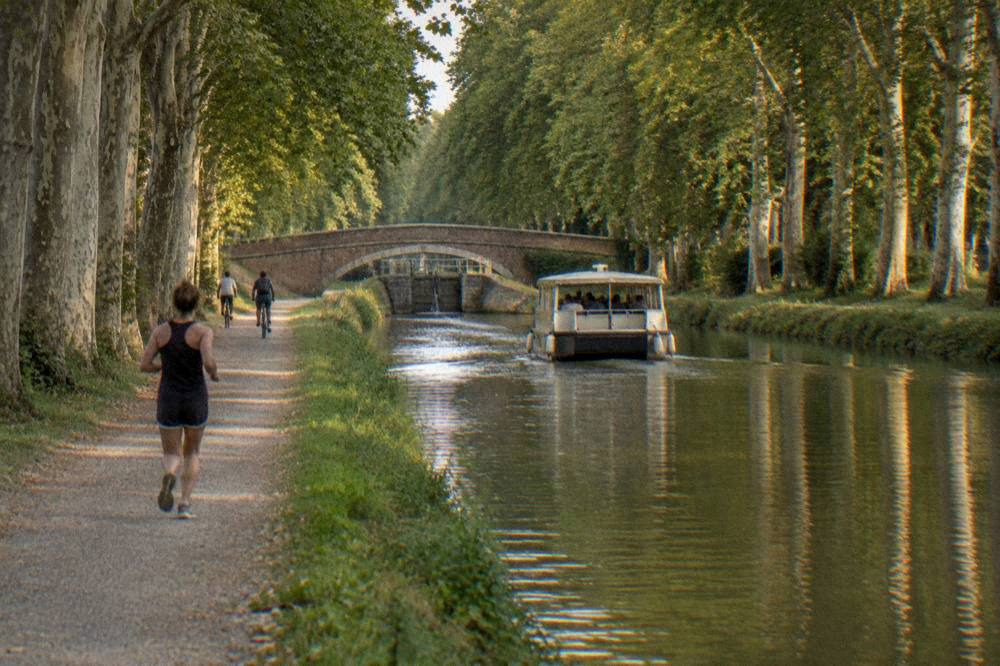
Does The Pass Tourisme Pay Off For A Canal Cycling Day?
The Toulouse tourist office's Pass Tourisme costs EUR 26 for stays of one to three days and pays off from the third activity, and it includes a free guided tour from the tourist office; adding EUR 10 buys ten public-transport trips on the metro, bus and tram, so a visitor pairing a museum morning with a canal afternoon and a tram ride home can come out ahead on day one.
The pass logic is arithmetic, not marketing. The tourist office's own page lists the normal rates for the museums and monuments the pass covers, and those figures let you check the break-even yourself:
| Attraction (normal rate listed by the tourist office) | Normal rate | With the Pass Tourisme |
|---|---|---|
| Fondation Bemberg | EUR 12 | Free |
| Museum de Toulouse | EUR 12 | Free |
| Les Abattoirs | EUR 12 | Free |
| Musee des Augustins | EUR 5 | Free |
| Couvent des Jacobins | EUR 5 | Free |
| Cite de l'espace | EUR 29 | Discounted, not free |
Three of the EUR 12 museums and the pass has paid for itself; the transport add-on at EUR 10 for ten trips undercuts the EUR 16 price of ten single tickets bought separately. The Pass Tourisme guide walks through the full math, including which attractions are discounted rather than free.
Two timing caveats apply to anyone building a museum-and-canal day. The Musee des Augustins is temporarily closed from 21 September to 2 October 2026 for great-cloister works, with its Gothic halls, the sacristy, the Notre-Dame de Pitie hall and the chapter house, reopening on 3 October 2026 from 10:00. And the Couvent des Jacobins is free on the first Sunday of the month, except when a temporary exhibition is on, which is a rule stated for the Jacobins and not a general citywide free-Sunday policy. The Musee des Augustins guide and the Couvent des Jacobins guide carry the current detail.
What Can You Combine With A Canal Ride: Day Trips, Food And Festivals?
A canal cycling day pairs well with three things: a day trip along the wider corridor, since Albi and Cordes-sur-Ciel sit within reach as a full-day coach excursion; a food tour in Toulouse itself, which turns a rest day into a tasting circuit; and a festival, because the city's calendar runs Piano aux Jacobins from 8 to 30 September 2026, Toulouse les Orgues from 7 to 18 October 2026 and the Christmas markets from 26 November to 27 December 2026.
The day trip option matters when the weather turns or the legs need a break. The Albi and Cordes-sur-Ciel excursion covers two of the region's headline inland towns in one coach day, and it is one of the trio of tours this site features alongside the canal cruise and the chef-led food and history tour. Albi's UNESCO connection runs through the same Routes of Santiago listing family as Saint-Sernin's, though Albi's own listing is separate from the canal's, and the Albi guide and the Carcassonne guide cover the two heavyweight day trips in detail.
Food is the other half of a Toulouse day. The Toulouse food guide, the cassoulet guide and the restaurants guide cover what to eat in the city, and a guided food tour with a chef, in English, is the featured tasting option for visitors who want the eating explained as well as done. The Victor Hugo market guide covers the city's central market hall for self-guided grazers.
| Event | 2026-2027 dates |
|---|---|
| Piano aux Jacobins | 8 to 30 September 2026 |
| Toulouse les Orgues (31st edition) | 7 to 18 October 2026, opening concert 7 October at Notre-Dame de la Daurade |
| Christmas markets (Place du Capitole, allees Jean-Jaures, square Charles-de-Gaulle) | 26 November to 27 December 2026 |
| Rio Loco | 9 to 13 June 2027, theme "Noctiluca" |
A September or October cycling day lands in the middle of the festival calendar, which is the quiet argument for early autumn: 210.1 hours of sunshine in September, the piano festival in the Jacobins cloister, and the organ festival opening the month after. The Toulouse events guide carries the full calendar.
Where Should You Stay For Easy Canal Access?
The best base for a canal cycling trip is central Toulouse, because the towpath starts at the city and every segment of the local network converges there, and the tourist tax on non-classified lodging, including most platform rentals, is 5 percent of the pre-tax nightly price per person under Toulouse Metropole's rules. Staying central means the canal is a short ride away and the museums, markets and restaurants are closer still.
The where to stay guide breaks the neighborhoods down properly, and the honest summary for a cyclist is that the canal rewards proximity more than luxury. A bed near the Garonne puts the water at both ends of the day: the river on one side, the canal on the other. The Capitole guide and the Notre-Dame du Taur guide describe the monumental core that sits between the two.
The tourist tax is the one accommodation figure that was verified for this site, and it deserves a plain statement: for non-classified or pending-classification lodging, which covers most short-term rental platforms, the charge is 5 percent of the pre-tax nightly price per person, per night, under the Toulouse Metropole rules. Classified properties pay flat rates by category, but those per-star figures are not stated on the official page this site checked, so they stay off this page too.
Common Questions About Canal Du Midi Cycling From Toulouse
Quick answers to what planners ask most about a canal cycling day from Toulouse.
Is the Canal du Midi UNESCO-listed?
Yes. The Canal du Midi was inscribed by UNESCO in 1996 under criteria i, ii, iv and vi, covering 2,007 hectares of protected property. The Basilique Saint-Sernin in Toulouse carries a separate UNESCO listing as part of the Routes of Santiago de Compostela in France, inscribed in 1998.
What is the best month for cycling the Canal du Midi from Toulouse?
July is the sunniest month in Meteo-France's 1991-2020 normals for Toulouse-Blagnac, with 258.6 hours of sunshine and only 40.1 mm of rain. September is a strong alternative, with 210.1 hours of sunshine and 45.7 mm of rain. May is the wettest month of the year at 73.6 mm, despite the spring reputation.
How much does public transport cost in Toulouse?
The Tisseo e-boutique catalogue lists a single trip at EUR 1.90, a day pass at EUR 7.20 and a 3-day pass at EUR 14.30, with no 2-day pass offered. A single bought on board costs EUR 2.50, and the airport single covering the network plus the Navette aeroport is EUR 9.50.
Can you cycle and take a boat on the same day?
Yes. A narrated cruise on the UNESCO-listed canal runs from Toulouse with commentary, so a common plan is to ride the towpath out and cruise back, or to save the boat for a rest day. The boat trips guide on this site compares the cruise options.
Does the Pass Tourisme include the canal cruise?
The Pass Tourisme, at EUR 26 for stays of one to three days, includes free entry to the museums and monuments the tourist office lists and a free guided tour from the tourist office; the canal cruise is a separate bookable product, not a pass inclusion. Adding EUR 10 to the pass buys ten public-transport trips.
Is the tram running to Toulouse airport?
No. Tram T2 to the airport has been closed since 5 June 2023 and stays closed until the end of 2026 for the Line C metro works. The airport link is the Navette aeroport, one departure every 15 minutes, taking 20 to 40 minutes to the center.
A canal cycling day from Toulouse ends where it started, on the Garonne, with the pink brick glowing in the evening light and the towpath waiting for the next morning. Plan around the climate data, buy the fare that matches your ride count, and let the trees do the shading.