Is Toulouse Worth Visiting
Toulouse, the pink-brick city on the Garonne in southwestern France, is one of Europe's aerospace capitals and one of its most underrated city breaks. This guide weighs what it does best against what it lacks, with verified prices, climate data and transport facts.
Short answer
Yes, Toulouse is worth visiting for most travelers. The city combines pink-brick old quarters, UNESCO-linked monuments, a major aerospace attraction scene, a distinctive southwest food tradition and a student-filled riverside life, at prices well below Paris. It is not a beach destination and its headline sights are fewer than in Lyon or Bordeaux, so two to three days suit it.
Toulouse, the pink-brick "La Ville Rose" on the Garonne in the Occitanie region of southwestern France, gets described as France's most underrated city more often than any other, and the label has stuck for a reason. The commune counts 514,819 inhabitants (INSEE, population in 2023), it is the home of the Airbus assembly lines, and it sits on the Canal du Midi, the UNESCO-listed waterway that runs from the city toward the Mediterranean. It is an inland city: no sea, no beach, no harbor. What it offers instead is a compact old center of terracotta brick, a serious food tradition, and an aerospace industry that funds a cluster of museums and visitor attractions no other French city can copy.
This guide weighs the question honestly. It covers what Toulouse genuinely does well, what it does not, what a visit costs in verified euro figures, and how many days the city deserves. The facts come from the tourist office's own Pass Tourisme page, the Tisseo fare catalogue, Meteo-France's 1991-2020 climate normals for Toulouse-Blagnac, and the city's own pages.
Is Toulouse Worth Visiting?
Yes, for most travelers Toulouse is worth visiting, with two conditions. It rewards people who want a walkable, food-focused, low-stress city break rather than a checklist of world-famous monuments, and it rewards anyone with an interest in aviation and space, because the Airbus assembly lines and the museums around them are genuinely unique to this city. Travelers who need blockbuster sights at every turn will find the city quieter than Paris or Lyon.
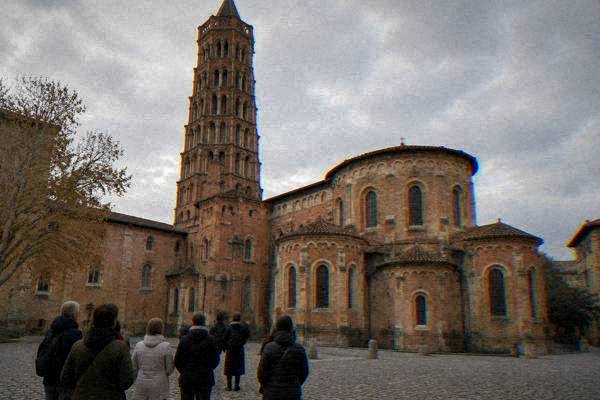
Start with what the city is. The tourist office's Pass Tourisme page lists the headline cultural stops: the Couvent des Jacobins, the Musee des Augustins, Les Abattoirs, the Fondation Bemberg and the Museum, plus a discounted entry to Cite de l'espace. The Basilique Saint-Sernin is listed as part of the UNESCO "Routes of Santiago de Compostela in France" property, inscribed in 1998, and the Canal du Midi carries its own UNESCO inscription from 1996. That is two UNESCO connections, something few mid-size French cities can claim.
The honest counterweight: Toulouse is not a city of single must-see monuments the way Paris is. Its appeal is cumulative, the brick streets, the riverside, the markets, the cassoulet, the aerospace sites. If that cumulative style suits you, the answer is a clear yes. A good first move is a guided loop of the center: the open-top minibus sightseeing tour covers the main quarters with an audio guide, and its own page on this site explains who it suits. For a wider sense of the city's claims, read what Toulouse is famous for.
What Makes Toulouse Different From Other French Cities?
Three things set Toulouse apart: the pink terracotta brick that gives the city its "La Ville Rose" nickname, the aerospace industry that makes it Europe's aircraft assembly capital, and a southwest food tradition built on cassoulet, Toulouse sausage and local wines. No other French city combines the three, and each one shapes what a visit actually feels like.
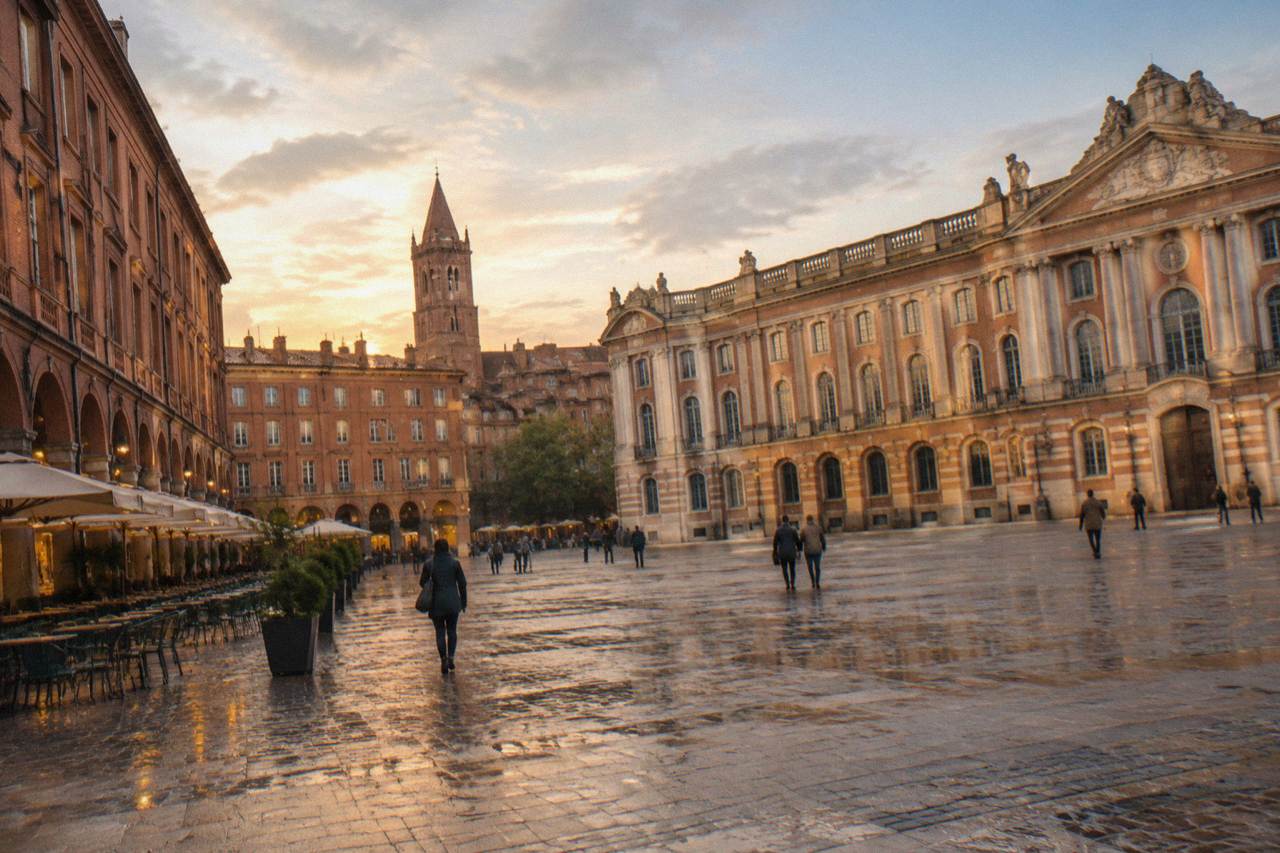
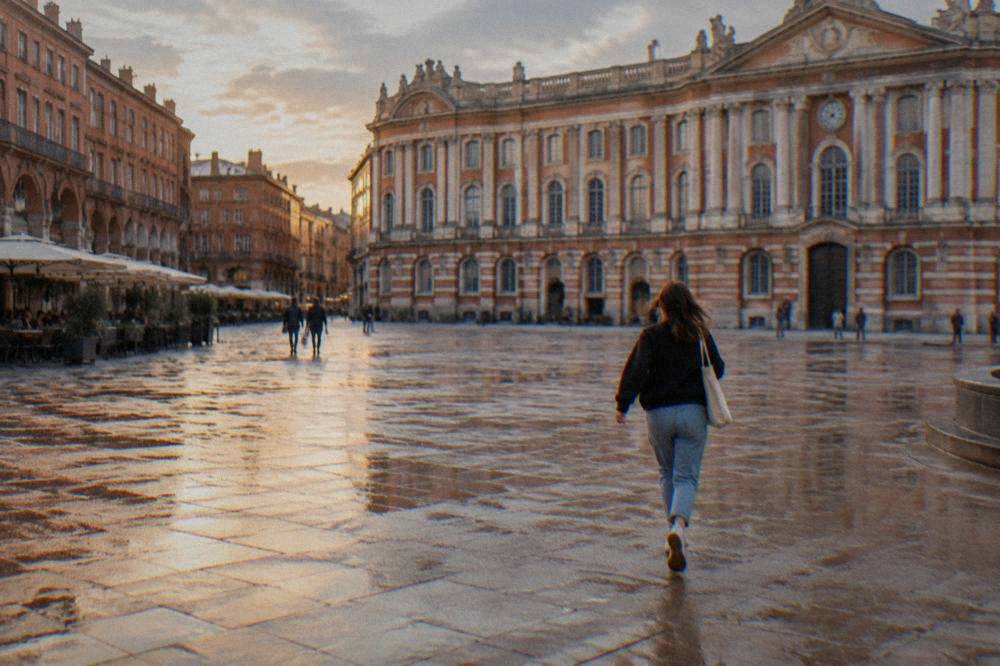
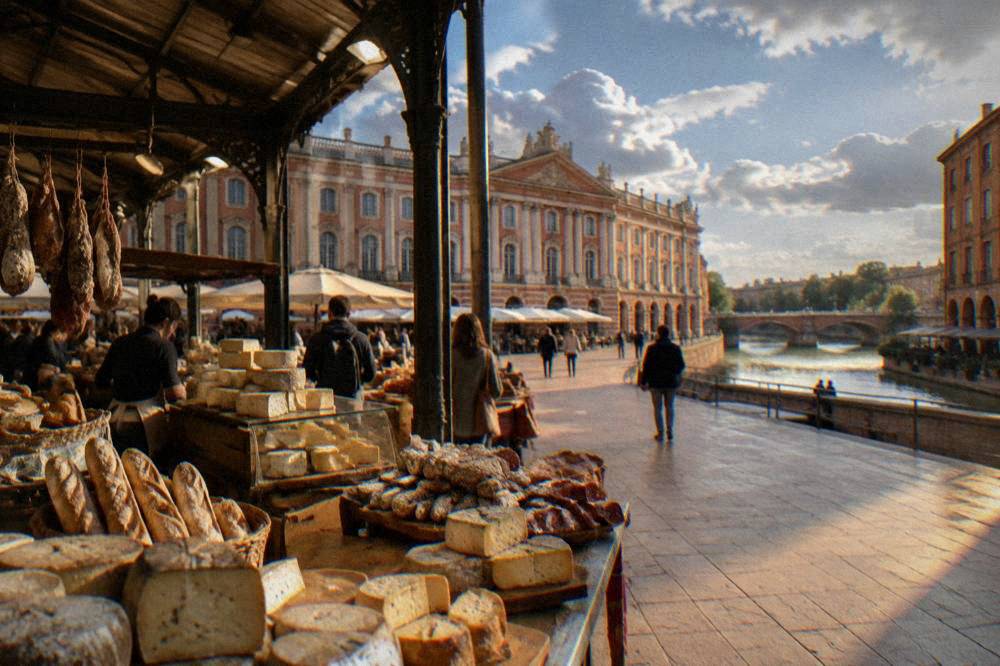
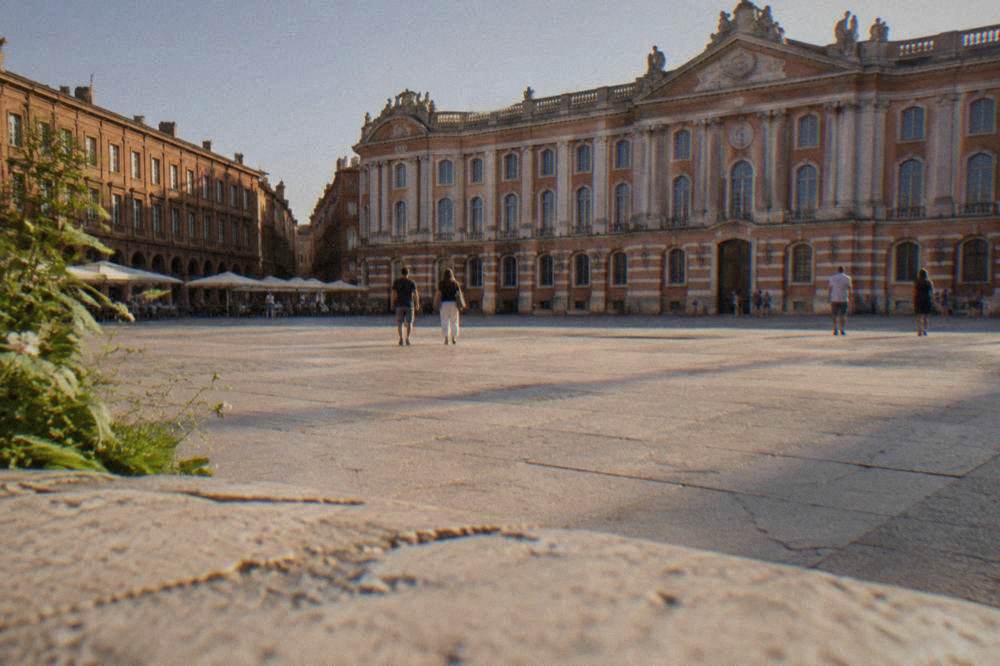
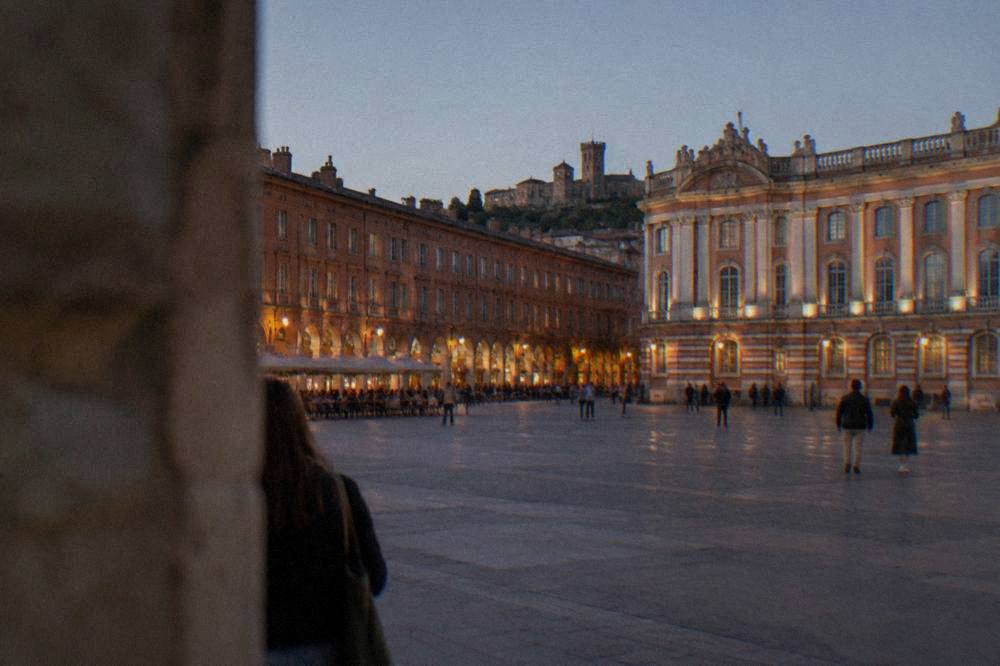
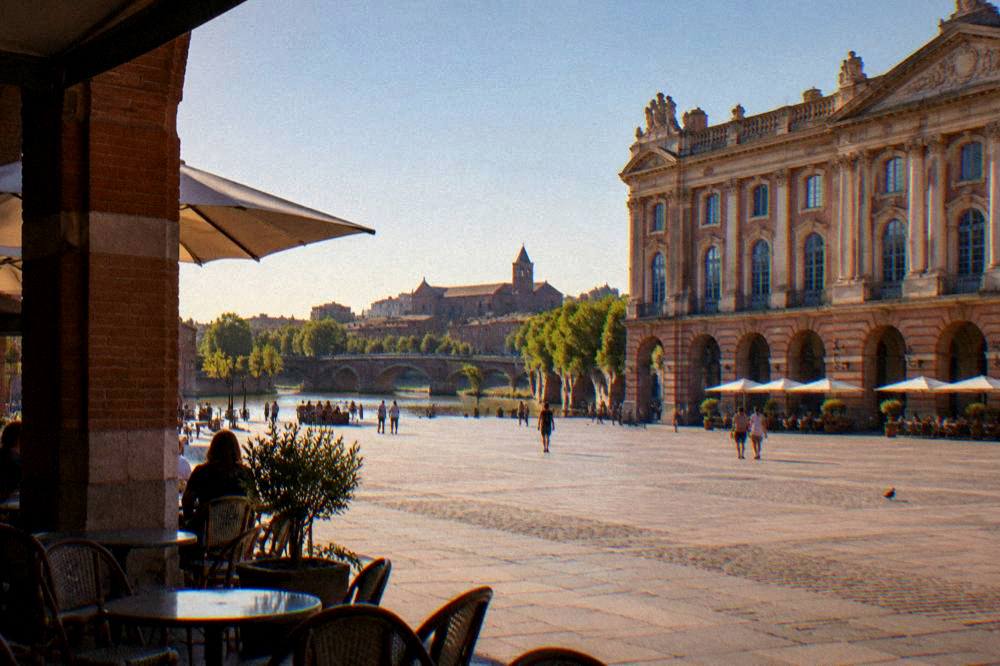
The brick is the first thing anyone notices. The old center is built from it, the Capitole, the Jacobins, the shopfronts on the rue du Taur, all in the same warm clay tones that go deep orange at sunset. The city's nickname, "La Ville Rose", comes from that brick. The aerospace side is just as real: the Airbus assembly lines sit inside the city's metro area, the Aeroscopia aviation museum displays full-size aircraft, and the Cite de l'espace park runs full-scale rocket and space exhibits. The food tradition anchors the third identity, and the tourist office's own listings treat it as a headline attraction rather than a side note.
Here is what the main cultural stops cost at their normal rates, as the tourist office's Pass Tourisme page lists them:
| Place | Normal adult rate | Notes from the source |
|---|---|---|
| Fondation Bemberg | EUR 12 | Free with the Pass Tourisme |
| Museum de Toulouse | EUR 12 | Free with the Pass Tourisme |
| Les Abattoirs | EUR 12 | Free with the Pass Tourisme |
| Musee des Augustins | EUR 5 | Free with the Pass Tourisme |
| Couvent des Jacobins | EUR 5 | Free with the Pass Tourisme; free on the first Sunday of the month except when a temporary exhibition is on |
| Cite de l'espace | EUR 29 | Discounted, not free, with the Pass Tourisme |
Two cautions the sources attach. The Musee des Augustins is temporarily closed from 21 September to 2 October 2026 for great-cloister works, with its Gothic halls reopening on 3 October 2026 from 10:00. And the Musee Saint-Raymond closed on 3 November 2025 for renovation and modernisation works and reopened on 3 April 2026. For a deeper comparison with France's other southern cities, see Toulouse vs Bordeaux and Toulouse vs Lyon.
How Many Days Do You Need In Toulouse?
Two days covers the old center, the main monuments and one market lunch; three days adds the aerospace museums and a relaxed riverside pace; four days is the point at which you should start adding day trips to Carcassonne or Albi rather than stretching city time. Most itineraries land on three days as the sweet spot.
The old center is compact and walkable. Day one can take the Capitole, the Basilique Saint-Sernin, the Jacobins and the Garonne riverside without any transport beyond your own feet. Day two suits the museums and the markets, the Marche Victor Hugo above all. Day three is where Toulouse separates itself from other French cities: Aeroscopia and the Cite de l'espace each justify half a day, and the Airbus factory tours run to 1h30 each for the A350 and A321 lines. The Manatour page states the factory tour rules plainly: an original passport or ID card is required, no photocopy or phone image, arrive 30 minutes early, no cameras or pets.
Rather than walk it all? Book a sightseeing bus tour here.
The tourist office's Pass Tourisme is the arithmetic that ties a three-day plan together:
| Pass Tourisme | Price | What the tourist office's page says it includes |
|---|---|---|
| Base pass, 1 to 3 days | EUR 26 | Free entry to the listed museums and monuments, plus a free guided tour from the tourist office; pays off from the third activity |
| Transport add-on | +EUR 10 | Ten public-transport trips on metro, bus and tram |
This site has a full breakdown in the Pass Tourisme guide, and ready-made plans in one day in Toulouse, 2 days in Toulouse and 3 days in Toulouse. For where to sleep, where to stay in Toulouse maps the neighborhoods.
Is Toulouse Expensive To Visit?
No, by French city-break standards Toulouse is inexpensive: a single metro or bus trip costs EUR 1.90, a day pass EUR 7.20, the main museums charge EUR 5 to EUR 12, and the city's tourist tax on non-classified lodging is 5 percent of the pre-tax nightly price per person. Food and lodging sit below Paris levels, and the transport fares are fixed and published.
The Tisseo e-boutique catalogue gives the full fare ladder, and it is short:
| Tisseo ticket | Price |
|---|---|
| Single trip | EUR 1.90 |
| Single trip bought last-minute on board | EUR 2.50 |
| 10 trips | EUR 16.00 |
| Day pass ("Journee") | EUR 7.20 |
| 3-day pass | EUR 14.30 |
| Airport single (Tisseo network plus Navette aeroport) | EUR 9.50 |
Note there is no 2-day pass in the catalogue. For airport logistics, the Navette runs one departure every 15 minutes and takes 20 to 40 minutes to the center, the tram line to the airport has been closed since 5 June 2023 until the end of 2026, and this site covers the whole transfer in Toulouse airport to city center and the Toulouse airport guide. Getting around the city itself is covered in getting around Toulouse.
The food budget is where Toulouse rewards the visitor. Cassoulet, the city's signature dish, is a substantial restaurant meal rather than a snack, and the markets sell cheese, charcuterie and bread at counter prices. The site's Toulouse food guide and cassoulet guide go deep on both.
What Is The Food Like In Toulouse?
The food of Toulouse is southwest farmhouse cooking at restaurant scale: cassoulet built on Toulouse sausage and local beans, duck in every form, cheeses from the surrounding region, and wines from Fronton, Gaillac and the wider southwest, sold in markets and in wine bars that specialize in exactly those bottles. It is one of the strongest reasons to visit, and the tourist office treats it as such.
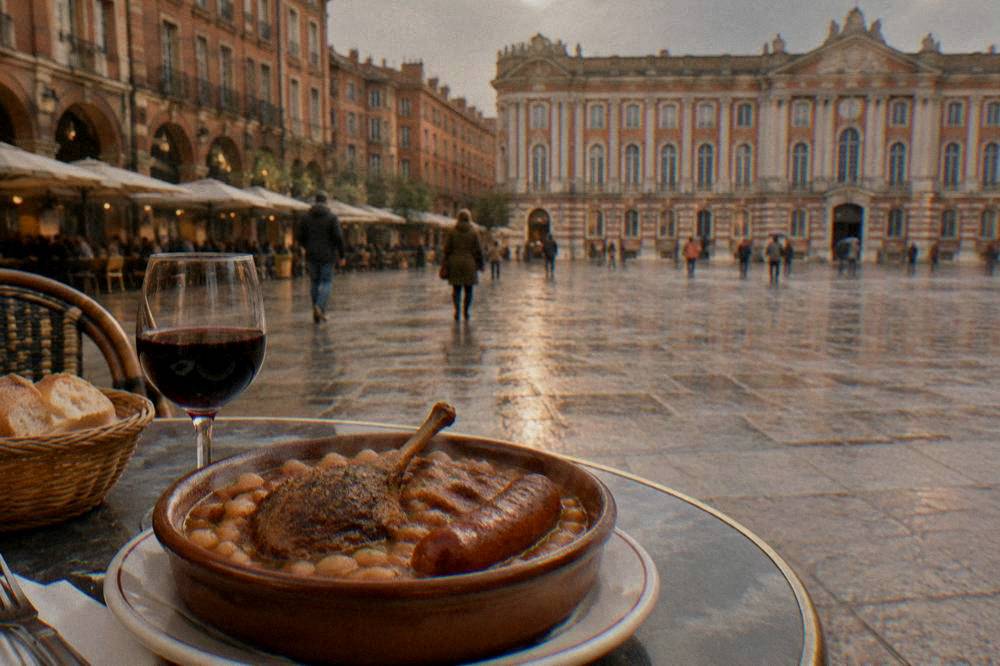
Cassoulet is the headline. It is a slow-cooked bean and meat casserole whose Toulouse version carries the city's own sausage, and arguing about which city makes the true one is a local sport. Around it sits a whole family of southwest staples: duck confit, foie gras, and the covered markets, above all the Marche Victor Hugo, where raw and cooked versions of the same tradition sit a few stalls apart. The Toulouse sausage guide covers the city's namesake charcuterie in detail.
The easiest way to eat the tradition is a guided tasting walk. The guided food tour with tastings moves through the center with a series of stops, and the site's Toulouse restaurants guide helps once you are choosing on your own. For the wine side, the Fronton vineyard area sits close enough to the city that winery visits run as organized tours.
What Is The Weather Like In Toulouse?
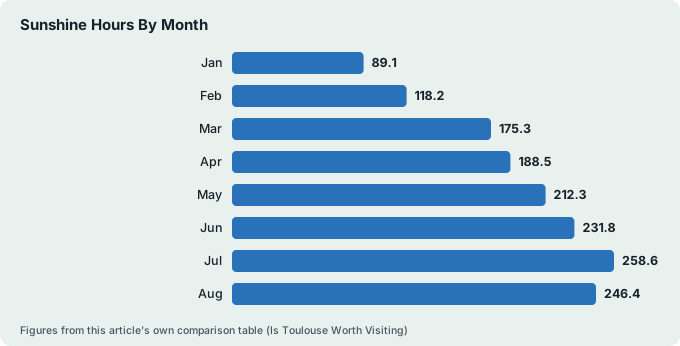
Toulouse has a mild four-season climate: Meteo-France's 1991-2020 normals for Toulouse-Blagnac show an annual mean maximum of 18.8C, a mean minimum of 9.6C, 627 mm of rain over 95.8 rain days, and 2,075.1 hours of sunshine, with July the sunniest month at 258.6 hours and May the wettest at 73.6 mm. Summers are warm without being extreme, winters are cool and gray rather than harsh.
The counterintuitive part is the rain pattern. May, not a winter month, is the wettest month at 73.6 mm, nearly double February's 37.2 mm, with April at 65.2 mm and June at 64.2 mm close behind. Then the tap turns off: July gets just 40.1 mm alongside its 258.6 hours of sunshine, and averages 11.5 days a year above 30C. The records, from the same Meteo-France fiche covering 1947 to June 2025, run from 42.4C on 23 August 2023 down to -19.2C on 15 February 1956. The wider set of guides lives on Toulouse Travel Guide.
| Month | Mean C | Rain mm | Sunshine hours |
|---|---|---|---|
| Jan | 6.3 | 52.5 | 89.1 |
| Feb | 7.1 | 37.2 | 118.2 |
| Mar | 10.3 | 45.3 | 175.3 |
| Apr | 12.7 | 65.2 | 188.5 |
| May | 16.4 | 73.6 | 212.3 |
| Jun | 20.3 | 64.2 | 231.8 |
| Jul | 22.6 | 40.1 | 258.6 |
| Aug | 22.8 | 44.6 | 246.4 |
| Sep | 19.3 | 45.7 | 210.1 |
| Oct | 15.3 | 54.3 | 155.2 |
| Nov | 9.9 | 55.0 | 99.9 |
| Dec | 7.0 | 49.3 | 89.7 |
The full seasonal picture, including which months suit which activities, sits in Toulouse weather and the best time to visit Toulouse. If you are timing a visit around an event, the city's calendar has verified anchors: Piano aux Jacobins runs 8 to 30 September 2026, Toulouse les Orgues holds its 31st edition from 7 to 18 October 2026 with the opening concert at Notre-Dame de la Daurade, the Christmas markets on Place du Capitole, the allees Jean-Jaures and square Charles-de-Gaulle run 26 November to 27 December 2026, and Rio Loco returns 9 to 13 June 2027 with the theme "Noctiluca".
What Can You See Beyond The City?
Toulouse works as a base for some of the best day trips in southern France: the medieval walled city of Carcassonne, the Albi cathedral town and hilltop Cordes-sur-Ciel, the Gaillac wine route, and the Pyrenees roughly 100 km to the south, all reachable by coach tours that depart from the city center. Staying four days or more, the day trips are the reason to extend.
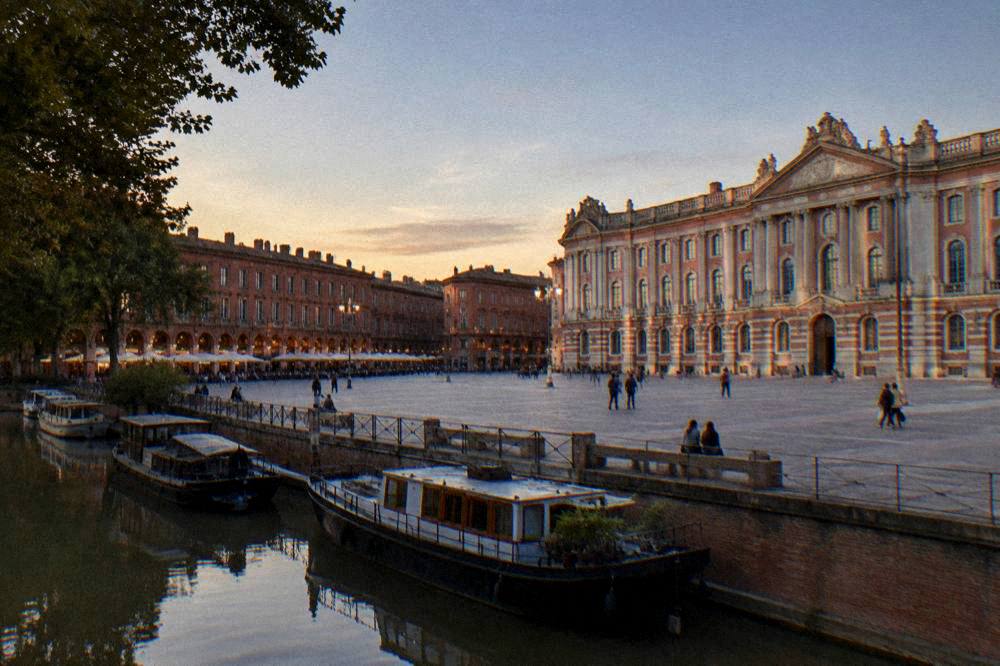
The city's position is the asset. The Canal du Midi starts here and runs toward the coast, the Albi and Cordes-sur-Ciel pairing makes a full day, and Carcassonne is close enough that coach tours run there daily with an audio guide. The UNESCO dimension extends outward too: the Canal du Midi's 1996 inscription follows the waterway from Toulouse, and the Albi visit ties into the region's medieval heritage. The Albi and Cordes-sur-Ciel day trip is the classic pairing, and the full menu of options is mapped in day trips from Toulouse.
The aerospace angle also extends beyond the city limits, with the Airbus factory tours and the Aeroscopia museum sitting together in the Blagnac area. Aeroscopia's practical page states its rates plainly: adult EUR 16, reduced EUR 13, annual pass EUR 26, family pass EUR 80, open daily 9:30-18:00 with last entry at 17:00, closed 25 December, 1 January and 7 May 2026, and with an exhibition hall that is not heated or air-conditioned. The site's Airbus factory tour guide covers the assembly-line visits, which require an original passport or ID card.
The canal itself deserves a dedicated mention. The UNESCO-listed Canal du Midi cruise runs on the waterway from inside the city, and the site's guides to the Canal du Midi and Canal du Midi boat trips cover the longer options.
A day trip changes the character of a stay in a way few city breaks allow. Where a third day in the center deepens your knowledge of the same brick streets, a day in Carcassonne or Albi swaps the whole backdrop: fortified walls, hilltop lanes and cathedral towns that belong to a different chapter of the region's history. That variety, more than any single sight inside the city, is what makes a longer Toulouse stay feel like a full regional trip rather than one city repeated.
Who Should Skip Toulouse?
Travelers who should skip Toulouse are those who need a beach or a coastline, since the city is inland with no sea access; those whose main interest is a dense cluster of world-famous single monuments, which Paris, Lyon and even Bordeaux out-deliver; and those visiting in strict mid-winter, when the gray months offer the least of what the city does best. For everyone else the city holds up.
Be honest about the sea question because the marketing of "south of France" misleads people every year. Toulouse is inland, on the Garonne, and the Mediterranean coast is a separate trip. The Pyrenees are roughly 100 km to the south, close enough for a day trip but not a backdrop you see from the center. Within the city, the monument list is real but modest: the Capitole, Saint-Sernin, the Jacobins, the cathedral, the riverside. What fills the days is the texture, the food, the aerospace sites, the markets, the canal.
The verdict, stated plainly: Toulouse is worth visiting for travelers who want a food-first, walkable, affordable French city with a unique aerospace layer and strong day-trip options. It is not worth visiting for someone who wants the Riviera, or who measures a city by its single most famous building. The site's Toulouse museums guide and Toulouse rugby guide cover two more reasons the city can earn extra days.
Common Questions About Visiting Toulouse
Quick answers to what planners ask most about a Toulouse trip.
Is Toulouse worth visiting for a weekend?
Yes. Two days cover the old center, the main monuments and a market lunch, and the tourist office's Pass Tourisme at EUR 26 for stays of one to three days bundles the main museums with a free guided tour.
Is Toulouse a walkable city?
Yes, the old center is compact and the main sights, the Capitole, Saint-Sernin, the Jacobins and the riverside, sit within walking distance of each other. The Tisseo network covers anything farther out, with a single trip at EUR 1.90 and a day pass at EUR 7.20.
How many days are enough in Toulouse?
Two days for the old center, three to add the aerospace museums, and from four days onward you should start adding day trips such as Carcassonne or Albi rather than stretching city time.
Is Toulouse expensive compared to Paris?
No. Transport fares are fixed and low, the main museums charge EUR 5 to EUR 12 at normal rates, and the city's tourist tax on non-classified lodging is 5 percent of the pre-tax nightly price per person, per Toulouse Metropole.
What is the best month to visit Toulouse?
Meteo-France's 1991-2020 normals show July as the sunniest month at 258.6 hours of sunshine with only 40.1 mm of rain, while May is the wettest month at 73.6 mm. Late spring through early autumn offers the most of what the city does best.
Does Toulouse have any UNESCO sites?
The Canal du Midi, which begins in Toulouse, was inscribed by UNESCO in 1996, and the Basilique Saint-Sernin is listed as part of the "Routes of Santiago de Compostela in France" property inscribed in 1998.