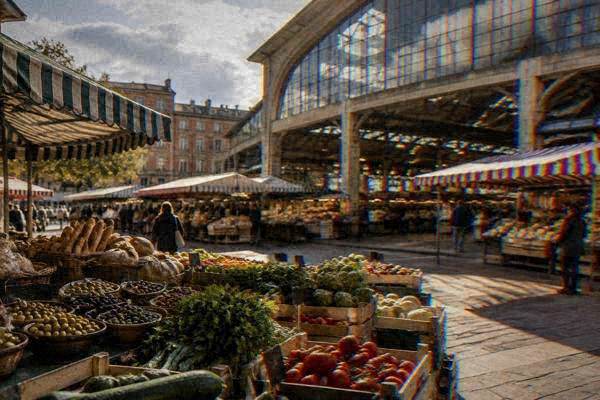
Marche Victor Hugo, Toulouse's Central Market Hall
The Marche Victor Hugo is Toulouse's central covered market, a pink-brick hall of butchers, cheesemongers, fishmongers and wine stalls that doubles as the city's clearest single lesson in southwestern French cooking.
Short answer
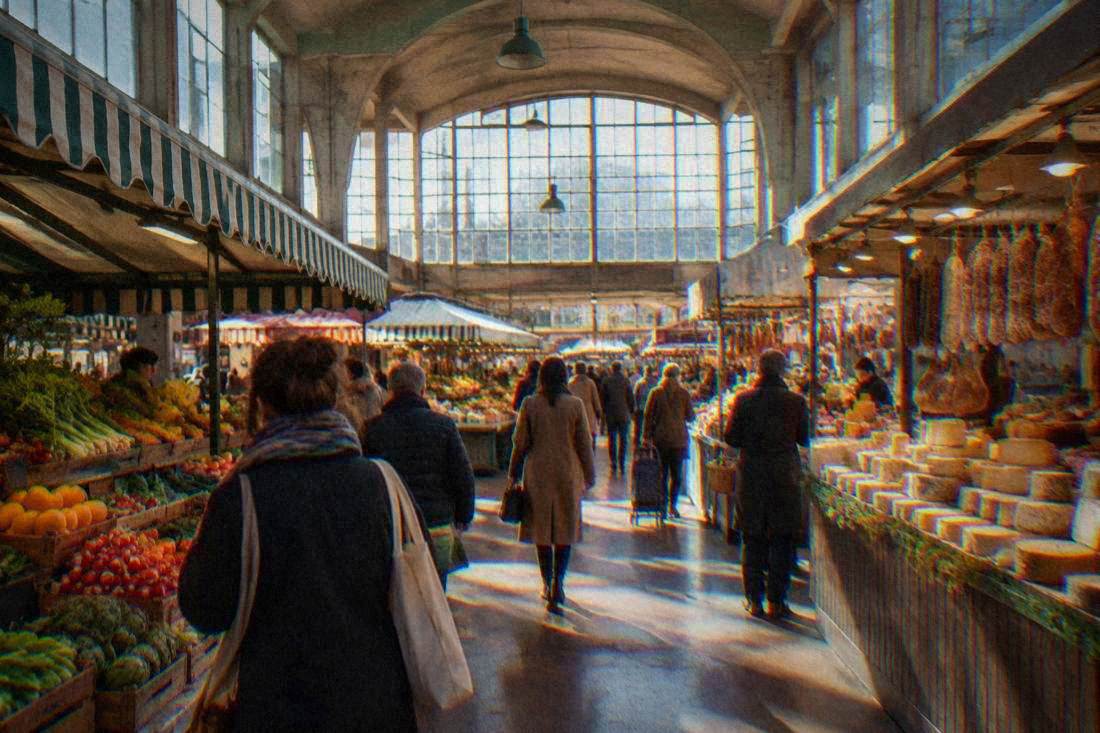
The Marche Victor Hugo is Toulouse's main covered market hall, a short walk from the Place du Capitole. Expect cheese, charcuterie, oysters, cassoulet ingredients and local wine rather than souvenirs, and go in the morning when the stalls are at their fullest.
The Marche Victor Hugo is the central covered market of Toulouse, the pink-brick city on the Garonne in the Occitanie region of southwestern France. This is not a souvenir market and not a tourist trap dressed in bunting: it is the working food hall where the city's cooks, restaurateurs and home shoppers buy their cheese, their charcuterie, their oysters and their wine, and where the raw materials of the region's most famous dish, cassoulet, sit in plain view. The hall sits a short walk south of the Place du Capitole, and for visitors it is the single most efficient place to understand what southwestern French food actually is. This guide from Toulouse Travel Guide covers what to look for inside, how to reach it, when to go, and the guided tasting tours that use the market as their starting point.
What Is The Marche Victor Hugo In Toulouse?
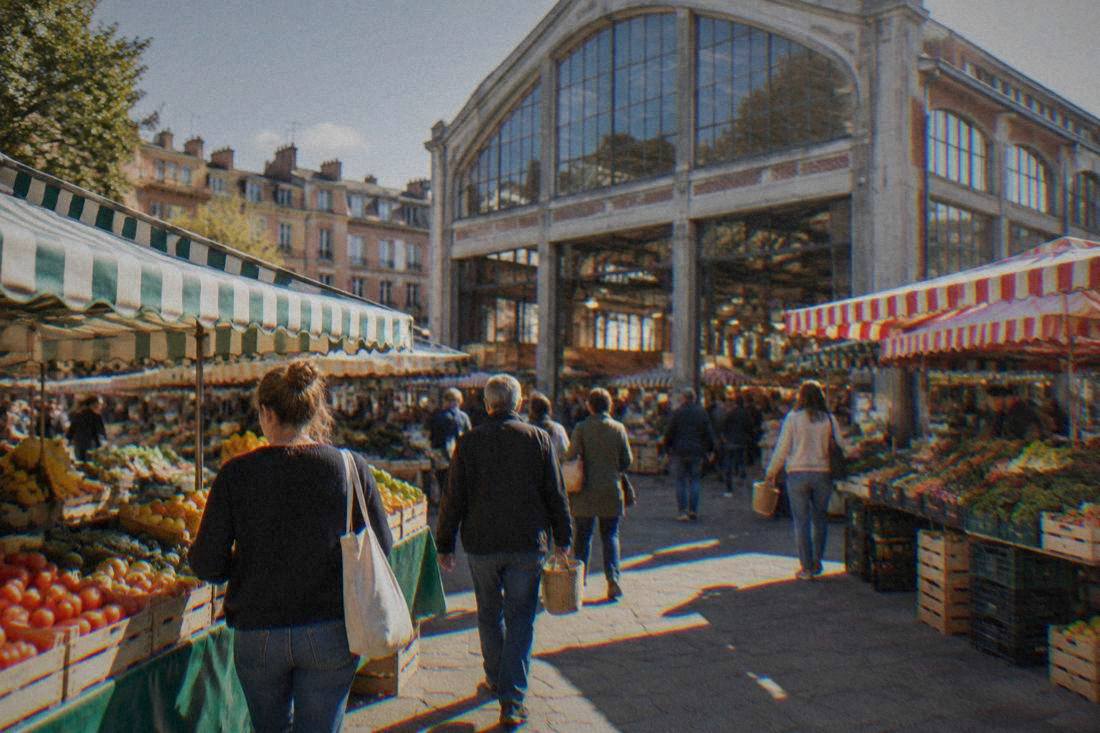
The Marche Victor Hugo is Toulouse's principal covered food market, a brick market hall in the city center that concentrates the region's products, from cassoulet ingredients to raw-milk cheeses and Atlantic oysters, in one walkable space. It is the market locals actually shop, which is why it reads as a lesson in the food of the Occitanie region rather than a display for visitors.
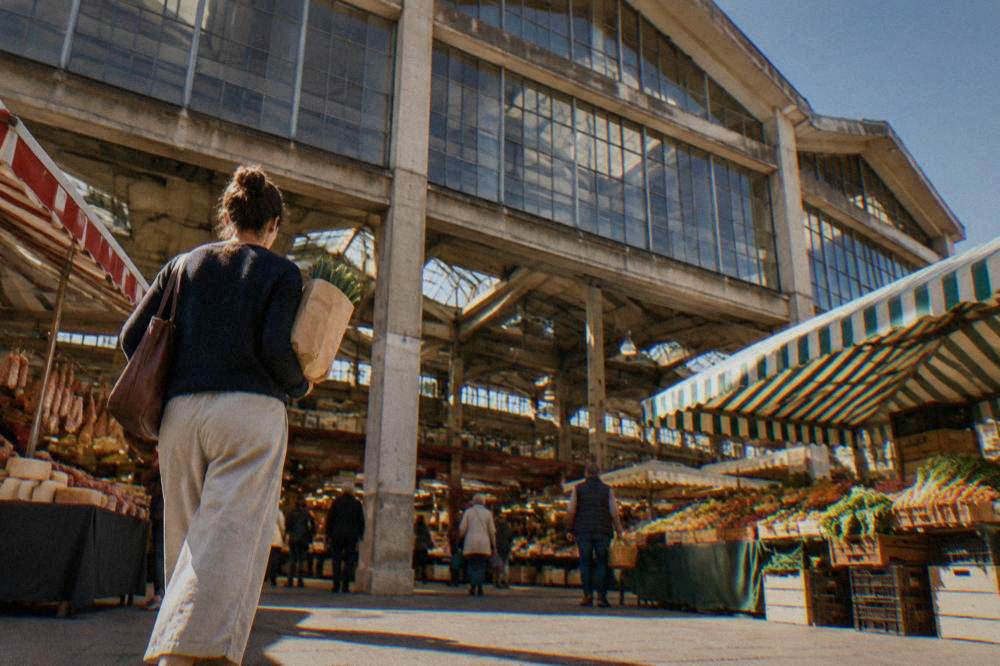
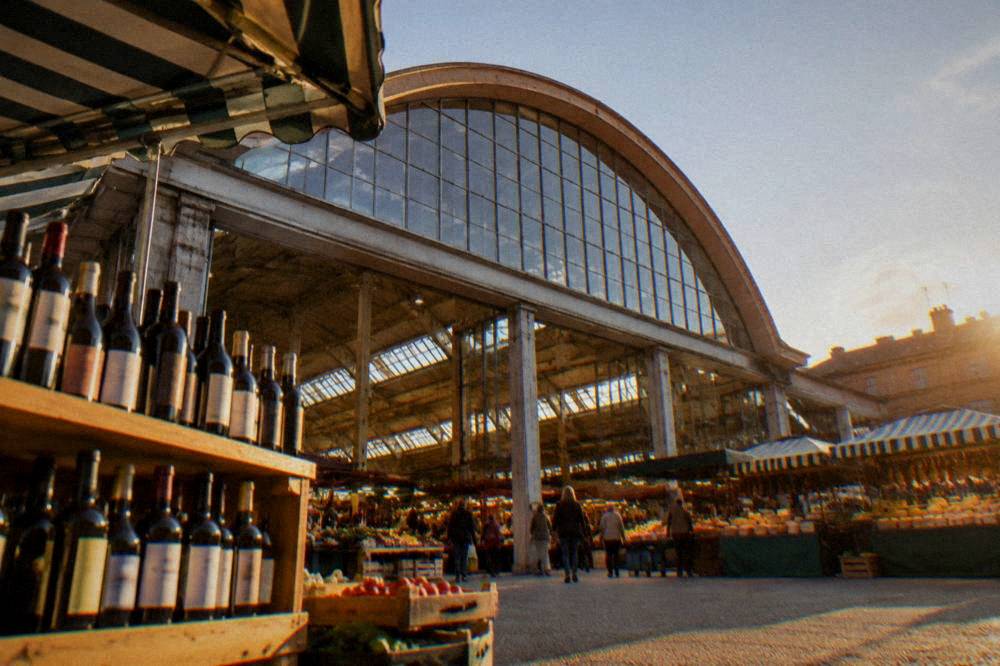
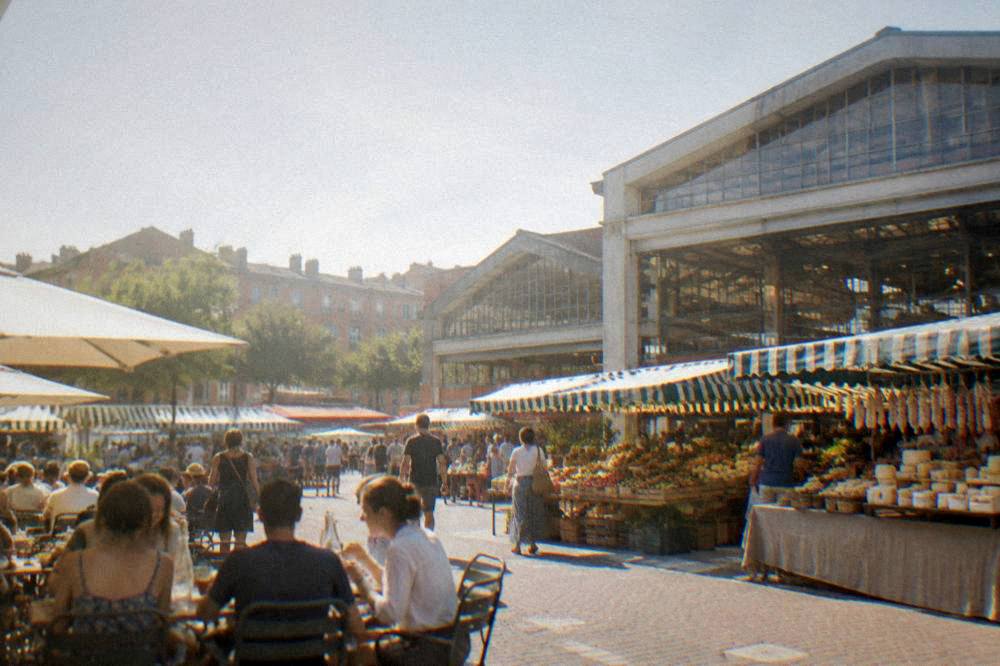
Toulouse is known as "La Ville Rose" for the pink brick that gives the city its color, and the market hall fits that character: this is a purpose-built market building, not a collection of street stalls, and its stalls are permanent businesses run by the same families in many cases for decades. The hall's layout follows the classic French market-hall logic. Butchers and poultry sellers cluster together, cheesemongers have their own aisle, fishmongers line up with their crushed-ice displays, and wine merchants and produce sellers fill the gaps between them.
What makes the hall useful for a visitor is that it compresses the whole regional pantry into one visit. The sausages of Toulouse, the confit and other preserved meats that go into cassoulet, the cheeses of the Pyrenees foothills and the Gaillac and Fronton wine regions to the north and northeast, the oysters shipped up from the Atlantic coast: all of it is here, sold by people who will tell you how to cook it if you ask. The market is also the natural place to assemble a picnic, which matters because the Garonne riverside and the Jardin des Plantes are both within reach for eating it.
A practical note on timing: French covered markets are morning institutions. The stalls are fully stocked early, the professional shoppers come first, and by early afternoon the hall winds down. Plan a morning visit, and if you want to eat on site rather than shop, the simple restaurants around and inside the market do a brisk lunch business built on whatever the stalls sold that morning.
What Should You Look For Inside The Market Hall?
Look for the ingredients rather than prepared foods: Toulouse sausage, duck and goose confit, tarbais beans, Pyrenees cheeses, oysters on the half shell, and bottles from the Gaillac and Fronton wine regions. These are the products the region is actually known for, and the stallholders are the right people to ask how each one is used at home.
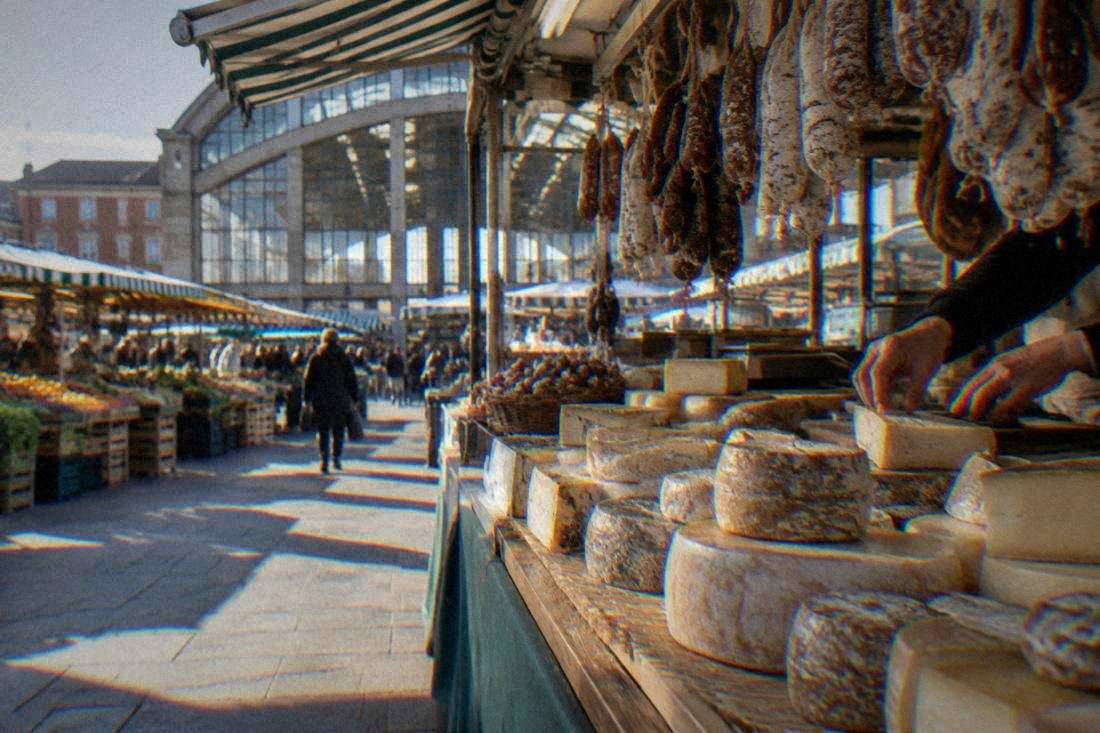
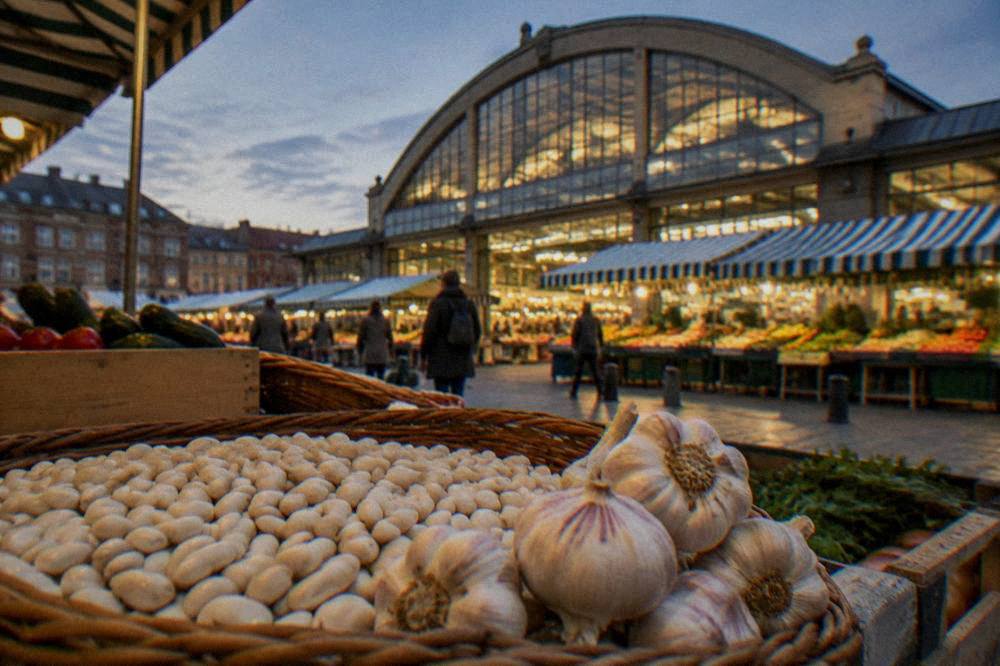
Start with the meats. Toulouse sausage is the city's signature pork product, a coarse-ground, garlic-scented sausage that belongs in cassoulet as much as on a grill, and every serious butcher in the hall carries it. Alongside it you will find duck and goose confit, the preserved legs that form the second pillar of cassoulet, and often the prepared cassoulet itself in jars, ready to take home. The bean matters too: cassoulet is built on haricots blancs, and the tarbais bean, grown around Tarbes at the foot of the Pyrenees roughly 100 km south, is the variety the region prizes. For the full story of the dish, see the site's guide to cassoulet.
The cheese stalls carry the sheep's-milk and cow's-milk cheeses of the Pyrenees foothills and the surrounding farmland, and the fishmongers sell Atlantic oysters by the dozen, shucked to order in season. Wine is the third category worth seeking out. Toulouse sits between two quiet, historic wine regions: Gaillac, one of France's oldest vineyard areas, and Fronton, known for its negrette grape. Both appear on the market's wine stalls at prices that are usually gentler than the better-known names from further afield, and the stallholders can tell you which bottle goes with the sausage you just bought.
Two honest caveats. No specific restaurant, price, opening hour or "best stall" ranking was sourced for this market, so this guide names what to look for rather than who to buy it from: prices vary by stall and by season, so check the board at each counter. And the market is a shopping venue first; if you want the tasting experience rather than the shopping, a guided tour turns the same stalls into a moving lunch.
The region's pantry at a glance:
| Category | What The Region Is Known For | Where It Comes From |
|---|---|---|
| Charcuterie | Toulouse sausage, duck and goose confit, preserved meats | Toulouse and the surrounding farmland |
| Cassoulet beans | Haricots blancs, with tarbais the prized variety | The Tarbes area, roughly 100 km south |
| Cheese | Sheep's-milk and cow's-milk cheeses | Pyrenees foothills and southwestern France |
| Seafood | Atlantic oysters, sold by the dozen in season | The Atlantic coast |
| Wine | Gaillac whites and reds, Fronton negrette | Gaillac and Fronton, both near Toulouse |
The tasting tours that work the market are worth comparing before you go:
Should You Take A Guided Tasting Tour Of The Marche Victor Hugo?
A guided tasting tour is the efficient choice if you want to eat your way through the market rather than shop it: a guide translates the stalls, orders the right things and turns two hours of browsing into a structured meal with the stories behind each product. If you speak French, love browsing and are happy to assemble your own picnic, you can skip the tour and shop directly.
Want to eat your way through the stalls with a guide? Book a market food tour with tastings here.
The strongest argument for a tour is access. A stallholder who deals all morning with fluent local shoppers will give a foreign visitor a warm smile and a sample; a local guide gets the full performance, the history of the sausage, the argument about the correct bean, the producer's name. The market is also dense: without a plan, a first-time visitor tends to buy cheese, feel full and leave. With a guide, the same hall becomes a sequence of stops with tastings at each one.
The site's featured tour for this article is the Victor Hugo Market small-group tasting tour, a small-group walk built around the hall's stalls, and you can Check availability on the operator's live listing. Two alternatives suit different appetites: a chef-led food and history tour that pairs the market's products with the city's story, and, for a non-food contrast, a ticket to the Halle de La Machine, the city's other great hall, where the machines are theatrical rather than edible.
Booking the walk is deliberately simple: the operator's live listing carries the current dates, the meeting point near the hall and the cancellation terms, so there is nothing to arrange at the stall counters themselves. Once the slot is confirmed, all that remains is to arrive hungry and let the guide lead the way from aisle to aisle.
If you would rather build the meal yourself, the honest advice is to come early, come hungry and come with cash as well as a card: some independent stalls in French markets still prefer cash, and a market picnic in Toulouse costs what you choose to spend at the counter, not a fixed tariff.
How Do You Get To The Marche Victor Hugo?
The market sits in central Toulouse, a short walk from the Place du Capitole, and the city's Tisseo network covers it on the metro: a single trip costs EUR 1.90, a day pass EUR 7.20, and a 3-day pass EUR 14.30, per the official Tisseo e-boutique catalogue. Visitors staying in the center can simply walk.
Toulouse is a compact city at its core, and the market's position south of the Capitole puts it inside the walkable heart. If you are staying further out, the metro and bus network run on the Tisseo fares below, bought from machines or the e-boutique before boarding; a single bought last-minute on board costs EUR 2.50 instead of EUR 1.90, so it pays to buy ahead. A 10-trip ticket at EUR 16.00 suits a longer stay.
| Tisseo Ticket | Price | What It Covers |
|---|---|---|
| Single trip | EUR 1.90 | One journey on the network |
| Single bought on board | EUR 2.50 | One journey, last-minute purchase |
| 10 trips | EUR 16.00 | Ten journeys, loaded in advance |
| Day pass | EUR 7.20 | Unlimited travel for one day |
| 3-day pass | EUR 14.30 | Unlimited travel for three days |
Visitors arriving by air should note one detail that catches people out: tram T2 to Toulouse-Blagnac airport has been closed since 5 June 2023 and stays closed until the end of 2026 because of the metro Line C works. The airport link is the Navette aeroport bus, one departure every 15 minutes, taking 20 to 40 minutes to the center, with a single ticket at EUR 9.50. Line C itself, the city's third metro line at 27 km and 21 stations from Colomiers to Labege, opens at the end of 2028.
The tourist office's Pass Tourisme is worth weighing if the market is one stop on a museum-heavy day. At EUR 26 for stays of one to three days it includes a free guided tour from the tourist office, and adding EUR 10 buys ten public-transport trips. The office's own list of normal admission rates shows what the pass covers.
| Site | Normal Adult Rate | With The Pass Tourisme |
|---|---|---|
| Fondation Bemberg | EUR 12 | Free |
| Museum de Toulouse | EUR 12 | Free |
| Les Abattoirs | EUR 12 | Free |
| Musee des Augustins | EUR 5 | Free |
| Couvent des Jacobins | EUR 5 | Free |
| Cite de l'espace | EUR 29 | Discounted |
When Is The Best Time Of Year To Visit The Market?
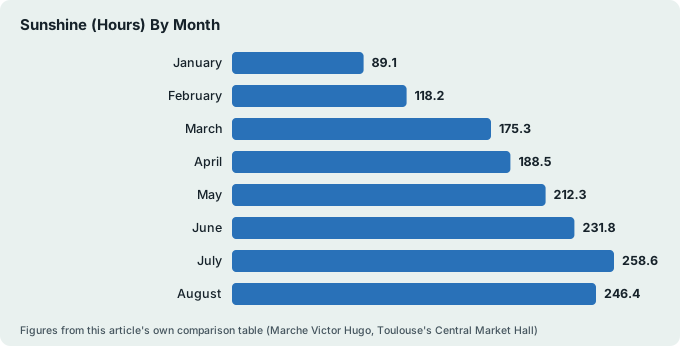
Any month works for a covered market, but the surrounding experience changes with the seasons: May is statistically Toulouse's wettest month at 73.6 mm of rain, while July is the sunniest at 258.6 hours with only 40.1 mm, so late spring brings the fullest produce stalls and summer brings the picnic weather, per Meteo-France's 1991-2020 normals for Toulouse-Blagnac.
The market hall itself is protected from the weather, which is why this page recommends it without a seasonal caveat. What the seasons change is what surrounds the visit. Spring and early summer bring the new produce, the first oysters of the season's rhythm and the long evenings that make a market picnic on the Garonne banks worthwhile. The Meteo-France normals for Toulouse-Blagnac show the pattern clearly: rain peaks in May at 73.6 mm, with April at 65.2 mm and June at 64.2 mm close behind, while February is the driest month at 37.2 mm, a profile that surprises visitors expecting a wet Atlantic winter.
| Month | Mean Temperature (C) | Rain (mm) | Sunshine (Hours) |
|---|---|---|---|
| January | 6.3 | 52.5 | 89.1 |
| February | 7.1 | 37.2 | 118.2 |
| March | 10.3 | 45.3 | 175.3 |
| April | 12.7 | 65.2 | 188.5 |
| May | 16.4 | 73.6 | 212.3 |
| June | 20.3 | 64.2 | 231.8 |
| July | 22.6 | 40.1 | 258.6 |
| August | 22.8 | 44.6 | 246.4 |
| September | 19.3 | 45.7 | 210.1 |
| October | 15.3 | 54.3 | 155.2 |
| November | 9.9 | 55.0 | 99.9 |
| December | 7.0 | 49.3 | 89.7 |
Autumn is the season the food-minded visitor should take seriously: the wine regions around the city are in harvest, the game and mushroom stalls fill out, and the festival calendar, from Piano aux Jacobins in September to Toulouse les Orgues in October, gives the city a reason to stay out after dinner. December adds the Christmas markets on Place du Capitole and the allees Jean-Jaures from 26 November to 27 December 2026, which turn a market visit into part of a wider food-and-festival loop.
What Else Is Near The Marche Victor Hugo?
The market sits inside the walkable historic core, with the Place du Capitole, the Basilique Saint-Sernin, the Couvent des Jacobins and the Musee des Augustins all reasonable walks away, so a market morning slots naturally into a sightseeing day rather than needing its own expedition. Plan the museums for the afternoon, after the stalls wind down.
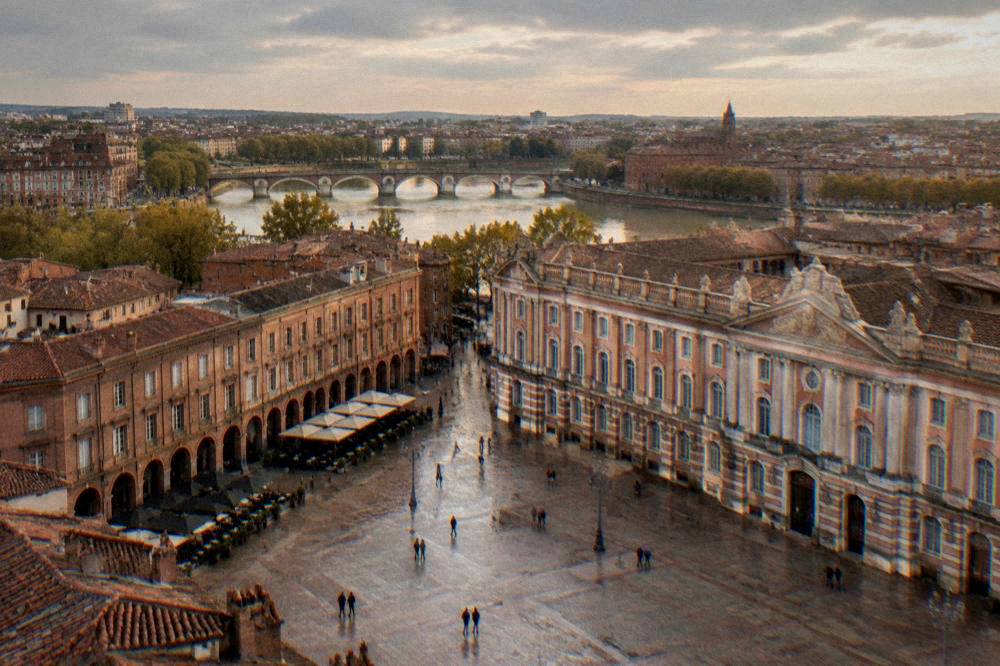
The Capitole de Toulouse, the city's grand municipal building and the square in front of it, is the obvious first stop north of the market. From there the Basilique Saint-Sernin, a UNESCO-listed stop on the Routes of Santiago de Compostela in France, inscribed in 1998, anchors the north of the center, while the Couvent des Jacobins, free on the first Sunday of the month except when a temporary exhibition is on, sits closer to the market's own side of town.
Two museum notes matter for planning. The Musee des Augustins is temporarily closed from 21 September to 2 October 2026 for great-cloister works, and its Gothic halls, the sacristy, the Notre-Dame de Pitie hall and the chapter house, reopen on 3 October 2026 from 10:00. The Musee Saint-Raymond closed on 3 November 2025 for renovation and modernisation works and reopened on 3 April 2026.
For the aerospace-inclined, the Aeroscopia aviation museum, adult admission EUR 16, open daily 9:30-18:00 with last entry at 17:00, is a bus or car ride rather than a walk, as is the Cite de l'espace, with tickets from EUR 22.50 and a normal adult rate of EUR 29. Both pair well with a market morning on the same day only if you start early.
If the food thread is the one you want to pull, the chef-led option below is the deeper version of the same walk, pairing the market's products with the city's history in one outing.
And for the afternoon after the stalls close, the mechanical theatre of the Halle de La Machine makes a family-friendly contrast:
Common Questions About The Marche Victor Hugo
What Is The Marche Victor Hugo?
It is Toulouse's principal covered food market, a brick market hall in the city center where butchers, cheesemongers, fishmongers and wine merchants sell the products of the Occitanie region and southwestern France. It is a working market that locals shop, not a display market for tourists.
Where Is The Marche Victor Hugo In Toulouse?
The market sits in central Toulouse, a short walk south of the Place du Capitole, in the walkable historic core of the pink-brick city on the Garonne. Visitors staying in the center can reach it on foot.
What Food Is Toulouse Famous For?
The city's signature products are Toulouse sausage, duck and goose confit, and cassoulet, the baked bean-and-meat dish the region claims as its own. The market hall is the clearest place to see all three in raw form, alongside Pyrenees cheeses, Atlantic oysters and wines from the nearby Gaillac and Fronton regions.
When Should I Visit The Marche Victor Hugo?
Go in the morning. French covered markets are morning institutions: the stalls are fully stocked early and wind down by early afternoon. Any month of the year works for a covered hall, though the surrounding picnic weather is best in summer, when July averages 258.6 hours of sunshine with only 40.1 mm of rain.
Can You Eat At The Market, Or Only Shop?
Both. The stalls sell raw ingredients and picnic supplies, and the simple restaurants in and around the hall serve lunches built on what the stalls sold that morning. No specific restaurant, price or hours were sourced for this market, so treat lunch as a walk-in affair and check the board at the door.
Is A Guided Market Tour Worth It In Toulouse?
If you speak French and enjoy browsing, no: shop directly. If you want the stories behind the sausage, the cheese and the wine translated into English while tasting as you go, a guided tasting tour is the efficient way through the hall, and the operator's live listing carries the current price and availability.
A morning at the Marche Victor Hugo is the fastest route into what Toulouse actually eats: sausage and confit, Pyrenees cheese, oysters from the Atlantic and bottles from vineyards an hour from the city walls. Shop it slowly on your own, or let a guide turn the same aisles into a meal, and either way you will leave understanding why the region's cooks talk about cassoulet the way they do.