3 Days In Toulouse
Three days is enough to cover the pink-brick heart of Toulouse and still leave the city for a full day in the surrounding region.
Short answer
Spend day one on the Capitole, Saint-Sernin and the Jacobins; day two on the Garonne, the Augustins and a Canal du Midi cruise; day three on a day trip to Albi or Carcassonne. A 3-day Tisseo pass costs EUR 14.30.
Toulouse, the pink-brick "La Ville Rose" on the Garonne in southwestern France, rewards exactly this much time: three days covers the old-town core, the riverside, the canal, and one full day beyond the city limits. The commune counted 514,819 inhabitants at the last INSEE figure, and everything a first visit needs sits inside a compact center that the two metro lines and the tram stitch together. This itinerary spreads the major sights across three days so no single afternoon becomes a museum marathon, and it ends with the day trip visitors say made their trip.
Before the day-by-day plan, two planning notes. First, transport: the Tisseo e-boutique catalogue lists a single trip at EUR 1.90 and a 3-day pass at EUR 14.30, which suits this itinerary well since you will ride the metro throughout your stay. Second, the tourist office's Pass Tourisme, at EUR 26 for stays of one to three days, pays off from the third paid activity and includes a free guided tour from the office; the office's own page lists the normal rates it waives, and the table further down makes the arithmetic easy to check.
A word on pace. Each day below is built around one anchor sight, one secondary stop, and enough slack that a long lunch or an unplanned detour does not derail anything. Toulouse is a city that rewards wandering: the streets between the Capitole and the river hold more of the pink-brick character that gives the city its nickname than any single monument does, and the nickname itself is well earned, though the brick's exact history is a story for another page. If a day runs short, the itinerary tells you what to drop first.
What Should You Do On Day One In Toulouse?
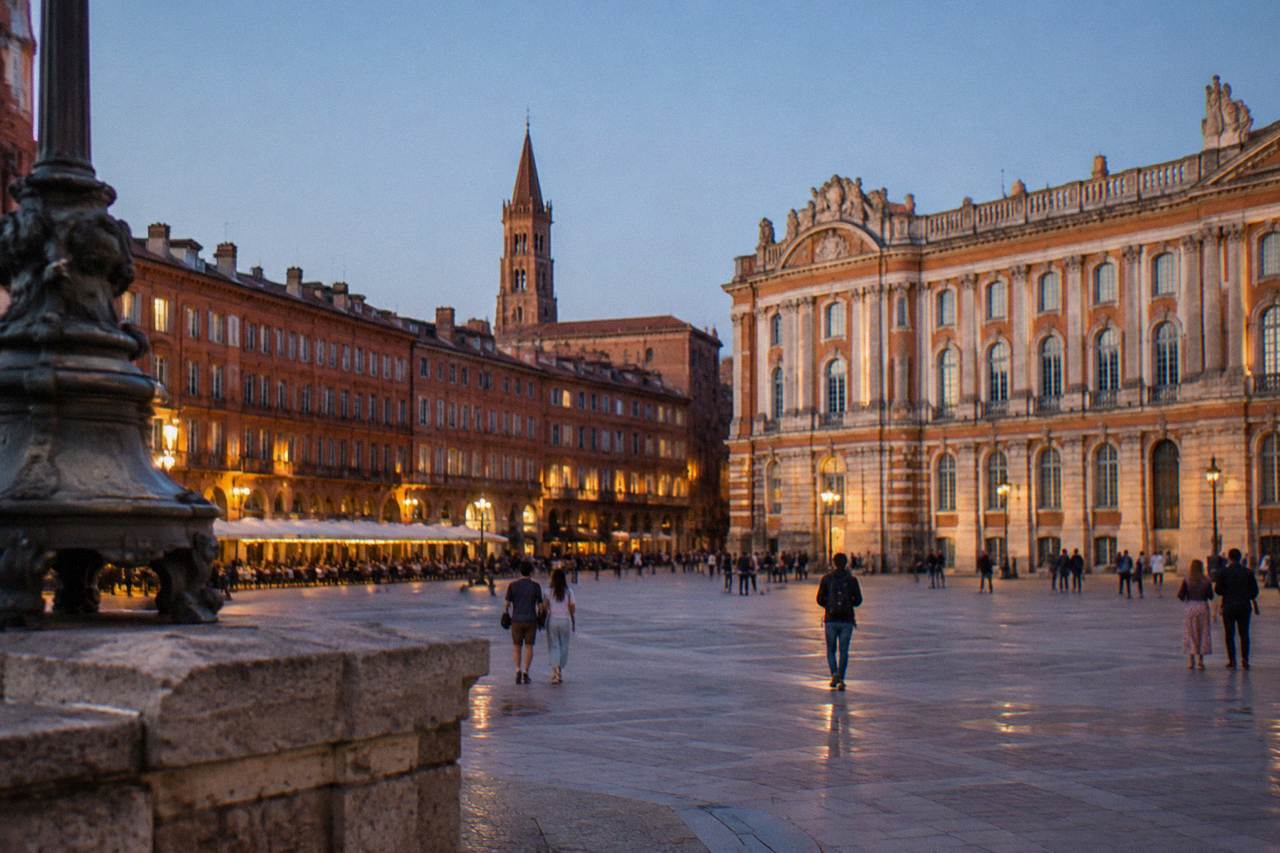
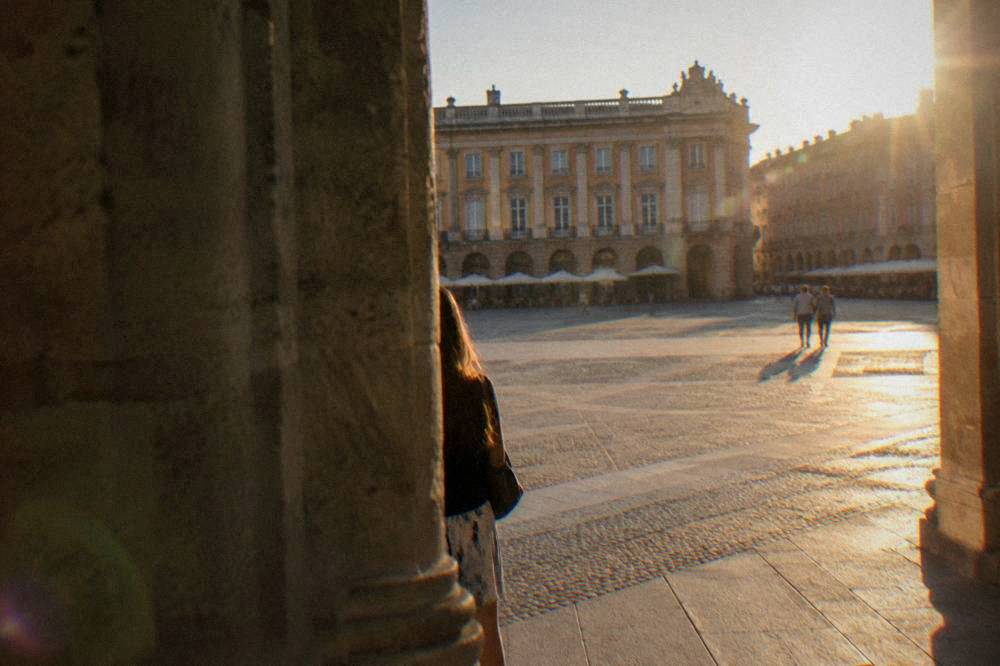
Start at the Place du Capitole, walk the Capitole's halls and the square's arcades, then follow the rue du Taur north to the Basilique Saint-Sernin, the UNESCO-listed stop on the Via Tolosana pilgrimage route. In the afternoon, take in the Couvent des Jacobins and finish along the Garonne at the Pont Neuf. Day one is entirely walkable, with no transport needed.
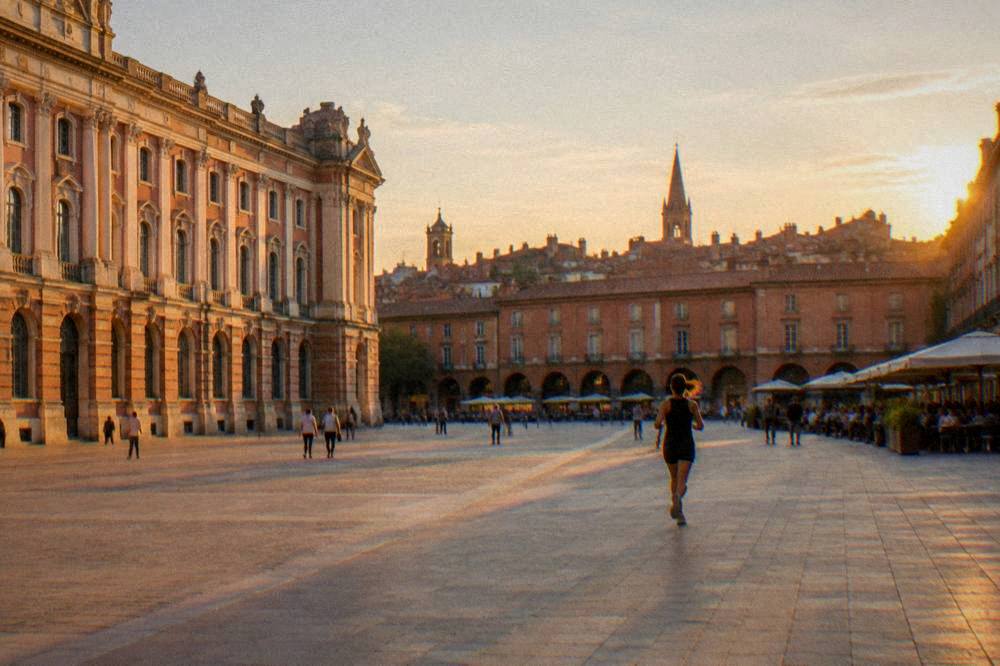
The Capitole, the city's town hall and theater, anchors the main square; its facade runs the whole eastern side and the arcades shelter cafés and the tourist office. The basilica of Saint-Sernin, a short walk up the rue du Taur, is listed as part of the UNESCO "Routes of Santiago de Compostela in France" property, inscribed in 1998, and the city's page describes it as a major stop on the Via Tolosana. Our dedicated pages on the Capitole and the Basilica of Saint-Sernin go deeper on both.
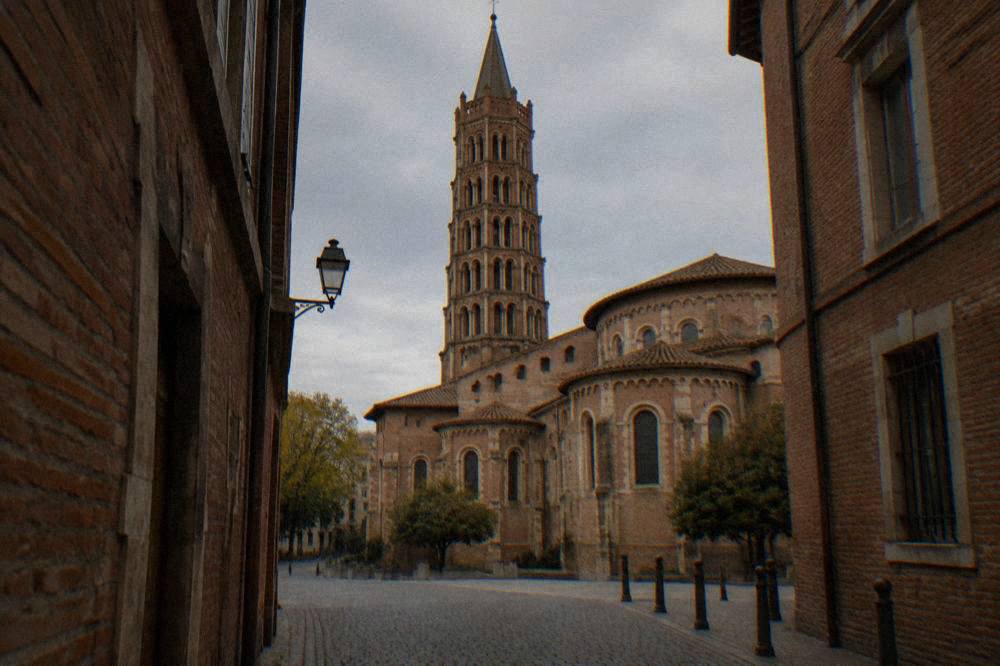
The rue du Taur itself deserves the walk, not just the destination at its end. The street links the square to the basilica and is one of the oldest axes in the city, lined with shops and cafés in the same warm brick. Saint-Sernin rewards a slow circuit: the city's page notes the building has been a Monument Historique since 1840, and its scale is the point, a church built to receive pilgrims in numbers. Give it an unhurried hour before lunch.
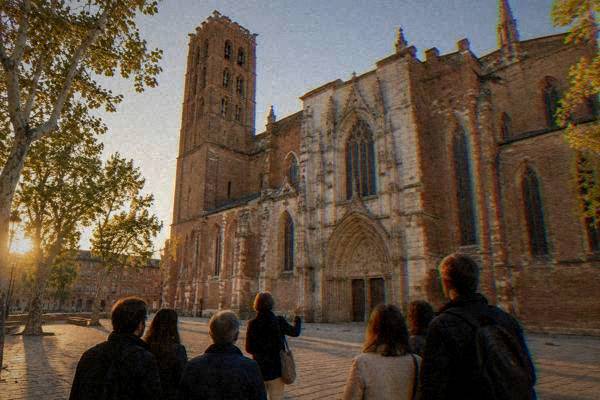
The afternoon belongs to the Couvent des Jacobins, the Dominican convent whose church holds the palm-rib vault locals love to point out. The city's page notes the church roof is under restoration, with the site staying open to visitors. The Jacobins is free on the first Sunday of the month, except when a temporary exhibition is on; the tourist office lists its normal rate at EUR 5.
From there it is a few blocks down to the Garonne and the Pont Neuf, which closes the day at its best hour. If the evening has energy left, the Toulouse at night page extends the walk past the illuminated riverbanks.
If you would rather hand day one's navigation to a professional, the site's featured walk is a natural fit here: the Toulouse Must-See Highlights with a Guide tour, Check availability. It covers the old town's essentials with a live guide, which pairs well with the free options below.
How Much Do The Day-One Sights Cost, And Which Pass Covers Them?
The tourist office's Pass Tourisme costs EUR 26 for stays of one to three days, waives entry at the Couvent des Jacobins (normally EUR 5) and the Musee des Augustins (normally EUR 5), and includes a free guided tour from the office; adding EUR 10 buys ten public-transport trips. The office states the pass pays off from the third activity.
The office's own Pass Tourisme page lists the normal rates below, so the comparison is easy to make against your own plan. Note that Cite de l'espace is discounted, not free, with the pass.
| Site (tourist office list) | Normal rate | With Pass Tourisme |
|---|---|---|
| Fondation Bemberg | EUR 12 | Free |
| Museum de Toulouse | EUR 12 | Free |
| Les Abattoirs | EUR 12 | Free |
| Musee des Augustins | EUR 5 | Free |
| Couvent des Jacobins | EUR 5 | Free |
| Cite de l'espace | EUR 29 | Discounted |
Two timing warnings for day one and the rest of the trip. The Musee des Augustins is temporarily closed from 21 September to 2 October 2026 for great-cloister works, with its Gothic halls reopening on 3 October 2026 from 10:00, per the museum's own announcement. And the Musee Saint-Raymond closed on 3 November 2025 for renovation and modernisation works, reopening on 3 April 2026. Our Musee des Augustins page carries the reopening detail.
The pass decision comes down to how many of the paid sites above your three days will actually include. A plan built around the Jacobins and the Augustins alone spends EUR 10 at the door, well under the pass price; add the Fondation Bemberg or Les Abattoirs and the balance tips. The free guided tour from the tourist office is the pass's quiet advantage, since a guided walk bought separately is one of the pricier line items on any Toulouse budget.
What Should You Do On Day Two In Toulouse?
Give day two to the river and the canal: a morning cruise on the UNESCO-listed Canal du Midi, the afternoon between the Musee des Augustins and the Carmes district, and an evening aperitif cruise or a walk along the Garonne. A single Tisseo ticket at EUR 1.90 covers the short metro hops between them.
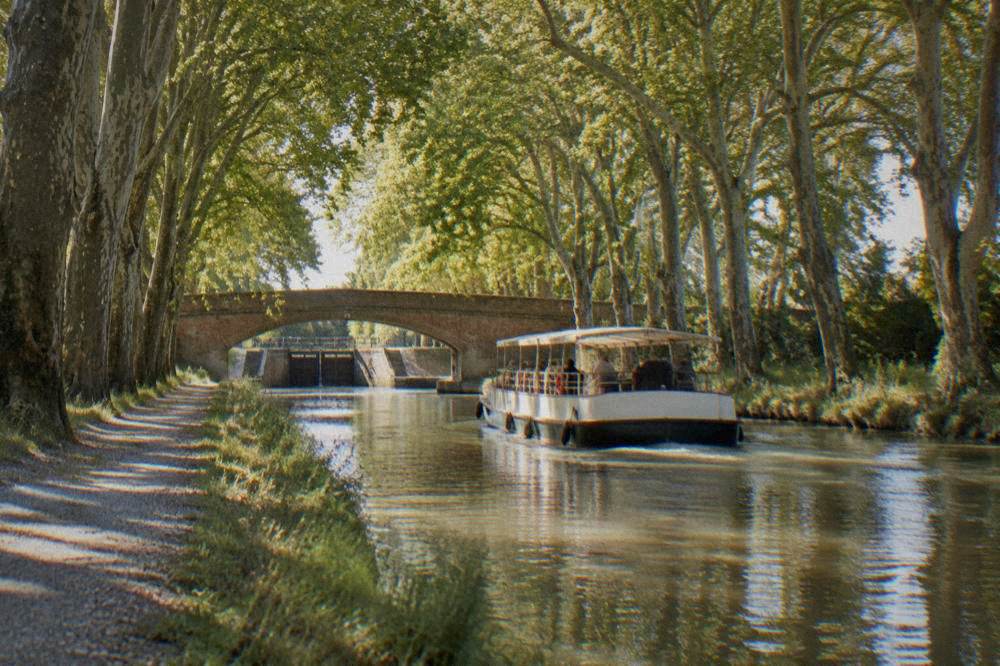
The Canal du Midi, inscribed by UNESCO in 1996 under criteria i, ii, iv and vi, begins its journey from the Garonne at Toulouse, and a short cruise is the easiest way to see it. The Canal du Midi page explains the waterway's route; several operators run commentated trips from the city, and the tour cards below carry the current prices and ratings.
For the afternoon, the Musee des Augustins, the fine-arts museum in the former Augustin convent, sits between the Capitole and the river; with its Gothic halls reopening 3 October 2026, the museum's own site is the place to confirm what is open on your date. Afterward, drift south into the Carmes quarter, whose streets and small squares make an easy late-afternoon circuit, and cross the river into Saint-Cyprien if the weather holds.
Food stops slot naturally into day two. The Marche Victor Hugo market hall is the city's covered market and the subject of its own page, and the Toulouse food guide covers the dishes to look for, cassoulet above all. Name a dish as a thing to seek, not a restaurant, since the dishes themselves are the reliable anchor for planning. The market quarter sits on the edge of the Carmes district, so the morning cruise, the market and the afternoon museum form one connected loop rather than three separate expeditions.
If day two lands on a Sunday, note the Jacobins free-entry rule from day one and swap it in: the first Sunday of the month makes the convent free, except when a temporary exhibition is on, which can reshuffle the pass arithmetic in your favor.
Should Day Three Stay In Toulouse Or Leave It?
Leave it. With the old town covered on days one and two, day three belongs to a day trip: Albi and Cordes-sur-Ciel by coach with audio guides, or Carcassonne's walled city, both reachable as organized coach excursions from Toulouse. Travelers who prefer to stay in the city can swap in Aeroscopia and the Airbus story instead.
Day three belongs to a day trip to Albi, Carcassonne or Cordes-sur-Ciel. Book a full-day Albi and Carcassonne excursion here.
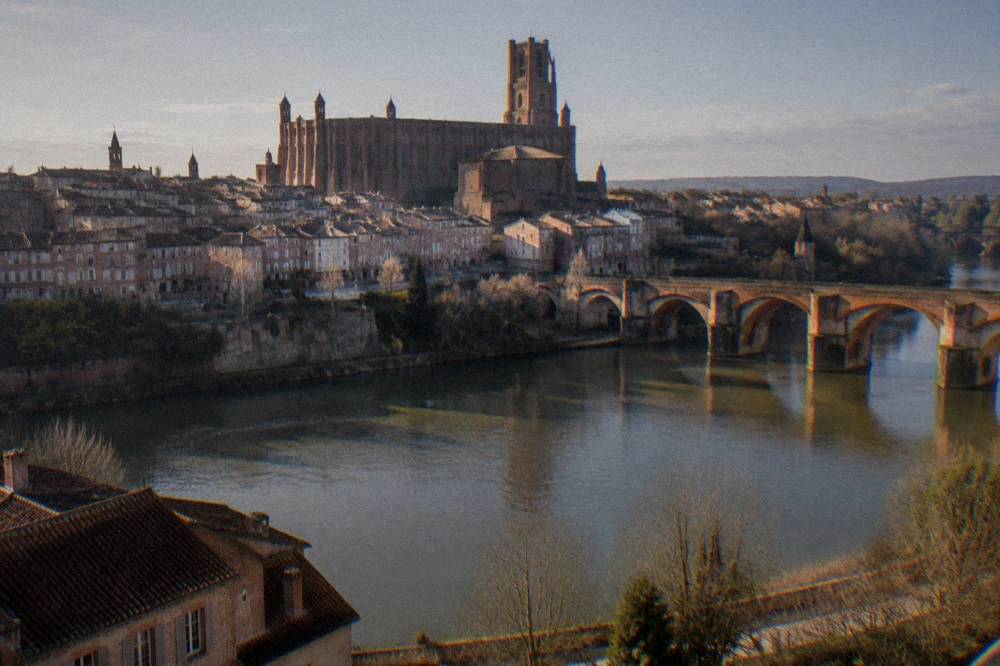
The two classic coach options both run as full-day trips. The Albi and Cordes-sur-Ciel excursion pairs the episcopal city of Albi, whose Sainte-Cecile cathedral is part of a UNESCO listing, with the hilltop village of Cordes-sur-Ciel; the Carcassonne trip reaches the medieval fortified city, also UNESCO-listed. Our Albi and Carcassonne day-trip pages give the fuller case for each.
The stay-in-town alternative is the aerospace lane. Aeroscopia, the aviation museum beside the Airbus sites, charges EUR 16 adult admission, is open daily 9:30-18:00 with last entry at 17:00, and is closed 25 December, 1 January and 7 May 2026, per its practical page; the same page notes the exhibition hall is not heated or air-conditioned, so dress for the season. The Aeroscopia page and the wider aerospace Toulouse itinerary cover the visit, including the Airbus factory tours run by Manatour, which require an original passport or ID card, no photocopy and no phone image.
For families, the Toulouse with kids page is the better day-three source: Cite de l'espace, whose homepage lists tickets from EUR 22.50, is the child favorite, and the Cite de l'espace attraction page has the planning detail. A family splitting up on day three can send one group to Albi and keep the other at the space park, since both options start and end in the city.
How Do You Get Around Toulouse In Three Days?
Buy the Tisseo 3-day pass at EUR 14.30, or pay EUR 1.90 per single trip if you will ride fewer than eight times; the e-boutique catalogue also lists a day pass at EUR 7.20 and ten trips at EUR 16.00. There is no two-day pass in the catalogue, so the choice is singles, the day pass, or the 3-day.
The full fare table from the official catalogue:
| Tisseo ticket | Price |
|---|---|
| Single trip | EUR 1.90 |
| Single bought last-minute on board | EUR 2.50 |
| 10 trips | EUR 16.00 |
| Day pass | EUR 7.20 |
| 3-day pass | EUR 14.30 |
| Airport single (Tisseo + Navette aeroport) | EUR 9.50 |
One warning that matters if your three days start or end at the airport: tram T2 to Toulouse-Blagnac has been closed since 5 June 2023 and stays closed until the end of 2026 because of the metro Line C works. The airport's own page directs passengers to the Navette aeroport bus, which runs one departure every 15 minutes and takes 20 to 40 minutes to the center; the Navette to the Matabiau bus station takes about 25 minutes. The Toulouse airport to city center guide carries the full arrival walkthrough. The rest of the planning pages sit on Toulouse Travel Guide.

The metro Line C project itself, 27 km and 21 stations from Colomiers to Labege, opens at the end of 2028, so it plays no part in this itinerary. The getting around Toulouse guide covers the network in full.
For day three's coach excursions, the meeting points sit in the city center, so no extra transport cost applies beyond getting to the departure spot. If your day trip runs to Carcassonne or Albi by train instead, the Toulouse train station guide covers Matabiau; no verified journey time is printed here, so check the operator's own planner for the schedule.
When Is The Best Time Of Year For A Three-Day Trip?
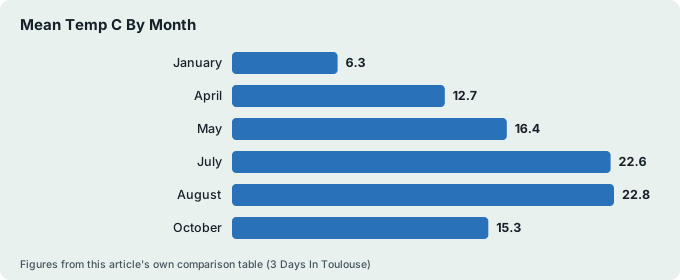
The Meteo-France 1991-2020 normals for Toulouse-Blagnac put July and August as the warmest months, July as the sunniest at 258.6 hours, and May as the wettest month at 73.6 mm, almost double February's 37.2 mm, so late spring and early autumn pair warm days with fewer downpours than May delivers.
The counterintuitive part is the rain: visitors assume the wet season is winter, but the normals show May leading the year at 73.6 mm, with April (65.2 mm) and June (64.2 mm) next. Then the tap turns off, and July gets just 40.1 mm. Annual totals run to 627 mm over 95.8 rain days, with 2,075.1 hours of sun across the year.
| Month | Mean temp C | Rain mm |
|---|---|---|
| January | 6.3 | 52.5 |
| April | 12.7 | 65.2 |
| May | 16.4 | 73.6 |
| July | 22.6 | 40.1 |
| August | 22.8 | 44.6 |
| October | 15.3 | 54.3 |
The records for the station, kept since 1947, run from a high of 42.4C on 23 August 2023 to a low of -19.2C on 15 February 1956, so summer heat is real. If your three days land on a wet stretch, the rainy day in Toulouse page lists the indoor options, and the best time to visit Toulouse guide works through the seasons month by month.
What Events Might Coincide With Your Three Days?
Piano aux Jacobins runs 8 to 30 September 2026, Toulouse les Orgues holds its 31st edition from 7 to 18 October 2026 with the opening concert at Notre-Dame de la Daurade, and the Christmas markets on the Place du Capitole, the allees Jean-Jaures and the square Charles-de-Gaulle run 26 November to 27 December 2026, so an autumn or December trip can fold a festival into the itinerary.
| Event | Dates | Venue |
|---|---|---|
| Piano aux Jacobins | 8-30 September 2026 | Couvent des Jacobins |
| Toulouse les Orgues (31st edition) | 7-18 October 2026 | Multiple, opening at Notre-Dame de la Daurade |
| Christmas markets | 26 November-27 December 2026 | Place du Capitole, allees Jean-Jaures, square Charles-de-Gaulle |
| Rio Loco | 9-13 June 2027 | Prairie des Filtres |
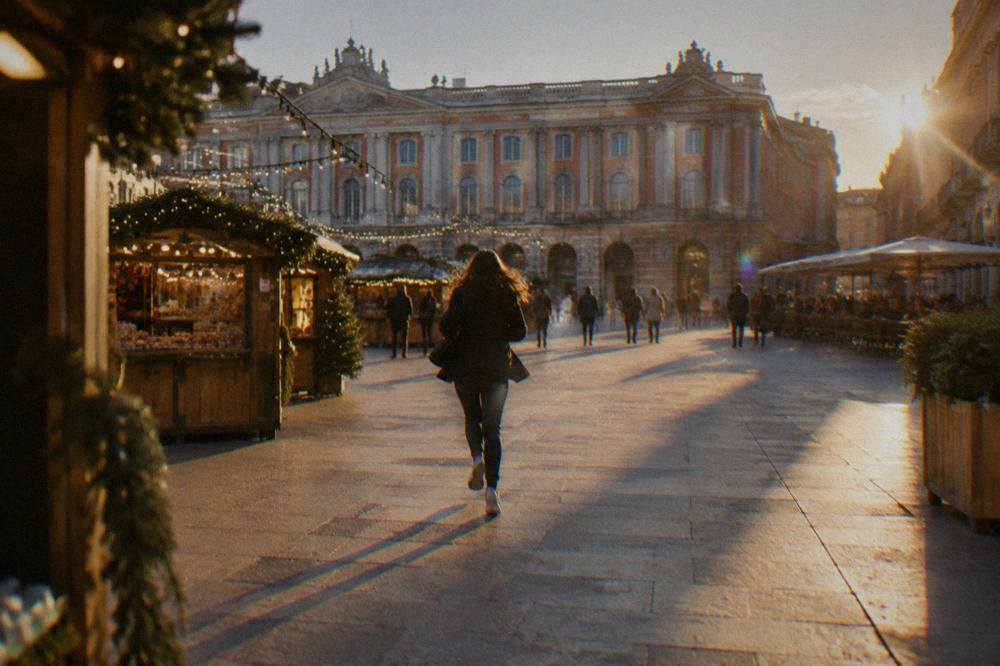
A December trip lines up with the Christmas markets, which put the Place du Capitole, day one's starting point, at its most atmospheric; the Toulouse Christmas market page covers it. The Toulouse events calendar collects the rest of the year.
What Does A Three-Day Toulouse Trip Cost?
Budget around EUR 14.30 for three days of transport with the Tisseo 3-day pass, EUR 26 for the Pass Tourisme if you will hit three or more paid sites, EUR 5 each for the Jacobins and the Augustins without it, EUR 16 for Aeroscopia, and from EUR 22.50 for Cite de l'espace, plus the 5% Toulouse Metropole tourist tax on non-classified lodging such as most platform rentals.
| Item | Figure | Source |
|---|---|---|
| Tisseo 3-day pass | EUR 14.30 | Tisseo e-boutique catalogue |
| Pass Tourisme (1-3 days) | EUR 26 | Tourist office |
| Couvent des Jacobins | EUR 5 (free 1st Sunday, except exhibitions) | City page |
| Musee des Augustins | EUR 5 | Tourist office |
| Aeroscopia adult | EUR 16 | Aeroscopia practical page |
| Cite de l'espace | from EUR 22.50 (normal adult EUR 29) | Cite de l'espace, tourist office |
| Tourist tax, non-classified lodging | 5% of pre-tax nightly price per person | Toulouse Metropole |
The per-star flat tourist-tax rates are not part of this page because they were not verified on the official site; the 5% rule for non-classified and pending-classification lodging is the figure Toulouse Metropole states. For the fuller budget picture, including where to economize, see the Toulouse on a budget page and the Toulouse cost guide.
Is Three Days The Right Amount, Or Should You Take Two Or Four?
Three days is the sweet spot for Toulouse itself plus one day trip: two days covers the city core but forces a choice between Albi and Carcassonne, while four days only makes sense if you want a second day trip or a deeper aerospace lane. The answer depends almost entirely on how many day trips you want.
The one day in Toulouse plan squeezes the Capitole, Saint-Sernin and the riverside into a single loop, and the 2 days in Toulouse version adds the museums and a canal cruise. Three days is the first length at which a coach excursion comfortably fits without sacrificing the city. If you are weighing the region more broadly, the how many days is enough for Toulouse answer page works through the trade-offs, and the day trips from Toulouse guide lists the full range, from the Pyrenees roughly 100 km south to the Gaillac wine route.
Common Questions About Three Days In Toulouse
Quick answers to what planners ask most about a three-day Toulouse itinerary.
Is 3 days in Toulouse enough?
Yes. Three days covers the old-town core, the riverside and the canal, and leaves one full day for a coach excursion to Albi, Cordes-sur-Ciel or Carcassonne.
What should I do on each of the 3 days in Toulouse?
Day one: the Capitole, Saint-Sernin and the Jacobins. Day two: a Canal du Midi cruise, the Musee des Augustins and the Carmes district. Day three: a day trip, or Aeroscopia and Cite de l'espace if you stay in town.
Do I need the Tisseo 3-day pass for a 3-day trip?
It is the natural fit at EUR 14.30, but if you will ride the metro only a handful of times, EUR 1.90 singles may cost less. There is no two-day pass in the catalogue.
Is the Pass Tourisme worth it for 3 days?
The tourist office states it pays off from the third activity, and it includes a free guided tour from the office. At EUR 26 for stays of one to three days, it suits a three-day museum-heavy plan.
Can you do a day trip on day three of a Toulouse trip?
Yes, that is exactly what day three is for. Coach excursions to Albi and Cordes-sur-Ciel and to Carcassonne both run as full-day trips from the city.
What is the rainiest month to avoid for a Toulouse trip?
May, not winter: Meteo-France's 1991-2020 normals for Toulouse-Blagnac put May at 73.6 mm of rain, the year's wettest month, against 37.2 mm in February.
Three days in Toulouse, planned this way, leaves nothing on the table: the pink-brick core, the water, and one wall of the wider region, all inside a EUR 14.30 transport pass.