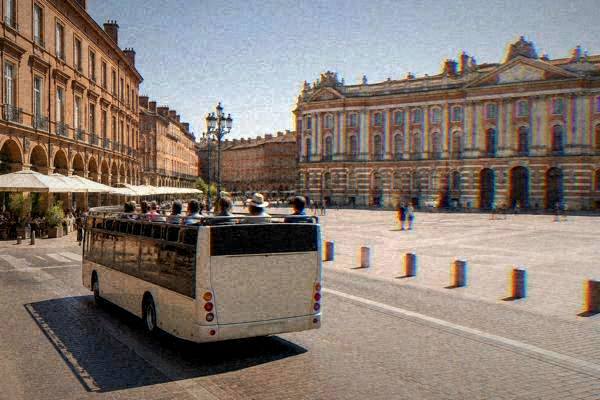
Toulouse Metro
The Toulouse metro is the fastest way across the pink city, and this guide sets out the verified fares, lines, airport transfer and the Line C works that will shape your visit.

Short answer
Toulouse runs two automated metro lines, a tram network and city buses under the Tisseo brand. A single trip costs EUR 1.90, a day pass EUR 7.20 and a 3-day pass EUR 14.30, all verified on the Tisseo catalogue. The airport is served by the Navette aeroport bus, not the tram, which stays closed until the end of 2026.
Toulouse, the pink-brick capital of the Occitanie region in southwestern France, is a city you cross underground as much as on foot. Its metro is small by Paris standards but fast, clean and fully automated, and it stitches the historic center to the train station, the university districts and the aerospace plants faster than any taxi can manage at rush hour. This guide lays out how the network works, what tickets genuinely cost on the official Tisseo catalogue, how to reach the city from Toulouse-Blagnac airport while the airport tram stays closed, and what the big Line C construction project means for a visit.
How Does The Toulouse Metro Work?
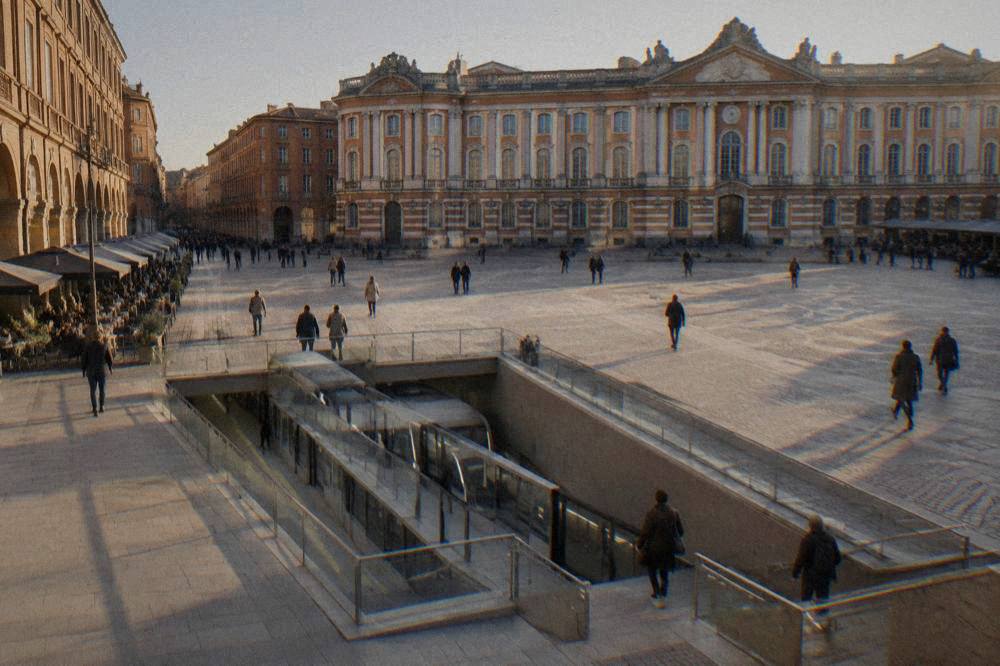
Toulouse runs two automated metro lines, Line A and Line B, plus a tram network and city buses, all under the Tisseo brand. The metro uses driverless rubber-tyred trains, and a single ticket covers metro, tram and bus with free transfers between them. The network is run by Tisseo, the public transport authority for the Toulouse metropole.
The two metro lines cross the city on broadly perpendicular axes. Line A runs from the southwest toward the northeast, serving the SNCF station at Matabiau and the Marengo district among its stops, while Line B runs north to south through the eastern side of the center, including the Jeanne-d'Arc and Carmes areas. The lines interchange at Jean-Jaubert and Capitole is within a short walk of the central stations, which is why so much of the historic core is explored on foot once you arrive. The tram lines, T1 and T2, connect the city toward Blagnac and the airport corridor.
The trains are fully automated, with no driver aboard, and platform screen doors are a standard feature of the stations. That is a fact of the system's design, not a promise about your journey. Frequencies are strongest at peak times and taper in the evening, so check the Tisseo site or the on-site displays for the timetable that applies on your travel day.
Practically, riding is straightforward. You buy a ticket from a machine or the e-boutique app, validate it at the gate, and the same ticket follows you from metro to tram to bus inside one journey. There is no zoned tariff to decode: the whole metropole is one flat fare zone, which makes the arithmetic of a day pass simple. If your hotel sits near a Line B station and dinner is across the river in Saint-Cyprian, the return journey is two singles or a fraction of a day pass, nothing more complicated than that.
What Do Toulouse Metro And Bus Tickets Cost?
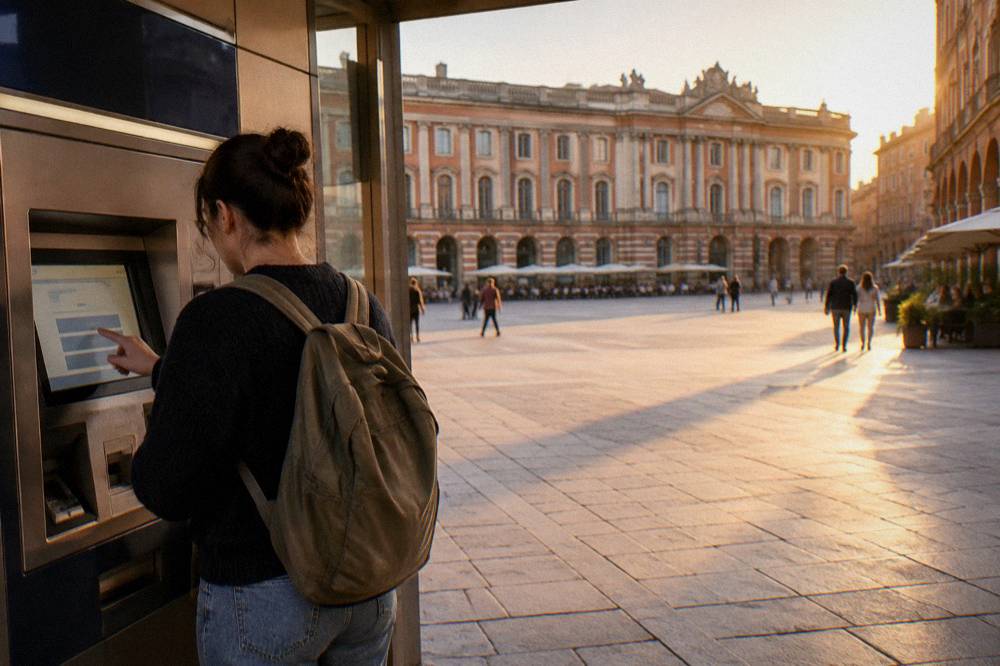
A single Tisseo trip costs EUR 1.90 when bought in advance, or EUR 2.50 if bought last-minute on board. A 10-trip carnet costs EUR 16.00, a one-day pass EUR 7.20 and a 3-day pass EUR 14.30. There is no 2-day pass on the Tisseo catalogue. These are the verified prices from the official Tisseo e-boutique.
The single ticket is the building block of the whole tariff. One "deplacement" covers a journey with transfers between metro, tram and bus, so a metro-to-bus connection inside one trip does not need a second ticket. The day pass, called "Journee", is worth it from roughly the fourth trip of the day onwards, and the 3-day pass at EUR 14.30 beats buying three day passes separately by a clear margin for a short stay.
| Ticket | Price | What it covers |
|---|---|---|
| Single trip (bought in advance) | EUR 1.90 | One journey with transfers on Tisseo |
| Single trip (last-minute on board) | EUR 2.50 | Same journey, bought on board |
| 10 trips | EUR 16.00 | Ten single journeys |
| Day pass ("Journee") | EUR 7.20 | Unlimited travel for one day |
| 3-day pass | EUR 14.30 | Unlimited travel for three days |
| Airport single | EUR 9.50 | Tisseo network plus the Navette aeroport |
Note what the catalogue does not contain: a 2-day pass does not exist, so do not plan around one. If a reseller offers you something that sounds like a 2-day Tisseo pass, it is not a Tisseo product. For sightseeing, weigh the transport passes against the tourist office's own Pass Tourisme, which the Toulouse Pass Tourisme guide covers in detail, since that pass bundles museum entry with an optional 10-trip transport add-on.
The last-minute on-board price of EUR 2.50 is the trap to avoid. It exists for people who board without a ticket, and it turns a EUR 1.90 journey into a EUR 2.50 one for the sake of thirty seconds at a machine. Buy before you board, every time, and the difference never touches your budget.
How Do You Get From Toulouse-Blagnac Airport To The City?
The airport tram, T2, has been closed since 5 June 2023 and stays closed until the end of 2026 because of the Line C metro works. The public transport link is the Navette aeroport bus, with one departure every 15 minutes, taking 20 to 40 minutes to the center, and the airport single ticket costs EUR 9.50.
That tram closure is the single most important transport fact for a visitor right now. Anyone who read an older guide, or a page that recycles one, will tell you to hop on the tram at the airport. Do not. The Navette aeroport bus is the reinforced replacement, running a departure every 15 minutes, and it reaches the center in 20 to 40 minutes depending on traffic. A separate Navette serves the Matabiau bus station in about 25 minutes, and city buses 30 and 31 take about 45 minutes to the Capitole with changes along the way.
The airport handled 7,621,409 commercial passengers in 2025, down 2.8 percent on 2024, so the transfer infrastructure is sized for a busy mid-range hub rather than a mega-airport. The EUR 9.50 airport single covers the Tisseo network plus the Navette, which makes it a better deal than a plain single plus a separate bus fare would be. The airport's own access page still quotes EUR 9 for the Navette, but the Tisseo catalogue is the seller's current price, and EUR 9.50 is the figure to budget with. The full transfer picture, including taxi alternatives, is laid out in the Toulouse airport to city center guide, and the airport itself is covered in the Toulouse airport guide.
| Airport option | Time to the center | Notes |
|---|---|---|
| Navette aeroport bus | 20 to 40 minutes | One departure every 15 minutes |
| Navette to Matabiau bus station | About 25 minutes | Serves the mainline station district |
| Buses 30 and 31 | About 45 minutes to Capitole | Requires changes |
| Tram T2 | Closed | Closed since 5 June 2023, until the end of 2026 |

What Is Metro Line C And When Does It Open?
Metro Line C, Toulouse's third metro line, is a 27 km line with 21 stations running from Colomiers through Blagnac, Toulouse and Labege. It is scheduled to open at the end of 2028. The line is under construction now, and its works are the reason the airport tram has been closed since June 2023.
Line C is the biggest transport project in the city, and its route is significant for visitors because it passes through Blagnac, the district that includes the airport corridor and the Aeroscopia aviation museum. Once it opens, the airport will gain a rail link as part of the wider scheme, but that is a future benefit: until the end of 2026 the tram stays closed, and until the end of 2028 Line C itself carries no passengers. A Line B extension toward Labege is also planned, but no verified opening date exists for it, so treat any month or year you see quoted for that extension with caution.
The construction is visible across the city, with station fit-out now under way on the Line C corridor. None of this disrupts the two existing metro lines, which continue to run normally, so the works matter mainly if your accommodation sits near a construction site or your plans involve Blagnac.
| Line C fact | Detail |
|---|---|
| Length | 27 km |
| Stations | 21 |
| Route | Colomiers - Blagnac - Toulouse - Labege |
| Opening | End of 2028 |
| Related closure | Tram T2 to the airport, closed since 5 June 2023 |
Is Toulouse Walkable Once You Leave The Metro?
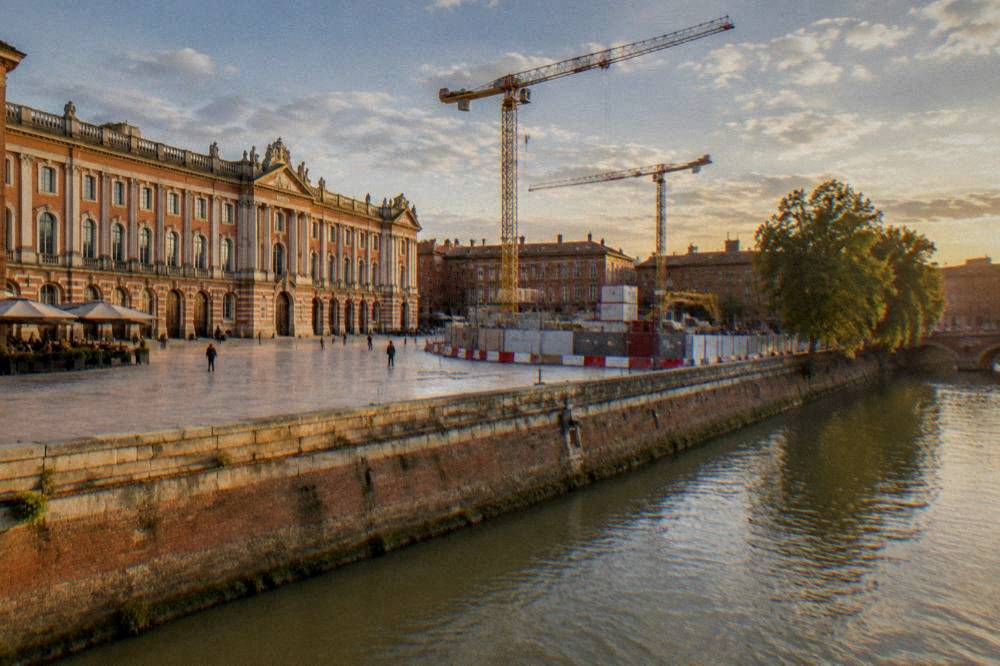
Yes, the historic core of Toulouse is compact and walkable, and the metro is best treated as the tool for crossing the city quickly rather than for moving inside it. The Capitole, Saint-Sernin, the Jacobins convent and the Garonne riverside all sit within a walkable band, so a single metro ride into the center usually covers the whole sightseeing day.
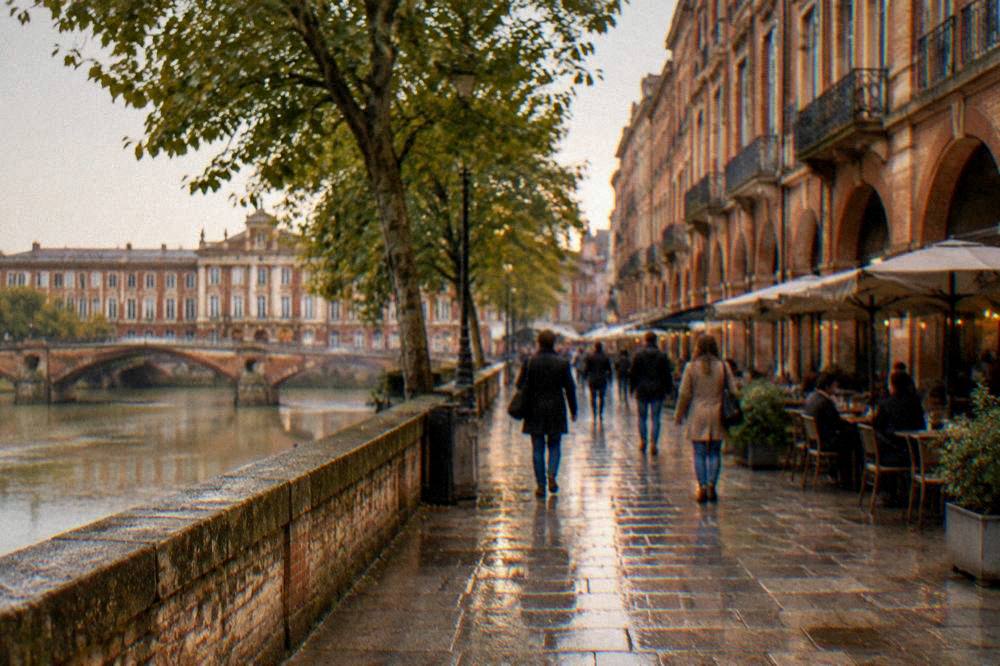
The pattern that works for a short visit is simple: ride the metro or tram to the edge of the old city, then walk. The pink-brick lanes between the Capitole and the Basilique Saint-Sernin, a UNESCO-listed monument as part of the Routes of Santiago de Compostela in France, are a pleasure on foot, and the riverside along the Garonne links the center to the Saint-Cyprian district across the water. For a structured introduction, a private walking tour with a local guide covers the highlights, and the Toulouse walking tours guide compares the options.
For travelers who tire of walking, the network still has you covered: a day pass at EUR 7.20 lets you hop on and off buses across the center, and the tram reaches districts the metro does not. If you are weighing a car against public transport, the car hire in Toulouse guide explains why a rental only pays off for regional day trips rather than city sightseeing.
If you would rather pedal between the lanes than walk or ride, book a bike rental here.
How Does The Metro Fit Day Trips Out Of Toulouse?
The metro itself does not leave Toulouse, but it is the link that makes regional day trips work, because most coach tours and private transfers depart from central points that the metro serves. The SNCF station at Matabiau, reached by metro, is the departure point for trains, and the coach day trips to Carcassonne, Albi and Lourdes leave from stops in the center.
That is the practical logic of a Toulouse transport strategy: use the EUR 1.90 single or the day pass inside the city, then hand the long-distance leg to a tour operator or a train. The day trips from Toulouse guide catalogs the full range, from Carcassonne's medieval walls to the hilltop village of Cordes-sur-Ciel, and each of those destinations is a coach or train ride, not a metro ride. Trains from Matabiau reach Carcassonne, Montauban, Bordeaux and Paris directly, though this site does not quote journey times for those routes because they were not verified on an official SNCF page.
For Carcassonne specifically, a transfer-and-free-time trip is the low-effort option: the operator handles the road, you handle the citadel.
A spiritual half-day to Lourdes works the same way, with the grotto and basilica visit organized around a departure from Toulouse.
| Day trip destination | How it is reached from Toulouse |
|---|---|
| Carcassonne | Coach day trip or direct train from Matabiau |
| Albi and Cordes-sur-Ciel | Coach day trip with audio guides |
| Lourdes | Organized day trip, about 4 hours |
| Montauban | Direct train from Matabiau |
| Bordeaux | Direct train from Matabiau |
What Pass Should A Visitor Buy: Tisseo Or Pass Tourisme?
For pure transport, the Tisseo 3-day pass at EUR 14.30 is the best-value option for a short stay, while the tourist office's Pass Tourisme at EUR 26 bundles museum entry with an optional EUR 10 transport add-on of 10 trips. The Pass Tourisme pays off from the third activity, and it includes a free guided tour from the tourist office.
The choice comes down to what your days look like. If you are museum-heavy, the Pass Tourisme wins: the tourist office lists normal rates of EUR 12 for the Fondation Bemberg, the Museum and Les Abattoirs, and EUR 5 each for the Musee des Augustins and the Couvent des Jacobins, all free with the pass. If you are mostly walking the old city with one museum a day, the plain Tisseo 3-day pass plus individual museum tickets can work out cheaper. The Toulouse museums guide helps you pick which collections justify the bundle.
| Option | Price | Best for |
|---|---|---|
| Tisseo single trip | EUR 1.90 | One or two journeys a day |
| Tisseo day pass | EUR 7.20 | A day of hop-on, hop-off riding |
| Tisseo 3-day pass | EUR 14.30 | A short stay, transport only |
| Pass Tourisme | EUR 26 | Museum-heavy stays, pays off from the 3rd activity |
| Pass Tourisme transport add-on | +EUR 10 | Adds 10 public-transport trips |
One timing note worth checking before you buy: the Musee des Augustins is temporarily closed from 21 September to 2 October 2026 for great-cloister works, with its Gothic halls reopening on 3 October 2026 from 10:00. The Couvent des Jacobins is free on the first Sunday of the month except when a temporary exhibition is on, and its church roof is under restoration while the site stays open. Neither fact changes the pass math much, but both change what your pass gets you on a given day.
Does The Weather Affect How You Use The Toulouse Metro?
Not much in summer, but yes in late spring: Meteo-France's 1991-2020 normals for Toulouse-Blagnac show May is the wettest month at 73.6 mm of rain, with April at 65.2 mm and June at 64.2 mm close behind, so the metro earns its keep on wet spring days. July, by contrast, is the sunniest month at 258.6 hours with just 40.1 mm of rain.
That pattern surprises people who assume southern French rain falls in winter. February is actually the driest month at 37.2 mm, and the rain peaks in May before the tap turns off for summer. Annual rainfall totals 627 mm across 95.8 rain days, with 2,075.1 hours of sunshine over the year, so Toulouse is a sunny city with a genuinely wet late spring. On a rainy May afternoon the metro-plus-museum combination is the obvious play, and the rainy day in Toulouse guide exists for exactly that scenario.
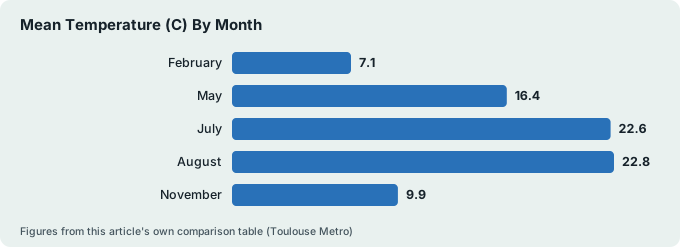
The record high of 42.4C on 23 August 2023 is also worth knowing: in a heat event, the metro is cooler than the street, and the climate tables in the Toulouse weather guide tell you which months run hottest. For planning the whole trip around the climate, the best time to visit Toulouse guide puts the numbers in calendar order.
| Month | Mean temperature (C) | Rainfall (mm) | Sunshine (hours) |
|---|---|---|---|
| February | 7.1 | 37.2 | 118.2 |
| May | 16.4 | 73.6 | 212.3 |
| July | 22.6 | 40.1 | 258.6 |
| August | 22.8 | 44.6 | 246.4 |
| November | 9.9 | 55.0 | 99.9 |
Common Questions About The Toulouse Metro
How much is a single Toulouse metro ticket?
A single Tisseo trip costs EUR 1.90 bought in advance, or EUR 2.50 if bought last-minute on board. One ticket covers a journey with transfers between metro, tram and bus.
Is there a Toulouse metro day pass?
Yes. The Tisseo day pass, called "Journee", costs EUR 7.20 and covers unlimited travel for one day. A 3-day pass costs EUR 14.30. There is no 2-day pass on the Tisseo catalogue.
Can you take the tram from Toulouse airport?
No. Tram T2 to the airport has been closed since 5 June 2023 and stays closed until the end of 2026 because of the Line C metro works. The Navette aeroport bus runs one departure every 15 minutes and takes 20 to 40 minutes to the center.
How much is the bus from Toulouse airport to the city center?
The airport single, covering the Tisseo network plus the Navette aeroport, costs EUR 9.50 on the official Tisseo catalogue. The airport's own page still quotes EUR 9, but EUR 9.50 is the current selling price.
When does the new Toulouse metro Line C open?
Line C, a 27 km line with 21 stations running from Colomiers through Blagnac, Toulouse and Labege, is scheduled to open at the end of 2028. Until then the two existing metro lines continue to run normally.
Is the Toulouse metro easy to use without French?
Yes. The system is automated, tickets are bought from machines with menu options, and station displays show line and destination information. A single ticket covers transfers between metro, tram and bus, so there is little to negotiate once you have your ticket.
The Toulouse metro will not be the memory you take home, the pink-brick squares and the Garonne at dusk will, but it is the machine that makes those memories cheap to reach. Buy the ticket that matches your pace, keep the airport tram closure in mind, and let the rest of the planning happen above ground, as described across Toulouse Travel Guide.