Toulouse Vs Nice: Which French City Fits Your Trip?
Two French cities that rarely appear on the same shortlist, compared honestly: Toulouse, the inland pink-brick aerospace capital on the Garonne, and Nice, the Riviera city on the Mediterranean. The verified numbers in this comparison come from Toulouse's own official sources.
Short answer
Toulouse is an inland, pink-brick city on the Garonne in southwestern France with a lower rainfall total than its reputation suggests, while Nice sits on the Mediterranean coast with a sea-and-beach identity Toulouse cannot offer. Choose Toulouse for aerospace, cassoulet and Canal du Midi day trips; choose Nice for the seaside.
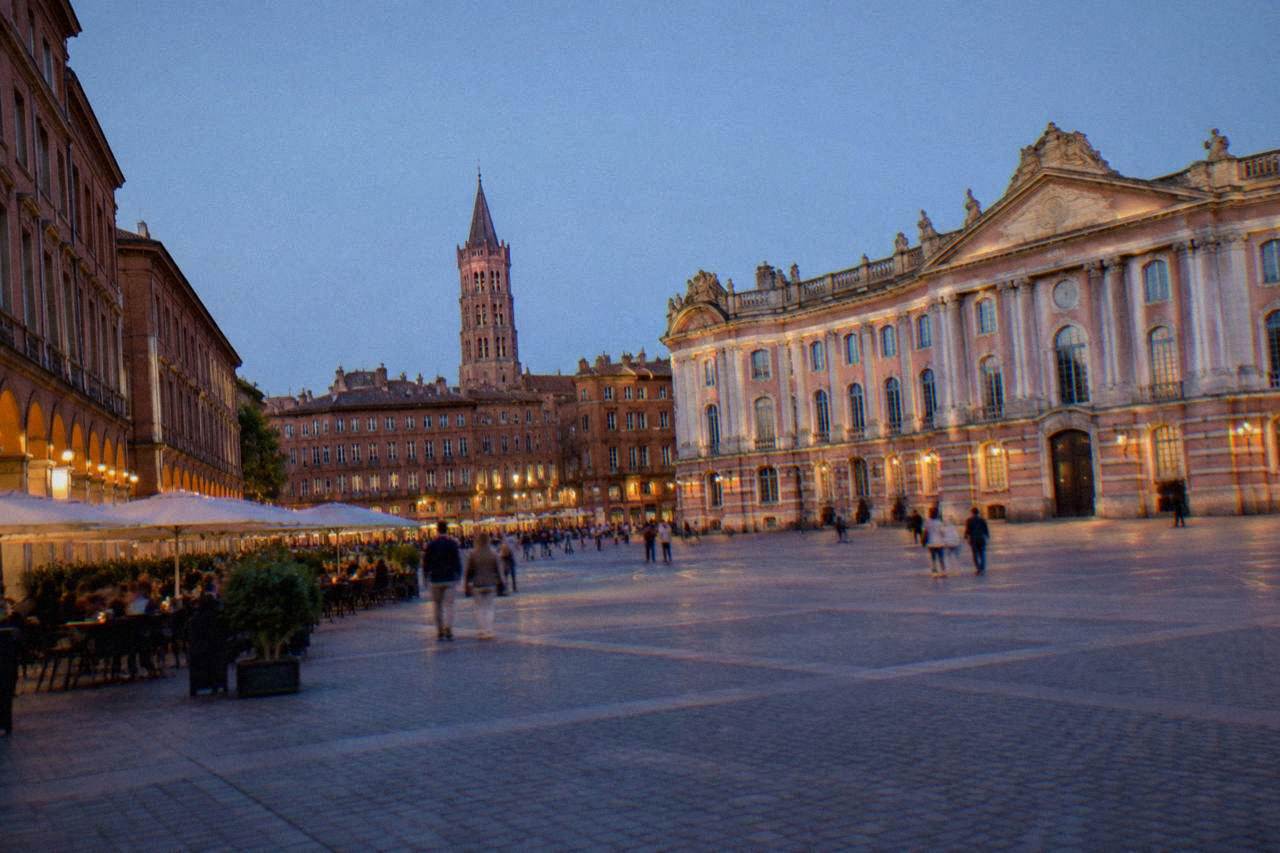
Toulouse, the pink-brick "La Ville Rose" on the Garonne in the Occitanie region of southwestern France, rarely gets compared with Nice, and that is exactly why the comparison is useful. One is an inland aerospace and university city roughly 100 km from the Pyrenees; the other is the capital of the French Riviera, a seaside city whose whole identity is built around the Mediterranean. This page puts the two side by side using verified Toulouse figures from official sources, so at least half of the comparison stands on solid ground rather than travel-blog folklore.
The honest starting point: if your heart is set on a beach holiday, Toulouse cannot compete, because it has no sea, no beach and no harbour. But if you want a city break with cassoulet, a UNESCO-listed canal, an aerospace museum and day trips toward Carcassonne and the Pyrenees, the pink city makes a strong case, and often a cheaper one. The sections below work through climate, cost, getting around, food and day trips so you can match the city to the trip you actually want. You can read more about the city's identity on the Toulouse Travel Guide homepage.
Is Toulouse Or Nice Better For A City Break?
Toulouse is the better pick for a city break built around food, aerospace and medieval brick architecture, while Nice suits travelers whose main goal is the Mediterranean shoreline. Toulouse's compact center between the Capitole and the Garonne can be crossed on foot, its museums cluster within a short walk of each other, and its signature dish, cassoulet, is a full destination in itself. Nice offers a seafront that Toulouse simply has no answer to.
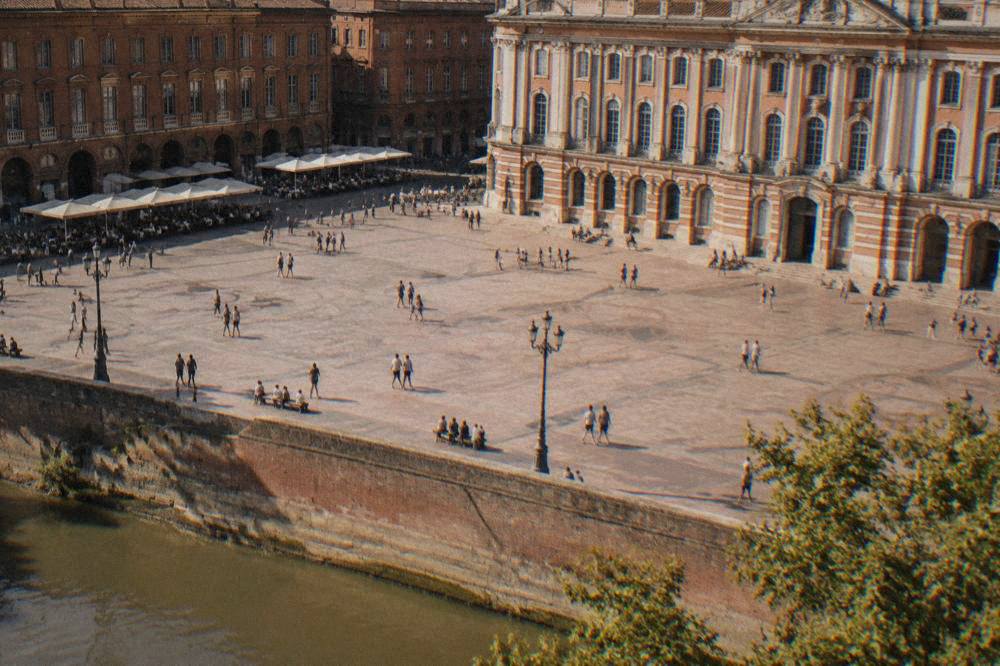
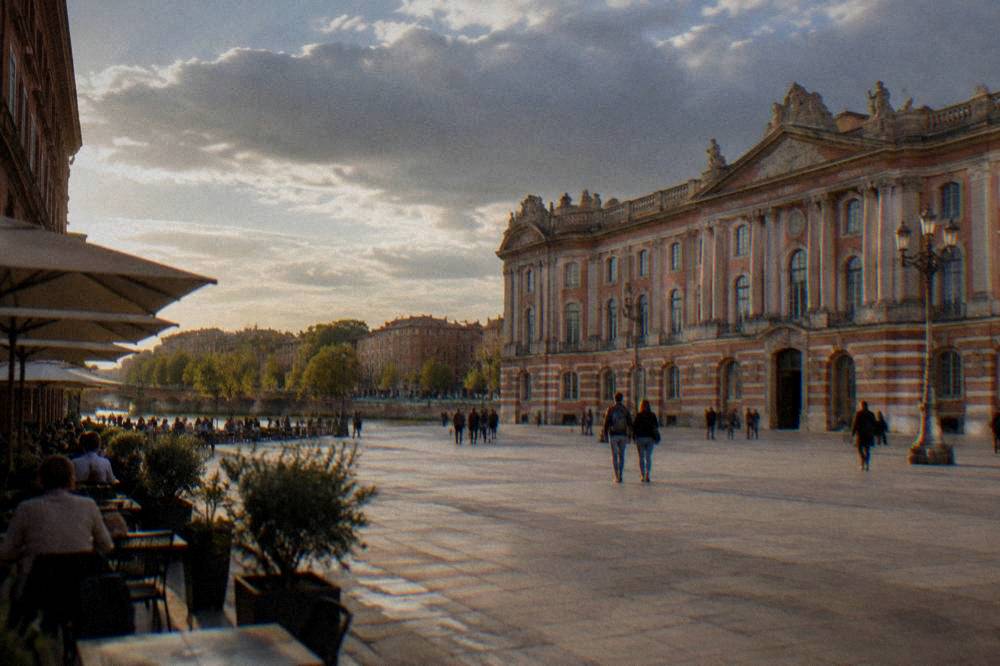
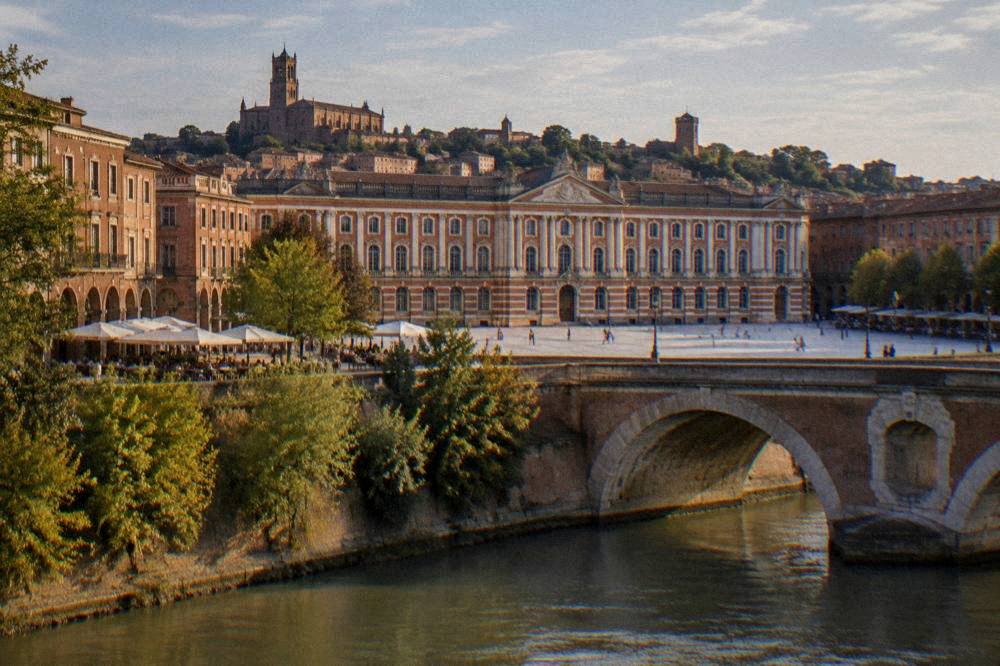
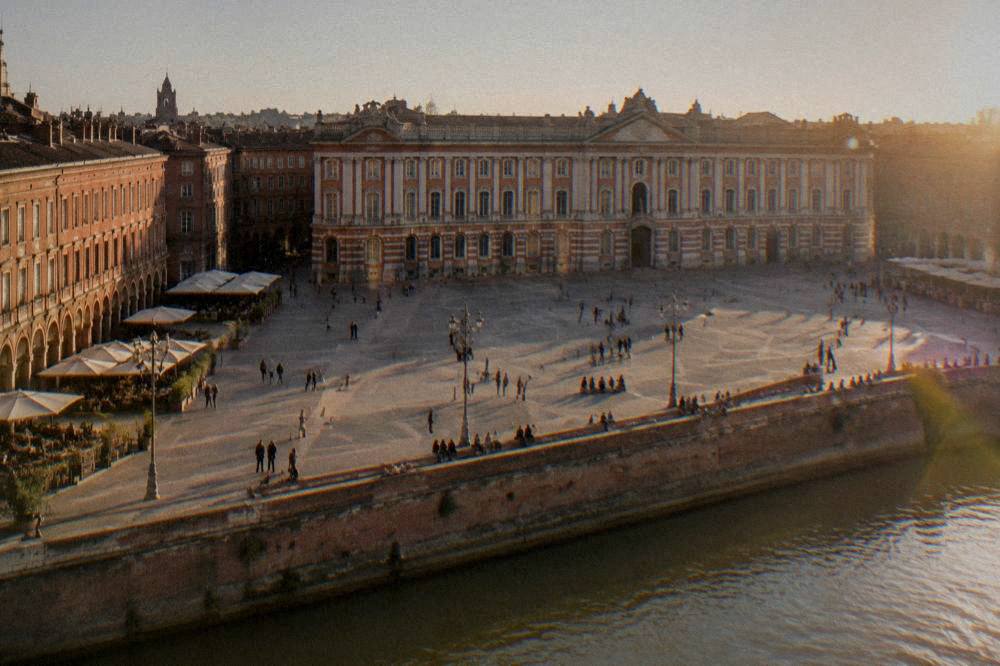
Both cities work as short-break destinations, but they reward different itineraries. In Toulouse, the core visitor loop runs from the Place du Capitole through the Jacobins convent to the Basilique Saint-Sernin, a listed UNESCO monument as part of the Routes of Santiago de Compostela in France, inscribed in 1998. The walks between them are short and the streets between them are the attraction, pink brick at every turn.
Nice's center, by contrast, splits between the old town and the seafront, and the pull of the water means visitors spend less time inside the city and more time along it. Neither approach is wrong. It depends whether your ideal evening is a slow dinner of Toulouse sausage and local wine, or a sunset over a coastline Toulouse cannot offer.
For a first taste of the pink city without wearing out your shoes, an electric tuk-tuk tour with photo stops covers the highlights in one guided loop. Check availability for the electric tuk-tuk tour, and see the wider what Toulouse is famous for guide for the full picture.
How Do The Two Cities Compare On Weather?
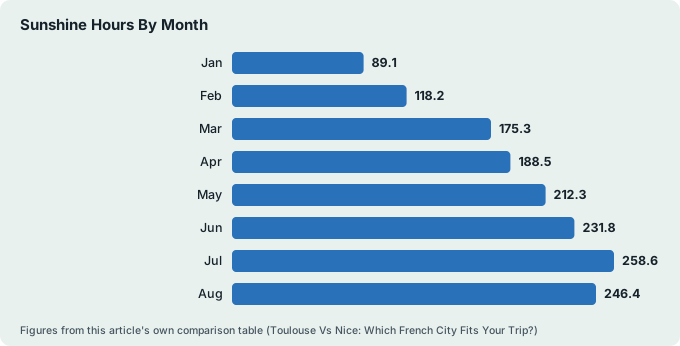
Toulouse averages 2,075.1 hours of sunshine a year with 627 mm of rain, and its wettest month is May at 73.6 mm, not a winter month. Meteo-France's 1991-2020 normals for Toulouse-Blagnac also show July as the sunniest month, 258.6 hours, with a record high of 42.4C recorded on 23 August 2023. Nice's Mediterranean climate runs warmer in winter, but Toulouse's numbers surprise visitors who assume the southwest is grey.
The Toulouse side of that answer comes straight from Meteo-France's official climate normals for the Toulouse-Blagnac station. The pattern that catches people out is the spring rain: May is the wettest month at 73.6 mm, with April at 65.2 mm and June at 64.2 mm close behind, while February is the driest at just 37.2 mm. Summer, when visitors arrive, is genuinely dry: July gets 40.1 mm of rain and 11.5 days a year above 30C.
| Month | Mean temp C | Rain mm | Sunshine hours |
|---|---|---|---|
| Jan | 6.3 | 52.5 | 89.1 |
| Feb | 7.1 | 37.2 | 118.2 |
| Mar | 10.3 | 45.3 | 175.3 |
| Apr | 12.7 | 65.2 | 188.5 |
| May | 16.4 | 73.6 | 212.3 |
| Jun | 20.3 | 64.2 | 231.8 |
| Jul | 22.6 | 40.1 | 258.6 |
| Aug | 22.8 | 44.6 | 246.4 |
| Sep | 19.3 | 45.7 | 210.1 |
| Oct | 15.3 | 54.3 | 155.2 |
| Nov | 9.9 | 55.0 | 99.9 |
| Dec | 7.0 | 49.3 | 89.7 |
Nice's advantage is winter: a Riviera January feels like a Toulouse March, and the sea moderates cold snaps in a way an inland city far from the nearest coast never enjoys. Toulouse's record low of -19.2C, set on 15 February 1956, is a reminder that the southwest can freeze hard even if it rarely does. If you are planning a December or January trip, the sea wins; from April to October, the gap narrows a lot.
For month-by-month planning on the Toulouse side, see the Toulouse weather guide and the best time to visit Toulouse breakdown.
Which City Is Cheaper To Visit?
Toulouse is generally the cheaper city to visit, with a single metro or bus trip at EUR 1.90, a day pass at EUR 7.20 and the tourist office's Pass Tourisme at EUR 26 including free entry to several museums and a free guided tour. The only tourist-tax figure stated for Toulouse is the 5% levy on non-classed lodging, including most platform rentals. Nice's Riviera pricing pushes hotel and restaurant bills higher.
The transport numbers come from Tisseo's official e-boutique catalogue: a single trip is EUR 1.90, or EUR 2.50 if bought last-minute on board, a 10-trip carnet is EUR 16.00, a day pass is EUR 7.20 and a 3-day pass is EUR 14.30. There is no 2-day pass, so a three-night stay either buys the 3-day pass or tops up singles as needed. The airport single, covering the Tisseo network plus the Navette aeroport, is EUR 9.50.
| Tisseo ticket | Price |
|---|---|
| Single trip | EUR 1.90 |
| Single bought on board | EUR 2.50 |
| 10 trips | EUR 16.00 |
| Day pass | EUR 7.20 |
| 3-day pass | EUR 14.30 |
| Airport single | EUR 9.50 |
The Pass Tourisme is where Toulouse's value shows most clearly. At EUR 26 for stays of one to three days, it includes a free guided tour from the tourist office, and adding EUR 10 buys ten public-transport trips. The tourist office's own page lists what the pass covers at normal rates: Fondation Bemberg at EUR 12, the Museum at EUR 12, Les Abattoirs at EUR 12, Musee des Augustins at EUR 5 and Couvent des Jacobins at EUR 5, with Cite de l'espace discounted rather than free against its EUR 29 normal rate. The pass pays off from the third activity.
| Attraction | Normal rate | With Pass Tourisme |
|---|---|---|
| Fondation Bemberg | EUR 12 | Free |
| Museum de Toulouse | EUR 12 | Free |
| Les Abattoirs | EUR 12 | Free |
| Musee des Augustins | EUR 5 | Free |
| Couvent des Jacobins | EUR 5 | Free |
| Cite de l'espace | EUR 29 | Discounted |
Nice counters with a bigger supply of free seafront: the shoreline itself costs nothing, and beach time is the cheapest activity either city offers. But once you move indoors, Riviera restaurant and hotel pricing generally sits above Toulouse's, and the pink city's food reputation, covered in the Toulouse food and cassoulet guides, delivers a lot per euro. The Pass Tourisme guide breaks the pass down further.
Which City Has The Better Food Scene?
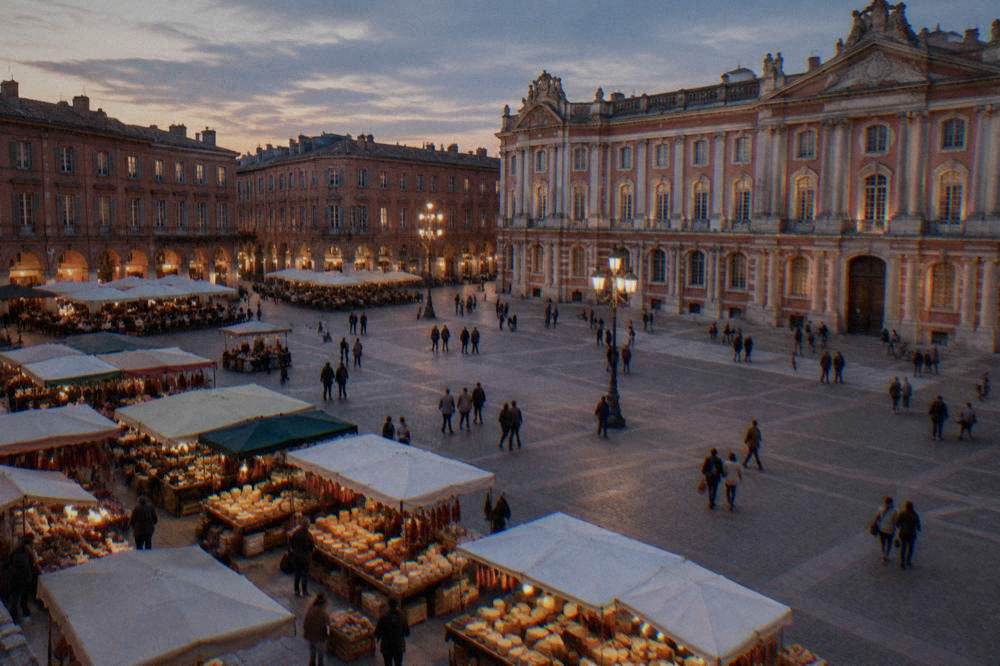
Toulouse's food identity is the stronger of the two for regional cooking: cassoulet, Toulouse sausage and the stalls of the Marche Victor Hugo anchor a scene built on the southwest's duck, bean and wine traditions, and a chef-led food and history tour is the city's most reliable introduction to it. Nice answers with Nicoise salad, socca and seafood, plus a coastal produce market of its own.
The Toulouse case rests on dishes with the city's name on them. Cassoulet, the slow-baked bean and duck casserole, is the signature, and Toulouse sausage is the other name-brand product; both are covered in depth elsewhere on this site. The Marche Victor Hugo is the traditional market heart of that scene, and the city's food tours, several of which run through it with tastings, are the fastest way to learn which stall sells what.
Nice's kitchen is lighter and saltier: think olive oil, anchovies and the chickpea pancake socca rather than duck fat and tarbais beans. If your trip is about eating by the water, Nice wins on setting; if it is about eating the region's most famous dish in its home city, Toulouse wins on substance. The Toulouse restaurants guide picks up where this comparison stops.
How Easy Is It To Get To Each City?
Toulouse-Blagnac airport handled 7,621,409 commercial passengers in 2025, down 2.8% on 2024, and connects to the center by the Navette aeroport bus running every 15 minutes for a 20 to 40 minute ride, with the airport single at EUR 9.50. The tram line T2 to the airport has been closed since 5 June 2023 and stays closed until the end of 2026. Nice's airport sits right on the coast with its own dedicated link to the city.
The Toulouse arrival is more complicated than it used to be, and any guide that tells you to take the tram to the airport is out of date. The Navette aeroport is the public transport link while the Line C metro works continue, one departure every 15 minutes, taking 20 to 40 minutes to the center, and about 25 minutes to the Matabiau bus station. Buses 30 and 31 take about 45 minutes to the Capitole with changes.
| Airport option (Toulouse-Blagnac) | Frequency / time | Price |
|---|---|---|
| Navette aeroport to center | Every 15 min, 20-40 min | EUR 9.50 |
| Navette to Matabiau bus station | About 25 min | EUR 9.50 |
| Buses 30 and 31 to Capitole | About 45 min, with changes | Standard Tisseo fare |
| Tram T2 | Closed since 5 June 2023, until end of 2026 | Not running |
Getting around inside the city is straightforward once you have landed: the metro's two operating lines plus buses and trams run on the Tisseo fares listed above, and the getting around Toulouse guide covers the detail. A third metro line, Line C, is under construction: 27 km and 21 stations from Colomiers to Labege, opening at the end of 2028. Arrivals logistics are covered in the Toulouse airport and airport to city center guides, and flight options in flights to Toulouse.
Which City Has Better Day Trips?
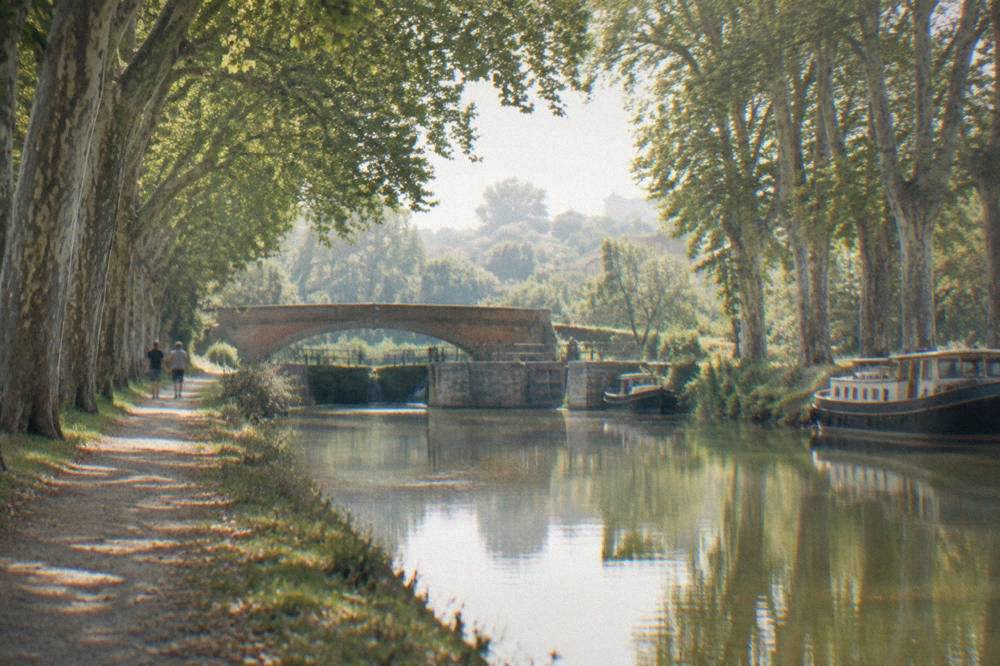
Toulouse's day-trip range is exceptional for an inland city: Carcassonne's walled medieval citadel, the UNESCO-listed Albi and the clifftop village of Cordes-sur-Ciel all sit within coach-tour distance, and the Canal du Midi, itself UNESCO-listed since 1996, starts from the city. Nice's day trips run along the Riviera to Monaco, Eze and Antibes, a coastline itinerary rather than a heritage one.
The two day-trip menus barely overlap, which makes this the clearest differentiator in the whole comparison. From Toulouse, the classic outing is Carcassonne, and a coach day trip with an audio guide is one of the most booked products on this site; a transfer-and-free-time version covers the same citadel with more independence. Albi and Cordes-sur-Ciel pair a UNESCO-listed cathedral town with one of the region's most photographed villages, and the full day trips from Toulouse guide lists the rest, from Lourdes to the Cathar castles.
Nice's excursions are about the water and the money: Monaco, the clifftop village of Eze, the Cap d'Antibes. Beautiful, certainly, but it is a single coastal ribbon. Toulouse's day trips fan out in every direction across Occitanie, medieval bastides, vineyards like Gaillac and Fronton, mountain spa towns toward the Pyrenees, and a canal you can cruise, bike or walk. If day trips are a core part of your plan, the pink city has the deeper bench.
The Carcassonne transfer trip is the easiest of them to book and run, and the food and history tour with a chef is the other standout for visitors who want the city itself explained through an unhurried stretch of walking and eating.
Which Is Better For Families And Aerospace Fans?
Toulouse is the clear winner for aerospace-minded families: Cite de l'espace, the space theme park, sells tickets from EUR 22.50 with a normal adult rate of EUR 29, and the Aeroscopia aviation museum charges EUR 16 for adults, open daily 9:30-18:00 with last entry at 17:00. Airbus factory tours of the A350 and A321 lines run at EUR 18 for adults. Nice offers beaches and aquarium-style coastal attractions instead.
This is where Toulouse's identity as Europe's aerospace capital becomes a practical itinerary. Cite de l'espace is a full-day space park with rockets and planetarium shows; Aeroscopia, next to the Airbus plant at Blagnac, displays full-size aircraft including Concorde, and its practical page warns that the exhibition hall is not heated or air-conditioned, worth knowing before a winter visit. The museum closes on 25 December, 1 January and 7 May 2026.
The Airbus factory tours deserve advance planning: the A350 and A321 tours each last 1h30, cost EUR 18 for adults with reduced tickets at EUR 15, and children under 6 go free. The operator requires an original passport or ID card, no photocopies and no phone images, and asks visitors to arrive 30 minutes early; cameras and pets are not allowed. The Airbus factory tour guide covers the booking mechanics, and the Toulouse with kids guide the family angle.
Nice can match Toulouse for family fun on the sand, but it has nothing equivalent to a space park or a working airliner assembly line. For a teenager who cares about planes, or a parent who wants a museum day that does not depend on weather, the southwest wins comfortably.
What About Events, Rugby And Nightlife?
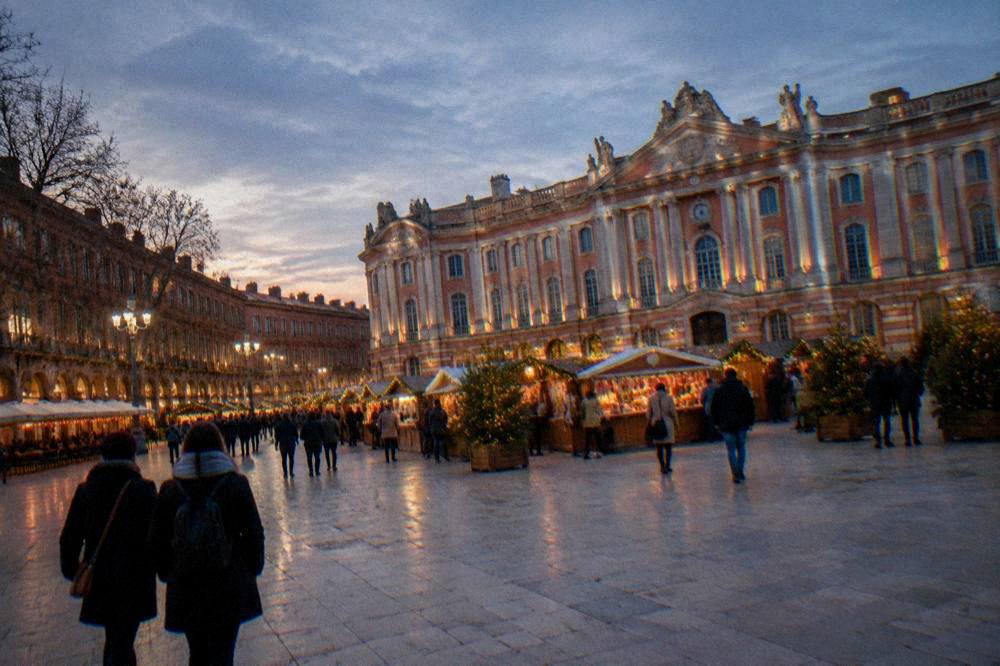
Toulouse's event calendar for the coming year includes Piano aux Jacobins from 8 to 30 September 2026, Toulouse les Orgues from 7 to 18 October 2026, and the Christmas markets on Place du Capitole, allees Jean-Jaures and square Charles-de-Gaulle from 26 November to 27 December 2026, with Rio Loco returning 9 to 13 June 2027. Nice counters with its February carnival, the Riviera's signature winter event.
The piano festival fills the Jacobins cloister each September; the organ festival takes over churches across the city in October, with its opening concert on 7 October at Notre-Dame de la Daurade. The Christmas market on the Place du Capitole is the classic December reason to visit, and Rio Loco, the world-music festival on the Prairie des Filtres, has confirmed 9 to 13 June 2027 for its "Noctiluca" edition.
| Toulouse event | Dates |
|---|---|
| Piano aux Jacobins | 8-30 September 2026 |
| Toulouse les Orgues (31st edition) | 7-18 October 2026 |
| Christmas markets (Capitole, Jean-Jaures, Charles-de-Gaulle) | 26 November - 27 December 2026 |
| Rio Loco | 9-13 June 2027 |
Rugby is the other Toulouse card: the city is one of the great rugby towns of France, and match weekends around the Stadium de Toulouse change the whole atmosphere of the center, as the Toulouse rugby guide explains. Nice's sporting identity leans on the Riviera's glamour events rather than a tribal home crowd. For evening plans, the nightlife guide, and for the December trip specifically, the Christmas market guide.
Where Should You Stay In Each City?
Toulouse's practical center for visitors is the area around the Capitole and Saint-Sernin, with Saint-Etienne, the Carmes and Saint-Aubin as characterful alternatives, and the only tourist-tax figure stated for Toulouse is the 5% levy Toulouse Metropole applies to non-classed lodging, including most platform rentals. Nice's stays split between the seafront and the old town, at Riviera prices.
No major new museums or food halls have been confirmed for 2025-2026 in official sources.
The where to stay in Toulouse guide maps the neighborhoods properly. The short version of the comparison: Toulouse gives you a walkable, brick-warmed historic center at inland-France prices, while Nice charges a premium for the sea view, and everything else follows from that single difference.
To stay inside the walkable brick center, book a hotel room here.
Common Questions About Toulouse Vs Nice
Quick answers to what planners ask most about choosing between the two cities.
Is Toulouse close to Nice?
No. The two cities sit at opposite ends of southern France: Toulouse is inland in the southwest, on the Garonne, while Nice is on the Mediterranean coast near the Italian border. The full distance and transport options are covered in the dedicated answer on is Toulouse close to Nice.
Which city is warmer, Toulouse or Nice?
Nice, especially in winter, because the Mediterranean moderates its temperatures. Toulouse's Meteo-France 1991-2020 normals show an annual mean maximum of 18.8C with a record low of -19.2C from 15 February 1956, so the inland city freezes harder than the coast ever does.
Does Toulouse have a beach?
No. Toulouse is an inland city with no sea, no beach and no harbour. The Garonne river and the Canal du Midi are its water, and the nearest coast is a separate trip; the Pyrenees, roughly 100 km south, are the mountain alternative.
Is Toulouse cheaper than Nice?
Generally yes. Toulouse's local prices include a EUR 1.90 metro single, a EUR 7.20 day pass and the EUR 26 Pass Tourisme covering several museums; Nice's Riviera positioning pushes hotel and restaurant prices higher.
Which city is better for a weekend?
Both work, but they suit different weekends. Toulouse rewards a food-and-heritage break, cassoulet, the Jacobins and the Capitole, all walkable; Nice rewards a shoreline break. If you want the answer for the pink city specifically, see is Toulouse worth visiting.
Can you combine Toulouse and Nice in one trip?
You can, but they are far apart, so it means a long train ride or a flight between the two. A more natural pairing for Toulouse is Carcassonne, Albi or the Pyrenees, all covered in the day-trip guide.
The choice, in the end, is between two very good cities doing very different jobs. Pick Toulouse for cassoulet, pink brick, aerospace and the deepest day-trip bench in the southwest; pick Nice when the trip only makes sense next to the sea.