Best Time To Visit Toulouse
Late May through June and September through mid-October give Toulouse its best mix of sun, open attractions and festival life, and the city's own climate record explains exactly why.
Short answer
The best time to visit Toulouse is late May through June or September through mid-October. Meteo-France's 1991-2020 normals show July is the sunniest month at 258.6 hours, but May is the wettest at 73.6 mm, so early summer and early autumn balance warmth against rain better than peak July and August.
Toulouse, the pink-brick "La Ville Rose" on the Garonne in the Occitanie region of southwestern France, rewards careful timing. Its climate is genuinely seasonal: Meteo-France's 1991-2020 normals for the Toulouse-Blagnac station record 2,075.1 hours of sunshine a year against 627 mm of rain, and the rain does not fall evenly. The wettest month is May, not a winter month, and the sunniest is July. That single fact reshapes the whole calendar, because the months that feel obvious from a distance are not always the months that deliver.
This guide walks through the year using only the verified climate record, the city's dated festival calendar and the attraction schedules that change with the seasons. For a deeper dive into temperatures and rainfall month by month, the companion piece on Toulouse weather carries the full picture, and the practical pages on getting around Toulouse and the Pass Tourisme cover what a ticket costs once you have picked your dates. If you are still weighing the city against its rivals, the comparison piece on Toulouse versus Bordeaux is a useful tiebreaker, and the question of whether the trip is worthwhile at all is covered in is Toulouse worth visiting.
When Is The Best Time To Visit Toulouse?
The best time to visit Toulouse is late May through June, or September through mid-October. Meteo-France's 1991-2020 normals put July as the sunniest month at 258.6 hours, but May is the wettest at 73.6 mm and August averages 22.8C, the warmest month. Early summer and early autumn deliver warm, bright weather without the peak-season heat or the thundery late-spring rain.
Once you have picked your window, sort where you will sleep, book a hotel room here.
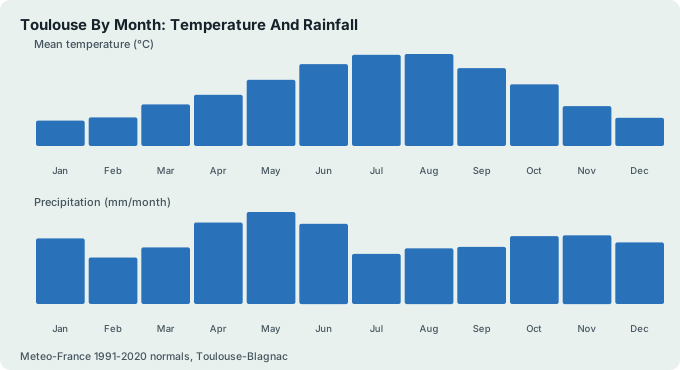
The reasoning sits in the rainfall curve more than the temperature curve. Spring rain builds steadily through the season: April averages 65.2 mm and June 64.2 mm, with May peaking at 73.6 mm across 9.9 rain days. Then the tap turns off. July drops to 40.1 mm and August to 44.6 mm, and sunshine peaks at 258.6 and 246.4 hours respectively. The trade is heat: July and August average 28.2C and 28.5C daily maximums, with 11.5 and 11.3 days a year above 30C respectively.
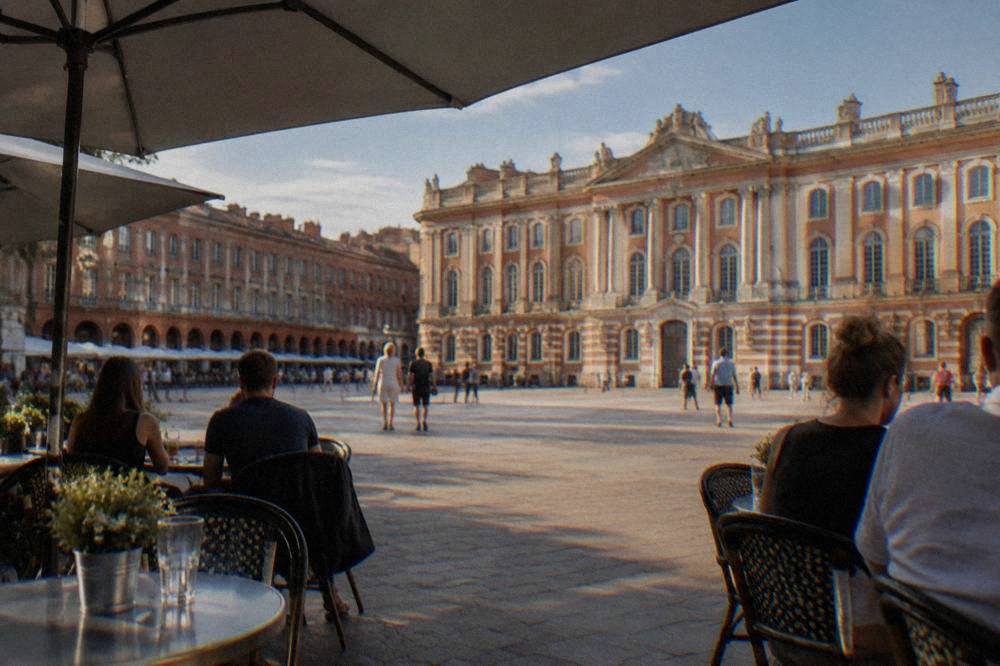
September is the quiet champion. The mean maximum falls to a comfortable 24.8C, sunshine holds at 210.1 hours, higher than any month from October to May, and rain stays modest at 45.7 mm. October cools to a 19.7C mean maximum with 155.2 hours of sun. Add the festival calendar and the argument gets stronger: Toulouse les Orgues runs 7 to 18 October 2026, and the Christmas markets do not open until 26 November, so early autumn gets culture without peak crowds.
For travelers who want the city explained rather than just seen, an immersive guided walk slots well into either shoulder season. The 18th-century immersion experience is one of the more unusual ways to absorb the historic center, and the operator's live listing carries the current price and availability.
What Does The Toulouse Climate Look Like Month By Month?
Meteo-France's 1991-2020 normals for Toulouse-Blagnac show a year that averages 18.8C as a mean maximum and 9.6C as a mean minimum, with 627 mm of rain spread over 95.8 rain days. August is the warmest month at a 22.8C overall mean, January the coldest at 6.3C, and the rain peaks in May rather than in winter.
The table below is the full monthly record, read directly from the official climate normals. Use it to check any specific month rather than trusting a generic "mild and sunny" description.
| Month | Mean max C | Mean min C | Rain mm | Rain days | Sun hours |
|---|---|---|---|---|---|
| Jan | 9.7 | 2.9 | 52.5 | 9.2 | 89.1 |
| Feb | 11.2 | 3.1 | 37.2 | 7.8 | 118.2 |
| Mar | 15.0 | 5.5 | 45.3 | 8.2 | 175.3 |
| Apr | 17.6 | 7.9 | 65.2 | 9.3 | 188.5 |
| May | 21.4 | 11.4 | 73.6 | 9.9 | 212.3 |
| Jun | 25.7 | 15.0 | 64.2 | 7.1 | 231.8 |
| Jul | 28.2 | 17.0 | 40.1 | 5.7 | 258.6 |
| Aug | 28.5 | 17.1 | 44.6 | 5.9 | 246.4 |
| Sep | 24.8 | 13.9 | 45.7 | 6.6 | 210.1 |
| Oct | 19.7 | 10.9 | 54.3 | 7.5 | 155.2 |
| Nov | 13.5 | 6.3 | 55.0 | 10.0 | 99.9 |
| Dec | 10.4 | 3.6 | 49.3 | 8.7 | 89.7 |
Two extremes frame the record. The all-time high at this station is 42.4C, set on 23 August 2023, and the all-time low is -19.2C, from 15 February 1956, across a records window running from 1947 to June 2025. Neither is a planning number in the normal sense, but the 2023 record is a useful reminder that late August in Toulouse can occasionally turn serious.
The days above 30C column of the same record tells the summer story plainly: June sees 6 such days, July 11.5 and August 11.3, while May manages just 0.6 and September 3.5. If heat is the thing you are planning around, the numbers above are the honest guide.
One more pattern worth reading out of the table: the shoulder months are not equal. April and October sit at nearly the same mean maximum, 17.6C against 19.7C, but April brings 65.2 mm of rain to October's 54.3 mm, and October holds 155.2 sunshine hours to April's 188.5. A traveler choosing between the two spring and autumn equivalents is really choosing between more light in April and less rain in October.
Is Spring A Good Time To Visit Toulouse?
Spring is a strong season in Toulouse, with March warming from a 15.0C mean maximum to 21.4C in May and sunshine climbing from 175.3 to 212.3 hours, but it is also the city's wettest stretch. May averages 73.6 mm of rain over 9.9 rain days, more than any other month, so pack for showers alongside the warmth.
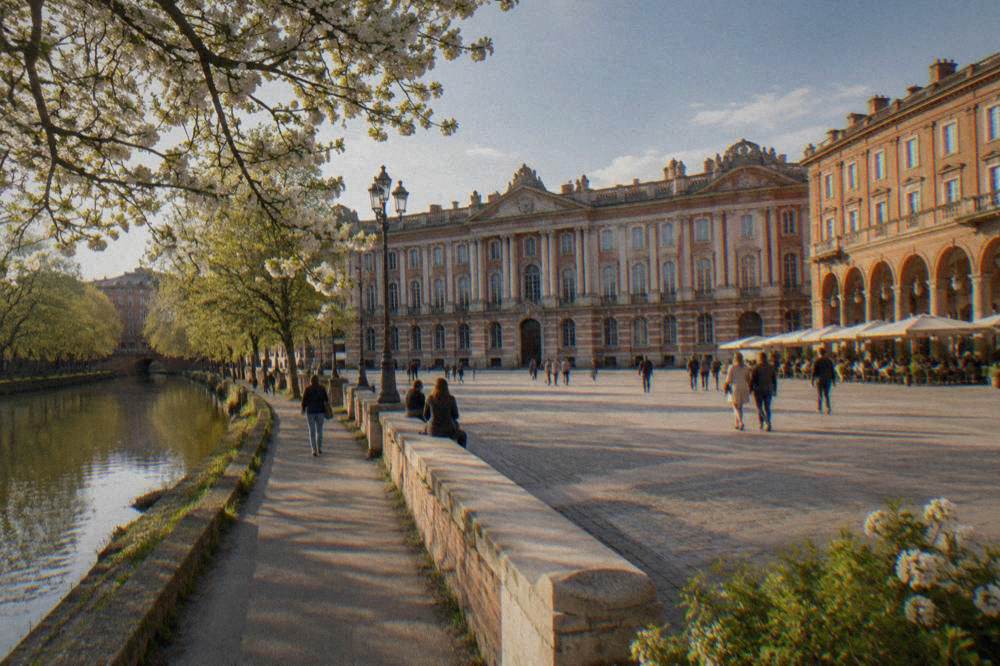
March and April are the months when the parks and riverside paths come back to life, and the city feels local again after winter. The trade is variability. A March day can reach 15C on average, but the mean minimum of 5.5C means cold mornings, and April's 65.2 mm of rain arrives across 9.3 rain days, the second-wettest count of the year after November.
Late spring also carries one of the city's cultural anchors. Piano aux Jacobins ran 8 to 30 September 2026 in its most recent edition, so the festival itself is an autumn event, but the Couvent des Jacobins hosts visitors year round, and the roof restoration works that ran through summer 2026 were managed with the site kept open. Check the convent's own page for current conditions before you build an itinerary around it.
For a spring visit, the free guided tour included with the Pass Tourisme is a good first-day move. The tourist office's Pass Tourisme page lists the pass at EUR 26 for stays of one to three days, says it pays off from the third activity, and notes that adding EUR 10 buys ten public-transport trips. A rainy May afternoon spent indoors at the Fondation Bemberg, normally EUR 12 and free with the pass, turns the wettest month on the calendar into a museum month instead.
| Spring month | Mean max C | Rain mm | Rain days | Sun hours |
|---|---|---|---|---|
| March | 15.0 | 45.3 | 8.2 | 175.3 |
| April | 17.6 | 65.2 | 9.3 | 188.5 |
| May | 21.4 | 73.6 | 9.9 | 212.3 |
What Is Summer In Toulouse Really Like?
Summer in Toulouse is hot and bright, with July and August averaging 28.2C and 28.5C mean maximums, 258.6 and 246.4 hours of sunshine, and just 40.1 mm and 44.6 mm of rain. The same record shows 11.5 days above 30C in July and 11.3 in August, and the all-time station high of 42.4C was set on 23 August 2023.
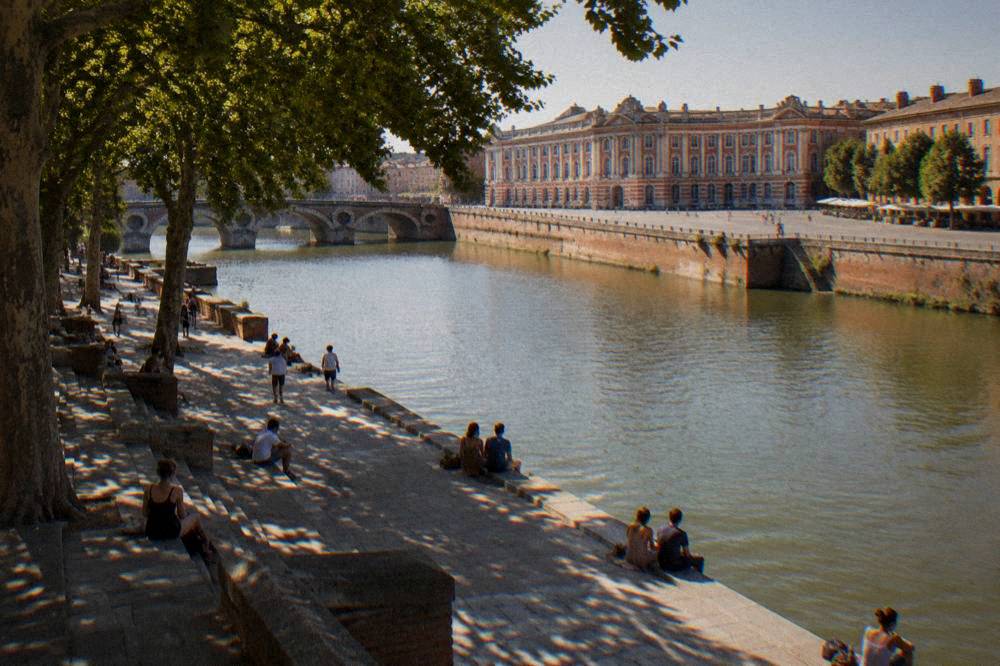
The honest summer picture is a city built for long evenings. Rain almost stops, with only 5.7 rain days in July and 5.9 in August, and the mean minimums of 17.0C and 17.1C keep nights warm. The cost is the afternoon: those eleven-plus days above 30C per summer month mean lunchtime sightseeing gives way to shade, and the pink brick holds its heat well into the evening.
Summer is also the season when families lean on the big attractions, and Cite de l'espace is the flagship. The tourist office lists its normal adult rate at EUR 29, discounted rather than free with the Pass Tourisme, and its own homepage carries tickets from EUR 22.50. An e-ticket booked ahead removes the ticket-line part of a hot day.
A summer note on getting in and out: Toulouse-Blagnac airport handled 7,621,409 commercial passengers in 2025, down 2.8 percent on 2024, and the airport pages are the place to check summer schedule changes. The Toulouse airport and airport to city center guides carry the transfer detail.
Is Autumn The Sweet Spot For Toulouse?
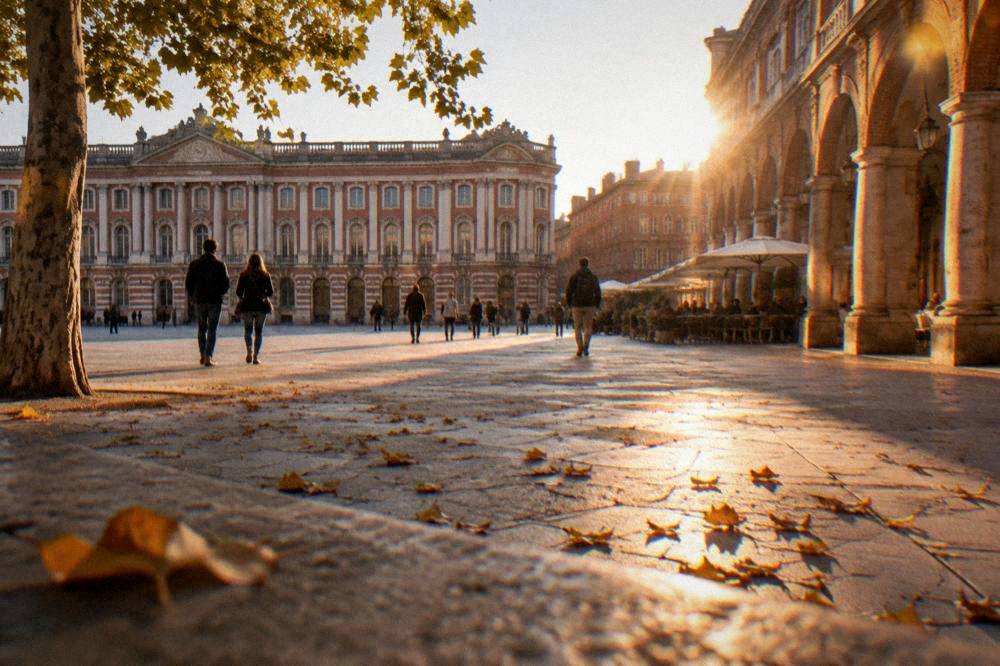
Autumn is arguably the best single season for Toulouse. September averages a 24.8C mean maximum with 210.1 hours of sunshine and only 45.7 mm of rain, October cools to 19.7C with 155.2 hours, and the festival calendar peaks, with Toulouse les Orgues running 7 to 18 October 2026 and its opening concert on 7 October at Notre-Dame de la Daurade.
The 31st edition of Toulouse les Orgues is confirmed across multiple venues, and the city's own agenda pages carry the program.
Autumn is also prime day-trip weather. The medieval walled city of Carcassonne is the classic target, and a transfer-and-free-time excursion lets you set your own pace once you arrive. The day trips from Toulouse guide covers the full range of options across the region, from the UNESCO-listed Albi to the hilltop villages of the Cordes-sur-Ciel type.
| Autumn month | Mean max C | Rain mm | Rain days | Sun hours |
|---|---|---|---|---|
| September | 24.8 | 45.7 | 6.6 | 210.1 |
| October | 19.7 | 54.3 | 7.5 | 155.2 |
| November | 13.5 | 55.0 | 10.0 | 99.9 |
One museum date matters for autumn 2026 specifically. The Musee des Augustins is temporarily closed from 21 September to 2 October 2026 for great-cloister works, and its Gothic halls, the sacristy, the Notre-Dame de Pitie hall and the chapter house, reopen on 3 October 2026 from 10:00. If an early-October trip includes the fine-arts museum, plan it for the second half of your stay.
Is Winter Worth It In Toulouse?
Winter in Toulouse is mild rather than harsh, with January averaging a 9.7C mean maximum and a 2.9C mean minimum, and 89.1 hours of sunshine, but it is a low-light season. The Christmas markets at Place du Capitole, the allees Jean-Jaures and square Charles-de-Gaulle run 26 November to 27 December 2026, which is the clear reason to time a December visit.
The record low of -19.2C from February 1956 is a historical footnote, not a packing instruction: modern Januarys average above freezing at night by nearly three degrees. Rain stays moderate through winter, 52.5 mm in January and 49.3 mm in December, and November is actually the month with the most rain days, 10.0 on average.
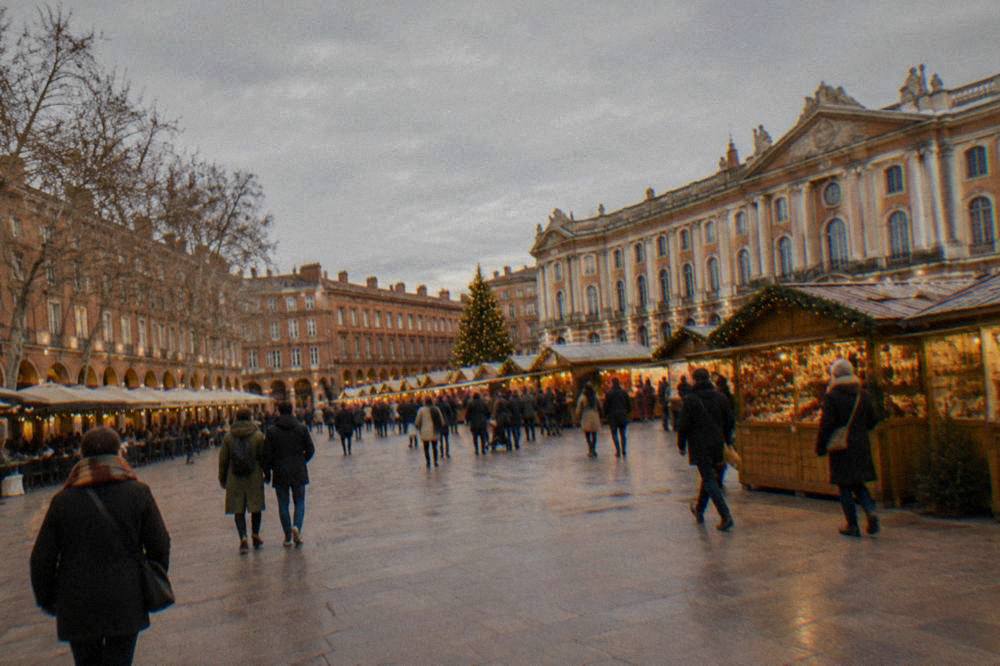
Winter visitors get lower accommodation demand and the indoor circuit: the museums, the Basilique Saint-Sernin, a stop on the Routes of Santiago de Compostela inscribed by UNESCO in 1998, and the Couvent des Jacobins, free on the first Sunday of the month except when a temporary exhibition is on. The Toulouse museums guide maps the indoor options, and where to stay in Toulouse helps with neighborhood choice in the quieter season.
| Winter month | Mean max C | Mean min C | Rain mm | Sun hours |
|---|---|---|---|---|
| December | 10.4 | 3.6 | 49.3 | 89.7 |
| January | 9.7 | 2.9 | 52.5 | 89.1 |
| February | 11.2 | 3.1 | 37.2 | 118.2 |
Which Toulouse Events Should You Plan A Trip Around?
The dated, officially confirmed events are Piano aux Jacobins from 8 to 30 September 2026, Toulouse les Orgues from 7 to 18 October 2026, the Christmas markets from 26 November to 27 December 2026, and Rio Loco from 9 to 13 June 2027 with the theme Noctiluca. The Festival des Lanternes at Blagnac is discontinued and should not be planned around.
The city's agenda pages carry all four confirmed events. Rio Loco's 2026 edition ran 10 to 14 June, so the June 2027 dates fit the established pattern of an early-summer music festival on the Prairie des Filtres. The marathon, the Toulouse Game Show and the Fete de la Violette all appear in event listings, but their dates were not confirmed on the city's own pages, so treat any date you see for them as provisional and check the organizers' pages before booking travel around them.
| Event | Confirmed dates | Source status |
|---|---|---|
| Piano aux Jacobins | 8 to 30 September 2026 | City agenda page |
| Toulouse les Orgues (31st edition) | 7 to 18 October 2026 | City agenda page |
| Christmas markets (Capitole, Jean-Jaures, Charles-de-Gaulle) | 26 November to 27 December 2026 | Metropole site |
| Rio Loco (Noctiluca) | 9 to 13 June 2027 | Festival site |
| Festival des Lanternes, Blagnac | Discontinued | Do not plan around |
How Do Transport And Passes Change With The Season?
Tisseo's official catalogue prices do not change with the seasons: a single trip is EUR 1.90, a day pass EUR 7.20 and a 3-day pass EUR 14.30 year round, and there is no 2-day pass. The airport single, covering the Tisseo network plus the Navette aeroport, is EUR 9.50, and the Pass Tourisme at EUR 26 with a EUR 10 transport add-on is the planning tool that matters most.
The seasonal angle is capacity rather than price. The Navette aeroport runs one departure every 15 minutes and takes 20 to 40 minutes to the center, with the tram link to the airport closed until the end of 2026 for the Line C metro works. In the busy summer window, allowing for that journey time is the honest advice; the schedule itself is fixed.
| Ticket | Price | Notes |
|---|---|---|
| Single trip | EUR 1.90 | EUR 2.50 bought on board |
| 10 trips | EUR 16.00 | |
| Day pass | EUR 7.20 | |
| 3-day pass | EUR 14.30 | No 2-day pass exists |
| Airport single | EUR 9.50 | Includes Navette aeroport |
| Pass Tourisme | EUR 26 | 1 to 3 days, free guided tour included |
| Pass transport add-on | EUR 10 | Adds 10 transport trips |
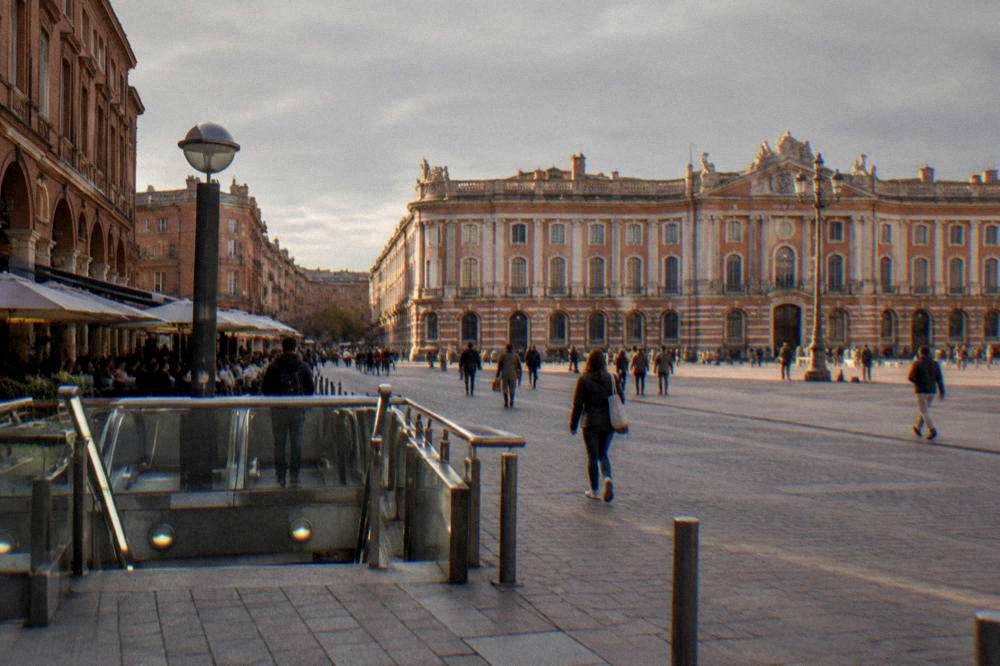
The Pass Tourisme math is season-independent but worth stating: the tourist office says it pays off from the third activity, and the normal rates it lists are Fondation Bemberg at EUR 12, the Museum at EUR 12, Les Abattoirs at EUR 12, the Musee des Augustins at EUR 5 and the Couvent des Jacobins at EUR 5, all free with the pass. A wet May day that turns into a museum crawl is exactly the scenario the pass was built for, and Toulouse Travel Guide carries a full Pass Tourisme breakdown.
Common Questions About The Best Time To Visit Toulouse
Quick answers to what planners ask most about timing a Toulouse trip.
What is the hottest month in Toulouse?
August is the warmest month at a 22.8C overall mean, with July close behind at 22.6C. In terms of daily maximums, August averages 28.5C and July 28.2C, and the all-time station high of 42.4C was recorded on 23 August 2023.
What is the coldest month in Toulouse?
January is the coldest month, averaging a 9.7C mean maximum and a 2.9C mean minimum, with 89.1 hours of sunshine. The all-time record low of -19.2C dates from 15 February 1956.
Does it rain a lot in Toulouse?
The annual total is 627 mm spread over 95.8 rain days. The surprise in the record is that May is the wettest month at 73.6 mm, ahead of April at 65.2 mm and June at 64.2 mm, while February is the driest at 37.2 mm.
Is Toulouse worth visiting in December?
Yes, if the Christmas markets are the draw: they run 26 November to 27 December 2026 across Place du Capitole, the allees Jean-Jaures and square Charles-de-Gaulle. Expect a 10.4C mean maximum and 89.7 hours of sunshine, so build the visit around indoor sights and evening lights.
When is Toulouse's festival season?
The densest stretch is September to October: Piano aux Jacobins runs 8 to 30 September 2026 and Toulouse les Orgues 7 to 18 October 2026. In early summer, Rio Loco is confirmed for 9 to 13 June 2027.
Is summer too hot for sightseeing in Toulouse?
July and August average 11.5 and 11.3 days a year above 30C respectively, so midday sightseeing is best swapped for shaded terraces and evening walks. September, at a 24.8C mean maximum with 210.1 hours of sun, is the comfortable alternative with nearly the same light.
Whatever window you choose, book the experiences that sell out first, the guided walks and the day trips, ahead of your dates, and let the climate table above settle the rest.