Toulouse Vs Marseille
Two of France's biggest draws, one inland and pink bricked, one Mediterranean and maritime, compared on cost, weather, food and day trips.
Short answer
Toulouse suits travelers who want a compact, walkable pink brick city with aerospace sights and Canal du Midi day trips, while Marseille suits those who want the sea, a gritty port energy and coastal hikes. Both are reachable by direct train, and neither needs a car in the center.
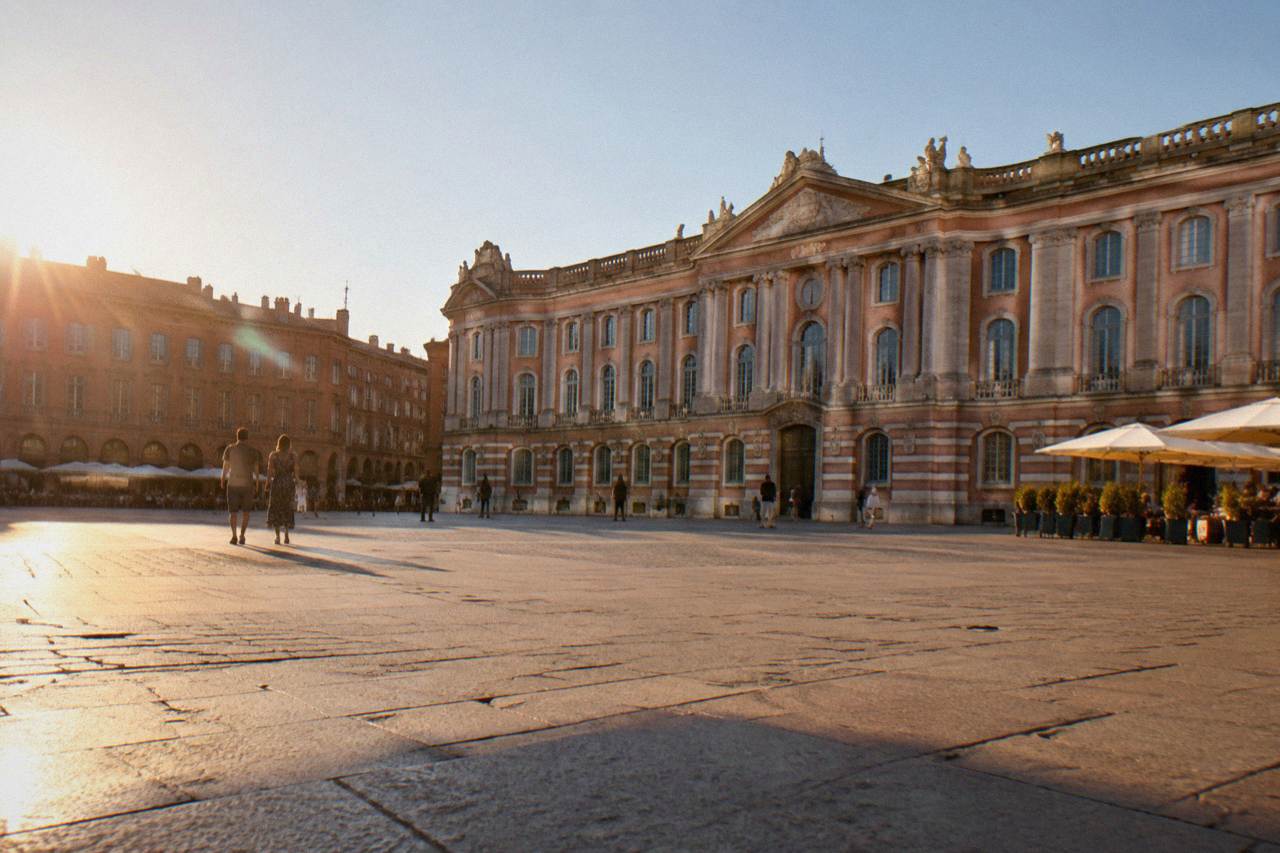
Toulouse, the pink brick city on the Garonne in southwestern France, gets compared to Marseille more often than either city expects. Both are southern, both are proud of their food, and both sit far enough from Paris that a trip to either feels like a different country from the capital. But they are opposites in almost every way that matters to a traveler: Toulouse is an inland city of terracotta brick, canals and aerospace, while Marseille is France's great Mediterranean port, built around a harbor, seafood and the calanques. This comparison lays out what each city does well, using Toulouse's verified prices, climate and transport figures, so you can decide which one earns your week.
Which City Is Better For A First Visit, Toulouse Or Marseille?
Toulouse is the easier first visit: its historic center is compact, its metro and buses are simple to use, and its headline sights, the Capitole, the Basilique Saint-Sernin and the Couvent des Jacobins, sit within an easy walk of each other. Marseille rewards a first visit too, but it demands more planning, because its attractions, the Vieux-Port, the MuCEM and the calanques, spread across a larger and hillier city.
Neither city is a bad choice. The honest difference is pacing. Toulouse can be absorbed on foot over two or three days, with the guide to three days in Toulouse covering the realistic maximum visitors need. Marseille is a city where the sea and the cliffs pull you outward, and where the best experiences, boat trips into the calanques and hikes along the coast, take half a day each.
If your trip is short and you want architecture, museums and a strong food scene without renting a car, Toulouse wins. If your trip is longer, or the sea is non-negotiable, Marseille wins. Toulouse has no sea, no beach and no harbor: it sits on the Garonne river and the Canal du Midi, and the nearest coast is a long way off. Travelers who arrive expecting a Mediterranean city are the ones who leave disappointed.
For a quick orientation, the sightseeing bus loops past the main sights in about an hour, which is a reasonable way to place the city's geography on day one. The sightseeing bus tour runs from the city center and needs no booking gymnastics.
How Do The Two Cities Compare On Atmosphere And Size?
Toulouse is a mid-sized, self-contained city of 514,819 inhabitants in the commune itself, with a calm, student-inflected atmosphere, terracotta brick everywhere and a center you can cross on foot in under an hour. Marseille is bigger, louder and more contrasted, a port city where grand avenues meet working docks, and where the energy comes from the sea rather than from the squares.
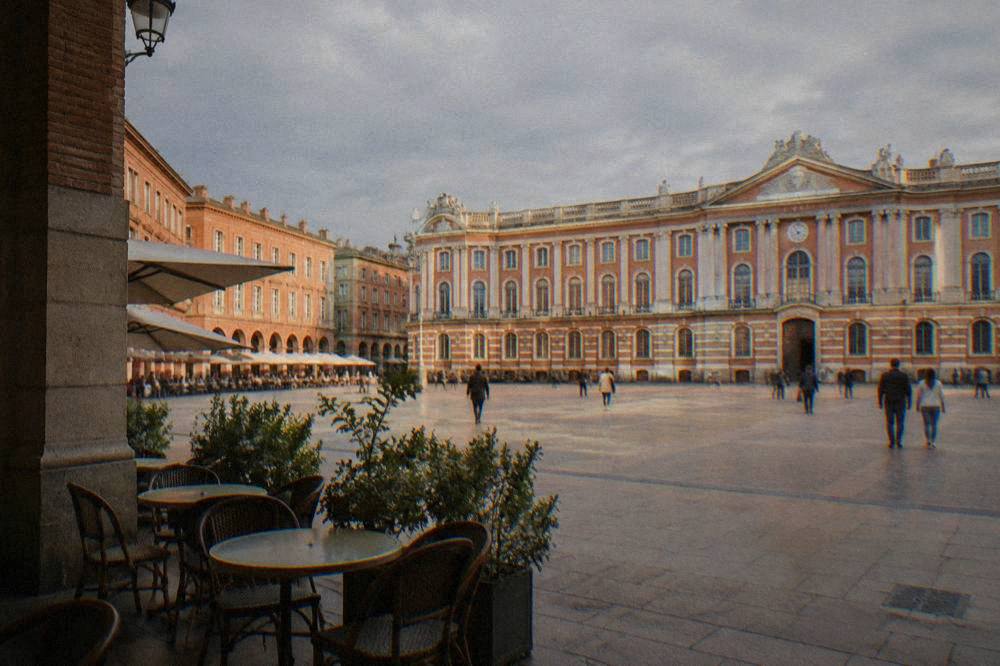
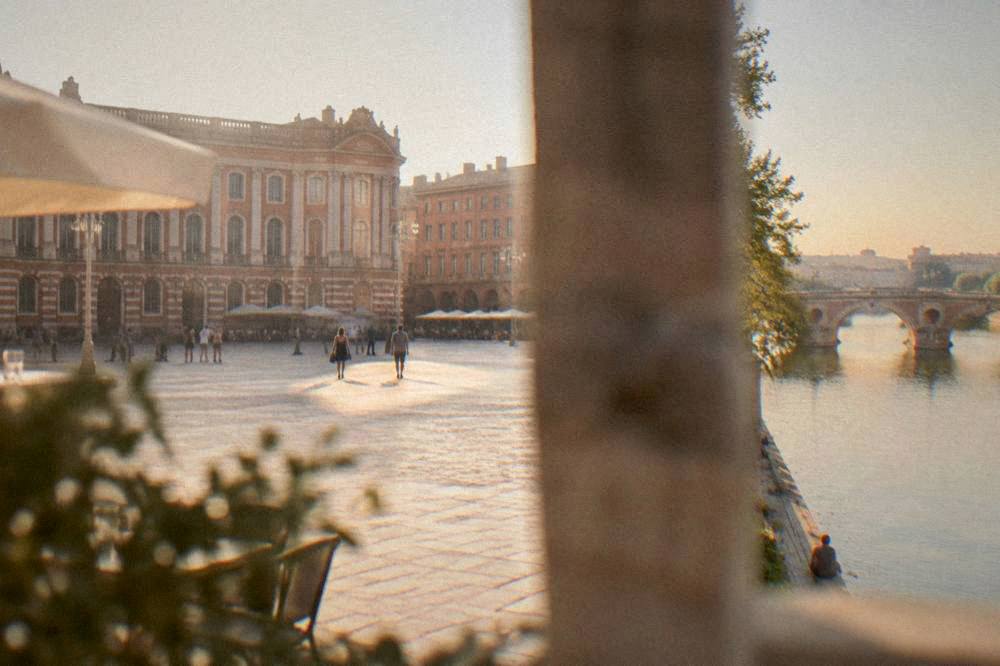
Toulouse's character is brick. The city's nickname, La Ville Rose, comes from the pink terracotta that colors the Capitole, the mansions of the rue d'Alsace-Lorraine side streets and the courtyards of the Jacobins, and the whole explanation of why Toulouse is the pink city is worth reading before a visit. Add a large student population, the aerospace industry around Airbus, and the Canal du Midi drifting through the south of the city, and you get a place that feels engineered for wandering.
Marseille's character is the port. The Vieux-Port is the hinge of the city, fishing boats and ferries in a harbor enclosed by two forts, and the city climbs steeply away from it in neighborhoods that range from polished to scruffy, sometimes on the same street. Where Toulouse is uniform in its brick, Marseille is a patchwork: Provençal limestone, modern glass at the MuCEM, and the white of the calanques visible from the corniche on a clear day.
Neither atmosphere is objectively better. Toulouse is tidier and more restful; Marseille is more dramatic and more demanding of a visitor's attention. Families with young children and travelers who like to end the day in one neighborhood tend to prefer Toulouse. Photographers, hikers and anyone who measures a city by its light tend to prefer Marseille.
What Does A Trip To Each City Cost?
Toulouse is the cheaper city to run day to day: a single metro or bus trip costs EUR 1.90, a day pass EUR 7.20, the tourist office's Pass Tourisme is EUR 26 for one to three days, and headline museums charge EUR 5 to EUR 12 at normal rates. Marseille's costs are harder to pin down from Toulouse's figures, but its transport and museum pricing follow the same French municipal pattern, so the real difference comes from what you do, not where you are.
The Toulouse figures come from the operator and the tourist office directly. Tisseo, the local transit network, prices a single trip at EUR 1.90, or EUR 2.50 if bought last-minute on board, with 10 trips at EUR 16.00, a day pass at EUR 7.20 and a 3-day pass at EUR 14.30. There is no 2-day pass. The airport single, covering the Tisseo network plus the Navette aeroport bus, is EUR 9.50.
| Tisseo ticket | Price |
|---|---|
| Single trip | EUR 1.90 |
| Single bought on board | EUR 2.50 |
| 10 trips | EUR 16.00 |
| Day pass | EUR 7.20 |
| 3-day pass | EUR 14.30 |
| Airport single (network + Navette) | EUR 9.50 |
The Pass Tourisme, sold by the tourist office for EUR 26, covers stays of one to three days and pays off from the third activity. It includes a free guided tour from the tourist office, and adding EUR 10 buys ten public-transport trips. The office's own rate table shows what the pass replaces.
| Attraction (normal rate) | Standard price | With Pass Tourisme |
|---|---|---|
| Fondation Bemberg | EUR 12 | Free |
| Museum de Toulouse | EUR 12 | Free |
| Les Abattoirs | EUR 12 | Free |
| Musee des Augustins | EUR 5 | Free |
| Couvent des Jacobins | EUR 5 | Free |
| Cite de l'espace | EUR 29 | Discounted |
The full breakdown, including the guided tour and the transport add-on, is in the Pass Tourisme guide. One Toulouse-specific cost note: the city's tourist tax on non-classified lodging, which covers most platform rentals, runs at 5% of the pre-tax nightly price per person, charged through the host.
On the Marseille side, avoid assuming it is cheap because it is southern. The classic Marseille expenses are the sea ones: boat trips into the calanques and seafood restaurants around the Vieux-Port, and those add up faster than a Toulouse week built around museums, cassoulet and canal walks. A realistic budget comparison: in Toulouse, a day of two museums, a market lunch and an evening drink is a modest day; in Marseille, the equivalent day plus a boat trip costs more, but you get the sea.
Which City Has The Better Weather?
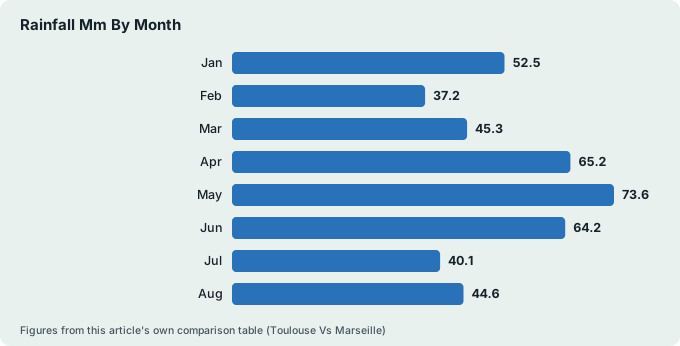
Marseille has the more classically Mediterranean climate, with the sea moderating both heat and cold, while Toulouse's climate is more varied: Meteo-France's 1991-2020 normals for Toulouse-Blagnac show an annual mean maximum of 18.8C, 2,075.1 hours of sunshine, 627 mm of rain, and a surprise, May, not winter, is the wettest month with 73.6 mm.
The Toulouse numbers are worth knowing before you pack. July is the sunniest month at 258.6 hours of sunshine with just 40.1 mm of rain, and the city averages 11.5 days a year above 30C. The records since 1947 run from -19.2C in February 1956 to 42.4C in August 2023, which tells you both extremes are possible but neither is normal.
| Month | Mean temperature C | Rainfall mm |
|---|---|---|
| Jan | 6.3 | 52.5 |
| Feb | 7.1 | 37.2 |
| Mar | 10.3 | 45.3 |
| Apr | 12.7 | 65.2 |
| May | 16.4 | 73.6 |
| Jun | 20.3 | 64.2 |
| Jul | 22.6 | 40.1 |
| Aug | 22.8 | 44.6 |
| Sep | 19.3 | 45.7 |
| Oct | 15.3 | 54.3 |
| Nov | 9.9 | 55.0 |
| Dec | 7.0 | 49.3 |
The counterintuitive part is spring. May, April and June are Toulouse's three wettest months, at 73.6, 65.2 and 64.2 mm respectively, while February is the driest at 37.2 mm. Travelers who assume a southern French city is dry in May get caught out. The full month-by-month picture, including what it means for planning, is in the best time to visit Toulouse guide.
Marseille, by contrast, sits on the coast and behaves like it: hotter, drier summers and milder winters, with the mistral wind blowing through in gusts that clear the sky and drop the felt temperature. This site does not quote Marseille's climate figures, because they were not verified against the French weather service the way Toulouse's were, but the direction of the comparison is not in doubt: more sun, less rain, more wind, and swimming in the sea actually possible for several months of the year, which inland Toulouse cannot offer.
Food: Cassoulet Or Bouillabaisse?
Toulouse's table runs on cassoulet, Toulouse sausage, violets and the Victor Hugo market, while Marseille's runs on bouillabaisse, pastis and seafood straight off the boats, and the honest answer is that Toulouse is the better eating city for a sit-down regional experience, while Marseille is better the moment your meal needs to involve fish that was swimming that morning.
The Toulouse side is well documented on this site. The city's signature dish is cassoulet, the slow-baked bean and meat casserole, and the cassoulet guide covers what it is and how to judge a good one. Around it sit Toulouse sausage, the Victor Hugo market with its oyster and charcuterie stalls, and a violet tradition that shows up in sweets and liqueurs. The food guide ties it together.
A guided food tour is the fastest way into that table, and the tasting walk above covers the classics in one outing. For a deeper read on where to eat, the restaurants guide lists the dishes to look for rather than ranking kitchens.
Marseille's bouillabaisse is a genuine institution, but it comes with a catch worth knowing: the respected versions are expensive, served in specific restaurants, often requiring a reservation, and the cheap versions are a different dish entirely. Marseille also has the stronger street-food culture, from panisses to pizza by the slice near the Vieux-Port. Toulouse eats better at the mid-range; Marseille eats better if your budget stretches to the classic fish tables or drops to street level.
How Easy Is Each City To Get Around?
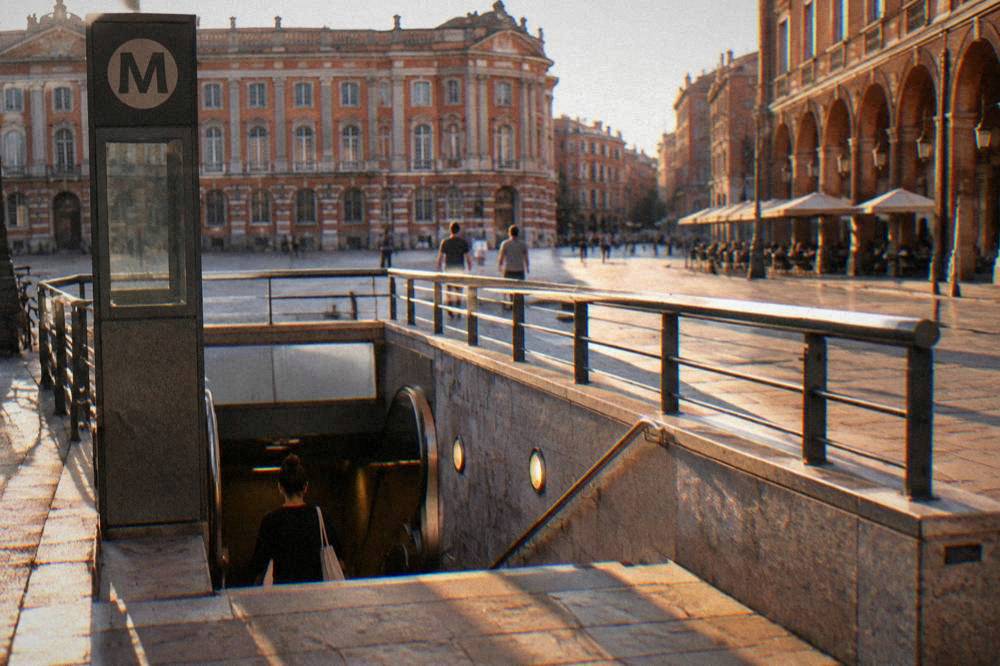
Toulouse is the easier city to move through: it has a two-line metro plus buses and trams, a single trip costs EUR 1.90, and the historic center is walkable end to end, while Marseille's two-line metro serves the city but its headline sights, the corniche and the calanques, depend on buses, boats and shoes, so Marseille rewards a visitor who plans each excursion rather than drifting.
Toulouse's transit is simple enough to explain in a paragraph. The Tisseo network runs the metro, buses and trams; tickets are the ones in the table above; and the airport connection is the Navette aeroport bus, since the T2 tram to the airport has been closed since 5 June 2023 and stays closed until the end of 2026. The bus leaves every 15 minutes and takes 20 to 40 minutes to the center. The full picture, including the new Line C metro opening at the end of 2028, is in the getting around guide.
Marseille's transport is functional in the center and frustrating at the edges. The metro links the train station to the Vieux-Port quickly, and buses run along the corniche, but reaching the start of the calanques trails and getting back can consume real time, and in summer the coastal buses fill up. A visitor to Marseille should budget for a boat or a bus ticket every day. A visitor to Toulouse can genuinely spend three days on foot with one metro ride.
For orientation on day one, the open-top bus loop is a fair option, and it pairs with the airport to city center guide for the arrival logistics.
Which City Has The Better Day Trips?
Toulouse has the stronger inland day trips, with the UNESCO-listed Canal du Midi at the city's edge and Carcassonne, Albi and the Pyrenees within reach, while Marseille's day trips are coastal and dramatic, led by the calanques and Cassis, so the winner depends entirely on whether your ideal day trip ends at a medieval wall or a swimming cove.
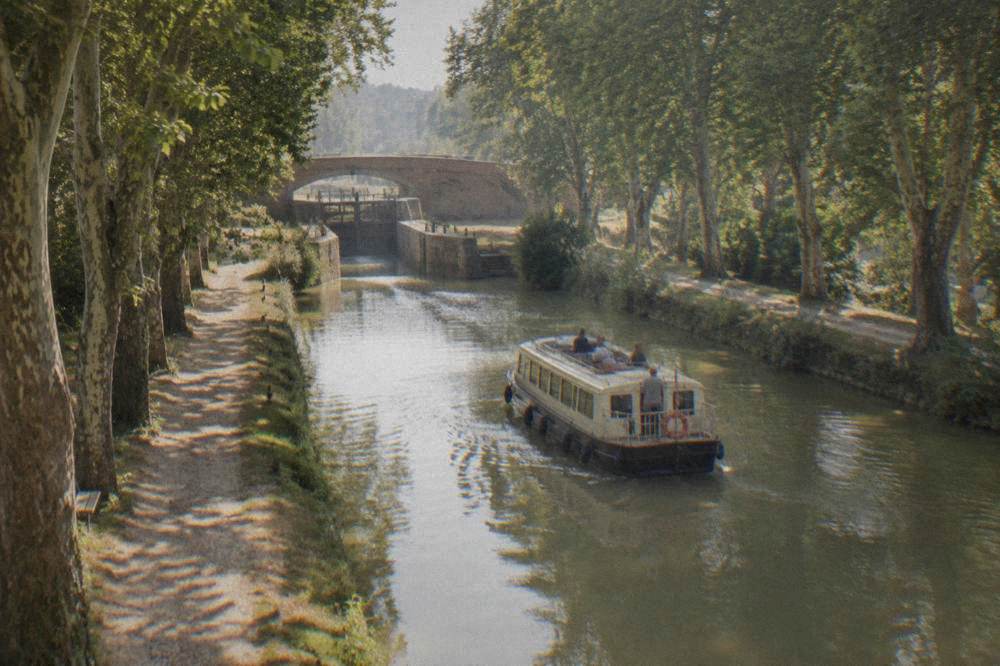
The Toulouse list is deep. Carcassonne, the walled cite, is the headline, and the Carcassonne guide covers it in full. Albi and Cordes-sur-Ciel make a strong second. The Pyrenees sit roughly 100 km to the south, close enough for a mountain day, and the full menu is in the day trips from Toulouse guide. The Canal du Midi, inscribed by UNESCO in 1996, runs through the city itself, so the easiest "day trip" is a cruise that starts minutes from the center.
Marseille's day trips are about water and rock. The calanques, the limestone inlets between Marseille and Cassis, are the reason many people visit the region at all, and they are hiked, swum and boated rather than toured. Cassis, Aix-en-Provence and the lavender country sit behind Marseille in a way that Toulouse's inland options, Cathar castles, Gaillac vineyards, Lourdes, do not have a sea to compete with.
| Day trip | From Toulouse | From Marseille |
|---|---|---|
| Headline walled site | Carcassonne | Cassis old town |
| UNESCO option | Canal du Midi (1996) | Arles, Roman monuments |
| Nature day | Pyrenees, about 100 km south | Calanques coastal hikes |
| Wine region | Gaillac | Provence rosé country |
| Boat trip | Canal du Midi cruise | Calanques boat excursion |
| Swimming | Not in the city | Sea coves in summer |
Where Should You Stay In Each City?
In Toulouse, stay inside the boulevards, with the Capitole, Saint-Etienne and Carmes areas putting the whole center within a walk, while in Marseille the Vieux-Port and the Panier are the areas that keep the city legible, and in both cities the rule is the same: the center costs more per night and saves the difference in transport and time.
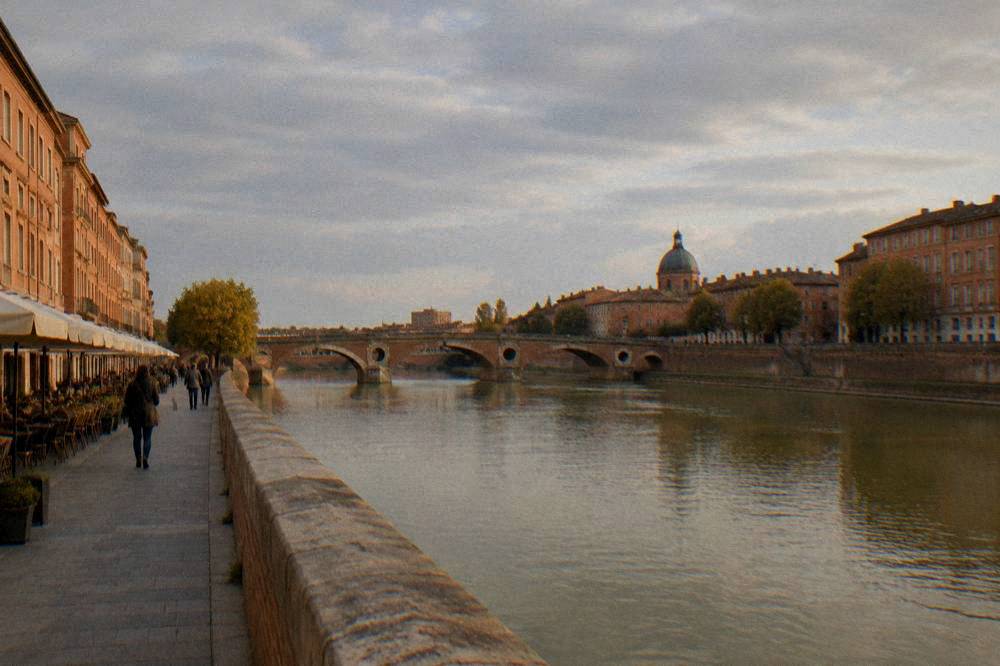
Toulouse's neighborhoods divide cleanly. The where to stay guide walks through them, but the short version is that the area around the Capitole is the classic choice, Carmes and Saint-Etienne are quieter with better food streets, and Saint-Cyprien across the Garonne trades a short walk over the Pont-Neuf for lower rates. All of them are inside the fare zones covered by a EUR 1.90 single.
To base yourself near the Capitole, book a hotel room here.
Marseille's geography punishes the wrong location more than Toulouse's does. The neighborhoods climb hills and wrap around inlets, so a cheap room far from the center can mean a bus transfer each way. Around the Vieux-Port you pay for location and get walkability; in the Panier you get atmosphere and stairs; along the corniche you get sea views and a dependence on buses.
One planning note that applies to both cities: tourist tax in Toulouse on non-classified rentals, which includes most platform apartments, is 5% of the pre-tax nightly price per person, so the apparent saving on a cheap apartment shrinks slightly at checkout. The same tax exists in Marseille under French national rules, applied by the city at its own rates.
What About Families, Museums And Rainy Days?
Toulouse is the stronger family and museum city: Cite de l'espace charges EUR 29 for an adult with tickets from EUR 22.50, Aeroscopia charges EUR 16 with planes you can walk under, and the city's museums cluster within walking distance, while Marseille's family highlights are the boat trips and the MuCEM, and its rainy-day offer is thinner once the sea is off the table.
The Toulouse attraction numbers are worth a table, because they are the ones this site verified directly with the operators.
| Toulouse attraction | Adult admission | Notes |
|---|---|---|
| Cite de l'espace | EUR 29 | Tickets from EUR 22.50 on the site |
| Aeroscopia | EUR 16 | Open daily 9:30-18:00, last entry 17:00 |
| Airbus factory tour (Manatour) | EUR 18 | Original passport or ID required |
| Couvent des Jacobins | EUR 5 | Free first Sunday, except during exhibitions |
| Musee des Augustins | EUR 5 | Closed 21 Sep to 2 Oct 2026 for works |
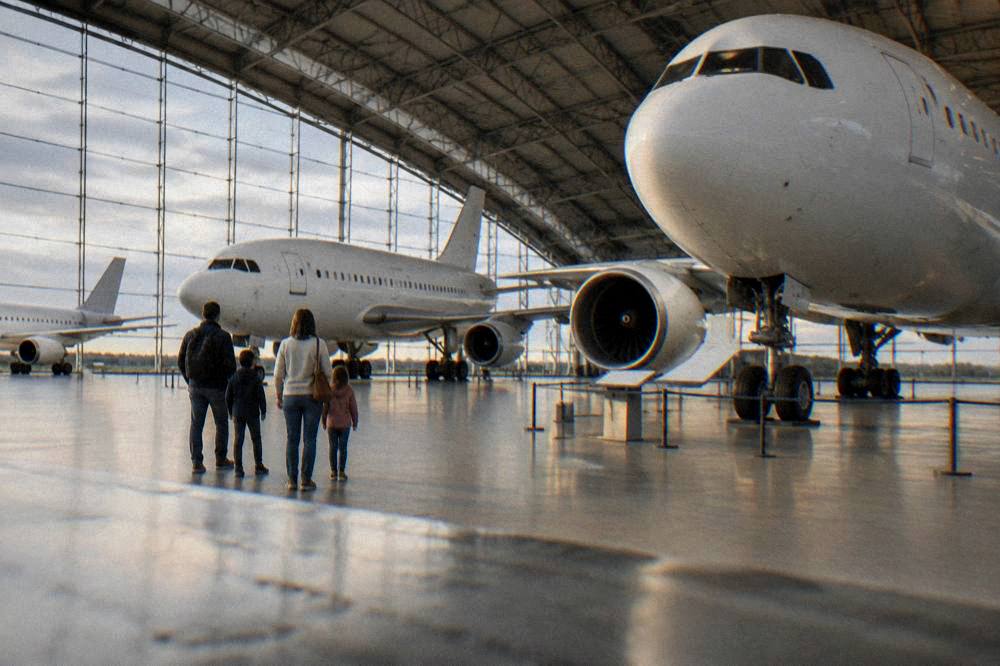
The Airbus factory tour deserves a flag: an original passport or ID card is required, no photocopies or phone images, and visitors need to arrive well ahead of the start, with no cameras allowed. The Airbus factory tour guide covers the practicalities, and the museums guide maps the rest of the collection.
Marseille's museum anchor is the MuCEM, the museum of Mediterranean civilizations at the harbor mouth, and it is genuinely excellent. But beyond it and the old charity museum, the indoor offer thins out, and a rainy day in Marseille is a flatter day than a rainy day in Toulouse, which the rainy day guide exists to solve.
What Is Happening In Each City In 2026 And 2027?
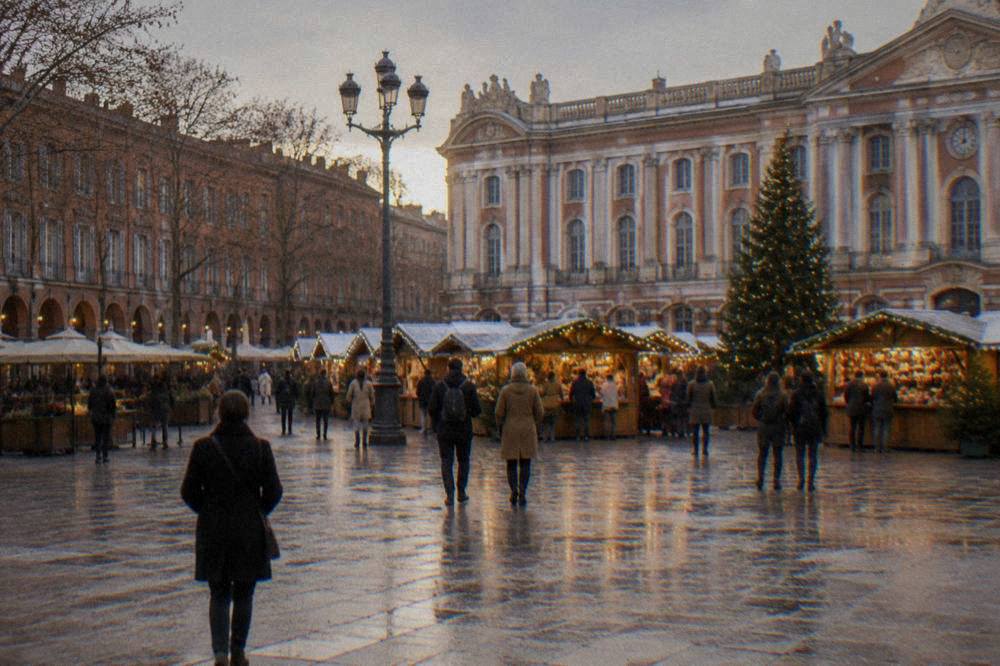
Toulouse's verified calendar includes Piano aux Jacobins from 8 to 30 September 2026, Toulouse les Orgues from 7 to 18 October 2026, Christmas markets from 26 November to 27 December 2026 and Rio Loco from 9 to 13 June 2027, so plan around the Toulouse dates if timing is your deciding factor.
The Toulouse dates come from the city and the organizers.
| Event | Dates |
|---|---|
| Piano aux Jacobins | 8 to 30 September 2026 |
| Toulouse les Orgues (31st edition) | 7 to 18 October 2026 |
| Christmas markets (Capitole, allees Jean-Jaures, square Charles-de-Gaulle) | 26 November to 27 December 2026 |
| Rio Loco | 9 to 13 June 2027 |
The organ festival's opening concert is on 7 October at Notre-Dame de la Daurade, and the Christmas market on the Place du Capitole is the city's biggest seasonal draw. The events guide and the Christmas market guide carry the detail.
Marseille's calendar is not this site's to quote. What can be said without figures: the city hosts a major carnival tradition, a summer of coastal festivals and a strong Christmas period, and any of them can be checked on the city's own pages before booking. If your trip is anchored to a specific festival, verify the Marseille dates yourself rather than trusting a summary.
So, Toulouse Or Marseille?
Choose Toulouse for a compact, brick-built city that is easy to walk, cheap to run, with cassoulet, canals, aerospace and strong inland day trips, and choose Marseille for the sea, the calanques, a bigger and rawer urban energy and a coastline you can swim from. If you have a week, the strongest answer is to split it: the two cities are linked by direct train, and the pairing gives you both the brick and the blue.
The decision usually comes down to one question: is the sea on your list? If it is not, Toulouse is the safer and, on the verified numbers, the cheaper and simpler trip, with the is Toulouse worth visiting guide making the case in full. If it is, Marseille delivers something Toulouse cannot, and no canal cruise substitutes for it.
A split week is genuinely practical. Arrive in Toulouse, spend three days on the center, the canal and the market, then take a direct train south and finish with two days of calanques and bouillabaisse. Travelers doing the reverse, Marseille first, arrive in Toulouse with their legs already trained for the hills.
Common Questions About Toulouse Vs Marseille
Is Toulouse cheaper than Marseille?
Toulouse is cheap to run: a single transit trip is EUR 1.90, a day pass EUR 7.20, and the Pass Tourisme at EUR 26 covers three days of museums. The cities price similarly for basics, and the difference comes from activities, since Marseille's boat trips and seafood tables cost more than Toulouse's museums and cassoulet.
Which city is better without a car?
Both work without a car, but Toulouse is easier. Its center is walkable and its metro, buses and trams run on a single EUR 1.90 ticket, with a day pass at EUR 7.20. Marseille's center is transit-friendly too, but the calanques and the corniche depend on buses and boats, so a car-free Marseille day takes more planning.
Does Toulouse have a beach?
No. Toulouse is an inland city on the Garonne river and the Canal du Midi, with no sea and no beach. The nearest coast is far enough away that it is not a Toulouse day trip. If a beach is essential to your trip, Marseille is the choice of the two cities.
Which city has better weather?
Marseille, on the general Mediterranean pattern: more sun, less rain and milder winters. Toulouse's verified normals show 2,075.1 hours of sun a year, a July mean of 22.6C and a surprise in the rain, with May the wettest month at 73.6 mm. Toulouse summers are warm enough, with 11.5 days a year above 30C, but the sea moderates Marseille in a way inland Toulouse cannot match.
Can you visit both cities on one trip?
Yes, and it is a good plan. A direct train links the two, so a common pattern is three or four days in Toulouse followed by two or three in Marseille, or the reverse. Spend the Toulouse half on the Capitole, the Jacobins, the canal and cassoulet, and the Marseille half on the Vieux-Port and the calanques.
Which city is better for food?
Toulouse is better for a regional sit-down tradition: cassoulet, Toulouse sausage, the Victor Hugo market and a violet-themed sweet culture. Marseille is better for seafood, led by bouillabaisse, though the respected versions are expensive and often need a reservation. If your ideal meal is meat and beans, pick Toulouse; if it is fish, pick Marseille.
If you are leaning Toulouse, the Toulouse Travel Guide homepage is the full map of the city, and the comparison with Bordeaux or Lyon in the guides to Toulouse vs Bordeaux and Toulouse vs Lyon covers the other two cities travelers usually weigh it against.