Carcassonne: The Medieval Walled City Day Trip From Toulouse
Carcassonne is the day trip visitors to Toulouse have at the top of their list, a complete medieval walled city standing on a hill above the Aude river, reachable from Toulouse by a direct train or by guided coach tour.
Short answer
Carcassonne is a medieval fortified city in the Occitanie region of southwestern France, a short direct train ride or coach trip from Toulouse. Visitors go for the day, walk the double walls and the narrow streets of the Cite, and return to Toulouse in the evening.
Carcassonne, in the Occitanie region of southwestern France, is the fortified medieval city that draws day trippers out of Toulouse, roughly a hundred kilometers down the corridor toward the Mediterranean. Toulouse, the pink-brick prefecture of Haute-Garonne on the Garonne, makes a practical base for it: a direct train runs from Toulouse-Matabiau, and several guided coach tours depart from the city center each week. This guide, from the Toulouse Travel Guide editorial desk, covers how to get there, what to see inside the walls, what to eat, when to go and whether an overnight stay beats a day trip.
Where Is Carcassonne And Why Is It The Classic Day Trip From Toulouse?
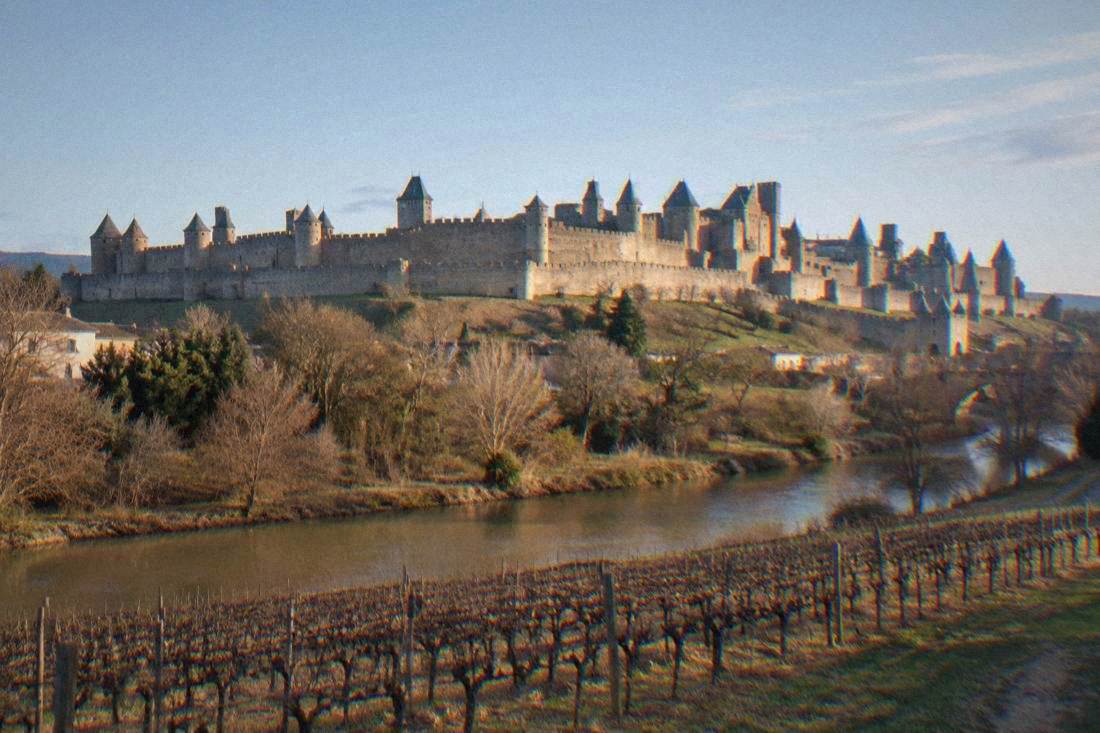
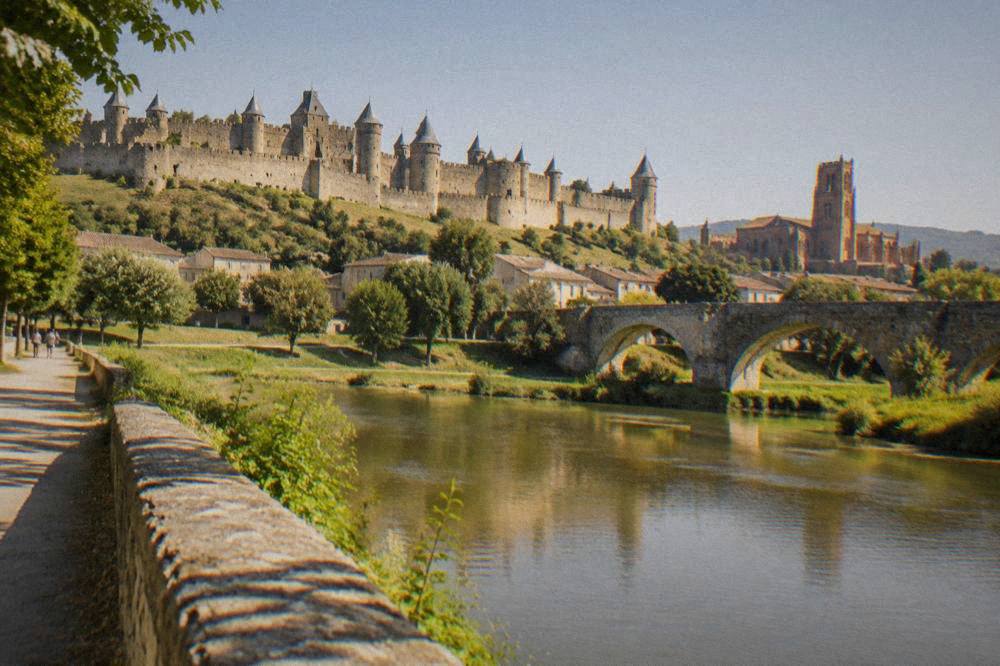
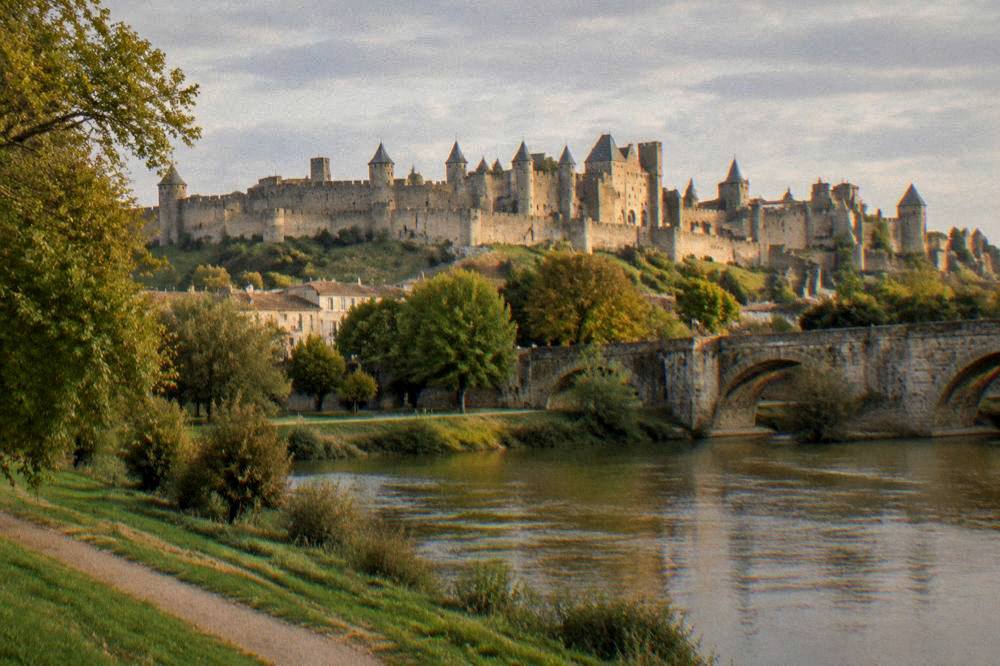
Carcassonne sits on a hill above the Aude river in the Occitanie region of southwestern France, and its Cite medievale, the walled upper town, is one of the most complete fortified medieval cities in Europe. From Toulouse it is a short direct train ride away, which is why it anchors more day-trip plans from the pink city than any other single destination.
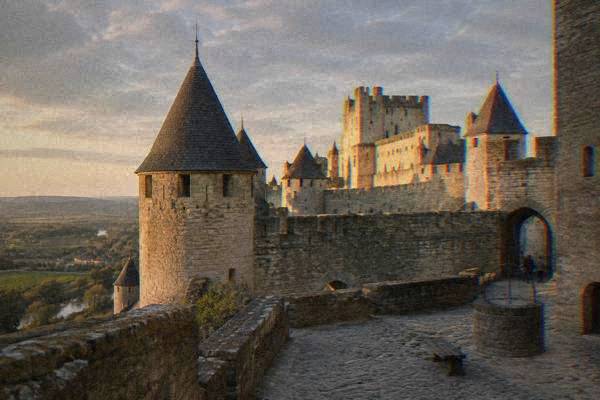
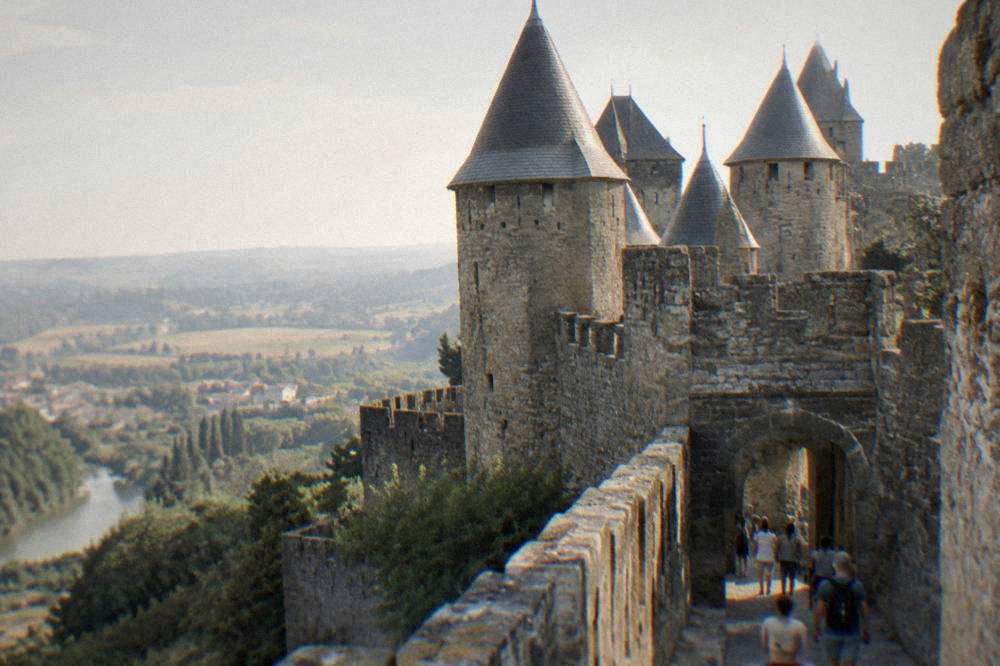
The lower town spreads along the riverbank with squares, markets and ordinary French street life. The upper town is the attraction: a double ring of walls studded with towers, entered through gates, enclosing cobbled lanes, the Chateau Comtal and the basilica of Saint-Nazaire. The scale is what surprises people. This is not a single castle or a gate and a wall, it is an entire defended town you can walk around and through.
The pairing with Toulouse works because the two cities sit in the same region and share a travel corridor. A visitor based in Toulouse for three or four days can devote one of them to Carcassonne without an overnight, a hotel change or a long-distance reservation. That flexibility is exactly why Carcassonne is worth visiting as a day trip rather than a detour on the way somewhere else, and why tour operators run so many departures from Toulouse to serve the demand.
How Do You Get From Toulouse To Carcassonne?
You have three realistic options from Toulouse: a direct train from Toulouse-Matabiau station, a guided coach day trip with a tour operator, or a self-drive. The train is the independent traveler's choice, the coach tour removes all planning, and driving suits anyone combining Carcassonne with villages that trains do not reach. There is no verified journey time for the train, so check the operator's own timetable before committing to a schedule.
The train is the simplest version of the independent trip. Services run from Toulouse-Matabiau toward Carcassonne along the corridor toward Narbonne, and the station in Carcassonne sits in the lower town with the walled city visible uphill. Buy tickets through the rail operator's own site or app, and allow margin on the return in the evening, because the last departures fill the day's plans more than the first ones do.
Getting to Matabiau itself is a Tisseo matter, and the official e-boutique catalogue gives the fares. A single trip costs EUR 1.90, or EUR 2.50 if bought last-minute on board, so the honest move is to buy before you board.
| Tisseo ticket | Price | What it covers |
|---|---|---|
| Single trip | EUR 1.90 | One journey on metro, tram or bus |
| Single, bought on board | EUR 2.50 | One journey, last-minute purchase |
| Day pass | EUR 7.20 | Unlimited travel for one day |
| 10 trips | EUR 16.00 | Ten journeys, shareable over your stay |
| 3-day pass | EUR 14.30 | Unlimited travel across three days |
The coach tour is the other main route, and for visitors it is the better one. The operator handles the drive, the timing and the drop-off, and several products add an audio guide or a live guide to the ride. This site lists the main Carcassonne-linked tours, and the comparison below shows how they differ in format.
Prefer to leave the drive and timing to someone else? Book a guided coach day trip here.
| Tour | Format | What it covers |
|---|---|---|
| Carcassonne Day Trip by Coach with Audio Guide | Shared coach | Round-trip coach from Toulouse with audio guide commentary |
| Carcassonne Trip with Transfer & Free Time | Small group | Transfer from Toulouse and free time inside the walls |
| Full Day in Albi, Carcassonne & Cordes + Lunch | Full-day coach | Three towns in one circuit with lunch included |
| Castle of Kings and Crusades Day Trip | Private | A themed private day built around the crusades history |
The full-day Albi, Carcassonne and Cordes circuit deserves a special mention for anyone who wants more than one destination from a single departure. It pairs the walled city with Albi and the hilltop village of Cordes-sur-Ciel, with lunch included, which turns a Carcassonne day into a sampler of the whole region. You can Check availability on the operator's live listing.
Self-driving is the third option and the most flexible one. It suits travelers who want to stop at Cathar-country villages on the way, and it pairs naturally with the Cathar castles day trip route. The trade-off is parking and arrival timing in Carcassonne itself, which is easier outside the middle of the day in high season.
What Should You See Inside The Walled City?
The essentials inside the walls are the double ramparts with their towers, the Chateau Comtal at the heart of the Cite, and the basilica of Saint-Nazaire, and the honest way to see them is on foot in a loop that takes in the outer wall walk, the inner streets and the castle. Allow a half day minimum, and treat the walls themselves as the main exhibit rather than a backdrop.
Start at the Narbonne Gate, the grandest of the entrances, and walk the outer rampart. The wall walk delivers the postcard view of the towers stacked against the sky, and it also gives you the view down over the lower town and the Aude. The inner ring is where the streets narrow and the shops, cafes and craft workshops cluster, so plan to drift rather than march.
The Chateau Comtal sits at the defended core of the Cite and is the one interior that rewards a ticket. Its courtyards, defensible passages and exhibition spaces explain how the place actually functioned as a fortress, which reframes everything you saw from the outside. The basilica of Saint-Nazaire anchors the other end of the visit, a stone church whose interior is the quietest large space inside the walls.
Two practical notes shape the day. First, the Cite is entirely walkable but entirely cobbled, so shoes matter more than they do in Toulouse, a fact covered in more detail in is Carcassonne a walkable city. Second, the middle of the day is when coach groups concentrate, so an early arrival or a late afternoon changes the feel of the streets completely.
What And Where Should You Eat In Carcassonne?
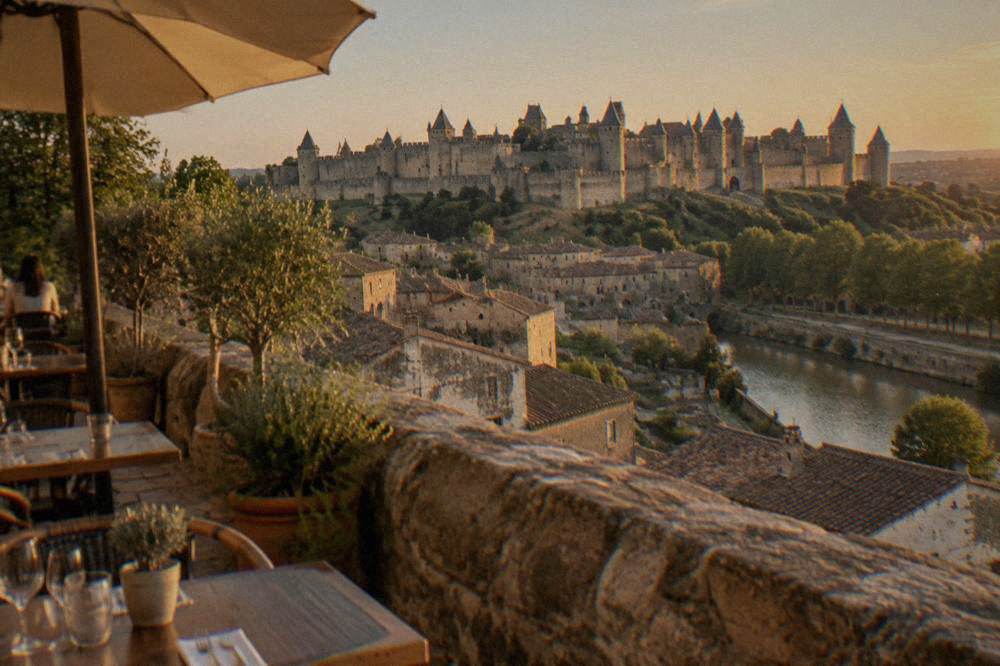
The dish to look for in Carcassonne is cassoulet, the slow-cooked bean and meat casserole that this part of Occitanie claims as its own, alongside regional charcuterie, local Corbieres wine and the sweet treats sold in the bakeries inside the walls. Eat inside the Cite for the atmosphere and the view, or drop into the lower town for a more local price level.
Carcassonne sits in cassoulet country, the same culinary belt as Toulouse, and the versions here lean on the local saucisse and confit traditions. The full story of the dish, what belongs in it and how the arguments between towns run, is covered in the site's cassoulet guide, and the Carcassonne angle is in what food is Carcassonne famous for. The honest planning advice is simple: order it at a sit-down lunch, because it is a heavy dish and an afternoon of wall-walking is the right way to earn and burn it.
| What to look for | What it is | Where to find it |
|---|---|---|
| Cassoulet | Slow-cooked beans with sausage and confit | Sit-down restaurants, lower town and inside the walls |
| Regional charcuterie | Cured meats of the Aude and Haute-Garonne | Market stalls and delicatessens |
| Corbieres wine | Red wine from the vineyards south of the city | Restaurant lists and wine shops |
| Bakery sweets | Regional pastries and violet-flavored treats | Bakeries inside the Cite |
Wine deserves its own sentence. Carcassonne sits close to the Corbieres and Minervois vineyard belt, and restaurant lists inside the walls carry local reds that cost far less than their reputation. Anyone who wants to make wine the point of a day out should look at the Gaillac wine route instead, which is the closer wine country to Toulouse.
When Is The Best Time Of Year To Visit Carcassonne?
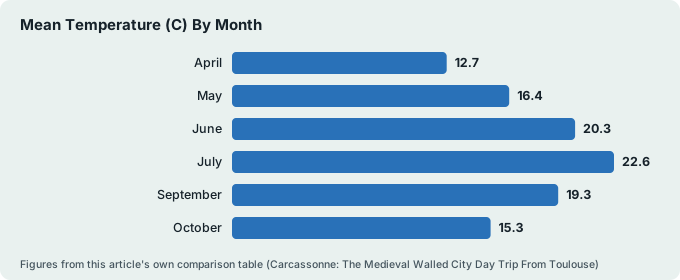
The best months for a Carcassonne day trip from Toulouse are late spring and early autumn, when the regional climate is warm but the summer peak of heat and crowds has passed. Meteo-France's 1991-2020 normals for Toulouse-Blagnac show July and August as the hottest and sunniest months, and May as the wettest, so the shoulders of the season balance the two.
The climate data below comes from Meteo-France's normals for the Toulouse-Blagnac station, the closest long-run record to the whole corridor, and it describes the regional pattern your Carcassonne day will sit inside. The wall walk is fully exposed to the sun, so the temperature column matters more here than it does for a museum day in Toulouse.
| Month | Mean temperature (C) | Rain (mm) | Sunshine (hours) |
|---|---|---|---|
| April | 12.7 | 65.2 | 188.5 |
| May | 16.4 | 73.6 | 212.3 |
| June | 20.3 | 64.2 | 231.8 |
| July | 22.6 | 40.1 | 258.6 |
| September | 19.3 | 45.7 | 210.1 |
| October | 15.3 | 54.3 | 155.2 |
Two details in that table surprise people planning around it. May, not a winter month, is the wettest in the record at 73.6 mm, with April and June close behind, so a spring visit carries a real rain risk even when the days feel warm. July, by contrast, is the sunniest month at 258.6 hours with only 40.1 mm of rain, but it also sits inside the school-holiday peak, when the Cite is at its busiest.
| Annual figure (Toulouse-Blagnac normals) | Value |
|---|---|
| Mean daily maximum | 18.8 C |
| Mean daily minimum | 9.6 C |
| Total rain | 627 mm over 95.8 rain days |
| Total sunshine | 2,075.1 hours |
| Record high | 42.4 C (23 August 2023) |
| Record low | -19.2 C (15 February 1956) |
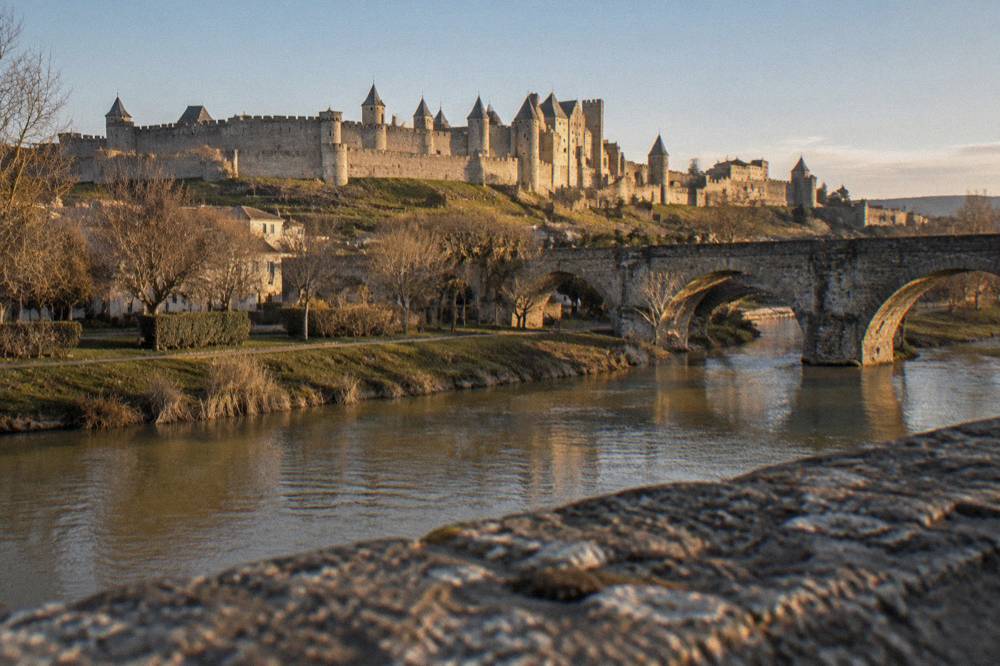
The record high is a useful planning boundary. On extreme-heat days the wall walk becomes genuinely hard work before noon, and the shaded streets of the lower town or an early start are the honest answers. In winter the Cite empties out, the stones photograph beautifully in low light, and the December visit question applies to the whole region.
Should You Stay Overnight Or Visit Carcassonne As A Day Trip?
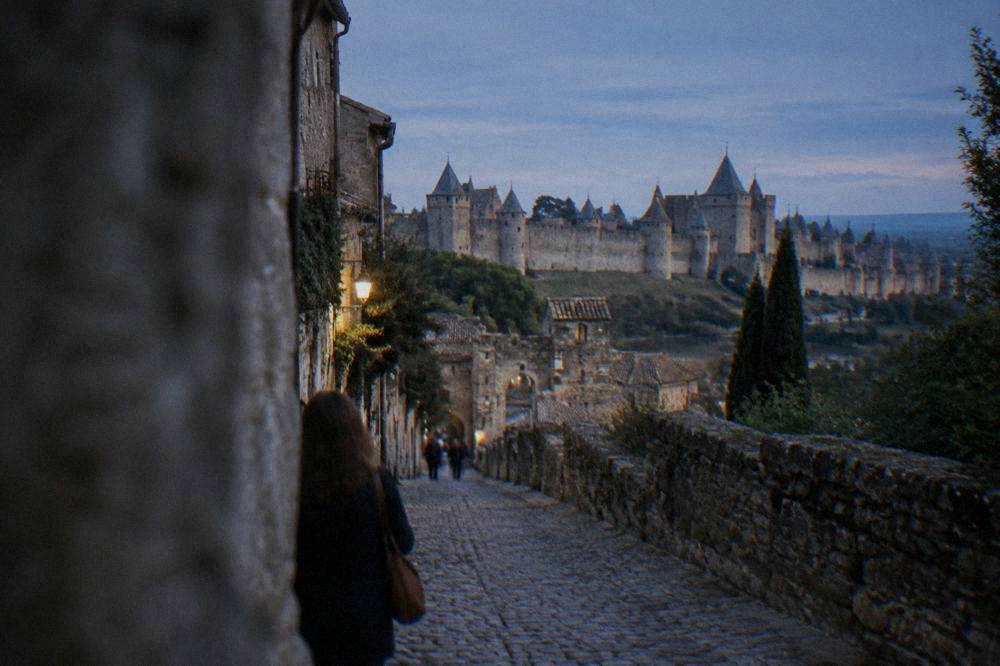
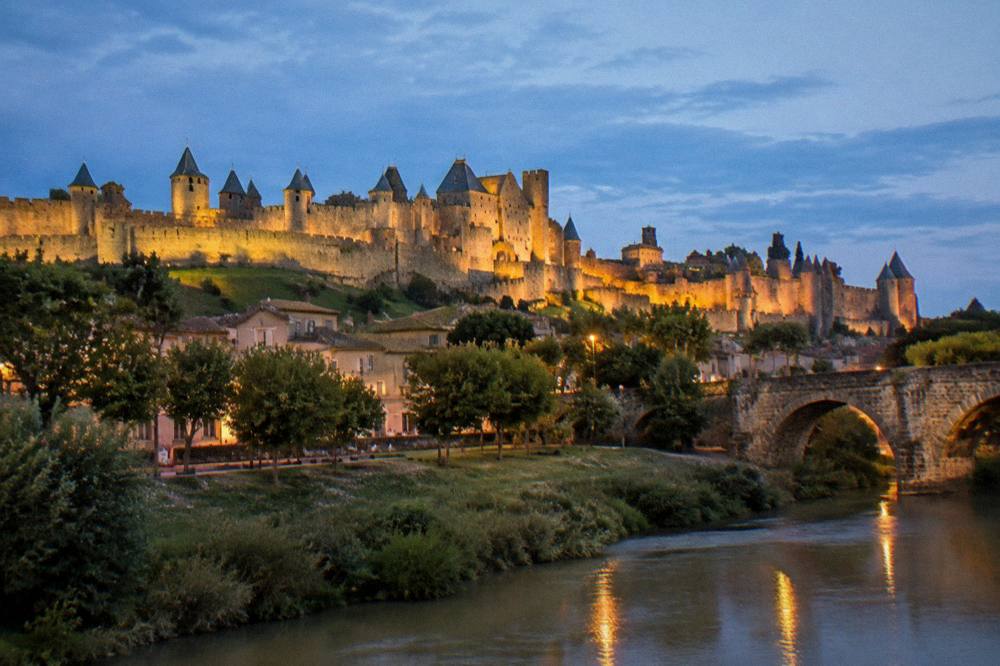
A day trip from Toulouse is enough to see the walls, the castle and the basilica, and it is how visitors experience Carcassonne, but an overnight inside or beneath the walls buys you the city after the coaches leave, when the streets quiet down and the illuminated walls become the whole show. Choose the day trip if Toulouse is your single base, and the overnight if Carcassonne is the point of the trip.
The economics favor the day trip from a Toulouse base. One Tisseo fare to Matabiau, one train or coach booking, and you are back in the pink city for dinner, with no second hotel and no luggage logistics. The overnight trades that efficiency for time: the evening and early morning inside the Cite are the hours when the place feels least like an attraction, and they are the hours a day tripper structurally cannot have.
Staying inside the walls is its own decision, with a small stock of hotels within the fortifications and more in the lower town, a trade-off examined in can you stay inside Carcassonne. Anyone planning a wider sweep of the region, Albi, Cordes-sur-Ciel, the Cathar castles, might base a night in Carcassonne instead of returning to Toulouse each time.
Can You Combine Carcassonne With Albi, Cordes-sur-Ciel Or The Cathar Country?
Yes, and combining is often the smarter use of a day: the full-day coach circuit covers Albi, Carcassonne and Cordes-sur-Ciel with lunch included, while self-drivers can string Carcassonne together with Cathar castles or hilltop villages that no train reaches. The single-destination day trip is best for a first visit, the combinations for a second.
The three-town circuit is the flagship combination on this site's roster. It leaves from Toulouse, covers Albi with its cathedral and episcopal buildings, the hilltop village of Cordes-sur-Ciel and Carcassonne in one loop, with lunch included, which removes both the scheduling puzzle and the where-to-eat decision from the middle of the day. For a visitor with only one free day and three ambitions, it is the product that resolves the conflict.
The self-drive combinations run differently. Carcassonne sits at the edge of Cathar country, and the Cathar castles route is the natural extension for anyone with a car and a second day. Hilltop villages such as Rocamadour and Saint-Cirq-Lapopie lie further afield and pair better with their own overnight than with a Carcassonne dash.
| Combination | Destinations | Best for |
|---|---|---|
| Three-town coach circuit | Albi, Carcassonne, Cordes-sur-Ciel | One free day, no car, three sights |
| Cathar country drive | Carcassonne plus castles | Self-drivers with two days |
| Albi and Cordes only | Albi, Cordes-sur-Ciel | Travelers skipping the walled city |
| Wine and walls | Carcassonne plus Corbieres vineyards | Visitors prioritizing tastings |
The separate Albi and Cordes-sur-Ciel pages carry the detail on each of those destinations, and the full day-trips overview puts every option from Toulouse side by side.
What Do People Ask Before Booking A Carcassonne Tour From Toulouse?
The questions that come up before booking are whether the walled city justifies the travel, whether a guided coach or an independent train trip suits the visitor better, how much free time the tours allow inside the walls, and what happens with food and cancellation. The short answers: it justifies the trip for almost everyone, the coach suits first-timers, free time varies by product, and bookings cancel free up to a stated deadline.
The guided-versus-independent decision is the real fork. A coach tour fixes your departure time and your hours inside the Cite, and in exchange it removes the timetable reading, the station transfers and the risk of a missed connection. An independent train trip gives you full control of the clock, which matters if you want the evening light on the walls or a long lunch. The why is Carcassonne so famous page covers the reputation side of the same decision.
One cultural footnote worth knowing before you go: the walled city has a film history, and productions have shot inside and around the fortifications, a thread picked up in what movie was filmed in Carcassonne. It explains some of the staged-medieval flavor of the shops inside the walls, which is part of the place rather than a defect of it.
Common Questions About A Carcassonne Day Trip
Quick answers to what planners ask most about a Carcassonne day trip from Toulouse.
Is Carcassonne worth visiting from Toulouse?
For most travelers, yes. The walled city is one of the most complete medieval fortifications in Europe, it is a short direct train ride or coach trip from Toulouse, and a day is enough to walk the walls, the Chateau Comtal and the basilica. The full argument is on the site's page answering is Carcassonne in France worth visiting.
How do you get from Toulouse to Carcassonne without a car?
Take a direct train from Toulouse-Matabiau or a guided coach tour. The train suits independent planning, while coach tours handle the drive and the schedule for you. There is no verified journey time for the train, so check the rail operator's timetable when you book.
Can you visit Carcassonne in one day?
Yes. A day trip covers the wall walk, the castle interior and the basilica with time for lunch. An overnight adds the quiet evening and early morning inside the walls, which is a real upgrade but not a necessity for a first visit.
Is Carcassonne walkable?
The Cite is entirely walkable but entirely cobbled, with slopes between the lower town and the walls. Comfortable shoes matter more here than in Toulouse, and the details are covered in the site's answer to is Carcassonne a walkable city.
What should you eat in Carcassonne?
Cassoulet is the regional signature, with local charcuterie and Corbieres wine alongside it. Order cassoulet at a sit-down lunch, because it is a heavy dish and the wall walk is the right way to earn it.
When is the best time of year for the trip?
Late spring and early autumn balance warmth against crowds and rain. May is the wettest month in the regional record at 73.6 mm, and July is the sunniest at 258.6 hours but sits inside the school-holiday peak, when the Cite is busiest.
Whether you go by train with a timetable of your own making or let a coach tour carry the logistics, Carcassonne rewards the day with the most complete medieval skyline in Occitanie, all within reach of a Toulouse base.