Toulouse Markets
Toulouse, the pink-brick city on the Garonne in the Occitanie region of southwestern France, shops the way southern French cities do: at markets. This guide covers what to look for, what it costs to get there, and when the calendar is at its best.
Short answer
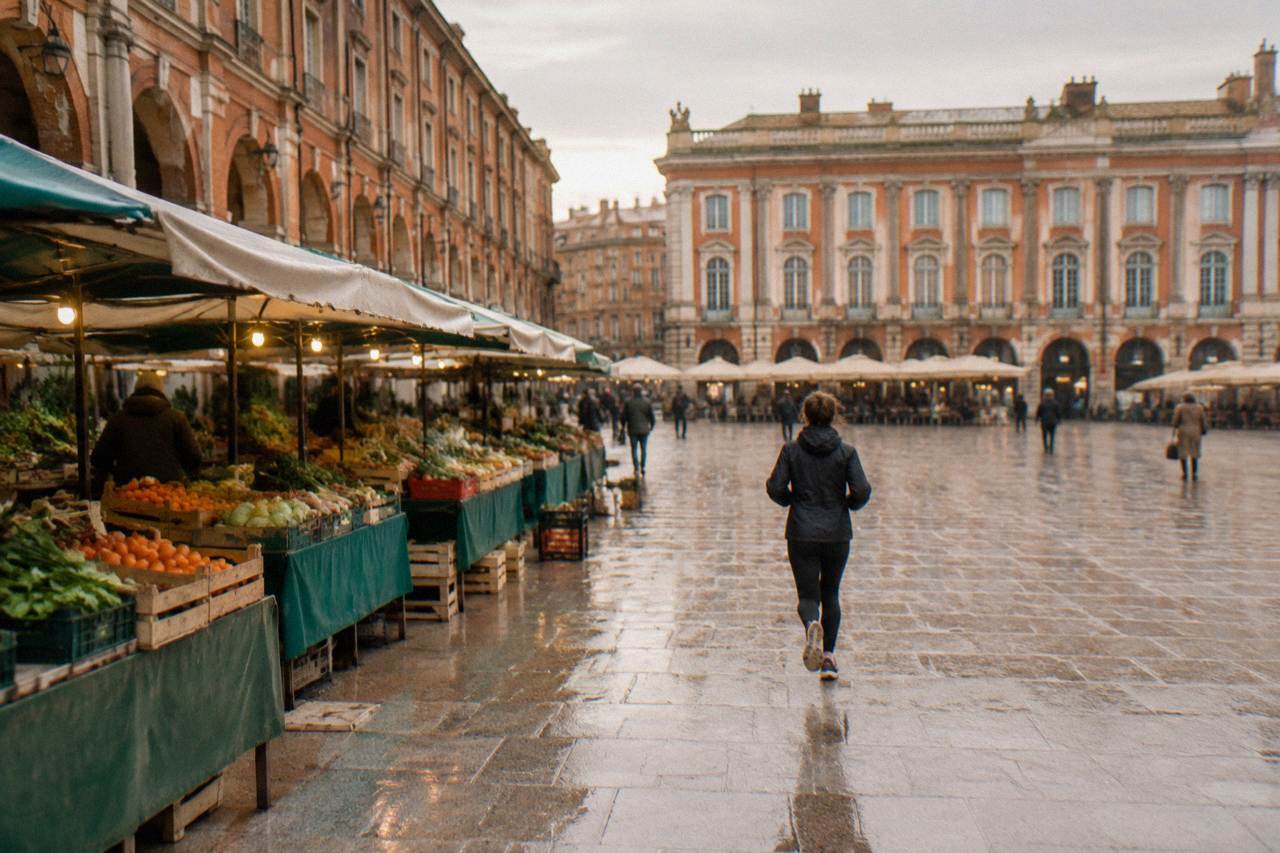
Toulouse's markets center on the covered Marche Victor Hugo and the open-air stalls around the city center. A single Tisseo ticket costs EUR 1.90, the day pass EUR 7.20, and the tourist office's Pass Tourisme at EUR 26 includes a free guided tour and museum entry, paying off from the third activity.
Toulouse, the pink-brick "La Ville Rose" on the Garonne in the Occitanie region of southwestern France, is a city that still shops the old way: at markets. The covered halls and open-air squares of the city center sit within a compact walkable core, and the produce on the stalls, sausages, cassoulet ingredients, violets and Southwest wines, tells you more about the local table than any restaurant menu can. This guide from Toulouse Travel Guide lays out what to look for, what a market day actually costs in transport and admission terms, and how the seasons and the festival calendar change what you will find.
What Are The Main Markets In Toulouse?
The market landscape of Toulouse splits into covered halls and open-air squares, with the Marche Victor Hugo as the best-known food hall and open-air stalls spreading through the center and the neighborhood squares. Each has its own character, and none requires a ticket: a market visit in Toulouse costs nothing to enter, only what you choose to buy.
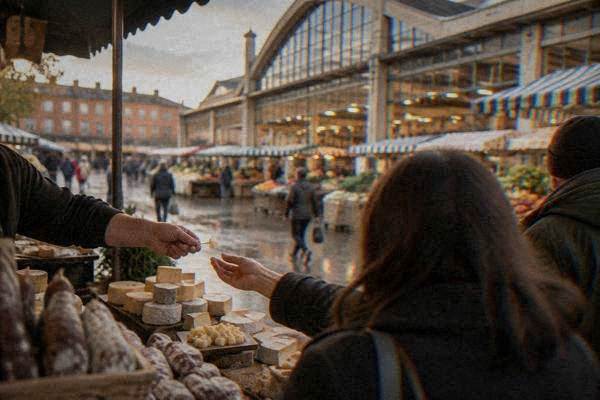
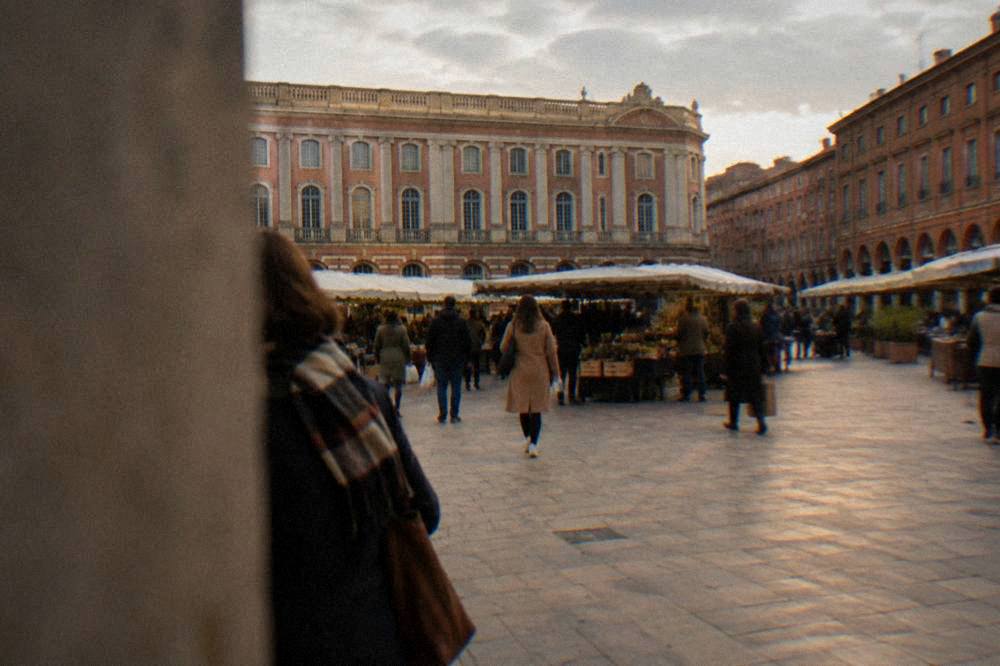
The Marche Victor Hugo is the name that comes up first in any conversation about food shopping here. It is a covered hall, which means it runs in all weathers, and its stalls carry the products the region is known for: Toulouse sausage, cassoulet ingredients, cheeses of the Southwest, and the violets the city treats as its emblem. The hall sits close to Place du Capitole, so it slots easily into a first day of sightseeing alongside the Capitole itself and the Basilique Saint-Sernin, a listed stop on the Santiago de Compostela routes inscribed by UNESCO in 1998.
Around it, open-air markets operate in the traditional southern French pattern: producers and traders set up stalls in the morning and pack away by early afternoon. No specific market day, hour or stall count was sourced for this guide, so check the city's own listings before planning a morning around one particular square. What is safe to say is that the market habit runs through the whole city, from the Carmes quarter to Saint-Cyprien across the Garonne, and that a walk between them crosses some of the prettiest streets in La Ville Rose.
For the full food context, the companion guide to Toulouse food and specialties covers the dishes, and the deep dive on cassoulet explains the bean-and-sausage stew whose ingredients fill half the stalls you will pass.
What Should You Look For On The Stalls?
Shop for the things the region is genuinely known for: Toulouse sausage, the ingredients of a cassoulet, Southwest cheeses, violets and violet products, and the wines of the Fronton and Gaillac areas. Treat the market as a tasting route rather than a single purchase, and buy small amounts across several stalls rather than one big basket at the first one.
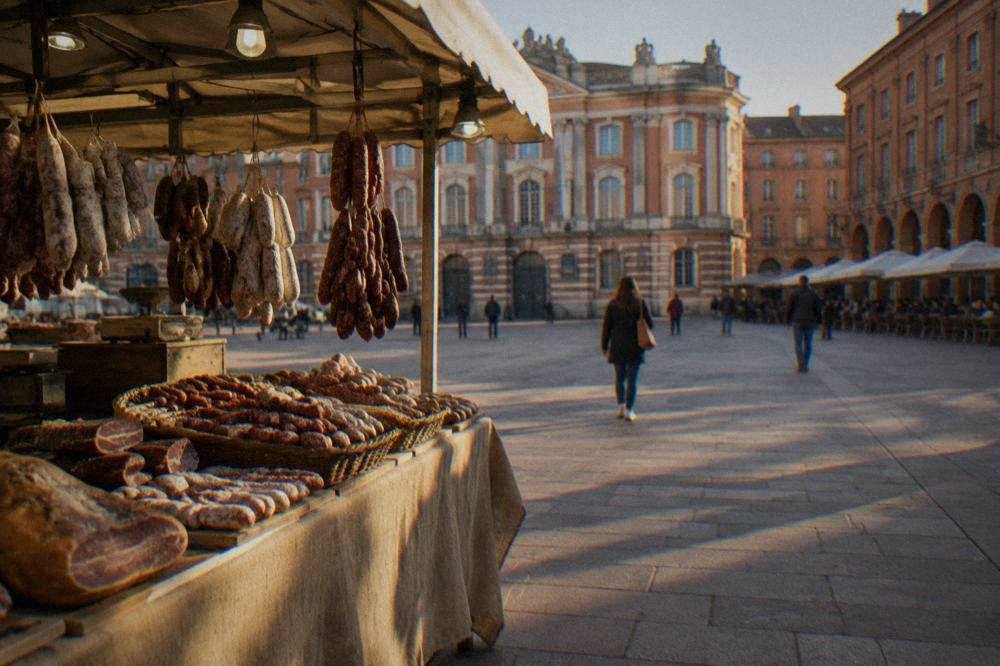
Toulouse sausage is the headline item. It is a fresh pork sausage, and the market stalls of the city are where local cooks buy it for cassoulet. The stew itself is assembled from white beans, confit and sausage, and a market visit is the place to see every component laid out side by side. No specific stall, price or ranking was sourced for this guide, so follow your nose rather than a recommendation.
Violets are the other signature. The city treats the flower as its emblem, and candied violets, violet syrup and violet-scented sweets appear on market stalls and in the shops around the center. They make the most portable souvenir the city offers, small, light and unbreakable, which matters if Toulouse is one stop on a longer trip. The story behind the flower and its place in the city's identity is told in the guide to Toulouse violets, and the wider shopping picture, from covered halls to boutiques, is in the Toulouse shopping guide.
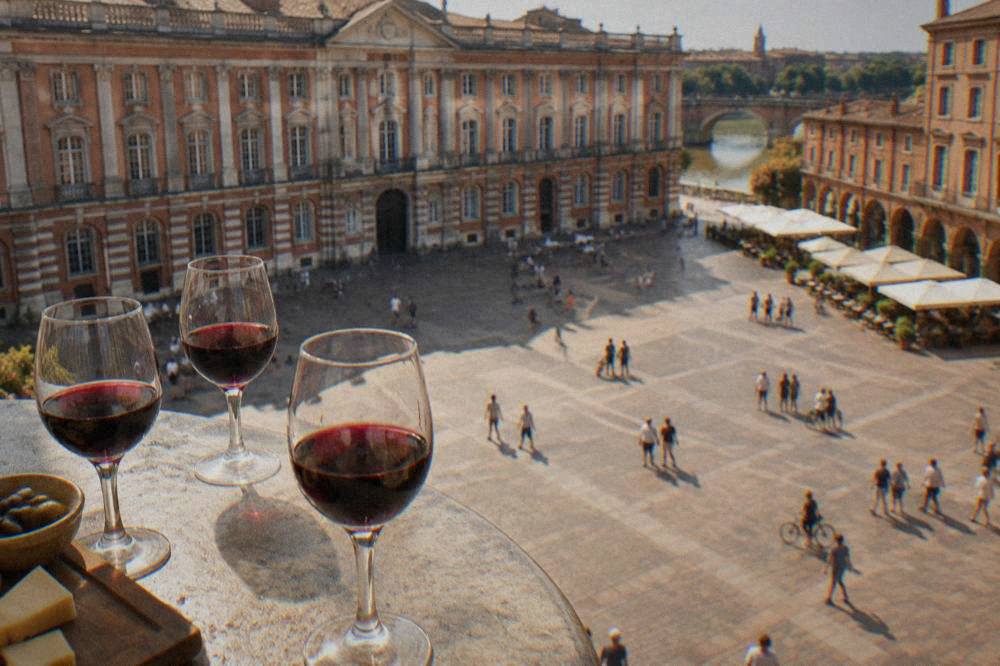
The wine angle deserves a paragraph of its own. The vineyards of the Southwest, Fronton to the north and Gaillac to the northeast, reach the city through market stalls and wine merchants, and the local reds are the traditional pour alongside cassoulet. If you would rather have the tasting handled for you, a guided winery visit with transfer included is the easiest route, and the listing for the winery, wine and food tasting tour covers what the day includes; Check availability if that format suits your group.
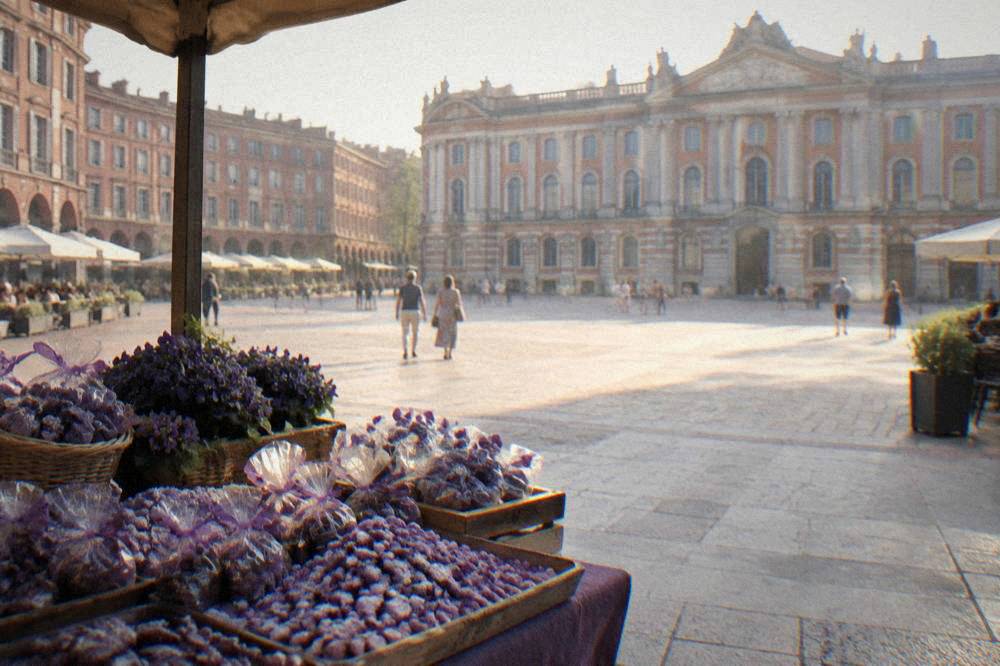
The table below is a shopping list, not a ranking: what each item is and why it belongs to this city.
| What To Look For | What It Is | Why It Belongs To Toulouse |
|---|---|---|
| Toulouse sausage | Fresh pork sausage sold by the piece | The classic cassoulet sausage, bought at markets by local cooks |
| Cassoulet ingredients | White beans, duck or goose confit, sausage | The city's signature stew, assembled from market components |
| Violets and violet sweets | Candied flowers, syrup, pastilles | The flower is the city's emblem and its most portable souvenir |
| Southwest cheeses | Regional cow and sheep milk cheeses | The grazing country around the city feeds the stalls |
| Fronton and Gaillac wines | Red, white and rose from nearby appellations | The traditional pours beside the local table |
How Much Does A Market Day In Toulouse Cost?
Getting to the markets costs EUR 1.90 for a single Tisseo trip, EUR 7.20 for a day pass or EUR 14.30 for a 3-day pass, and the tourist office's Pass Tourisme costs EUR 26 for stays of one to three days, including a free guided tour, with an optional EUR 10 add-on for ten public-transport trips. The pass pays off from the third activity, the tourist office states.
The Tisseo catalogue gives the fares, and they are low enough that transport should never shape your itinerary. A single trip bought at a machine or in advance is EUR 1.90; the same trip bought last-minute on board rises to EUR 2.50, so it is worth buying before you ride. Ten trips cost EUR 16.00 as a carnet. There is no 2-day pass in the catalogue, only the day pass at EUR 7.20 and the 3-day pass at EUR 14.30, so a two-night stay is a choice between two day passes or one 3-day pass.
| Tisseo Ticket | Price | Notes |
|---|---|---|
| Single trip | EUR 1.90 | Bought in advance |
| Single trip, on board | EUR 2.50 | Last-minute purchase |
| 10 trips | EUR 16.00 | Carnet for longer stays |
| Day pass | EUR 7.20 | Unlimited travel for one day |
| 3-day pass | EUR 14.30 | No 2-day pass exists in the catalogue |
| Airport single | EUR 9.50 | Tisseo network plus the Navette aeroport |
The Pass Tourisme is the other number worth knowing. At EUR 26 it covers stays of one to three days and includes a free guided tour from the tourist office; adding EUR 10 buys ten public-transport trips. The museums the tourist office lists as free with the pass, at their normal rates, are set out below. The full breakdown is in the guide to the Toulouse Pass Tourisme.
| Included With The Pass Tourisme | Normal Rate | With The Pass |
|---|---|---|
| Fondation Bemberg | EUR 12 | Free |
| Museum de Toulouse | EUR 12 | Free |
| Les Abattoirs | EUR 12 | Free |
| Musee des Augustins | EUR 5 | Free |
| Couvent des Jacobins | EUR 5 | Free |
| Cite de l'espace | EUR 29 | Discounted, not free |
One caveat for autumn 2026 planners: the Musee des Augustins is temporarily closed from 21 September to 2 October 2026 for great-cloister works, with its Gothic halls reopening on 3 October 2026 from 10:00. If a museum visit is part of your market day, time it around that closure.
A market morning also pairs well with a guided tasting walk. The small-group Victor Hugo market tasting tour is built exactly around the hall's stalls, and the card below shows what the listing carries.
A market morning also pairs well with a guided tasting walk. Book a Victor Hugo market tasting tour here.
When Is The Best Time Of Year For Market Shopping In Toulouse?
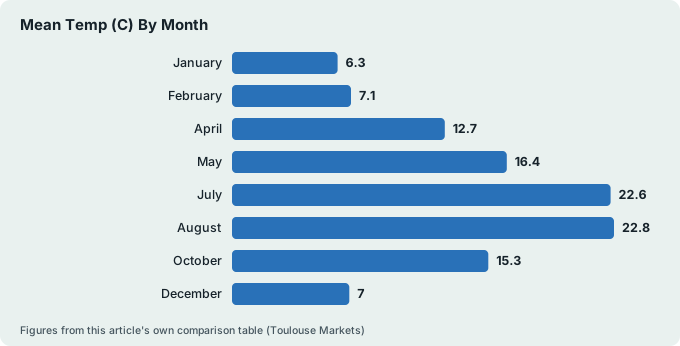
May is the wettest month in Toulouse, with 73.6 mm of rain in the Meteo-France 1991-2020 normals, and February the driest at 37.2 mm, which inverts what visitors expect from a southern French city. July is the sunniest month at 258.6 hours of sunshine with only 40.1 mm of rain, so late spring and early autumn balance reasonable weather against the thinnest crowds.
The climate data for Toulouse-Blagnac is worth reading before you pack. The annual picture is 627 mm of rain across 95.8 rain days and 2,075.1 hours of sun, with a mean daily maximum of 18.8C and a mean minimum of 9.6C. The surprise is the distribution: the rain peaks in late spring, not winter, with April at 65.2 mm and June at 64.2 mm close behind May. If a market morning is the centerpiece of your day, an umbrella in May matters more than one in February.
| Month | Mean Temp (C) | Rain (mm) | Sunshine (Hours) |
|---|---|---|---|
| January | 6.3 | 52.5 | 89.1 |
| February | 7.1 | 37.2 | 118.2 |
| April | 12.7 | 65.2 | 188.5 |
| May | 16.4 | 73.6 | 212.3 |
| July | 22.6 | 40.1 | 258.6 |
| August | 22.8 | 44.6 | 246.4 |
| October | 15.3 | 54.3 | 155.2 |
| December | 7.0 | 49.3 | 89.7 |
July and August are the warm months, with 11.5 and 11.3 days a year respectively reaching 30C or more, and the record high at the station is 42.4C, set on 23 August 2023. Covered halls like the Marche Victor Hugo are the sensible choice in that heat, since they give you shade and a roof. The seasonal detail, month by month, is in the guides to Toulouse weather and the best time to visit Toulouse.
What Food Markets And Events Shape The Toulouse Calendar?
The 2026-2027 calendar around Toulouse's market squares includes Piano aux Jacobins from 8 to 30 September 2026, Toulouse les Orgues from 7 to 18 October 2026, the Christmas markets on Place du Capitole, the allees Jean-Jaures and square Charles-de-Gaulle from 26 November to 27 December 2026, and Rio Loco from 9 to 13 June 2027.
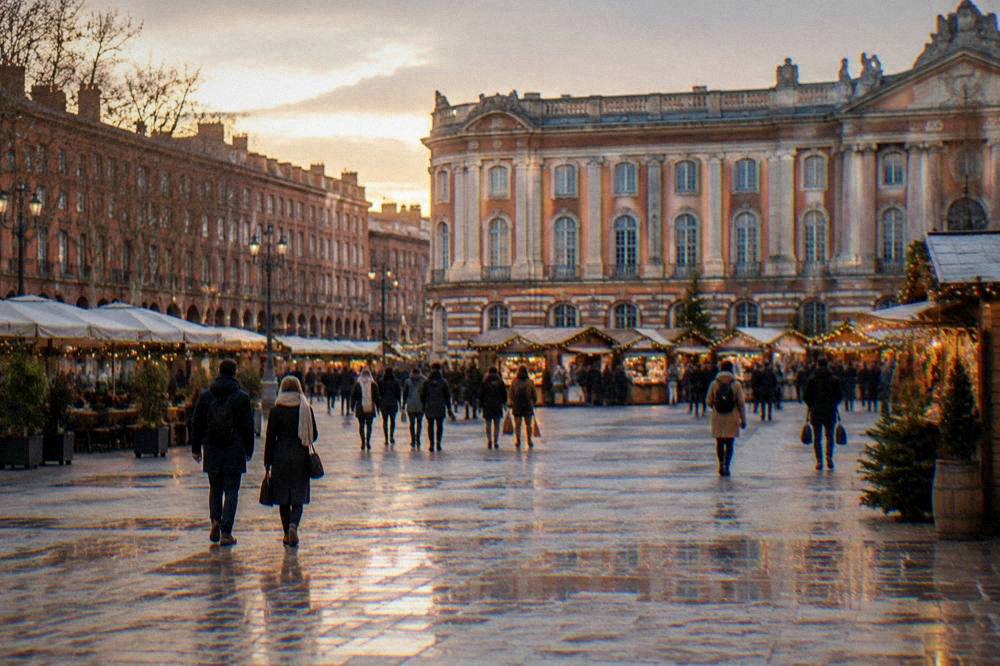
The Christmas markets are the ones that transform the shopping streets most completely. For a month, from 26 November to 27 December 2026, the stalls take over Place du Capitole, the Ramblas of the allees Jean-Jaures and square Charles-de-Gaulle, and the market habit shifts from produce to crafts, gifts and hot food. If your trip can land inside that window, the city center becomes a single continuous market, and the detail of what to expect there is in the guide to the Toulouse Christmas market.
The autumn festivals overlap with the harvest season, which is the right time of year for the wine and produce stalls. Piano aux Jacobins runs 8 to 30 September 2026 in the Jacobins cloister, and Toulouse les Orgues, in its 31st edition, follows from 7 to 18 October 2026, with the opening concert on 7 October at Notre-Dame de la Daurade. In June, Rio Loco takes over the Prairie des Filtres by the Garonne from 9 to 13 June 2027. The dates below come from the official city and organiser pages.
| Event | Dates | Where |
|---|---|---|
| Piano aux Jacobins | 8 to 30 September 2026 | Couvent des Jacobins cloister and other venues |
| Toulouse les Orgues (31st edition) | 7 to 18 October 2026 | Multiple venues; opening concert 7 October at Notre-Dame de la Daurade |
| Christmas markets | 26 November to 27 December 2026 | Place du Capitole, allees Jean-Jaures, square Charles-de-Gaulle |
| Rio Loco | 9 to 13 June 2027 | Prairie des Filtres |
Can You Turn A Market Day Into A Wine Day?
Yes, and the wineries of the Southwest sit close enough to Toulouse that a half or full day away from the stalls is realistic, with guided options that include the transfer, the tasting and the food. The Fronton appellation lies just north of the city and the Gaillac country to the northeast, and both reach the city through the market stalls and wine merchants of the center.
The simplest version is to buy at the market and taste at your accommodation. The more rewarding version is to go to the source. A guided winery visit with transfer included takes the driving and the logistics off your plate, which matters in wine country; the listing for the winery, wine and food tasting tour with transfer sets out what the day covers. For a deeper route through the vineyards, the Gaillac wine route guide maps the appellation, and day trips from Toulouse cover the wider region.
The tasting theme runs through several formats in the city itself. Wine bar walks with a local expert operate in the center, and the small-group Fronton wine tour heads out to a winemaker for a full day. The card below shows the bike-and-tastings option for anyone who would rather work up an appetite between stops.
How Do You Get Around On Market Day?
The Tisseo network of metro, tram and bus covers the market squares of Toulouse, with a single trip at EUR 1.90 and a day pass at EUR 7.20, and the airport connects through the Navette aeroport at EUR 9.50 for a single including the Tisseo network, running one departure every 15 minutes and taking 20 to 40 minutes to the center. The tram T2 to the airport has been closed since 5 June 2023 and stays closed until the end of 2026.
The practical detail that catches visitors out is the airport tram. Tram T2 has not served Toulouse-Blagnac since 5 June 2023, and it stays out of service until the end of 2026 because of the metro Line C works. The replacement is the Navette aeroport, a dedicated bus running one departure every 15 minutes, taking 20 to 40 minutes to the center and about 25 minutes to the Matabiau bus station. City buses 30 and 31 take about 45 minutes to Capitole with changes. The full breakdown, including how the connections work, is in the guide to Toulouse airport to the city center.
Within the city, the metro and bus fares above apply, and the getting-around guide covers the network in detail: getting around Toulouse. One forward-looking note from the Metropole's own project pages: metro Line C, 27 km and 21 stations from Colomiers through Blagnac, Toulouse and Labege, is scheduled to open at the end of 2028, which will reshape cross-city journeys after your visit.
Where you base yourself matters less than you might think, because the market squares cluster in the walkable core. The trade-offs between the center, Carmes and Saint-Cyprien are laid out in where to stay in Toulouse, and the question of whether the city deserves the trip at all is answered, with figures, in is Toulouse worth visiting.
If a market morning leaves you wanting the region's bigger picture, the three-town day trip to Albi, Carcassonne and Cordes-sur-Ciel with lunch included is the most complete single-day loop, and the selection below shows how it compares with the winery day and the electric tuk-tuk city tour.
Common Questions About Toulouse Markets
Quick answers to what planners ask most about shopping the markets of Toulouse.
What is the most famous market in Toulouse?
The Marche Victor Hugo is the best-known food market in the city, a covered hall close to Place du Capitole whose stalls carry Toulouse sausage, cassoulet ingredients, Southwest cheeses and violet products. No ranking of the city's markets was sourced for this guide, so treat that as the established name rather than a verdict.
How much does transport to the markets cost?
A single Tisseo trip costs EUR 1.90 bought in advance, or EUR 2.50 bought on board. A day pass costs EUR 7.20 and a 3-day pass EUR 14.30, per the official Tisseo catalogue. There is no 2-day pass.
What food should I buy at a Toulouse market?
Look for Toulouse sausage, the beans and confit that make up a cassoulet, Southwest cheeses, candied violets and violet sweets, and red wines from the Fronton and Gaillac appellations. The guide to Toulouse food covers the full list of local specialties.
When do the Christmas markets run in Toulouse?
The Christmas markets on Place du Capitole, the allees Jean-Jaures and square Charles-de-Gaulle run from 26 November to 27 December 2026, per the Toulouse Metropole's official markets page.
Is the Pass Tourisme worth it for a market trip?
The Pass Tourisme costs EUR 26 for stays of one to three days, includes a free guided tour from the tourist office and free entry to several museums, and pays off from the third activity, the tourist office states. Adding EUR 10 buys ten public-transport trips.
Can I visit a winery from Toulouse on a market day?
Yes. Guided winery visits with transfer included operate from the city, and the Fronton and Gaillac appellations are the closest wine country. The listing for the winery, wine and food tasting tour sets out what the day covers.