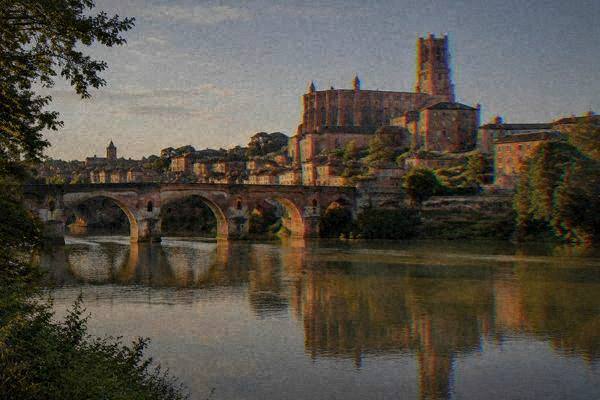
Toulouse Lautrec: The Painter, The Family Name, And The Pink City Of France
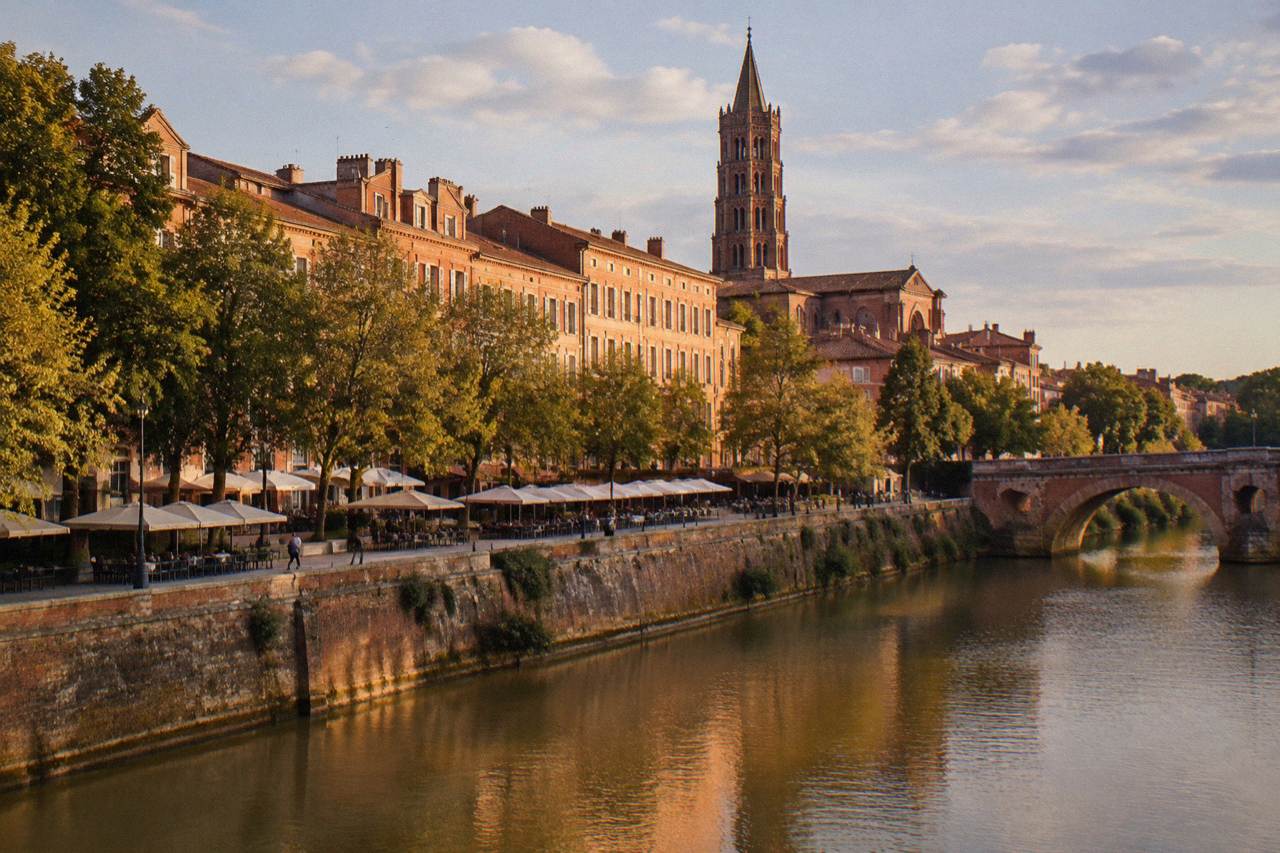
The name Toulouse-Lautrec belongs to one of the most recognizable painters of the French avant-garde, and it starts with a city: Toulouse, the pink-brick capital of the Occitanie region in southwestern France, on the Garonne river and the Canal du Midi.
Short answer
Henri de Toulouse-Lautrec took his name from an aristocratic French family whose title traces back to the Counts of Toulouse, and he was born at Albi, a short train ride from the city of Toulouse itself. The painter made his name in Paris, but Toulouse is where the family name, the region and the day-trip geography all come together for a visitor.
The name Toulouse-Lautrec belongs to one of the most recognizable painters of the French avant-garde, and it starts with a city: Toulouse, the pink-brick capital of the Occitanie region in southwestern France, on the Garonne river and the Canal du Midi. Locals call it La Ville Rose for the warm color of its bricks. The painter Henri de Toulouse-Lautrec carried the city's name in his own, inherited from an old aristocratic family whose title traces back to the Counts of Toulouse, and he was born at Albi, a short train ride north of the city. This guide untangles the painter, the family name and the place, and then turns the whole thing into a practical plan: what to see in Toulouse, how to reach the Lautrec country around it, what transport and passes cost, and when to go.
Who Was Toulouse-Lautrec, And What Does The Name Have To Do With Toulouse?
Henri de Toulouse-Lautrec was a French painter and printmaker, born at Albi into an aristocratic family whose name combines the city of Toulouse with the village of Lautrec, and the title in that name descends from the Counts of Toulouse. He built his reputation painting the nightlife of Paris, but his family name, his birthplace and his regional roots all point back toward the pink city in southwestern France.
The full name is a piece of French geography in itself. The family styled itself "de Toulouse-Lautrec", joining the great southern city to Lautrec, a small medieval hill town in the Tarn that still stands today and that this site covers in its own day-trip guide to Lautrec. The "de" is the old French nobiliary particle, and the Toulouse half of the compound comes from the family's claimed descent from the Counts of Toulouse, the medieval rulers of the county that gave the city its name.
That is the honest chain: the city gave its name to a county, the county's rulers gave their name to a noble line, and the noble line gave its name to a painter. The painter himself did not live in Toulouse in any way the sources this site relies on record. He was born at Albi, the episcopal city on the Tarn, and he made his working life in Paris, in the studios and dance halls of Montmartre. What Toulouse offers the visitor is therefore not a house museum but a region: the city that anchors the name, the towns that carry it, and the museums and landscapes of the Occitanie region around them.
For travelers who arrive with the painter in mind, the practical shape of the trip is a city stay in Toulouse with excursions outward. Albi holds the painter's native city and its own monuments. Lautrec holds the village that completes the family compound name. And Toulouse itself holds the transport hub, the hotels, the food scene and the pink-brick streets that make the whole plan work, which is exactly what the rest of this guide sets out.
Where Can You See The Painter's World From Toulouse?
The painter's world splits across three places reachable from Toulouse: Albi, his native city on the Tarn with its monumental cathedral and episcopal quarter; Lautrec, the medieval hill village that carries the other half of his family name; and Toulouse itself, whose museums, markets and old streets hold the regional context. None of the three requires a car if you plan around the city's rail and coach links.
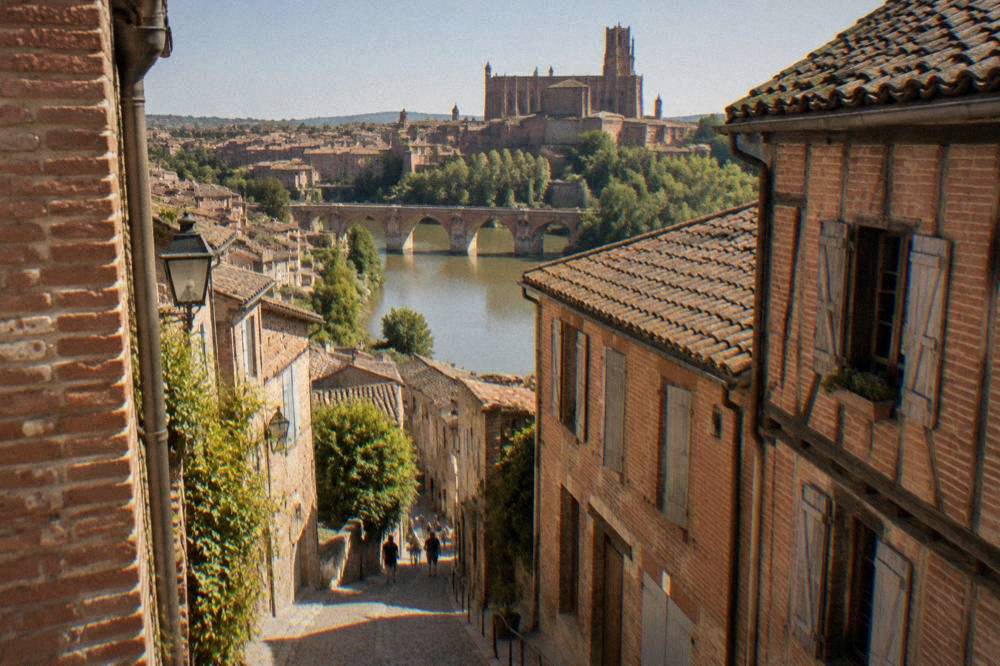
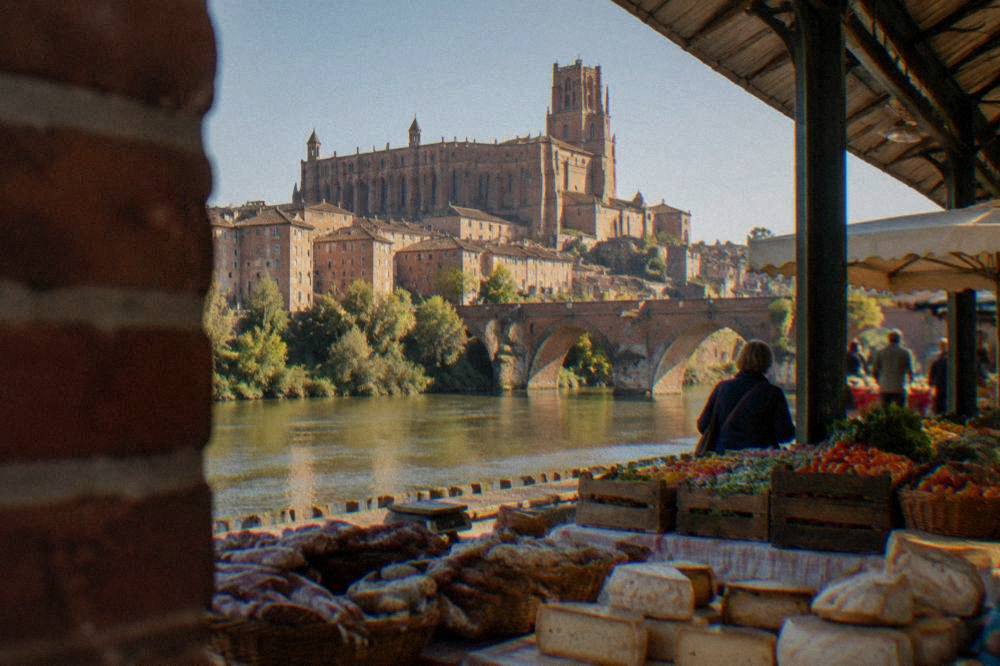
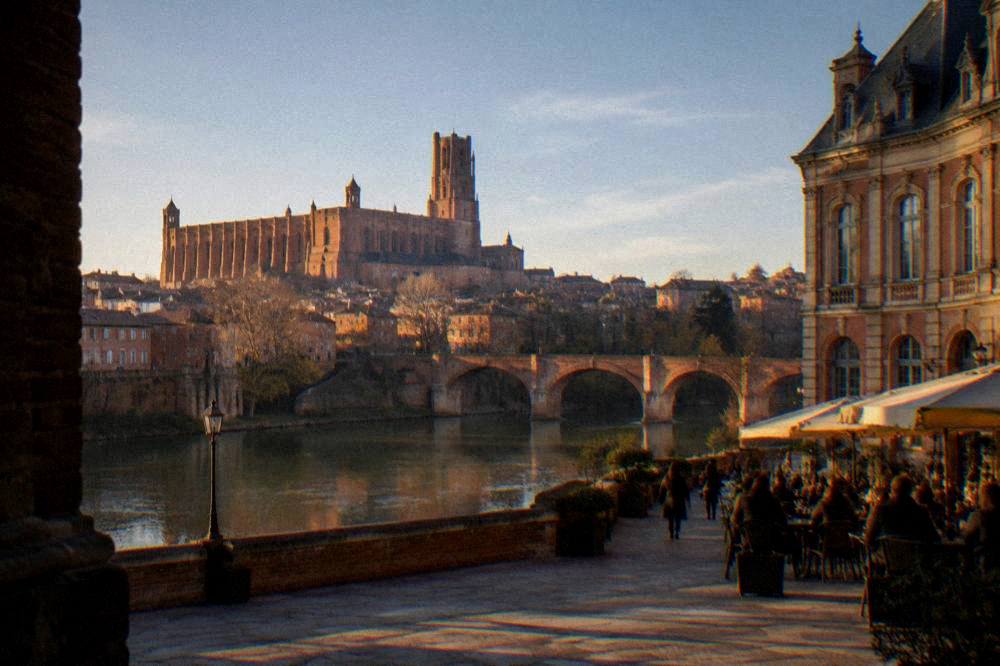
Albi is the anchor. The city sits on the Tarn and is listed as part of the UNESCO "Routes of Santiago de Compostela in France" property through its cathedral's listing in that inscription, which was made in 1998. The same UNESCO listing covers Toulouse's own Basilique Saint-Sernin, which the city's page describes as a major stop on the Via Tolosana pilgrim route. That shared inscription is a neat symbol of how the region hangs together: pilgrim roads, brick and stone, and the same southern France that produced the painter's family.
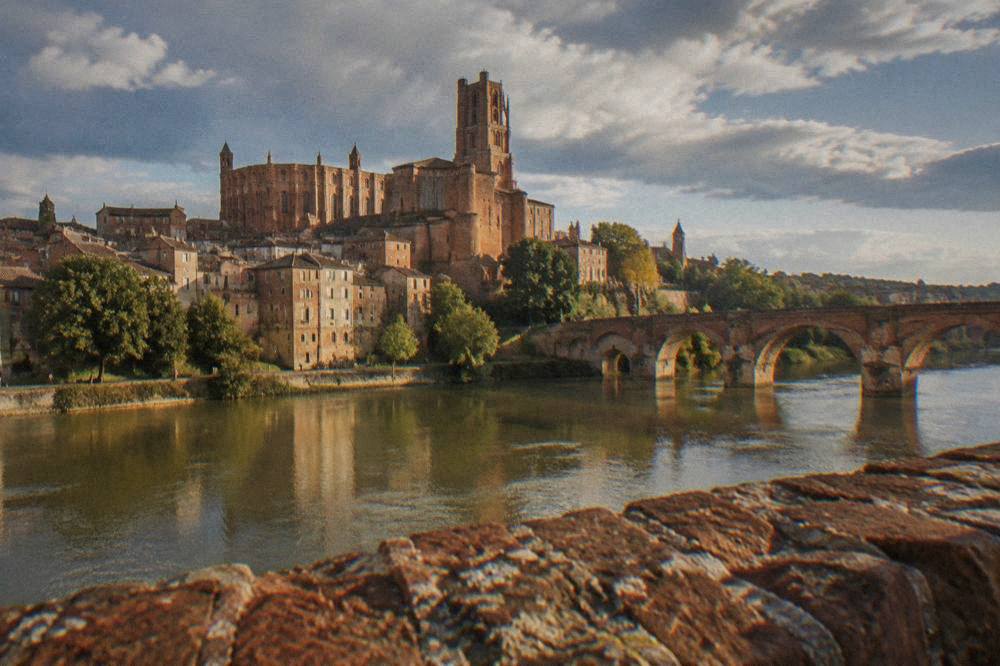
Lautrec, the village, is a separate destination in the Tarn, a hill settlement with medieval gates that this site covers separately. It has no direct connection to the painter's biography beyond the name, and it is honest to say so: the village gave the family its compound surname centuries before the painter was born. Visiting both Albi and Lautrec in one loop is a classic Tarn day, and operators run it from Toulouse as a booked excursion, which removes every planning headache.
That is where the tours below come in. The Albi and Cordes day trip covers the Tarn's headline destinations with audio guides, and the private Albi and Cordes-sur-Ciel version runs the same country in a small-group format. For the city days in between, a guided walking circuit of Toulouse's own monuments gives the regional story from a live guide, and a self-guided audio tour lets you walk the pink city at your own pace.
The related tour for this page is the Toulouse Must-see Attractions Walking Tour With A Guide, a private guided walk of the city's headline monuments; Check availability on the operator's live listing. It pairs naturally with an Albi day, because the walk orients you in the city and the excursion carries you out into the painter's home country.
How Do You Plan A Toulouse-Lautrec Day Trip From Toulouse?
Plan the trip as a two-base itinerary: sleep in Toulouse, where the hotels, rail hub and food scene sit, and take one full day for Albi, reached by a direct train from the city, with Lautrec either folded into a booked excursion or saved for a second day. A three-night stay gives you the city, the Tarn and a rest day without rushing anything.
The reason to base in Toulouse is practical. The city is the region's transport hub, with a metro and tram network run by Tisseo, an airport at Blagnac, and rail links outward. The city's own sights fill the gaps between excursions: the Capitole, the Basilique Saint-Sernin, the Couvent des Jacobins, the riverside Garonne walk and the Victor Hugo market, all covered in this site's guide to day trips from Toulouse and its individual attraction pages. For a fuller framing of the city before you commit, read what Toulouse is famous for and where Toulouse actually is.
For the Albi day itself you have two honest options. The train is the independent route: a direct rail link runs from Toulouse toward Albi, and the tourist infrastructure at the far end is walkable from the station area. The booked excursion is the low-effort route: coaches leave Toulouse with audio guides and return the same evening, which matters if you would rather not read a timetable in French. Both work; the choice is about how much of the day you want to own.
Happy to let someone else handle the Albi day. Book an Albi and Cordes day trip here.
A word on pacing. The painter's story tempts visitors to cram Albi, Lautrec and Cordes-sur-Ciel into a single loop, and the full-day combined excursions do exist, with lunch included on at least one of them. But the Tarn rewards a slower eye, the same way Toulouse does. Two nights minimum in the city, three if you want both the Albi day and a free afternoon for the museums, is the honest floor.
How Much Does Getting Around Toulouse Cost?
A single Tisseo journey in Toulouse costs EUR 1.90 bought in advance, a day pass costs EUR 7.20 and a three-day pass costs EUR 14.30, per the operator's official fare catalogue, and there is no two-day pass. The airport shuttle single costs EUR 9.50 and includes the Navette airport bus, which runs every 15 minutes and takes 20 to 40 minutes to the center.
Those figures come straight from the Tisseo e-boutique catalogue, which is the seller's own price list. The full fare set worth knowing:
| Ticket | Price | Notes |
|---|---|---|
| Single trip, bought in advance | EUR 1.90 | Metro, bus and tram |
| Single trip, bought last-minute on board | EUR 2.50 | Costs more than planning ahead |
| 10 trips | EUR 16.00 | Works out cheaper per journey |
| Day pass | EUR 7.20 | One calendar day |
| 3-day pass | EUR 14.30 | No 2-day pass exists in the catalogue |
| Airport single | EUR 9.50 | Tisseo network plus the Navette airport bus |
The airport link needs one warning that trips up travelers. Tram line T2 to Toulouse-Blagnac airport has been closed since 5 June 2023 and stays closed until the end of 2026 because of the metro Line C works, so no timetable you find online that mentions a tram to the airport is current. The Navette airport bus is the public-transport link, one departure every 15 minutes, with a journey of 20 to 40 minutes to the center and about 25 minutes to the Matabiau bus station. Buses 30 and 31 take about 45 minutes to the Capitole with changes. The airport handled 7,621,409 commercial passengers in 2025, down 2.8 percent on 2024, so the shuttle is a busy, well-used service rather than a niche one. More of these guides are collected on Toulouse Travel Guide.
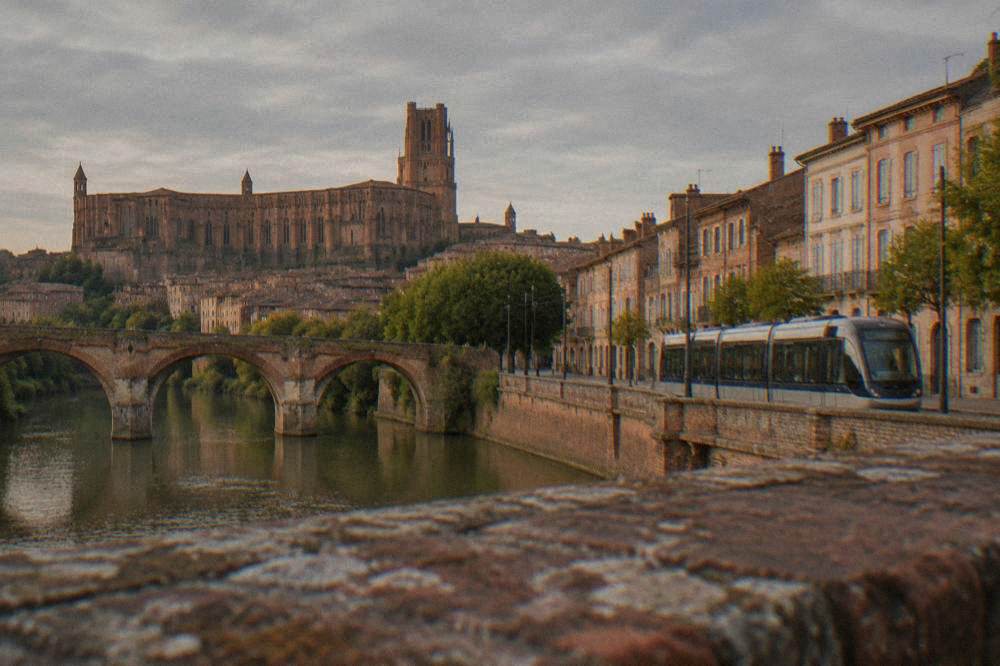
The metro Line C itself, the project behind the tram closure, is a 27 km line with 21 stations running from Colomiers through Blagnac, Toulouse and out to Labege, and it opens at the end of 2028. Until then the network you ride is the current one, and the fares above are the ones that apply. If you are weighing a car instead, see the site's car hire guide for Toulouse; for the airport transfer in detail, read Toulouse airport to city center.
Is The Pass Tourisme Worth It For An Art-Focused Trip?
The Toulouse tourist office's Pass Tourisme costs EUR 26 for stays of one to three days and includes a free guided tour from the tourist office; adding EUR 10 adds ten public-transport trips. The office's own page says the pass pays off from the third activity, so for an art-focused trip that stacks several museums it usually earns its price, and for a one-museum day it does not.
The pass's value comes from the entry fees it covers. The tourist office lists these normal rates, all free with the pass:
| Attraction | Normal rate | With the Pass |
|---|---|---|
| Fondation Bemberg | EUR 12 | Free |
| Museum (Museum de Toulouse) | EUR 12 | Free |
| Les Abattoirs | EUR 12 | Free |
| Musee des Augustins | EUR 5 | Free |
| Couvent des Jacobins | EUR 5 | Free |
| Cite de l'espace | EUR 29 | Discounted, not free |
Do the arithmetic honestly. Two of the EUR 12 museums plus the Jacobins already clears EUR 26, before the guided tour and any transport add-on. A single museum and a wander does not. The pass is a volume product, and an art-focused itinerary is exactly the volume case.
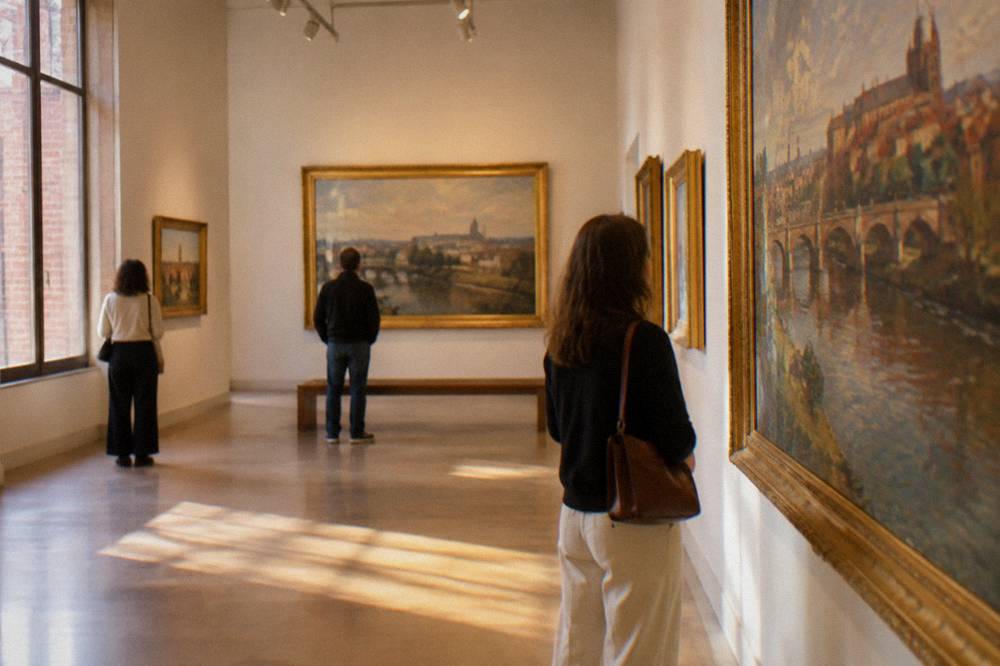
One timing note that matters for museum planning. The Musee des Augustins, the city's fine arts museum, is temporarily closed from 21 September to 2 October 2026 for great-cloister works, and its Gothic halls, the sacristy, the Notre-Dame de Pitie hall and the chapter house, reopen on 3 October 2026 from 10:00. The Couvent des Jacobins is free on the first Sunday of the month except when a temporary exhibition is on, and roof restoration work on the church is under way while the convent stays open to visitors with adjustments. Check the individual museum pages on this site, starting with the Toulouse museums guide, before you lock an itinerary.
When Is The Best Time To Visit Toulouse For This Trip?
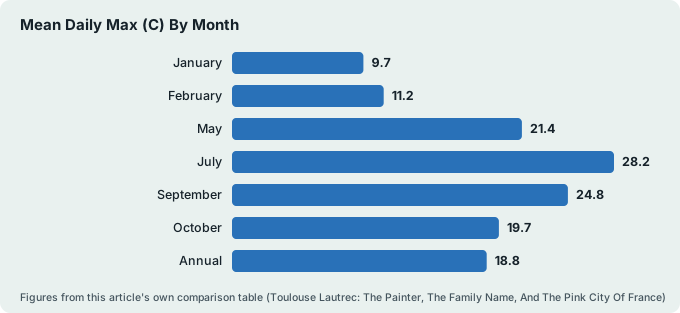
The best months for an art and day-trip itinerary around Toulouse are late spring and early autumn, when the Meteo-France 1991-2020 normals for Toulouse-Blagnac show comfortable temperatures and the long daylight makes the Albi and Lautrec excursions pleasant; July is the sunniest month at 258.6 hours of sunshine with only 40.1 mm of rain, while May, the wettest month at 73.6 mm, needs a rain plan.
The climate data surprises first-time visitors, and it is worth internalizing before you pack. Toulouse's wettest month is not in winter: May averages 73.6 mm of rain, nearly double February's 37.2 mm, with April at 65.2 mm and June at 64.2 mm close behind. Then the tap turns off, and July, the sunniest month, gets just 40.1 mm. The annual totals are 627 mm of rain over 95.8 rain days and 2,075.1 hours of sun.
| Month | Mean daily max (C) | Mean daily min (C) | Rain (mm) | Rain days |
|---|---|---|---|---|
| January | 9.7 | 2.9 | 52.5 | 9.2 |
| February | 11.2 | 3.1 | 37.2 | 7.8 |
| May | 21.4 | 11.4 | 73.6 | 9.9 |
| July | 28.2 | 17.0 | 40.1 | 5.7 |
| September | 24.8 | 13.9 | 45.7 | 6.6 |
| October | 19.7 | 10.9 | 54.3 | 7.5 |
| Annual | 18.8 | 9.6 | 627 | 95.8 |
| Month | Sunshine (hours) | Days at 30 C or more |
|---|---|---|
| January | 89.1 | 0 |
| April | 188.5 | 0 |
| July | 258.6 | 11.5 |
| August | 246.4 | 11.3 |
| September | 210.1 | 3.5 |
| Annual | 2,075.1 | 33 (sum of monthly) |
The records frame the extremes: Meteo-France's station record for Toulouse-Blagnac shows a high of 42.4 C on 23 August 2023 and a low of -19.2 C on 15 February 1956. Neither is a planning norm, but the summer figure is a fair warning that July and August afternoons can run hot, with 11.5 and 11.3 days a year at 30 C or more respectively. For the full picture, read the site's Toulouse weather guide and the best time to visit Toulouse.
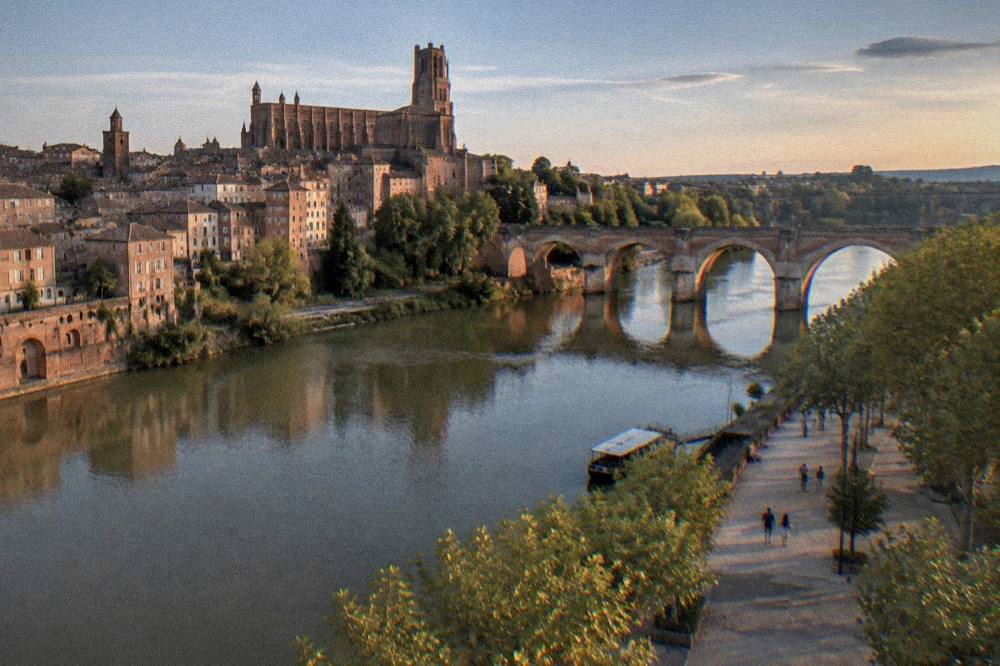
Autumn has a second draw for an art trip: the festival calendar. Piano aux Jacobins runs 8 to 30 September 2026 in the Jacobins cloister and other venues, and Toulouse les Orgues, the international organ festival, holds its 31st edition from 7 to 18 October 2026, with the opening concert on 7 October at Notre-Dame de la Daurade. Both fill the city's historic churches with music, which suits a trip built around art, architecture and the region's old stones.
What Else Should You Build Into A Toulouse-Lautrec Trip?
Build the trip around three layers: the city's monuments and museums, the food scene that the region is famous for, and the day-trip country of the Tarn and beyond, and leave at least one unscheduled afternoon, because Toulouse rewards wandering between the Capitole, the riverside and the markets more than any rigid checklist does.
Start with the city layer. The headline monuments are the Capitole, the Basilique Saint-Sernin, the Jacobins and the Garonne riverside, and the private guided walk mentioned earlier covers them with a live guide. If you prefer to move at your own pace, the self-guided audio tour of the pink city below does the same ground with commentary in your ears.
The food layer matters more here than in most French cities, because the region's table is the painter's home table too. Cassoulet, the slow baked bean and meat dish, is the regional signature, and this site covers it in depth in the cassoulet guide and the wider Toulouse food guide. The Victor Hugo market is the place to see the raw materials, and a guided tasting walk through it turns the market into a meal. For where to sit down afterward, start with the Toulouse restaurants guide.
The excursion layer extends past the Tarn. The Rocamadour day trip below reaches one of France's most dramatic pilgrimage clifftowns, a fitting companion to the pilgrim-road UNESCO listing that ties Saint-Sernin and Albi together. Carcassonne is another walled option, and the Pyrenees sit roughly 100 km south for a mountain day. If the trip grows past a week, the south of France from Toulouse routes give you the full menu.
Finally, the practical layer. Where to sleep is covered in the where to stay in Toulouse guide, and the only verified tourist-tax figure is the Toulouse Metropole rule that non-classified or pending-classification lodging, which includes most platform rentals, pays 5 percent of the pre-tax nightly price per person. If you are flying in, the flights to Toulouse guide and the Toulouse airport guide cover the air side, and the rail arrival from the capital is in the Paris to Toulouse guide.
For the events calendar, the verified dates for the season around a typical art trip:
| Event | Dates | Notes |
|---|---|---|
| Piano aux Jacobins | 8 to 30 September 2026 | Cloister and other venues |
| Toulouse les Orgues | 7 to 18 October 2026 | 31st edition; opening concert 7 October at Notre-Dame de la Daurade |
| Christmas markets | 26 November to 27 December 2026 | Place du Capitole, allees Jean-Jaures, square Charles-de-Gaulle |
| Rio Loco | 9 to 13 June 2027 | Prairie des Filtres; theme "Noctiluca" |
A December trip built around the Christmas market is its own pleasure, and the pink brick under the market lights is worth the colder evenings: January's mean daily minimum is 2.9 C. Whenever you go, the honest summary is that the painter is the excuse and the region is the reward. Toulouse holds the name, the hub and the pink-brick streets; Albi and the Tarn hold the painter's own ground; and the whole loop fits inside a long weekend done at a proper pace.
Common Questions About Toulouse Lautrec
Quick answers to what planners ask most about the painter and the city that shares his name.
Was Toulouse-Lautrec from Toulouse?
No. The painter Henri de Toulouse-Lautrec was born at Albi, on the Tarn north of Toulouse. His family name combines the city of Toulouse with the village of Lautrec, and the title descends from the Counts of Toulouse, but his working life was spent in Paris painting its nightlife.
Can You Visit The Village Of Lautrec From Toulouse?
Yes. Lautrec is a medieval hill village in the Tarn, and it works as a day trip from Toulouse, either independently or as part of a booked excursion that strings it together with Albi and Cordes-sur-Ciel. The village's link to the painter is the name rather than his biography.
How Many Days Do You Need For A Toulouse-Lautrec Trip?
Plan on three or four nights in Toulouse: one full day for the city's monuments, one full day for Albi, and a free afternoon or second excursion for Lautrec, the museums or the riverside. The Pass Tourisme covers one to three days, which matches the honest pace.
Is Albi A UNESCO Site?
Partly. Albi's heritage is tied to the UNESCO "Routes of Santiago de Compostela in France" inscription of 1998, the same listing that includes Toulouse's Basilique Saint-Sernin as a component. The Canal du Midi, which passes through Toulouse, is separately inscribed, in 1996.
What Is The Cheapest Way To Get Around Toulouse?
The Tisseo catalogue prices a single advance-bought journey at EUR 1.90, ten trips at EUR 16.00, a day pass at EUR 7.20 and a three-day pass at EUR 14.30. There is no two-day pass. The airport single, including the Navette airport bus, costs EUR 9.50.
Is Toulouse Worth Visiting If You Only Care About The Painter?
Yes, but adjust the frame. Toulouse is the hub and the name-anchor, not a Lautrec house museum. The city's own monuments, food scene and museums justify the stay, and the Albi and Lautrec excursions deliver the painter's ground. Read the site's full verdict in the guide to whether Toulouse is worth visiting.