Toulouse Cathedral
Toulouse Cathedral, the Cathedrale Saint-Etienne, stands in the heart of La Ville Rose, the pink-brick city on the Garonne in southwestern France. This guide covers what to see inside, how to reach it with Tisseo transport, nearby sights, and the best time to visit.
Short answer
Toulouse Cathedral, the Cathedrale Saint-Etienne, is the city's cathedral church in the center of Toulouse. The building is known for its uneven architecture, with a nave and choir that sit at different alignments, and it sits within walking distance of the Capitole, Saint-Sernin and the Garonne riverside.
Toulouse Cathedral, the Cathedrale Saint-Etienne, is the principal church of Toulouse, the pink-brick city on the Garonne in the Occitanie region of southwestern France. It sits in the center of the city, a short walk from the Place du Capitole and the streets of the old town, and it is one of the stops that appears on nearly every walking route through La Ville Rose. The building does not have the uniform silhouette of a cathedral raised in a single campaign: its parts were assembled over a long period, and the result is a structure whose west front is broad and austere while the interior opens into spaces of very different proportions. This guide from Toulouse Travel Guide> covers what that means in practice, how to reach the cathedral with the city's Tisseo network, what the surrounding sights cost, and how the local climate should shape the timing of a visit.
What Makes Toulouse Cathedral Unusual?
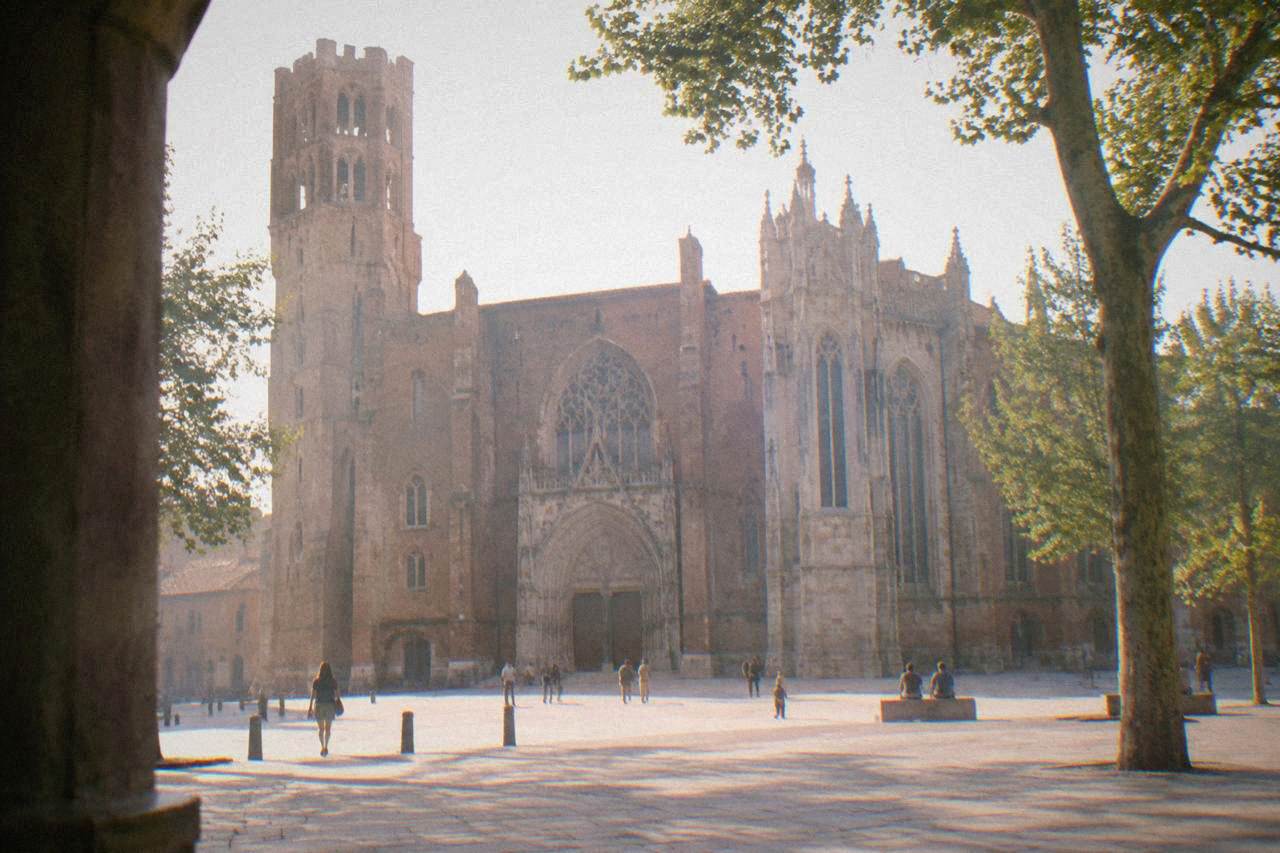
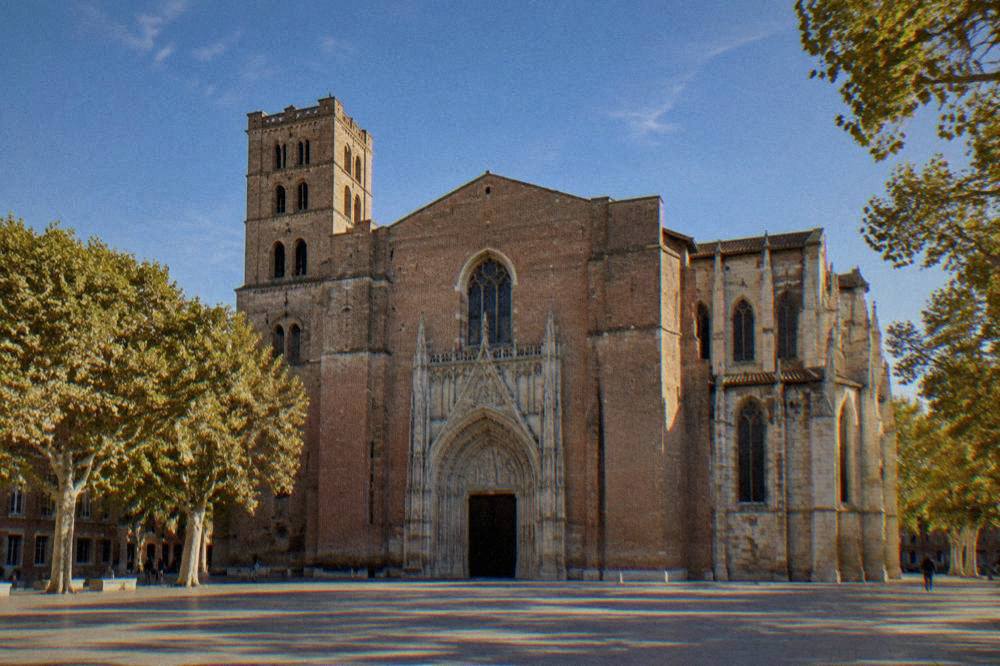
Toulouse Cathedral is a building of two halves: a broad, fortress-like west front and a much taller choir behind it, with a nave and choir that sit at different alignments, so the interior never resolves into a single straight line. The effect is visible the moment you step inside. Where a conventional cathedral draws the eye straight down one axis to the far window, here the perspective shifts partway along, and the walls, vaults and window levels change character as you move through. The exterior tells the same story. The facade is one of the widest of any cathedral, yet it carries only a single doorway, and its brick and stone surfaces sit next to each other in bands that do not match. None of this is hidden damage or a botched repair: it is simply what several centuries of building and rebuilding produced, and it is the reason the cathedral looks the way it does.
The practical consequence for a visitor is that the cathedral rewards slow looking rather than a quick photo. The interior is large, dim in places and bright in others, and the change in alignment between the nave and the choir means that each part of the building frames the next differently. Treat the visit as a walk through a sequence of spaces rather than a dash to a single viewpoint, and the architecture does the work for you.
The cathedral also functions as a working church rather than a museum piece. Services, concerts and rehearsals take place in it, and the atmosphere changes with them. If quiet matters to you, a weekday morning is a safer bet than a weekend afternoon, and any visit should be planned around the fact that a cathedral in use is not open on the same schedule as a ticketed attraction. The building gives the center of Toulouse its most solemn interior, and it costs nothing to enter, which places it alongside the Basilique Saint-Sernin as one of the two great church interiors of the city.
How Do You Get To Toulouse Cathedral?
Toulouse Cathedral sits in the city center, a short walk from the Place du Capitole, and the Tisseo network's single ticket costs EUR 1.90, with a day pass at EUR 7.20 and a 3-day pass at EUR 14.30, according to the official Tisseo e-boutique catalogue. For practical purposes the cathedral is a walking destination from anywhere in the old town: the Capitole, the Jacobins and the Garonne riverside all lie within an easy stroll of its doors. If you are coming from further out, the metro and bus network run by Tisseo covers the city, and the fares below are the ones the official catalogue lists. There is no 2-day pass, so a decision between the day pass and the 3-day pass depends on how long your stay is and how many trips a day you expect to make.
| Tisseo ticket | Price (EUR) |
|---|---|
| Single trip | 1.90 |
| Single trip bought last-minute on board | 2.50 |
| 10 trips | 16.00 |
| Day pass ("Journee") | 7.20 |
| 3-day pass | 14.30 |
| Airport single (network plus Navette aeroport) | 9.50 |
Two cautions from the verified facts about transport in Toulouse apply here. First, if you are arriving by air, the tram line T2 to Toulouse-Blagnac airport has been closed since 5 June 2023 and stays closed until the end of 2026 because of the metro Line C works, so the airport link is the Navette, which runs one departure every 15 minutes and takes 20 to 40 minutes to the center. Second, the new metro Line C, 27 km long with 21 stations running from Colomiers through Blagnac, Toulouse and Labege, does not open until the end of 2028, so no trip planning today should assume it. The details of getting from the airport into town are covered in full on our Toulouse airport to city center guide.
For a visit built around the cathedral and the old town, the honest advice is that you may not need a transport pass at all. The sights that cluster around the cathedral, from the Capitole to the Pont Neuf and the Garonne riverside, are all walkable from one another, and the single ticket at EUR 1.90 exists for the trips that walking does not cover. The getting around Toulouse guide breaks down the whole network, including the buses and trams, in more detail.
What Can You See Inside Toulouse Cathedral?
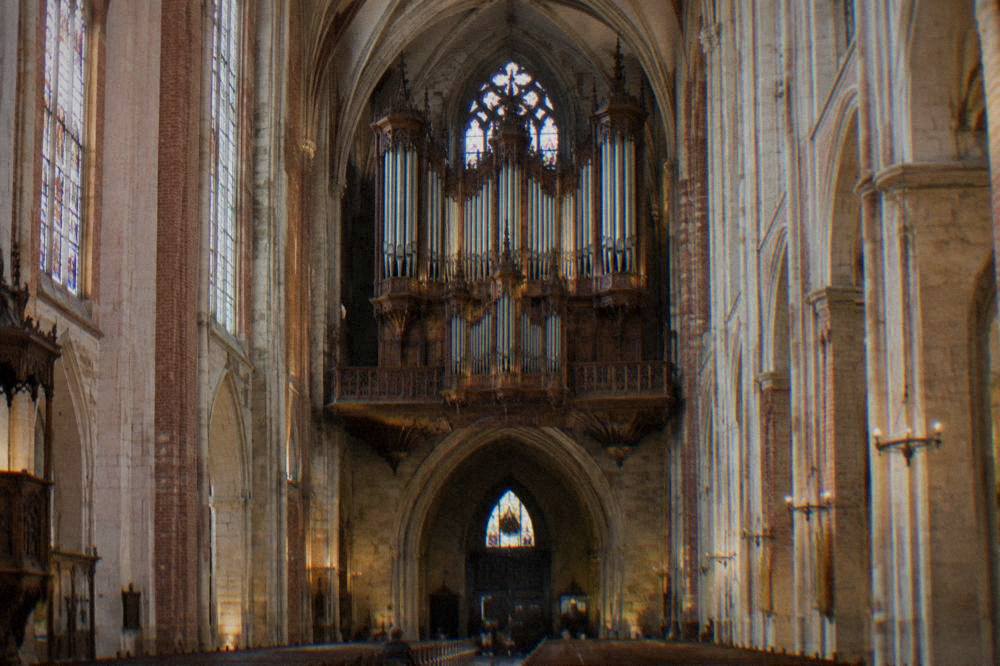
The interior of Toulouse Cathedral runs through a sequence of spaces with different proportions: the wide nave with its piers and chapels, the misaligned transition where the axis shifts, and the tall choir with its stained glass, plus the organ and the side chapels that carry most of the decorative interest. The stained glass is the single element that changes the room most, because the choir's windows sit high and pour colored light onto surfaces that are otherwise restrained. The organ case is another fixed point of the interior, and the chapels along the aisles each hold their own altarpieces and fittings. None of this needs a guidebook to appreciate, but a little context about what you are looking at does sharpen the walk.
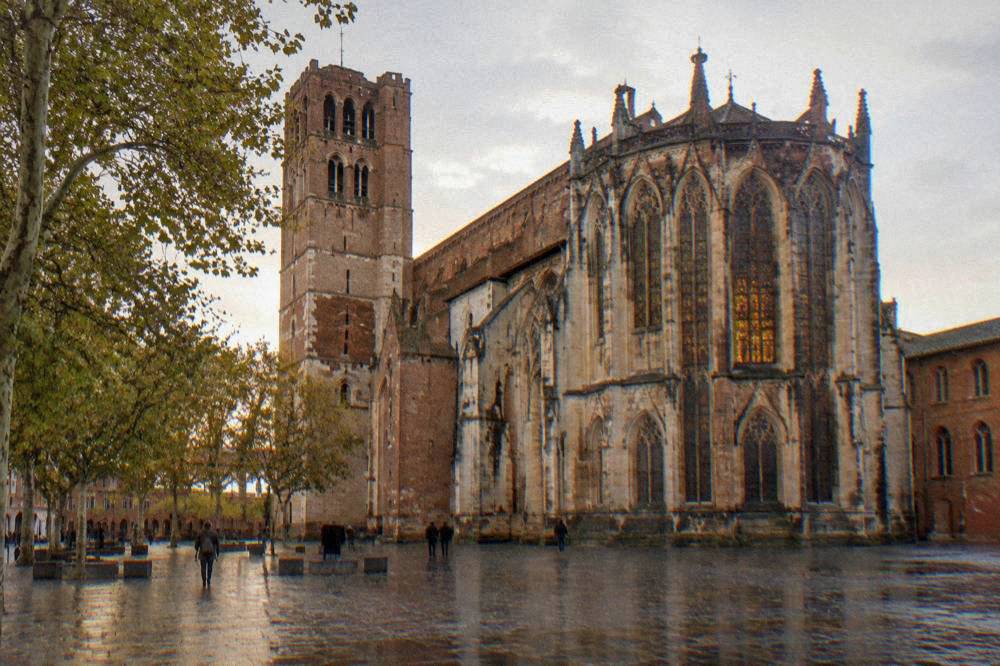
The shift in alignment between the nave and the choir is the thing to watch for. Stand near the west end and look east, then walk forward and look back: the two parts of the building frame each other at an angle, and the vault heights and window levels change as you pass from one to the other. This is not a defect to be apologized for but the record of a building that was worked on across a very long span, and once you have noticed it, every other observation about the interior falls into place around it.
The question of who is buried in the cathedral is one readers ask often enough that we treat it separately: the who is buried in Toulouse Cathedral page carries the answer, along with the context around the burials. Beyond that, the best approach inside is simply to give the building time. The contrast between the dim nave and the bright choir rewards a slow circuit, and the chapels repay the last twenty minutes of a visit more than the first five.
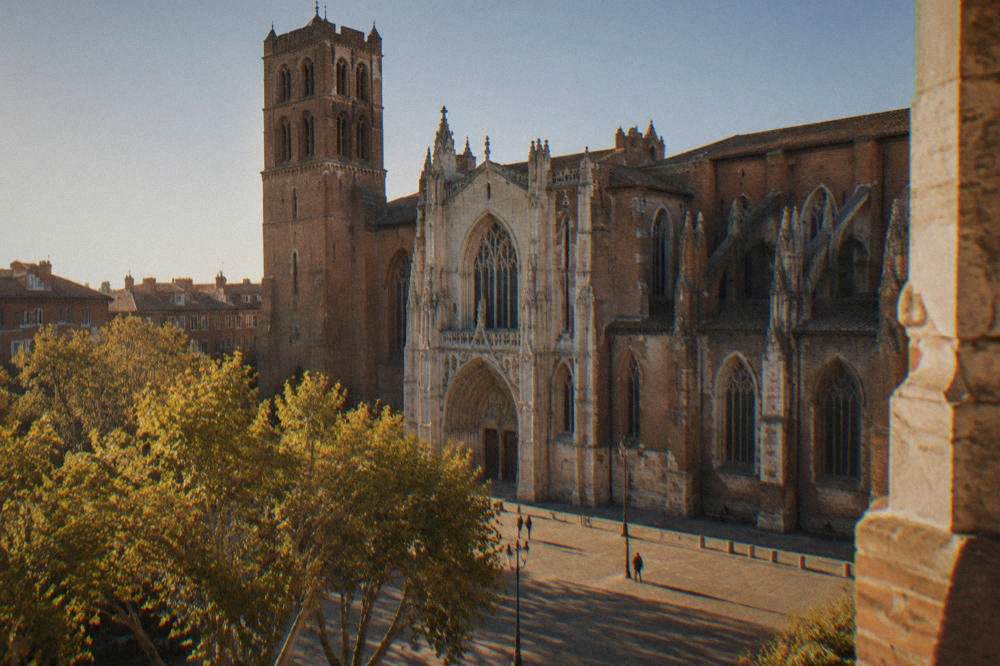
What Does A Visit Cost, And What Should You Budget Nearby?
Entry to Toulouse Cathedral itself is free, but the sights around it are not: the tourist office's Pass Tourisme page lists normal rates of EUR 12 for the Fondation Bemberg, EUR 12 for the Museum, EUR 12 for Les Abattoirs, EUR 5 for the Musee des Augustins and EUR 5 for the Couvent des Jacobins, and the pass at EUR 26 covers them for stays of 1 to 3 days. That is the arithmetic a cathedral-centered day in Toulouse actually runs on. The cathedral anchors the walk; the museums and monuments around it decide the budget. The Pass Tourisme pays off from the third activity, includes a free guided tour from the tourist office, and adding EUR 10 to it buys 10 public-transport trips on the metro, bus and tram.
| Sight | Normal adult rate (EUR) | With the Pass Tourisme |
|---|---|---|
| Fondation Bemberg | 12 | Free |
| Museum de Toulouse | 12 | Free |
| Les Abattoirs | 12 | Free |
| Musee des Augustins | 5 | Free |
| Couvent des Jacobins | 5 | Free |
| Cite de l'espace | 29 | Discounted |
Two timing notes from the verified facts matter for this itinerary. The Musee des Augustins is temporarily closed from 21 September to 2 October 2026 for great-cloister works, and its Gothic halls, the sacristy, the Notre-Dame de Pitie hall and the chapter house, reopen on 3 October 2026 from 10:00. The Couvent des Jacobins is free on the first Sunday of the month except when a temporary exhibition is on, a rule stated for the Jacobins and not to be generalized to other museums. Both sit within the same walking radius as the cathedral, so a museum day and a cathedral day can be merged or split depending on the calendar.
If the aerospace side of Toulouse is on your list, the same budget logic extends across the city. Aeroscopia, the aviation museum near the airport, charges EUR 16 for an adult ticket, EUR 13 reduced, with an annual pass at EUR 26 and a family pass at EUR 80, and it is open daily 9:30-18:00 with last entry at 17:00, closed on 25 December, 1 January and 7 May 2026. The Cite de l'espace, the space park on the other side of the city, lists tickets from EUR 22.50 on its homepage, with the tourist office giving its normal adult rate as EUR 29. Neither is next to the cathedral, but both belong to the same Toulouse that built them, and the Aeroscopia and Cite de l'espace pages cover them in detail.
What Is Near Toulouse Cathedral?
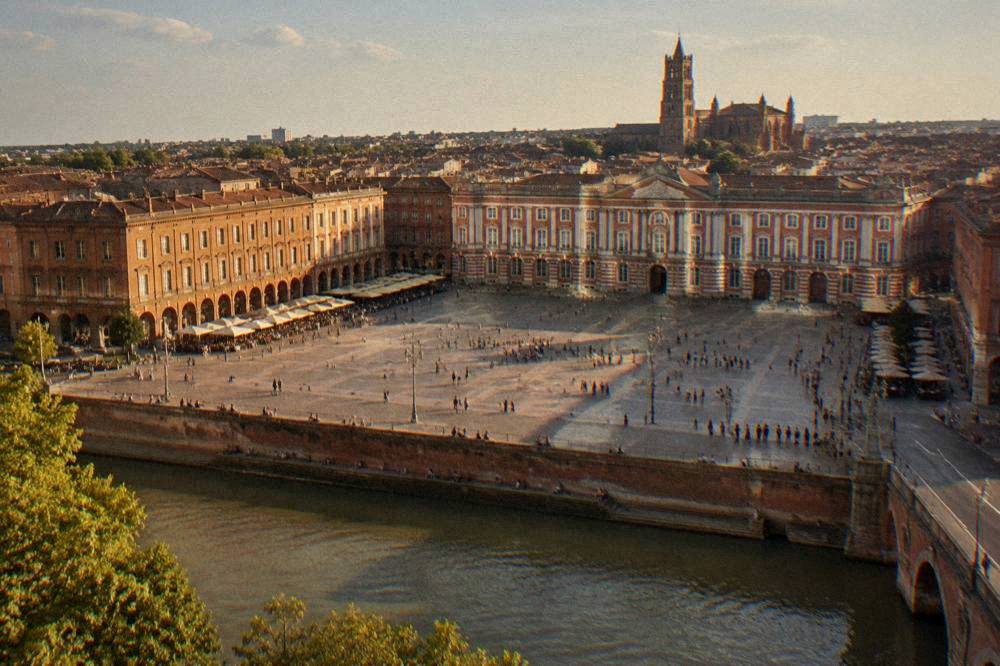
The cathedral sits in a walkable cluster of central Toulouse sights: the Capitole with its square and town hall, the Basilique Saint-Sernin on the Via Tolosana pilgrimage route, the Couvent des Jacobins, the Musee des Augustins, the Marche Victor Hugo food market, and the Garonne riverside with the Pont Neuf, all reachable on foot from its doors. This density is the cathedral's real advantage. A visitor who enters the cathedral in the morning can reach any of the sights below without planning a single transport trip, and the whole set fits into the one-day and two-day itineraries this site publishes.
| Nearby sight | What it is | Walking fit |
|---|---|---|
| Capitole de Toulouse | Town hall, theater and square | Short stroll |
| Basilique Saint-Sernin | Pilgrimage basilica on the Via Tolosana | Short stroll |
| Couvent des Jacobins | Convent church and cloister | Short stroll |
| Musee des Augustins | Fine arts museum in an old convent | Short stroll |
| Marche Victor Hugo | Covered food market | Short stroll |
| Pont Neuf and the Garonne | River crossing and riverside walks | Short stroll |
The Capitole, covered in full on our Capitole de Toulouse page, is the civic heart of the city and the natural first stop before or after the cathedral. Saint-Sernin, listed as part of the UNESCO "Routes of Santiago de Compostela in France" property inscribed in 1998, is the other great church of Toulouse and a major stop on the Via Tolosana, and the contrast between its unified Romanesque interior and the cathedral's shifting spaces is the most instructive pairing a church-minded visitor can make in this city. The Jacobins, with its cloister and its roof restoration under way while the site stays open, sits between the two.
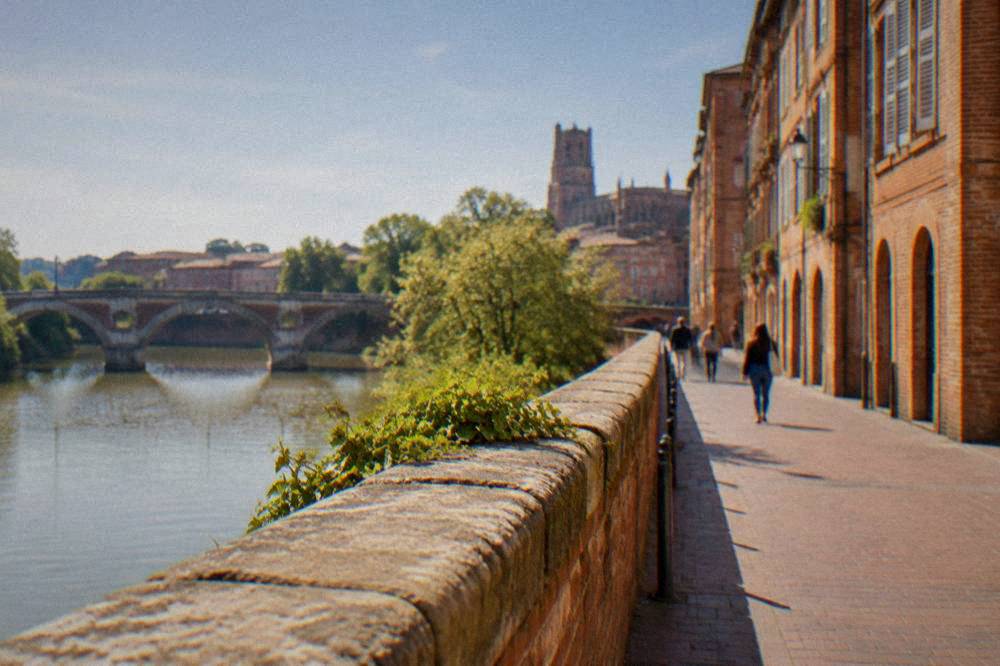
For eating, the Marche Victor Hugo, covered in our Victor Hugo market guide, is the covered food market of the center, and the surrounding streets carry the restaurants and cafés of the old town. The Toulouse food and Toulouse restaurants guides cover what to eat, from cassoulet to the local sausage, without pretending that any single address has been ranked. The riverside, with its views over the Garonne and the Pont Neuf, is where the afternoon of a cathedral day usually ends.
When Is The Best Time To Visit Toulouse Cathedral?
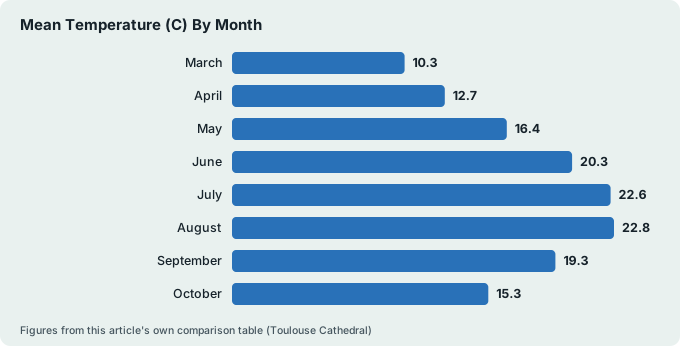
The best months for a cathedral-centered visit to Toulouse are late spring through early autumn, but the Meteo-France 1991-2020 normals for Toulouse-Blagnac carry a surprise: May is the wettest month of the year at 73.6 mm of rain, well ahead of February at 37.2 mm, while July is the sunniest at 258.6 hours with only 40.1 mm of rain. The conventional instinct that rain belongs to winter is wrong here. The rain peaks in May, with April at 65.2 mm and June at 64.2 mm close behind, and then the tap turns off for the summer. For a trip built around walking between the cathedral, the Capitole and the riverside, that pattern matters more than temperature alone.
| Month | Mean temperature (C) | Rain (mm) | Sunshine (hours) |
|---|---|---|---|
| March | 10.3 | 45.3 | 175.3 |
| April | 12.7 | 65.2 | 188.5 |
| May | 16.4 | 73.6 | 212.3 |
| June | 20.3 | 64.2 | 231.8 |
| July | 22.6 | 40.1 | 258.6 |
| August | 22.8 | 44.6 | 246.4 |
| September | 19.3 | 45.7 | 210.1 |
| October | 15.3 | 54.3 | 155.2 |
The wider annual picture, from the same Meteo-France fiche, shows a mean daily maximum of 18.8C and a mean minimum of 9.6C across the year, with 627 mm of rain spread over 95.8 rain days and 2,075.1 hours of sun. The record high is 42.4C, set on 23 August 2023, and the record low is -19.2C, from 15 February 1956, both figures from the records period running from 1947 to June 2025. Days at or above 30C cluster in July and August, at 11.5 and 11.3 days a year respectively. The cathedral has one advantage in this climate that the riverside does not: it is an indoor sight, so a rainy May afternoon costs a cathedral visit nothing.
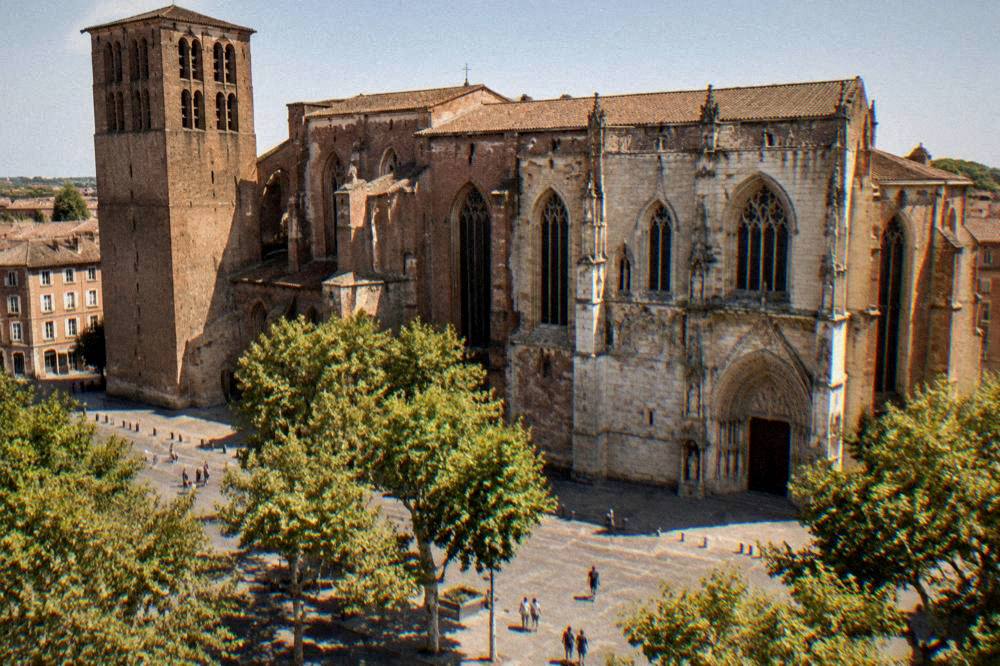
The seasonal question is covered in more depth on the best time to visit Toulouse and Toulouse weather guides, and the rainy-day options, including the Musee des Augustins, Les Abattoirs and the Fondation Bemberg, sit on the rainy day in Toulouse page. In short: any month works for the cathedral itself, and the choice of month should be driven by what surrounds it.
What Events Fill The Cathedral And Its Neighborhood?
The verified events calendar around Toulouse includes Piano aux Jacobins from 8 to 30 September 2026, the Toulouse les Orgues organ festival in its 31st edition from 7 to 18 October 2026 with its opening concert on 7 October at Notre-Dame de la Daurade, and the Christmas markets on the Place du Capitole, the allees Jean-Jaures and the square Charles-de-Gaulle from 26 November to 27 December 2026. For a cathedral visitor, the organ festival is the headline: a cathedral with a great organ, in a city that runs an international organ festival across its churches each October, is a building worth revisiting in that window. Piano aux Jacobins fills the Jacobins cloister and other venues through late September.
| Event | Verified dates | Venue |
|---|---|---|
| Piano aux Jacobins | 8 to 30 September 2026 | Couvent des Jacobins and other venues |
| Toulouse les Orgues (31st edition) | 7 to 18 October 2026 | Multiple venues, opening concert at Notre-Dame de la Daurade |
| Christmas markets | 26 November to 27 December 2026 | Place du Capitole, allees Jean-Jaures, square Charles-de-Gaulle |
| Rio Loco | 9 to 13 June 2027 | Prairie des Filtres |
The full events picture, including the festivals whose next dates are not yet confirmed on official pages, sits on the Toulouse events guide, and the Christmas market season has its own page at Toulouse Christmas market. What matters for this article is narrower: the cathedral district is quietest in ordinary weekday mornings, liveliest during the festival windows of September and October, and at its most decorated during the Christmas market period, when the walk between the cathedral and the Place du Capitole passes through the market on the Capitole square.
Which Tours Work Well Around A Cathedral Visit?
The tours that pair best with a cathedral visit are the city-walk formats: a self-guided audio tour of the Pink City that you control at your own pace, and a guided electric bike tour that covers the panoramic sights and includes the Teleo cable car, with the Aeroscopia admission ticket as the add-on for the aerospace half of the city. The cathedral is a stop on the classic walking geography of central Toulouse, so any tour built around the old town passes close to it. The choice between them is a choice of pace and transport, not of coverage.
Prefer to wander the Pink City with commentary in your ears? Book a self-guided audio tour here.
The self-guided audio format suits a traveler who wants to stand inside the cathedral, or in front of its facade, and listen at their own speed, doubling back to the Notre-Dame de la Daurade or the Notre-Dame du Taur churches when a question arises. The bike and cable car format suits a traveler covering the whole city in one sweep, from the Canal du Midi to the riverside, and trading depth for reach. The walking-tour options in general, including the free, tip-based GuruWalk walks led by guides such as those behind Harry's Free Tour, are compared on the Toulouse walking tours page.
Common Questions About Toulouse Cathedral
Is Toulouse Cathedral free to enter?
The cathedral is a working church and entry is free. Budget instead for the sights around it: the tourist office lists normal rates of EUR 12 for the Fondation Bemberg, the Museum and Les Abattoirs, and EUR 5 each for the Musee des Augustins and the Couvent des Jacobins.
How old is Toulouse Cathedral?
The building was constructed and rebuilt across a very long span, which is why its nave and choir sit at different alignments and its facade carries a single doorway despite its width. This guide deliberately avoids dating the parts of the building, because no date for its construction phases was verified against a primary source.
Who is buried in Toulouse Cathedral?
The burials in the cathedral are covered in detail on our dedicated page, who is buried in Toulouse Cathedral, which lists the figures connected to the building and the context around them.
How do I get to Toulouse Cathedral by public transport?
The cathedral sits in the center of Toulouse, a short walk from the Place du Capitole. A Tisseo single ticket costs EUR 1.90, a day pass EUR 7.20 and a 3-day pass EUR 14.30, per the official Tisseo e-boutique catalogue. From the airport, the Navette runs every 15 minutes and takes 20 to 40 minutes to the center, as tram T2 remains closed until the end of 2026.
What is the best time of day to visit Toulouse Cathedral?
A weekday morning is the quietest window for a working cathedral, and the interior light is strongest in the middle of the day, when the choir's stained glass is at its best. Avoid service times, and check locally for concert and rehearsal schedules, which vary.
Is Toulouse Cathedral worth visiting compared to Saint-Sernin?
Both are worth seeing, and they contrast sharply: the Basilique Saint-Sernin, listed since 1998 as part of the UNESCO "Routes of Santiago de Compostela in France", has a unified Romanesque interior, while the cathedral's interior shifts alignment between nave and choir. The two churches are a short stroll apart, so the pairing costs little time.
Toulouse Cathedral is the quiet anchor of the city center: free to enter, walkable from everything, and strange enough in its architecture to hold attention long after the pink-brick facades outside have become familiar. Pair it with Saint-Sernin for the contrast, give it a slow hour, and let the rest of the old town arrange itself around it.