Who Is Buried In Toulouse Cathedral?
Toulouse Cathedral holds no famous royal tomb. The famous burials of Toulouse sit elsewhere: Saint Saturnin at the Basilique Saint-Sernin and the relics of Saint Thomas Aquinas at the Jacobins. Here is what to see and how.
Toulouse, the pink-brick "La Ville Rose" on the Garonne in southwestern France, keeps its most famous dead in two places, and neither of them is the cathedral. The Cathedral of Saint-Étienne, the city's gothic cathedral, is a landmark of architecture rather than a necropolis: it holds no royal tomb and no saint's shrine that draws pilgrims. The burials that made Toulouse a stop on a great medieval pilgrimage route sit a short walk away, at the Basilique Saint-Sernin and at the Couvent des Jacobins, and those two buildings are where the question of who is buried in Toulouse really gets answered.
Who Is Buried In Toulouse Cathedral?
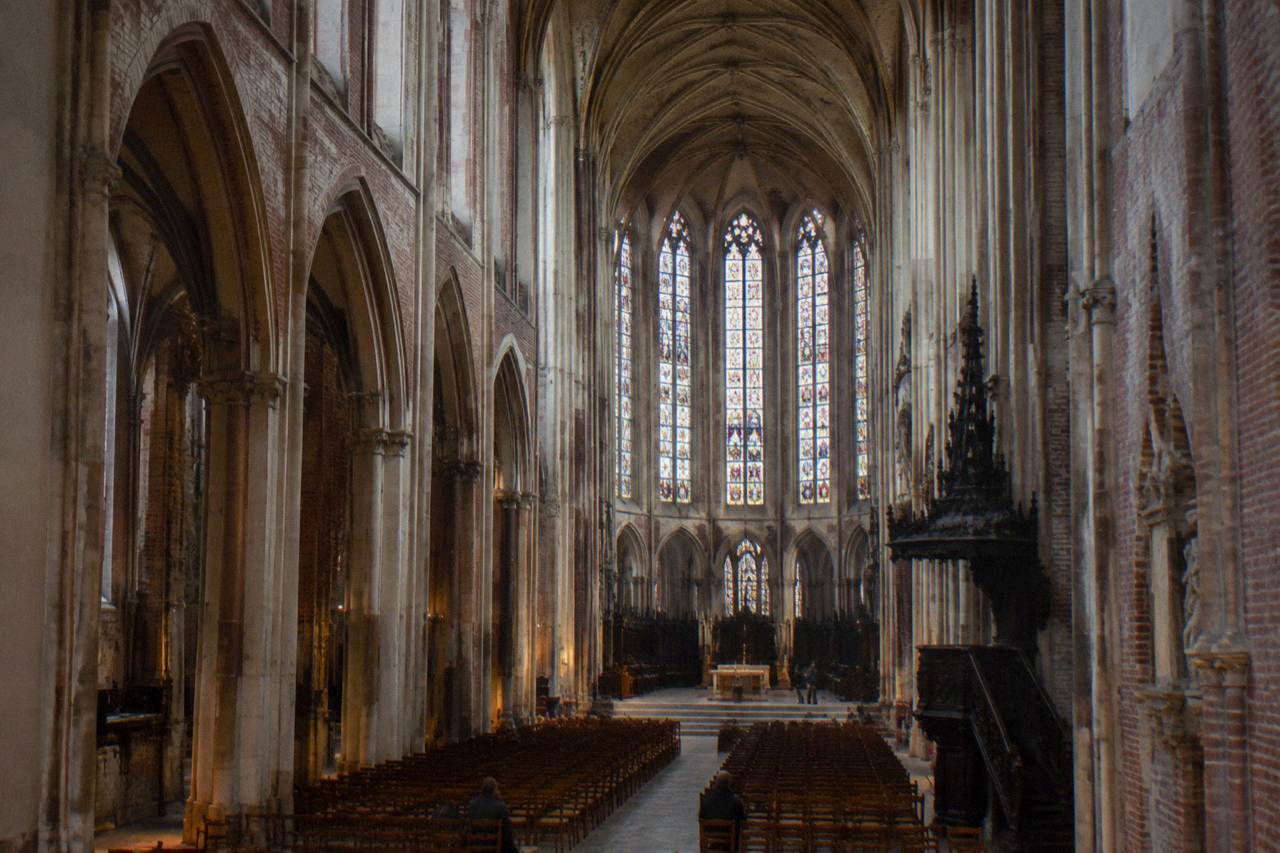
Toulouse Cathedral, the Cathedral of Saint-Étienne, holds no famous royal or saintly tomb and is not the burial place any visitor comes to Toulouse for. The city's celebrated dead rest elsewhere: the Basilique Saint-Sernin holds the relics of Saint Saturnin, the city's first bishop, and the Couvent des Jacobins holds the relics of Saint Thomas Aquinas, the medieval theologian. The cathedral itself is visited for its architecture.
That distinction surprises people who expect every French cathedral to be a Saint-Denis, the royal necropolis near Paris. Toulouse's cathedral was built and rebuilt over centuries, which is why its west front and its choir do not match, and its fame rests on that irregular architecture and on its stained glass rather than on any tomb inside. If a guidebook or a forum post tells you to seek out a famous grave in the cathedral, it is confusing the building with its neighbors.
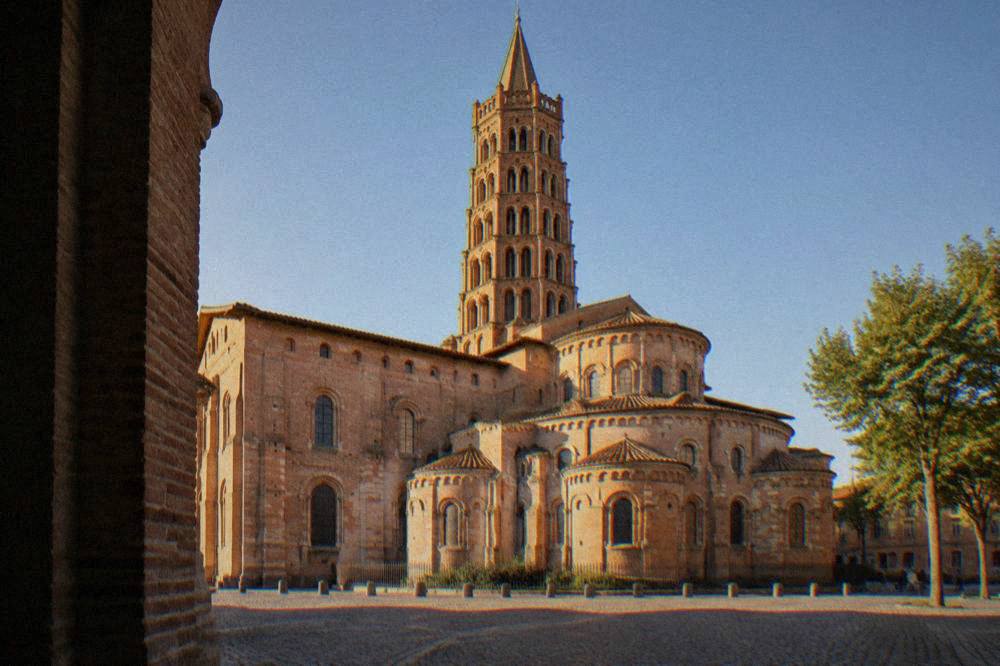
The confusion is understandable. Toulouse is one of the great pilgrimage cities of France, and the Basilique Saint-Sernin is listed by UNESCO as part of the "Routes of Santiago de Compostela in France", inscribed in 1998, with the basilica a major stop on the Via Tolosana, one of the four historic French routes to Santiago. Pilgrims came for relics, and relics are what the basilica has, not the cathedral. The basilica has also been a Monument Historique since 1840, as the city's page for the building states.
For the full story of the city's most famous saint, the companion page on which saint is buried in Toulouse goes deeper into Saint Saturnin and the basilica built around his relics.
Which Saint Is Buried In Toulouse?
The saint most famously buried in Toulouse is Saint Saturnin, also called Saint Sernin, the city's first bishop, whose relics lie in the Basilique Saint-Sernin at the top of the rue du Taur. The second great religious figure is Saint Thomas Aquinas, whose relics rest in the gothic church of the Couvent des Jacobins, the Dominican convent in the city center. Both are within walking distance of the cathedral.
Saint Saturnin's story is the founding legend of Christian Toulouse. Tradition holds that he was martyred in the city's early Christian centuries, tied by the feet to a bull that dragged him down what is now the rue du Taur, the street that runs from the Place du Capitole to the basilica. The basilica that carries his name grew around his tomb over the following centuries, and it became one of the largest and most complete Romanesque churches in western Europe, as well as the largest stop on the Via Tolosana.
The Jacobins tell a different, Dominican story. The Couvent des Jacobins was the motherhouse of the Dominican order in the region, and its church, a brick gothic masterpiece famous for the palm-tree vault over its choir, holds the relics of Saint Thomas Aquinas. The convent's city page notes that the church is open to visitors and that restoration work on the church roof has been under way, with the site staying open to visitors throughout. It is free on the first Sunday of the month, except when a temporary exhibition is on, and the tourist office lists its normal rate as EUR 5.
For planning purposes, here is how the two burial sites compare with the cathedral itself.
| Building | Who Or What It Holds | Why It Matters | Listed Admission |
|---|---|---|---|
| Toulouse Cathedral (Saint-Étienne) | No famous royal or saintly tomb | The city's cathedral, visited for its architecture | Church entry not priced in the tourist office's pass table |
| Basilique Saint-Sernin | Relics of Saint Saturnin, first bishop of Toulouse | UNESCO-listed as part of the Routes of Santiago de Compostela in France, inscribed 1998; a major stop on the Via Tolosana | Not in the pass table |
| Couvent des Jacobins | Relics of Saint Thomas Aquinas | Brick gothic church of the Dominican convent; free first Sundays except during temporary exhibitions | EUR 5 normal rate |
If your trip is built around Toulouse's wider fame rather than its tombs, the page on why Toulouse is so famous covers the pink brick, the aerospace industry and the food in one place.
How To Visit The Burial Sites Of Toulouse In One Day?
All three buildings sit in the historic center of Toulouse and can be visited on foot in a single day: the cathedral on the Place Saint-Étienne, the Jacobins a few blocks south, and the Basilique Saint-Sernin a short walk up the rue du Taur from the Capitole. A Tisseo day pass at EUR 7.20 covers metro, tram and bus if you would rather ride, and the Pass Tourisme at EUR 26 includes the Jacobins plus a free guided tour from the tourist office.
The tourist office's Pass Tourisme page lists the pass at EUR 26 for stays of one to three days, and says it pays off from the third activity. It includes a free guided tour from the tourist office, and adding EUR 10 buys ten public-transport trips on the metro, bus and tram network. The normal rates the office lists for sites covered free by the pass include the Fondation Bemberg at EUR 12, the Museum at EUR 12, Les Abattoirs at EUR 12, the Musee des Augustins at EUR 5 and the Couvent des Jacobins at EUR 5. The Cite de l'espace, whose normal adult rate is EUR 29, is discounted rather than free with the pass.
For getting around between the sites, the Tisseo e-boutique catalogue gives the current fares.
| Tisseo Ticket | Price | What It Covers |
|---|---|---|
| Single trip | EUR 1.90 | One journey on the network |
| Single trip bought last-minute on board | EUR 2.50 | One journey, bought from the driver |
| 10 trips | EUR 16.00 | Ten journeys, shareable over time |
| Day pass | EUR 7.20 | Unlimited travel for one day |
| 3-day pass | EUR 14.30 | Unlimited travel for three days |
| Airport single | EUR 9.50 | Tisseo network plus the Navette aeroport |
The Pass Tourisme's coverage, at the normal rates the tourist office lists, looks like this.
| Site Covered By The Pass Tourisme | Normal Rate | With The Pass |
|---|---|---|
| Couvent des Jacobins | EUR 5 | Free |
| Musee des Augustins | EUR 5 | Free |
| Fondation Bemberg | EUR 12 | Free |
| Les Abattoirs | EUR 12 | Free |
| Museum de Toulouse | EUR 12 | Free |
| Cite de l'espace | EUR 29 | Discounted |
One timing note for autumn visitors: the Musee des Augustins, which you may pass between the cathedral and the Jacobins, is temporarily closed from 21 September to 2 October 2026 for works in its great cloister, and its Gothic halls, the sacristy, the Notre-Dame de Pitie hall and the chapter house, reopen on 3 October 2026 from 10:00. Plan around those two weeks if the museum is on your list.
If you are pairing the city's churches with its other sights, the page on how many days is enough for Toulouse helps you size the trip, and the Toulouse Travel Guide homepage covers everything else in the city.
What Else Should You See Near Toulouse Cathedral?
The streets around Toulouse Cathedral hold the Capitole, the city's grand city hall and opera house, the rue du Taur leading to the Basilique Saint-Sernin, and the riverside walk to the Pont Neuf over the Garonne, all within the compact historic center. The cathedral's own square, the Place Saint-Étienne, is one of the quietest grand squares in the city, and the walk from it to the basilica follows the route of the martyrdom legend itself.
Start at the cathedral, whose full story is on the Toulouse Cathedral attraction page, then walk down the rue du Taur toward the Capitole. The street's name preserves the legend of Saint Saturnin, the bull, taurus in Latin, that dragged the saint to his death. From the Capitole square, the Basilique Saint-Sernin's stone tower rises over the rooftops a few minutes further north, and the crypt and ambulatory around the choir are where the pilgrimage traffic of a thousand years concentrated.
South and west of the cathedral, the Couvent des Jacobins and the Musee des Augustins sit close together near the river, and the Garonne itself is never more than a few blocks away. The city is compact: the whole circuit of cathedral, basilica, convent and riverside is a comfortable half-day walk, with cafés and the covered Marche Victor Hugo in between for a longer lunch.
Families with a free afternoon often split up here, and the space museum is the city's biggest draw for children: the Cite de l'espace, whose normal adult rate is EUR 29 with tickets from EUR 22.50 on its own homepage, is reachable on the metro, and a pre-booked e-ticket saves the ticket line. Check availability for the Cité de l'Espace E-Ticket if that fits your day.
Beyond the city, the burial-and-pilgrimage theme continues. Rocamadour, the clifftop sanctuary that was one of the great pilgrimage destinations of medieval Europe, is reachable on a long day trip from Toulouse, and the medieval-faith day trip built around it pairs naturally with a trip themed on Toulouse's saints. Carcassonne and Albi, both reachable by coach tours from the city, round out the region's medieval monuments.
Common Questions About Toulouse Cathedral Burials
Quick answers to what planners ask most about the cathedral and the city's famous tombs.
Who is buried in Toulouse cathedral?
Toulouse Cathedral, the Cathedral of Saint-Étienne, holds no famous royal or saintly tomb. The famous burials of Toulouse are at the Basilique Saint-Sernin, which holds the relics of Saint Saturnin, and at the Couvent des Jacobins, which holds the relics of Saint Thomas Aquinas.
Which saint is buried in Toulouse?
Saint Saturnin, also called Saint Sernin, the first bishop of Toulouse, is the city's great saint, and his relics lie in the Basilique Saint-Sernin. The basilica is a major stop on the Via Tolosana and is UNESCO-listed as part of the Routes of Santiago de Compostela in France, inscribed in 1998.
Where are the relics of Saint Thomas Aquinas in Toulouse?
They rest in the church of the Couvent des Jacobins, the brick gothic Dominican convent in the city center. The site is open to visitors, lists a normal admission of EUR 5 on the tourist office's pass page, and is free on the first Sunday of the month except when a temporary exhibition is on.
Is Toulouse Cathedral worth visiting if no one famous is buried there?
Yes. The cathedral is visited for its architecture: built and rebuilt over centuries, it is one of the most irregular gothic cathedrals in France, and its stained glass and mismatched west front are the reason to go. See the cathedral's attraction page for the full story.
Can you visit Saint-Sernin and the Jacobins on the same day as the cathedral?
Yes, easily. All three buildings sit in the compact historic center of Toulouse, a few minutes' walk apart along the rue du Taur and the streets south of the Capitole. A Tisseo day pass at EUR 7.20 covers any metro or bus hops, though visitors walk the whole circuit.
Does the Pass Tourisme cover the burial sites?
The Couvent des Jacobins is covered: the tourist office lists its normal rate as EUR 5, free with the EUR 26 Pass Tourisme, which also includes a free guided tour from the tourist office. The Basilique Saint-Sernin and the cathedral are not in the pass table the office publishes.