Toulouse Wines
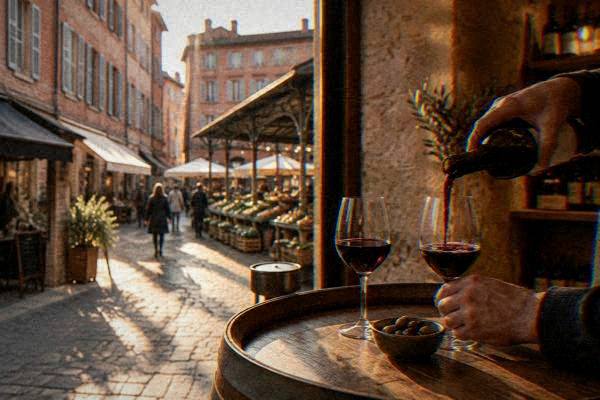
Toulouse sits in the middle of one of France's quietest good-value wine regions: Fronton begins just north of the city, Gaillac lies beyond Albi, and the pink-brick center keeps a dense little circuit of wine bars.
Short answer
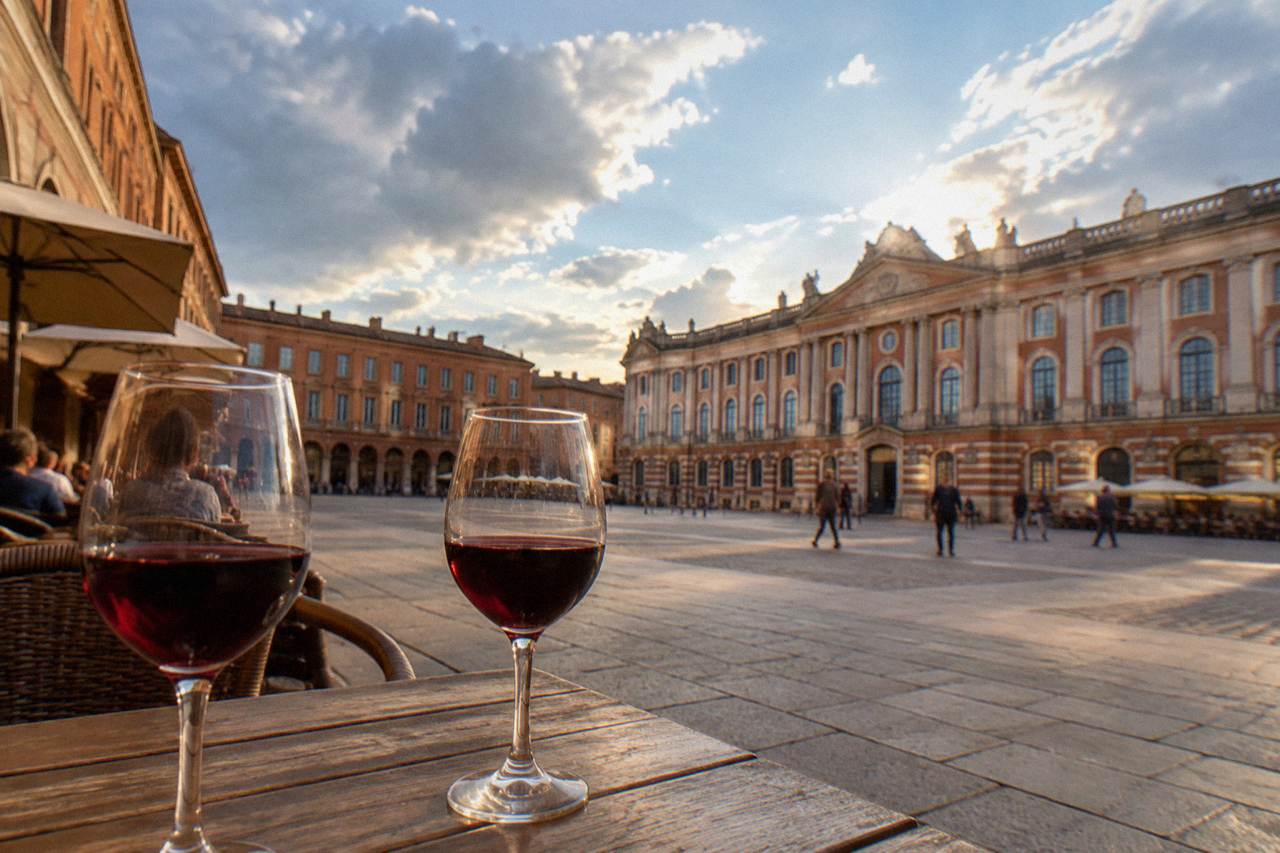
Toulouse is a genuine wine city. The Fronton vineyards sit just north of town, the Gaillac region is an easy day trip, and the historic center has wine bars with local lists. A small-group Fronton wine tour from Toulouse is the simplest way to taste without driving.
Toulouse, the pink-brick "La Ville Rose" on the Garonne in the Occitanie region of southwestern France, is one of the few French cities where you can plan an entire trip around wine without ever straying far from the terracotta rooftops. The Fronton vineyards begin just north of the city, the Gaillac wine country sits beyond Albi to the northeast, and the streets around the Capitole hold enough wine bars to keep an evening interesting. This guide lays out what to taste, where to taste it, and how to reach the vines without a car.
What Should You Know About Toulouse Wines Before You Plan?
Toulouse itself grows almost no vines, but it is the natural base for two distinct wine regions: Fronton, whose vineyards sit just north of the city, and Gaillac, a historic area reached on day trips toward Albi. The city's own wine culture lives in its wine bars, its markets and its food tours, all covered below.
The practical point is this: you sleep, eat and drink in Toulouse, and you taste at the source either on an organized tour or by joining a day trip that pairs the vines with somewhere else worth seeing. The Toulouse Travel Guide covers the city itself elsewhere; this page is about what goes in the glass.
Two regions dominate the conversation. Fronton is the local one, close enough that a tour can leave Toulouse, visit a winemaker and return with time to spare. Gaillac is farther out and usually gets bundled with Albi, which is where a lot of visitors actually want to go anyway. Both are covered in detail below, with the tours that reach them.
Wine here also comes with food attached. Cassoulet, the city's signature dish, is a rich casserole that practically demands a local red beside it, and the pairing question comes up constantly. The cassoulet guide and the broader Toulouse food guide handle the plate; this page handles the bottle.
A third strand is worth naming early: the guided wine experiences that run inside the city itself. Wine bar walks, market food tours with wine folded in, and chef-led food and history walks all operate from the center, which means that even a visitor with no interest in riding out to vineyards can build two or three wine-flavored evenings without leaving the pink brick behind. That matters for mixed groups, where one half wants the cellar and the other half wants the cathedral.
Is Fronton The Local Wine Of Toulouse?
Yes, Fronton is the wine region closest to Toulouse, sitting just north of the city, and it is the one local winemakers and wine bars will put in front of you first. A small-group tour from Toulouse is the standard way to visit a Fronton winemaker without needing to drive yourself.
Fronton's appeal for a visitor is logistical as much as oenological. Because the vineyards are nearby, a tour can be a relaxed day out rather than a long-haul expedition, and you are back in the pink city in time for dinner. The roster's Fronton Small Group Wine Tour from Toulouse is built exactly around that shape: a winemaker visit in a small-group format, with the transport handled.
If you would rather compare it against the operator's live listing before deciding, you can Check availability alongside the site's own day trips overview, which places Fronton in context with Carcassonne, Albi and the other big outings from the city.
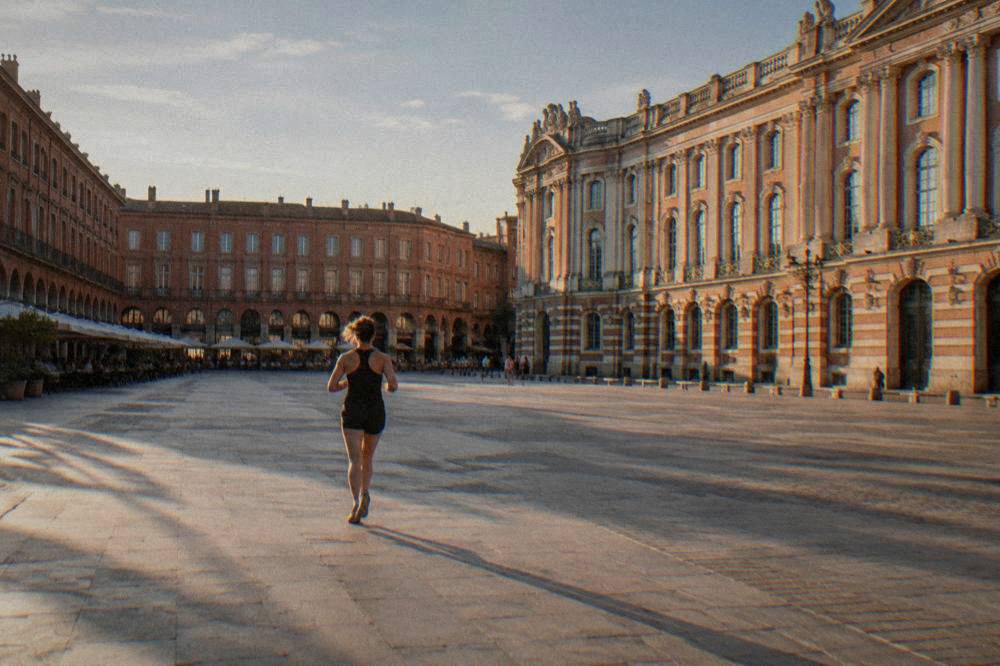
A note on timing: the vineyard calendar matters more than the tourist calendar. If you want to see vines in leaf rather than bare rows, aim your trip at the warmer half of the year, and check the best time to visit Toulouse guide for the full seasonal picture. Meteo-France's 1991-2020 normals for Toulouse-Blagnac show the shape of the year clearly.
| Season | Typical conditions around Toulouse | What it means for a wine trip |
|---|---|---|
| Spring (Mar-May) | Warming fast; May is the wettest month at 73.6 mm | Green vines, pack a rain layer |
| Summer (Jun-Aug) | July averages 258.6 hours of sun with just 40.1 mm of rain | Leafy vines, hot tastings, book ahead |
| Autumn (Sep-Nov) | Rain rising again from 45.7 mm in September | Harvest season, the busiest time at wineries |
| Winter (Dec-Feb) | February is the driest month at 37.2 mm | Bare vines, quiet cellars, city-focused trips |
Where Can You Drink Local Wine Inside Toulouse Itself?
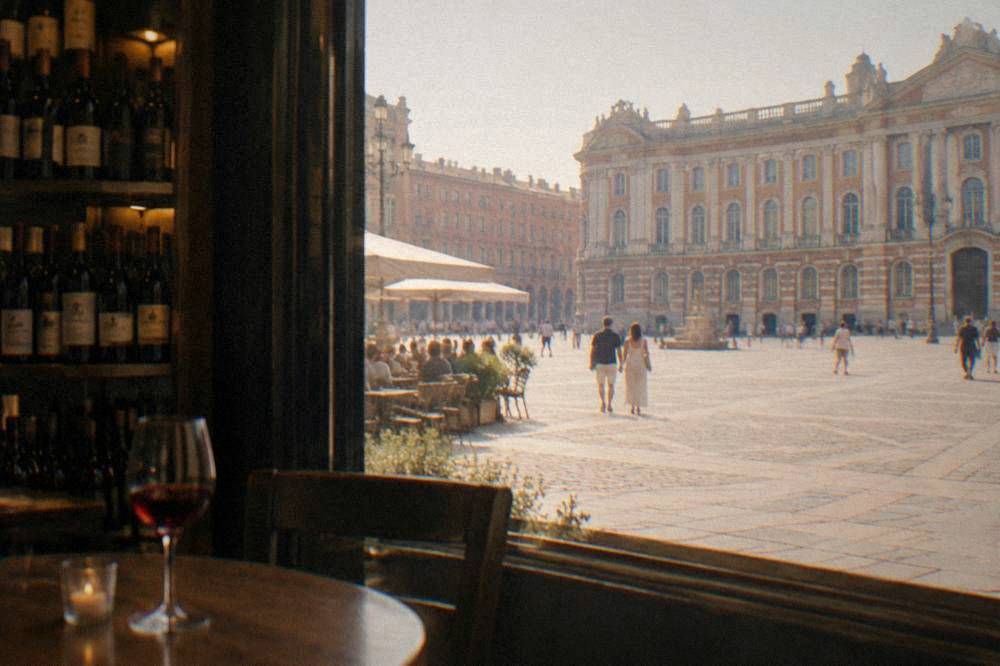
The historic center of Toulouse carries a dense circuit of wine bars, and the most reliable way into them is a guided wine bar walk with a local expert, which visits several bars in one evening and explains what is in each glass. Doing it solo works too, but the guided version removes the guesswork from a French wine list.
Wine bar culture here is a walking culture. The bars cluster in the streets around the Capitole and Saint-Etienne, close enough together that an evening becomes a gentle crawl rather than a trek across town. That density is exactly what the guided formats exploit: the roster carries a small-group wine bar experience with a local wine expert, plus a wine bar walking tour built on the same idea.
For visitors who want wine with dinner rather than as the whole evening, the Toulouse restaurants guide covers where the eating is good, and the classic move is a local red alongside cassoulet. The Victor Hugo market, covered in its own market guide, is the other in-city stop worth making: it is the place to pick up cheese and charcuterie that can stand beside any bottle you carry home.
Can You Combine Wine Tasting With A Day Trip To Albi Or Gaillac?
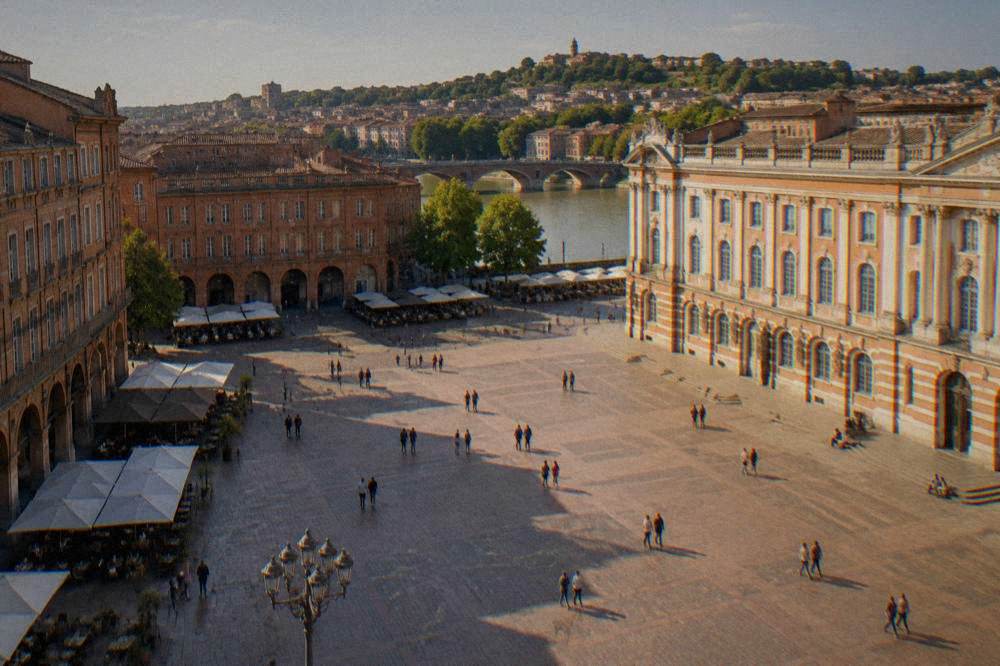
Yes, and it is one of the better-value shapes for a Toulouse trip: Gaillac is the wine region reached on Albi day trips, so a single outing covers a cathedral town and a wine area. The roster's Albi, Cordes and Gaillac day tour from Toulouse is built around exactly that combination, pairing the Gaillac wine region with two celebrated hillside towns.
Gaillac country sits inland to the northeast, and in practice almost nobody visits it standalone. The day tours route it through Albi, with Cordes-sur-Ciel often folded in as the scenic stop. From a planning point of view this is efficient: one long day, one booking, and you come back having seen the region's most photographed perched village as well as having tasted its wine.
The Gaillac wine route guide goes deeper on the region itself for anyone planning to self-drive, and the Albi guide covers the town at the other end of the trip. If the whole idea appeals, the site's day trips from Toulouse guide ranks the options by the kind of day you want.
Planning to self-drive the Gaillac wine route? Book a rental car here.
How Do You Get From Toulouse To The Wine Regions Without A Car?
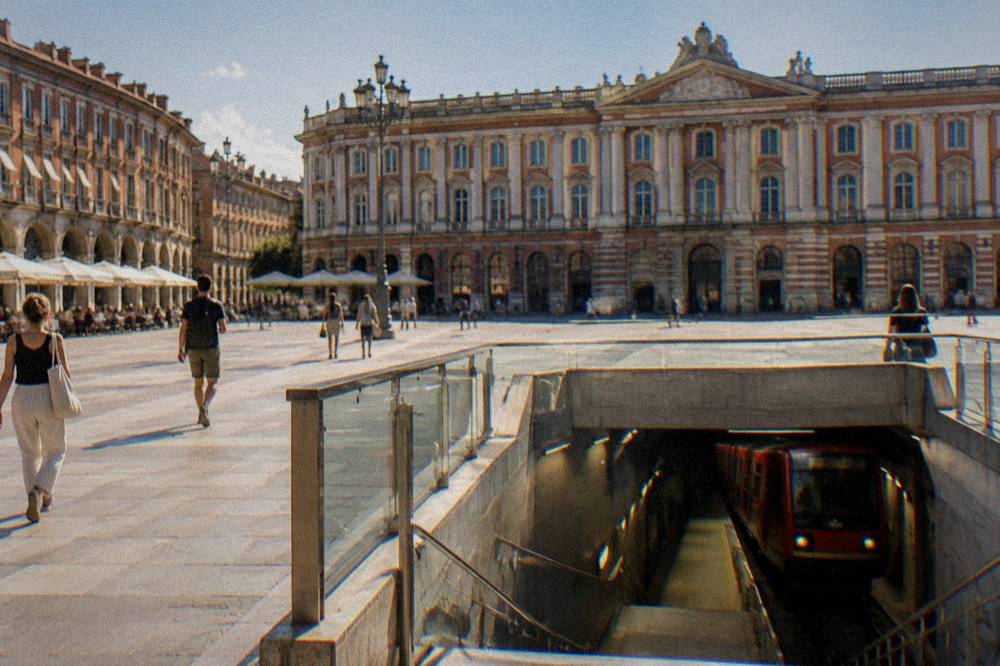
You either join a tour with transport included, or you use the city as a base and let someone else handle the roads. The Tisseo network covers the city itself, with a single trip at EUR 1.90 and a day pass at EUR 7.20, but the vineyards are rural and the practical answer for visitors is a tour or a hired car.
Inside Toulouse, public transport is cheap and simple. The Tisseo e-boutique catalogue lists the fares plainly, and they matter mostly for getting between your hotel, the wine bars and the tour departure points.
| Tisseo ticket | Price |
|---|---|
| Single trip | EUR 1.90 |
| Single trip bought last-minute on board | EUR 2.50 |
| 10 trips | EUR 16.00 |
| Day pass | EUR 7.20 |
| 3-day pass | EUR 14.30 |
Out of the city, the calculus changes. Train times to specific wine towns were not verified for this site, so no journey figure is given here; what can be said is that the organized tours exist precisely because the vines are awkward to reach. The car hire guide covers the self-drive alternative for anyone confident on French rural roads, and the getting around Toulouse guide has the full transport picture.
What Should You Expect To Pay For Wine Experiences Around Toulouse?
Product prices are never typed on this site: every bookable tour's price, rating and duration renders from its live listing, so the honest answer is to check the listing for the current figure. What can be stated is the city-side cost structure: Tisseo fares, museum admission and the Pass Tourisme, all of which shape the budget around the wine itself.
The tourist office's Pass Tourisme page lists EUR 26 for stays of one to three days, pays off from the third activity, and includes a free guided tour from the tourist office; adding EUR 10 buys ten public-transport trips. It also covers the museums that fill the hours between tastings, at the normal rates the office publishes.
| Museum or monument | Normal rate listed by the tourist office | With the Pass Tourisme |
|---|---|---|
| Fondation Bemberg | EUR 12 | Free |
| Museum de Toulouse | EUR 12 | Free |
| Les Abattoirs | EUR 12 | Free |
| Musee des Augustins | EUR 5 | Free |
| Couvent des Jacobins | EUR 5 | Free |
For the wine products themselves, the roster pages carry the live figures: the Fronton tour, the wine bar walks and the Gaillac day tour each have their own page on this site with current pricing and ratings. The Pass Tourisme guide works through the pass arithmetic in detail for anyone weighing it against individual tickets.
When Is The Best Time Of Year For A Wine Trip To Toulouse?
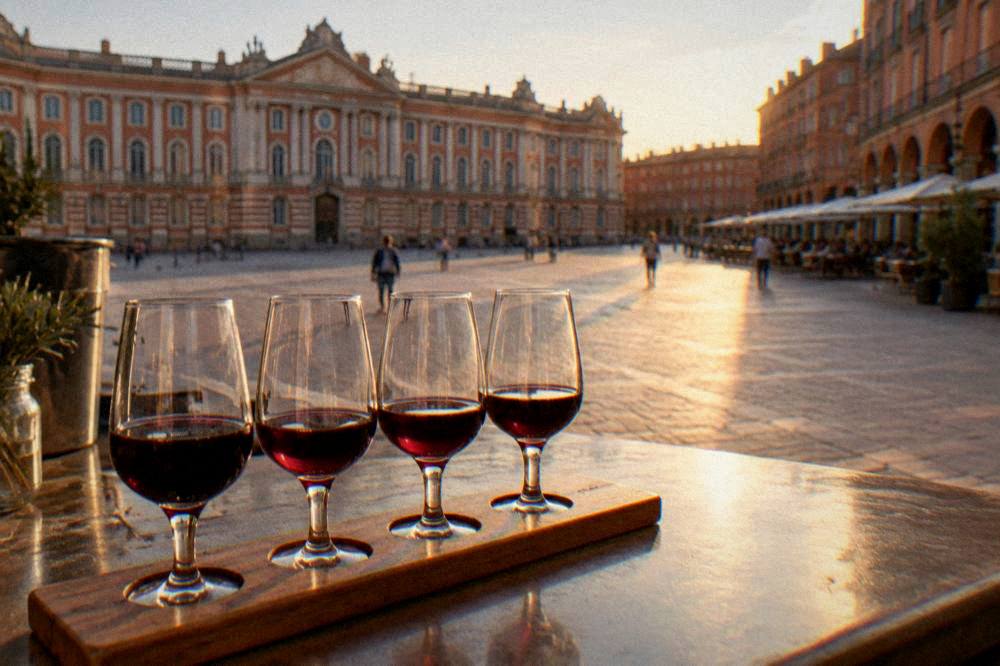
July is the best all-round month for a wine trip: Meteo-France's 1991-2020 normals for Toulouse-Blagnac show it as the sunniest month at 258.6 hours, with only 40.1 mm of rain, though harvest-minded visitors prefer early autumn, when the vineyards are at their busiest and the days still average 210.1 hours of sun in September.
The surprise in the data is where the rain falls. Toulouse's wettest month is not in winter: May averages 73.6 mm across the 1991-2020 period, almost double February's 37.2 mm, with April at 65.2 mm and June at 64.2 mm close behind. Anyone booking a spring vineyard visit should plan around that, not around the assumption that Mediterranean France is dry from April onward.
| Month | Mean daily max | Mean daily min | Rain | Sunshine hours |
|---|---|---|---|---|
| March | 15.0 C | 5.5 C | 45.3 mm | 175.3 h |
| May | 21.4 C | 11.4 C | 73.6 mm | 212.3 h |
| July | 28.2 C | 17.0 C | 40.1 mm | 258.6 h |
| September | 24.8 C | 13.9 C | 45.7 mm | 210.1 h |
| October | 19.7 C | 10.9 C | 54.3 mm | 155.2 h |
Heat is the other factor. The same normals record 11.5 days a year at or above 30 C in July and 11.3 in August, against 3.5 in September, which is one reason late September and October suit a lot of wine travelers better than high summer. The Toulouse weather guide carries the full monthly table.
Are There Wine-Adjacent Events To Time A Trip Around?
Yes, though the verified calendar is mostly a cultural one rather than a wine one: Toulouse les Orgues runs 7 to 18 October 2026 in its 31st edition, and the Christmas markets run 26 November to 27 December 2026, both of which pair naturally with cold-weather drinking. No wine festival dates were verified, so none are listed here.
The honest position is that Toulouse's verified event calendar is about organs, pianos and Christmas markets rather than grape harvests. Piano aux Jacobins ran 8 to 30 September 2026 in the Jacobins cloister, and Rio Loco's next edition is confirmed for 9 to 13 June 2027 at the Prairie des Filtres, with the theme "Noctiluca". None of these are wine events, but all of them are evenings out, and evenings out in Toulouse tend to end near a bottle.
| Event | Verified dates | Venue or area |
|---|---|---|
| Piano aux Jacobins | 8 to 30 September 2026 | Couvent des Jacobins |
| Toulouse les Orgues (31st edition) | 7 to 18 October 2026 | Multiple venues; opening concert 7 October at Notre-Dame de la Daurade |
| Christmas markets | 26 November to 27 December 2026 | Place du Capitole, allees Jean-Jaures, square Charles-de-Gaulle |
| Rio Loco | 9 to 13 June 2027 | Prairie des Filtres, theme "Noctiluca" |
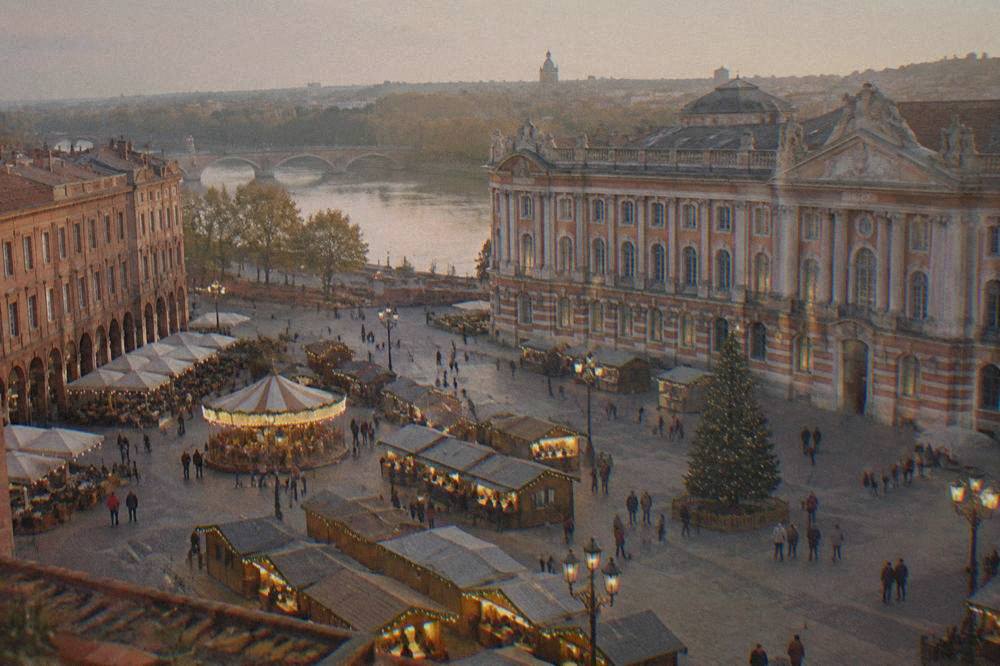
The Christmas market period deserves a special mention for wine travelers, because a cold evening among the chalets on Place du Capitole is one of the better settings for a warm glass of anything. The Toulouse Christmas market guide covers that season in detail.
How Do You Build A Wine-Focused Itinerary Around Toulouse?
A good shape is one city day, one vineyard day and one combined day: start with a walking tour of the pink city to learn its layout, spend a day on a Fronton wine tour, then use a third day for an Albi-and-Gaillac outing, filling the evenings with the wine bars around the Capitole. Three days is enough to do all of it at a relaxed pace.
Day one is for orientation. Toulouse is compact enough that a guided walk covers the essentials quickly, and knowing where the Capitole, Saint-Sernin and the Garonne sit makes every later evening simpler. The site's one day in Toulouse and 3 days in Toulouse itineraries give the hour-by-hour versions.
Day two is the vineyard. Fronton is the natural choice because of the distance, and the small-group tour above is the low-friction way to do it. Day three goes long: Albi with Gaillac wine country folded in, or Carcassonne if the medieval bucket-list item matters more than the vines. The trio below covers all three shapes.
Where you sleep shapes the evenings more than the days. The where to stay in Toulouse guide breaks the center down neighborhood by neighborhood, and staying within walking distance of the Capitole is what makes the wine bar crawl effortless rather than a project.
One refinement for travelers with more time: the second vineyard day does not have to be Gaillac. The roster also carries a winery visit with wine and food tasting and transfer included, which runs closer to the city, and a gourmet walk pairing cheese, wine and heritage in the center. A four-day trip can therefore hold two tasting days without repeating itself, one among the vines and one among the cheese plates.
Common Questions About Toulouse Wines
Quick answers to what planners ask most about wine in and around Toulouse.
What wine is Toulouse famous for?
Toulouse is the base for Fronton, the wine region just north of the city, and for day trips into the Gaillac wine country beyond Albi. Inside the city itself, the wine culture is a wine bar scene concentrated around the Capitole and Saint-Etienne.
Can you visit vineyards from Toulouse without a car?
Yes. Small-group wine tours from Toulouse handle the transport to Fronton, and the Gaillac region is reached on Albi day tours that fold the vineyards into a longer route. Train times to specific wine towns were not verified for this site, so the organized tours are the dependable car-free option.
What should you drink with cassoulet in Toulouse?
A local red is the classic answer, and the Fronton and Gaillac regions are the ones to ask for by name. The dish itself is covered in the site's dedicated cassoulet guide, which goes into what goes into it and why it is so rich.
Is there a wine festival in Toulouse?
No wine festival dates were verified for this site, so none are listed. The verified autumn events are Toulouse les Orgues from 7 to 18 October 2026 and the Christmas markets from 26 November to 27 December 2026, both of which pair well with cold-weather drinking.
How many days do you need for a wine trip to Toulouse?
Three is the comfortable number: one day for the city and its wine bars, one for a Fronton vineyard tour, and one for a longer Albi and Gaillac day trip. It can be compressed into two, but the vineyard day and the Albi day both want full daylight.
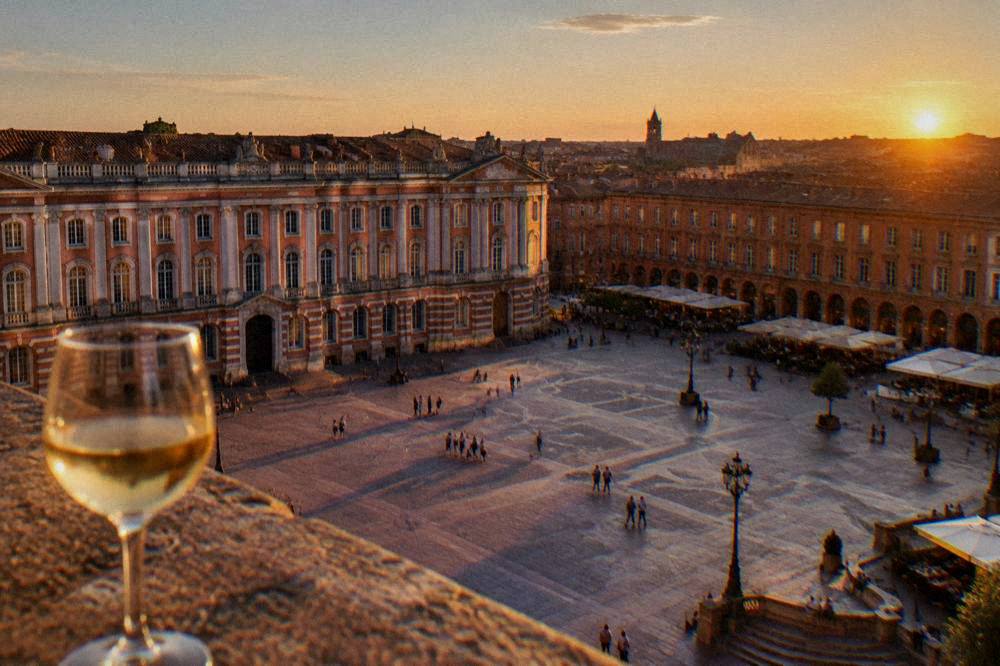
One last planning thought: wine is the reason to come, but it is rarely the only reason people stay. The vines north of the city, the hill towns to the northeast and the wine bars in between all sit inside one of France's most likeable cities, and the itineraries linked above make it easy to pour the two halves of the trip together. Start with a glass of something local on your first evening, and let the rest of the plan arrange itself around it.