Toulouse Vs Montpellier
Toulouse, the pink-brick La Ville Rose on the Garonne in southwestern France, and Montpellier, the Mediterranean-facing student city further east, both sit in the south and both reward a long weekend. This comparison lays out what each does best and where the verified numbers land.
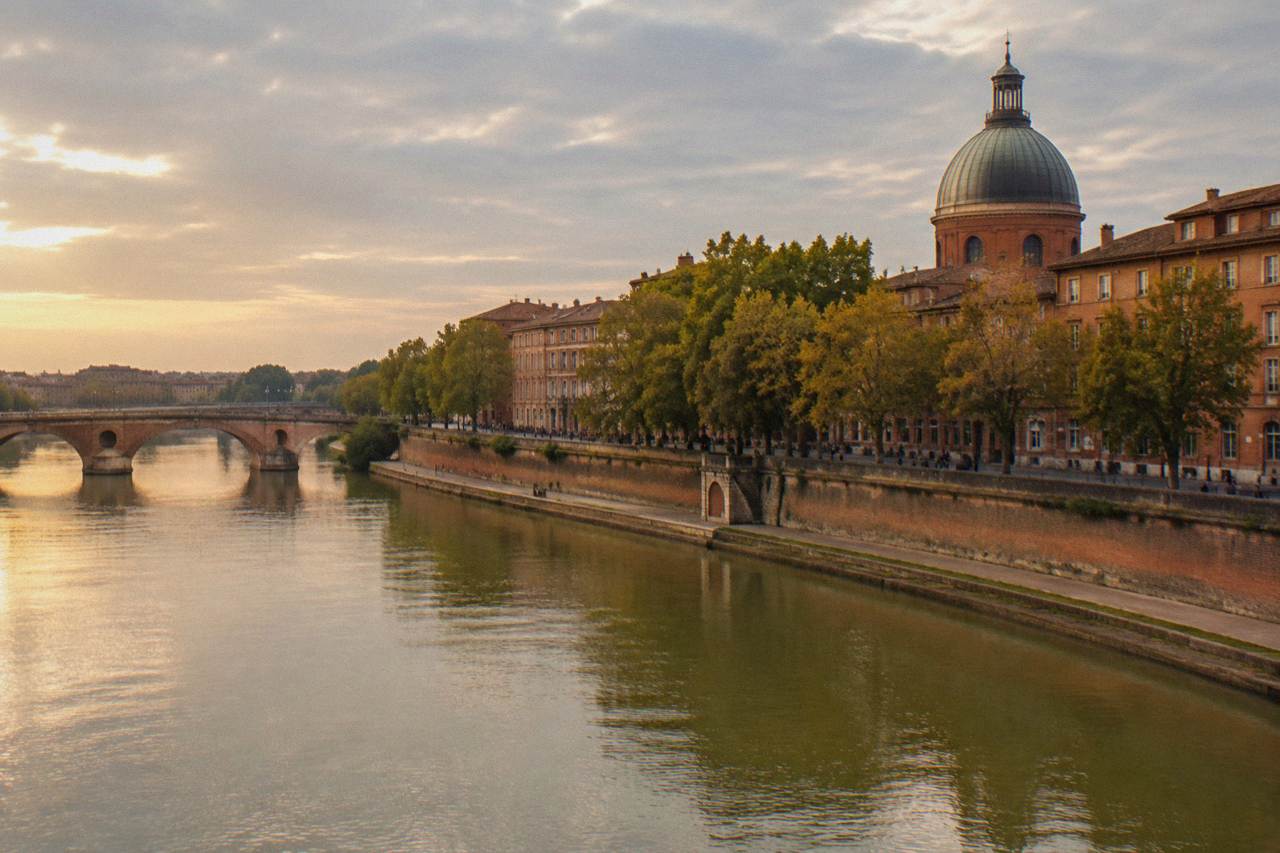
Short answer
Toulouse is the larger, more aerospace-driven city on the Garonne, with 514,819 residents, a UNESCO-listed canal and a metro that keeps running while a third line is built for the end of 2028. Montpellier skews younger and closer to the Mediterranean coast. Choose Toulouse for pink-brick heritage, space museums and inland day trips; choose Montpellier for a coastal-leaning, student-paced stay.
Toulouse, the pink-brick city the French call La Ville Rose, sits on the Garonne river in the Occitanie region of southwestern France, roughly 100 km north of the Pyrenees. Montpellier sits further east, in the Mediterranean south, a city of students and stone courtyards within easy reach of the coast. Travellers planning a trip to the south of France often shortlist both and then stall, because each city sells itself hard and the honest comparison is hard to find. This guide makes the case for each, using the figures this site holds for Toulouse and a plain reading of what Montpellier offers, so the choice comes down to what you actually want from a city break rather than which one has the louder marketing. For a wider sense of the pink city's case, start with is Toulouse worth visiting.
Which City Should You Choose, Toulouse Or Montpellier?
Choose Toulouse if you want a big inland city with aerospace museums, a UNESCO-listed canal, cassoulet and easy train links to medieval hill towns; choose Montpellier if you want a compact, youthful Mediterranean city with coastal day trips and a more relaxed pace. The two overlap far less than their shared region suggests, and each suits a different kind of traveller clearly better than the other.
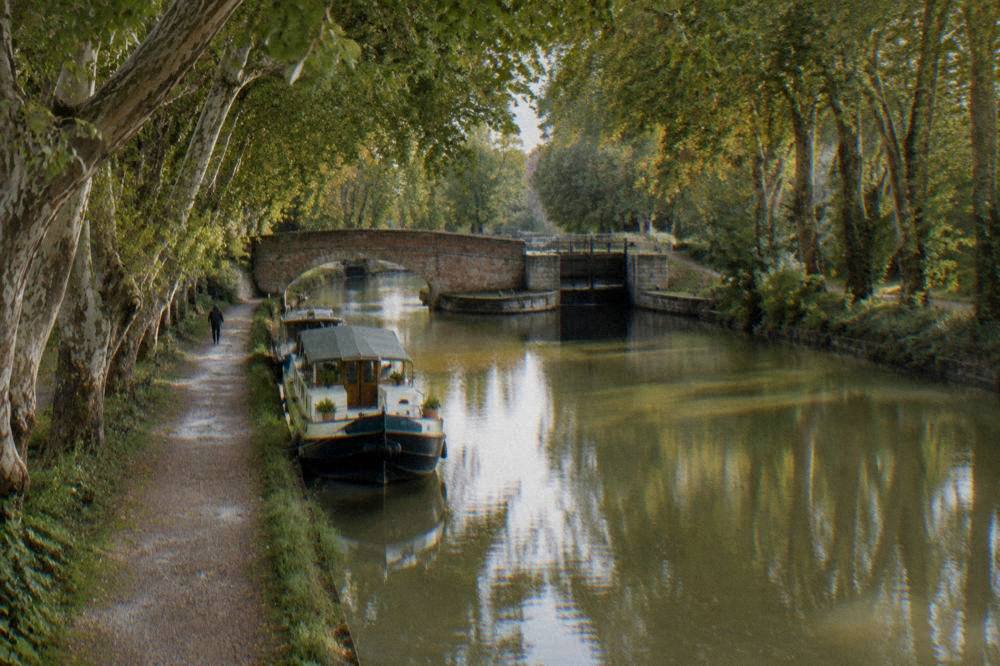
The honest starting point is that these are different animals. Toulouse is a working aerospace capital: Airbus designs and assembles airliners here, and the city's visitor economy leans on that, on its pink brick, and on the Canal du Midi, inscribed by UNESCO in 1996. The commune counts 514,819 residents in INSEE's 2023 figure, and it carries the weight of a regional capital, a metro, a tram network and a busy airport that handled 7,621,409 commercial passengers in 2025.
Montpellier trades on a different mood. It is smaller, markedly younger in feel, and its geography points south toward the Mediterranean rather than toward mountains. Its defenders talk about the elegance of its historic core, its cafe life and the proximity of seaside towns; its critics point out that the city itself has no beach and that summer crowds stretch everything thin. Neither charge is really a counterargument to Toulouse, which is exactly why the comparison deserves a proper airing rather than a coin flip.
A useful filter is the day-trip question. From Toulouse the classic escapes run inland and upward: Albi and Cordes-sur-Ciel, Carcassonne, the Pyrenees to the south, Lourdes and Rocamadour. From Montpellier they run to the coast and to nearby medieval towns. If your mental image of the perfect side trip involves a walled citadel or a mountain pass, Toulouse wins before the itinerary is even written. Our day trips from Toulouse page collects the full menu.
What Does Each City Offer A First-Time Visitor?
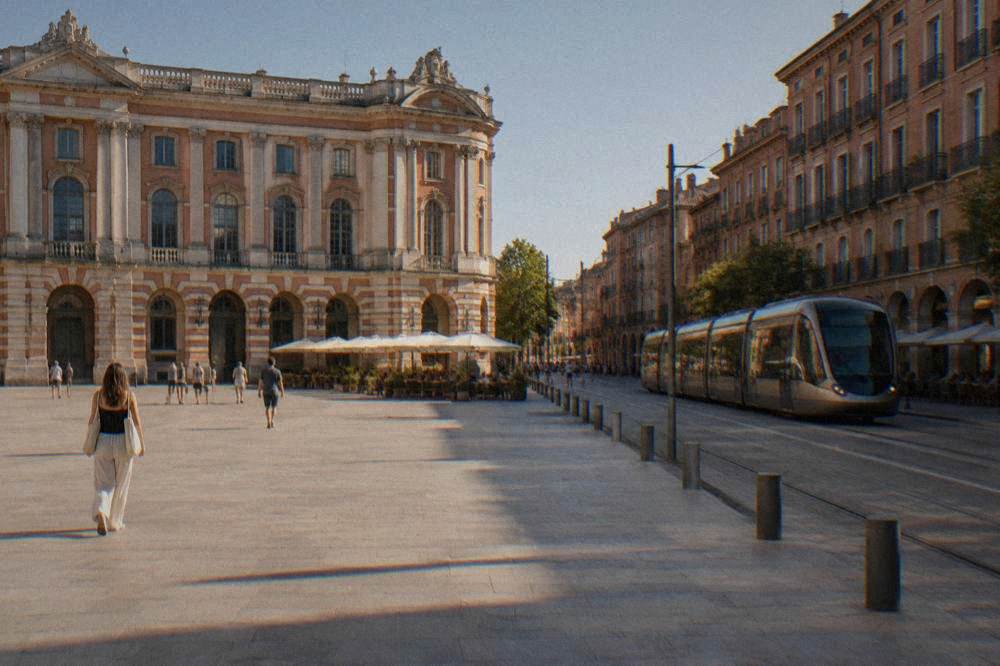
Toulouse's first-visit core is the Capitole and its square, the Basilique Saint-Sernin, the Couvent des Jacobins, the riverside Garonne walk and the Canal du Midi, with Cite de l'espace and Aeroscopia for space lovers; Montpellier's is its historic core of private mansions and its main square, plus coastal excursions. Toulouse simply has more named heavyweight sights per square kilometre.
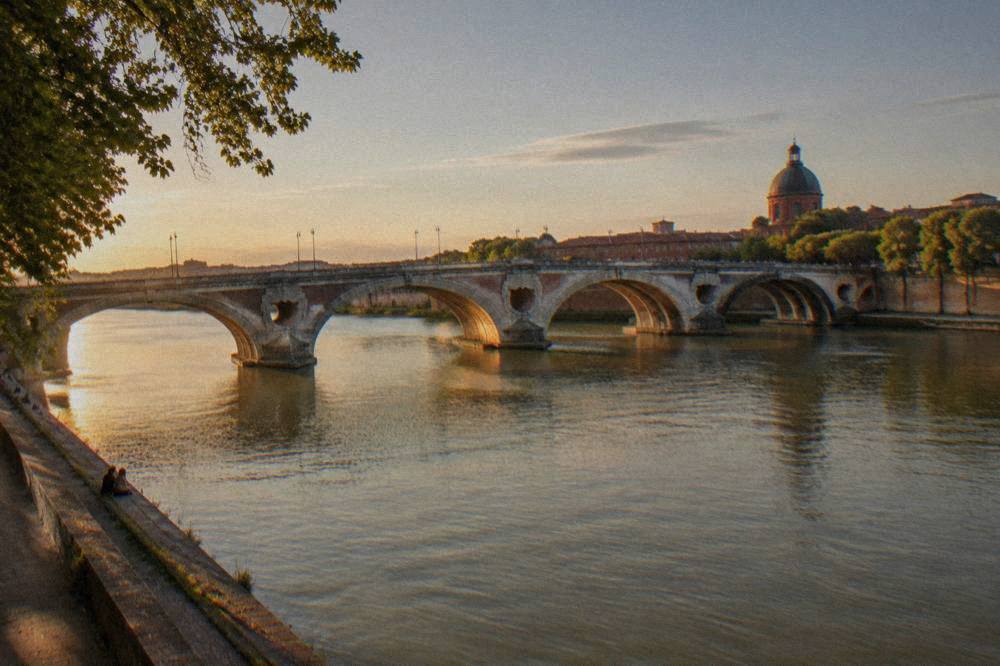
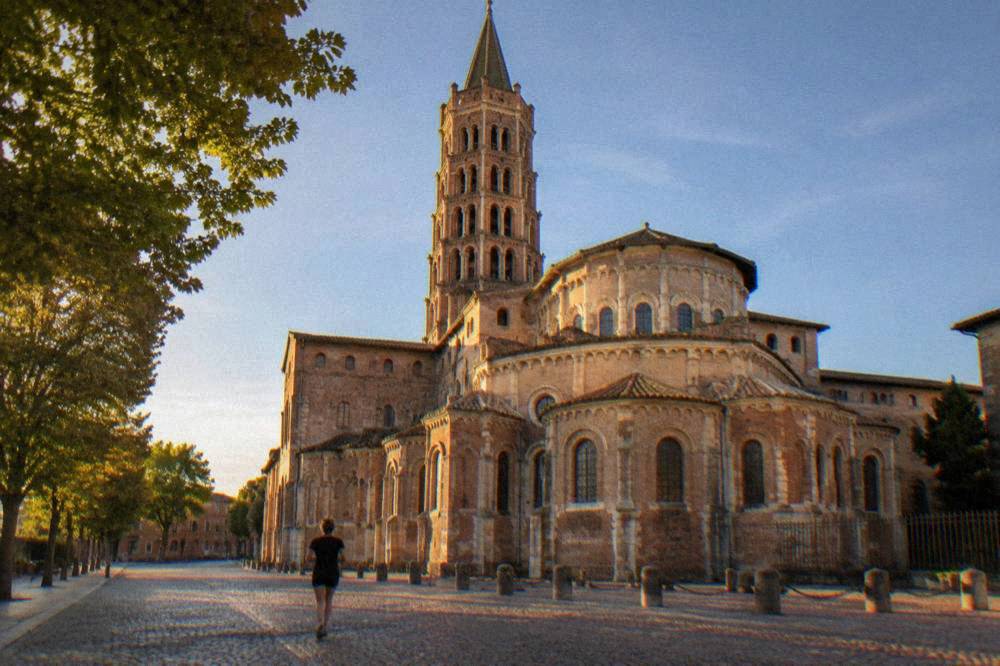
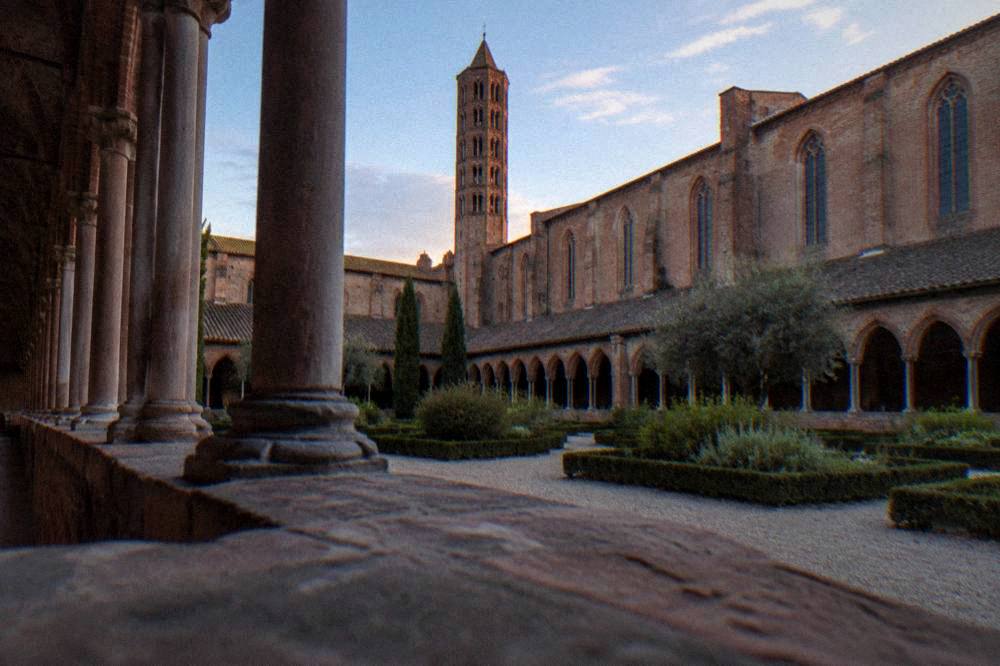
The pink city's monument list is unusually strong for a city most foreigners cannot place on a map. The Basilique Saint-Sernin has been part of the UNESCO-listed "Routes of Santiago de Compostela in France" since 1998 and is a major stop on the Via Tolosana, the pilgrim road that ran through Toulouse toward Spain. The Couvent des Jacobins, a brick Gothic convent, charges EUR 5 at its normal rate and is free on the first Sunday of the month except when a temporary exhibition is on. The Capitole, the city's town hall and opera house, anchors the main square, and the Garonne riverside with the Pont Neuf gives the city its evening walk.
Montpellier's equivalent first day is more atmospheric than monumental: a wander through the old quarter's narrow streets, time on the main square with its opera house, and a look at the grand medical-faculty buildings that hint at the city's long academic history. It is a lovely day. It is simply a day with fewer individual sights you would cross Europe for.
For Toulouse, the practical anchor is the tourist office's Pass Tourisme at EUR 26 for stays of one to three days, which the office says pays off from the third activity and includes a free guided tour; adding EUR 10 buys ten public-transport trips. The Toulouse Pass Tourisme page works through the arithmetic in detail.
| Toulouse at a glance | Figure |
|---|---|
| Commune population (INSEE, 2023) | 514,819 |
| Airport passengers, 2025 | 7,621,409 |
| Canal du Midi UNESCO inscription | 1996 |
| Saint-Sernin UNESCO inscription (Santiago routes) | 1998 |
| Pass Tourisme, 1 to 3 days | EUR 26 |
| Distance to the Pyrenees | Roughly 100 km south |
If you would rather let someone else handle the orientation, a guided circuit is a sensible first-morning move. The electric tuk-tuk tour with photo stops and audio commentary covers the highlights without a metro map in hand, and a narrated cruise on the UNESCO-listed Canal du Midi shows the city from the water that made it rich.
Is Toulouse Easier To Reach And Get Around Than Montpellier?
Toulouse is one of the easiest cities in the south of France to reach by air, with 7,621,409 passengers passing through Toulouse-Blagnac in 2025, and its Tisseo network sells a single trip for EUR 1.90 and a day pass for EUR 7.20, which makes car-free sightseeing genuinely cheap. Montpellier is also well connected by rail, but its airport is far smaller.
The fare table matters more than it looks, because both cities are walkable in their cores and the transit question only really bites on airport runs and museum days. Tisseo's official catalogue lists the single trip at EUR 1.90, rising to EUR 2.50 if bought last-minute on board, with ten trips at EUR 16.00, a day pass at EUR 7.20 and a three-day pass at EUR 14.30. There is no two-day pass in the catalogue. The airport single, covering the Tisseo network plus the Navette aeroport shuttle, is EUR 9.50.
| Tisseo ticket | Price |
|---|---|
| Single trip | EUR 1.90 |
| Single bought on board | EUR 2.50 |
| 10 trips | EUR 16.00 |
| Day pass | EUR 7.20 |
| 3-day pass | EUR 14.30 |
| Airport single (network plus Navette) | EUR 9.50 |
One trap to avoid: the tram line T2 to Toulouse-Blagnac airport has been closed since 5 June 2023 and stays closed until the end of 2026 while the Line C metro works proceed. The Navette aeroport bus is the replacement, running one departure every 15 minutes and taking 20 to 40 minutes to the centre, or about 25 minutes to the Matabiau bus station. The airport's own transfers explainer covers the options, and the wider getting around Toulouse page handles the rest.
Montpellier holds its own on city transport, with trams and a compact core, and its rail connections are strong. What it cannot match is airport scale: Toulouse-Blagnac is a genuine international hub for the southwest, with the passenger count to show for it, and direct flights arrive from across the UK and Europe, a subject our flights to Toulouse page details. If you are flying in from outside France, the balance tips to Toulouse.
How Do The Two Cities Compare On Food?
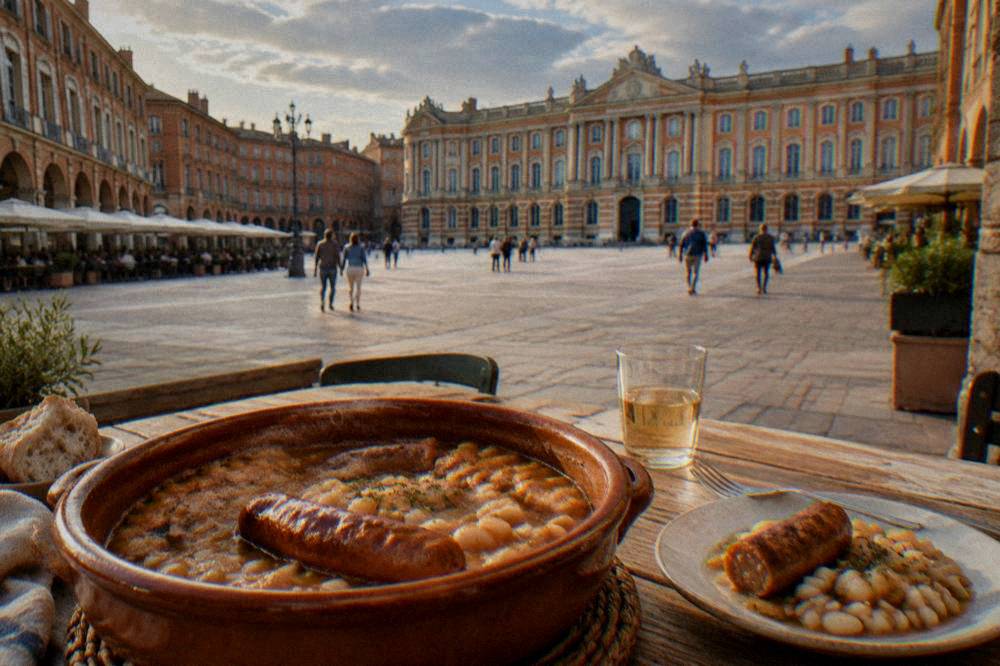
Toulouse's table is built on cassoulet, the slow-cooked bean and meat casserole that carries the city's name, plus Toulouse sausage, violet sweets and the Marche Victor Hugo market hall; Montpellier leans Mediterranean, with seafood and coastal produce closer at hand. Neither city will let you eat badly, but only one invented the definitive winter casserole.
Cassoulet is the argument-ender for visitors. The dish, a baked casserole of white beans, sausage and confit, is claimed across the southwest but Toulouse's version, with its own sausage, is the one the city hangs its hat on, and our cassoulet page traces the traditions around it. Around that sit the sausage itself, violet-flavored sweets from the city's flower trade, and the Marche Victor Hugo, the covered market where restaurateurs shop. The Toulouse food and Toulouse restaurants pages map the practical side.
Montpellier's food identity is lighter and saltier: its position toward the coast puts fish and shellfish on menus that a Toulouse chef has to truck in. Its market culture is real too, and the student population keeps prices honest in the back streets. The fair summary is that Montpellier eats like a Mediterranean city and Toulouse eats like the capital of the southwest: one is olive oil and the other is duck fat, and both positions have passionate defenders.
Where Toulouse pulls ahead for a food-focused visitor is the depth of guided options. A chef-led food and history tour in English, a Victor Hugo market tasting walk and a winery visit with transfer all run from the city, and the food tour with full meal and drinks turns dinner into the day's main event. You can compare the formats and Check availability on the operator's live listing.
Which City Wins On Museums And Monuments?
Toulouse wins on weight of sights: Saint-Sernin carries UNESCO status, the Couvent des Jacobins is a brick Gothic masterpiece at EUR 5, and the Pass Tourisme bundles a cluster of EUR 5 to EUR 12 museums into one EUR 26 pass, while Montpellier's museums are pleasant rather than destination-defining. For a museum-heavy itinerary, Toulouse is the stronger base.
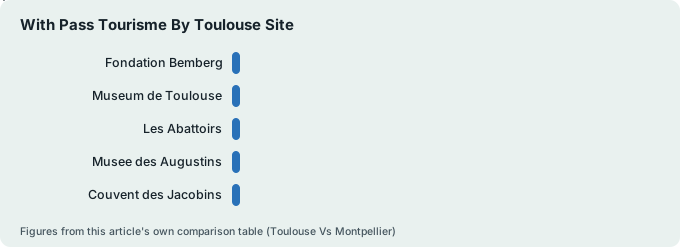
The pink city's museum stack is deeper than its size suggests. The Fondation Bemberg, the Museum, and Les Abattoirs each list a EUR 12 normal rate that the tourist office says the Pass Tourisme covers outright, while the Musee des Augustins and the Couvent des Jacobins sit at EUR 5. The Augustins, the fine arts museum in a former convent, is worth timing carefully: it is fully closed from 21 September to 2 October 2026 for great-cloister works, after which its Gothic halls, the sacristy, the Notre-Dame de Pitie hall and the chapter house, reopen on 3 October 2026 from 10:00.
| Toulouse site | Normal adult rate | With Pass Tourisme |
|---|---|---|
| Fondation Bemberg | EUR 12 | Free |
| Museum de Toulouse | EUR 12 | Free |
| Les Abattoirs | EUR 12 | Free |
| Musee des Augustins | EUR 5 | Free |
| Couvent des Jacobins | EUR 5 | Free |
| Cite de l'espace | EUR 29 | Discounted, not free |
Beyond the galleries sit the two aerospace sites that have no Montpellier equivalent at all. Cite de l'espace, the space theme park, sells tickets from EUR 22.50 with its normal adult rate at EUR 29, and Aeroscopia, the aircraft museum next to the Airbus works, charges EUR 16 for an adult, open daily 9:30-18:00 with last entry at 17:00. The Aeroscopia and airbus factory tour pages cover both, including the rule that the factory tours require an original passport or ID card, no photocopy and no phone image.
Montpellier's cultural offer is respectable, with fine arts and history museums in handsome buildings, but nothing in its catalogue commands a special trip the way Saint-Sernin or the Airbus halls do. Its real cultural asset is its festival and student energy, which fills the streets rather than the galleries. If your ideal city break is two museums a day, Toulouse is the pick; if it is one museum and four hours of wandering, Montpellier makes a fair case.
For a first sweep of the pink city's monuments without wearing out your shoes, the electric tuk-tuk format with photo stops and audio commentary covers the essentials in comfort.
How Does The Weather Compare Between Toulouse And Montpellier?
Toulouse's Meteo-France 1991-2020 normals show 2,075.1 hours of annual sunshine, 627 mm of rain and a wettest month that surprises people: May, at 73.6 mm, not winter, with February the driest at 37.2 mm; July is the sunniest at 258.6 hours. Montpellier, closer to the Mediterranean, runs sunnier and hotter in summer in general terms, though this site holds no verified normals for it.
The counterintuitive Toulouse fact is worth repeating because it changes how people pack. The rain in the pink city peaks in late spring, not in the grey months: May averages 73.6 mm, April 65.2 mm and June 64.2 mm, while February sits at just 37.2 mm. Summer then dries out and heats up, with July seeing 11.5 days a year above 30C and August 11.3. The all-time records at the Toulouse-Blagnac station, kept since 1947, run from -19.2C on 15 February 1956 to 42.4C on 23 August 2023.
| Toulouse climate (1991-2020 normals) | Value |
|---|---|
| Annual sunshine | 2,075.1 hours |
| Annual rainfall | 627 mm |
| Wettest month | May, 73.6 mm |
| Driest month | February, 37.2 mm |
| Sunniest month | July, 258.6 hours |
| Record high | 42.4C, 23 August 2023 |
| Record low | -19.2C, 15 February 1956 |
Montpellier's Mediterranean position gives it hotter, drier summers and milder winters in broad terms, and its nearness to the sea tempers the extremes. What Toulouse offers instead is a four-season climate with genuine variety: cold-enough winters for the Christmas market on Place du Capitole to feel seasonal, and hot summers that push everyone toward the Garonne at dusk. Neither city is a rainy-day city, but Toulouse's May figure means spring visitors should pack a light rain layer even for the sunny south. The Toulouse weather and best time to visit Toulouse pages go month by month.
Which City Makes The Better Base For Day Trips?
Toulouse is the stronger day-trip base for inland France: Albi, Cordes-sur-Ciel, Carcassonne, the Pyrenees roughly 100 km south, Lourdes and Rocamadour all radiate from it, several with organized tours running year-round; Montpellier's excursions lean to the coast and nearby towns, which is a different and narrower menu. If day trips are half your holiday, pick Toulouse.
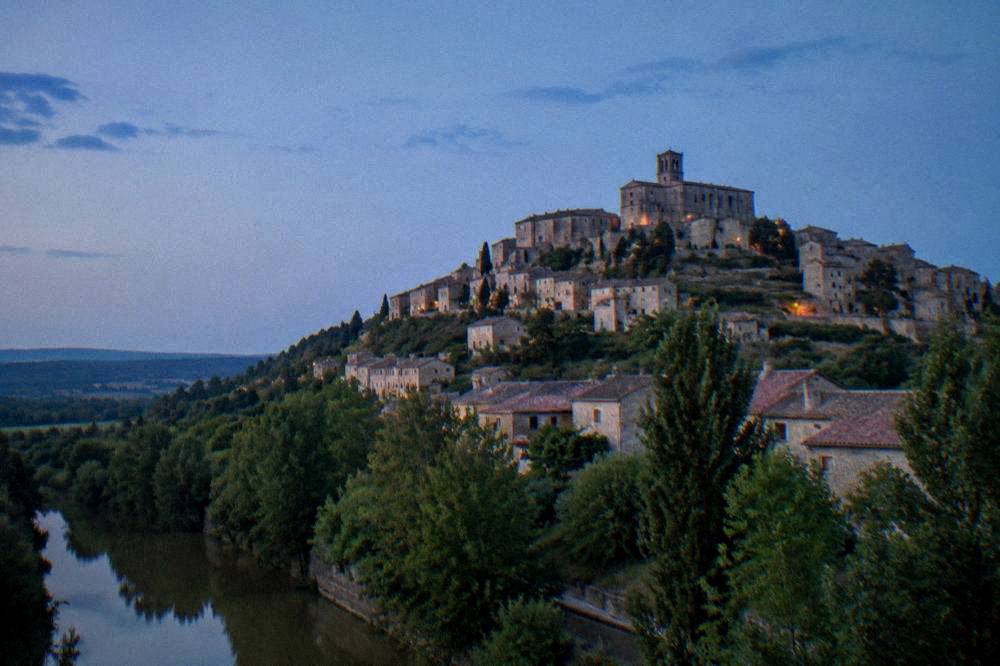
The Albi and Cordes-sur-ciel pairing is the classic proof. Albi, whose Sainte-Cecile cathedral and Toulouse-Lautrec museum anchor a brick old town, pairs with the hilltop village of Cordes-sur-Ciel for a full day that works either as an organized coach trip with audio guides or as a private tour with a driver-guide. Carcassonne, the restored walled citadel, is another staple, and the Pyrenees make a mountain day possible without an overnight. The full spread, from Gaillac wine country to Saint-Cirq-Lapopie, sits on our day trips from Toulouse page.
| Day trip from Toulouse | What it is | Organized options from the city |
|---|---|---|
| Albi and Cordes-sur-Ciel | Brick cathedral city plus hilltop village | Coach trip with audio guides; private day tour |
| Carcassonne | Walled medieval citadel | Coach day trip; private crusades-themed trip |
| Pyrenees | Mountains roughly 100 km south | Private sightseeing flight; self-drive |
| Lourdes | Pilgrimage sanctuary | Half-day getaway; private sanctuary tour |
| Gaillac wine region | Vineyards and bastide towns | Small-group wine day tour |
Montpellier's day-trip menu is honestly good, just different: seaside towns, lagoons and a couple of handsome inland cities within reach. For a traveller whose ideal week alternates city mornings with walled-town afternoons and mountain roads, the Toulouse menu is simply richer. The two Albi formats below show the range: a shared coach day with audio guides, or a private tour with the itinerary in your own hands.
The private format suits families and small groups who want the pace set by their own questions rather than a fixed schedule. Travellers watching the budget, or simply happy to share a coach with other visitors, get the same two towns in one day from the shared option with audio guides.
Either way, the Albi and Cordes pairing is the single best inland day trip either southern city can offer, and it is one Montpellier cannot match.
How Do The Cities Compare Through The Year On Events?
Toulouse's 2026-2027 calendar includes Piano aux Jacobins from 8 to 30 September 2026, the Toulouse les Orgues festival from 7 to 18 October 2026, Christmas markets from 26 November to 27 December 2026 and Rio Loco from 9 to 13 June 2027; Montpellier runs its own festival season, but Toulouse's autumn organ and piano programming in medieval cloisters is a genuinely distinctive draw.
The autumn cluster is where the pink city shows its character. Piano aux Jacobins puts concerts in the Couvent des Jacobins cloister from 8 to 30 September 2026, and the 31st edition of Toulouse les Orgues follows from 7 to 18 October 2026, opening with a concert at Notre-Dame de la Daurade on 7 October. The Christmas markets then take over Place du Capitole, the allees Jean-Jaures and square Charles-de-Gaulle from 26 November to 27 December 2026. In early summer, Rio Loco fills the Prairie des Filtres from 9 to 13 June 2027 with its "Noctiluca" edition.
| Toulouse event | Confirmed dates |
|---|---|
| Piano aux Jacobins | 8 to 30 September 2026 |
| Toulouse les Orgues (31st edition) | 7 to 18 October 2026 |
| Christmas markets | 26 November to 27 December 2026 |
| Rio Loco 2027 | 9 to 13 June 2027 |
Montpellier answers with its own festivals and a student-calendar energy that keeps the bars full, and its dance and cinema programming has a strong reputation. But if you can time a trip to the organ festival or the piano season, Toulouse in October delivers something Montpellier cannot copy: world-class music inside centuries-old brick. Sports fans should also weigh in the city's rugby culture, covered on our Toulouse rugby page, which turns match weekends into city-wide events.
The final practical differences are small but real. Both cities are safe by big-city standards, a question our is Toulouse safe page addresses directly. Both are walkable in their cores, with Toulouse rewarding a bit more planning because its sights spread wider along the Garonne. Where to sleep in each is a neighborhood question, and our where to stay in Toulouse guide sorts the pink city's districts by character. If this comparison has you leaning Toulouse but still weighing other options, the Toulouse vs Bordeaux and Toulouse vs Lyon pages run the same exercise against two more rivals, and Toulouse Travel Guide holds the full set of planning pages.
To settle into the pink city for a few days, book a hotel room here.
Common Questions About Toulouse Vs Montpellier
Quick answers to what planners ask most about the two cities.
Is Toulouse bigger than Montpellier?
Toulouse is the larger city, with 514,819 residents in the commune per INSEE's 2023 figure, and it carries a bigger airport, a metro-tram network and the regional-capital institutions that come with that scale. Montpellier is smaller in population but feels dense and lively thanks to its large student body.
Which city is better for a first trip to the south of France?
For a first trip, Toulouse offers more named heavyweight sights, from UNESCO-listed Saint-Sernin to the Airbus-linked museums, plus stronger day trips inland. Montpellier suits travellers who prioritize atmosphere, cafe life and coastal excursions over monument-ticking.
Is Montpellier warmer than Toulouse?
In general terms Montpellier's Mediterranean position gives it hotter summers and milder winters. Toulouse's Meteo-France normals show 2,075.1 hours of annual sun and 627 mm of rain, with May the wettest month at 73.6 mm and July the sunniest at 258.6 hours; this site holds no equivalent normals for Montpellier.
Can you visit both Toulouse and Montpellier on one trip?
Yes, and the pairing works well: the two cities sit in the south of France with direct rail connections between them, so a week split between a pink-brick inland stay and a Mediterranean-leaning city stay is entirely practical. Base yourself in each for several nights rather than day-tripping between them.
Which city is better without a car?
Both work car-free, but Toulouse's Tisseo network is cheap and simple, with a single trip at EUR 1.90 and a day pass at EUR 7.20, and its airport link runs a shuttle every 15 minutes. Organized tours from Toulouse also cover Albi, Carcassonne and the Canal du Midi without any driving on your part.
Which city is better for food?
Toulouse is the home of cassoulet and Toulouse sausage, with a strong market culture at the Marche Victor Hugo and a deep bench of guided food and wine tours. Montpellier leans Mediterranean with more seafood on the menu. Neither will disappoint, but Toulouse's dishes are the ones with international name recognition.