Toulouse Pronunciation
Toulouse, the pink-brick city on the Garonne in southwestern France, is pronounced roughly 'too-LOOZ' in English and 'too-LOOZ' with a soft French ending in French. This guide breaks down the name syllable by syllable and covers the landmarks, dishes and street names that trip visitors up.
Short answer
Toulouse is pronounced too-LOOZ: two syllables, stress on the second, and the final S is silent in both French and English. In French the ending is a soft 'z' sound rather than a full English Z, but the difference is small enough that too-LOOZ works everywhere.
Toulouse, the pink-brick city on the Garonne in the Occitanie region of southwestern France, carries a name that visitors routinely mispronounce in both directions: some say "TOO-loose", others say "too-loose-ee", and both miss the mark. The correct form is closer to "too-LOOZ", with the stress landing on the second syllable and the final S falling silent. French speakers glide through the word in under a second, and once the rhythm clicks, the rest of the city's vocabulary follows a set of predictable patterns. This guide covers the name itself, then the landmarks, dishes, districts and transport words that cause the most trouble on a first trip.
How Do You Pronounce Toulouse?
Toulouse is pronounced "too-LOOZ" in English and very similarly in French: two syllables, stress on the second one, and a silent final S. The French version softens the ending into a light "z" glide, so a closer respelling is "too-LOOZ" spoken gently, without a hard buzz on the last sound. Say "too" then "LOOZ" and you have it.
Break the word into its parts and the pattern is clear. The first syllable, "Tou", sounds like the English word "too". The second syllable, "louse", does not rhyme with the insect: it rhymes with "lose", as in "you lose". Put together, that gives "too-LOOZ". The stress matters more than the individual sounds. English speakers who flatten the word into "TOO-looz" with front stress sound noticeably off to French ears, while the second-syllable stress sounds natural even if every vowel is imperfect.
The silent S at the end is the single biggest stumbling block. French does not pronounce a final S on this word, and the standard English pronunciation follows suit. Some visitors, seeing the spelling, add a hissing "ss" or even a full "zuh" ending, and both are wrong. If you remember nothing else from this page, remember that the word ends on the "ooz" sound and nothing after it.
Here is the word laid out piece by piece:
| Piece | Sounds like | Notes |
|---|---|---|
| Tou | "too" | rhymes with "you" |
| lou | "loo" | rhymes with "shoe" |
| se (final) | "z" | soft finish, the S is silent |
| Whole word | "too-LOOZ" | stress on the second syllable |
What Does The Name Sound Like To A French Speaker?
To a French speaker, Toulouse is a smooth two-beat word, "too-LOOZ", spoken with an even, unhurried rhythm and no hard consonant at the end. The French R never appears in the word itself, and the final syllable fades rather than stops. The city's own residents say it quickly and lightly, the same way they say any familiar place name.
French place names follow stress rules that differ from English. English tends to hammer one syllable, but French distributes weight evenly and lets the phrase, not the word, carry the emphasis. When a local says "je vais a Toulouse", meaning "I'm going to Toulouse", the city name arrives as a light two-beat unit inside the sentence. Imitating that evenness does more for your accent than perfecting any single vowel.
The vowel in the second syllable deserves one note. It is a pure "oo", as in "food", never the "ow" of "loud" and never the short "u" of "bus". Visitors who read the word as containing "louse", the insect, produce exactly that "ow" sound and end up with something a French listener will still understand but will not recognize as the city's name at first hearing. For more on how the city sits in its region, see the companion page on where Toulouse is.
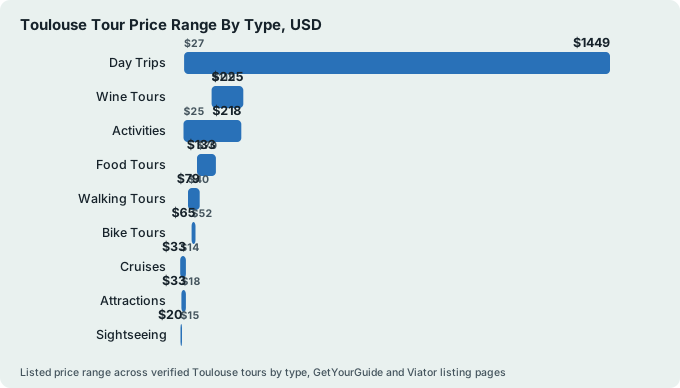
A guided walk is one of the fastest ways to hear these names spoken by someone who uses them daily, and the city's walking tours cover the same ground this guide describes. The highlights walk with a live guide is a good fit for a first visit:
You can also Check availability for that walk before you travel, since morning slots fill first in the busy season. The meeting point is announced when you book, and the guide will happily repeat any street name you want to practice. Visitors find that one walk fixes their pronunciation of the major landmarks for the rest of the trip, because hearing the names in context, while standing in front of the buildings themselves, anchors the sounds far better than reading a respelling ever can.
How Do You Pronounce The Names Of Toulouse's Landmarks?
The landmark names follow French reading rules: Capitole is "kah-pee-TOLL", Saint-Sernin is "san sair-NAN", the Couvent des Jacobins is "koo-VAHN day zhah-koh-BAN", and Cite de l'espace is "see-tay duh less-PAHS". Each name keeps its final consonant silent unless a vowel follows, which is the pattern to watch across every sign in the city.
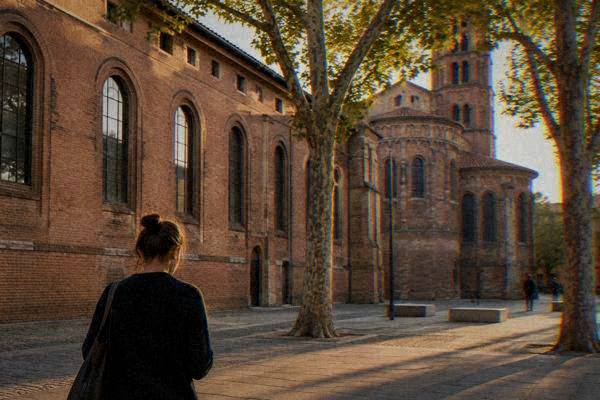
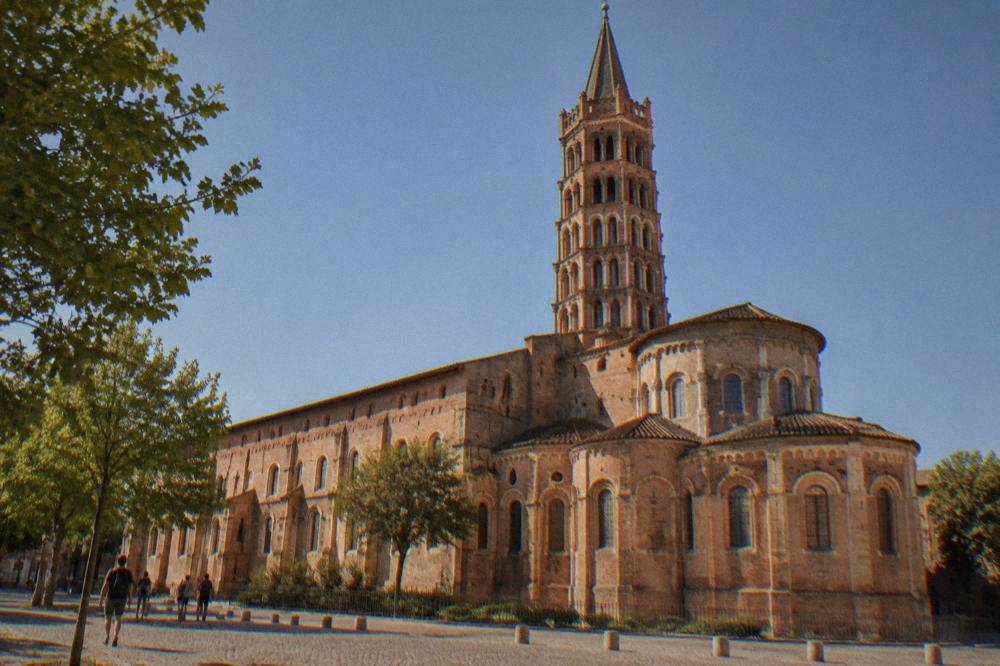
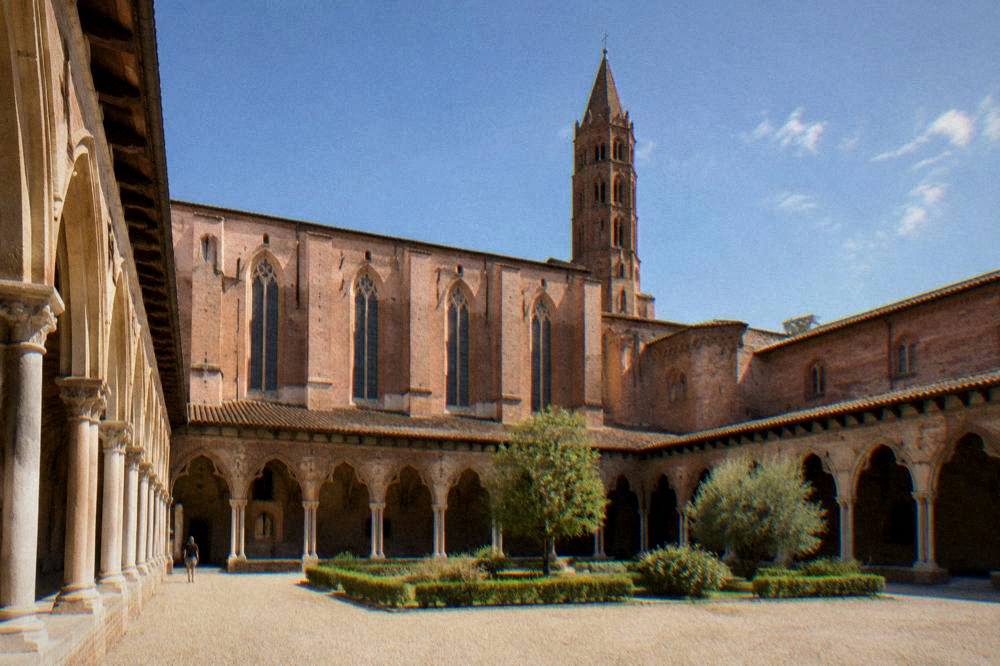
The Basilique Saint-Sernin, the UNESCO-listed church on the Via Tolosana pilgrimage route, gives visitors the most trouble. "Saint" is pronounced "san", one syllable, and "Sernin" runs as "sair-NAN" with a nasal final N that barely sounds. The full name comes out as "bah-SEE-leek san sair-NAN". The basilica's own page on this site covers Saint-Sernin in detail if you want to plan a visit around it.
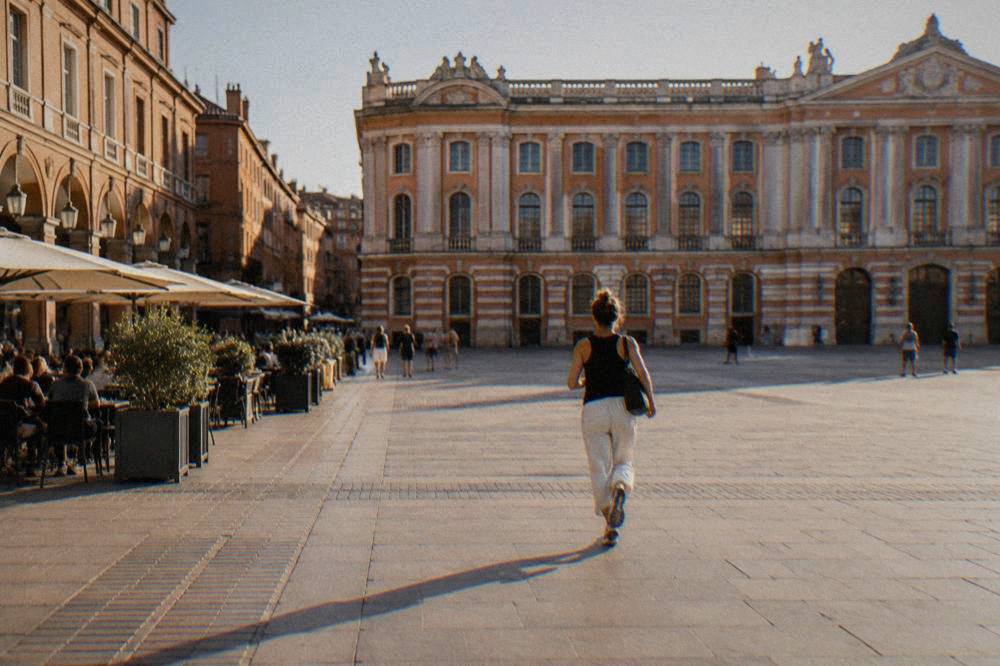
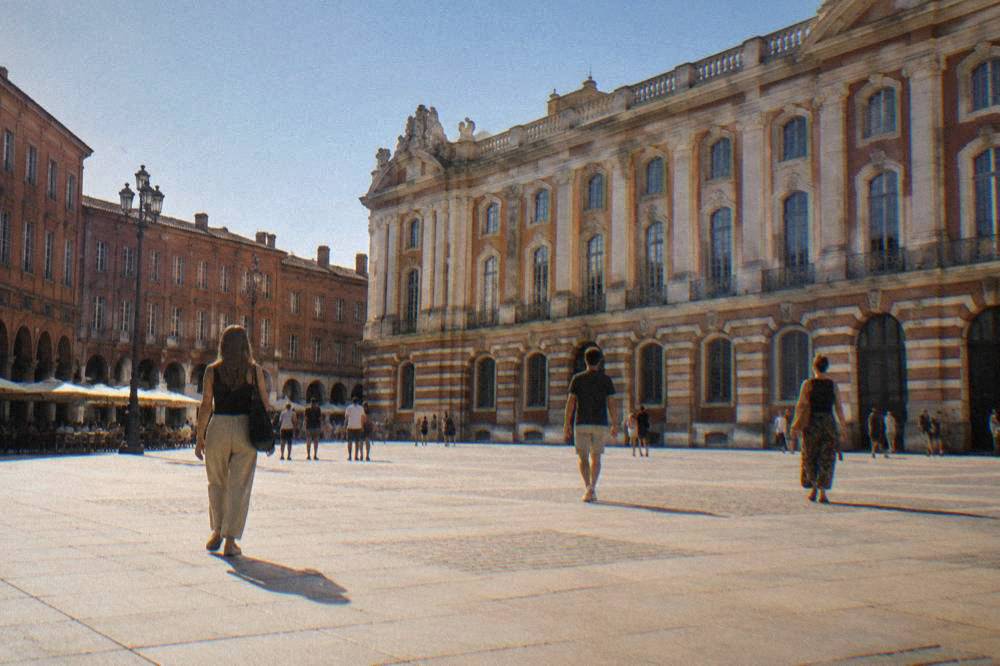
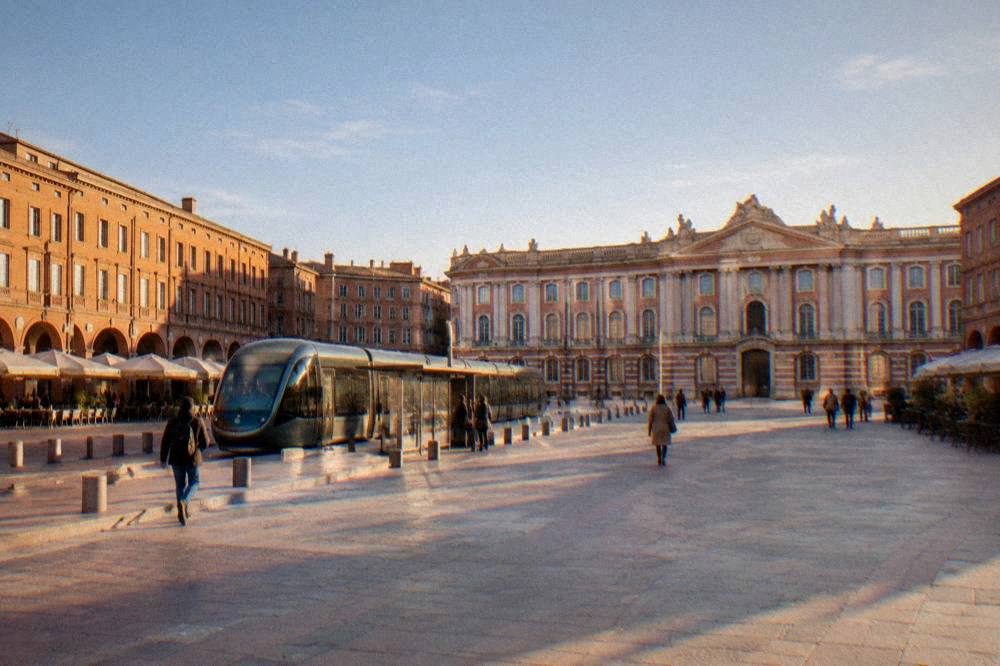
The Capitole, the city hall on the main square, looks harder than it is. The word is "kah-pee-TOLL", with the final E silent and the stress drifting evenly across the three beats. The square in front, Place du Capitole, adds "plahs dew kah-pee-TOLL". The Capitole and the surrounding Capitole and Saint-Sernin quarter make up the historic core, so these two names will come up constantly in taxi rides, hotel conversations and tour meeting points.
| Landmark | Respelling | Watch out for |
|---|---|---|
| Capitole | kah-pee-TOLL | final E is silent |
| Saint-Sernin | san sair-NAN | "Saint" is one syllable |
| Couvent des Jacobins | koo-VAHN day zhah-koh-BAN | J sounds like "zh" |
| Cite de l'espace | see-tay duh less-PAHS | no "site" sound |
| Matabiau | mah-tah-bee-OH | stress the last vowel |
| Garonne | gah-RUHN | nasal ending, no hard N |
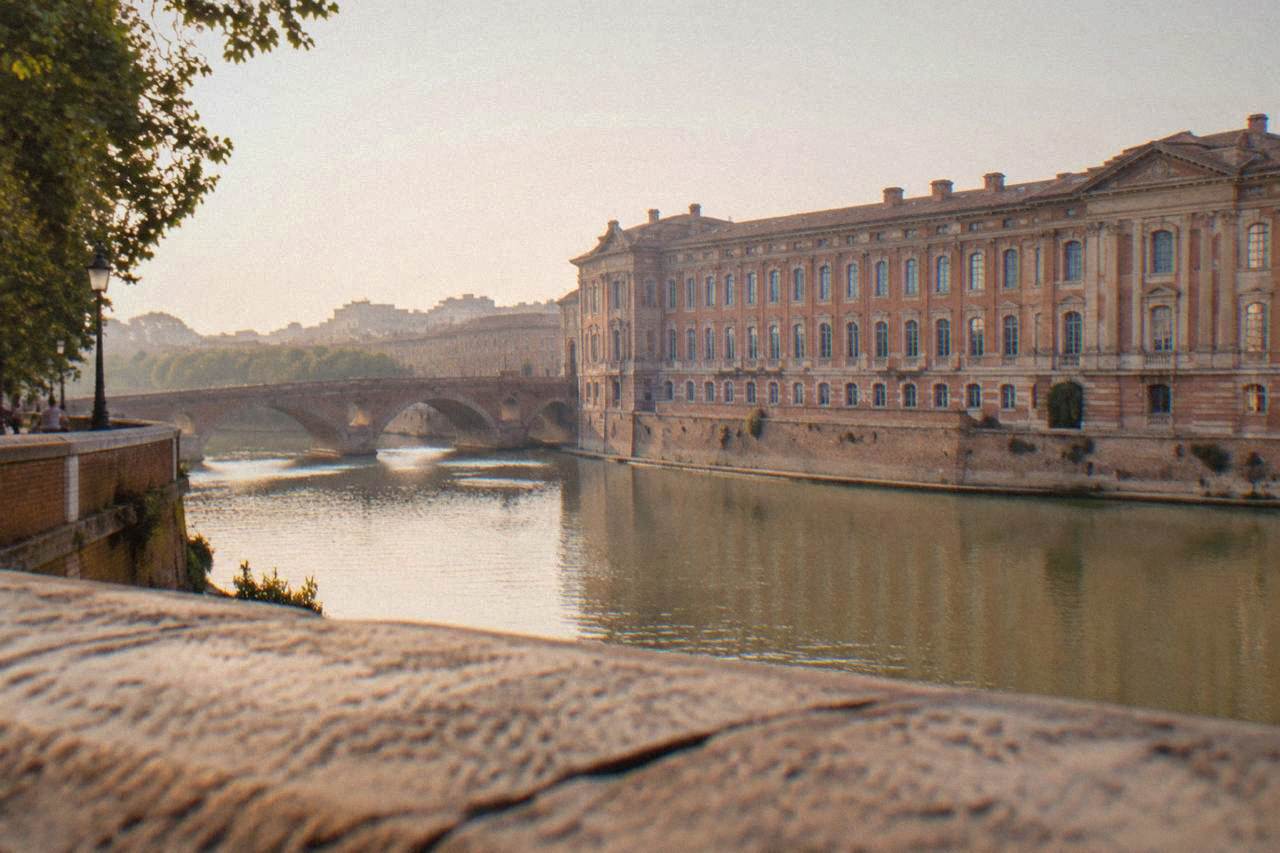
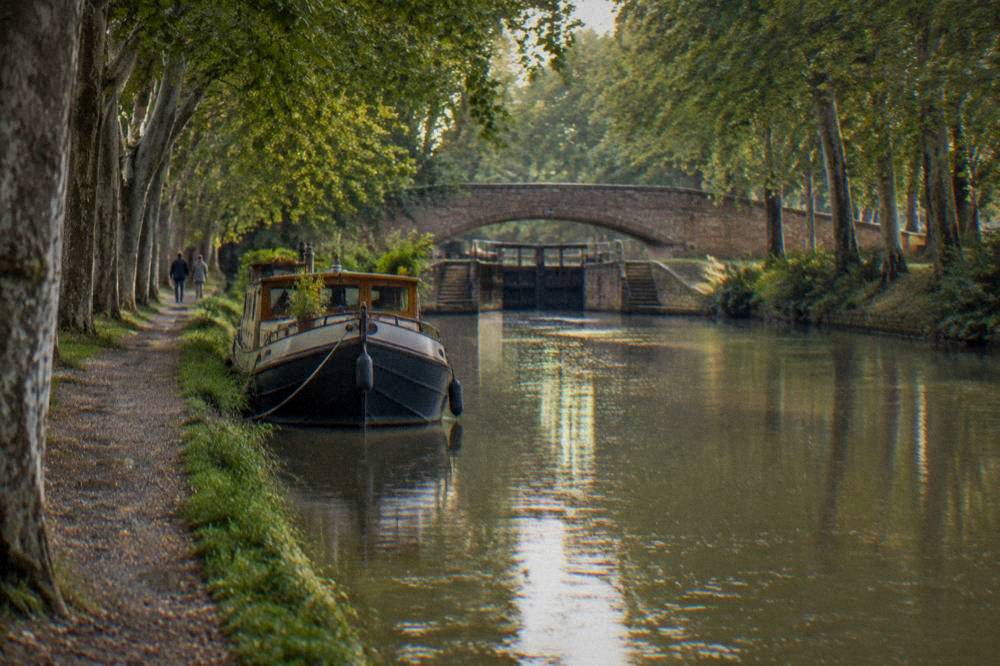
The Garonne river runs through the whole city, and its name ends in a nasal sound that English lacks. Say "gah-RUHN" and let the final N die in the nose rather than touching the tongue to the roof of the mouth. The Garonne riverside and the Pont Neuf are the two places the name will matter most, since both are common meeting points.
Is The Final S In Toulouse Really Silent?
Yes, the final S in Toulouse is silent in both French and standard English pronunciation. The word ends on the "ooz" vowel sound, not on a hiss or a hard consonant. This mirrors a broader French rule: final consonants, including S, T and D, usually stay silent unless the next word begins with a vowel, in which case the consonant links forward.
That linking rule, called liaison in French, matters less for the city's own name and more for phrases around it. In "Toulouse est belle", meaning "Toulouse is beautiful", the silent S links into the following "est" and produces a light "z" bridge: "too-LOOZ-ay-bell". A visitor saying the name in isolation never needs this. A visitor reading a sentence aloud from a map or a menu might hear it and wonder where the extra sound came from. The wider set of guides lives on Toulouse Travel Guide.
Other city names in the region follow the same silent-S pattern. Carcassonne ends on a pure vowel, "kar-kah-SOHN", and Albi ends on "bee". The day trips from Toulouse all involve names that look harder on paper than they sound in the mouth, and the pattern is consistent: trust the vowels, doubt the final consonants.
How Do You Say The Food Words Without Embarrassment?
The essential food words are simpler than they look: cassoulet is "kah-soo-LAY", saucisse de Toulouse is "so-SEES duh too-LOOZ", and violette is "vee-oh-LET". The stress falls on the final syllable in each, and the double L or double S spellings never produce the sounds an English reader expects.
Cassoulet, the slow-cooked bean and meat dish the region is known for, is the word visitors most want to get right at the table. It runs as "kah-soo-LAY", three syllables, with the final T silent. The cassoulet page on this site explains what goes into the dish and where the debates about it run hottest. The Toulouse sausage that goes into it carries the city's own name, so once the city name is secure, the sausage follows for free.
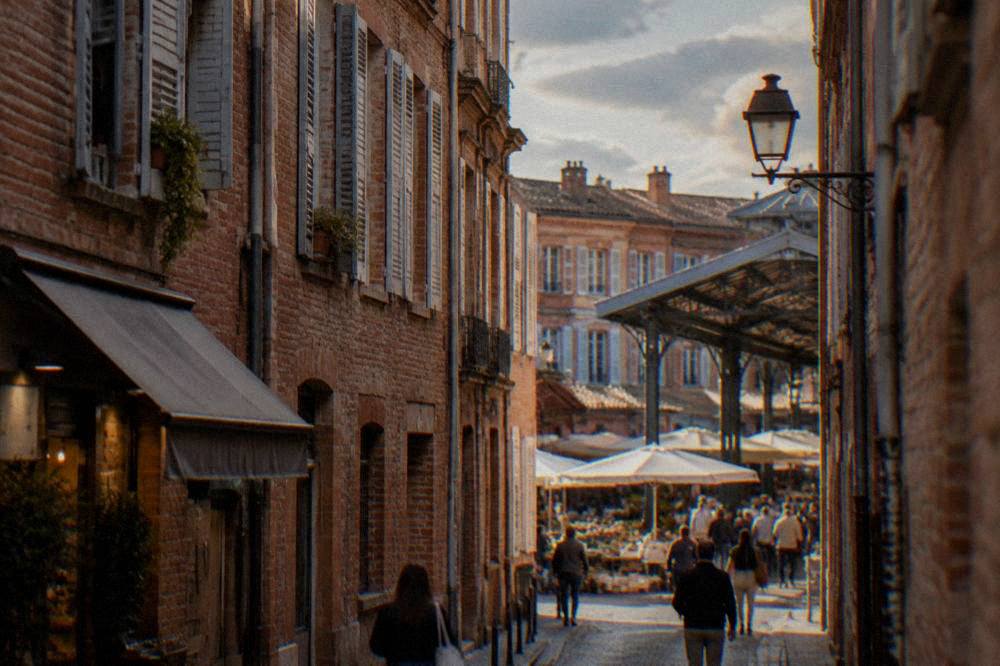
The markets add a few more. Marche Victor Hugo, the covered market in the center, is "marsh vee-ktohr YOO-goh", and the Victor Hugo market is where the tastings start for several food walks. Order in a low, even voice and the words land better than a loud attempt at a French accent, which locals generally receive with more warmth when it is quiet than when it is theatrical.
| Food word | Respelling | Meaning |
|---|---|---|
| cassoulet | kah-soo-LAY | bean and meat stew |
| saucisse de Toulouse | so-SEES duh too-LOOZ | plain pork sausage |
| violette | vee-oh-LET | the city's famous flower |
| marche | mar-SHAY | market |
| saucisson | so-see-SOHN | dried sausage |
| pain | PAN | bread |
Which Transport Words Will You Hear At The Ticket Machine?
The transport words to know are "billet" (bee-YAY, ticket), "correspondance" (koh-reh-spohn-DAHNS, transfer), and the station name Matabiau (mah-tah-bee-OH). Tisseo, the network operator, is pronounced "tee-SAY-oh", and the airport shuttle is simply "lah nah-VEHT", the Navette.
Tisseo's own fare catalogue lists the prices you will see on the machines: a single trip costs EUR 1.90, or EUR 2.50 bought last-minute on board, a day pass is EUR 7.20, a 3-day pass is EUR 14.30, ten trips cost EUR 16.00, and the airport single covering the Tisseo network plus the Navette is EUR 9.50. There is no 2-day pass in the catalogue, so do not hunt for one at the machine. The getting around Toulouse guide covers how the network fits together.
The main rail station, Toulouse-Matabiau, appears on every ticket and announcement. Say "too-LOOZ mah-tah-bee-OH" and any taxi driver will understand. The station's own page, Toulouse train station, covers the layout, and the Paris to Toulouse route is the long-distance line that uses it most.
| Ticket or name | Respelling | Price or role |
|---|---|---|
| billet | bee-YAY | a ticket |
| Tisseo | tee-SAY-oh | the transit network |
| Matabiau | mah-tah-bee-OH | main train station |
| Navette aeroport | nah-VEHT air-oh-PORT | airport shuttle, EUR 9.50 single |
| Journee | zhoor-NAY | day pass, EUR 7.20 |
| 3 jours | twah zhoor | 3-day pass, EUR 14.30 |
Do The District Names Follow The Same Rules?
Yes, the district names follow the same French rules: Carmes is "karm", Saint-Cyprien is "san see-PREE-yan", and Compans-Caffarelli is "kohm-PAHN kah-fah-REH-lee". The final consonants stay silent, the stress leans on the last syllable, and the nasal vowels carry the endings.
The Carmes quarter, whose name ends in a silent S and a silent E, sounds like the single syllable "karm". Saint-Cyprien, across the river, adds a nasal "yan" finish that has no exact English equivalent: the closest approximation is "see-PREE-yahn" with the N half-spoken. The Carmes and Saint-Cyprien pages describe what each quarter offers, and both names will appear on bus destination boards.
Saint-Aubin, the market quarter east of the center, is "san oh-BAN", and Saint-Etienne, around the cathedral, is "san ay-TYEN". The cathedral itself, Cathedrale Saint-Etienne, runs as "kah-tay-DRAL san ay-TYEN". The Toulouse cathedral guide covers the building; the pronunciation is the easiest part, since every element follows rules already covered here.
What About Toulouse-Lautrec And Other Famous Names?
Toulouse-Lautrec is pronounced "too-LOOZ loh-TREK", with the city name unchanged and the painter's surname stressing its second syllable. The full formal name, Henri de Toulouse-Lautrec, adds "ahn-REE duh" in front, and the final C of Lautrec sounds as a hard K, one of the exceptions where a final consonant does speak.
The painter Henri de Toulouse-Lautrec carried the city's name as part of his family title, which is why his name appears on museum signage and souvenir postcards across the region. The Toulouse-Lautrec page on this site explains the connection and why the artist belongs to the city's story even though he spent much of his working life in Paris.
Other famous names follow. Airbus, the aerospace company with its assembly lines at the edge of the city, is pronounced the same as in English, "AIR-bus", and the Airbus factory tour page covers the visit. Aeroscopia, the aircraft museum next to the assembly plants, runs as "air-oh-SKOH-pee-ah". The Aeroscopia guide has the practical details, including the EUR 16 adult admission and the daily 9:30-18:00 opening hours with last entry at 17:00.
Does Getting The Pronunciation Right Actually Matter?
In practice, a close attempt matters more than a perfect one: locals in Toulouse respond warmly to any genuine try at French, and the city's names are forgiving because the spelling-to-sound rules are consistent. English is widely understood in tourist areas, but a correctly stressed "too-LOOZ" at a taxi rank or a ticket window shortens every exchange.
The city's tourist infrastructure helps. Signs at the airport and the airport to city center transfer points carry pictograms and English, and the Pass Tourisme from the tourist office, EUR 26 for stays of one to three days, includes a free guided tour where every name gets spoken aloud. The Pass Tourisme page breaks down what the pass covers at the museums whose names fill this guide.
The museums themselves are where pronunciation and planning meet. The Fondation Bemberg, "fohn-dah-SYON bahm-BEHRG", normally charges EUR 12, as do the Museum and Les Abattoirs, "lay zah-bwah-TWAHR", and the Couvent des Jacobins normally charges EUR 5, all free with the Pass. The Toulouse museums guide puts them in order.
| Museum or pass item | Respelling | Normal rate |
|---|---|---|
| Fondation Bemberg | fohn-dah-SYON bahm-BEHRG | EUR 12 |
| Les Abattoirs | lay zah-bwah-TWAHR | EUR 12 |
| Musee des Augustins | mew-ZAY dayz oh-GOOS-tan | EUR 5 |
| Couvent des Jacobins | koo-VAHN day zhah-koh-BAN | EUR 5 |
| Pass Tourisme | pahs too-REEZ-muh | EUR 26 |
For travelers who want the names in their ears before arrival, a guided walk remains the simplest option, and the spiritual day trips westward use the same skills: Lourdes is "LOORD", one syllable, and the grotto is "groh-TOH". The shared-departure option suits solo travelers and pairs who want a half-day trip without the cost of a private vehicle.
Families and small groups who would rather set their own pace, and who want the sanctuary to themselves with a dedicated guide, are better served by the private version of the same journey.
Both Lourdes options, alongside the city highlights walk, are collected below for a side-by-side comparison of what each covers.
Common Questions About Toulouse Pronunciation
Quick answers to what visitors ask most about saying the city's name.
Is Toulouse pronounced "TOO-loose"?
No. The stress falls on the second syllable, and the word ends on a "z" sound, not an "s" sound. "Too-LOOZ" is the standard respelling in both English and French, with the French version softening the final consonant into a light glide.
Do you pronounce the S at the end of Toulouse?
No. The final S is silent in French and in the standard English pronunciation. The word ends on the "ooz" vowel sound. The S only surfaces as a linking "z" when the next word in a French sentence begins with a vowel.
How do French people say Toulouse?
French speakers say it as an even two-beat word, "too-LOOZ", with no hard consonant at the end and no strong stress on either syllable. The rhythm of the surrounding sentence carries the emphasis, not the word itself.
How do you pronounce Saint-Sernin?
"San sair-NAN". The word "Saint" collapses to a single syllable, and "Sernin" ends in a nasal N that barely sounds. The basilica is part of the UNESCO-listed Routes of Santiago de Compostela in France, inscribed in 1998.
Is the French R needed to say Toulouse correctly?
No. The city's name contains no R at all. The French R appears in other local names, notably "Garonne", but the city name itself uses only the sounds "too" and "looz", both of which exist in English.
How do you pronounce cassoulet?
"Kah-soo-LAY", with the stress on the final syllable and the final T silent. The dish is the region's signature slow-cooked bean and meat stew, and ordering it by name in Toulouse needs no more than those three syllables.
Practice the city's name a few times before the trip, keep the second-syllable stress, and let the silent endings stay silent. The rest of the vocabulary on this page follows the same handful of rules, and a quiet attempt at any of them will earn a warmer welcome in Toulouse than a loud one that tries too hard.