Toulouse History
Toulouse, the pink-brick La Ville Rose on the Garonne in southwestern France, keeps its history visible: in the brickwork, in a pilgrimage basilica, in a UNESCO-listed canal and in the aerospace plants at the edge of town.
Short answer
Toulouse history is easiest to read through four layers: the pink brick that gives La Ville Rose its nickname, the Basilique Saint-Sernin on the Via Tolosana pilgrimage route, the Canal du Midi inscribed by UNESCO in 1996, and the modern aerospace industry that has reshaped the city. This guide walks through each one with verified dates, museum reopening timelines and the events that carry the past into the present.
Toulouse, the pink-brick city known as La Ville Rose on the Garonne river in the Occitanie region of southwestern France, is a place where the past stays physically present. The commune counted 514,819 inhabitants at the last INSEE reference (population in 2023), and much of what those residents live among, brick facades, a pilgrimage basilica, a working canal, aircraft assembly halls, is history you can walk past on an ordinary afternoon. This guide on Toulouse Travel Guide lays out what is actually verified about that past: which dates are documented, which buildings carry them, and where the story continues into the present. Where a popular explanation exists but no primary source confirms it, this page says so instead of repeating a comfortable legend.
Why Is Toulouse Called La Ville Rose?
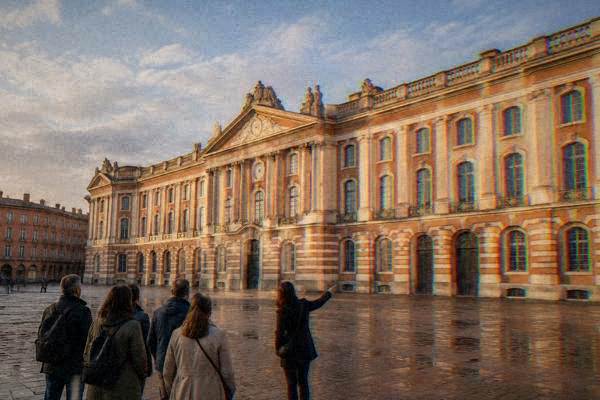
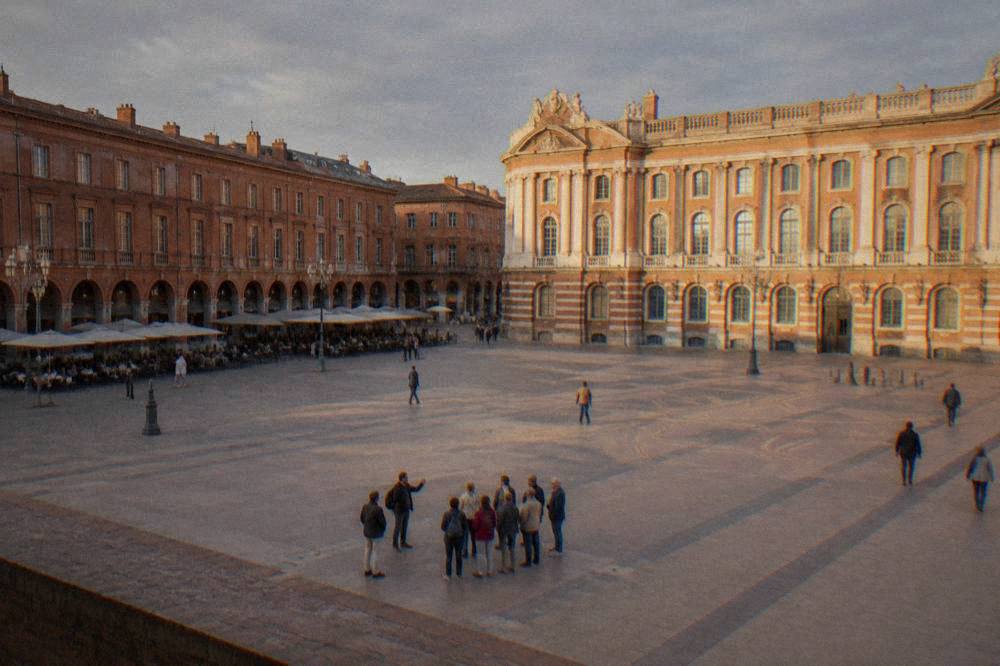
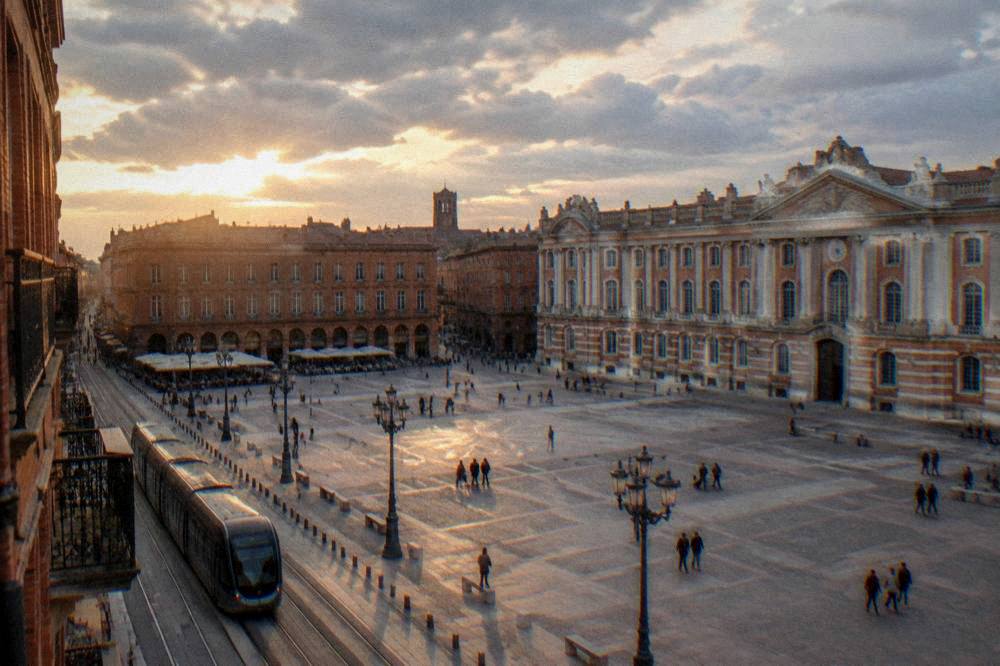
Toulouse is called La Ville Rose because of the color of its bricks: the historic buildings glow in shades of pink and terracotta, and the nickname is the city's well-known byname. No dated explanation of the brick survives in verified sources, so this guide describes the color without inventing a century, a quarry or a law. The brick is the first and most visible layer of Toulouse history, and it needs no legend to be striking.
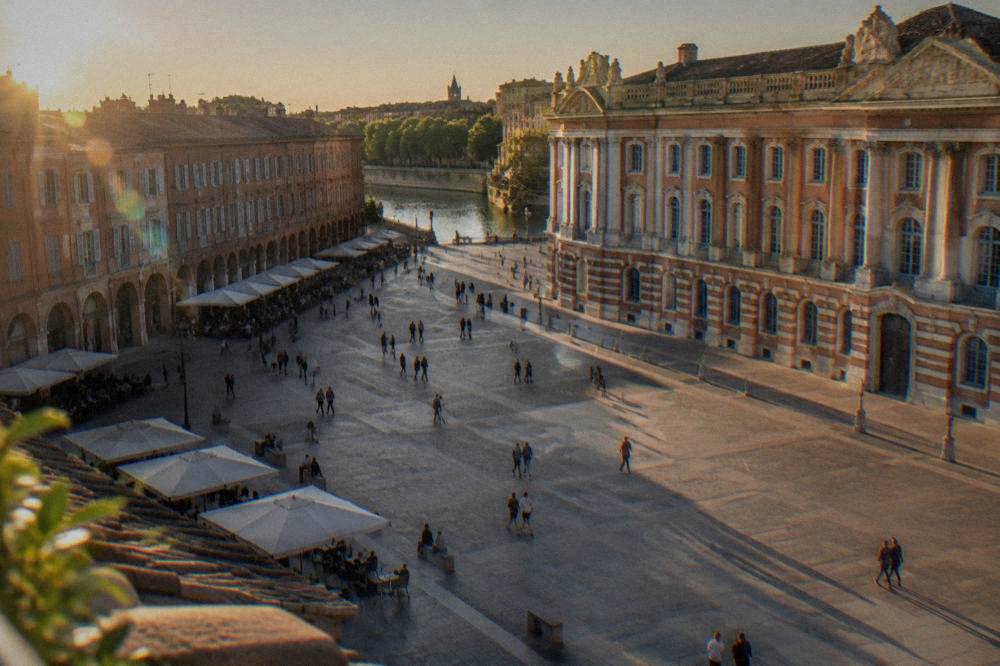
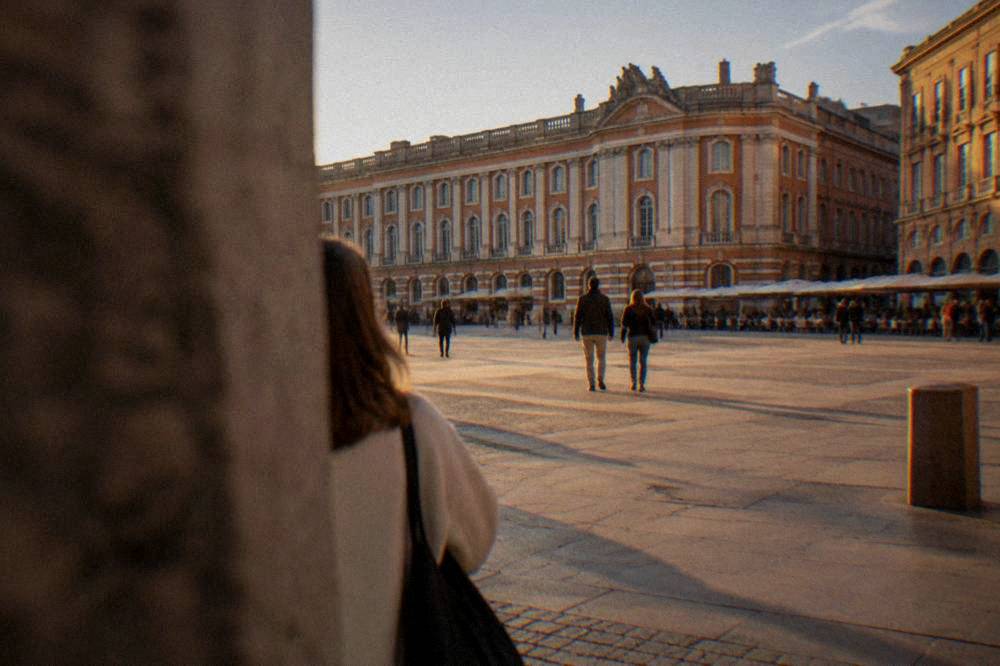
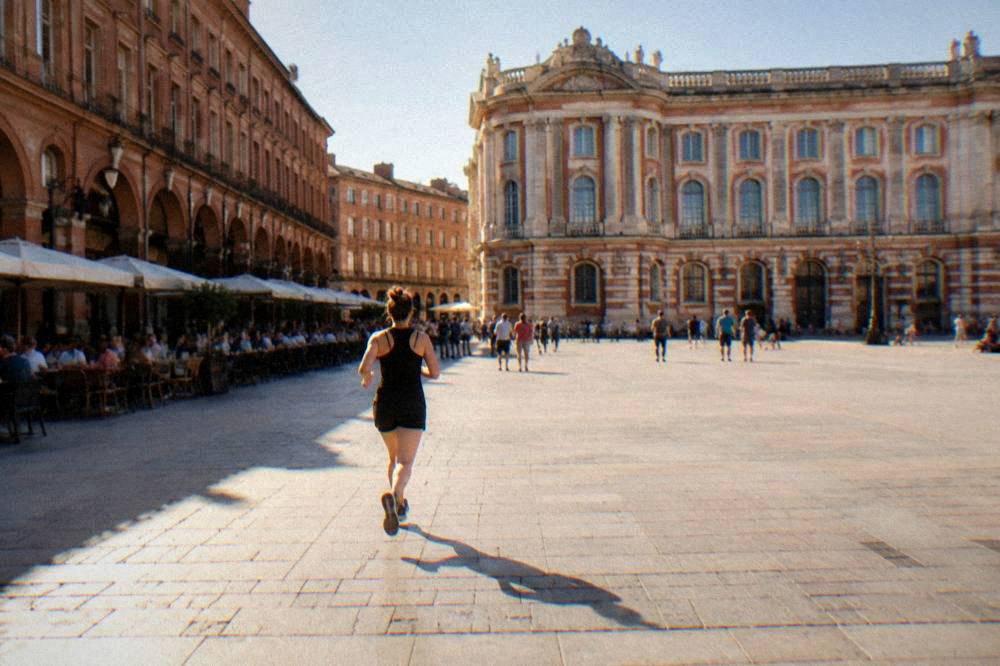
Walk the streets between the Capitole and the Garonne and the color changes with the hours. In the low sun of late afternoon the walls deepen toward red, and after rain they look almost violet. The nickname is used by the city's own institutions, by the tourist office and by residents, and it is the thread that runs through almost every description of the place. No tidy story survives about when the brick came to dominate or where it was quarried, and a guide that invents one is guessing dressed up as fact.
The pink city idea has even become a product of its own. Among the walks and tours on offer in Toulouse is an immersive listing called "Immerse yourself in Toulouse in the 18th century," which uses the historic setting as its frame, and a self-guided audio tour titled "Discover Toulouse: Self-Guided Audio Tour of the Pink City." Both are modern ways of consuming an old city, and both lean on the brick.
For the broader picture of what the city is known for, from the sausage to the planes, see what Toulouse is famous for.
What Role Does The Basilique Saint-Sernin Play In Toulouse History?
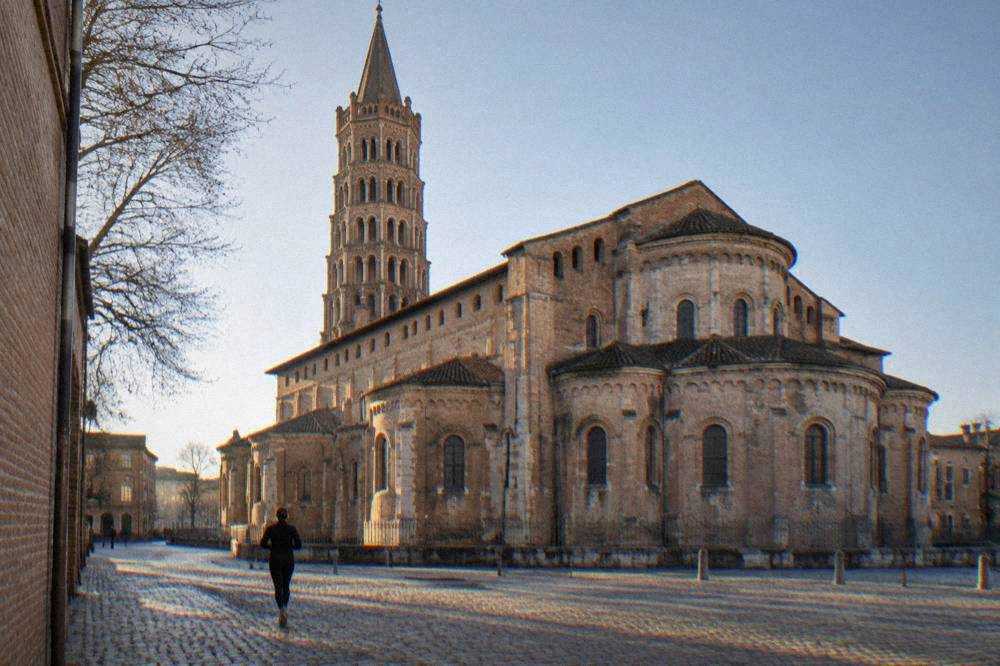
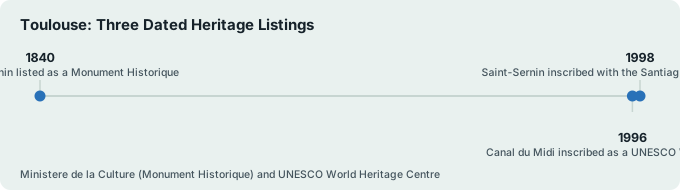
The Basilique Saint-Sernin is Toulouse's major stop on the Via Tolosana, one of the pilgrimage routes toward Santiago de Compostela, and it has been a listed Monument Historique since 1840. Since 1998 it has been part of the UNESCO World Heritage property "Routes of Santiago de Compostela in France." It is the city's clearest documented link between local history and a European-scale story.
The Via Tolosana is the southern French branch of the network of paths that carried medieval pilgrims across the Pyrenees toward Spain, and Toulouse sits on it as a station of consequence. The basilica's UNESCO status comes through that property, inscribed in 1998, not as a standalone monument, and the city's own heritage listing states its Monument Historique date of 1840 plainly. That is the documented core of the building's historical importance.
A point of precision that matters: Toulouse holds exactly two UNESCO connections. The Canal du Midi, inscribed in 1996, and the Santiago routes property of 1998, of which Saint-Sernin is a component. No other Toulouse landmark, not the Capitole, not the Jacobins, not the Garonne bridges, carries the UNESCO label, and any guide that attaches it more widely is stretching the record.
| UNESCO connection in Toulouse | Inscription year | Details from the verified record |
|---|---|---|
| Canal du Midi | 1996 | Criteria (i)(ii)(iv)(vi), property of 2,007 hectares |
| Routes of Santiago de Compostela in France | 1998 | Basilique Saint-Sernin listed as a component of this property |
| Basilique Saint-Sernin | Monument Historique since 1840 | Described as a major stop on the Via Tolosana |
If the basilica and the pilgrimage story are what draw you, a guided walk is the efficient way to see them in context, and the options below include a private tour with a local, an Aeroscopia entry ticket for the aerospace side of the story and a Carcassonne day trip that follows the medieval thread out of the city.
How Does The Canal Du Midi Connect Toulouse To World History?
The Canal du Midi, which begins at Toulouse and links the Garonne to the Mediterranean, was inscribed on the UNESCO World Heritage list in 1996 under criteria (i), (ii), (iv) and (vi), with a property measuring 2,007 hectares. It is the second documented pillar of Toulouse history after Saint-Sernin, and unlike the basilica it is still a working, navigable waterway you can cruise today.
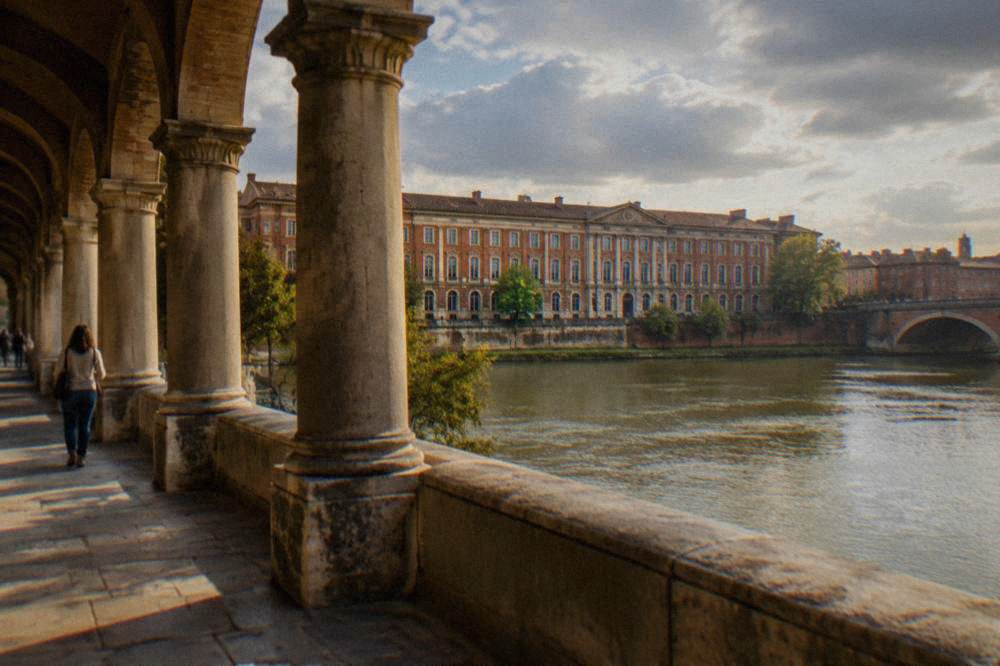
The canal's UNESCO inscription is the anchor date, and the listing's size, just over two thousand hectares, gives a sense of the scale of the engineering being recognized. In Toulouse the canal meets the Garonne, and the tree-lined banks are one of the city's signature walks. The waterway also feeds a whole family of visitor experiences, from short narrated cruises to longer trips and bike rides along the towpath.
For planning around the canal, the practical pages on this site cover getting around Toulouse and the day-trip options beyond the city, collected in day trips from Toulouse. If you want to read the water rather than ride it, the cruise below is the listing to check.
What Do Toulouse Museums Reveal About The City's Past?
Toulouse's museums are themselves a piece of current history: the Musee des Augustins partially reopened in December 2025 after more than six years of works, shuts fully from 21 September to 2 October 2026 for cloister works, and its Gothic halls reopen on 3 October 2026 from 10:00. The Musee Saint-Raymond closed on 3 November 2025 for renovation and modernisation works and reopened on 3 April 2026. The Jacobins carried roof restoration through summer 2026 while staying open.
The Augustins is the clearest case of a museum whose renovation is part of the city's story. Its partial reopening in December 2025 came with redesigned spaces and a new entrance, and the schedule that followed is precise: a temporary full closure from Monday 21 September to Friday 2 October 2026 for works in the great cloister, then the reopening of the Gothic halls, the sacristy, the Notre-Dame de Pitie hall and the chapter house, on 3 October 2026 from 10:00. The great cloister restoration runs to spring 2027. A visitor who plans around these dates sees a museum in motion rather than a finished object.
The Musee Saint-Raymond closed on 3 November 2025 for renovation and modernisation works and reopened on 3 April 2026, with its exhibition "Gaulois, mais Romains !" running from 3 April 2026 to 3 January 2027. The Couvent des Jacobins, meanwhile, kept visitors coming through its church roof restoration, with works on the frame, gutters, covering and fire safety planned to end in summer 2026.
| Site | Verified status and dates |
|---|---|
| Musee des Augustins | Partial reopening December 2025 after more than six years of works; full closure 21 Sep to 2 Oct 2026; Gothic halls reopen 3 Oct 2026 from 10:00; cloister restoration completes spring 2027 |
| Musee Saint-Raymond | Reopened 3 April 2026 with Gaulois, mais Romains ! running to 3 January 2027 |
| Couvent des Jacobins | Open through church roof restoration, works planned to end summer 2026; free on the first Sunday of the month except when a temporary exhibition is on |
Admission is where the Pass Tourisme earns its place in a history-heavy itinerary. The tourist office's Pass Tourisme page lists the pass at EUR 26 for stays of one to three days, says it pays off from the third activity, includes a free guided tour from the tourist office, and adds ten public-transport trips for EUR 10 more. The normal rates the office lists make the arithmetic visible.
| Included site (free with the Pass Tourisme) | Normal rate listed by the tourist office |
|---|---|
| Fondation Bemberg | EUR 12 |
| Museum de Toulouse | EUR 12 |
| Les Abattoirs | EUR 12 |
| Musee des Augustins | EUR 5 |
| Couvent des Jacobins | EUR 5 |
Cite de l'espace, at a normal rate of EUR 29, is discounted rather than free with the pass. The full museum picture, including the art collections and the smaller houses, is in Toulouse museums, and the pass mechanics are broken down in the Pass Tourisme guide.
How Did Toulouse Become An Aerospace Capital?
Toulouse's aerospace present is documented in its visitor infrastructure: the Aeroscopia aviation museum charges EUR 16 for adults, opens daily 9:30 to 18:00 with last entry at 17:00, and the Manatour company runs Airbus A350 and A321 factory tours of 1h30 each at EUR 18 for adults. The museum's own practical page notes that its exhibition hall is not heated or air-conditioned, a detail that says as much about the hangar's scale as any brochure.
The factory tour rules are unusually strict, and they are worth knowing before you book. Manatour's Airbus page states that an original passport or ID card is required, with no photocopy and no phone image accepted, that visitors must arrive 30 minutes early, and that cameras and pets are not allowed. Children under 6 go free, and the reduced rate is EUR 15. These are the operator's own stated conditions, not folklore, and they exist because the tour crosses an active industrial site.
Aeroscopia's own figures come from its practical page: adult admission EUR 16, reduced EUR 13, an annual pass at EUR 26 and a family pass at EUR 80, with the museum closed on 25 December, 1 January and 7 May 2026. Recent reporting also has the museum planning a longer-term expansion and renovation with completion around 2028, while staying open on its normal hours in the meantime.
| Aerospace visit | Adults | Reduced | Key stated conditions |
|---|---|---|---|
| Aeroscopia museum | EUR 16 | EUR 13 | Open daily 9:30-18:00, last entry 17:00; closed 25 Dec, 1 Jan, 7 May 2026; hall not heated or air-conditioned |
| Aeroscopia annual pass | EUR 26 | - | Family pass EUR 80 |
| Airbus A350 factory tour (Manatour) | EUR 18 | EUR 15 | 1h30; original passport or ID card required, no photocopy or phone image; arrive 30 minutes early; no cameras or pets; free under 6 |
| Airbus A321 factory tour (Manatour) | EUR 18 | EUR 15 | 1h30; same ID and arrival conditions; "Airbus Kids" program also offered |
The deep background on the plant itself, and on why the aircraft industry sits here at all, is in the Airbus factory tour guide. For the aerospace museum specifically, the entry ticket below is the listing to check.
Which Annual Events Carry Toulouse History Into The Present?
Toulouse's festival calendar keeps its historic venues working: Piano aux Jacobins runs 8 to 30 September 2026 in the Couvent des Jacobins cloister, the 31st Toulouse les Orgues festival runs 7 to 18 October 2026 with its opening concert at Notre-Dame de la Daurade, and the Christmas markets on Place du Capitole, the allees Jean-Jaures and square Charles-de-Gaulle run 26 November to 27 December 2026. Rio Loco returns 9 to 13 June 2027 on the Prairie des Filtres.
The value of these events, for a visitor interested in history, is that they happen inside the historic fabric rather than beside it. The Jacobins cloister hosts the piano festival, the city's churches host the organ festival, and the main square hosts the Christmas market. Recent coverage describes the September 2026 edition of Piano aux Jacobins as the festival's 47th, which gives a sense of how deep the tradition runs.
One cancellation matters for planners: the Festival des Lanternes at Blagnac has not been renewed, with reporting citing funding as the reason, so it should not appear on any Toulouse-area winter itinerary. On the other side of the year, Rio Loco's 2027 edition is confirmed for 9 to 13 June with the theme "Noctiluca", after the 2026 edition ran 10 to 14 June.
| Event | Verified dates | Historic venue |
|---|---|---|
| Piano aux Jacobins | 8 to 30 September 2026 | Couvent des Jacobins cloister and other venues |
| Toulouse les Orgues (31st edition) | 7 to 18 October 2026 | Opening concert 7 October at Notre-Dame de la Daurade |
| Christmas markets | 26 November to 27 December 2026 | Place du Capitole, allees Jean-Jaures, square Charles-de-Gaulle |
| Rio Loco | 9 to 13 June 2027 | Prairie des Filtres, theme "Noctiluca" |
The calendar pages on this site collect the rest, and the seasonal side of planning, from the wettest month to the sunniest, is covered in Toulouse weather and the best time to visit Toulouse.
Where Can You Walk Through Toulouse History Today?
The most direct way to absorb Toulouse history is on foot, and the city's roster includes a free, tip-based walk, Harry's Free Tour on GuruWalk, alongside paid private tours with local guides and themed food-and-history walks. The free-walk format means no upfront price at all: you book a place, walk, and tip what the tour was worth to you. For a private option, this site's featured tour is a private walking tour with a local, bookable on its own page.
To hear that story at your own pace, book a self-guided audio tour here.
The free-walk scene deserves its own explanation because it works differently from everything else in the roster. GuruWalk is the platform, Harry is the guru, and the walk is free with tips expected at the end. Naming both is the honest way to present it, and it is the one place on this site where a booking platform is named in prose, precisely because the platform is the product. There is also a second free option, an interactive "Rose City" walk built around fun facts, for visitors who want a lighter tone.
The paid end of the spectrum includes a private walking tour with a local guide, which you can look at on its tour page or check live availability for, and a chef-led food and history tour that ties the city's story to its table. The overlap is the point: in Toulouse the historical walk and the eating walk tend to cover the same streets.
The chef-led option below is the one to look at if the cassoulet side of the story matters as much as the brick. The food pages, including Toulouse food and the deep dive on cassoulet, carry the same story in ingredient form.
How Is Modern Toulouse Building On Its Past?
Toulouse is mid-way through the largest change to its transport network in a generation: metro Line C, 27 km long with 21 stations from Colomiers to Blagnac, Toulouse and Labege, is scheduled to open at the end of 2028, and the tram connection to the airport has been closed since 5 June 2023 until the end of 2026. The airport handled 7,621,409 commercial passengers in 2025, down 2.8% on 2024.
The two dates in that answer are easy to swap by mistake, so they are worth fixing clearly: the airport tram closure runs until the end of 2026, and the new metro line opens at the end of 2028. Until the tram returns, the airport's own access page states that the Navette bus runs one departure every 15 minutes, taking 20 to 40 minutes to the center and about 25 minutes to the Matabiau bus station. Buses 30 and 31 take about 45 minutes to the Capitole with changes.
Even the city's climate record reads like history. Meteo-France's 1991-2020 normals for the Toulouse-Blagnac station put the record high at 42.4C on 23 August 2023 and the record low at -19.2C on 15 February 1956, with an annual average of 627 mm of rain across 95.8 rain days and 2,075.1 hours of sunshine. A detail that surprises planners: the wettest month is May, at 73.6 mm, almost double February's 37.2 mm, while July, the sunniest month at 258.6 hours, gets just 40.1 mm.
| Measure (Meteo-France 1991-2020, Toulouse-Blagnac) | Value |
|---|---|
| Record high | 42.4C on 23 August 2023 |
| Record low | -19.2C on 15 February 1956 |
| Annual rainfall | 627 mm across 95.8 rain days |
| Annual sunshine | 2,075.1 hours |
| Wettest month | May, 73.6 mm |
| Sunniest month | July, 258.6 hours of sunshine, 40.1 mm of rain |
For the practical side of arriving and moving around, see where Toulouse is, Toulouse airport and the airport to city center guide. And if the walking, aerospace and medieval strands of this history have convinced you to book something, the three listings below are the ones this site features for exactly that: a private walk with a local, an Aeroscopia entry ticket and a Carcassonne crusades day trip.
Common Questions About Toulouse History
Quick answers to what planners ask most about the city's past.
Is Any Part Of Toulouse UNESCO Listed?
Two connections exist. The Canal du Midi was inscribed on the UNESCO World Heritage list in 1996, and the Basilique Saint-Sernin is a component of the "Routes of Santiago de Compostela in France" property, inscribed in 1998. No other Toulouse landmark carries UNESCO status.
How Old Is The Basilique Saint-Sernin?
The building's administrative history is better documented than its construction date: it has been a listed Monument Historique since 1840, and since 1998 it has been part of the UNESCO Santiago routes property as a major stop on the Via Tolosana. For older dates, check the basilica's own documentation.
Why Is Toulouse Called La Ville Rose?
Because of the pink and terracotta brick of its historic buildings. The nickname is the city's well-known byname and appears in its own institutional material. No dated, sourced explanation of the brick's origin survives, so treat any precise story about quarries or centuries as a legend rather than a fact.
What Is The Oldest Building In Toulouse?
What the record does settle is administrative: Saint-Sernin has been a Monument Historique since 1840, and the city's UNESCO listings date from 1996 and 1998. A dedicated answer page on this site tackles the oldest-building question directly.
Is The Musee Des Augustins Open?
It partially reopened in December 2025 after more than six years of works, then closed fully from 21 September to 2 October 2026 for great-cloister works. Its Gothic halls, the sacristy, the Notre-Dame de Pitie hall and the chapter house, reopen on 3 October 2026 from 10:00.
Can You Visit The Airbus Factories In Toulouse?
Yes, through the Manatour operator, which runs Airbus A350 and A321 factory tours of 1h30 each plus an "Airbus Kids" program. An original passport or ID card is required, with no photocopies or phone images accepted, visitors must arrive 30 minutes early, and cameras and pets are not allowed. The Aeroscopia museum next door can be visited on its own ticket.
The layers stack neatly by the end of a visit: brick, basilica, canal, museum cloisters, factory halls. Toulouse history is not one date but a sequence of them, and the ones on this page are the dates the record actually supports.