What Is The Secret To A Good Cassoulet?
The secret to a good cassoulet in Toulouse: the beans, the slow layering, the crust, and where to taste the city's signature dish.
Cassoulet is the dish Toulouse answers with, the pink-brick city on the Garonne in southwestern France where the question is not whether to eat it but how to tell a good one from a forgettable one. The name points to the cassole, the earthenware pot the dish is cooked in, and the arguments about what goes into that pot have filled books, family kitchens and entire towns' tourism campaigns. This page breaks the question open the way a cook breaks the crust of a cassoulet: carefully, and with an appetite. For the full background on the dish itself, start with what exactly is a cassoulet and the site's cassoulet guide.
What Is The Secret To A Good Cassoulet?
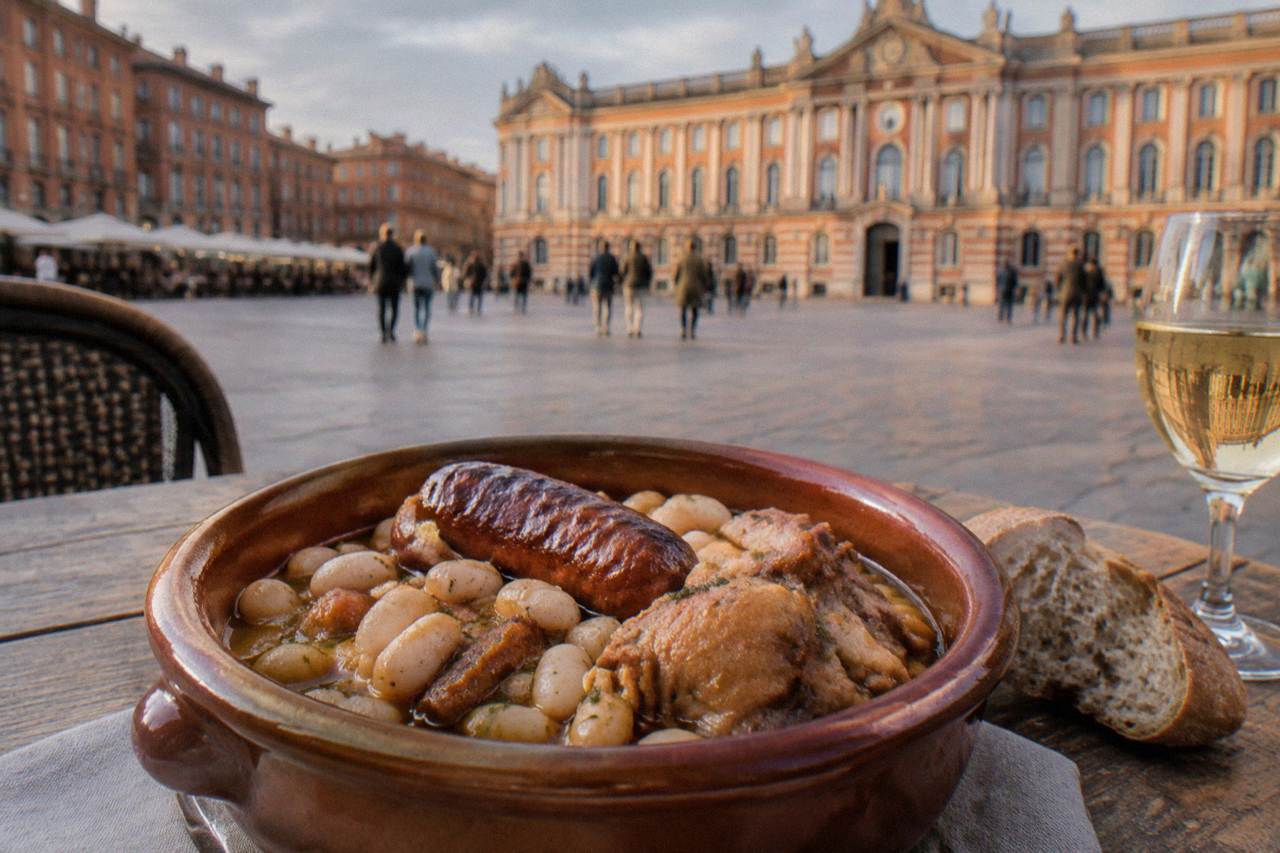
The secret to a good cassoulet is the beans first, then the layering, then the crust: firm white beans that hold their shape, meats and beans built in distinct layers rather than stirred into a stew, and a crust broken back into the dish several times so it flavors everything, all cooked slowly and never rushed. No single ingredient rescues a cassoulet that skips the patience. The dish rewards the opposite of improvisation. In Toulouse, the version that carries the city's name is the one most locals will defend, and its logic applies to every pot.
That answer deserves unpacking, because each of its three parts is a whole discipline. The beans are the foundation and the most common point of failure. The layering is what separates a cassoulet from a pork-and-bean stew. The crust, the golden skin that forms on top as the pot cooks, is the signature of the dish and the part a cook returns to again and again. Everything else, the meats, the aromatics, the timing, serves those three.
The rest of this page walks through each part in turn, then looks at what makes the Toulouse version its own thing, the mistakes that ruin pots every winter, and where to taste a well-made cassoulet when you are in the city. If you are planning a trip around food generally, the site's signature dish of Toulouse page sets the wider table.
Why The Beans Decide Everything
The beans decide everything because a cassoulet is, before anything else, a bean dish: the white beans must soak properly, cook until tender but not until they burst, and absorb the fat and cooking liquid of the meats around them, so a pot with mushy or hard beans fails no matter how good its confit is. The beans are the majority of the dish by volume and by identity. A cook who treats them as filler has already lost.
The traditional bean of the region is the white haricot, and the reason cooks obsess over it is texture. Undercooked beans stay chalky and refuse to take on flavor. Overcooked beans collapse into a paste that turns the whole pot heavy and uniform, which is precisely the stodgy failure people who dislike cassoulet are describing. The target is a bean that is tender to the bite, still whole, and sitting in a thick, glossy liquid rather than a soup or a purée.
| Element | What it should be | What failure looks like |
|---|---|---|
| Bean texture | Tender, intact, holding its shape | Mushy paste or chalky centers |
| Cooking liquid | Thick, glossy, coating the beans | Watery soup or dry, starchy sludge |
| Soaking | Long, cold, unhurried | Skipped or rushed with hot water |
| Final dish | Distinct beans and meats in layers | Everything stirred into one uniform mass |
The liquid deserves as much attention as the bean itself. A good cassoulet's liquid is not gravy and not broth: it is the bean cooking water enriched by the rendered fat of the meats, reduced until it clings. Some cooks add a ladle of the bean cooking water back into the pot as it bakes, which keeps the beans moist while the crust forms. The dish is baked gently, never boiled hard, because a rolling boil breaks the beans and clouds the liquid.
If you want to taste these distinctions rather than read about them, a guided walk with stops along the way is the efficient route.
How The Layers And The Crust Are Built
A good cassoulet is built, not mixed: meats and beans go into the pot in layers so each keeps its character, and the crust that forms on top is broken and pushed back down into the dish several times during baking, which is the step that gives cassoulet its depth of flavor and its name-worthy texture. The crust is not decoration. It is the mechanism by which the whole pot gets seasoned from the top down.
The layering is why the dish survives long cooking. Meats that need time, the confit and the cured pieces, sit at the bottom where the heat is gentlest and the fat renders out slowly into the beans above them. The sausage goes in whole, often toward the top, so it does not disintegrate. The beans fill the spaces between rather than being buried as an afterthought. When it is done, you serve through the layers, so each plate gets a share of everything instead of a spoonful of undifferentiated stew.
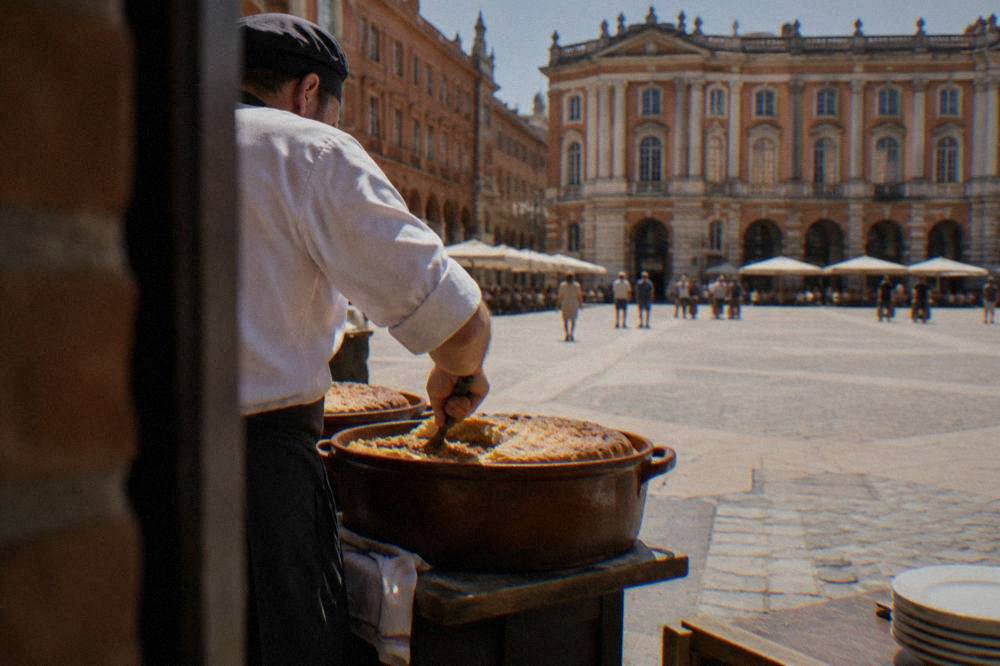
The crust ritual is the part that surprises people who have only eaten a mediocre version. As the pot bakes, a skin forms on the surface. A careful cook breaks it, pushes it into the beans, and lets a new skin form, repeating the cycle several times. Each break folds toasted, concentrated flavor back into the dish. The final service keeps the last crust intact, golden and crisp, so the table gets the full effect of the pot arriving with its lid of crust unbroken.
| Step | What the cook does | Why it matters |
|---|---|---|
| Layering | Confit and cured meats at the base, beans between, sausage whole | Each element keeps its texture and identity |
| First bake | Gentle oven heat, no stirring | Beans absorb fat without breaking |
| Crust breaking | Skin pushed back in, repeated several times | Concentrated flavor folds through the pot |
| Final bake | Crust left intact and golden | The dish arrives with its signature top |
Patience is the thread through all of it. The dish was, by tradition, a pot that could sit by a fire for a day while a household worked, and the modern version still rewards that unhurried schedule. Rushing a cassoulet produces something edible but flat, and every shortcut shows up in the texture of the beans first.
What Makes The Toulouse Version Its Own Dish
The Toulouse version stands apart by its meats: the city's cassoulet carries a fresh pork loin and the local Toulouse sausage, a garlic-seasoned fresh sausage that is the city's signature, alongside the duck or goose confit, and it is this combination that Toulouse defends against the versions of Castelnaudary and Carcassonne, each town claiming its own correct recipe. The rivalry is real, long-running and good-natured, and visitors get to benefit from all three.
The Toulouse sausage is the local marker. It is a fresh, coarse-ground pork sausage seasoned with garlic, and it is treated as a distinct ingredient rather than a generic sausage substitute. In the pot it is cooked whole so it stays juicy and sliceable, and its garlic seasoning works its way into the beans around it. The city's pork tradition supplies the loin, which adds a leaner meat to balance the confit's richness. The result is a pot with more fresh-pork character than some neighboring versions. The full index of guides sits on Toulouse Travel Guide.
For the wider story of the sausage itself, see what is special about Toulouse sausage and the guide to Toulouse food. What to drink alongside is its own question, and the site answers it in what wine you drink with cassoulet; the region's reds are the conventional answer, and the local Fronton and Gaillac areas both sit close to the city.
Tasting the dish in its home city is the honest way to calibrate. A guided tasting walk puts the cassoulet, the sausage and the market culture in one afternoon.
Common Mistakes And How To Avoid Them
The common mistakes are rushing the beans, stirring the pot, using the wrong sausage, and skipping the crust: correcting those four alone puts a homemade cassoulet ahead of most restaurant versions, because they address the texture, the structure, the seasoning and the flavor depth that define the dish. Each mistake has a fix, and none of the fixes costs money, only attention.
The first mistake is bean failure, which is almost always a soaking or temperature problem. Fix it with a long cold soak and a gentle simmer, tasting a bean before the pot goes into the oven. The second is stirring, which turns layered cooking into stew: the pot should be assembled, then left alone apart from the crust ritual. The third is the sausage. A cured or smoked sausage will fight the dish; the Toulouse version is a fresh, garlic-seasoned pork sausage, and a fresh garlic sausage of some kind is the substitute if you cannot find the local one. The fourth is the crust, and it is the one people skip because it feels optional. It is not optional. It is the dish's defining texture and its slow-release seasoning.
| Mistake | What goes wrong | The fix |
|---|---|---|
| Rushing the beans | Mushy or chalky texture | Long cold soak, gentle heat, taste before baking |
| Stirring the pot | Layers collapse into stew | Assemble, then leave it alone |
| Wrong sausage | Smoked or cured flavor dominates | Fresh garlic pork sausage, cooked whole |
| Skipping the crust | Flat flavor, no signature top | Break and fold the crust several times |
A fifth mistake deserves a mention because it ruins the first impression: serving the pot boiling hot straight from a fierce oven. The dish is at its best hot but not scalding, rested briefly, so the liquid settles back around the beans. The traditional cassole, the earthenware pot the dish is named for, holds and releases heat slowly, which is part of why the vessel and the dish are inseparable in name.
Where To Taste A Good Cassoulet In Toulouse
In Toulouse, the reliable way to taste a good cassoulet is to eat it where the city's food culture is strongest, around the markets and the old center, and to judge each plate by the same tests: intact beans, distinct layers, a real crust and the local garlic sausage, with the Victor Hugo market and its neighborhood as the natural starting point. The market is where the city's raw materials are on display, and the restaurants around it cook from them.
No single address is listed here, because rankings and prices for individual restaurants were not sourced for this site. What can be said is structural: the dish is a winter one, it appears on menus across the old center, and the places that cook it in the cassole rather than reheat it are the ones that get the crust right. Ask whether the beans are cooked with the meats and whether the sausage is the local one; the answers tell you what the kitchen thinks the dish is. For the wider question of where the city eats, see where locals eat in Toulouse and what the must-eat in Toulouse covers.
The most efficient introduction is a guided tasting walk, where the guide does the vetting and you do the eating.
Between the market stalls, the charcuterie counters and the old center's tables, the city gives you the whole dish in context: the beans, the sausage, the confit and the pot they all end up in. Tasting your way there with a guide turns a meal into an education.
Common Questions About Cassoulet In Toulouse
Quick answers to what planners ask most about the dish.
What is the secret to a good cassoulet?
Firm, intact white beans; meats and beans layered rather than stirred; a crust broken and folded back in several times; and slow, unhurried cooking. Those four, in that order of importance.
What is a cassoulet made of?
White beans, duck or goose confit, fresh pork, and sausage, baked slowly in an earthenware pot. The Toulouse version adds the local garlic-seasoned fresh sausage and pork loin. See the site's page on what exactly is a cassoulet for the full breakdown.
What do the French eat with cassoulet?
Traditionally very little: a green salad to cut the richness, and a local red wine. The site's page on what the French eat with cassoulet covers the pairings in detail.
Is cassoulet the signature dish of Toulouse?
It shares the title with the Toulouse sausage, which is one of its own key ingredients. The site's page on the signature dish of Toulouse explains how the two fit together.
Can you make cassoulet in advance?
Yes, and it is arguably better the next day, provided the beans were cooked to just tender in the first place, so they do not break down when reheated gently.
Eat it once, made properly, and the question answers itself: the secret was never hidden, it was just slow.