What Exactly Is A Cassoulet?
A plain answer to what a cassoulet actually is, from the beans and the Toulouse sausage to where to eat the dish in Toulouse, the pink-brick La Ville Rose of southwestern France.
Cassoulet is the dish Toulouse answers with when the world asks what the city eats. Toulouse, the pink-brick La Ville Rose on the Garonne in southwestern France, is an inland city of 514,819 inhabitants, and its cooking runs to slow, generous, land-based food rather than anything from a coast. Cassoulet is exactly that: a deep earthenware casserole of white beans baked long and slow with duck confit, Toulouse sausage and pork until the beans turn creamy and the crust on top turns gold. This page answers the question plainly, piece by piece, and points to where the dish fits into a visit.
What Exactly Is A Cassoulet?
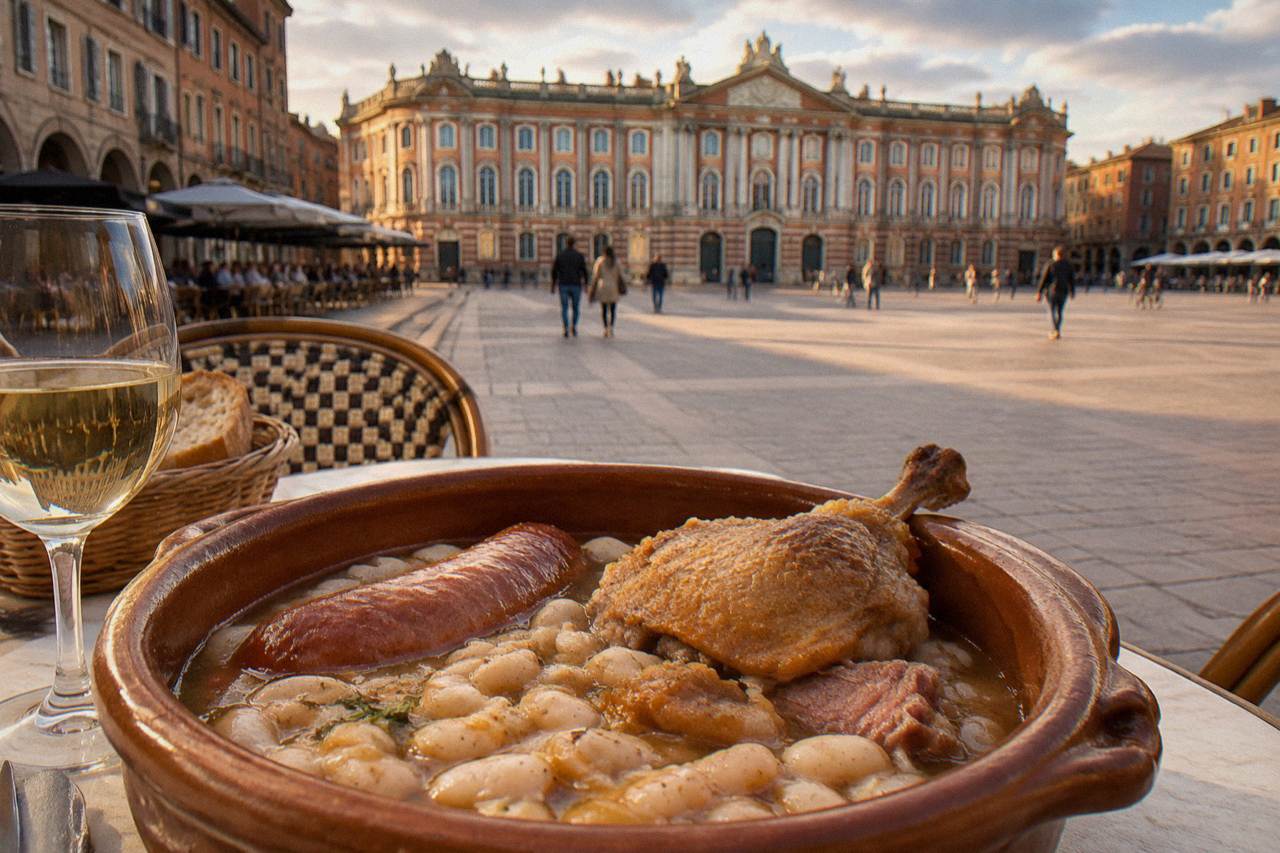
A cassoulet is a slow-baked casserole of white haricot beans cooked with duck confit, Toulouse sausage and pork, assembled in a deep earthenware dish and baked until the beans are creamy and the surface forms a golden crust. It is the signature dish of Toulouse, the pink-brick city on the Garonne in southwestern France, and it is eaten as a full main course, one shared dish set in the middle of the table.
The name is widely traced to the cassole, the glazed clay pot the dish is baked in, which makes the vessel and the food one and the same word. That pot matters more than it sounds. The shape, deep and flared, is what lets the beans cook gently while the top repeatedly crusts over, and bakers of the dish talk about "breaking the crust" several times during cooking so the flavors fold back into the beans.
What it is not matters too. It is not a soup, not a bean stew ladled from a pot, and not a quick weeknight braise. The defining act is the oven: the assembled dish goes in and stays there long enough for the beans to absorb the fat and cooking juices of the meats around them. A cassoulet served watery, without its crust, is a bean stew wearing the name.
The city's own relationship with the dish is unapologetic. Toulouse treats cassoulet as heritage food, the thing to seek out in the old center's restaurants and the dish that anchors the local food identity alongside the Toulouse sausage that goes into it. The fuller story of the dish in this city, including how it earned that status, is on the site's cassoulet guide, and the question of whether it outranks everything else on the local table is picked apart in what the signature dish of Toulouse is.
What Goes Into A Cassoulet, Piece By Piece?
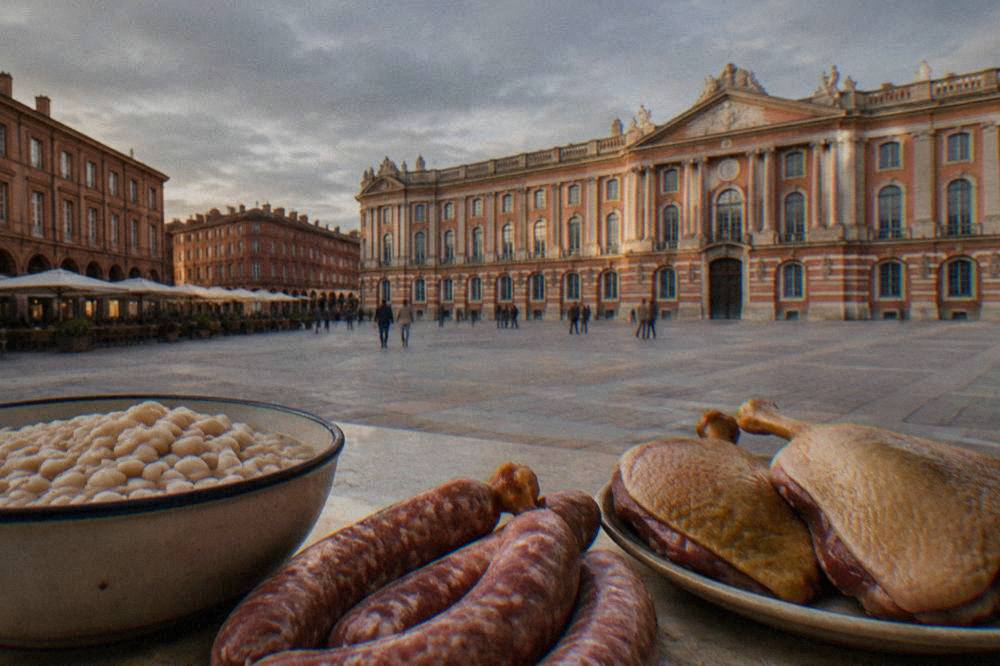
The Toulouse cassoulet is built from white haricot beans, duck confit, Toulouse sausage, and pork, usually fresh pork and salted pork together, with a crust of breadcrumbs or bean skin that is broken and reformed during baking. Every version keeps the beans, the confit and the sausage; the pork cuts are where one restaurant's recipe differs from the next. It is assembled in layers, meat and beans alternating, then baked.
The beans come first. White haricot beans are soaked, then cooked until they are just short of done, because the oven will finish them in the fat of the meats. The beans carry the dish: a cassoulet is judged on whether they hold their shape while turning creamy inside, and on whether they taste of the duck and pork around them rather than of water.
The meats are the second layer of identity. Duck confit, the leg preserved and cooked in its own fat, is the anchor of the Toulouse version, and the Toulouse sausage, a coarse fresh pork sausage, is the piece that carries the city's name straight onto the plate. The sausage itself has its own story, told on the page about what is special about Toulouse sausage. Pork in some form, often shoulder plus a salted cut for depth, fills out the pot.
| Component | Role In The Dish | Notes |
|---|---|---|
| White haricot beans | The body of the dish | Soaked, par-cooked, finished in the oven |
| Duck confit | The anchor meat of the Toulouse version | Its fat flavors the beans through baking |
| Toulouse sausage | The city's namesake piece | Coarse fresh pork sausage |
| Fresh pork | Bulk and sweetness | Cuts vary by cook |
| Salted pork | Depth and seasoning | Often a cured or salted cut |
| Crust | The signature top layer | Broken and reformed during baking |
The crust deserves its own sentence. During the bake, the surface is broken several times so the crusty top sinks and a new one forms, a rhythm that gives the dish its texture contrast. A finished cassoulet arrives at the table still bubbling in its cassole, and it is served from the dish rather than plated in the kitchen.
The best way to understand the assembly is to taste the pieces as the city presents them, and a guided food walk does exactly that. The Toulouse Food & History Tour with a Chef (in English) walks the city's food and its past together, and you can Check availability on the operator's live listing.
Where Should You Eat Cassoulet In Toulouse?
Order cassoulet in a traditional restaurant in Toulouse's historic center, the streets around the Capitole and the Saint-Sernin quarter, where the dish is baked in earthenware and served from the pot. It appears on menus across the old city, and it is a lunch-and-dinner dish, generous enough to be the whole meal. No single address was ranked best, so pick a room that bakes its own rather than reheats one.
The honest advice is structural rather than a list of names. Look for the signs of a house that makes its own: the dish arriving in a cassole, still bubbling; a menu that lists it as a plat du jour in cooler months; and a room that treats it as the centerpiece rather than one of forty options. A cassoulet is a baked dish, and a reheated one is a different, sadder thing. The wider set of guides lives on Toulouse Travel Guide.
Timing shapes the experience more than in most cities. Toulouse sits in a climate where the wettest month is May, at 73.6 mm of rain against February's 37.2 mm, and the sunniest month is July, at 258.6 hours of sunshine, so the cassoulet season naturally leans toward the cooler, damper months. That is not a rule, and the dish never disappears from the city's tables, but a gray afternoon in the old center is the weather the dish was built for.
For eating the way residents eat rather than the way guidebooks point, the site's page on where locals eat in Toulouse covers the neighborhoods worth walking into, and the wider food picture, markets and all, sits in the Toulouse food guide. The Victor Hugo market, the city's central covered market, is where the raw materials of the dish, the sausage, the confit, the beans, are sold by the stall, and a guided tasting walk through it is one of the best short introductions to everything that ends up in the pot.
What Do You Drink With Cassoulet, And What Else Goes On The Table?
Cassoulet is a rich, fatty, slow-baked dish, and the local answer is red wine from the region around Toulouse, the Fronton and Gaillac country to the city's north and northeast, served alongside rather than after the dish. The meal around it stays simple: a green salad to cut the richness, and a light dessert to finish, because the cassoulet itself is the whole main course.
The wine question has its own page, and it is worth reading in full: what wine you drink with cassoulet. The short version is that the region's own reds, the Fronton appellation just north of the city and the Gaillac vineyards beyond it, are the natural pairing, and a wine tour of the Gaillac country from Toulouse is one way to taste them at the source.
The rest of the table is a matter of balance. A sharp green salad after the main course is the classic reset, and the dessert course leans light. What the French eat alongside and after the dish, course by course, is laid out in what the French eat with cassoulet, which settles the question of whether anything should precede the pot at all.
| Course | What It Is | Why It Works |
|---|---|---|
| Before | Usually nothing, or something very light | The cassoulet is the meal |
| Main | The cassoulet, served from the cassole | Rich, baked, complete |
| Salad | Sharp greens after the main | Cuts the richness of the beans and fat |
| Cheese or dessert | A light finish | The dish leaves little room for more |
| Drink | Regional red wine | Fronton and Gaillac are the local answers |
Can You Cook A Cassoulet At Home, And What Makes One Good?
Yes, and the home version is entirely realistic: soak the beans, brown the meats, layer beans, duck confit, Toulouse sausage and pork in a deep dish, and bake it long and slow, breaking the crust a few times as it forms. What separates a good one from a flat one is time, the quality of the confit and sausage, and resisting the urge to rush the beans.
The technique is forgiving but not fast. The beans must be soaked and par-cooked before they meet the meats, the assembly goes into the oven in layers, and the bake is measured in hours rather than minutes. The crust is the part home cooks get wrong most often: it needs to be broken and reformed, not left as a single lid, and not stirred into the beans.
The site's page on the secret to a good cassoulet goes deeper on the technique, and the cassoulet guide covers the dish's place in the city's cooking. Sourcing matters as much as method: the Toulouse sausage is the piece that carries the most flavor per bite, and it is the one ingredient worth seeking out properly rather than substituting.
For travelers who want the dish explained while tasting it, a market-led food walk is the bridge between the home kitchen and the restaurant table, and the Victor Hugo market tasting tour does it with the ingredients in front of you.
Want the dish explained while you taste it? Book a market food tour here.
How Does Cassoulet Fit Into A Toulouse Trip?
Treat cassoulet as one anchor of a food-focused visit rather than a single meal to tick off: eat it once in a traditional room in the historic center, taste its ingredients at the Victor Hugo market, drink the local reds alongside it, and let the rest of the trip carry the pink-brick city's other flavors, from the sausage to the violet sweets. Two or three days is enough to do all of this without rushing.
The dish sits inside a bigger food city. Toulouse's markets, its covered Victor Hugo market above all, are where the components are sold, and a walk through them explains the cassoulet better than any menu does. The city's other signatures, the sausage and the violet, round out a trip that can be planned around eating well, and the question of how many days is enough for Toulouse usually resolves to a pace that leaves room for one long cassoulet lunch.
Common Questions About Cassoulet In Toulouse
Quick answers to what planners ask most about the dish.
What exactly is a cassoulet?
A slow-baked casserole of white haricot beans, duck confit, Toulouse sausage and pork, assembled in a deep earthenware dish called a cassole and baked until the beans are creamy and the top forms a golden crust. It is the signature dish of Toulouse.
What meat is in a Toulouse cassoulet?
Duck confit, Toulouse sausage and pork. The confit is the anchor of the Toulouse version, the sausage carries the city's name, and pork, fresh or salted, fills out the pot. Versions vary in the pork cuts but keep the beans, confit and sausage.
Is cassoulet a stew?
Not quite. A cassoulet is baked rather than simmered on the stove, and its defining feature is the crust that forms on top and is broken and reformed during cooking. A watery bean stew without the baked crust is a different dish.
What wine goes with cassoulet?
Regional reds are the local answer: Fronton, the appellation just north of Toulouse, and Gaillac beyond it. The pairing logic is simple, a rich baked dish wants a red with enough character to stand up to duck fat and pork.
When is cassoulet season in Toulouse?
The dish is on the city's tables year round, but it belongs naturally to the cooler months. Meteo-France's 1991-2020 normals show May as Toulouse's wettest month at 73.6 mm of rain, and the baking season leans into that damp weather rather than away from it.
Can you make cassoulet at home?
Yes. Soak the beans, brown the meats, layer everything in a deep dish and bake it slowly, breaking the crust a few times. The two things that decide the outcome are time and the quality of the sausage and confit, so source those properly.