Moissac
Moissac, a small abbey town on the Tarn in southwestern France, is one of the rewarding short train rides from Toulouse. This guide covers what to see, how to get there, what it costs, and which other trips pair with it.
Short answer
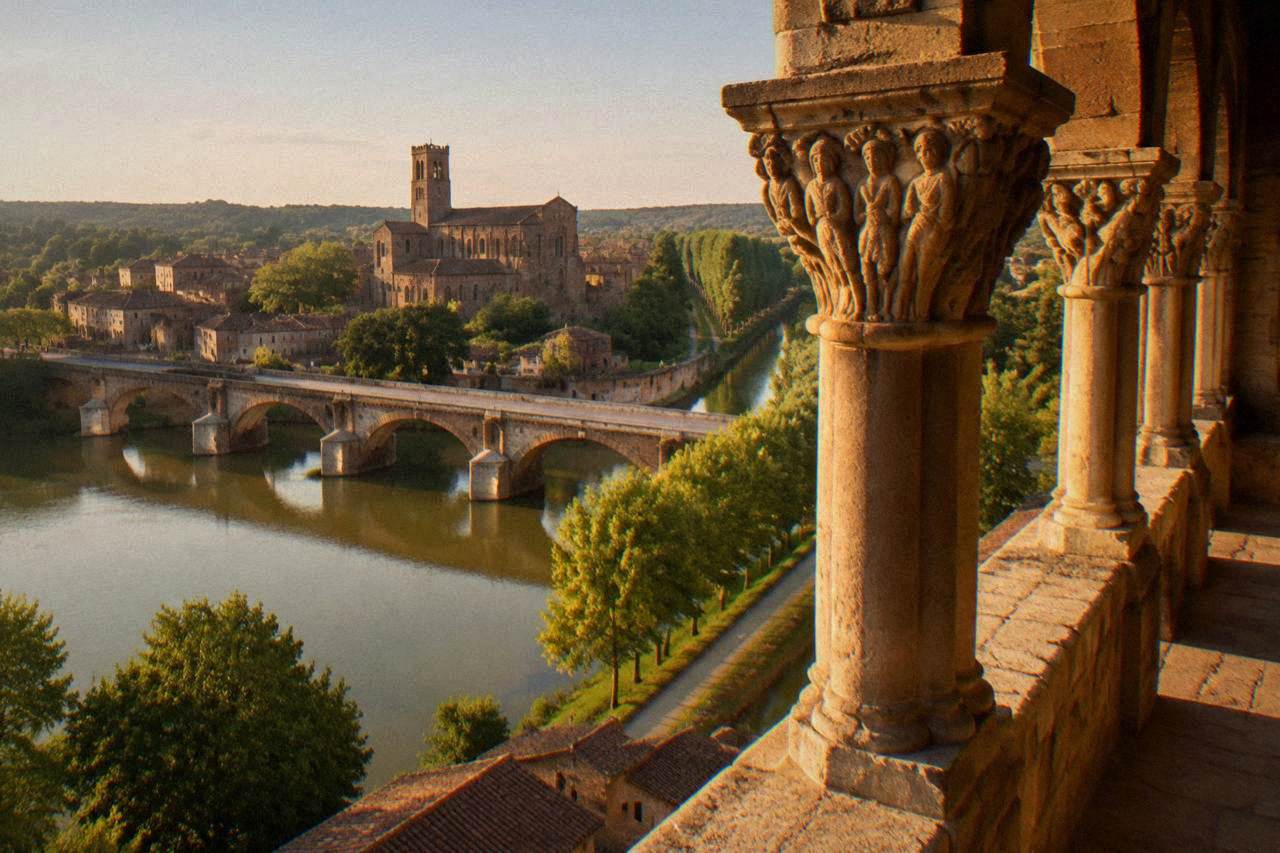
Moissac is a small town on the Tarn river in the Occitanie region of southwestern France, a short train ride from Toulouse. Its abbey, its canal-side setting, and its Chasselas grapes make it a quiet, walkable day trip that contrasts with the big museums and pink-brick squares of Toulouse itself.
Moissac is a small abbey town on the Tarn river in the Occitanie region of southwestern France, a short train ride north of Toulouse, the pink-brick "La Ville Rose" on the Garonne. It is a town built around water and stone: the river on one side, the canal on the other, and a Romanesque abbey at the center whose cloister and carved portal are what bring travelers here rather than the town's modest size. For visitors based in Toulouse, Moissac works as a slow, low-stress counterpoint to the city: you leave the metro and the museums behind, spend a day walking lanes and towpaths, and are back in Toulouse for dinner. This guide lays out what the town offers, how to reach it, what a day there costs, and how it fits with the other classic day trips out of Toulouse.
Where Is Moissac And Why Does It Belong On A Toulouse Itinerary?
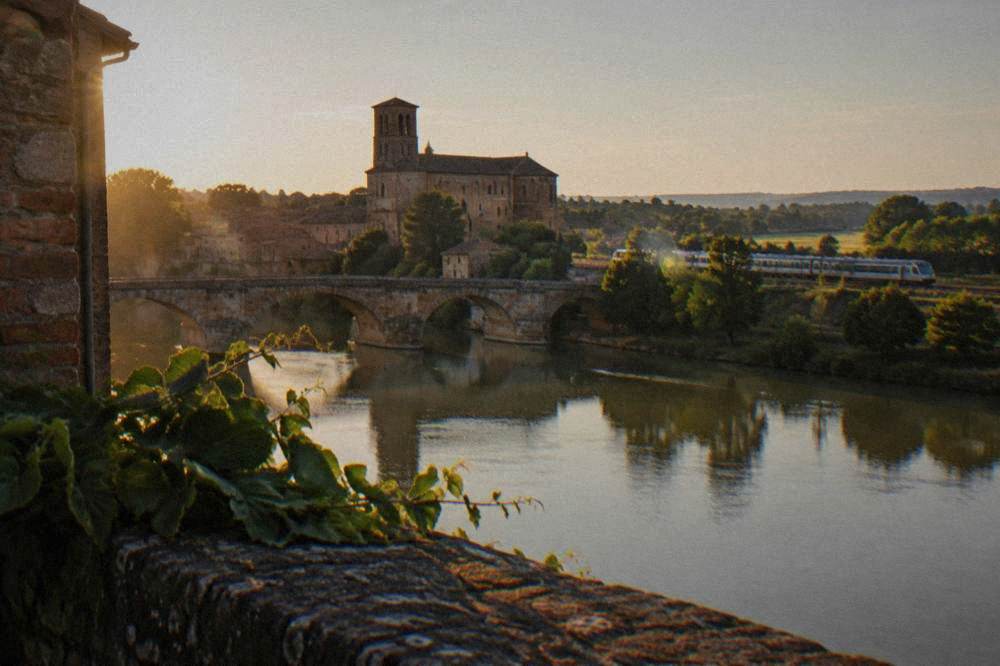
Moissac sits on the Tarn river in the Tarn-et-Garonne department of the Occitanie region, roughly between Toulouse and Bordeaux, and it belongs on a Toulouse itinerary because it compresses the region's two great themes, pilgrimage architecture and canal engineering, into one walkable town. The abbey of Saint-Pierre is the reason the town exists on the map at all: monastic buildings, a cloister of carved pillars, and a sculpted south portal that art historians treat as one of the milestones of Romanesque sculpture. The town also sits on the waterway route that links the Garonne basin toward the Atlantic, so the same visit takes in both stone and water.
The pilgrimage connection matters for context. The UNESCO "Routes of Santiago de Compostela in France" were inscribed in 1998, and the Basilique Saint-Sernin in Toulouse is listed as part of that property, a major stop on the Via Tolosana. Moissac's abbey belongs to the same world of Cluniac monasticism and pilgrim roads, which is why the pairing of a Toulouse stay with a Moissac day trip reads as one continuous story rather than two unrelated stops. The Canal du Midi, inscribed by UNESCO in 1996 under criteria (i), (ii), (iv) and (vi), supplies the other half of that story, and the canal route continues westward from Toulouse through this stretch of country toward the Atlantic side.
Practically, the town is small enough to see on foot in a day. There is a compact historic center around the abbey, a riverside quarter, and canal-side paths that run flat and straight in both directions. That makes it a good choice for travelers who want a day without logistics: no parking, no schedules beyond the train, and no need to move fast.
| UNESCO thread | Inscribed | What it means for this trip |
|---|---|---|
| Canal du Midi | 1996 | The canal culture Moissac's waterways belong to, day-trippable from Toulouse |
| Routes of Santiago de Compostela in France | 1998 | The pilgrim-road world the abbey of Saint-Pierre belongs to |
| Basilique Saint-Sernin, Toulouse | Part of the 1998 property | The Toulouse anchor of the same route, on the Via Tolosana |
What Are The Highlights Of Moissac?
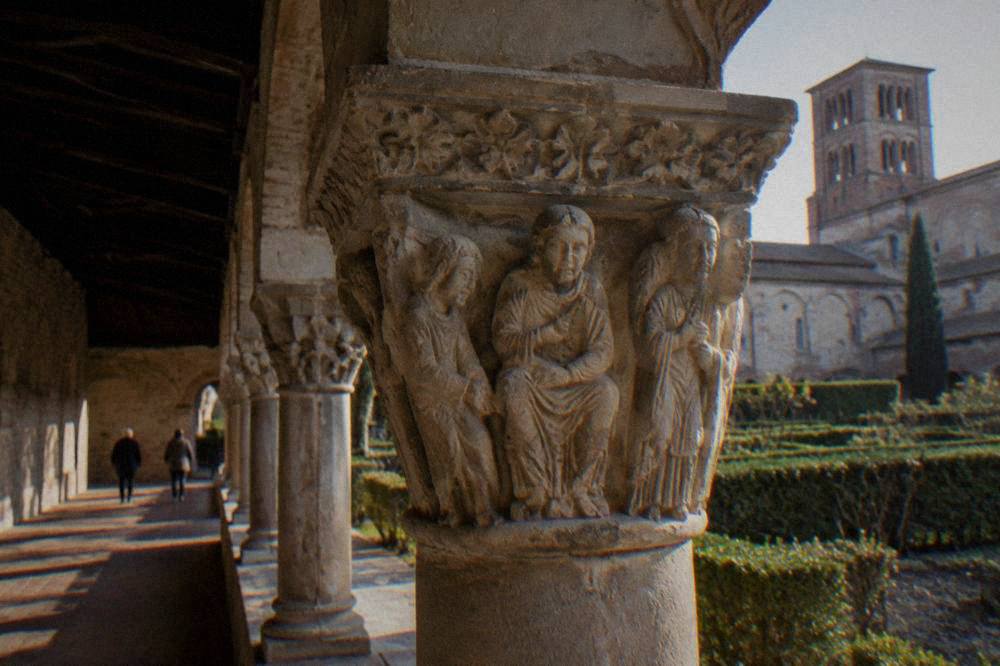
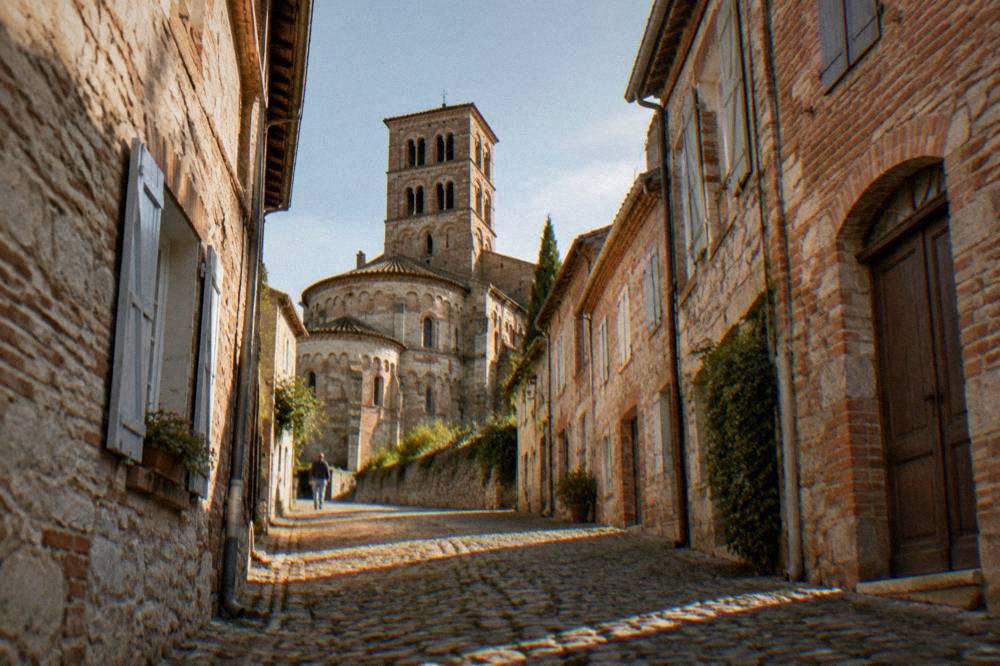
The highlights of Moissac are the abbey of Saint-Pierre with its cloister and sculpted portal, the old lanes of the historic center around it, the Tarn riverside, and the canal-side towpaths on the town's edge, all within a short walk of one another. The abbey is the anchor: the cloister is a square of carved pillars, each with a capital of figures, animals and foliage, and the south portal is a dense carving program in stone. The historic center spreads from the abbey through narrow streets of brick and stone. Downhill, the Tarn runs wide under plane trees, and the canal path offers flat walking in either direction.
Take the abbey slowly. The cloister rewards time spent looking at individual capitals rather than circling once and leaving; the carving style is narrative, with scenes stacked into small blocks of stone, and the portal does the same thing on a grander scale above the door. Check the abbey's own opening arrangements before you travel, because religious buildings in France often close for services and lunch hours, and this site's facts do not carry a verified schedule for it.
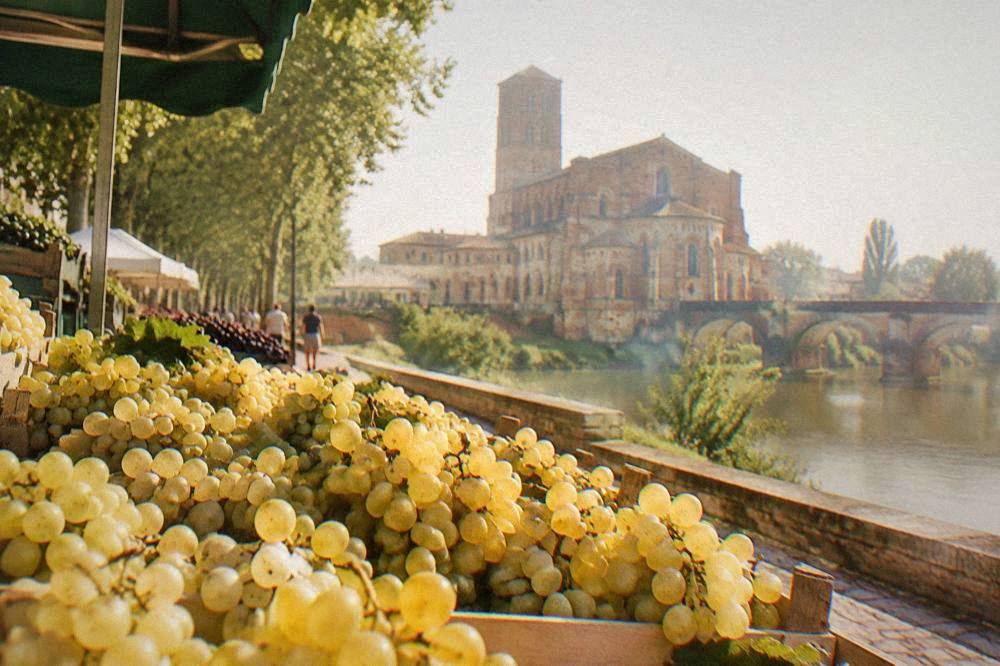
After the abbey, the town itself takes an hour or two. The market square, the small commercial streets, and the riverside walk below the town make an easy loop. In late summer and early autumn, look for Chasselas de Moissac, the local table grape, sold in the town and across the region in season; it is a named local product and a fair souvenir that weighs nothing.
If you would rather have someone else handle the planning, guided day trips from Toulouse cover several towns in the region in one vehicle, and the Rocamadour: Pilgrims, Miracles and Medieval Faith Day Trip takes in another of the great pilgrimage sites of the southwest. You can also compare it against the full day-trip roster below.
How Do You Get From Toulouse To Moissac?
You get from Toulouse to Moissac by train from Toulouse's Matabiau station, a short direct ride north through the Garonne valley, or by car on the region's main roads; the train is the calmer option because Moissac's sights sit within walking distance of the town center and you avoid parking entirely. Trains run along the Toulouse to Bordeaux corridor, which is the line that serves Moissac, so a day trip can be planned around a morning departure and a late-afternoon return. Check the operator's own timetable for the day you travel, because this site does not publish a verified journey time or fare for the Toulouse to Moissac route.
The station-to-town walk is part of the pleasure of the day. Moissac is compact, and the walk from the station to the abbey passes through residential streets that set the tone before you reach the old center. If you drive instead, follow the signs for the town center and expect the usual small-town French parking setup, free and paid zones around the edge of the center; this site does not carry verified parking details for Moissac, so treat the signs on the ground as the authority.
For the Toulouse end of the journey, the city's own transit is run by Tisseo, and its official e-boutique catalogue lists the fares you will use getting to and from Matabiau. A single trip costs EUR 1.90, or EUR 2.50 if bought last-minute on board; a day pass is EUR 7.20 and a 3-day pass EUR 14.30. There is no 2-day pass in the catalogue. If you are flying out of Toulouse-Blagnac after your trip, note that the airport single, covering the Tisseo network plus the Navette aeroport, is EUR 9.50.
| Tisseo ticket (official e-boutique catalogue) | Price |
|---|---|
| Single trip | EUR 1.90 |
| Single trip bought last-minute on board | EUR 2.50 |
| 10 trips | EUR 16.00 |
| Day pass ("Journee") | EUR 7.20 |
| 3-day pass | EUR 14.30 |
| Airport single (Tisseo network + Navette aeroport) | EUR 9.50 |
Can You Combine Moissac With The Canal Du Midi?
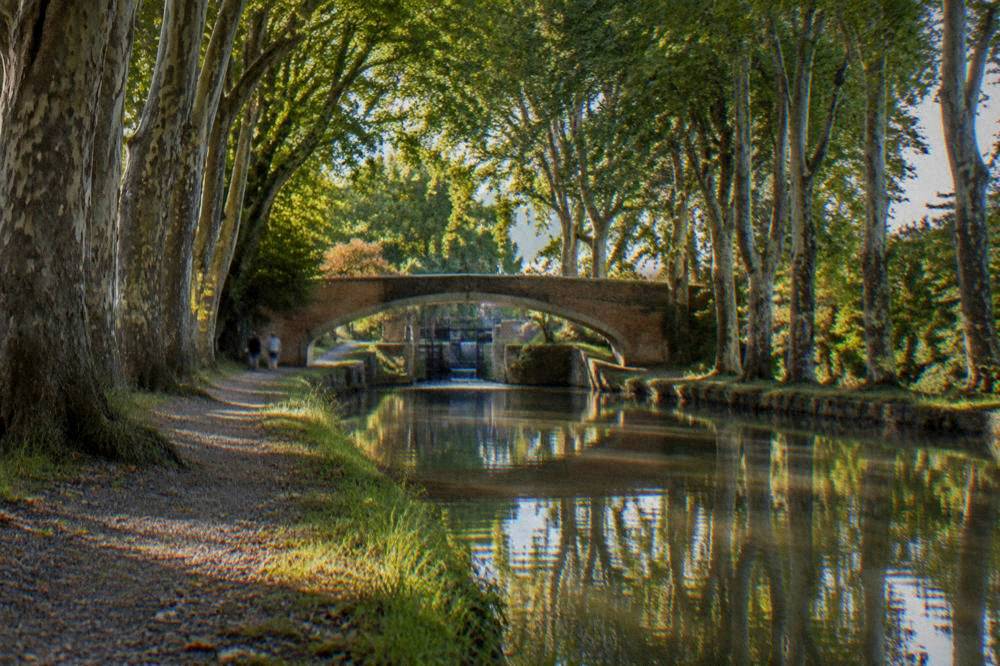
Yes, you can combine Moissac with the Canal du Midi story, because the town sits on the linked waterway route of the Garonne basin, and from Toulouse itself you can book a cruise on the UNESCO-listed Canal du Midi before or after your Moissac day to see the engineering from the water. The Canal du Midi, inscribed by UNESCO in 1996, runs from Toulouse toward the Mediterranean, and the waterway network that Moissac belongs to continues the Atlantic-facing side of the same river system. Together they explain why this part of France is a canal region as much as a pilgrimage region.
The simplest combination is a two-day pattern. Spend one day in Moissac on foot, walking the canal-side paths that run out of the town, and spend a half-day in Toulouse on the canal itself. Several cruise products run from Toulouse on the Canal du Midi; the narrated cruise option below covers the UNESCO-listed stretch with commentary, and the longer cruise tour with commentary covers more water.
For cyclists, the towpaths are the attraction: flat, tree-lined and continuous. If you are planning a bigger canal trip, the site's Canal du Midi by bike guide covers the full route, and the Canal du Midi boat trips guide covers the options for doing it on the water. Moissac's own paths are a gentle sample of the same landscape.
When Is The Best Time Of Year To Visit Moissac?
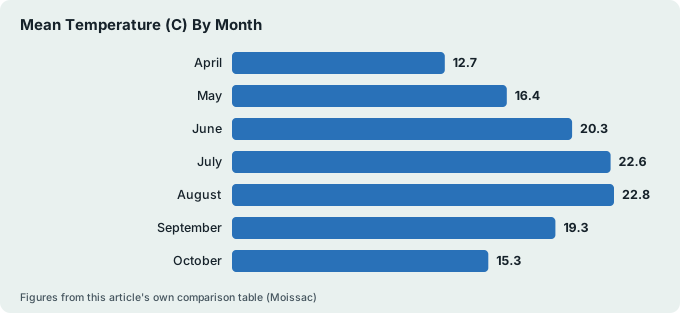
The best time to visit Moissac is late spring through early autumn, with September and October standing out because the grape harvest brings the Chasselas de Moissac into the markets and the heat of summer has passed; May is worth a caveat, because it is statistically the wettest month in this part of France. Meteo-France's 1991-2020 normals for Toulouse-Blagnac, the nearest verified climate record this site holds, show May averaging 73.6 mm of rain, the wettest month of the year, ahead of April at 65.2 mm and June at 64.2 mm. July is the sunniest month, at 258.6 hours of sunshine with only 40.1 mm of rain.
The surprise in the data is that winter is not the wet season here. February is the driest month in the record at 37.2 mm, and the rain peaks in late spring instead. For a walking day trip like Moissac, that argues for June, July and September over April and May, and it argues for carrying a light rain layer in spring regardless of the forecast. The record extremes underline the range: 42.4C on 23 August 2023 at the top, and -19.2C on 15 February 1956 at the bottom, both from the Meteo-France record for 1947 to June 2025.
If you are timing a Toulouse trip around festivals, the 2026 calendar gives you anchors. Piano aux Jacobins runs 8 to 30 September 2026, Toulouse les Orgues, in its 31st edition, runs 7 to 18 October 2026 with the opening concert on 7 October at Notre-Dame de la Daurade, and the Christmas markets on Place du Capitole, the allees Jean-Jaures and square Charles-de-Gaulle run 26 November to 27 December 2026. Rio Loco returns 9 to 13 June 2027 with the theme "Noctiluca". Any of these can bracket a Moissac day nicely.
| Month | Mean temperature (C) | Rain (mm) | Sunshine (hours) |
|---|---|---|---|
| April | 12.7 | 65.2 | 188.5 |
| May | 16.4 | 73.6 | 212.3 |
| June | 20.3 | 64.2 | 231.8 |
| July | 22.6 | 40.1 | 258.6 |
| August | 22.8 | 44.6 | 246.4 |
| September | 19.3 | 45.7 | 210.1 |
| October | 15.3 | 54.3 | 155.2 |
What Does A Moissac Day Trip Cost?
A self-guided Moissac day trip costs a train fare plus lunch plus whatever the abbey charges on the day, and the main way to shave museum costs on the Toulouse side is the tourist office's Pass Tourisme at EUR 26, which pays off from the third activity and includes a free guided tour from the tourist office. The tourist office's Pass Tourisme page lists the pass at EUR 26 for stays of one to three days, with an optional EUR 10 add-on for ten public-transport trips on the metro, bus and tram network. The office's own table of normal rates shows what the pass covers in Toulouse itself.
For Moissac specifically, the costs are simple: the train fare, which you should check with the operator, lunch in one of the town's small restaurants, and abbey admission if it is charged on the day of your visit. Food and restaurant prices in the region are not verified on this site either, so treat menus on the ground as the authority and budget the way you would for a small French country town.
The Toulouse-side costs are the ones with the clearest numbers. The tourist office lists normal rates of EUR 12 for the Fondation Bemberg, EUR 12 for the Museum, EUR 12 for Les Abattoirs, EUR 5 for the Musee des Augustins and EUR 5 for the Couvent des Jacobins, all free with the pass. Cite de l'espace's normal rate is EUR 29, and it is discounted, not free, with the pass. If your Moissac day sits inside a longer Toulouse stay with three or more paid museums on the plan, the pass math starts working, which is exactly what the office means by "pays off from the third activity".
One more figure belongs in any budget: the tourist tax. Toulouse Metropole charges 5% of the pre-tax nightly price per person for non-classified or pending-classification lodging, which includes most platform rentals; that is the only tourist-tax rate verified on this site, so ask your accommodation what applies to your booking.
| Pass Tourisme item | Figure (tourist office page) |
|---|---|
| Pass Tourisme, 1 to 3 days | EUR 26 |
| Transport add-on, 10 trips | +EUR 10 |
| Free guided tour from the tourist office | Included |
| Break-even point | From the 3rd activity |
| Cite de l'espace (normal rate, discounted with pass) | EUR 29 |
| Toulouse museum or monument | Normal rate (tourist office table) | With Pass Tourisme |
|---|---|---|
| Fondation Bemberg | EUR 12 | Free |
| Museum de Toulouse | EUR 12 | Free |
| Les Abattoirs | EUR 12 | Free |
| Musee des Augustins | EUR 5 | Free |
| Couvent des Jacobins | EUR 5 | Free |
Which Other Day Trips Pair Well With Moissac?
The day trips that pair best with Moissac are the other small-town destinations north and west of Toulouse, above all Montauban on the Tarn's sister river, the Gaillac wine route, Cahors on the Lot, and the pilgrimage-and-castle towns of Rocamadour, Conques and Carcassonne, each reachable as a separate day from the same Toulouse base. Moissac belongs to a cluster of half-day and full-day excursions that share the same train lines and river valleys, so a week in Toulouse can alternate a city day, a canal day and a small-town day without ever repeating itself.
Montauban is the natural companion, close by and similar in scale, with its own brick architecture and its own place in the region's story; the site's Montauban guide covers it in full. The Gaillac wine route makes a good follow-on for travelers who liked Moissac's rural, riverside mood. Farther afield, Cahors and Saint-Cirq-Lapopie extend the same valley landscape deeper into the Lot, while Conques is the region's other great monastic stop for anyone who came to Moissac for the abbey.
For the headline day trips, Carcassonne and Albi are the two that anchor most Toulouse itineraries, and Rocamadour belongs on the list for pilgrims and cliff-top views. A coach day trip is the low-effort way to reach Carcassonne if you would rather not drive, and the option below covers it with an audio guide.
If you are building the whole week from scratch, start with the site's day trips from Toulouse overview and the Toulouse Travel Guide homepage for the city days in between, then slot Moissac into whichever stretch of the week needs a quiet day.
How Do You Plan The Perfect Moissac Day Hour By Hour?
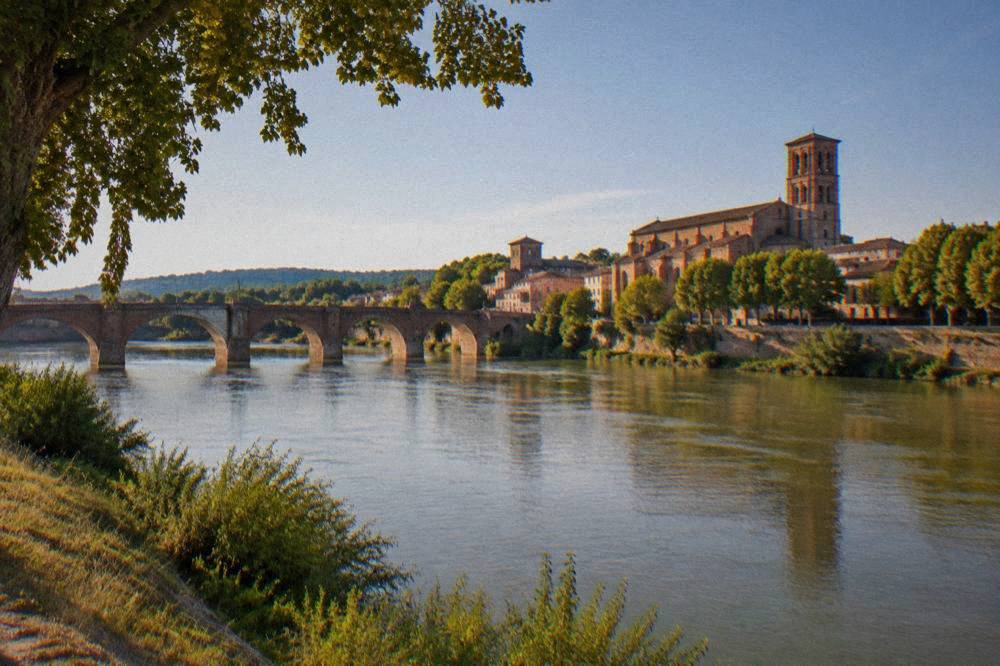
A good Moissac day runs: a morning train from Toulouse after a quick transit ride to Matabiau, the abbey and cloister first while your legs are fresh, a slow lunch in the old center, the riverside and canal paths through the afternoon, and a late-afternoon train back so you are in Toulouse for the evening. The shape matters more than the exact times, because the town rewards slowness and punishes nothing: there is no queue culture here, no timed entry, and no need to book ahead for the walking itself.
Start in Toulouse with breakfast near your accommodation, then use a Tisseo single at EUR 1.90 to reach Matabiau. The train north follows the Garonne valley, and the ride is short enough that you lose almost nothing of the morning. Arrive, walk into town, and go straight to the abbey: the cloister is the sight you traveled for, and it is best seen before the day warms up and before any group visits arrive.
Lunch is the pivot of the day. The old center has small restaurants and cafes, and the local products to look for are the Chasselas grape in season, the region's duck and prune cooking, and the wines of the surrounding Fronton and Gaillac areas; this site does not verify individual restaurant details, so choose on the spot by the menu board. After lunch, walk downhill to the Tarn, follow the riverside, then pick up the canal path in either direction for as long as you like, remembering that a towpath walk is an out-and-back unless you have arranged transport.
Head back to the station in time for a late-afternoon train, and you will be back in Toulouse with the whole evening ahead. If the day has left you with energy, the city's Toulouse at night guide has the evening plan; if it has not, a cassoulet somewhere quiet is the traditional way to end a day in this region, and the site's cassoulet guide explains what is in it.
| Time block | Plan | Notes |
|---|---|---|
| Morning | Train from Toulouse Matabiau, walk to the abbey | Tisseo single EUR 1.90 to the station |
| Late morning | Abbaye Saint-Pierre, cloister and portal | The core sight; allow unhurried time |
| Midday | Lunch in the old center | Menus on the ground are the authority |
| Afternoon | Tarn riverside walk, then canal towpath | Flat, out-and-back walking |
| Late afternoon | Train back to Toulouse | Check the operator's timetable for the return |
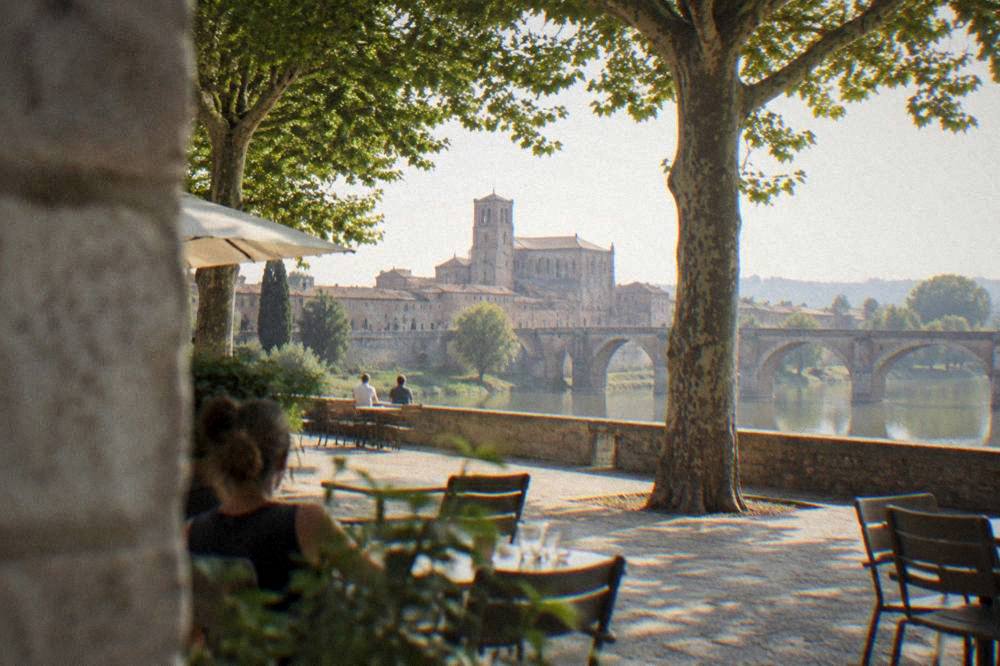
Before the practical questions, one last thought on why Moissac earns its day. Toulouse is a city of aerospace, big museums and rugby crowds, and it fills a week easily on its own. What it cannot give you, within its own streets, is the sensation of a small monastic town where the loudest sound is water moving past plane trees. That is what the short train ride buys, and travelers who take it tend to rank the day higher than they expected to, which is the best outcome a day trip can have. The guided options below cover travelers who prefer the region with a driver and a plan.
Common Questions About A Moissac Day Trip
Quick answers to what planners ask most about Moissac.
How do I get from Toulouse to Moissac?
Take a train from Toulouse's Matabiau station; Moissac sits on the Toulouse to Bordeaux rail corridor, and the town's sights are within walking distance of the station. Check the operator's own timetable for times and fares on your travel date, because this site does not publish a verified journey time or fare for that route.
What is Moissac famous for?
Moissac is famous for the abbey of Saint-Pierre, above all its Romanesque cloister of carved pillars and its sculpted portal, and for the Chasselas de Moissac table grape sold in season. The town also sits on the Tarn river and the canal waterway route of the Garonne basin, which gives it riverside and towpath walking.
Can you walk everywhere in Moissac?
Yes. Moissac is compact, and the abbey, the historic center, the riverside and the canal paths form one walkable loop from the station. A day trip needs no local transport at all.
Is Moissac connected to the Canal du Midi?
Moissac belongs to the linked waterway system of the Garonne basin, of which the Canal du Midi, inscribed by UNESCO in 1996, is the Mediterranean-facing half running from Toulouse. To experience the Canal du Midi itself, take a cruise from Toulouse; the narrated cruise option in this guide covers the UNESCO-listed stretch with commentary.
How much does a Moissac day trip cost?
The costs are the train fare, lunch, and any abbey admission charged on the day; none of those figures is verified on this site, so check with the operator and on the ground. On the Toulouse side, a Tisseo single to the station is EUR 1.90, and the tourist office's Pass Tourisme at EUR 26 covers municipal museums from the third activity upward.
What is the best time of year for Moissac?
Late spring through early autumn, with September and October ideal for cooler walking and the Chasselas grape harvest. Be aware that May is the wettest month in the verified Meteo-France 1991-2020 normals for Toulouse-Blagnac, at 73.6 mm, so pack a rain layer if you travel then.