Cahors Day Trip From Toulouse: What To See, Do And Taste In The Lot
Cahors makes a rewarding escape from Toulouse: old lanes, a famous fortified bridge, dark red wine and the limestone country of the Lot all in one day.
Short answer
Cahors is a compact riverside town in the Lot, reachable from Toulouse for a day out built around its old quarter, its fortified bridge and its red wine. Trains and roads connect the two, the town center needs no car once you arrive, and the surrounding valley rewards a longer loop.
Toulouse, the pink-brick city on the Garonne in the Occitanie region of southwestern France, sits close enough to the Lot valley that a day out in Cahors fits comfortably into a single morning-to-evening plan. The town gives you something the big city cannot: a small, walkable old center wrapped in a river bend, a famous stone bridge, and wine country that starts at the town gates. This page lays out how to think about the trip, how to get there, what to do with the hours once you arrive, and what the whole day should cost.
What Kind Of Day Out Is Cahors From Toulouse?
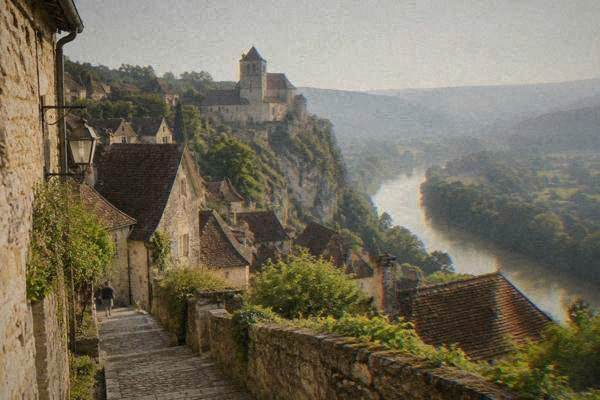
Cahors is a small, historic town in the Lot department, the limestone and wine country that begins north of Toulouse, and it works as a slow, food-and-stones day rather than a checklist sprint. The center is compact enough to explore entirely on foot, the river loops almost all the way around the old town, and the surrounding hills carry vineyards and cliff villages. Plan it as a taste of a different, quieter Occitanie than the one Toulouse shows you.
The appeal is contrast. Toulouse is a big working city of 514,819 inhabitants, per INSEE's 2023 figure, with metro lines, aerospace plants and a rush hour. Cahors is none of that. It is a market town where the day still organizes itself around lunch, where the old lanes hold the heat in summer, and where the signature product, a dark, tannic red wine, is poured in the bars a few streets from where it is grown.
That contrast is exactly why the town pairs well with a Toulouse base. You leave La Ville Rose in the morning, spend the middle of the day somewhere slower, and are back in time for dinner on the Garonne. The town also anchors a wider region: the Lot valley holds some of the most photographed villages in the south of France, and Cahors is the natural gateway to them. If your trip allows more than one day out in this direction, the valley repays a second look, and our guide to Saint-Cirq-Lapopie and the Lot's clifftop villages covers the most famous of them.
Be honest with yourself about pace, though. A single day means choosing between depth in town and reach into the valley. Two days, or one day plus an overnight, lets you do both. The sections below assume one full day, with notes on stretching it.
How Do You Get From Toulouse To Cahors?
Cahors is reachable from Toulouse by rail and by road, and both routes cross the same rolling country of the Haute-Garonne and the Lot before dropping into the river valley. Trains run from Toulouse toward the Lot, and driving lets you add valley stops on the way back. No single leg needs a full day of travel, which is what makes the day-trip format work: check current timetables and fares on the operator's own site before you commit to a plan.
Start from the rail side. Trains out of Toulouse serve the towns of the wider region, and the practical detail that matters is not the timetable, which changes with the season, but the shape of the day: an early departure gives you a full afternoon in town, a mid-morning one turns the trip into a lunch-and-stroll outing. Buy tickets in advance on the operator's site, and remember that France is in the EU and the Schengen area, so no border formalities apply anywhere on this route.
Driving suits a different kind of day. The route north out of Toulouse is straightforward, and the freedom matters most on the return, when you can break the journey in one of the smaller Lot towns instead of sitting on a direct run home. The trade-off is parking and wine: if you plan to taste seriously, the train is the better choice, full stop.
Fancy lingering in the Lot's smaller towns on the way home? Book a rental car here.
Whichever way you go, the Toulouse end of the journey matters too. If you are staying outside the center, you will likely use the Tisseo network to reach the station. The official e-boutique catalogue lists the fares you need for planning:
| Tisseo ticket | Price |
|---|---|
| Single trip | EUR 1.90 |
| Single trip bought last-minute on board | EUR 2.50 |
| 10 trips | EUR 16.00 |
| Day pass | EUR 7.20 |
| 3-day pass | EUR 14.30 |
There is no two-day pass in the catalogue, so for a two-day Toulouse stay the choice is between two day passes at EUR 7.20 each or the 3-day pass at EUR 14.30. For a single day trip, a single ticket each way is all you need.
If you are flying into Toulouse-Blagnac first, note that the airport handled 7,621,409 commercial passengers in 2025, and that the tram line to the airport has been closed since 5 June 2023 because of the metro Line C works, with service not expected back before the end of 2026. The airport bus, the Navette, runs one departure every 15 minutes and takes 20 to 40 minutes to the center. Never plan around a tram to the airport: it does not currently run.
What Should You Do With A Single Day In Cahors?
A single day in Cahors divides naturally into three parts: the old town and its lanes in the morning, the famous fortified bridge and the riverbank around midday, and wine, either tasted in town or at a cellar in the surrounding hills, in the afternoon. Everything sits within walking distance of the center, so no local transport is needed once you arrive. Walk slowly, eat properly, and let the town set the pace rather than the clock.
The old center is the first stop. Cahors grew inside a near-complete loop of the Lot river, and that shape still defines the town: the streets crowd toward the water, the squares open where the ground allows, and the stone and half-timbered houses lean over the lanes. Give the morning to wandering without a route. The covered market square is the natural anchor, and the stalls there are the best place to assemble a picnic or just to see what the Lot's farmers and butchers are selling that week.
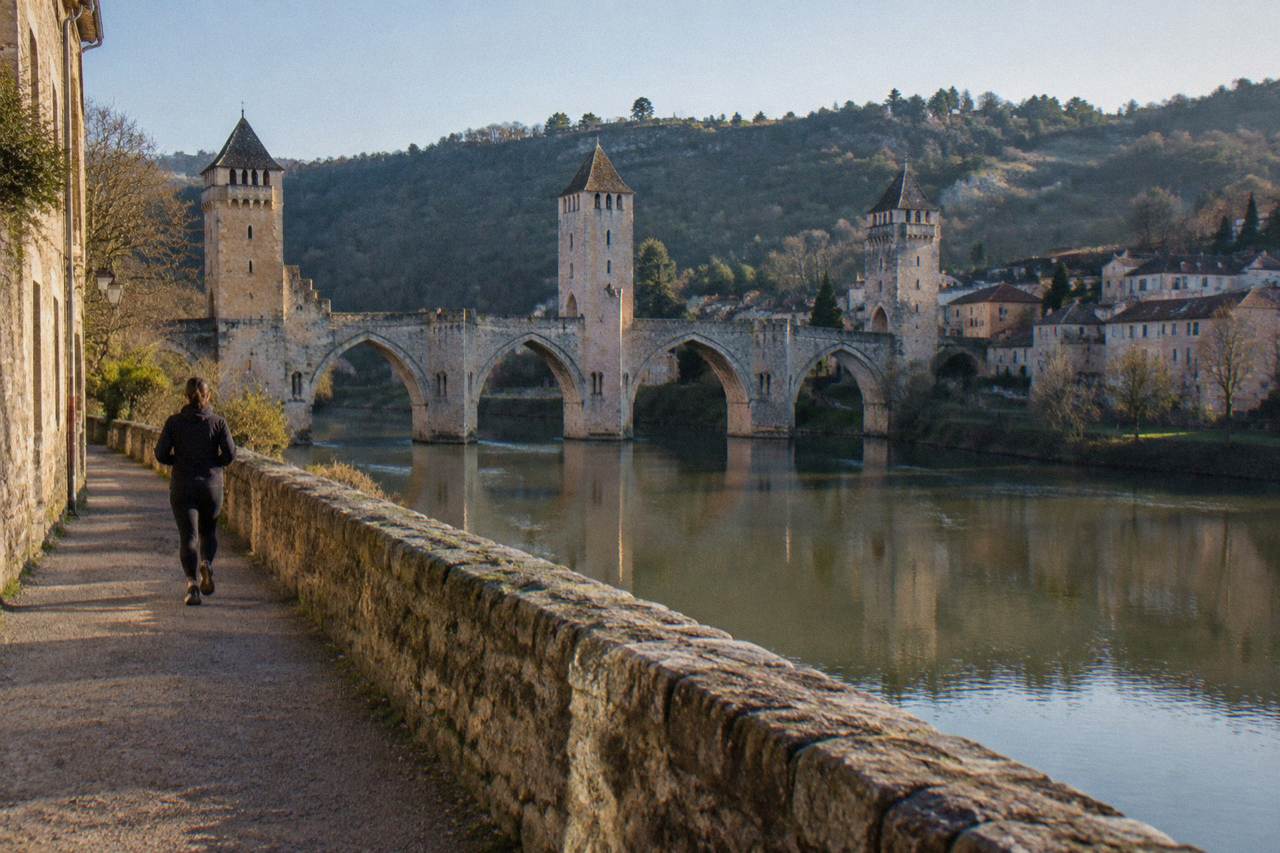
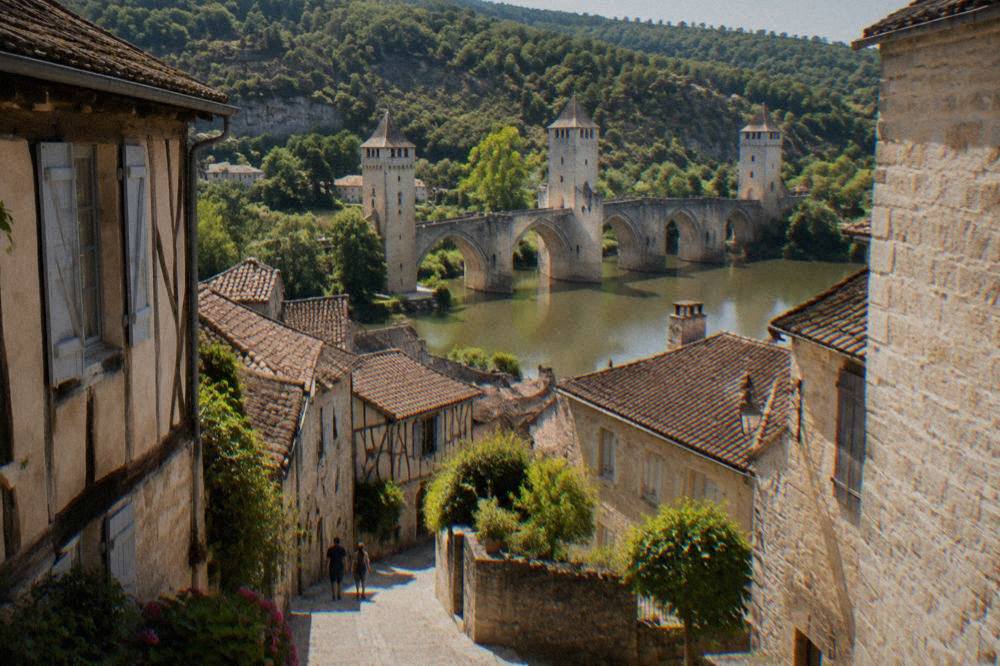
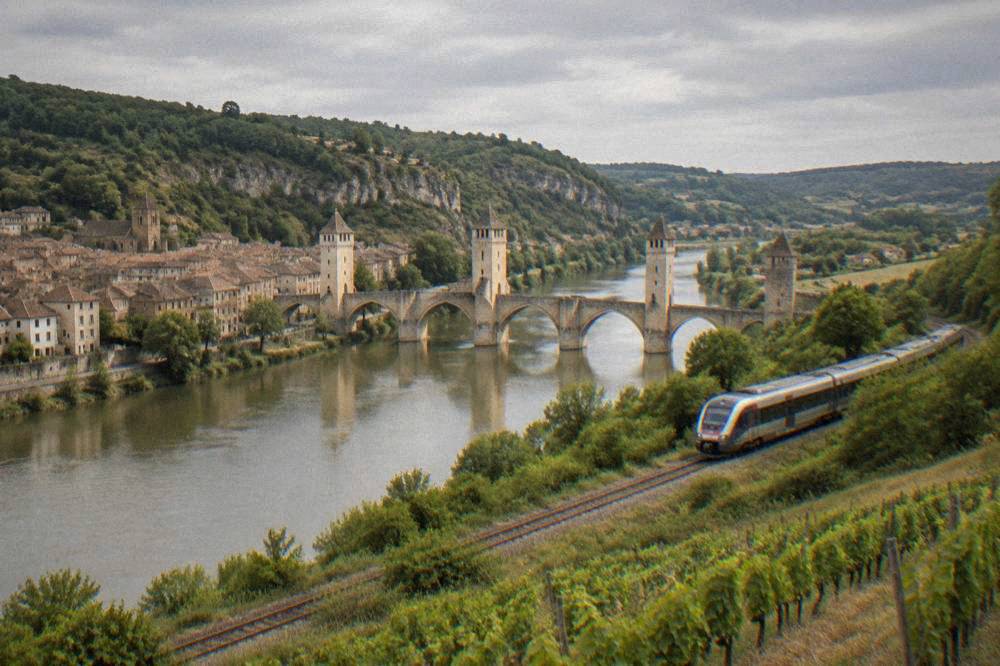
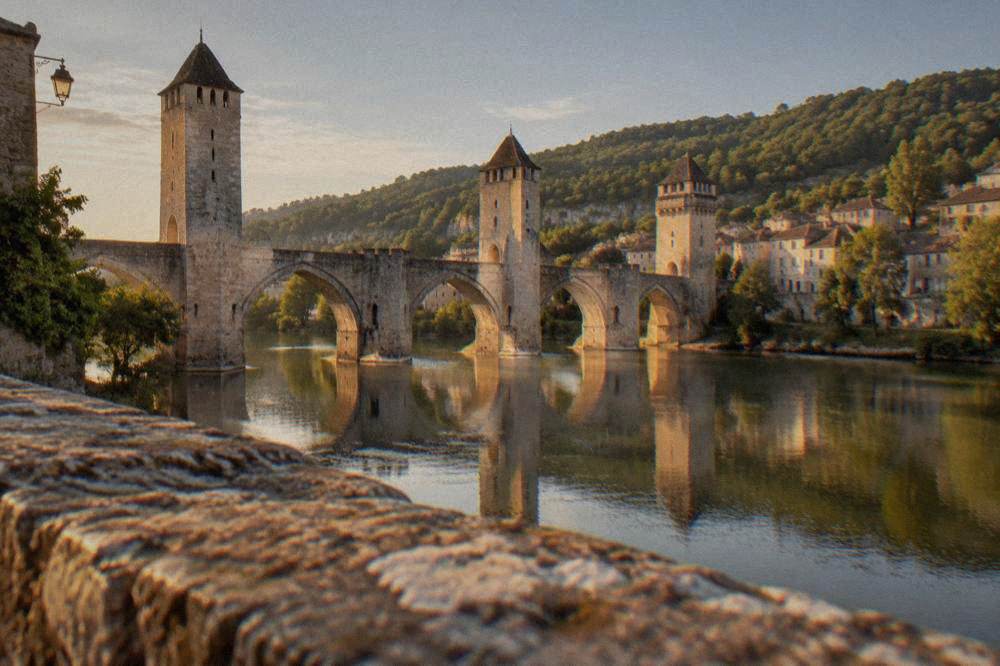
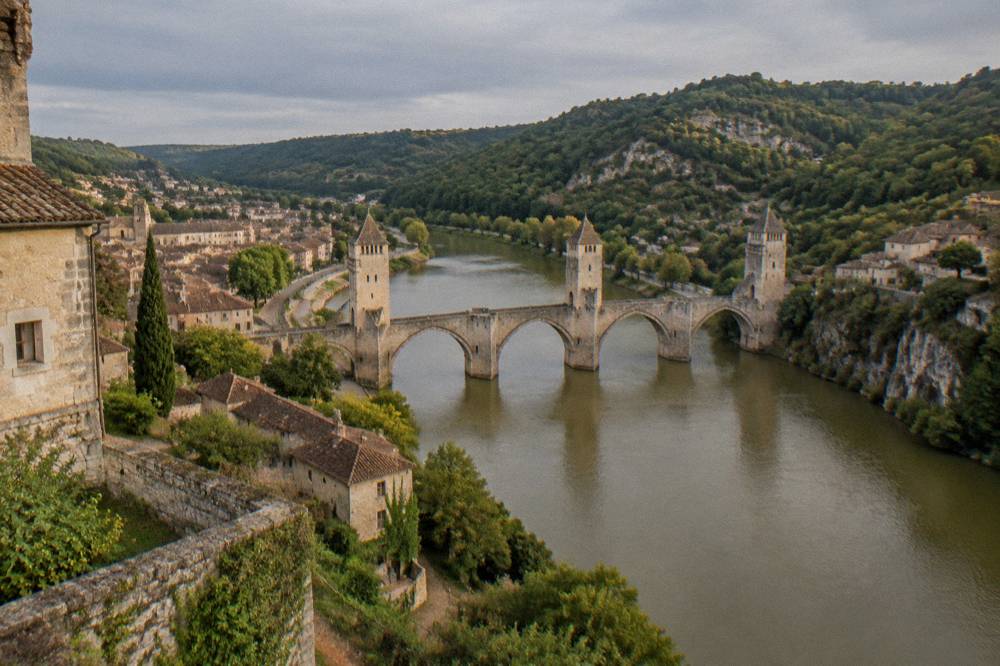
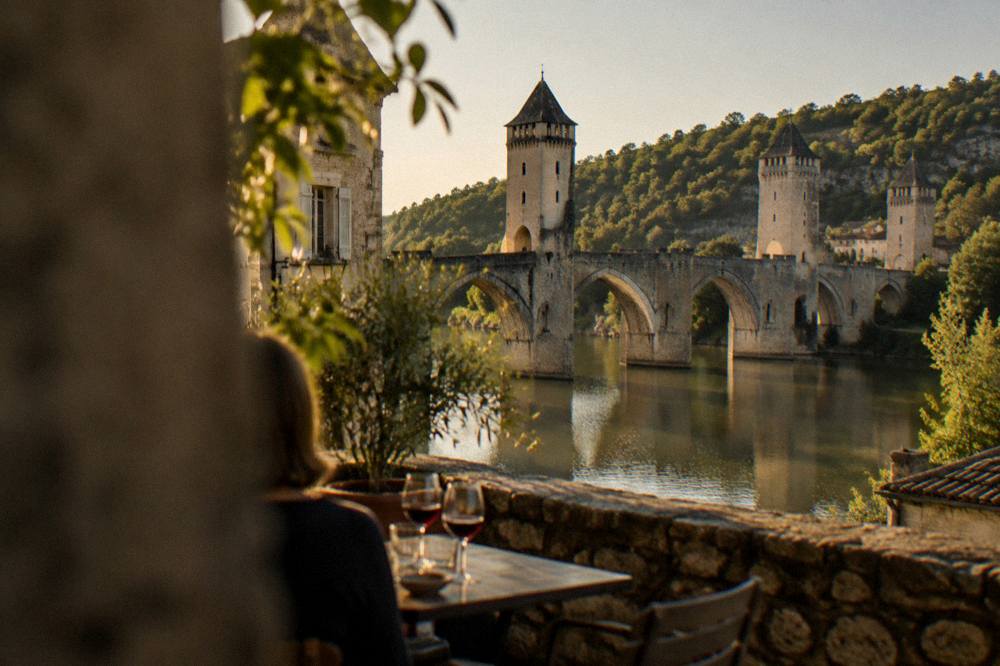
The bridge comes next. Cahors' fortified bridge, with its three towers, is the town's landmark and one of the most recognizable medieval structures in southern France, standing on the river just west of the center. Walk out onto it, circle back along the opposite bank, and take the low path under the arches if it is open: the view back up at the towers from water level is the one everybody photographs. The tourist office in town runs guided visits and can tell you on the day which parts are accessible.
Lunch is not a footnote here, it is half the point. The town's restaurant scene leans on the produce of the Lot: duck, goose, walnuts, dark bread and, above all, the local red wine. Sit down for a proper midday meal rather than grabbing something on the move, because kitchen hours in small French towns are real and the afternoon pause is part of the culture. Our Toulouse food guide covers the same southwestern larder if you want to know what to expect on the plate.
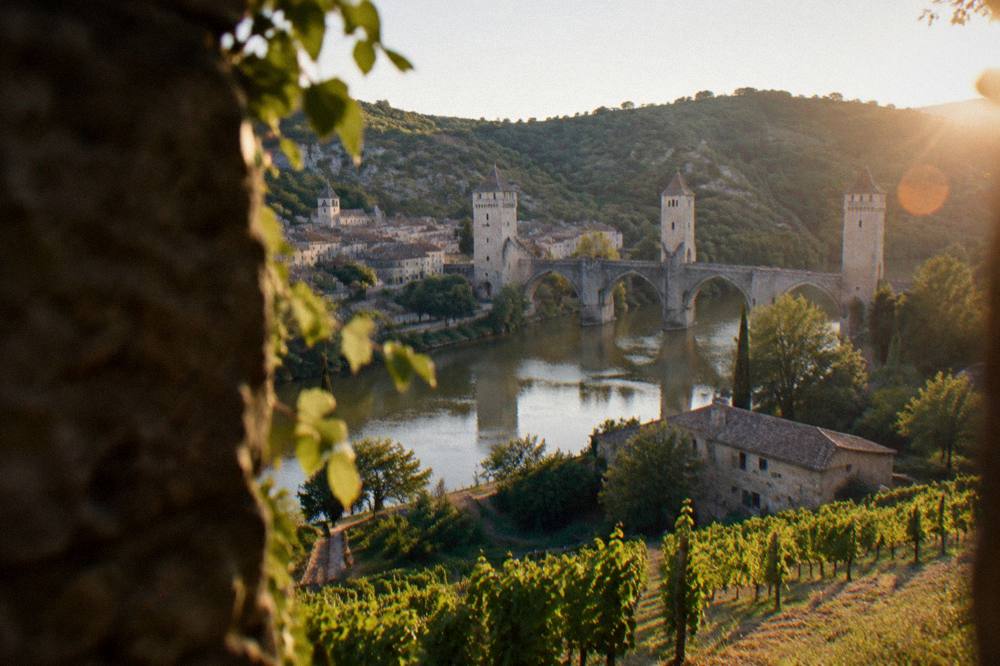
The afternoon belongs to the wine. Cahors' red is made from the Malbec grape and is known for its depth and dark color, and you can taste it in town at wine shops and bars, or out at the estates in the hills above the river. If you came by train, taste in town and buy bottles to carry. If you drove, one cellar stop in the hills makes a fine last act before the run home, and the driver simply skips the spitting debate by tasting nothing at all.
If you would rather leave the logistics to someone else, the guided option has real advantages: the travel is handled, the commentary fills in the history, and the day's rhythm is set by someone who runs it every week. This site's featured day tour out of Toulouse covers a different pair of Lot-adjacent highlights, Albi and Cordes-sur-Ciel, with audio guides in each town, and it makes a strong alternative day out if the Cahors timings do not suit your dates:
What Is There To See Around Cahors On A Longer Loop?
The country around Cahors is the reason many travelers stay a second day: the Lot valley is dense with clifftop villages, river meanders and wine estates, all within a short drive of town. The classic loop pairs Cahors with one or two valley villages, a cellar stop, and a viewpoint over the river's great bends. With two days, do the town properly on day one and the valley on day two.
The valley's headline village is Saint-Cirq-Lapopie, a cluster of stone houses perched above the Lot that draws painters and photographers for its setting. It pairs naturally with Cahors because both sit on the same river, and the drive between them follows the water through the meanders. Our dedicated page on Saint-Cirq-Lapopie goes deeper on that village, and the broader day trips from Toulouse overview places the whole Lot in context alongside the other compass points.
East of Cahors, the valley softens into the country around Moissac, whose abbey cloister is one of the celebrated works of Romanesque sculpture in the south. Westward, the river runs toward the wine estates and the limestone plateaux that give the region its character. None of these legs is a round-the-world journey; the point is that the Lot rewards slow loops, not sprints.
If you are building a wider southwestern itinerary from Toulouse, the Lot sits alongside several other day-trip directions, and mixing them keeps the week varied. The medieval walls of Carcassonne make a completely different day, the red-brick cathedral city of Albi another, and the vineyards of the Gaillac wine route a third. The Dordogne country around Sarlat and the abbey village of Conques are there too if your trip stretches past a week.
For a booked alternative in that medieval-town register, the coach day trip to Carcassonne with an audio guide is one of the most-booked products on this site's roster, and it suits travelers who want the walled-city experience without hiring a car:
Back in the Lot itself, the honest advice is to under-plan. Pick one village, one viewpoint and one cellar, and let the rest happen. The valley's pleasure is in the unplanned stops: the roadside viewpoint, the church open by chance, the second glass at a table you meant to leave an hour earlier.
When Is The Best Time Of Year For A Cahors Day Trip?
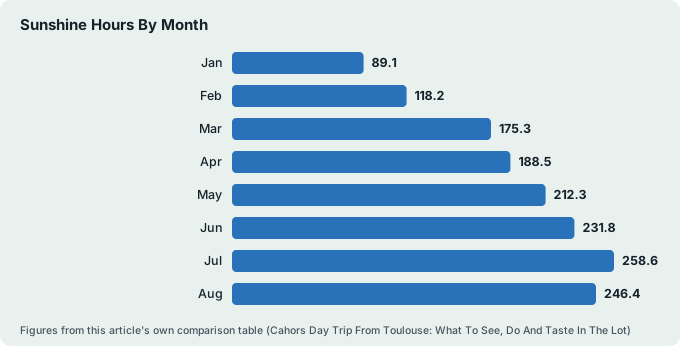
Late spring through early autumn is the sweet spot for a Cahors day trip: May to September brings warm afternoons, long light and full opening hours, while the peak heat of July and August makes midday the time to be at a table rather than on a hill. Meteo-France's 1991-2020 normals for Toulouse-Blagnac, the nearest verified climate record, show the shape of the year clearly.
The numbers come from the official Meteo-France fiche climatologique for the Toulouse-Blagnac station, and they describe the regional climate your day trip sits inside. The annual picture: a mean daily maximum of 18.8C, a mean minimum of 9.6C, 627 mm of rain across 95.8 rain days, and 2,075.1 hours of sunshine. The full index of guides sits on Toulouse Travel Guide.
| Month | Mean C | Rain mm | Sunshine hours |
|---|---|---|---|
| Jan | 6.3 | 52.5 | 89.1 |
| Feb | 7.1 | 37.2 | 118.2 |
| Mar | 10.3 | 45.3 | 175.3 |
| Apr | 12.7 | 65.2 | 188.5 |
| May | 16.4 | 73.6 | 212.3 |
| Jun | 20.3 | 64.2 | 231.8 |
| Jul | 22.6 | 40.1 | 258.6 |
| Aug | 22.8 | 44.6 | 246.4 |
| Sep | 19.3 | 45.7 | 210.1 |
| Oct | 15.3 | 54.3 | 155.2 |
| Nov | 9.9 | 55.0 | 99.9 |
| Dec | 7.0 | 49.3 | 89.7 |
Two details in that table surprise people. First, May is the wettest month of the year at 73.6 mm, wetter than any winter month, with April and June close behind. Second, the rain switches off in summer: July, the sunniest month at 258.6 hours, averages just 40.1 mm. So a May trip means green valleys and a real chance of a shower, while a July trip means heat and reliable sun.
| Month | Days with a maximum of 30C or more |
|---|---|
| May | 0.6 |
| Jun | 6.0 |
| Jul | 11.5 |
| Aug | 11.3 |
| Sep | 3.5 |
| Oct | 0.1 |
That heat column matters for a walking day. July and August average more than 11 days a year above 30C each, and the record high for the region, 42.4C on 23 August 2023, is a reminder that summer here can be serious. The counterweight is winter: the record low is -19.2C, set on 15 February 1956, though December and January means of 7.0C and 6.3C are the more realistic planning figures.
| Season | What the verified climate record supports |
|---|---|
| Spring | Mean 10.3-16.4C from March to May, 45.3-73.6 mm of rain per month, valley at its greenest |
| Summer | Mean 20.3-22.8C from June to August, 231.8-258.6 hours of sun per month, plan around midday heat |
| Autumn | Mean 19.3C in September falling to 9.9C in November, 45.7-55.0 mm of rain, harvest season in the vineyards |
| Winter | Mean 6.3-7.1C in December to February, 37.2-52.5 mm of rain, the quietest time in town |
For wine travelers, the harvest window is the romantic target, and the vineyards are at their busiest then. For photographers, the low light of October and the green of May both give the valley its best colors. For pure reliability of weather, June and September are the months that balance warmth against both rain and crowds.
What Does A Cahors Day Trip Cost From Toulouse?
The honest answer is that the day's cost is dominated by two lines, transport and lunch, and both flex widely: rail fares and fuel sit in one band, a sit-down Lot lunch in another, and wine tasting can be anything from a free pour at a cellar to a serious afternoon. The figures this site can verify are the Toulouse-end ones, the Tisseo fares above and the tourist office's Pass Tourisme rates, printed below; for the rest, check each operator's and each restaurant's own current prices.
Start with what is verifiable. If you are sightseeing in Toulouse around your day trips, the tourist office's Pass Tourisme costs EUR 26 for stays of one to three days, pays off from the third activity, and includes a free guided tour from the tourist office. Adding EUR 10 buys ten public-transport trips. The office's own page lists the normal admission rates at the municipal and partner sites the pass covers:
| Site in Toulouse | Normal rate listed by the tourist office | With the Pass Tourisme |
|---|---|---|
| Fondation Bemberg | EUR 12 | Free |
| Museum de Toulouse | EUR 12 | Free |
| Les Abattoirs | EUR 12 | Free |
| Musee des Augustins | EUR 5 | Free |
| Couvent des Jacobins | EUR 5 | Free |
| Cite de l'espace | EUR 29 | Discounted |
That pass is a Toulouse product, not a Cahors one, but it matters here because many travelers pair a city stay with several day trips, and the pass only pays off if you are actually using the city's museums between journeys.
For the Cahors end, the planning ranges are simple to state honestly. Rail fares change by date and by how early you book, so the operator's site is the only real price source. Lunch in the Lot runs from a market picnic to a full restaurant meal, and the kitchen's posted menu is the price of record. Tasting at the cellars is the same story: some estates pour for visitors as a courtesy, some charge, and the estate's own page or a phone call settles it. This site does not publish a band for any of these, and an invented range helps nobody.
One cost that is verified and often forgotten: the tourist tax. Toulouse Metropole levies 5% of the pre-tax nightly price per person on non-classified or pending-classification lodging, which includes most platform rentals, so factor it into your Toulouse accommodation math. The per-star flat rates for classified hotels are not figures this site can verify, so check with your hotel directly.
Where Should You Eat And What Should You Taste In Cahors?
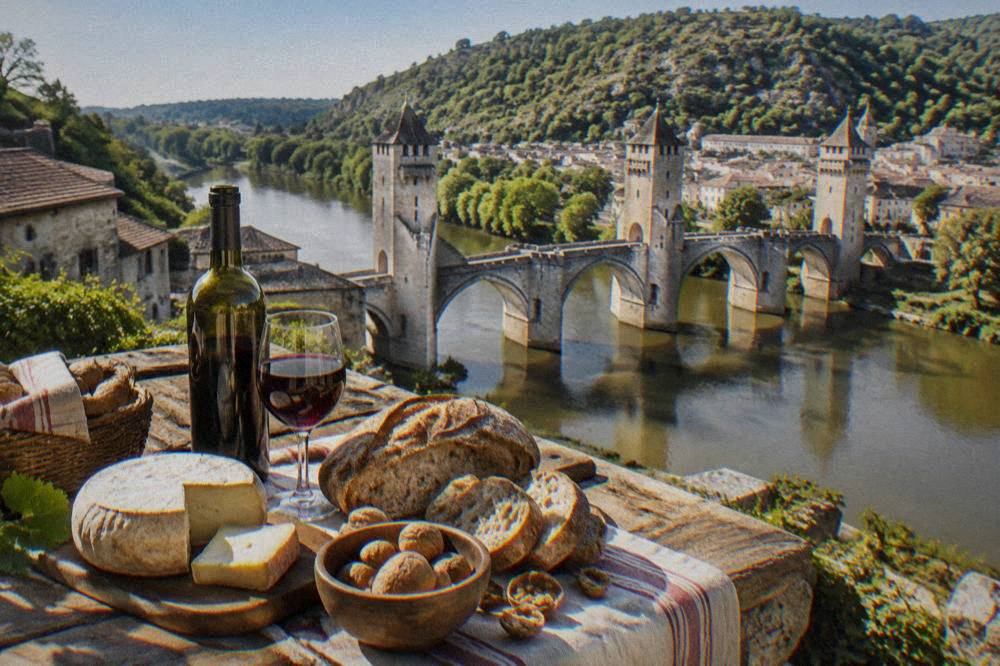
Eat the Lot's own larder: duck and goose in every form, walnuts, dark country bread, soft sheep cheeses and, above all, the town's dark red Malbec-based wine, which is the single taste the region is known for. The covered market is the best place to assemble a picnic, the old town's restaurants are the place for a proper midday meal, and the cellars in the hills are where the wine explains itself.
The southwestern French table that Toulouse eats from, cassoulet and charcuterie and confit, is the same table the Lot sets, and the market square in Cahors is where you see it raw: the ducks, the sausages, the cheeses, the fruit of the valley floor. Shop there for a picnic and eat it on the riverbank near the bridge, or take the market's output as your shopping list for gifts. Our pages on cassoulet and the Victor Hugo market in Toulouse cover the same food culture in the city.
The wine deserves its own paragraph. Cahors' red is historically famous for its depth and darkness, built on the Malbec grape, and it is the reason visitors make the trip at all. In town, wine shops and bars pour a range of estates side by side, which is the efficient way to taste if you came by train. In the hills, the estates themselves receive visitors, and the tourist office in town can point you to which ones are open on your day. If you are driving, the tasting rule is the driver's rule: the passenger tastes, the driver drives.
One honest caution: this site does not rank restaurants, and any specific address's hours, prices and reputation change fast enough that a printed recommendation would be stale before it was read. The market and the town's posted menus are the reliable sources on the day. What you can plan is the shape of the meal: a long midday lunch, a walk to burn it, and a light evening back in Toulouse.
Should You Plan Your Own Trip Or Book A Guided Day Tour?
Plan it yourself if you want the wine route and the flexibility to linger, and book a guided day tour if you would rather not think about timetables, parking or opening hours at all. The self-planned day wins on freedom and on cellar time; the booked day wins on effort and commentary. Cahors itself is not currently covered by this site's roster of bookable day tours, so a guided day out of Toulouse means choosing one of the other destinations on offer.
That last point is worth being plain about. This site's tour roster, 50 verified products, includes day trips to Albi, Cordes-sur-Ciel, Carcassonne, Lourdes and the clifftop and cavern country, but no Cahors coach or minibus product. So the guided question for a Cahors day is really a question about alternatives: if a booked day matters to you, the roster's day trips run to other towns, and the trio below are the ones this site highlights for travelers weighing that choice.
For the self-planned Cahors day, the checklist is short. Book rail tickets ahead on the operator's site, check the market day and the bridge's visiting arrangements with the tourist office, reserve lunch if you are traveling in high season, and decide the wine question, in town or in the hills, before you arrive. That is the whole plan. Everything else is walking.
For travelers who want the city seen properly on a lighter budget of effort, the open-top minibus sightseeing tour with an audio guide loops Toulouse's main sights and works well on the day before or the day after a long excursion, pairing naturally with a day-trip rhythm:
And if the day's weather turns, or the Lot proves too far for your dates, the machine-animal attraction of Halle de la Machine on Toulouse's outskirts is the roster's most reliable bad-weather card, with an entry ticket that suits families especially.
Whichever way you build the day, the underlying advice is the same: leave early, eat well, walk the bridge at both ends of the day if you can, and let the Lot's slow rhythm do the rest. Cahors is not a town that rewards a stopwatch, and the travelers who enjoy it most are the ones who arrive with a loose plan and a long lunch reservation.
Common Questions About A Cahors Day Trip
Quick answers to what planners ask most about a Cahors day out from Toulouse.
Is Cahors worth a day trip from Toulouse?
Yes, if you want a slow, food-and-stones day in a different register from the city: a walkable old center, a famous fortified bridge on the river, and the Lot's dark red wine. It suits travelers who enjoy lingering over lunch more than those who want a dense checklist of sights.
How do you get from Toulouse to Cahors without a car?
Trains and roads both connect the two, and the rail option is the natural car-free choice, with the town center walkable once you arrive. Check current timetables and fares on the operator's own site, since schedules and prices change by date and season.
What is Cahors famous for?
The town is known for its fortified bridge with three towers, its old center inside the river loop, and above all its dark red Malbec-based wine, one of the historic reds of southwestern France. The surrounding Lot valley adds clifftop villages and vineyard country.
How many days do you need for Cahors?
One day covers the old town, the bridge and a tasting. Two days let you add the valley loop, with villages such as Saint-Cirq-Lapopie and cellar visits in the hills, at a pace the region is actually built for.
When is the best month to visit Cahors?
June and September balance warmth against rain and crowds, according to the Meteo-France 1991-2020 normals for the region: July is the sunniest month at 258.6 hours but averages 11.5 days above 30C, while May, the wettest month at 73.6 mm, brings the valley at its greenest.
Can you taste Cahors wine without driving?
Yes. Wine shops and bars in the old town pour several estates side by side, which is the efficient car-free way to taste, and you can buy bottles to carry home. Save the cellar visits in the hills for a day when someone else is driving.