Castres
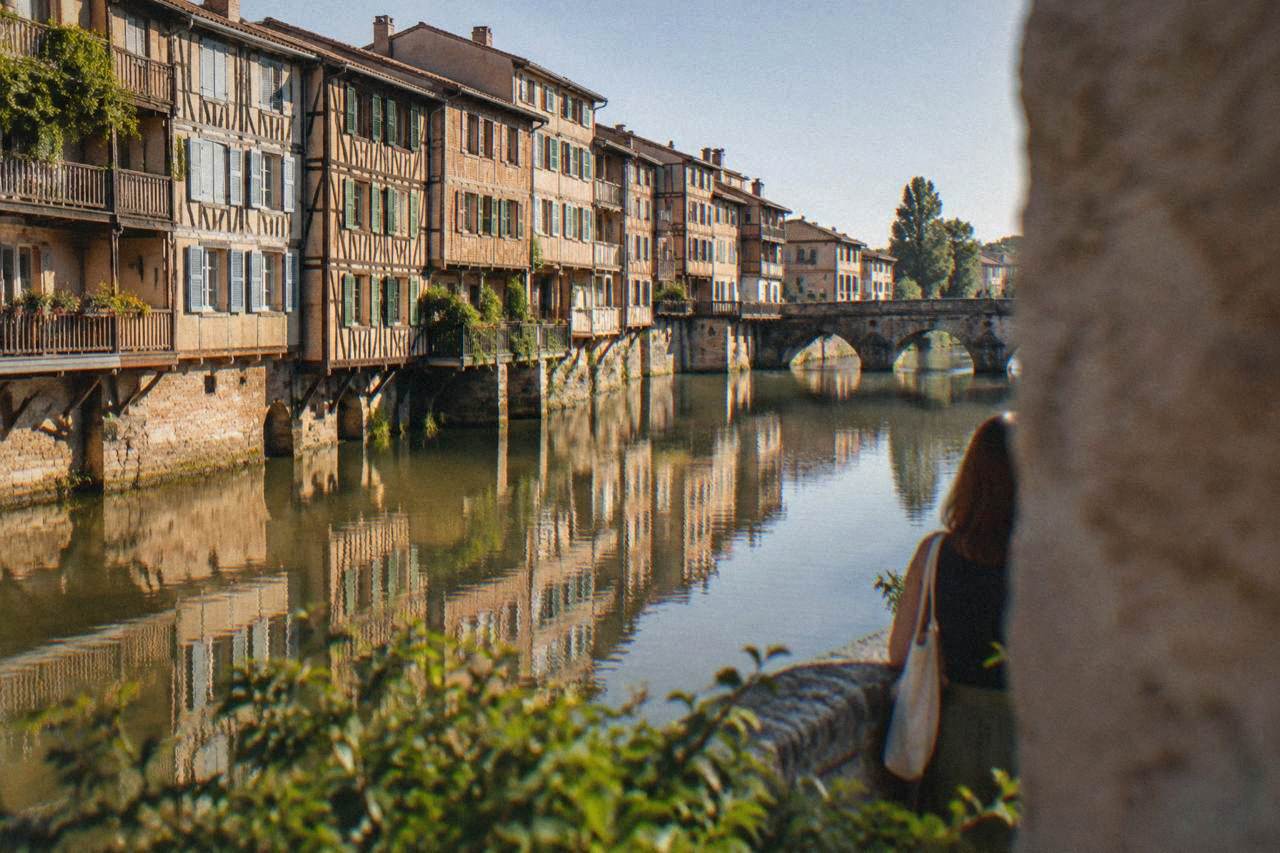
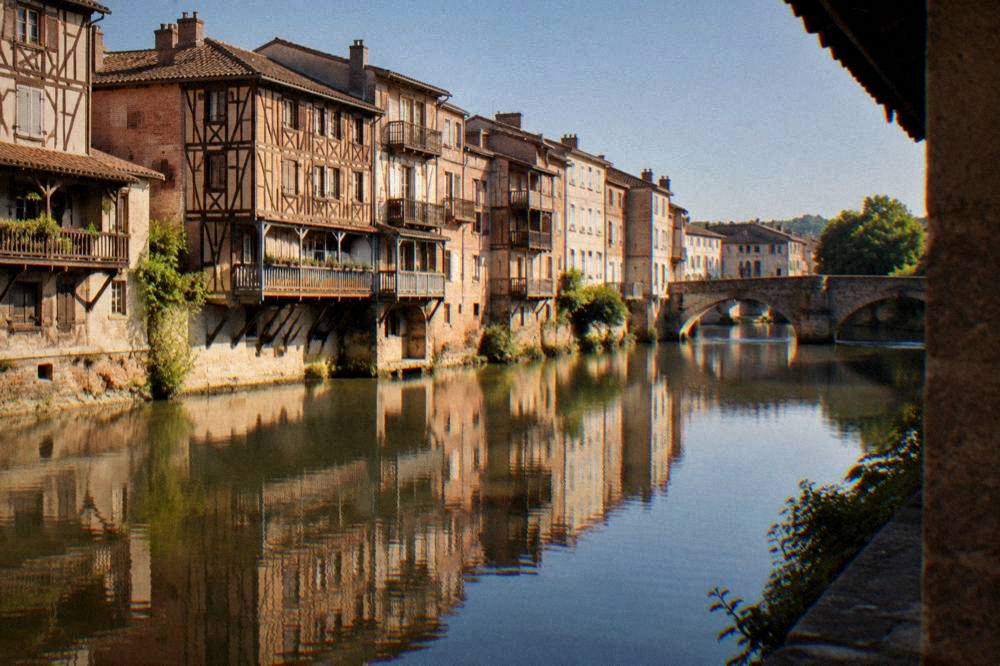
Castres, reached from Toulouse in the Occitanie region of southwestern France, is a half-timbered river town whose tannery houses stand over the water on wooden piles, a short and simple day trip from the pink city for travelers who want a smaller, quieter alternative to the big-name destinations.
Short answer
Castres is a compact river town east of Toulouse, reached by a direct train from Toulouse-Matabiau. The houses on the Agout, the Goya museum in the former bishop's palace and a relaxed old center are the whole appeal: it is a half-day of wandering, not a checklist of monuments.
Toulouse, the pink-brick "La Ville Rose" on the Garonne in the Occitanie region of southwestern France, sits within easy reach of a string of smaller towns that reward a day away from the city, and Castres is one of the quietest and most photogenic of them. The town is known above all for the rows of half-timbered houses that line the Agout river, former tannery workers' homes that stand on wooden piles with their upper floors hanging directly over the water. This guide lays out what a Castres day trip involves in practice: how the journey works, what there is to see once you arrive, when to go, and how the town compares with the other day trips you could take from Toulouse instead.
One honest note on scope before the practical detail. The figures in this article that come from primary sources concern Toulouse itself: transport fares, the city's climate record, the tourist office's Pass Tourisme and the airport. For Castres' own opening hours and admission prices, the town's own tourism pages are the place to confirm before you travel, because those details change and this site does not print a number it cannot source. What follows is planning guidance built on what is documented, plus a clear framework for the rest.
Where Is Castres And Why Do Day Trippers Go There?
Castres lies east of Toulouse on the Agout river, in the Tarn department of the Occitanie region, and its draw is concentrated in one riverside stretch: the half-timbered tannery houses over the water, a compact old center around them and the Goya museum in the former bishop's palace. It is a town for slow looking rather than monument-hunting, and that is exactly why it works as a day trip.
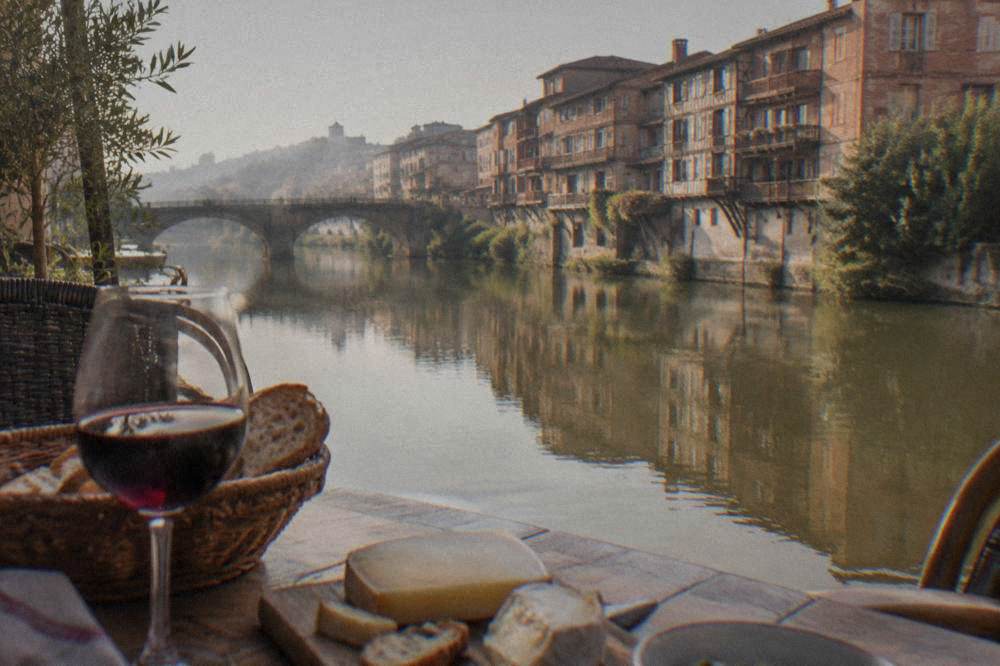
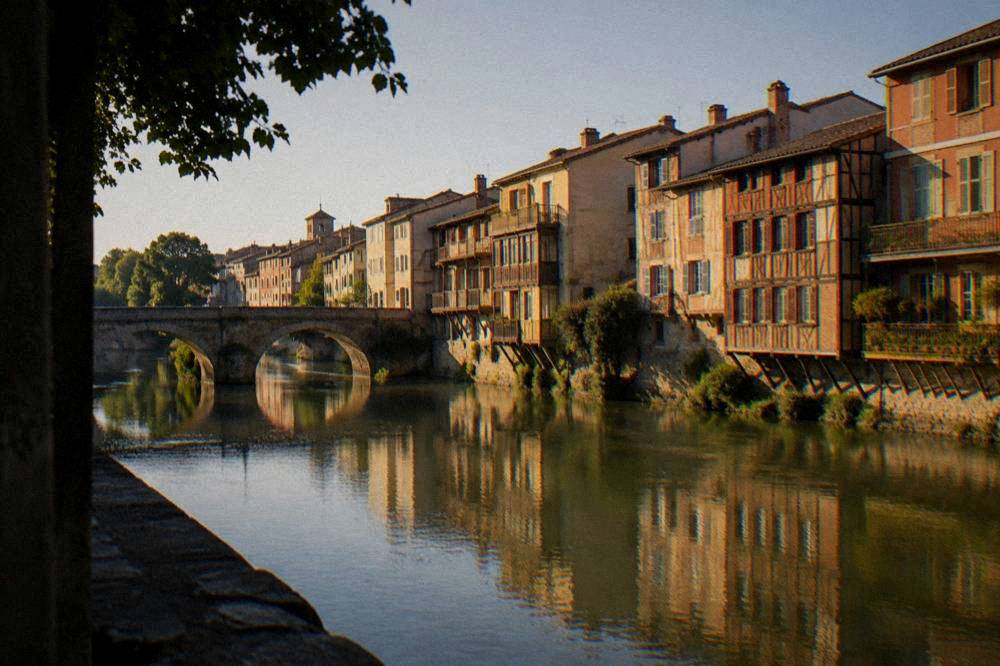
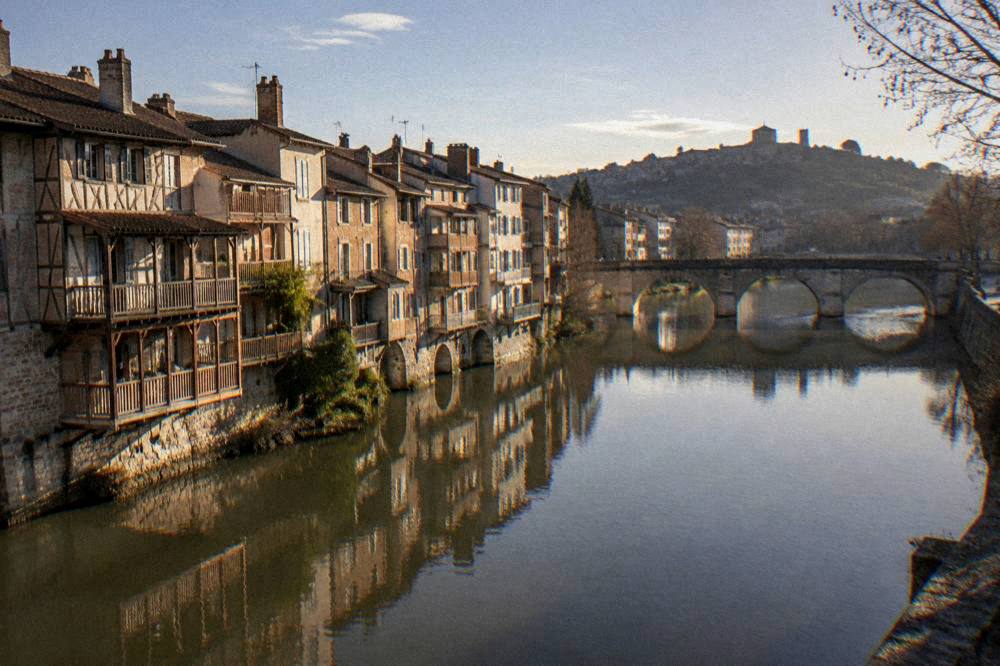
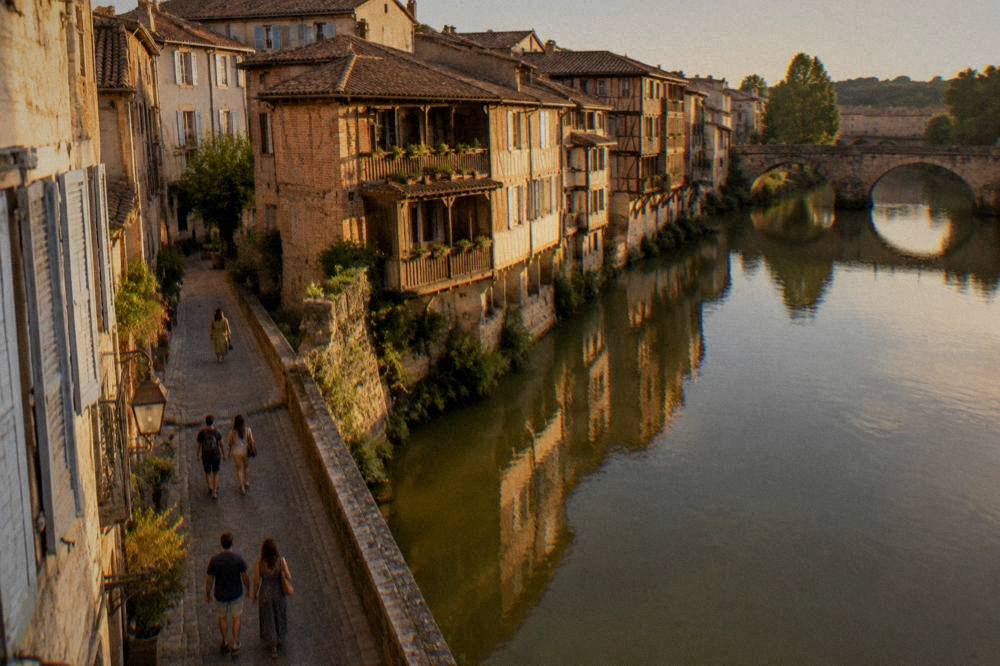
The town's fame rests on a single image: pastel-colored timber houses, their reflections doubled in the slow green water of the Agout, with laundry-windowed upper floors jutting toward the opposite bank. The houses belonged to the tanners who worked the riverbanks, and the quarter they left behind is small enough to walk end to end in well under an hour. Photographers arrive early for the calm water, and by late morning the riverside is simply a pleasant place to be rather than a sight to tick off.
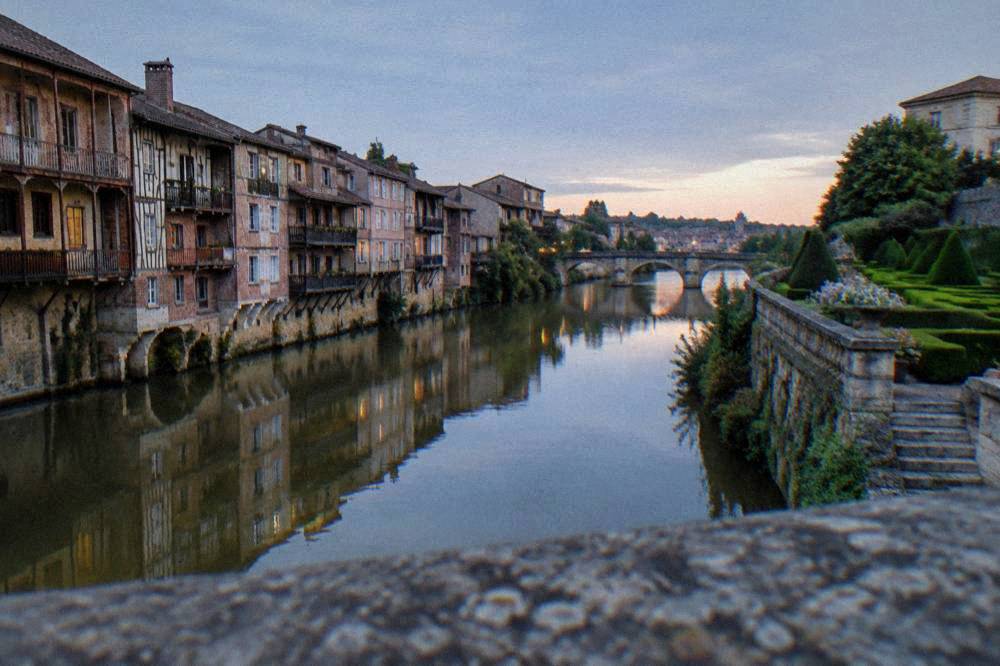
The second reason people make the trip is the Goya museum, installed in the former bishop's palace, a riverside building whose formal garden terraces step down to the water. The collection's Spanish paintings are the anchor, and the palace itself, with its clipped parterre and stone balustrades, is as much the attraction as what hangs inside. As with every museum detail on this page, confirm current hours and admission on the museum's own site before you go.
Beyond those two, Castres is a working town with markets, cafes and a rugby culture that matters a great deal locally. Travelers who arrive expecting a second Carcassonne, a walled citadel with a scripted route, will be disappointed; travelers who want a low-stakes day of riverside wandering, a museum and a long lunch will not. For a wider framing of the region's day-trip options, the Toulouse Travel Guide day-trips section covers the full spread, and the Albi day trip guide is the natural companion read, since Albi and Castres sit in the same department and can even be discussed together when planning a Toulouse-based week.
How Do You Get From Toulouse To Castres?
The simplest way to reach Castres from Toulouse is a direct regional train from Toulouse-Matabiau station, a journey that needs no car and drops you within reasonable walking distance of the old center. Driving is the alternative, and it is the better choice only if you want to chain Castres to other Tarn stops in one day. For a single-destination day trip, the train is the lower-friction option.
The train is the option this site can recommend without hedging. Trains run from Toulouse-Matabiau toward Castres, and the Toulouse train station guide explains how the station itself works: the entrance off the main forecourt, ticketing, and how the metro connects the station to the rest of the city. Because regional services vary by day and season, check the current timetable on the operator's own site for your travel date rather than relying on any fixed schedule printed anywhere online, including here.
Driving gives you freedom but also parking, and this site has no verified parking detail for Castres, so nothing is claimed here. What can be said is the general shape of the decision: the train removes navigation, parking and the question of a designated driver at lunch, which in a town whose restaurants pour local Gaillac wine is not a small consideration. The Gaillac wine route guide covers that wine country, which lies in the same broad area west and north of Castres.
Before leaving Toulouse, get your local transport sorted. The Tisseo network's official catalogue gives the fares, and they are worth knowing even for a day tripper, because you will likely use the metro to reach Matabiau:
| Tisseo ticket | Price |
|---|---|
| Single trip | EUR 1.90 |
| Single trip bought on board | EUR 2.50 |
| 10 trips | EUR 16.00 |
| Day pass | EUR 7.20 |
| 3-day pass | EUR 14.30 |
Note that there is no 2-day pass in the catalogue, so for a stay of two or three days the 3-day pass at EUR 14.30 is the multi-day option the network actually sells. The airport single, covering the Tisseo network plus the airport shuttle, is EUR 9.50.
If you are staying several days and doing city sightseeing around your day trips, the tourist office's Pass Tourisme changes the arithmetic: EUR 26 for stays of one to three days, paying off from the third activity, with an optional EUR 10 add-on for ten public-transport trips. The Pass Tourisme guide breaks down when it is worth it.
Guided options exist too, if you would rather someone else handle the day. A coach-based excursion removes the timetable puzzle entirely, and the pairing of guided transport with free time suits travelers who want the destination without the logistics:
What Are The Best Sights In Castres?
The essential sights are the riverside tannery houses on the Agout, the Goya museum in the former bishop's palace with its terraced garden, and the old center's streets and squares between them. Everything sits close together, so the sensible plan is one slow loop: river, palace garden, museum, then the old streets, with a market stop if your day coincides with one.
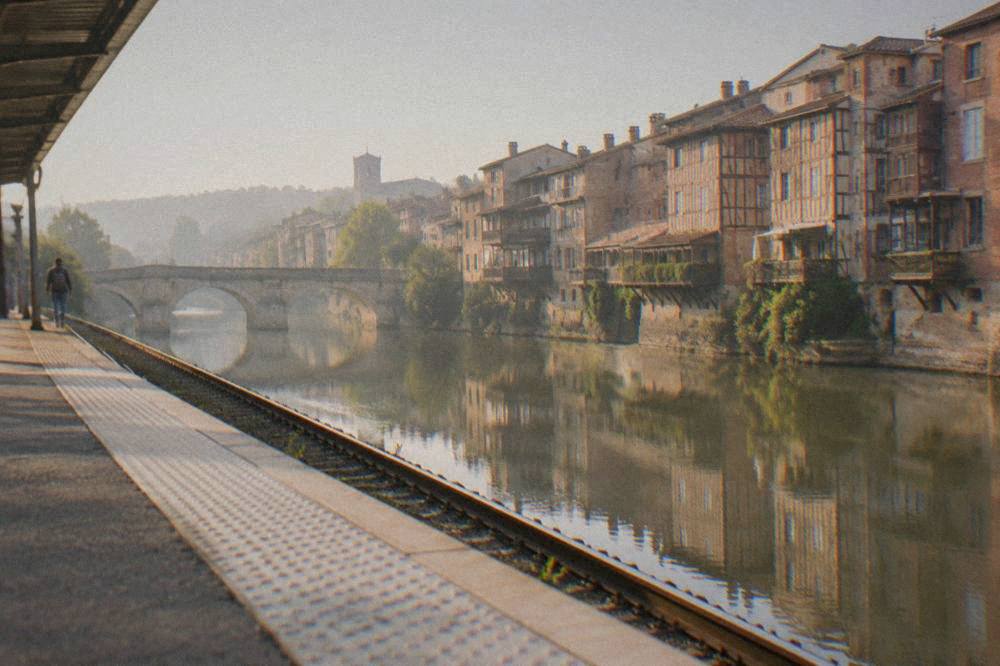
Start on the river. The tannery houses are the image Castres is known for, and they are best seen from the opposite bank or from one of the bridges, where the full row of overhanging facades reflects in the Agout. Early morning gives the calmest water and the fewest people in frame; midday light flattens the colors. There is no ticket, no queue and no route: the riverfront is simply there, and it costs as long as you choose to give it.
The former bishop's palace comes next. The building's garden, a stepped terrace of clipped box and gravel facing the water, is the town's most composed view, and the Goya museum inside it holds the Spanish collection the town is known for. Museum hours and admission change; the museum's own site is the reference. As a rule of thumb for French municipal museums in this region, the Couvent des Jacobins in Toulouse, for comparison, charges EUR 5 normal admission and is free on the first Sunday of the month except when a temporary exhibition is on, but that rule is stated for the Jacobins only and should not be assumed for Castres.
From the palace, wander. The old center around the river is a grid of narrow streets with shuttered townhouses, small squares and the usual complement of cafes, and the pleasure of it is aimlessness rather than any single address. Castres' covered market hall is the food stop if your day falls on a market morning; this site names no specific Castres restaurant, price or ranking, because none is verified here, and the honest advice is to follow the local lunch crowd.
For context on what a market town visit involves, the Toulouse markets guide explains how French market culture works, and the Victor Hugo market in Toulouse is the big-city version of the same instinct. If a guided food walk is more your speed, one exists for the capital of the region:
What About Lunch And Local Food In Castres?
Plan lunch around whatever the market and the old-town kitchens are serving rather than a named address: this site publishes no verified Castres restaurant, price or ranking, so the honest guidance is structural. Eat where locals are eating at 12:30, expect the regional staples of the Tarn and southwest France, and treat lunch as the fixed point of the day around which everything else flexes.
The Tarn is cassoulet country in the broad regional sense, and the cassoulet guide covers that dish in full, including the local debates about it that no visitor should wade into unarmed. The Toulouse food guide covers the wider regional pantry: the sausage that carries the city's name, the duck and goose preserves of the southwest, and the cheeses and wines that surround them. In Castres the same instincts apply at one remove: market produce, preserved meats, and a bottle from the nearby Gaillac vineyards if the restaurant's list runs local.
Timing matters more in France than visitors expect. Lunch service in smaller southern towns starts around noon and winds down by mid-afternoon, and a restaurant that looked open at 3 p.m. may not be serving. The same rhythm governs shops: many close for a midday break, which is a good reason to structure the day as sights in the morning, a long lunch, and the river again after. If you want the market rather than a restaurant, confirm the market day for your date of travel on the town's own tourism pages before committing the morning to it.
For a taste of the same food culture with a guide attached, back in Toulouse, a market-based walking tour with tastings is the structured version of the meal you would otherwise improvise:
If a full guided day out of the city is on your shortlist as well, the organized options below are worth a look before you lock in your Castres plans, since free cancellation up to 24 hours ahead keeps the decision reversible.
When Is The Best Time Of Year To Visit Castres?
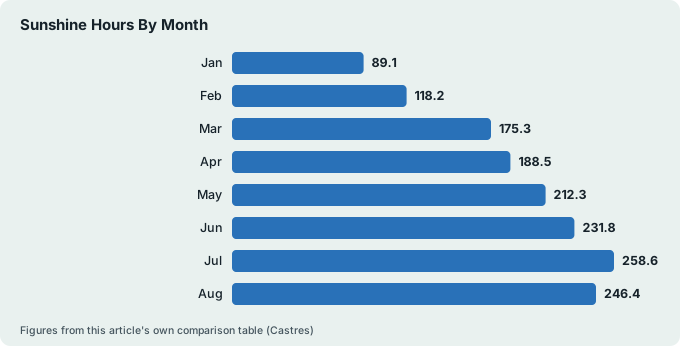
The best months for a Castres day trip are late spring through early autumn, with the riverfront at its best in warm, dry weather; Meteo-France's 1991-2020 normals for Toulouse-Blagnac, the nearest verified climate record, show July as the sunniest month at 258.6 hours and May as the wettest at 73.6 mm, so June offers the strongest mix of long days and lighter rain. Winter trips work, but they are indoor-led.
The climate record this site holds is for Toulouse-Blagnac, and Castres' own numbers are not in it, so treat the following as the regional baseline rather than a Castres-specific forecast. The annual picture at the verified station: a mean daily maximum of 18.8C, a mean daily minimum of 9.6C, 627 mm of rain across 95.8 rain days, and 2,075.1 hours of sunshine. The surprise in the data, and the detail that runs against visitors' assumptions, is that the wettest month is May, not a winter month: May averages 73.6 mm, ahead of April at 65.2 mm and June at 64.2 mm, while February is the driest at 37.2 mm.
| Month | Mean temp C | Rain mm | Sunshine hours |
|---|---|---|---|
| Jan | 6.3 | 52.5 | 89.1 |
| Feb | 7.1 | 37.2 | 118.2 |
| Mar | 10.3 | 45.3 | 175.3 |
| Apr | 12.7 | 65.2 | 188.5 |
| May | 16.4 | 73.6 | 212.3 |
| Jun | 20.3 | 64.2 | 231.8 |
| Jul | 22.6 | 40.1 | 258.6 |
| Aug | 22.8 | 44.6 | 246.4 |
| Sep | 19.3 | 45.7 | 210.1 |
| Oct | 15.3 | 54.3 | 155.2 |
| Nov | 9.9 | 55.0 | 99.9 |
| Dec | 7.0 | 49.3 | 89.7 |
What the table means for planning. July and August are the sunniest and warmest months, with 11.5 and 11.3 days a year above 30C respectively falling in those two months, and the record high at the station, 42.4C on 23 August 2023, is a reminder that summer heat here can be serious. June delivers nearly the same sunshine as July with fewer extreme days. The shoulder months, September and October, are the connoisseur's pick: 210.1 and 155.2 hours of sunshine, mean temperatures of 19.3C and 15.3C, and rain that is no heavier than spring's.
For a full seasonal breakdown, see the Toulouse weather guide and the best time to visit Toulouse guide. If your trip falls in the colder months, the rainy day in Toulouse guide is the companion piece: a wet-weather Castres day pivots to the Goya museum and long lunches, and the riverside houses photograph well under grey skies even when the terraces close.
How Does Castres Compare With Other Day Trips From Toulouse?
Castres is the choice for a quiet, low-commitment river town with one strong museum and one unforgettable view, while the bigger-name day trips from Toulouse each answer a different question: Carcassonne for the medieval spectacle, Albi for the brick cathedral and museum, Cordes-sur-Ciel for the hilltop village, and the Gaillac route for wine. Pick by what kind of day you want, not by ranking.
The honest comparison is by day-shape. Carcassonne is the heavyweight: a full walled citadel, a UNESCO-listed site, and a day that fills itself. The Carcassonne day trip guide covers it, and a coach excursion with audio guide is the low-effort version. Albi, covered in the Albi guide, pairs a monumental brick cathedral with a major art museum, which makes it the closest structural cousin to Castres: museum plus old center plus a short walk between them. Cordes-sur-Ciel, in the Cordes-sur-Ciel guide, is the hill-village experience, all climb and view.
| Day trip from Toulouse | What it answers best | Character of the day |
|---|---|---|
| Castres | Riverfront calm and one strong museum | Slow, photographic, low-stress |
| Carcassonne | Medieval citadel spectacle | Big, busy, unmissable |
| Albi | Brick cathedral plus art museum | Cultural, walkable, structured |
| Cordes-sur-Ciel | Hilltop village views | Scenic, physical, compact |
| Gaillac wine route | Vineyards and tastings | Rural, leisurely, driver-dependent |
Castres loses to those destinations on monument density and wins on tranquility. It is also the one to choose when the forecast is mixed rather than bad: the riverside houses need only dry spells, the museum absorbs a wet hour, and nothing in the town requires a ticketed time slot. If you are traveling without a car and want the simplest possible day, the train-and-wander shape of a Castres trip is hard to beat.
One pairing worth considering if you have more than a single day: the region's spiritual destinations. The Lourdes day trip guide covers the sanctuary town to the south, and a guided spiritual getaway from Toulouse, which includes the grotto and basilica, exists for travelers who want that journey organized end to end; you can Check availability on the operator's live listing. It is a different mood entirely from Castres, but both trade on quiet rather than spectacle.
What Should A One-Day Castres Itinerary Look Like?
A one-day Castres itinerary is a single loop: reach the river by late morning, walk the tannery-house stretch and the bridges while the light is good, take the bishop's palace garden and the Goya museum around midday, have a long regional lunch, then give the old center's streets the early afternoon before returning to Toulouse. Nothing needs pre-booking except, on some days, the museum.
The morning is the town's best hours. Arrive, drop toward the Agout, and walk the riverbank first, because the reflections are the sight and the light before noon is kindest to them. Cross at least one bridge: the view changes with every angle, and the full row of houses reads differently from mid-river. If your day coincides with a market morning, fold the market in before the museum, and buy whatever needs eating that day.
Midday is the palace. The garden terraces take twenty unhurried minutes, the museum as long as the collection holds you, and both sit within a minute of the river. Lunch follows, and in a town of this size the walk between museum and restaurant is trivial. Give the old center the early afternoon: the streets behind the river, the squares, the shops that reopen after the midday break. Finish back at the water for a last look, because the houses are worth a second pass in different light.
For travelers who prefer their city days guided rather than improvised, the same loop logic exists in Toulouse itself with a professional at the front:
And if the day trip has sharpened your appetite for the pink city rather than exhausted it, the one day in Toulouse guide and the 3 days in Toulouse guide show how the city itself fills a longer stay.
Common Questions About Castres
Quick answers to what planners ask most about a Castres day trip from Toulouse.
Is Castres worth a day trip from Toulouse?
Yes, for travelers who want a quiet river town rather than a monument circuit. The half-timbered houses over the Agout, the bishop's palace garden and the Goya museum make a satisfying single loop. Travelers who want a walled citadel or a hilltop village should pick Carcassonne or Cordes-sur-Ciel instead.
How do I get to Castres from Toulouse without a car?
A direct regional train from Toulouse-Matabiau is the no-car option, and the metro reaches Matabiau on the Tisseo network, where a single trip costs EUR 1.90. Check the operator's timetable for your travel date, because regional services vary by day and season.
What is Castres famous for?
The town is famous for its riverside tannery houses, pastel half-timbered buildings standing on piles over the Agout, and for the Goya museum in the former bishop's palace, which holds a notable Spanish painting collection. It is also a rugby town with a strong local identity.
Can you combine Castres and Albi in one day?
Both towns are in the Tarn, so the pairing is discussed often, but doing both justice in one day by public transport is tight. A more relaxed plan is one town per day, with Albi's brick cathedral and museum on one day and Castres' riverfront on the other. Confirm train connections for your date before committing.
What is the best month to visit Castres?
June is the strongest single month on the regional climate record: 231.8 hours of sunshine at the Toulouse-Blagnac station against 64.2 mm of rain, with fewer extreme heat days than July or August. September is the connoisseur's alternative, with 210.1 hours of sun and a 19.3C mean.
Do I need to book anything in advance for Castres?
Generally no: the riverfront and old center are open streets, and the only ticketed element is the Goya museum, whose hours and admission should be confirmed on the museum's own site before you travel. A table for a long lunch is the one reservation worth making on a busy day.
Castres will never compete with the walled cities and hilltop villages for drama, and that is precisely its use in a Toulouse-based trip: a day of river light, one good museum and a long lunch, reached by train and walked at whatever pace the morning allows. Plan the transport on the operator's own timetable, confirm the museum before you go, and let the Agout do the rest.