Why Is Carcassonne So Famous?
Why the walled city of Carcassonne, a short train ride from Toulouse in southwestern France, became one of the most famous medieval sites in Europe, and how to visit it.
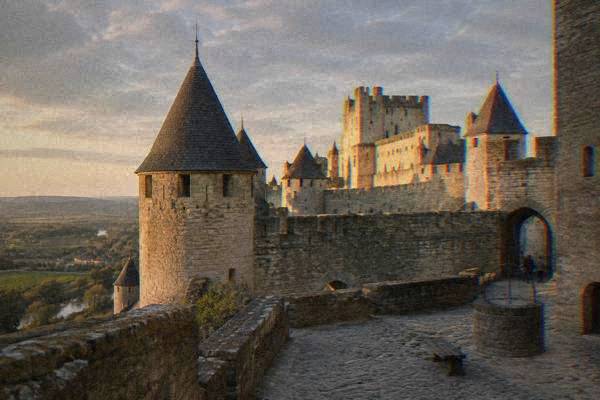
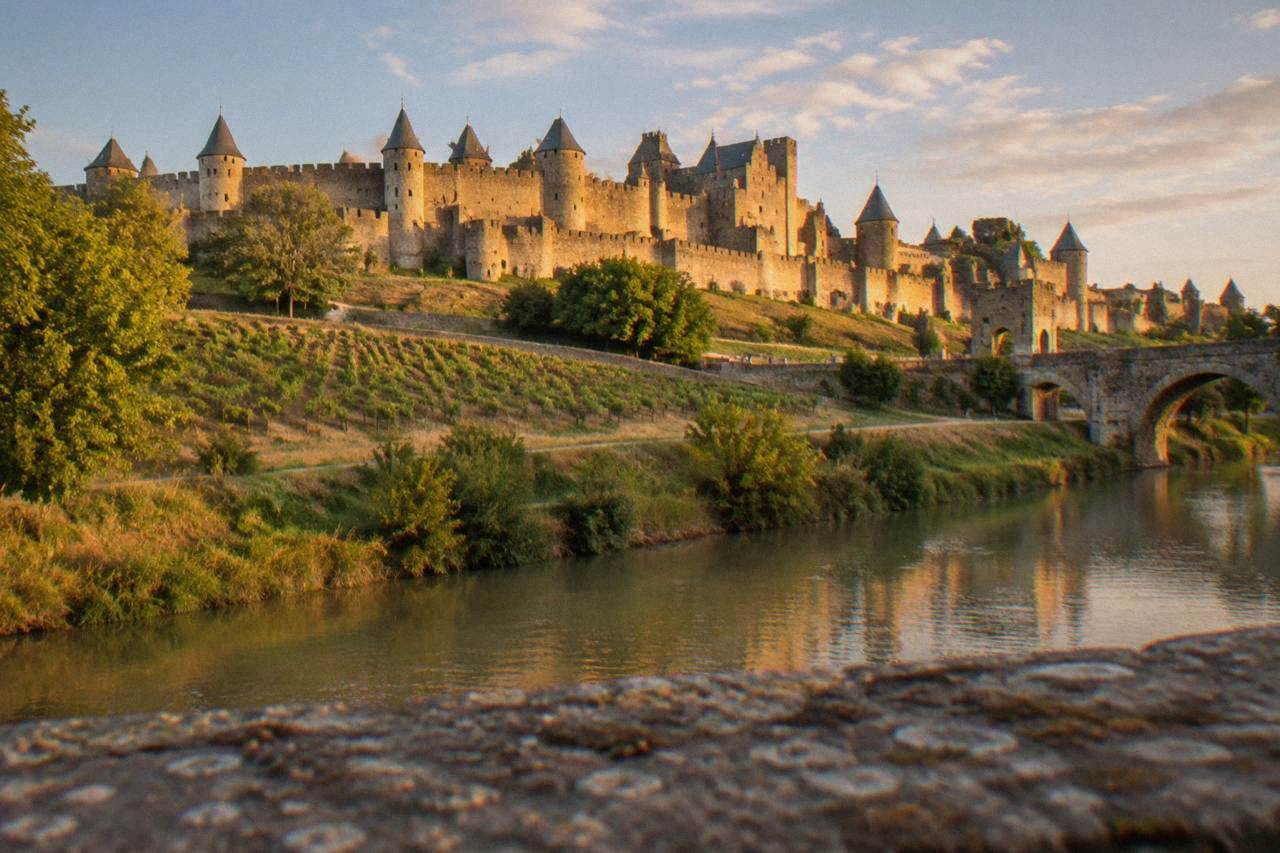
Carcassonne, in the Occitanie region of southwestern France, is famous for one of the most complete walled medieval cities anywhere in Europe, and it sits close enough to Toulouse, the pink-brick city on the Garonne, that visiting it is a standard day trip for anyone staying in the region. The Cité, as the fortified old town is known, is a double ring of ramparts studded with stone towers, enclosing a castle, a basilica and a lattice of cobbled lanes. Its silhouette, all grey stone and pointed roofs, has become one of the most reproduced images of medieval France. This page explains where that fame comes from, what nearly destroyed it, and how to see it from Toulouse without a car.
Why Is Carcassonne So Famous?
Carcassonne is famous because its Cité is a whole fortified medieval city, not a single castle: two concentric curtain walls, dozens of towers, a count's castle and a basilica all survive together on one hill, a short train ride from Toulouse. Few places in Europe kept a complete defensive ensemble of that scale, and its rescue from planned demolition turned it into a symbol of French heritage.
The fame rests on completeness. Where most medieval cities lost a gate here and a tower there to road-building and stone-robbing, Carcassonne kept its inner wall, its outer wall, the space between them and the buildings inside. Walking it today, you pass through the same gates that controlled entry centuries ago. The effect is less a ruin than a city that kept working, which is exactly what it was: a frontier stronghold, then a garrison town, then a poor neighborhood that happened to be surrounded by stone.
The second layer of fame is the rescue story. By the time demolition was seriously proposed, the Cité had fallen into disrepair, its walls crumbling and its commerce long moved downhill to the Bastide Saint-Louis on the plain below. A long restoration campaign, controversial in its own time for how much it rebuilt and reinvented, saved the ensemble instead. That controversy is part of the legend: the Carcassonne visitors photograph today is partly a reconstruction, and historians have argued about it ever since.
The third layer is literary and cinematic. The walls have featured in films, novels and legend cycles tied to the Cathar country of the region, and that romantic aura draws visitors who arrive knowing the image before they know the history. If you are curious about the screen side of that fame, this site answers it separately in what movie was filmed in Carcassonne.
A Double Ring Of Walls That Nearly Vanished
The Cité's structure is two full rings of fortifications, one inside the other, with a covered walkway between them, plus a castle built into the inner wall and a basilica at the heart of the enclosure. That double-envelope design is the technical reason the site reads as so complete, and it is why demolition, once proposed, would have erased something that could never have been rebuilt.
The outer wall comes first in the sequence visitors experience: you enter through a gate in it, cross the lists, the open strip between the two curtains, and only then reach the inner defenses. The lists are what make the place feel like a machine for war rather than a decorative backdrop. Towers along both rings are round on the outer line, and the whole circuit is walkable in sections, so a visitor can trace the defensive logic with their feet rather than imagining it from a diagram.
Inside, the Château Comtal, the count's castle, is itself a fortress within the fortress, with its own moat and its own wall. The Basilique Saint-Nazaire, the church at the center, carries stained glass and stone carving that draw visitors on their own account. Beyond the monuments, the lanes hold houses, shops and restaurants, which is why the question of whether you can sleep inside the walls is a real one; this site covers it in can you stay inside Carcassonne.
What the restoration debate means for a visitor is simple: go expecting a living, partly rebuilt monument rather than an untouched time capsule, and the place will exceed expectations. The towers were never meant to be pristine. They were meant to stand, and they do.
How To Visit Carcassonne From Toulouse
Carcassonne is an easy day trip from Toulouse: a direct train runs the route, and several organized options exist for travelers who prefer not to manage connections themselves. The walled city itself is compact and pedestrian, so a single day covers the walls, the castle and the basilica comfortably, and the main planning choice is simply how you get there.
For independent travelers, the train from Toulouse-Matabiau is the obvious option, a short direct ride with no changes. For anyone who would rather have transport, orientation and commentary handled together, a coach day trip with an audio guide runs from Toulouse; the operator's live listing carries the current schedule and price, and you can Check availability for your dates. This site also keeps a full planning page for the trip in its Carcassonne day trip guide.
| Option | What it involves | Best for |
|---|---|---|
| Direct train from Toulouse-Matabiau | A short direct ride, no changes, full freedom on arrival | Independent travelers |
| Coach day trip with audio guide | Round-trip transport from Toulouse plus recorded commentary | First-time visitors who want context |
| Self-drive | Your own car, your own timetable, stops en route possible | Groups and families |
One practical note: the Cité sits on a hill above the lower town, so arriving by any means ends with a climb. Once you are inside the walls, everything is on foot, and the question of how walkable the site really is has its own answer on this site in is Carcassonne a walkable city.
If you are weighing Carcassonne against other famous day trips from Toulouse, the honest comparison is that Carcassonne is the most visually dramatic of them, while Albi, with its brick cathedral and old bridge, is the closest rival. This site compares them in what is Albi France famous for.
What To See Inside The Walled City
The essentials inside the walls are the double rampart walk, the Château Comtal, the Basilique Saint-Nazaire and the gates themselves, especially the main entrance with its twin towers. A day is enough for all of it at a normal pace, and the views outward from the wall walks, over the lower town and the surrounding plain, are as much the attraction as the buildings.
| Sight | What it is | Good to know |
|---|---|---|
| Rampart walks | Circuit on and between the two walls | The outward views are the highlight |
| Château Comtal | The count's castle inside the inner wall | A fortress within the fortress |
| Basilique Saint-Nazaire | The principal church of the Cité | Noted for its stained glass |
| Porte Narbonnaise | The main gate of the outer wall | The classic photo approach |
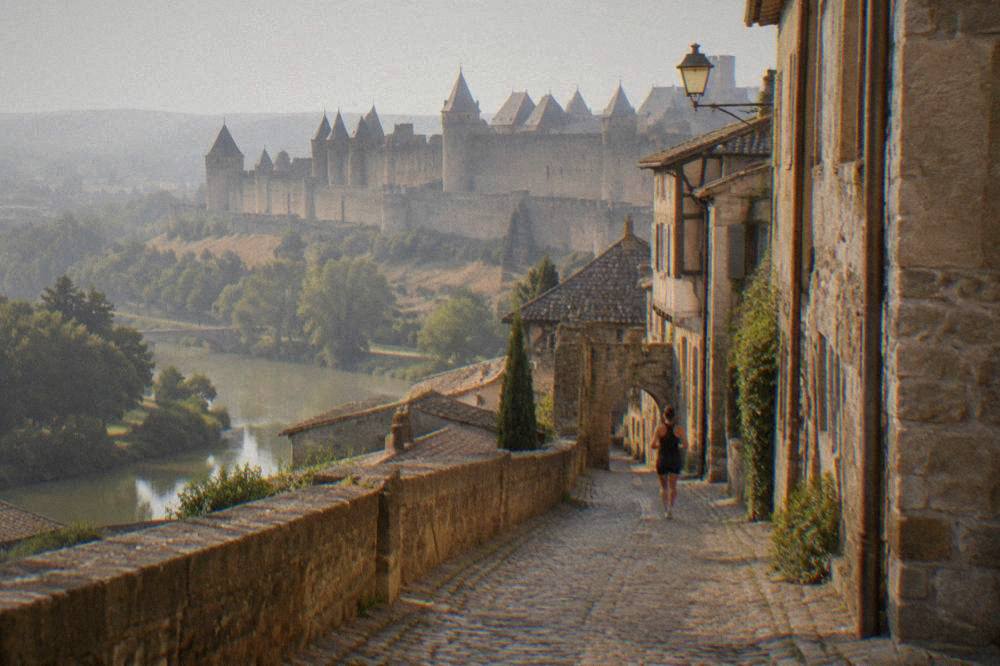
Food is part of the visit too. Carcassonne belongs to the cassoulet belt of the southwest, and the town claims its own place in that argument; this site covers the dish in detail in what exactly is a cassoulet and the local table in what food is Carcassonne famous for. Eating inside the walls costs more than eating in the lower town, which is a pattern rather than a rule, so check the menu before you sit down.
Legends, Films And The Canal Connection
Beyond the architecture, Carcassonne is famous for its legends, the Lady Carcas story among them, and for its place in the Cathar-country mythology of the region. Less obvious is the canal connection: the Canal du Midi, the UNESCO-inscribed waterway that begins near Toulouse, runs through Carcassonne on its way to the sea, tying the walled city to the same engineering landscape that made the region rich.
The Lady Carcas legend, in which a besieged princess tricks an army into retreat and then rings the bells, "Carcas sonne", is the kind of story every famous fortress ends up with, invented after the fact and loved anyway. The Cathar connection is heavier history: the region's medieval religious conflicts made these hilltop strongholds symbols, and Carcassonne's name recurs in every telling of that period.
The film history deserves its own mention because it feeds the fame directly: productions have used the walls as a stand-in for every imaginable medieval setting, and the site answers the specifics in what movie was filmed in Carcassonne France. If the fame has a single engine, it is that loop: the image circulates, the films borrow the image, and the films send more people to stand under the towers.
For a fuller weighing of whether the trip deserves its reputation, see is Carcassonne in France worth visiting, and for the castle-versus-castle question closer to Toulouse, what is the famous castle near Toulouse.
Common Questions About Carcassonne
Quick answers to what planners ask most about the walled city.
Why is Carcassonne so famous?
It is famous for being a complete walled medieval city, two full rings of ramparts with a castle and a basilica inside, a short train ride from Toulouse, and for the restoration campaign that saved it from demolition.
Can you stay overnight inside the walls of Carcassonne?
Yes, there is accommodation inside the Cité as well as in the lower town. This site covers the choice in its answer on staying inside Carcassonne.
Is Carcassonne walkable for visitors with limited mobility?
The Cité is pedestrian and cobbled, with climbs from the lower town and steps on the wall circuits. This site's answer on Carcassonne as a walkable city covers the details.
What food is Carcassonne famous for?
The town sits in the cassoulet country of the southwest, and the local table is covered in this site's answer on the food Carcassonne is famous for.
How do you get to Carcassonne from Toulouse?
A direct train runs from Toulouse-Matabiau, and coach day trips with audio guides operate from the city. The operator's live listing carries current schedules and prices.
For everything else on the region, from the walled city to the canal and the pink-brick streets of Toulouse itself, keep browsing Toulouse Travel Guide.