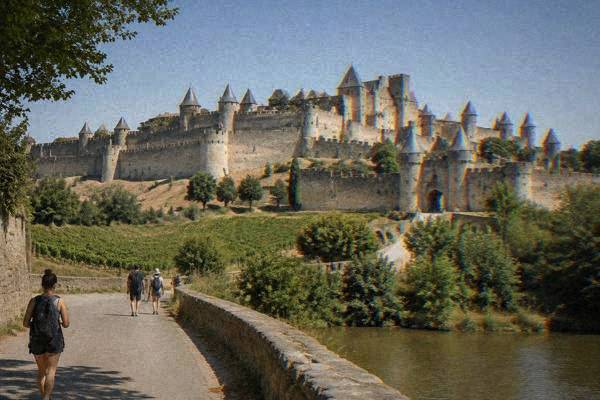
Is Carcassonne A Walkable City?
Yes, Carcassonne is a walkable city, and walking is the only way to see it. A practical guide to the medieval city's lanes, the flat Lower Town, and how to reach it from Toulouse.
Carcassonne, the fortified medieval city in the Occitanie region of southwestern France, sits a short train ride from Toulouse and draws day trippers by the coachload. The question that shapes every visit is a simple one: once you are there, do you need a car, a bus or anything with wheels at all? The answer is no, and this page explains exactly why, street by street, from the walled citadel on its hill down to the flat grid of the Lower Town.
Is Carcassonne A Walkable City?
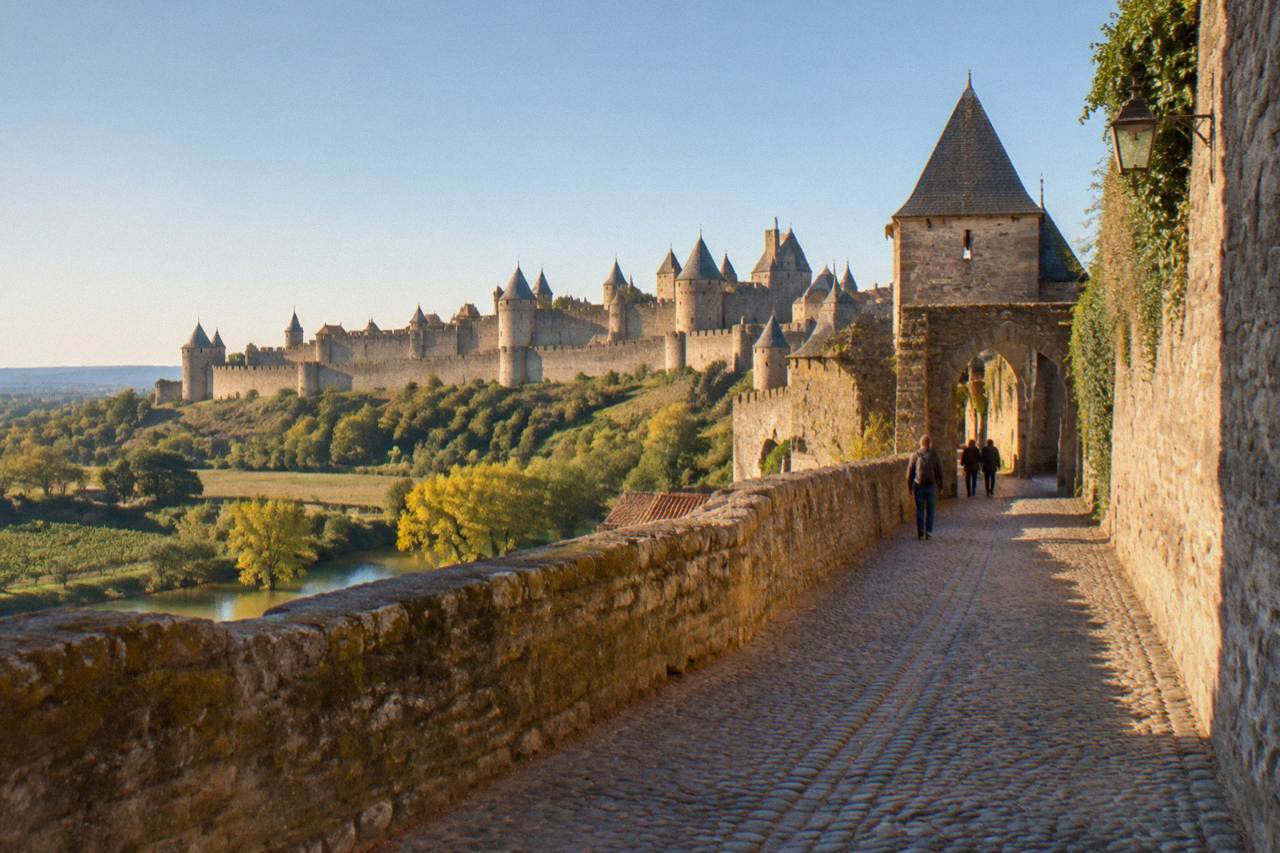
Yes, Carcassonne is a walkable city, and walking is the only sensible way to see it. The medieval walled city on its hill is closed to through traffic, and its lanes, ramps and rampart circuits exist for pedestrians alone. Across the river, the Lower Town is flat and compact, laid out on a grid you can cross on foot in minutes. Nothing a visitor comes to see requires a vehicle.
That walkability is not an accident of preservation. The walled city, the cite medievale, is a single continuous pedestrian environment: you enter through a gate, and from that moment every journey inside happens on foot. There are no through roads, no buses and no parking inside the walls worth planning around. The streets are narrow, cobbled and often stepped, which is wonderful for atmosphere and demanding on footwear.
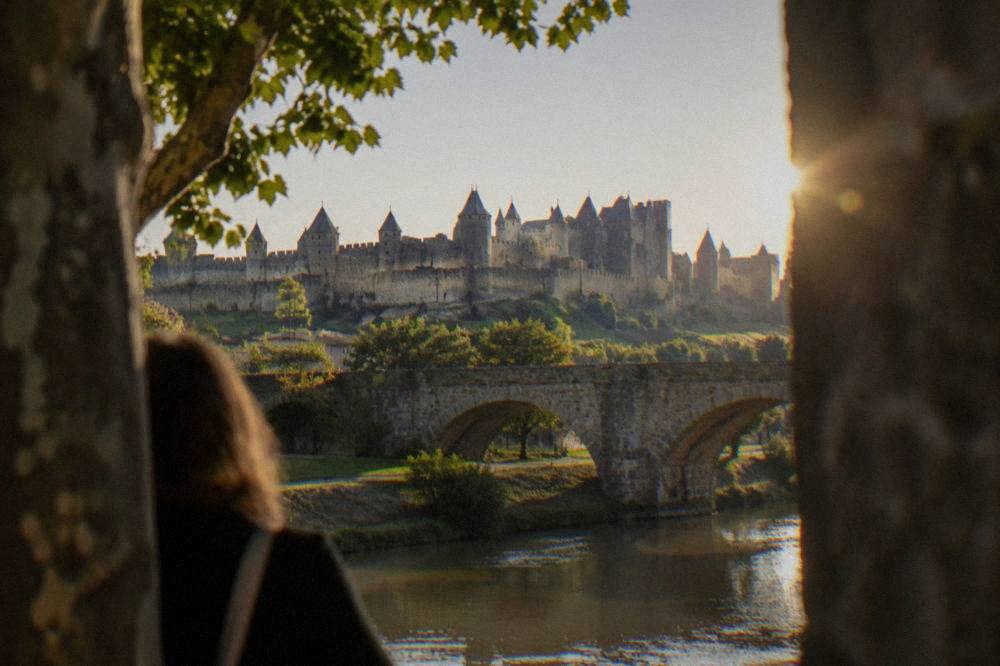
The Lower Town, the Bastide Saint-Louis on the west bank of the Aude, is the working half of the city where most residents live. It is flat, its squares and streets form a regular grid, and it connects to the walled city across the Pont Vieux, the old bridge that gives the classic postcard view of the fortifications. Walking from the Lower Town's central square up to the walled city's main gate takes a matter of minutes, though the climb is real: the cite sits on a promontory above the river, so the approach is uphill in one direction.
For context on how the city earned its fame, see why Carcassonne is so famous, and for the broader verdict on a visit, is Carcassonne in France worth visiting covers the case for and against.
How Walkable Is The Medieval City Compared With The Lower Town?
The medieval city is fully pedestrian but physically demanding, with cobbles, steps and slopes throughout, while the Lower Town is flat, shaded and easy but holds fewer of the headline sights. The two halves are connected by the Pont Vieux, a short walk apart. In practice you will spend most of your day on your feet inside the walls, so the walled city is where your shoes and your stamina matter.
Inside the walls, expect uneven stone underfoot almost everywhere. The main street, the rue Cros-Mayrevieille and its continuation the rue Saint-Louis, runs from the Porte Narbonnaise up the spine of the citadel, and it is the gentlest route. Side lanes drop away steeply toward the outer ramparts, and the rampart walkways themselves involve stairs, narrow passages and worn treads. Anyone with limited mobility will find parts of the interior genuinely difficult, and pushing a stroller means lifting it at intervals.
The Lower Town is the opposite. Its streets are regular, its pavements are ordinary city pavements, and its squares, the Place Carnot above all, are where locals sit at cafe tables. If you are staying overnight, this is also where most of the practical life of the city happens, a point covered in more depth in can you stay inside Carcassonne.
| Area | Terrain | What dominates | On-foot difficulty |
|---|---|---|---|
| Medieval city (east bank) | Cobbles, steps, slopes | Ramparts, gates, narrow lanes | Demanding, no vehicles |
| Pont Vieux | Flat bridge deck | The classic rampart view | Easy, a few minutes |
| Lower Town (west bank) | Flat grid | Squares, cafes, shops, markets | Easy, ordinary pavements |
| Approach roads to the gates | Uphill from the river | Views back over the walls | Moderate climb |
The split matters for planning. Give the walled city the morning, when the lanes are quieter and the heat has not built, and let the Lower Town absorb your lunch and late afternoon. The classic Cassoulet country lunch is its own reason to come down off the hill, and what food Carcassonne is famous for explains what to order.
How Do You Get From Toulouse To Carcassonne Without A Car?
You have two realistic car-free options: a direct train from Toulouse, which is a short ride with no timetable figure worth printing here, or an organized coach day trip with an audio guide. Both deposit you close enough to the walled city that everything after arrival happens on foot. Carcassonne is not a place you drive into and park inside; the visit begins when the wheels stop.
The train connects Toulouse with Carcassonne directly, and the station sits on the edge of the Lower Town, within walking distance of the Pont Vieux and the climb up to the walls. From the station your day is entirely pedestrian: across the bridge, up the hill, through the gate. Check the operator's own timetable for the current schedule rather than any figure quoted secondhand. Everything else covered here is indexed on Toulouse Travel Guide.
The coach alternative removes even the timetable work. The Carcassonne day trip by coach with an audio guide runs from Toulouse and handles the round trip in one booking, which is why it is this site's featured product for the question. You can read the full write-up on the Carcassonne day trip page or go straight to the operator: Check availability.
Want the round trip handled in one booking? Book a Carcassonne day trip by coach here.
If you are building a wider trip around Toulouse rather than a single dash to the walls, the planning math changes. A day trip works; two days lets you see the walled city at dawn and dusk, when the day crowds thin out, and the question of how long to give the region is covered in how many days is enough for Toulouse.
What Should You Wear For A Day Of Walking In Carcassonne?
Wear closed, flat shoes with real grip, because the medieval city's cobbles, steps and worn stone treads punish thin soles and heels. Dress for sun exposure on the ramparts and for shade in the lanes. Bring water, because the climb from the river is steady and the walled city sits exposed on its hill. Nothing about the terrain rewards anything you would be afraid to scuff.
The single most common mistake is footwear. The stones inside the walls are centuries of wear polished smooth in places, and when rain hits them they turn slippery. Sandals with smooth soles, dress shoes and anything with a heel all fail here. A broken-in pair of sneakers or light walking shoes solves the entire problem.
Weather planning comes next. The hilltop position means wind on the ramparts and sun on the open terraces, while the lanes below stay cool and shaded. Layers work better than a single heavy coat. In summer, go early: the lanes hold their heat, and the midday hours on the exposed walkways are the hardest part of the day on foot.
| Condition | What it does to the streets | What to do |
|---|---|---|
| Dry and warm | Cobbles firm, ramparts exposed | Sun hat, water, start early |
| Rain | Worn stones turn slippery | Grippy soles, avoid the rampart stairs |
| Cold and windy | Ramparts feel exposed, lanes sheltered | Layers, cover the ears on the walls |
| Peak season | Lanes crowded, slow walking pace | Enter at opening time, walk the walls first |
How Much Time Do You Need On Foot?
A focused half day covers the walled city's spine, the main gate and a stretch of ramparts, but a full day is the comfortable standard, because the Lower Town, the bridge and the walls each deserve separate time. Walking the whole citadel end to end takes minutes, not hours; what fills the day is looking, and the pace of looking is what you should plan around.
The walled city is small. Its lanes can be crossed on foot in a short time, and first-time visitors consistently underestimate how much of the day disappears into rampart views, gatehouses and side alleys anyway. The honest plan is a full day: walls in the morning, lunch in the Lower Town, and a second, quieter pass through the citadel in late afternoon when the coach groups have gone.
If Carcassonne is one stop on a Toulouse-based trip, the coach day trip is the format that fits: it compresses the journey and leaves the walking to you. Book it once your dates are firm, since day-trip seats are the thing that sells out around French school holidays.
Common Questions About Walking In Carcassonne
Quick answers to what planners ask most about seeing Carcassonne on foot.
Is Carcassonne a walkable city?
Yes. The medieval city is fully pedestrian, the Lower Town is flat and compact, and the two are a short walk apart across the Pont Vieux. No part of a standard visit requires a vehicle.
Can you walk all the way around the walls?
Sections of the ramparts are open as a walking circuit, with stairs and narrow passages along the way. Some parts of the fortifications are not publicly accessible, so a full loop of every tower is not possible on foot.
Is Carcassonne hilly?
The walled city sits on a hill above the Aude river, so the approach from the Lower Town is a steady climb. Inside the walls, lanes slope and steps appear throughout. The Lower Town itself is flat.
Is the medieval city suitable for wheelchairs or strollers?
Only in part. The main street from the Porte Narbonnaise is the most manageable route, but cobbles, steps and rampart stairs make much of the interior difficult for wheels. The Lower Town is the easier half of the city.
Where do you park if you arrive by car?
Parking sits outside the walls, and the visit proper begins on foot from wherever you leave the car. Visitors find the train or a coach day trip from Toulouse simpler than driving and parking altogether.
How long does it take to walk across the walled city?
The citadel is small enough to cross on foot in minutes along its spine. Most of the day goes into the ramparts, the gates and the side lanes rather than into covering distance.
The short version: pack the right shoes, give the city a full day, and let your feet do all of the work after the wheels stop. That is exactly how Carcassonne is meant to be seen, and the walk from the Pont Vieux up to the Porte Narbonnaise is the best first hour any visitor gets in the Occitanie region.