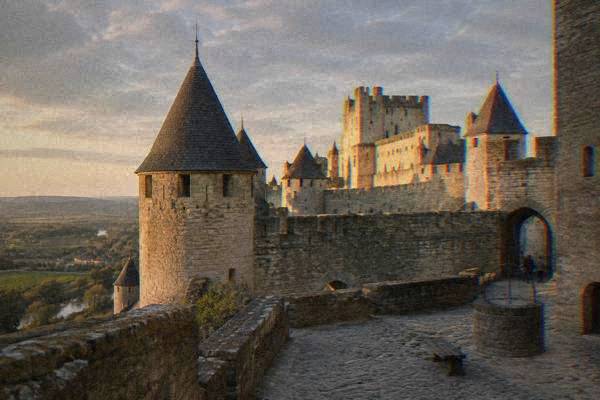
Can You Stay Inside Carcassonne?
Yes, you can stay inside the walled medieval city of Carcassonne, and this guide from the Toulouse Travel Guide explains how it works, what to expect, and how to plan it from Toulouse.
Yes, you can stay inside Carcassonne, and plenty of visitors do, because the fortified medieval city on the hill above the Aude river is not a museum shell but a functioning neighborhood with hotels, guesthouses, restaurants and residents. Most people who ask this question are planning a trip from Toulouse, the pink-brick city on the Garonne in the Occitanie region of southwestern France, and wondering whether the walled city empties at night or closes like an attraction. It does neither. The walls stay open, the streets stay public, and the experience of the place changes completely once the day-trip coaches have rolled back down the hill toward the station and the motorway.
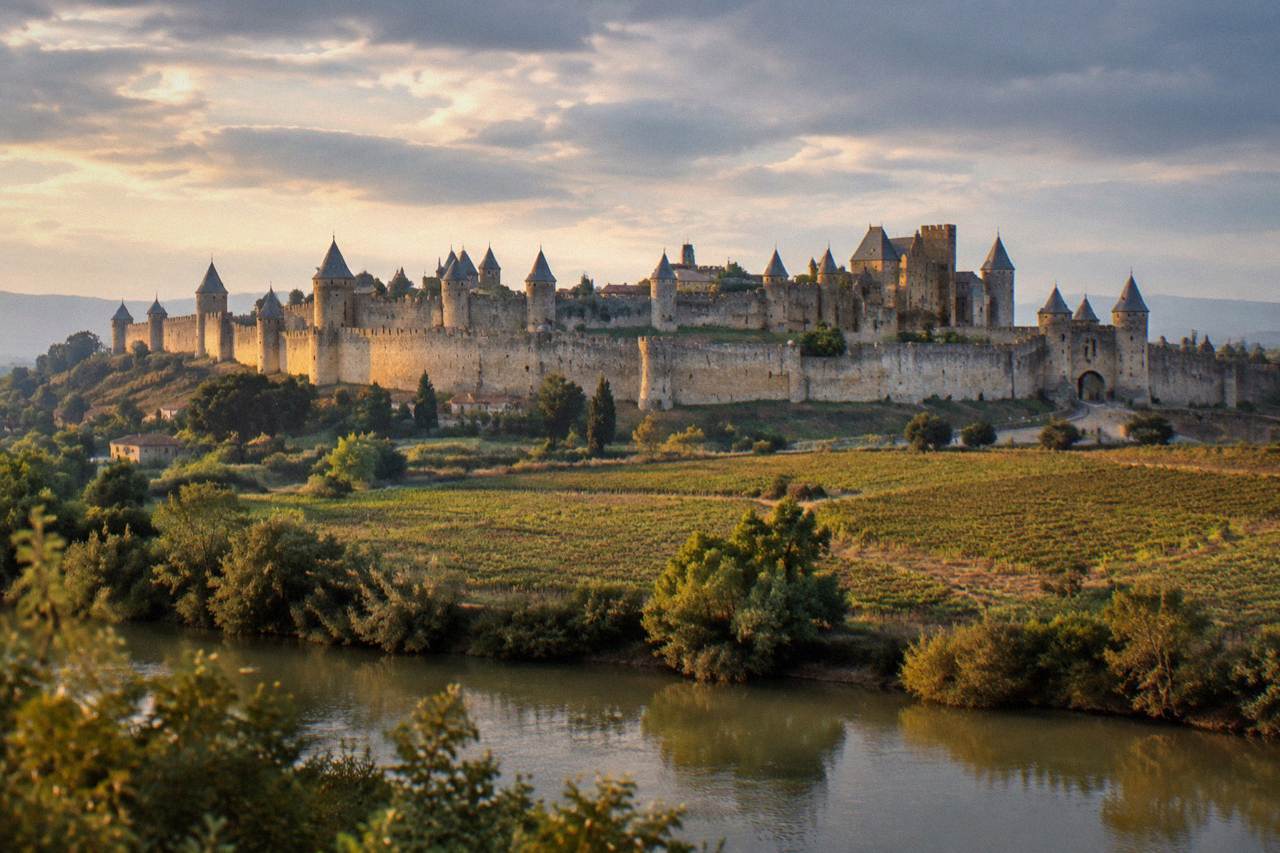
Can You Stay Inside Carcassonne?
Yes, you can stay inside Carcassonne, and the walled Cite medievale is a real residential and hospitality quarter rather than a gated monument. Hotels and guesthouses operate inside the fortifications, the streets are public at all hours, and there is no ticket for the walls themselves. After dark the atmosphere shifts completely, because the day visitors have left and the floodlit ramparts belong to whoever is still up there.
The distinction that matters when planning is between the Cite, the double-walled hilltop city with its fifty-odd towers, and the Bastide Saint-Louis, the flat grid of lower town across the river where most of Carcassonne's everyday commerce actually happens. Sleeping inside the Cite puts you within a two-minute walk of the ramparts, the Chateau Comtal and the basilica, in a stone warren that quiets down dramatically after the last excursion bus leaves. Sleeping in the lower town puts you closer to the train station, the market square and the restaurants locals actually use, at what is usually a lower rate.
Neither option requires a car. The two halves of the town are linked by the Old Bridge, the Pont Vieux, a walk of a few minutes, so the choice is really about which atmosphere you want to wake up in rather than about access. If the romantic appeal of the question is the walls themselves, then the answer is unambiguous: yes, book inside, and accept that you will carry your luggage up cobbled lanes to get there.
What A Night Inside The Walls Is Actually Like
A night inside the walls is quiet, atmospheric and slightly unreal, because the Cite empties of day visitors in the late afternoon and refills only with hotel guests and diners. The ramparts are floodlit after dark, the restaurants inside serve late, and by morning you can have the lanes almost to yourself before the first coaches arrive. The trade-offs are real: cobbles, stairs, limited vehicle access for luggage drop-offs, and thinner choice for everyday shopping than the lower town.
The rhythm of the place is its defining feature. From late morning to early evening, the Cite belongs to the excursion crowds, and the lanes between the Narbonne Gate and the Chateau Comtal are busy with tour groups. Once those groups leave, the population inside drops to the people actually staying there, and the character of the streets changes from festival to film set. Visitors who stay the night consistently describe the evening and the early morning as the part that justifies the extra expense, because those are the hours the day-trip majority never sees.
Practicalities follow from the medieval geography. Vehicles are restricted inside the walls, so if you arrive by car you should expect to park outside and walk your bags in, and if you arrive by train from Toulouse you will walk or take a short taxi ride up from the station in the lower town. The stone buildings mean sound carries, the lanes mean wheels on cobblestones, and the elevation means stairs. None of this is a reason not to do it, but it is a reason to pack lighter than you might for a city break in Toulouse itself.
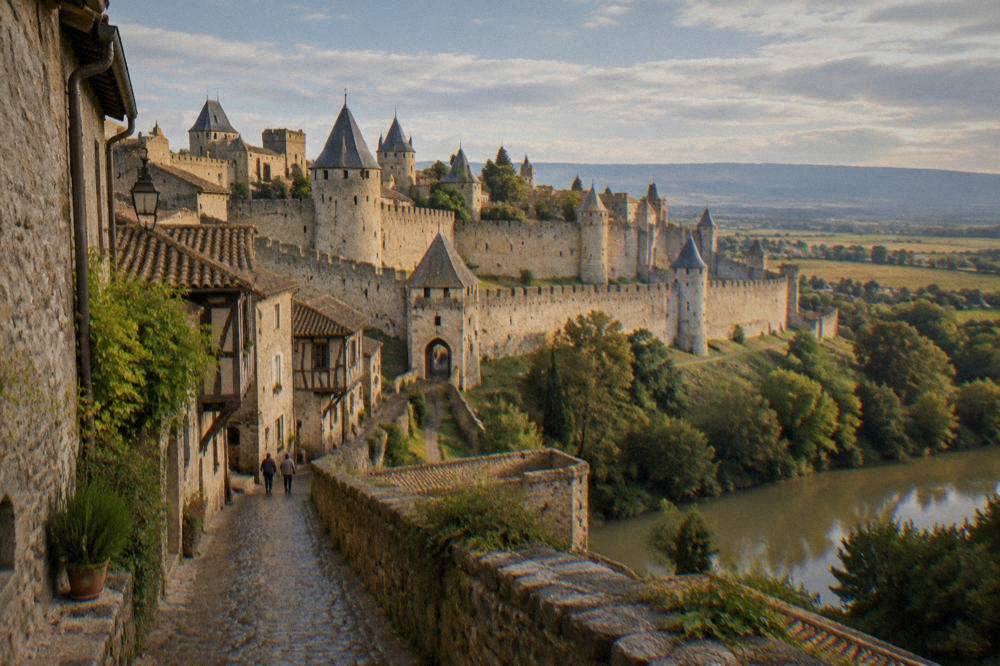
The other thing worth knowing is that the Cite is small. You can walk its full circuit of walls and lanes in well under an hour, which is exactly why staying the night works so well: you do not need to rush, because everything inside is close, and the lower town is a short stroll over the bridge when you want a bigger choice of food or a supermarket. For more on the layout and how walkable the whole settlement is, see our companion page on whether Carcassonne is a walkable city.
| Choice | Setting | What you get | What you trade |
|---|---|---|---|
| Hotel inside the Cite | Within the double walls, stone lanes | Ramparts at dawn and after dark, everything walkable in minutes | Higher rates, cobbles and stairs, restricted vehicle access |
| Guesthouse in the Bastide Saint-Louis | Lower town grid, flat streets | Closer to the station, markets and everyday restaurants | A walk or short ride up the hill for the walls |
| Day trip from Toulouse | No overnight stay | Zero luggage logistics, fixed schedule | You see only the crowded midday hours |
How To Plan The Trip From Toulouse
The simplest plan is a direct train from Toulouse-Matabiau to Carcassonne, a short ride that needs no car, followed by a walk or taxi up from the station to the Cite. Book accommodation inside the walls early, because the supply of rooms in a fortified village is naturally limited. If you are combining Carcassonne with other towns in the region, a guided day trip from Toulouse that bundles Albi and Cordes-sur-Ciel with lunch included removes all of the driving and connection risk.
Carcassonne sits roughly an hour's road journey southeast of Toulouse, and the train links the two city centers directly, which is why so visitors treat it as an easy overnight or even a same-day excursion. A night inside the walls pairs naturally with a second stop: the region around Carcassonne holds Albi, with its fortified cathedral, and the hill village of Cordes-sur-Ciel, and a loop covering all three is a classic two-day shape. Doing that loop by public transport is possible but involves connections, so many travelers split the difference: take the train for a Carcassonne-only overnight, or take a guided multi-town trip and sleep in Toulouse. The full index of guides sits on Toulouse Travel Guide.
For the overnight version, the logistics are light. Arrive, walk up the hill, drop your bags, and spend the late afternoon on the ramparts as the crowds thin. On the way back you can stop in the lower town for anything you need before returning inside for dinner. For travelers who prefer a guided frame, the full-day Albi, Carcassonne and Cordes trip with lunch included covers all three towns from Toulouse in one organized sweep, and Check availability if that shape fits your dates better than a train-and-hotel plan.
One thing worth checking before you lock in dates is what else is happening in the region that week. The Piano aux Jacobins festival in Toulouse runs 8 to 30 September 2026, and Toulouse les Orgues follows from 7 to 18 October 2026, both of which pull extra visitors into the wider Occitanie travel corridor and can make rooms in the region scarcer than usual. If your overnight in Carcassonne can flex a few days either side of those windows, you will have an easier time of it.
If you are building a wider Occitanie itinerary around Toulouse, our Carcassonne day-trip guide goes deeper on the town itself, and our page on where to stay in Toulouse covers the base-city side of the trip, including the neighborhoods that put you near Matabiau station for an early train.
| Planning step | Option A: independent overnight | Option B: guided day trip |
|---|---|---|
| Getting there | Direct train from Toulouse-Matabiau, a short ride | Coach or minibus from central Toulouse |
| Where you sleep | A hotel inside the Cite or the Bastide | You sleep in Toulouse, no hotel needed |
| Towns covered | Carcassonne only, at your own pace | Carcassonne plus Albi and Cordes-sur-Ciel |
| Luggage | One overnight bag, carried up the hill | None, you return to Toulouse same day |
| Tourist tax note | Non-classified or platform rentals pay 5% of the pre-tax nightly price per person | Not applicable, no overnight stay |
Is A Night Inside The Walls Better Than A Day Trip?
For first-time visitors with the time to spare, yes: a night inside the walls is the better version of Carcassonne, because the walled city's defining experience is its emptiness after dark and at dawn, which a day trip structurally misses. A day trip remains the right call when your time budget is tight, when you are based in Toulouse for only two or three nights, or when a guided multi-town itinerary matters more to you than sleeping inside a monument.
The honest comparison comes down to what kind of traveler you are. If your trip is anchored in Toulouse and you have four or more nights there, carving out one of them for Carcassonne is easy and rewarding: the train is direct, the town is compact, and the evening hours inside the Cite are the ones people remember. If instead you are compressing a lot of Occitanie into a few days, a day trip, whether by train or as part of a guided circuit, delivers the ramparts, the castle and the basilica without consuming a night, and the trade is entirely reasonable.
Two factors tilt the decision. First, the midday Cite is the crowded Cite; the question of why Carcassonne is so famous answers itself partly in volume of visitors, and staying overnight is the only way to see the place without that pressure. Second, food inside the walls skews toward visitors, while the lower town holds the more local tables, so a night lets you do both: the atmospheric evening inside, the honest morning bistro outside. Our pages on what food Carcassonne is famous for and the signature dish of Toulouse cover the regional table if you want to plan meals around the trip.
There is also a middle path worth naming: arrive late afternoon by train, stay the one night, and return to Toulouse the next morning once you have had the dawn lanes to yourself. That captures the entire value of sleeping inside while costing your itinerary a single day, and it is the shape we would suggest to anyone whose trip is Toulouse-first. Whatever you choose, the question this page started with has a simple answer, and it is one the tourist infrastructure of the town has been built to support for a long time.
Common Questions About Staying Inside Carcassonne
Quick answers to what planners ask most about sleeping inside the walled city.
Can you stay inside Carcassonne?
Yes. The fortified city is a functioning neighborhood with hotels and guesthouses inside the walls, and the streets remain public day and night. There is no gate, ticket or curfew for the Cite itself, only admission charges for individual monuments such as the Chateau Comtal and the ramparts circuit.
Is it expensive to sleep inside the walls?
Rooms inside the Cite generally cost more than equivalent rooms in the Bastide Saint-Louis below, because supply is limited and demand is high. Rates vary by season, and the summer months and festival periods fill first, so book early. One verified cost applies to any stay in the wider area: non-classified or platform rentals pay a tourist tax of 5% of the pre-tax nightly price per person.
Can you drive into the Cite to drop off luggage?
Vehicle access inside the walls is restricted, and the standard pattern is to park outside the Cite and carry bags in along the cobbled lanes. If you arrive by train, the station is in the lower town and you walk or take a short taxi ride up the hill. Pack light; the lanes are stepped in places.
How many days do you need for Carcassonne?
One night is enough to see the Cite properly and enjoy the quiet hours, with time for the lower town as well. A single long day works if you are day-tripping from Toulouse, since the train links the two cities directly and the ride is short. Add a second day only if you plan to use Carcassonne as a base for the surrounding region.
Do restaurants inside the walls stay open in the evening?
Yes, the restaurants inside the Cite serve dinner, and the evening is one of the main reasons to stay overnight. The choice is thinner than in the lower town and skews toward visitors, so many guests eat inside at night and head down to the Bastide for breakfast or lunch.
Is Carcassonne worth seeing if you cannot stay the night?
Yes. A day trip from Toulouse still delivers the ramparts, the castle and the basilica, and the town is compact enough that a full day covers it comfortably. The trade-off is that you see the Cite at its busiest, in the middle of the day, rather than in the quiet hours that overnight guests get.
The walls of Carcassonne are not just a postcard backdrop but a place where people sleep, eat and wake up, and one night inside them is one of the easiest upgrades available on a Toulouse-based trip.