Sarlat: A Day Trip From Toulouse
Sarlat, the golden-stone medieval town of the Perigord, sits west of Toulouse and makes an ambitious but rewarding day trip for travelers based in the pink city. This guide covers how to get there, what to see, what to eat, and how to weigh it against closer options.
Short answer
Sarlat is a medieval market town in the Dordogne, west of Toulouse, best reached by car or on a guided excursion because no direct train link was verified for this route. Its Renaissance and medieval old town, food market culture, and proximity to river valleys make it a full-day outing rather than a half-day one.
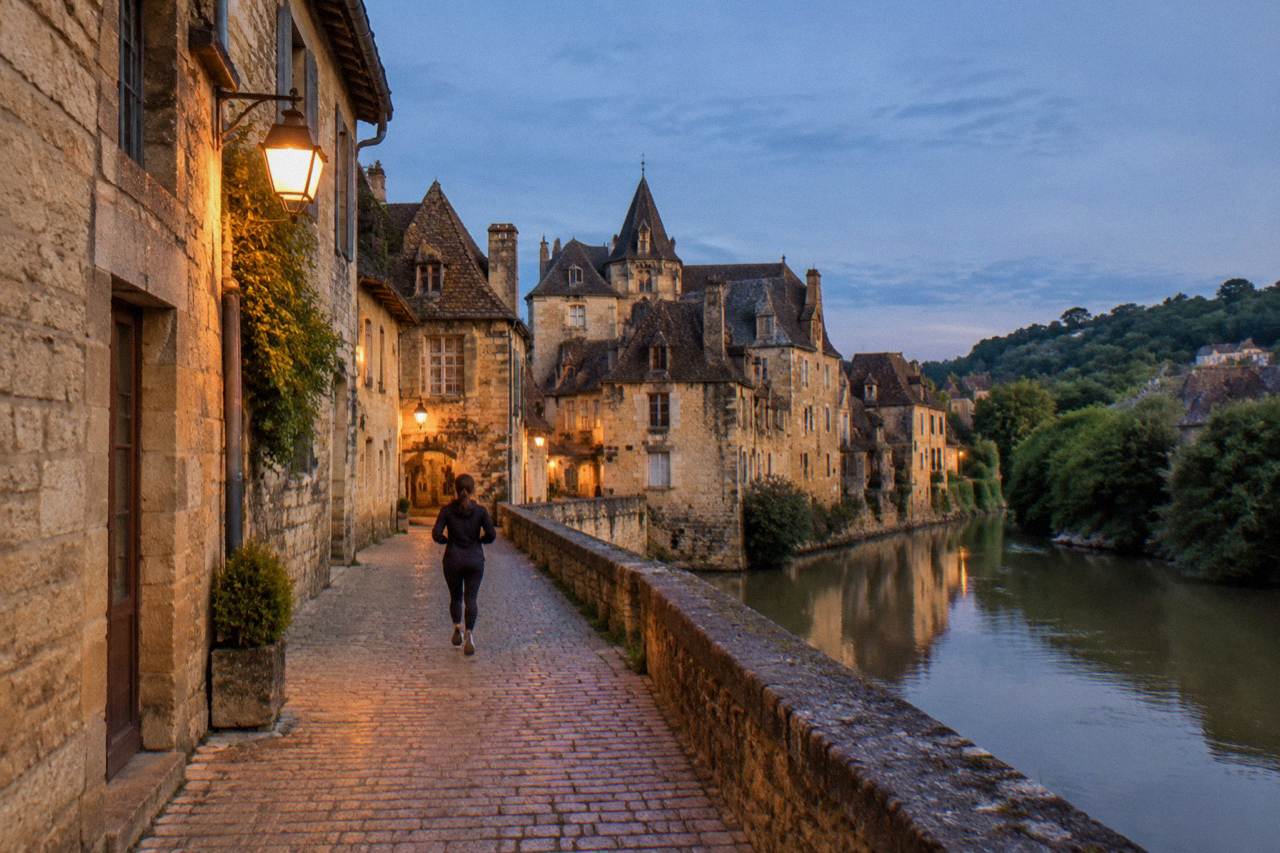
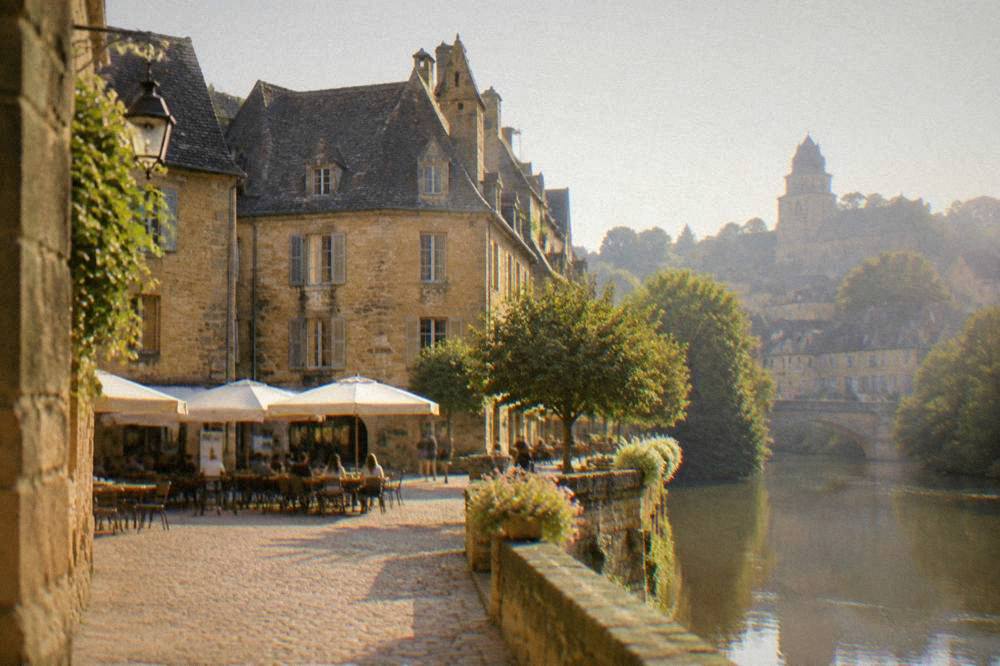
Sarlat-la-Caneda, usually just called Sarlat, is the great medieval showpiece of the Perigord, a town of golden limestone built for the film camera as much as for the visitor. It sits west of Toulouse, in the Dordogne, and it belongs on the radar of anyone using Toulouse, the pink-brick La Ville Rose on the Garonne in the Occitanie region of southwestern France, as a base. This is not a half-day hop. It is a full-day commitment, and the reward is one of the most complete medieval and Renaissance town centers in the country, a place whose old core has been protected as a heritage area under France's celebrated loi Malraux, the law that made whole-town preservation a national policy and turned Sarlat into its flagship example.
Where Is Sarlat And Why Does It Suit A Day Trip From Toulouse?
Sarlat-la-Caneda lies west of Toulouse in the Perigord, the historic region of the Dordogne river valley, and it suits a day trip because its entire appeal is concentrated in one compact, walkable old town. Travelers based in Toulouse reach it by car or on a guided excursion, since the town's draw is its dense medieval core rather than scattered sights.
The geography matters. Toulouse sits on the Garonne and the Canal du Midi, in Haute-Garonne; Sarlat sits in a different river world, the Dordogne, where limestone cliffs, fortified villages and castle-crowned riverbanks define the landscape. The two towns belong to different historic worlds too: Toulouse grew as a trading and university city of pink brick, while Sarlat grew around a bishop's seat and a market economy, and built in the honey-colored stone of the local quarries. That contrast is exactly what makes the trip work. You leave a city of brick and river commerce and arrive in a town that looks carved from a single block of amber.
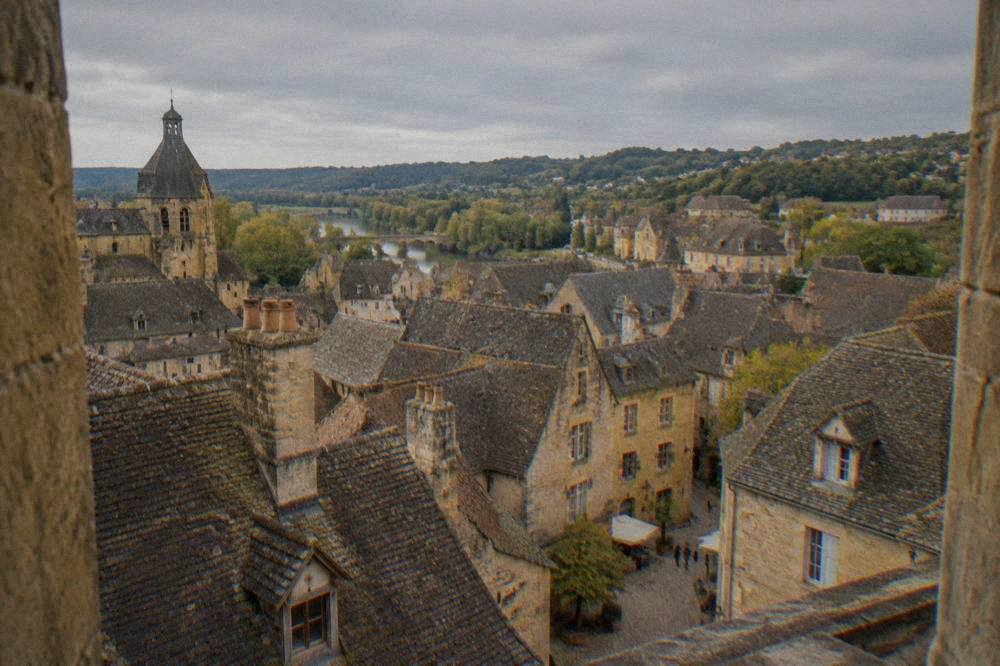
The old town is small enough to see on foot in a day, which is the practical argument for the trip. Everything a visitor comes for, the cathedral, the covered market hall, the lanes of the medieval core, the Renaissance mansions of the old town, sits within a few minutes' walk of one another. There is no need for local transport once you arrive. What the town asks of you is time: time to walk slowly, to look up at carved facades, and to sit down for the food the Perigord is known for.
For planning, treat Sarlat as a "one big outing" day rather than a "two stops" day. If you want a day trip that stacks several sights into one drive, the options closer to Toulouse, covered below in the comparison section, fit that pattern better. Sarlat rewards the traveler who gives it a whole day and resists the urge to sprint through it.
How Do You Get From Toulouse To Sarlat Without A Car?
Without a car, the realistic route from Toulouse to Sarlat is a guided excursion, because this site's research verified no direct train figure and no bus schedule for the Toulouse to Sarlat journey. Independent travelers drive, and those who prefer not to drive book a tour that includes transport. Either way, plan a full day out.
Trains from Toulouse Matabiau station reach many nearby cities, and Sarlat has its own station, but no verified timetable detail for this specific route appears in the sources behind this page, so check the operator's own site before assuming a rail day trip works. What can be said plainly: the drive is the standard way locals and experienced travelers do it, and it is a real drive, not a suburban hop.
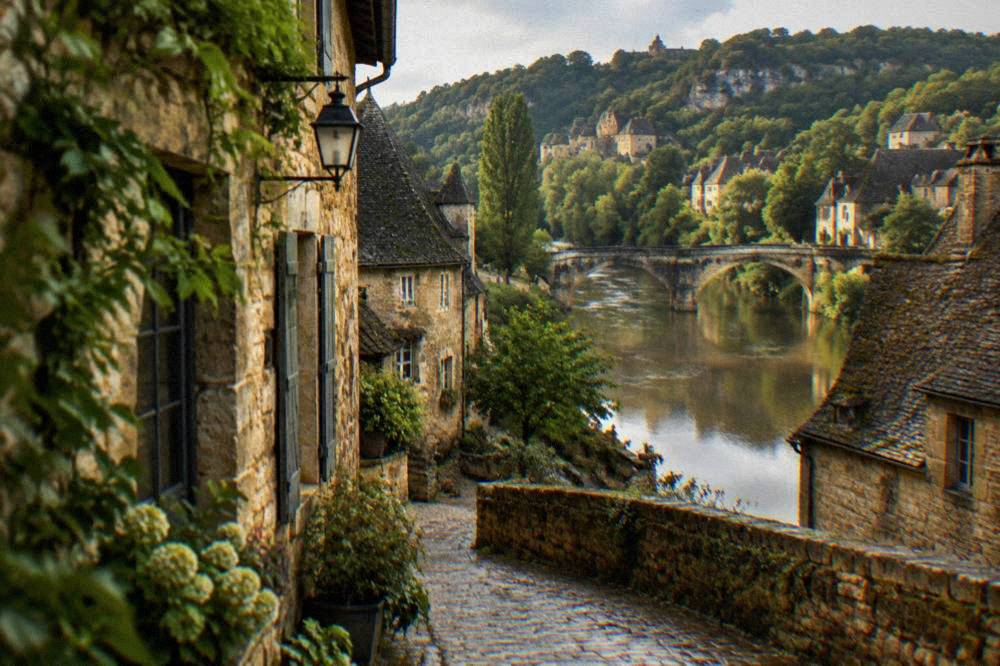
If you drive, leave early. The old town's streets are narrow and largely pedestrian, so the day's pattern is: park at the edge of the center, walk in, and stay on foot until you leave. Arriving early also puts you ahead of the day-trip crowd that builds toward midday in the lanes around the market square, and it gives you the soft morning light that photographers chase on the golden stone.
Before you leave Toulouse itself, the city's transport figures are worth knowing, because you will likely use the metro or a bus to reach your car, your rental or your meeting point. The Tisseo catalogue gives the prices below.
| Tisseo ticket | Price |
|---|---|
| Single trip | EUR 1.90 |
| Single trip bought on board | EUR 2.50 |
| 10 trips | EUR 16.00 |
| Day pass | EUR 7.20 |
| 3-day pass | EUR 14.30 |
| Airport single (network + Navette) | EUR 9.50 |
For travelers who would rather not plan the drive, the tour roster on this site includes guided medieval day trips out of Toulouse. The Rocamadour excursion below, run by a specialist guide, covers a cliff-perched pilgrimage village in the same broad region and handles all the logistics; read the listing for the current itinerary.
What Makes Sarlat's Old Town Worth The Journey?
Sarlat's old town is worth the journey because it is an almost unbroken ensemble of medieval and Renaissance buildings in golden limestone, protected and restored as a whole rather than as isolated monuments. The cathedral, the bishop's palace, the lantern of the dead and the tangle of lanes around the Place de la Liberte form one of the most coherent historic centers in the country.
The key word is ensemble. Many French towns preserve a church here and a mansion there; Sarlat preserved a town. France's loi Malraux, the law for the protection of historic urban areas, was applied to Sarlat's old core, and the restoration campaign that followed saved hundreds of facades, roofs and interiors. The result today is a center where the street plan, the building stock and the material, that warm local limestone, all belong to the same story. Walking it feels less like visiting monuments and more like stepping inside a single preserved object.
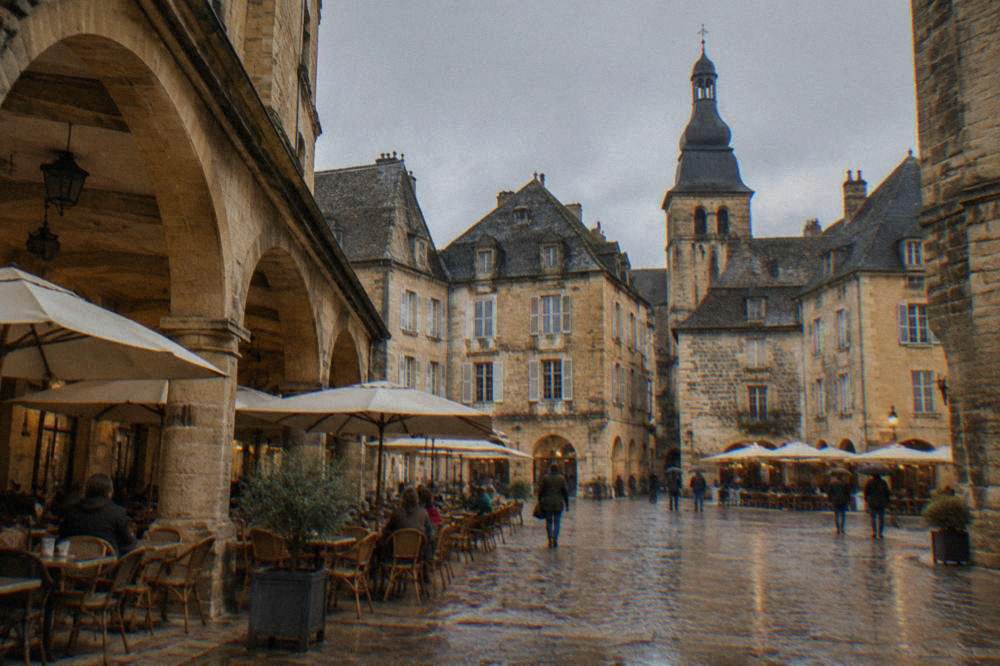
The sights to look for, in rough walking order: the Cathedral Saint-Sacerdos with its mismatched towers, a building that visibly changed architectural plans mid-history; the old bishop's palace complex; the Lantern of the Dead, a small stone tower whose exact original function is still debated by historians, which is a good reminder to hold medieval explanations lightly; the covered market occupying a former church, a conversion that says a lot about how the town's religious and market lives intertwined; and the maze of lanes running off the main square, where the best of Sarlat is simply the walking itself.
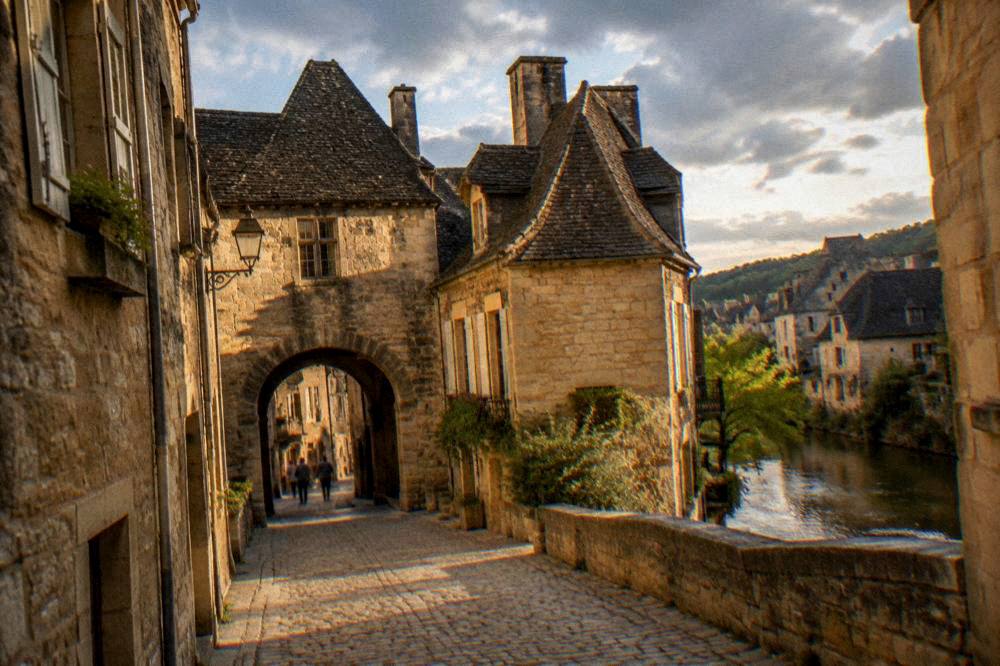
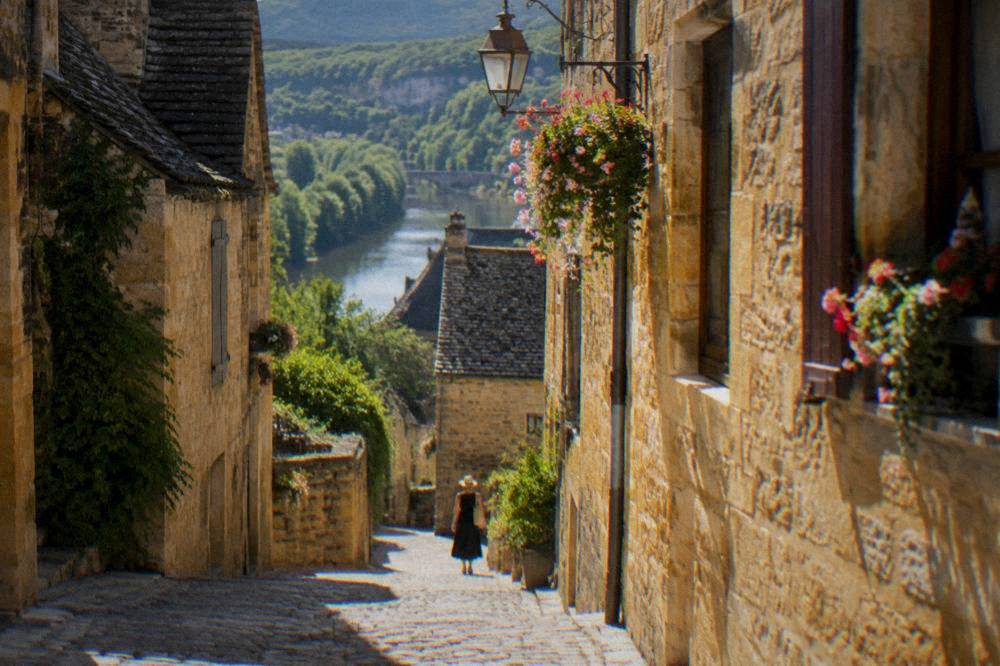
A note on light and timing: the stone changes character through the day. In the morning it is pale gold; at midday it is bright and hard to photograph well; in the late afternoon it goes deep amber. Travelers who stay until the end of the afternoon get the town at its most photogenic, and the lanes empty noticeably once the day-trippers leave. If your schedule allows a late return to Toulouse, the last hour in Sarlat is the one you will remember.
What Should You Eat In Sarlat?
Sarlat sits in the Perigord, the region whose name is shorthand in France for foie gras, truffles and walnuts, so the eating here is duck and goose fat, black truffle when in season, walnut oil and walnut cake. The town's market and its restaurant terraces are the place to taste all of it, and food is arguably the second reason, after the architecture, to make the trip.
The Perigord's food reputation is not a tourist invention. This is duck and goose country: confit, magret, foie gras and the rendered fat that locals cook potatoes in. Truffles are the region's other emblem, the black Perigord truffle, and its season runs in the colder months, when markets in the region sell it fresh. Walnuts from the Perigord carry their own protected label, and walnut oil dressed over salads or walnut cake for dessert are the everyday expressions of the local grove economy. Sarlat's market is the natural place to encounter all three, and the covered market in the former church is the most atmospheric spot in town to buy foie gras, cheese and preserves to carry home. Everything else covered here is indexed on Toulouse Travel Guide.
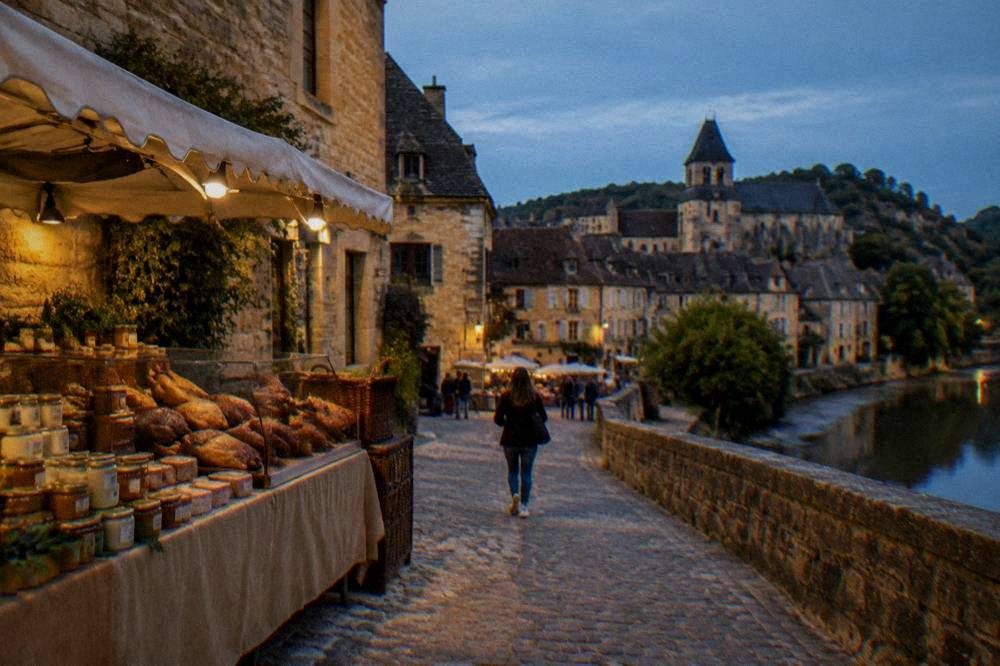
This site's rules prevent naming a "best" restaurant or quoting a specific establishment's prices, hours or ranking, because none of that was verified for Sarlat, so the practical advice is structural: eat in the old town, order the regional dishes rather than the generic bistro list, and if you are buying foie gras or truffle products to take back to Toulouse, buy from a market stall or a shop that states the origin on the label. A sit-down lunch in the old town is part of the day's rhythm; the Perigord rewards long lunches, and rushing back to the car with a sandwich wastes the region's single greatest asset.
For a taste of the same food culture without leaving Toulouse, the pink city has its own Perigord and southwest-French food scene, and the Toulouse food guide covers where that culture shows up in the city, from market halls to cassoulet. Sarlat is the source region for much of what Toulouse's best tables serve.
How Does Sarlat Compare With Toulouse's Other Day Trips?
Sarlat is the farthest-flung and most food-and-stone-focused of the major day trips from Toulouse, best for travelers with a full day and a car or a guide; Carcassonne is the fortified-city spectacle, Albi and Cordes-sur-Ciel the closer medieval pairing, and Rocamadour the dramatic cliff pilgrimage village. Each suits a different day.
The comparison matters because a week in Toulouse cannot fit everything, and Sarlat competes for the same day-slot as several superb alternatives. Carcassonne is the headline act, a fully restored walled citadel, and it is reachable by coach tour with an audio guide, which removes the driving question entirely. Albi pairs a brick cathedral city with the hilltop village of Cordes-sur-Ciel, and it is the classic two-stop medieval day. Rocamadour and Saint-Cirq-Lapopie are the cliff-village day trips, vertical towns built into rock faces, while Cahors and Conques reach into the neighboring Lot with its own river valleys and pilgrimage architecture.
| Day trip from Toulouse | Character of the day | Best for |
|---|---|---|
| Sarlat | Golden-stone medieval town, Perigord food | A full day, food lovers, photographers |
| Carcassonne | Restored walled citadel | First-time visitors, families, history |
| Albi and Cordes-sur-Ciel | Brick cathedral city plus hilltop village | Two-stop medieval variety |
| Rocamadour | Cliff-perched pilgrimage village | Drama, vertical views, guided tours |
| Saint-Cirq-Lapopie | Cliff village above the Lot river | Artists' village atmosphere, river scenery |
| Cahors | Bridge, wine and old quarter | Wine, a slower town day |
The honest ranking question is whether Sarlat beats those alternatives for a single day out of Toulouse. If you have one day only and no car, Carcassonne or Albi is the more practical choice. If you have a car and a genuine interest in food and architecture, Sarlat is arguably the most atmospheric of them all, because the old town is lived-in, the eating is exceptional, and the golden stone at dusk is a sight the pink brick of Toulouse cannot replicate. Many travelers who fall for the region end up doing two of these days, not one.
The tour roster on this site covers several of these days, and the trio below is the natural shortlist for a Sarlat-style outing: a guided medieval faith day trip to Rocamadour, a cruise through Toulouse's historic center for the day you stay in town, and an electric bike tour for seeing the pink city itself.
For the Rocamadour day in particular, the guided option makes sense for the same reason a Sarlat guide would: the drive is long, the parking and timing questions disappear, and a specialist guide explains the pilgrimage history that a signboard cannot. The tour's dedicated page on this site carries the full itinerary details, and the operator's live listing shows current dates and group sizes.
The same logic applies to the two city tours in that trio. A cruise through the historic center gives your legs a rest on a day you are not driving, and an electric bike tour covers far more of the pink city than walking alone. Both are worth booking for the days around your Sarlat outing rather than the day itself.
When Is The Best Time Of Year To Visit Sarlat From Toulouse?
The best time to visit Sarlat from Toulouse is late spring through early autumn, when the long daylight hours fit a full-day trip and the risk of a grey, cold walk through the old town is lowest; the Toulouse climate record shows July and August as the warm, sunny months and May as the wettest, so June and September offer the best balance.
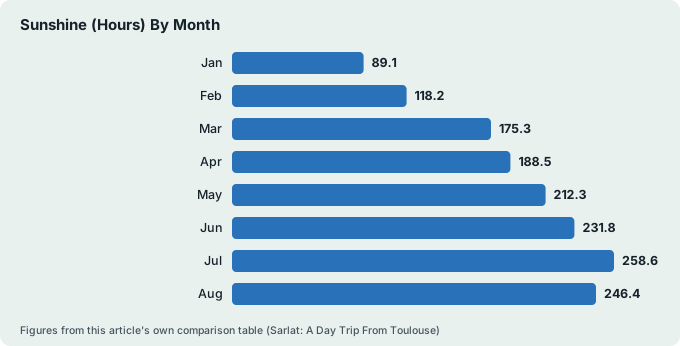
The climate data behind this page comes from Meteo-France's 1991-2020 normals for the Toulouse-Blagnac station, the closest long-term record to the route west, and it carries a genuinely counterintuitive fact: May, not a winter month, is the wettest month of the year at 73.6 mm of rain, nearly double February's 37.2 mm. April (65.2 mm) and June (64.2 mm) follow. Then the tap turns off: July, the sunniest month at 258.6 hours of sunshine, averages just 40.1 mm of rain. Anyone planning a "safe" spring day trip and a "risky" summer one has the risk assessment backwards.
| Month | Mean temp (C) | Rain (mm) | Sunshine (hours) |
|---|---|---|---|
| Jan | 6.3 | 52.5 | 89.1 |
| Feb | 7.1 | 37.2 | 118.2 |
| Mar | 10.3 | 45.3 | 175.3 |
| Apr | 12.7 | 65.2 | 188.5 |
| May | 16.4 | 73.6 | 212.3 |
| Jun | 20.3 | 64.2 | 231.8 |
| Jul | 22.6 | 40.1 | 258.6 |
| Aug | 22.8 | 44.6 | 246.4 |
| Sep | 19.3 | 45.7 | 210.1 |
| Oct | 15.3 | 54.3 | 155.2 |
| Nov | 9.9 | 55.0 | 99.9 |
| Dec | 7.0 | 49.3 | 89.7 |
Two seasonal notes refine the picture. First, summer heat: the same station records 11.5 days a year at or above 30C in July and 11.3 in August, and the all-time record high is 42.4C, set on 23 August 2023. Sarlat's stone lanes hold heat in the afternoon, so a summer visit argues for an early arrival, a long shaded lunch, and the late-afternoon walk. Second, winter: the truffle season is the cold months' compensation, and the Perigord's black truffle is at its freshest then, but the days are short, with January averaging 89.1 hours of sunshine, so a winter Sarlat day is a compact, indoor-leaning version of the trip.
Festival timing can anchor the trip too. If your Sarlat day is part of an autumn stay in Toulouse, the city's calendar gives you bookends: Toulouse les Orgues runs its 31st edition from 7 to 18 October 2026 with the opening concert at Notre-Dame de la Daurade, and the Christmas markets on Place du Capitole, the allees Jean-Jaures and square Charles-de-Gaulle run from 26 November to 27 December 2026.
| Verified Toulouse event | Dates |
|---|---|
| Piano aux Jacobins | 8 to 30 September 2026 |
| Toulouse les Orgues (31st edition) | 7 to 18 October 2026 |
| Christmas markets (Capitole, Jean-Jaures, Charles-de-Gaulle) | 26 November to 27 December 2026 |
| Rio Loco | 9 to 13 June 2027 |
What Can You Do In Toulouse Before Or After The Sarlat Day?
Before or after a Sarlat day, Toulouse itself offers the Pass Tourisme at EUR 26 for stays of one to three days, which the tourist office says pays off from the third activity and includes a free guided tour, plus a museum scene whose normal rates the office lists openly. The day after a long drive, the city's museums and riverside are the low-effort recovery plan.
The Pass Tourisme is the tourist office's own product, and its economics are transparent. The office's page lists the normal rates of the attractions that are free with the pass, which makes the arithmetic checkable rather than promotional.
| Attraction (free with Pass Tourisme) | Normal rate listed |
|---|---|
| Fondation Bemberg | EUR 12 |
| Museum de Toulouse | EUR 12 |
| Les Abattoirs | EUR 12 |
| Musee des Augustins | EUR 5 |
| Couvent des Jacobins | EUR 5 |
The pass also has a transport add-on: EUR 10 on top of the base price buys ten public-transport trips on the metro, bus and tram network. Cite de l'espace, the space park, is not free with the pass but discounted, and its normal adult rate is EUR 29, with tickets from EUR 22.50 on its own homepage. Two timing caveats matter for museum planning: the Musee des Augustins is fully closed from 21 September to 2 October 2026 for great-cloister works, with its Gothic halls reopening on 3 October 2026, and the Couvent des Jacobins is free on the first Sunday of the month except when a temporary exhibition is on.
The riverside is the other recovery plan. The Garonne and the Canal du Midi, the UNESCO-listed canal inscribed in 1996, shape the city, and a cruise through the historic center is the lowest-effort way to see it after a long day of driving. The shortlist below carries the same trio as before: the medieval Rocamadour day trip, the historic-center cruise, and the electric bike tour.
For a deeper look at the city's other day trips before you commit, the day trips from Toulouse overview on this site lays out the full menu, and the dedicated pages for Rocamadour, Carcassonne and Albi go deeper than this comparison does. The planning logic in best time to visit Toulouse also applies to Sarlat, since the same climate record governs both ends of the day.
Common Questions About A Sarlat Day Trip From Toulouse
Quick answers to what planners ask most about a Sarlat day trip.
Is Sarlat worth a day trip from Toulouse?
Yes, if you have a full day and either a car or a guided excursion. Sarlat's medieval and Renaissance old town is one of the most complete in France, and the Perigord food culture, foie gras, truffles and walnuts, is a second attraction in itself. It is a longer commitment than Carcassonne or Albi, so it suits travelers with extra days in Toulouse.
Can you get to Sarlat from Toulouse by train?
This site's research verified no direct train time, fare or frequency for the Toulouse to Sarlat route, so no figure is quoted here. Sarlat has a station, but before planning a rail day trip, check the operator's own timetable for the current connection. The standard way to do the trip is by car or on a guided excursion with transport included.
How long should you spend in Sarlat?
A full day is the right unit. The old town itself is compact and walkable, but the point of the trip is slow walking, a long market-and-lunch rhythm, and the late-afternoon light on the golden stone. Travelers who rush it see the streets and miss the town.
What food is Sarlat famous for?
Sarlat is the eating capital of the Perigord: foie gras, duck and goose confit, magret, black Perigord truffles in the cold season, and walnut products, including walnut oil and walnut cake. The covered market in the former church is the best single place to encounter all of it.
Is Sarlat or Carcassonne the better day trip from Toulouse?
They are different days. Carcassonne is a restored walled citadel and the more practical trip without a car, with coach tours available. Sarlat is a lived-in medieval town with better food and warmer stone, but it needs a car or a guide. Travelers with one day and no car should choose Carcassonne; travelers with a car and an interest in food should choose Sarlat.
When is the best month to visit Sarlat?
June and September, based on the Meteo-France 1991-2020 normals for the region: July and August are the sunniest but the hottest, with over 11 days a year at or above 30C in each, while May is surprisingly the wettest month at 73.6 mm of rain. Truffle hunters should look at the cold months instead, when the black Perigord truffle is in season.