What Movie Was Filmed In Carcassonne, France?
The answer to what movie was filmed in Carcassonne, France, plus how to visit the walled city's filming locations on a day trip from Toulouse.
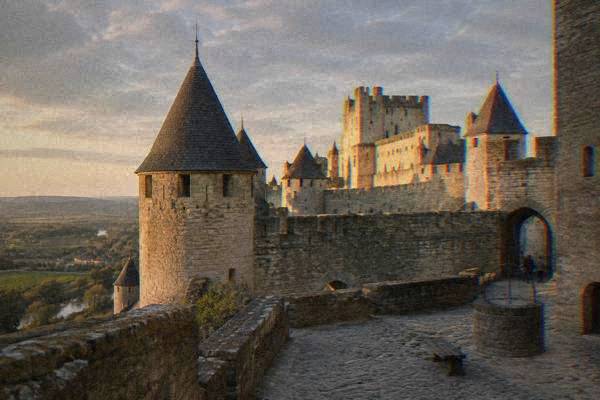
The film most often credited with putting Carcassonne on cinema screens is Robin Hood: Prince of Thieves, the 1991 adventure picture starring Kevin Costner, which used the medieval walled city in southwestern France as a filming location. Toulouse, the pink-brick city on the Garonne, sits a short train ride away and is the natural base for the trip. This page answers the question directly, then covers what the filming means for a visitor today: which parts of the citadel you can stand in, how the city handles its screen fame, and how to build the visit into a stay in the Occitanie region.
What Movie Was Filmed In Carcassonne, France?
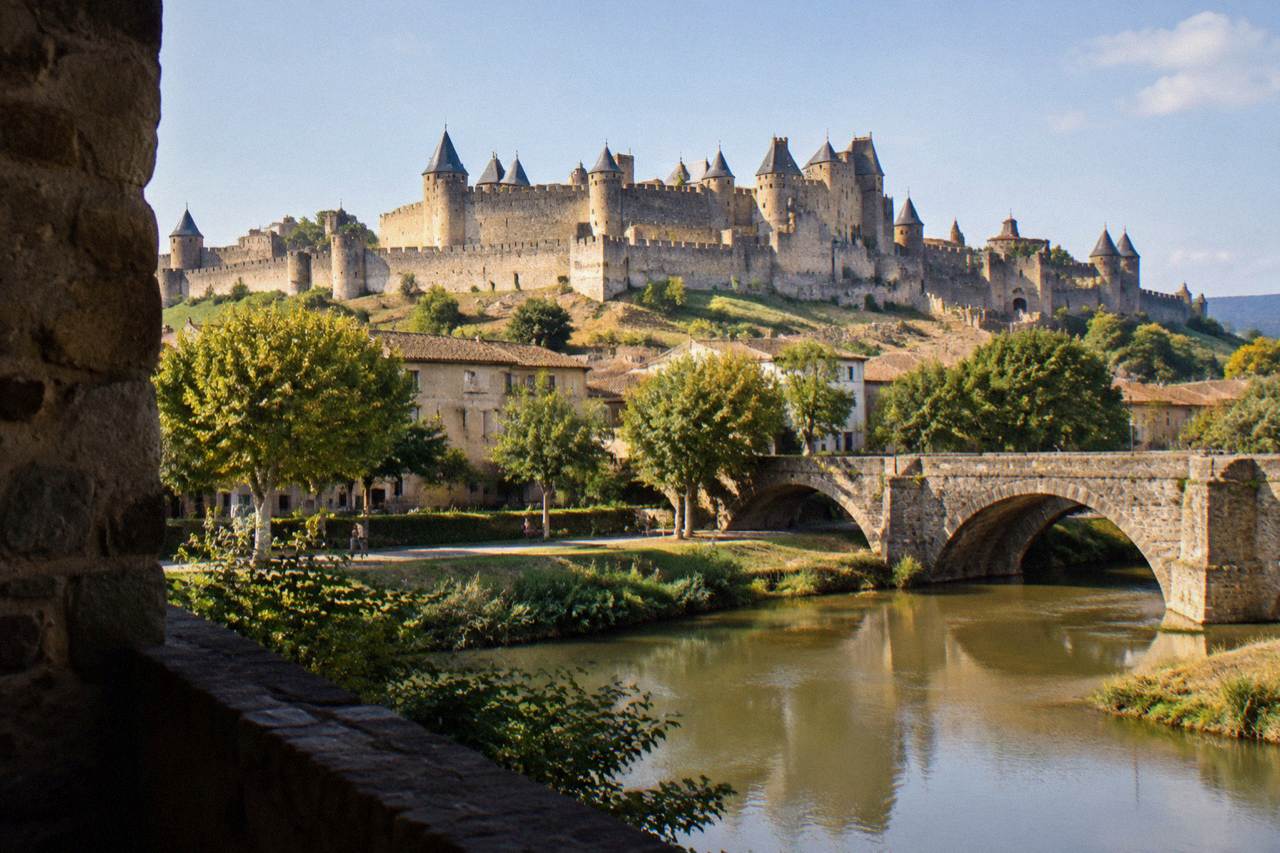
The movie most often named in answer to this question is Robin Hood: Prince of Thieves, the 1991 adventure film starring Kevin Costner, which used the walled city of Carcassonne in southwestern France as a filming location. The citadel's towers and ramparts appear in the picture, and the production is the reason many film fans first hear of the city.
The citadel, known locally as the Cite, is a double-walled medieval fortress with conical roofed towers, and it reads on camera exactly the way it reads in person: like a film set that happens to be real. That quality is what made it useful to a big-budget production, when building a convincing medieval castle from scratch was far harder than finding one that had survived intact. Carcassonne offered walls, gates, cobbled lanes and a skyline of towers without a single plywood facade.
It is worth being precise about what the filming did and did not involve. The production used the city as a location, which means real streets and real stonework appear in the finished picture, but Carcassonne was not the only location, and not every castle scene in the film was shot there. Productions of that scale piece together footage from several sites. The claim that survives scrutiny is the simple one: Robin Hood: Prince of Thieves filmed in Carcassonne, and the city has traded on that association ever since.
For a visitor arriving from Toulouse, the practical point is that the filming locations are not a separate ticketed attraction. They are the citadel itself, the same streets covered in why Carcassonne is so famous. You walk the ramparts, you stand at the gates, and you are standing where the cameras stood.
Why Did A Hollywood Production Choose Carcassonne's Ramparts?
A production chooses Carcassonne because the citadel is a complete, intact medieval fortress city, with double walls, towers and gates that need almost no dressing to read as a historical setting on camera. The 1991 Robin Hood production is the famous example, and the city's screen-ready silhouette is the reason it keeps attracting crews.
The economics are straightforward. A film that needs a medieval exterior can either build one or borrow one. Building means a backlot, weather risk and a result that looks built. Borrowing Carcassonne means a real fortress with real texture, and the citadel delivers that texture in a compact package: an outer wall, an inner wall, a castle at the core and a web of lanes between them. A camera can pan across towers that have stood for centuries without a single anachronism in the frame, provided the crew keeps modern signage out of shot.
The city's fame also feeds itself. Once one major picture has used the location, the images circulate, location scouts take notice, and the citadel becomes a known quantity in the industry. Visitors respond the same way. People who could not place Carcassonne on a map recognize its skyline the moment they see it, because they have already seen it in photographs, in documentaries and on screen. The fortress and the camera have a long mutual history.
That screen-ready quality is also why the city works so well for travelers who are not film fans at all. The same walls that flatter a lens make for one of the most atmospheric walks in France. If you are weighing whether the trip justifies the effort, is Carcassonne in France worth visiting covers the case in full, and the short version is that the citadel earns its reputation on foot, not just on film.
Which Other Screen Productions Have Used The Walled City?
Carcassonne has served as a location for more than the 1991 Robin Hood picture. European television productions, documentaries and advertising crews have all used the citadel, and the city's official channels announce shoots when they happen. No single later production matches the fame of the Hollywood film, which remains the one people actually ask about.
The honest framing matters here. Lists of "films shot in Carcassonne" circulate online, and they are not all reliable, because a location as photogenic as this one attracts loose claims. What is safe to say is that the citadel continues to host crews, that documentary makers return to it regularly, and that the city's administration publicizes major shoots when they are confirmed. A visitor who wants current information will find announcements through the city's own channels rather than through third-party film lists. The wider set of guides lives on Toulouse Travel Guide.
What the visitor actually experiences is the backdrop, not the filmography. The citadel is a living site with shops, restaurants and residents inside the walls, and it does not close or change character because a crew once worked there. The traces of filming are the traces of history: the walls, the Narbonne Gate, the towers along the inner rampart. Whether or not a specific scene was shot in a specific lane, the whole ensemble is what made filmmakers want the city in the first place.
The table below summarizes what the screen association means in practical terms for a visitor planning the trip from Toulouse.
| Aspect | What It Means For A Visitor |
|---|---|
| The famous film | Robin Hood: Prince of Thieves, 1991, used the citadel as a location |
| Where the filming happened | Inside and around the walled Cite, the same streets open to the public |
| Separate filming tour | None; the citadel itself is the location |
| Other productions | Documentaries, European TV and advertising shoots, announced case by case |
| Best base for a visit | Toulouse, from which a direct train and guided coach trips both run |
How Do You Visit Carcassonne's Filming Locations From Toulouse?
You visit Carcassonne from Toulouse either by a direct train from the city or by joining a guided day trip, and both put you inside the citadel's walls within a single morning. The filming locations are the citadel's public streets, so no special access is needed once you arrive. Toulouse is the practical base, with the trip doable as one full day.
The independent route is simple. A direct train runs from Toulouse toward Carcassonne, and the station sits a walk from the citadel, so a traveler can leave in the morning, spend the middle of the day inside the walls and return in the evening. The citadel costs nothing to enter as a district: you walk in through the gates like anyone else. The castle within the walls is the part that carries its own admission, and the rampart walk is the single best way to see the skyline that made the city castable.
The guided route trades independence for structure. A coach day trip handles the transport and the timing, pairs the citadel with commentary, and in some cases combines Carcassonne with other medieval towns in the region. For a visitor on a short stay in Toulouse, that efficiency matters: three or four days in the city is enough for Carcassonne plus the urban highlights, and how many days is enough for Toulouse covers that balance.
The site's featured option is the full-day Albi, Carcassonne and Cordes trip, which folds the citadel into a loop that also takes in Albi and Cordes-sur-Ciel, with lunch included. There is also a dedicated Carcassonne day-trip guide on this site for readers who want the full planning picture, including where the trip fits among the region's other medieval destinations.
What Should You Know Before You Go?
Plan to arrive early or stay late, walk the ramparts rather than only the main street, and treat the citadel as a full half-day rather than a photo stop. The main lane inside the walls fills with visitors through the middle of the day, while the outer and inner wall circuits stay quieter and deliver the views that made the city famous on film.
Timing is the single biggest lever. The citadel is a small place with a global reputation, and the difference between the main street at midday and the same street at nine in the morning is the difference between a queue of day-trippers and a near-empty medieval lane. Travelers who come by train from Toulouse control their own clock and can arrive before the coach groups; travelers on a guided trip get the timing handled for them, at the cost of a fixed schedule.
Lodging inside the walls is an option worth knowing about, and can you stay inside Carcassonne answers it in detail. Sleeping within the walls means you get the citadel in its two best states, early morning and evening, when the crowds are gone and the stones do the talking. The trade-off is a limited supply of rooms and prices that reflect the address.
Food is the other thing people under-plan. Carcassonne sits in cassoulet country, the same bean-and-meat tradition that anchors the regional table, and what food Carcassonne is famous for covers the local plate. If you are combining the trip with time in Toulouse, the city's own food scene deserves its share of the itinerary, and what is the signature dish of Toulouse explains how the two cities share one table tradition.
For readers building the wider Occitanie itinerary, the region offers more than one walled silhouette. The full-day trip that includes Cordes-sur-Ciel proves the point: that hilltop town delivers a different, vertiginous version of the medieval fantasy, and pairing it with Carcassonne in one day shows how varied the region's fortified towns really are.
Back in Toulouse itself, the contrast is the reward. Carcassonne is stone, towers and spectacle; Toulouse is pink brick, river light and a lived-in center, and the two make a natural double act. A narrated cruise on the UNESCO-listed Canal du Midi shows the engineering side of the region's history, and a food-tasting bike tour through the city covers the table side, so the citadel day slots into a fuller picture rather than standing alone.
Common Questions About Film And TV In Carcassonne
Quick answers to what planners ask most about the citadel's screen history and the visit itself.
What movie was filmed in Carcassonne, France?
Robin Hood: Prince of Thieves, the 1991 adventure film starring Kevin Costner, used the walled city of Carcassonne as a filming location. The citadel's towers and ramparts appear in the picture, and the production is the film most people mean when they ask the question.
Can you visit the places where the filming happened?
Yes. The filming used the citadel itself, which is a public district you walk into through its gates. The walls, gates and lanes that appear on screen are the same streets open to every visitor, with no separate filming location to find.
Is the citadel open to the public?
The walled city is open to walk through at any time, like any city district. The castle inside the walls carries its own admission and hours, and the rampart walk is the best way to see the skyline that made the citadel attractive to filmmakers.
How far is Carcassonne from Toulouse?
A direct train links the two cities, and the journey is short enough to do as a day trip, with the station a walk from the citadel. Guided coach day trips from Toulouse also run, some of which pair Carcassonne with Albi and Cordes-sur-Ciel in a single day.
Is one day enough for Carcassonne?
One day is enough to walk the walls, see the castle and eat well inside the citadel. Travelers who want the place at its quietest stay a night inside the walls, when the day crowds leave and the lanes return to something close to their filmed state.
Do film crews still shoot in Carcassonne?
Yes. Beyond the famous 1991 production, documentaries, European television and advertising crews continue to use the citadel, and major shoots are announced through the city's own channels when they are confirmed.