What Is The Signature Dish Of Toulouse?
The signature dish of Toulouse is cassoulet, a slow-cooked casserole of white beans, Toulouse sausage and confit. Here is what it is, why it belongs to the city, and where to eat it.
Cassoulet is the signature dish of Toulouse, the pink-brick city on the Garonne in the Occitanie region of southwestern France. Ask anyone in the city what plate carries its name and the answer comes back the same: a slow-cooked casserole of white beans, Toulouse sausage and duck confit, baked in a cassole, the earthenware dish that gives the recipe its name. The city treats this dish as an institution rather than a menu item, and the tourist office's own food pages present it as the table's centerpiece. This page sets out what the dish is, why Toulouse claims it so firmly, where to eat it, and what else belongs on the local plate.
What Is The Signature Dish Of Toulouse?
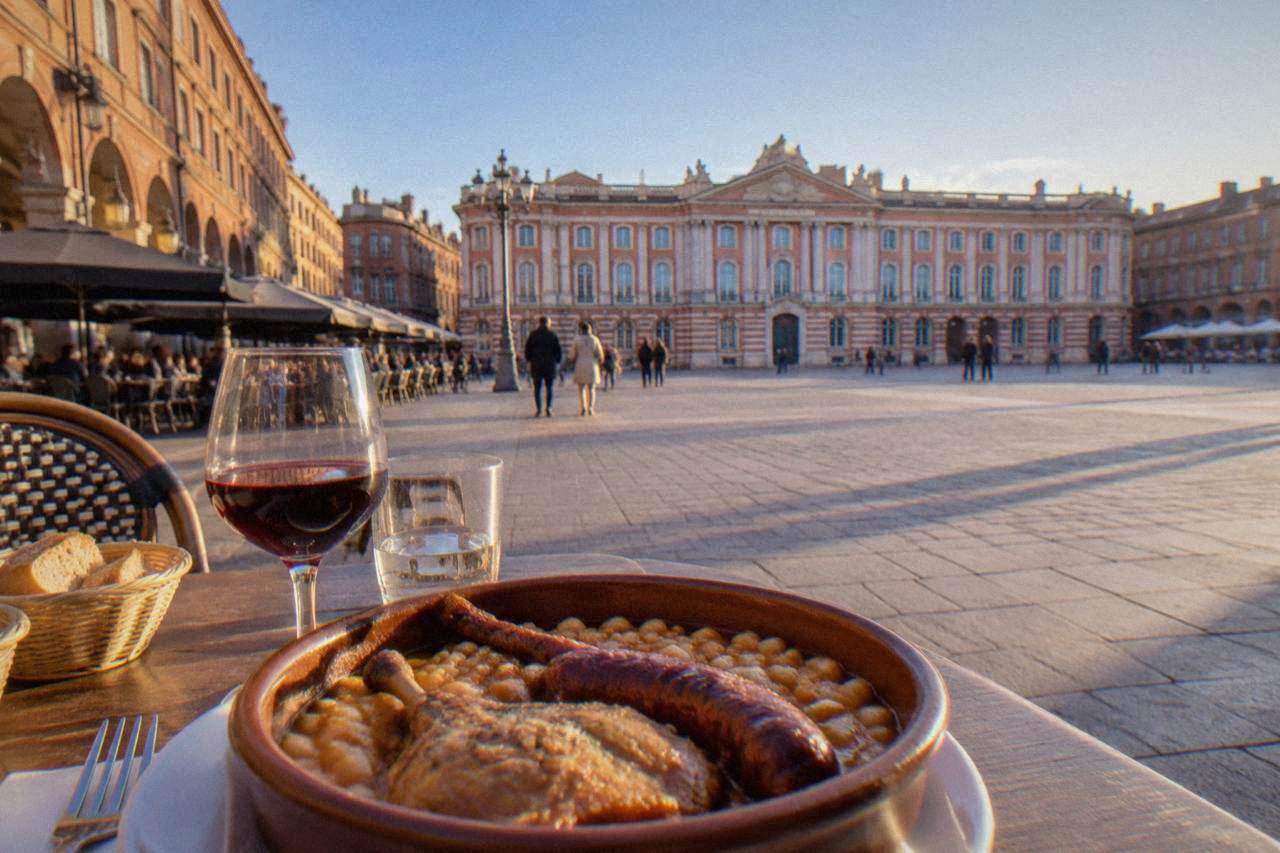
The signature dish of Toulouse is cassoulet, a slow-cooked casserole of white beans, Toulouse sausage and duck or goose confit, traditionally baked in a cassole, the glazed earthenware pot that gives the dish its name. The city treats it as its emblem on the table, and no other local plate carries the same weight in Toulouse's own food identity.
The dish is built in layers. The beans are the base, and they are not a filler: they are the substance of the plate, cooked slowly so they hold their shape while taking on the fat and the seasoning of the meats above them. The Toulouse sausage is the city's own contribution, a fresh garlic sausage that the local food tradition treats as a product in its own right, and this site has a full page on what is special about Toulouse sausage in its own right. On top sits the confit, duck most commonly, its preserved fat seeping down through the whole pot over hours in the oven.
The name comes from the pot, not the other way round. A cassole is the earthenware dish made in the region, and cassoulet is simply what cooks in it. That detail matters to how the city talks about the dish: it is a cooking vessel, a method and a plate all at once, which is why the argument about what does and does not belong in the pot runs so hot. For the full anatomy of the recipe, layer by layer, see the companion page on what exactly is a cassoulet.
| Element | Role In The Dish | What The Local Tradition Says |
|---|---|---|
| White beans | The base and the bulk of the plate | Must hold shape, never turn to puree |
| Toulouse sausage | The city's signature element | Fresh garlic sausage, a named local product |
| Duck or goose confit | The richness on top | Preserved meat, fat cooks down into the beans |
| The cassole | The earthenware cooking pot | Gives the dish its name |
| Crust | Formed during long oven time | The pot goes back in the oven so the top crisps |
Why Does Toulouse Claim Cassoulet So Firmly?
Toulouse claims cassoulet because the dish is named on the city's own terms: the sausage in the pot is the Toulouse sausage, the pot itself comes from the region's earthenware tradition, and the city's food identity is built around the cassoulet as its flagship plate. It is not a recipe that happens to be served here, it is a recipe the city signs.
The claim is part of a wider story about why the city is famous, which this site covers on the page why is Toulouse so famous. Food sits in that story alongside the pink brick, the aerospace industry and the Garonne, and cassoulet is the food item that carries the city's name into kitchens far beyond Occitanie. When a menu anywhere in the world prints the word Toulouse next to a sausage, the connection runs back through this pot.
The city's food culture is also a market culture. The Victor Hugo market is the traditional place where the raw materials of the pot are sold, and a guided walk through the stalls is one of the more direct ways to see how the dish is assembled before it ever reaches an oven. The gourmet walk Toulouse gourmet tour in English: cheese wine heritage covers that ground with a guide who frames the city's food traditions, and Check availability if that angle appeals.
The technique matters as much as the shopping list. The pot goes into the oven for a long time, and the crust that forms on top is pressed back into the beans several times during cooking, a step the local tradition treats as the mark of a properly made cassoulet. The secrets behind that process, and the arguments about beans, meats and cooking order, are laid out on the page what is the secret to a good cassoulet.
Where Do You Eat Cassoulet In Toulouse?
You eat cassoulet in Toulouse in the restaurants of the historic center and in the bistros around the Victor Hugo market, where the dish appears on menus as a house specialty rather than a tourist offering, and in winter it moves to the center of nearly every local menu. The city does not have one official address for it, the dish is the point, not the venue.
This site's food coverage deliberately names no single best bowl. What can be said honestly is where the dish lives: the restaurant streets of the center, the area around the Capitole, and the market quarter where the ingredients are sold a few steps from the tables that cook them. For how the city eats more broadly, the page where do locals eat in Toulouse covers the neighborhoods and habits, and the page what time do people eat in Toulouse explains the local clock, which matters when the dish of the day needs hours in the oven and dinner runs late.
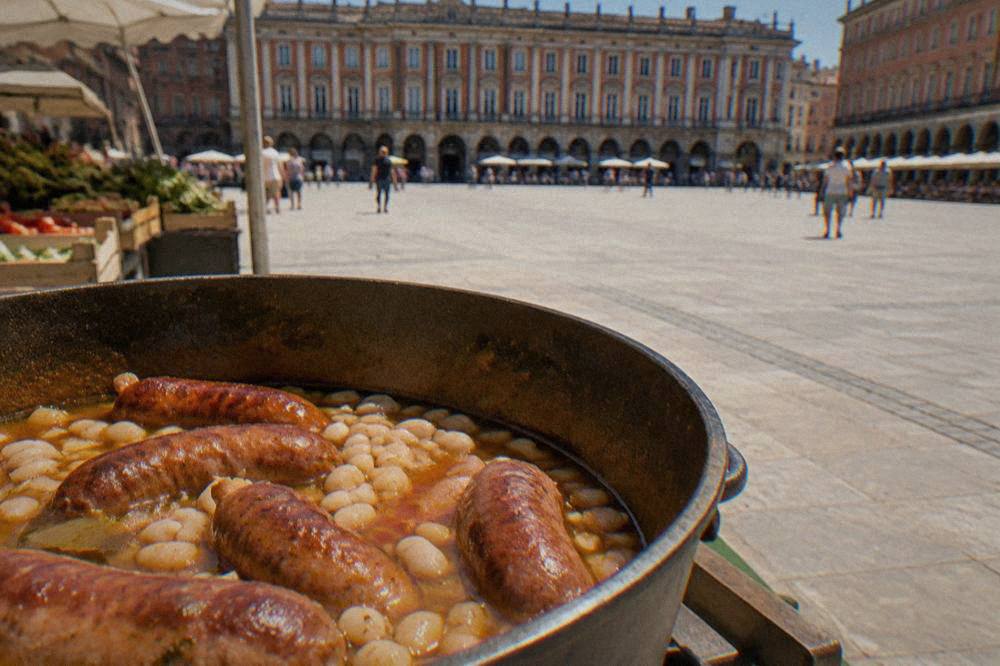
A guided food walk is the shortcut to the table. A guide who moves through the market and the center can show which sausages carry the local name, which beans the cooks buy and how the pot is assembled, and the tasting stops along the way do the explaining that a menu cannot. The gourmet walk profiled above is one option; the sightseeing minibus below is the opposite approach, a way to see the city's layout first and eat second.
What Else Is On The Toulouse Plate?
Beyond cassoulet, the Toulouse plate carries the Toulouse sausage as a product in its own right, the violet in sweet and sugared forms, the city's market and charcuterie traditions, and the southwest's duck and confit cooking, all of which the city presents as part of one food identity rather than a list of separate dishes. The sausage is the second signature, the violet is the sweet one.
The sausage deserves its own sentence. It is the element that puts the city's name in the pot, and it is sold across the region as a named product, fresh and garlic-heavy, coarse-ground rather than fine. The violet is the other emblem: Toulouse's confectioners have long worked the flower into sweets, and the city's affection for it shows up in the markets and the specialty shops. Neither this page nor any honest guide can rank the city's restaurants, but the traditions themselves are easy to name and easy to find.
A food-focused day in the city can also take in the sights without spending much, because several of the verified entry prices in the center are low or zero with the right pass. The tourist office's Pass Tourisme page lists the figures below, and they give a sense of how cheap the non-food part of a food day can be.
| Item On A Food-Day Itinerary | Normal Rate Listed By The Tourist Office | With The Pass Tourisme |
|---|---|---|
| Couvent des Jacobins | EUR 5 | Free |
| Musee des Augustins | EUR 5 | Free |
| Fondation Bemberg | EUR 12 | Free |
| Les Abattoirs | EUR 12 | Free |
| Pass Tourisme itself (1 to 3 days) | EUR 26 | Includes a free guided tour |
| Transport add-on (10 trips) | EUR 10 | Optional extra |
The Couvent des Jacobins also runs a free first Sunday of the month except when a temporary exhibition is on, a detail its own city page states, so a market morning followed by a free monument visit is a realistic Sunday in the city.
Can A Guided Tour Introduce You To The Toulouse Table?
A guided tour can introduce you to the Toulouse table efficiently, because the city's food walks tie the cassoulet, the sausage and the market tradition to the streets they come from, and the guides on this site's roster walk the same quarters the dish is cooked in. It is the fastest honest route from the question to the plate.
The options split by style. A food walk with tastings does the eating. A general walking tour does the geography, the Capitole, the basilica and the river, which is the context the food sits in. A sightseeing circuit by minibus covers the same ground for anyone who would rather ride between meals than walk. The trio below covers all three angles.
Common Questions About The Toulouse Signature Dish
Quick answers to what planners ask most about the city's signature plate.
What is the signature dish of Toulouse?
Cassoulet. It is a slow-cooked casserole of white beans, Toulouse sausage and duck or goose confit, baked in a cassole, the earthenware pot that gives the dish its name, and the city treats it as its emblem on the table.
What exactly is a cassoulet?
A cassoulet is a bean casserole cooked slowly in an earthenware dish, layered with preserved meats, in Toulouse's version the local garlic sausage and duck confit, and finished with a crust that is pressed back into the beans during cooking. This site has a full page on what exactly is a cassoulet.
What is the secret to a good cassoulet?
The local tradition points to the beans holding their shape, the quality of the sausage and confit, and the long oven time that builds the crust, which is pressed back into the pot several times. The page on what is the secret to a good cassoulet goes through the arguments in detail.
Where do locals eat cassoulet in Toulouse?
In the restaurants of the historic center and around the Victor Hugo market, where the dish is a house specialty rather than a tourist menu item. The page on where do locals eat in Toulouse covers the neighborhoods and habits.
What is special about Toulouse sausage?
It is a fresh, coarse-ground garlic sausage that carries the city's name as a product in its own right, and it is the element that puts Toulouse in the cassoulet pot. It is sold across the region's markets, including the Victor Hugo market in the center.
Can you try the dish on a guided tour?
Yes. The food walks on this site's roster, including the gourmet cheese, wine and heritage walk profiled above, move through the market quarter where the dish's ingredients are sold, with tastings along the way. Check availability on the operator's live listing for current times.
The signature dish of Toulouse is not a hidden one. It sits in the center of the city's food identity, in the market stalls that sell its ingredients and in the pots that come out of the ovens of the historic center every evening, and this Toulouse Travel Guide covers the rest of the table, from the sausage to the violet, on the pages linked above.