Toulouse Marathon
The Toulouse marathon turns the pink-brick streets of southwestern France's aerospace capital into a single running course for one Sunday each year. Here is how to plan the trip around it.
Short answer
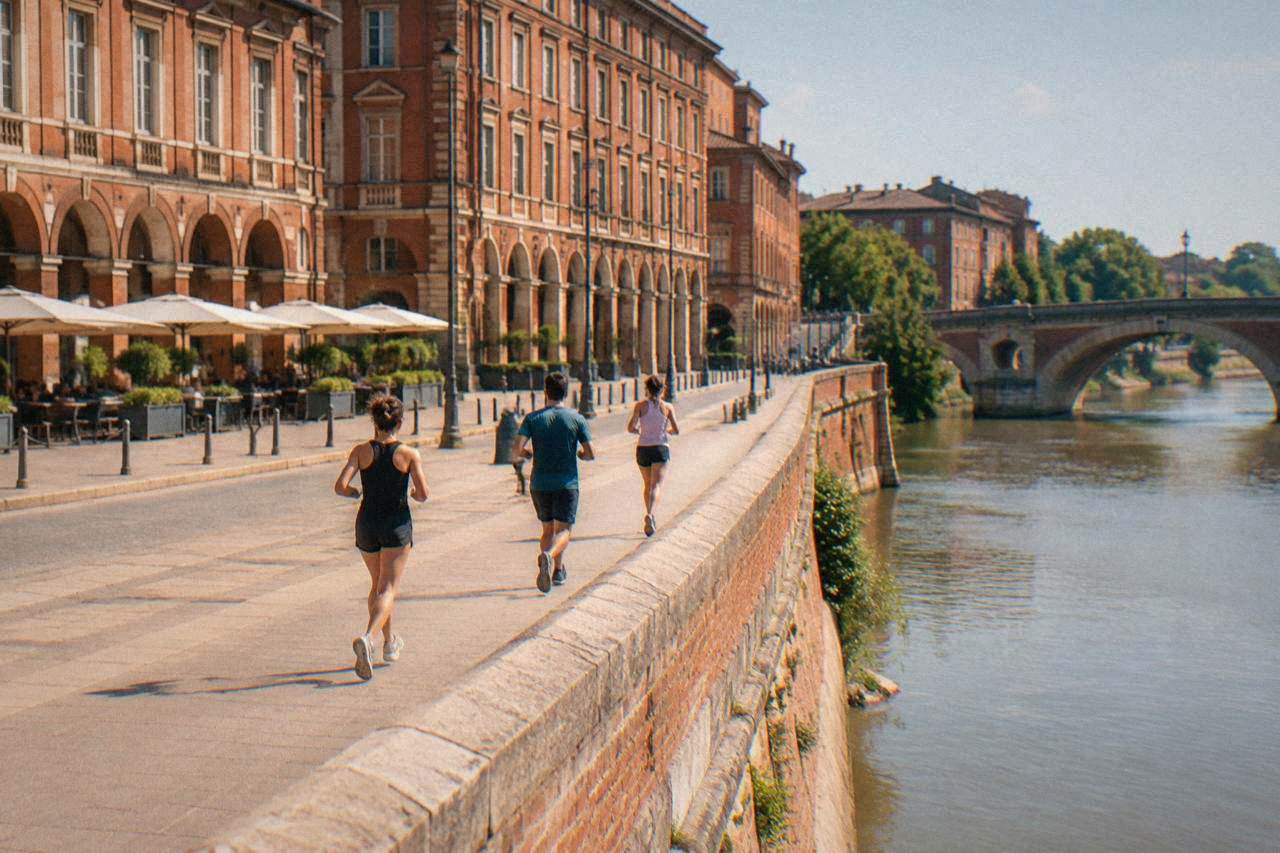
The Toulouse marathon is an annual road race through the pink-brick city on the Garonne in southwestern France. The organiser has not confirmed a date for the next edition on its own channels, so check the event site before booking. Toulouse is easy to reach by air and rail, compact enough to cross on foot, and warm for running well into autumn.
The Toulouse marathon gives runners a course through one of the most distinctive cities in southwestern France: La Ville Rose, the pink-brick city on the Garonne, whose terracotta facades line the streets between the Capitole and the river. This guide covers what the event is, how to get there and around, where to base yourself, what the weather does to your race plan, and how to fill the hours when you are not running. The event sits inside a city that is compact, walkable and famously warm in color, which makes it a good anchor for a whole weekend rather than a single race day.
What Is The Toulouse Marathon?
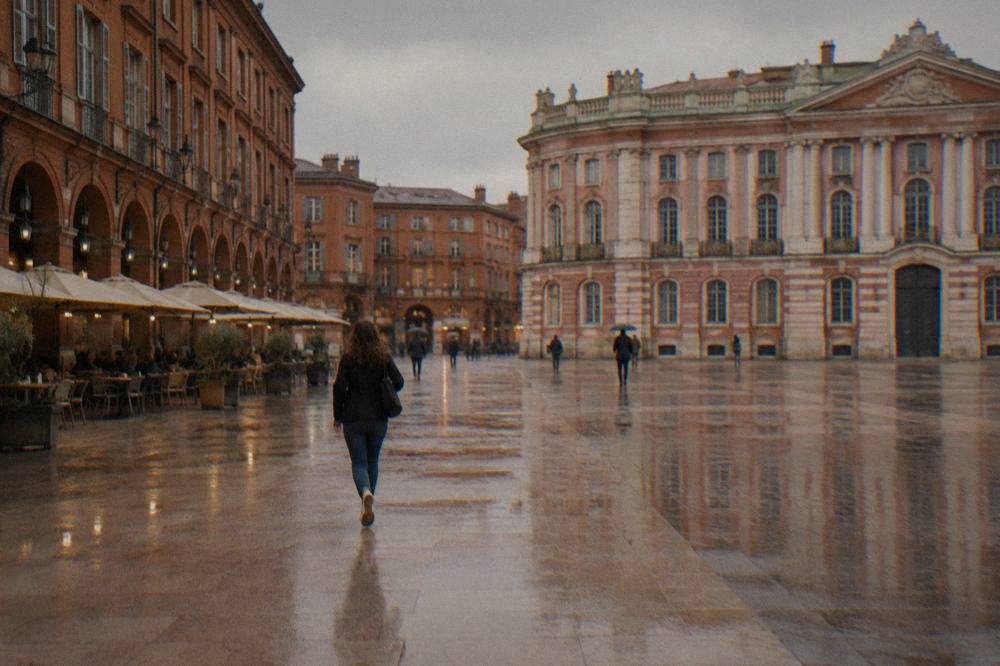
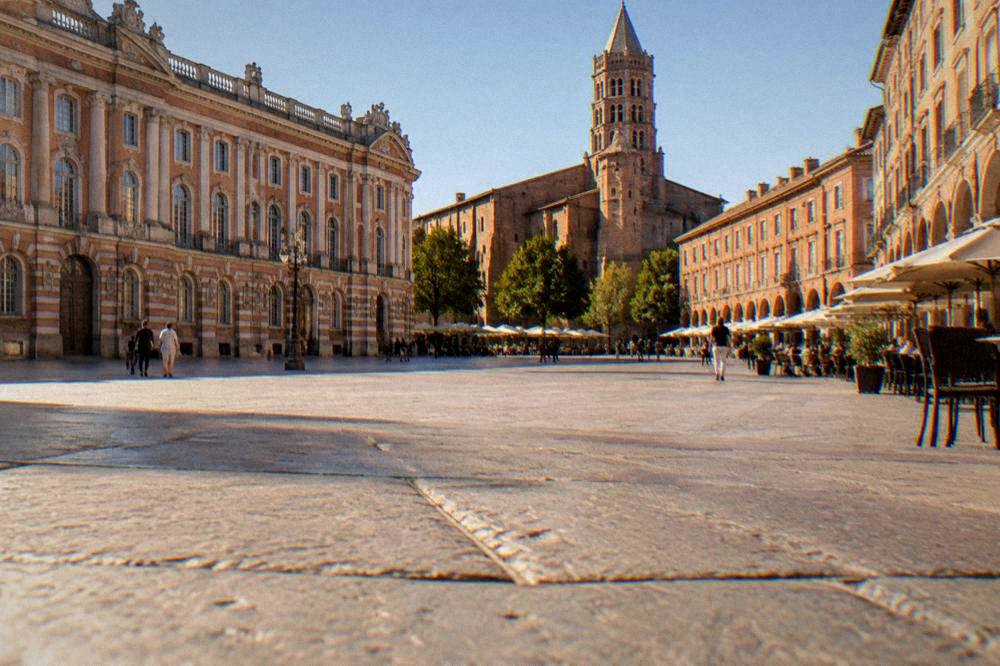
The Toulouse marathon is an annual road running event held in Toulouse, the pink-brick prefecture of Haute-Garonne in the Occitanie region of southwestern France, with a race village and finish festivities built around the Place du Capitole, and it is organized under the banner of the Toulouse Metropole run experience, which bundles the marathon distance with shorter races so that runners of different levels can take part across the same weekend. The city itself is the real draw: the course architecture of any given year is set by the organiser, but the setting, a low-rise city of rose-colored brick on the Garonne crossed by the Canal du Midi, stays constant.
Toulouse is an inland city, so nobody comes here for sea air. What runners get instead is a flat river city with a mild climate, a large student population and a strong sporting culture. Rugby is the city's loudest sport, and a marathon weekend sits comfortably inside that atmosphere of people who take their sport seriously but socially. If you are weighing Toulouse against better-known French marathon cities, the comparison guide on Toulouse versus Lyon and the one on Toulouse versus Bordeaux break down what each city offers a visitor.
The event weekend also gives you a ready-made excuse to see one of France's most underrated city centers. The basilica of Saint-Sernin is part of a UNESCO World Heritage listing, the Couvent des Jacobins is one of the finest brick Gothic buildings in the country, and the Capitole anchors a downtown you can cross on foot between the race village and your hotel. A weekend built around the marathon leaves room for all of it.
When Does The Toulouse Marathon Take Place?
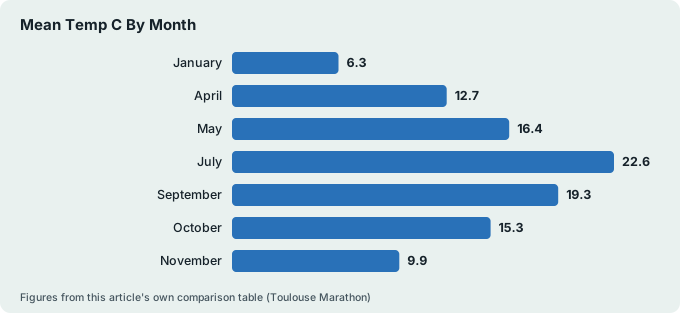
The Toulouse marathon has recently run in late autumn, but the organiser has not confirmed a date for the next edition on its official channels, so treat any date you see on third-party sites as provisional and check the event's own site before booking travel. Recent editions have clustered around the end of October and the beginning of November, a window that suits the city's climate: October averages a mean temperature of 15.3 C and November 9.9 C, cool enough for a road race without the summer heat that pushes Toulouse past 30 C on more than eleven days each July.
The honest position for a planner is this: pick your weekend once the organiser opens entries, then build flights and hotels around the confirmed date. Third-party race calendars have listed a Sunday in early November for the coming edition, with an event village on the Place du Capitole in the days before, but that listing is not the organiser's own confirmation. Late autumn in Toulouse is a good running window regardless, so a trip planned for that season works even if you end up running the city on your own route rather than the official one.
The wider events calendar matters here too, because a marathon weekend in October or November overlaps with several verified city events. Piano aux Jacobins runs 8 to 30 September 2026, Toulouse les Orgues holds its 31st edition from 7 to 18 October 2026 with the opening concert at Notre-Dame de la Daurade on 7 October, and the Christmas markets open on the Place du Capitole, the allees Jean-Jaures and the square Charles-de-Gaulle from 26 November to 27 December 2026. A runner arriving for a late-autumn race can catch the tail of the organ festival or the front of the market season depending on the exact weekend.
How Do You Get To Toulouse And Around On Race Weekend?
Toulouse-Blagnac airport handled 7,621,409 commercial passengers in 2025 and connects to the city by the Navette aeroport bus, which runs one departure every 15 minutes and takes 20 to 40 minutes to the center, while the airport tram stop has been closed since 5 June 2023 for metro works until the end of 2026. In the city, the Tisseo network's metro, tram and bus lines cover the whole urban area, and a single trip costs EUR 1.90, with a day pass at EUR 7.20 and a 3-day pass at EUR 14.30. For anyone arriving from Paris or elsewhere in France, getting to Toulouse by train is straightforward, and the full arrival options are covered in the Toulouse airport guide.
One transport fact matters more than any other for race weekend: do not plan on the tram to the airport. Tram T2 to the airport has been closed since 5 June 2023 and stays closed until the end of 2026 because of the Line C metro works. The Navette aeroport bus is the replacement, running every 15 minutes and reaching the center in 20 to 40 minutes, with a journey to the Matabiau bus station taking about 25 minutes. Buses 30 and 31 take about 45 minutes to the Capitole with changes. The airport single, covering the Tisseo network plus the Navette, costs EUR 9.50.
| Tisseo ticket | Price | Notes |
|---|---|---|
| Single trip | EUR 1.90 | Bought before boarding |
| Single trip, last minute on board | EUR 2.50 | More expensive, avoid |
| 10 trips | EUR 16.00 | Good for a long weekend |
| Day pass | EUR 7.20 | Unlimited travel for one day |
| 3-day pass | EUR 14.30 | No 2-day pass exists |
| Airport single | EUR 9.50 | Tisseo network plus Navette aeroport |
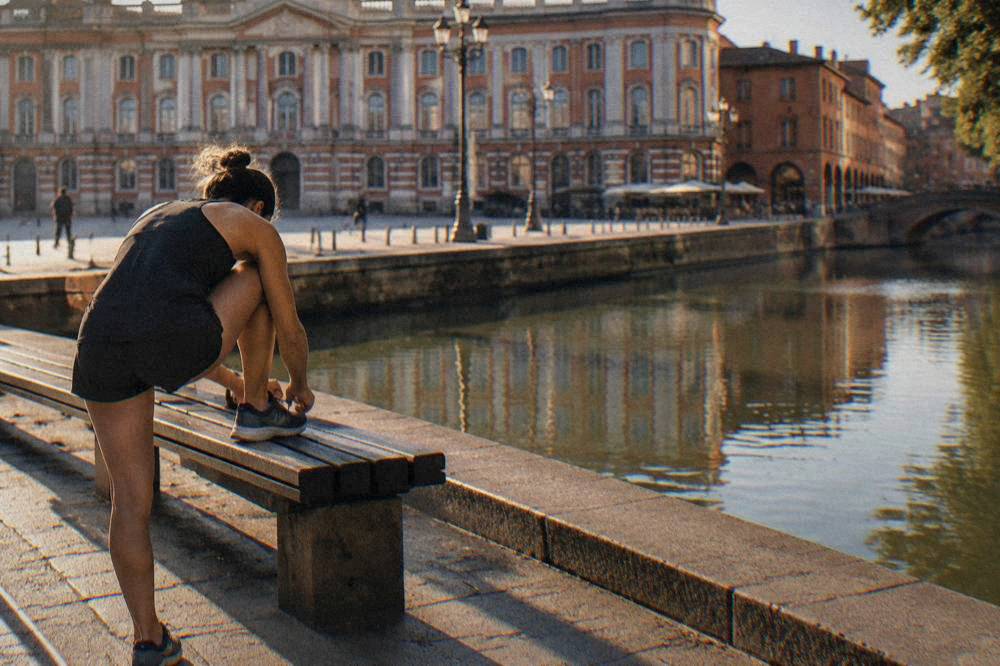
Getting around the city center barely needs the metro at all: the distance between the Capitole, the Garonne and Saint-Sernin is walkable, which is exactly what you want the day before a race when your legs should be resting. The full picture, including the Line C metro that opens at the end of 2028, is in the getting around Toulouse guide. If you would rather have someone else do the walking for you on race weekend, a sightseeing option is worth considering before your legs are committed to the full race distance.
A practical note on timing your arrival: aim to land by Friday evening for a Sunday race, so Saturday is free for the race village, your kit check and an easy pasta dinner. The flights to Toulouse guide lists the airlines and routes, and anyone needing wheels for a wider trip through Occitanie should read the car hire in Toulouse guide before deciding, though for the race weekend itself a car is more burden than help in a city this compact.
Where Should You Stay For The Toulouse Marathon?
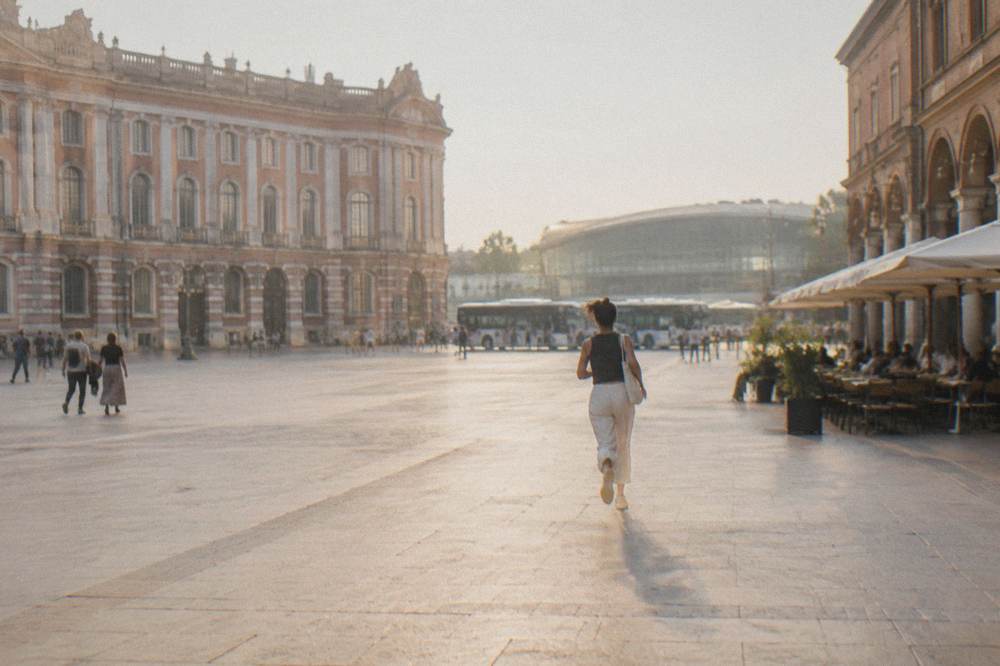
The best base for the Toulouse marathon is the area between the Place du Capitole and the Garonne, which puts you within walking distance of the race village, the riverside and the main sights, with the Carmes and Saint-Etienne quarters just south of the center offering quieter streets a short walk from the start. Toulouse is compact enough that almost any central hotel leaves you within a reasonable pre-race walk, so the real choice is between atmosphere and price rather than distance. The full neighborhood-by-neighborhood breakdown is in the where to stay in Toulouse guide.
One verified budget item belongs in every race-weekend calculation: the tourist tax. Toulouse Metropole charges 5% of the pre-tax nightly price per person per night on non-classified or pending-classification lodging, which includes most platform rentals. Hotels and apartments at the classified end pay flat rates set by the metropole, but those per-star figures have not been verified on the official page, so check your final price rather than budgeting from a remembered rate.
| Area | Character | Why It Suits A Marathon Weekend |
|---|---|---|
| Capitole and Saint-Georges | The heart of the city | Steps from the race village and the finish |
| Carmes | Brick lanes, small squares | Quiet nights, short walk to the center |
| Saint-Etienne | Cathedral quarter, food streets | Restaurants for the pre-race dinner |
| Saint-Cyprien | Across the river, local feel | Calmer, with riverside walking routes |
| Compans-Caffarelli | Business district near the Japanese garden | Modern hotels, quick metro access |
Book early, whatever you choose. A citywide event compresses central availability, and the tourist tax means the price you see on a booking page may not be the price at checkout. If your trip stretches beyond the race, the Toulouse hostels and apartments options cover the lower end of the market, and anyone combining the marathon with a longer stay through Occitanie will find the day trips from Toulouse guide useful for the days after your legs forgive you.
What Is The Weather Like For Running In Toulouse?
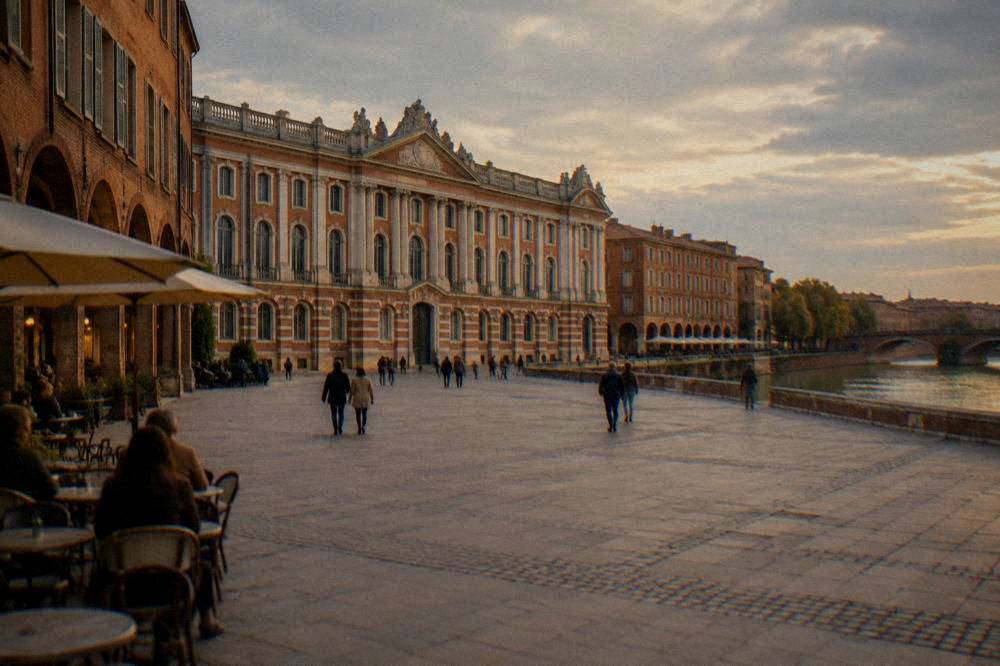
Meteo-France's 1991-2020 normals for Toulouse-Blagnac show an annual mean maximum of 18.8 C, a mean minimum of 9.6 C, 627 mm of rain spread over 95.8 rain days, and 2,075.1 hours of sunshine, with October averaging a 15.3 C mean and November 9.9 C, which makes late autumn one of the most comfortable running windows of the year. The surprise in the data is where the rain falls: May is the wettest month at 73.6 mm, well ahead of February's 37.2 mm, so a spring marathon build in Toulouse faces more weather than the calendar suggests. July is the sunniest month at 258.6 hours, with 40.1 mm of rain and 11.5 days a year above 30 C.
For a runner, the numbers translate simply. A late-autumn race means cool mornings, typically in single digits Celsius at the start line, and mild afternoons: ideal marathon conditions. A summer race, if the organiser ever moved the date, would be a different proposition, since August averages a 22.8 C mean and the record high for the station is 42.4 C, set on 23 August 2023. The record low, -19.2 C on 15 February 1956, is a reminder that winter training blocks in Toulouse can be genuinely cold, though far from that extreme in a normal year.
| Month | Mean temp C | Rain mm | Sunshine hours |
|---|---|---|---|
| January | 6.3 | 52.5 | 89.1 |
| April | 12.7 | 65.2 | 188.5 |
| May | 16.4 | 73.6 | 212.3 |
| July | 22.6 | 40.1 | 258.6 |
| September | 19.3 | 45.7 | 210.1 |
| October | 15.3 | 54.3 | 155.2 |
| November | 9.9 | 55.0 | 99.9 |
The month-by-month detail, including every monthly figure from the same Meteo-France normals, is in the Toulouse weather guide, and the broader question of when to come is covered in the best time to visit Toulouse. For race day itself, the practical advice is layered clothing you can discard at the start, since a 9 C morning feels very different standing still than it does at kilometer 30.
What Should You Eat Before And After The Race?
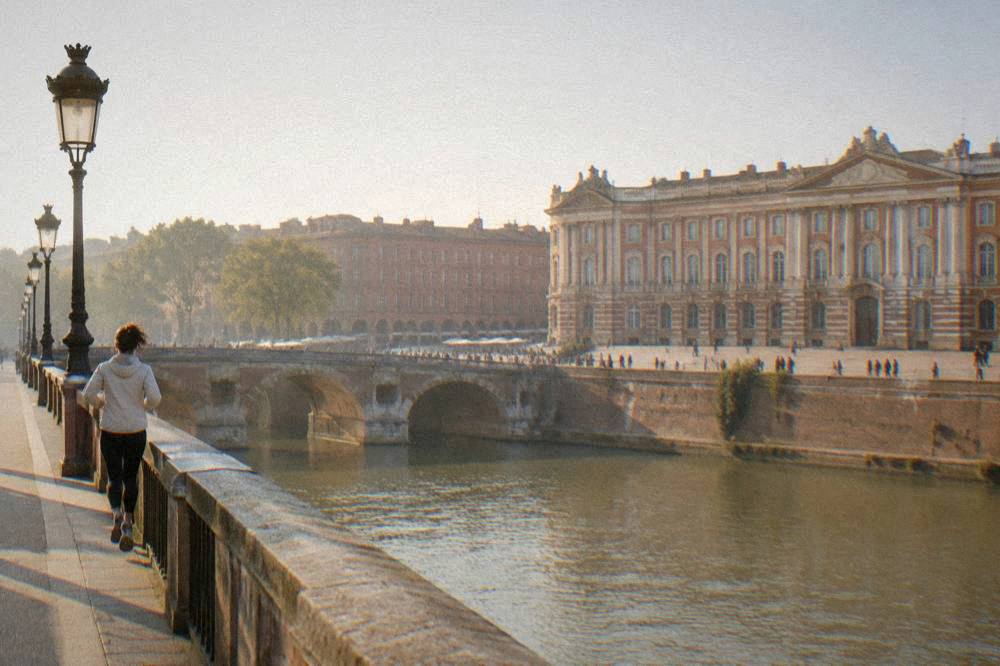
Cassoulet is the dish Toulouse is famous for, a slow-baked casserole of white beans, sausage and confit, and it is exactly the wrong thing to eat the night before a marathon but exactly the right reward for the evening after it. The city's food culture is built around the Victor Hugo market, where the raw materials of southwest French cooking, from Toulouse sausage to the region's cheeses, are sold from stalls under one roof, and around a restaurant scene that takes its time seriously. The Toulouse food guide covers the territory, and the dedicated cassoulet guide explains the dish and the arguments around it.
For the pre-race dinner, the practical move is the one every runner knows: plain, carbohydrate-forward and eaten early, since dinner in Toulouse, as across France, tends to start later than northern Europeans expect. The restaurant landscape is covered in the Toulouse restaurants guide, where you can find places that will serve a simple plate at an early hour rather than the full regional spread. Save the full spread, the cassoulet, the sausage, the wine, for after the finish line, when it becomes a celebration rather than a liability.
| Meal moment | What to look for | Where the guide covers it |
|---|---|---|
| Pre-race dinner | Simple pasta or plain grilled dishes, eaten early | Toulouse restaurants guide |
| Race-morning breakfast | Hotel breakfast or a bakery near your hotel | Toulouse food guide |
| Post-race celebration | Cassoulet, Toulouse sausage, local wine | Cassoulet guide |
| Market grazing | Victor Hugo market stalls | Toulouse markets and food guides |
A food tour works best on the day after the race, when your appetite has returned and your legs are happy with a slow walk between stops. The market itself sits inside the center, so the walk to and from it doubles as an easy recovery leg-stretcher through the pink-brick streets.
What Else Can You Do In Toulouse On Marathon Weekend?
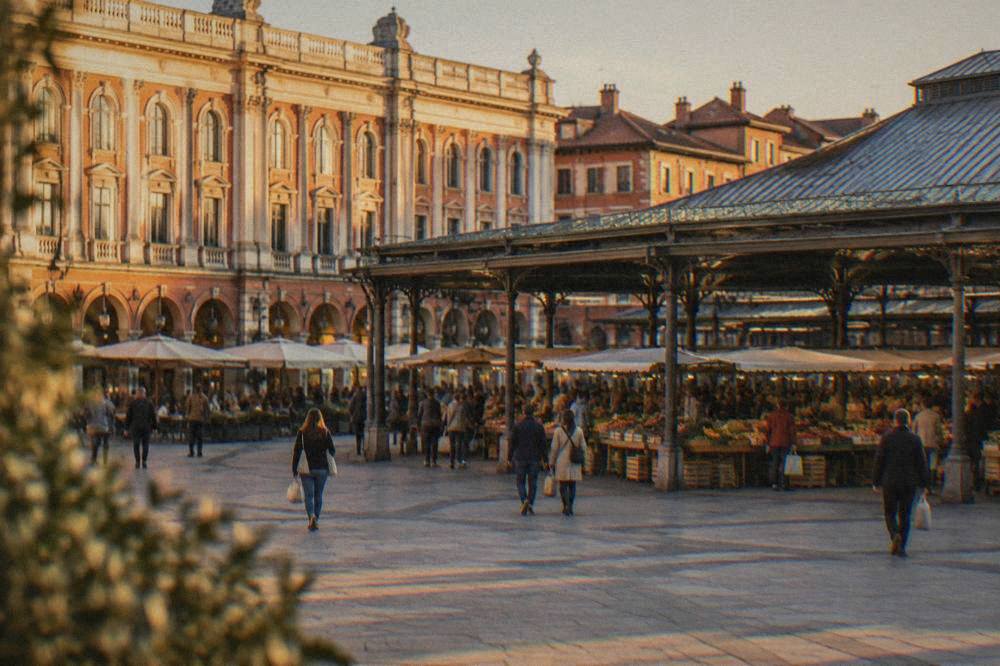
A marathon weekend in Toulouse can absorb the basilica of Saint-Sernin, a UNESCO-listed monument as part of the Routes of Santiago de Compostela inscribed in 1998, the Couvent des Jacobins, the Capitole, the Garonne riverside and the Cite de l'espace, whose normal adult rate is EUR 29, all without a car and mostly on foot. The city's sights are unusually concentrated: the Saint-Sernin guide, the Capitole guide and the Couvent des Jacobins guide between them cover a walkable triangle you can cover in a single afternoon, which is precisely the kind of sightseeing a runner can manage on tired legs.
Two planning warnings worth noting. First, the Musee des Augustins is temporarily closed from 21 September to 2 October 2026 for great-cloister works, with its Gothic halls, the sacristy, the Notre-Dame de Pitie hall and the chapter house, reopening on 3 October 2026 from 10:00, so check the calendar against your race weekend. Second, the Couvent des Jacobins is free on the first Sunday of the month except when a temporary exhibition is on, a rule stated for the Jacobins alone, so do not assume it applies to other museums. The tourist office's Pass Tourisme, at EUR 26 for stays of 1 to 3 days, covers several museums and includes a free guided tour from the office, and the full math is in the Pass Tourisme guide.
| Sight | Verified detail | Fit for a race weekend |
|---|---|---|
| Basilique Saint-Sernin | Part of the UNESCO Santiago de Compostela listing, 1998 | Short visit, central |
| Couvent des Jacobins | EUR 5 normal rate, free first Sundays | Central, easy walk |
| Musee des Augustins | EUR 5 normal rate, closed 21 Sep to 2 Oct 2026 | Check dates first |
| Cite de l'espace | EUR 29 normal adult rate | Half day, needs transport |
| Aeroscopia | EUR 16 adult, open daily 9:30-18:00 | Aviation fans, near the airport |
If your legs have nothing left, the aerospace side of the city, from Aeroscopia's aircraft museum to the Airbus factory tours, is covered in the Airbus factory tour guide, and the wider museum landscape in the Toulouse museums guide. Sport fans should also read the Toulouse rugby guide, because a city that fills its stadium for rugby treats a marathon finish line with the same noise.
Is The Toulouse Marathon Worth Building A Trip Around?
Yes, provided you treat the race as the anchor rather than the whole trip: the Toulouse marathon gives you a confirmed weekend in a compact, warm-colored city with UNESCO-listed monuments, a famous food culture and easy transport, and the honest caveat is that the organiser's next date is not yet confirmed on its own channels, so book nothing until it is. The city rewards a long weekend generously. Three days is enough to run the race, see the core sights and eat properly, and the 3 days in Toulouse itinerary shows exactly how the pieces fit together, while the shorter one day in Toulouse plan works for supporters who only have a single free day.
The comparison that matters for a runner choosing between French race cities is atmosphere per kilometer. Toulouse is not the largest city in France, a rank no source here supports, but its 514,819 residents give it the scale of a real city while its center stays small enough to feel personal on a race morning. The question of whether the city justifies the trip at all is answered at length in is Toulouse worth visiting, and the basics of its location, on the Garonne in the Occitanie region of southwestern France, are in where is Toulouse.
For runners who want to stretch the trip after the race, the region delivers: Carcassonne, Albi and the Pyrenees are all reachable as day trips, and the day trips from Toulouse guide ranks the options. This site, Toulouse Travel Guide, exists to make exactly this kind of planning simple. A guided highlights walk is the single best way to see the pink-brick center if your sightseeing hours are squeezed between the race village and the start gun, and the related tour below covers exactly that ground.
Whatever your finish time, the city will still be pink at the end of it, and the markets, the riverside and the cassoulet will all be waiting the next morning.
Common Questions About The Toulouse Marathon
Quick answers to what runners and their supporters ask most about the Toulouse marathon.
When is the Toulouse marathon held?
The event has recently run in late autumn, but the organiser has not confirmed a date for the next edition on its official channels. Check the event's own site before booking flights or a hotel, and treat dates on third-party calendars as provisional.
How do I get from Toulouse airport to the race area?
The Navette aeroport bus runs one departure every 15 minutes and takes 20 to 40 minutes to the center, with about 25 minutes to the Matabiau bus station. The airport tram stop has been closed since 5 June 2023 until the end of 2026, so do not plan on the tram. The airport single costs EUR 9.50.
What is the weather like for running in Toulouse?
Meteo-France's 1991-2020 normals show an annual mean maximum of 18.8 C and 627 mm of rain over the year. October averages a 15.3 C mean and November 9.9 C, which makes late autumn comfortable for a marathon. May is the wettest month at 73.6 mm, not a winter month.
Is Toulouse easy to get around without a car on race weekend?
Yes. The center is walkable, and the Tisseo network covers the rest: a single trip is EUR 1.90, a day pass EUR 7.20 and a 3-day pass EUR 14.30. There is no 2-day pass in the official catalogue.
Where should I stay for the Toulouse marathon?
Anywhere between the Capitole and the Garonne puts you within walking distance of the likely race village and finish. The Carmes and Saint-Etienne quarters offer quieter streets a short walk from the center. Remember the tourist tax: 5% of the pre-tax nightly price per person on non-classified lodging, including most platform rentals.
What should I eat after finishing?
Cassoulet, the city's signature dish of beans, sausage and confit, is the traditional reward, with Toulouse sausage and local wine alongside it. Save it for after the finish line: it is far too heavy for a pre-race dinner.