Toulouse Esim
An eSIM is the simplest way to stay online in Toulouse, the pink-brick city on the Garonne in southwestern France, without swapping physical SIM cards or hunting for a shop on arrival.
Short answer
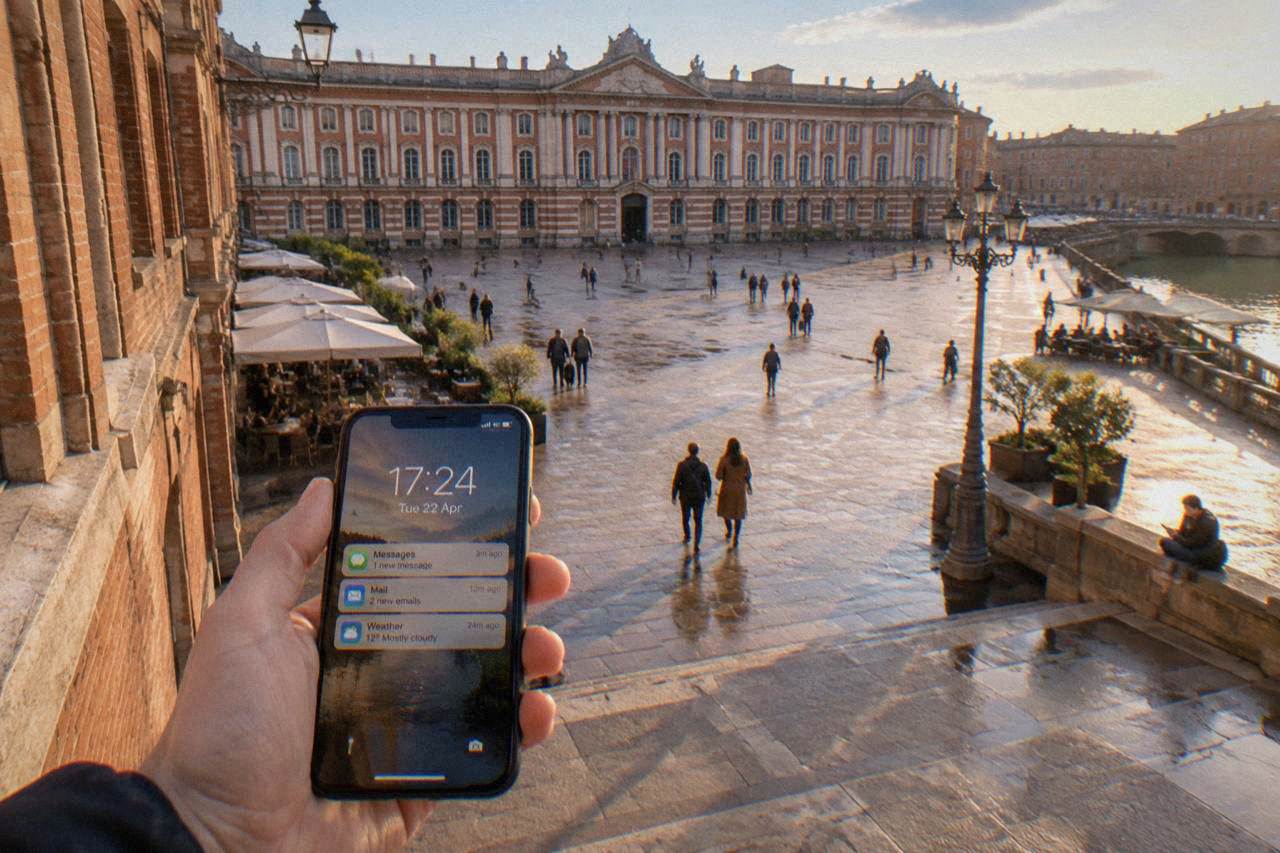
Buy a France eSIM before you fly, activate it when you land at Toulouse-Blagnac, and use it for maps, transit apps and bookings. France is in the EU and the Schengen area, so one European plan covers the whole stay.
An eSIM is the simplest way to stay online in Toulouse, the pink-brick city on the Garonne in southwestern France, without swapping physical SIM cards or hunting for a phone shop after a flight. The city is compact, walkable and well served by the Tisseo metro, tram and bus network, and almost everything a visitor needs, from transit tickets to museum entry, can be handled from a phone. This guide covers what an eSIM actually is, when to buy and activate one, how much data a Toulouse trip tends to consume, and which local apps and services are worth having in your pocket before you land at Toulouse-Blagnac.
What Is An eSIM And Why Does It Work Well In Toulouse?
An eSIM is a SIM card built into your phone's hardware that you activate by scanning a QR code or installing an app, and it works in Toulouse exactly as it does anywhere in France because France is in the EU and the Schengen area. You keep your home number for calls and texts while a second data plan runs in the background, so there is no physical card to lose and no shop to visit on arrival.
The practical difference is where you buy it. A traditional SIM means finding a storefront, queueing, and negotiating a plan in a language you may not speak. An eSIM is purchased and installed before you leave home, or from the airport wifi, and it connects to French networks the moment you land. Most modern handsets support eSIMs, though it is worth checking your specific model supports the feature before buying a plan.
For Toulouse specifically, the value is in the city's digital-first practicalities. Tisseo, the local transit operator, sells tickets through its own app and e-boutique, and the tourist office's Pass Tourisme can be researched and compared online before you commit. A data connection from the moment you step off the plane removes the scramble. To compare eSIM plans that cover France, you can browse France eSIM options here.

When Should You Buy And Activate Your Toulouse eSIM?
Buy your eSIM a few days before you fly and activate it after you land at Toulouse-Blagnac, or in airplane mode as the plane taxis to the gate. Most plans start their validity clock at first data use, not at purchase, so installing early costs nothing and activation on arrival gives you a working connection before you reach the terminal exit.
The airport is the natural activation point. Toulouse-Blagnac handled 7,621,409 commercial passengers in 2025, down 2.8% on 2024, and its public-transport links reward anyone who can check times on a phone immediately. The airport's own access page notes that the tram line T2 to the airport has been closed since 5 June 2023 and stays closed until the end of 2026 because of the metro Line C works, so the dedicated Navette aeroport bus is the public link, running one departure every 15 minutes and taking 20 to 40 minutes to the center. A working data plan at the gate means you can confirm the Navette schedule and buy the airport single, EUR 9.50 on the Tisseo catalogue, before you find the stop.
One timing note matters for anyone connecting through other countries. France is in the EU, and EU regulation means a plan sold for France generally roams across the union at no extra cost, so a connection via Paris, Amsterdam or Frankfurt works with the same eSIM. Check the specific plan's coverage list before buying, because some budget plans are France-only and some are Europe-wide.
If your trip extends beyond the city, our day trips from Toulouse guide covers Carcassonne, Albi and the Pyrenees, all reachable by coach tours or a direct train, and a data connection is what makes the spontaneous version of those trips possible.

How Much Mobile Data Do You Need For A Toulouse Trip?
For a typical city break, a plan in the range of 3 to 5 GB per week covers maps, transit apps, messaging and browsing in Toulouse, while anyone planning heavy navigation, streaming or hotspot use should look at 10 GB or more. Maps and transit apps are the big consumers, and they use far less data when you download offline maps on hotel wifi first.
The honest answer is that data use varies by habit, so treat any figure as a planning range and check your phone's own data statistics before you travel. What can be stated precisely is what you will use the connection for in Toulouse. The Tisseo app for transit tickets, a maps app for the pink-brick streets of the Carmes and Saint-Cyprian districts, museum and attraction bookings, and translation help if your French is rusty. Downloading offline maps of the city over hotel or cafe wifi is the single biggest data saving available.
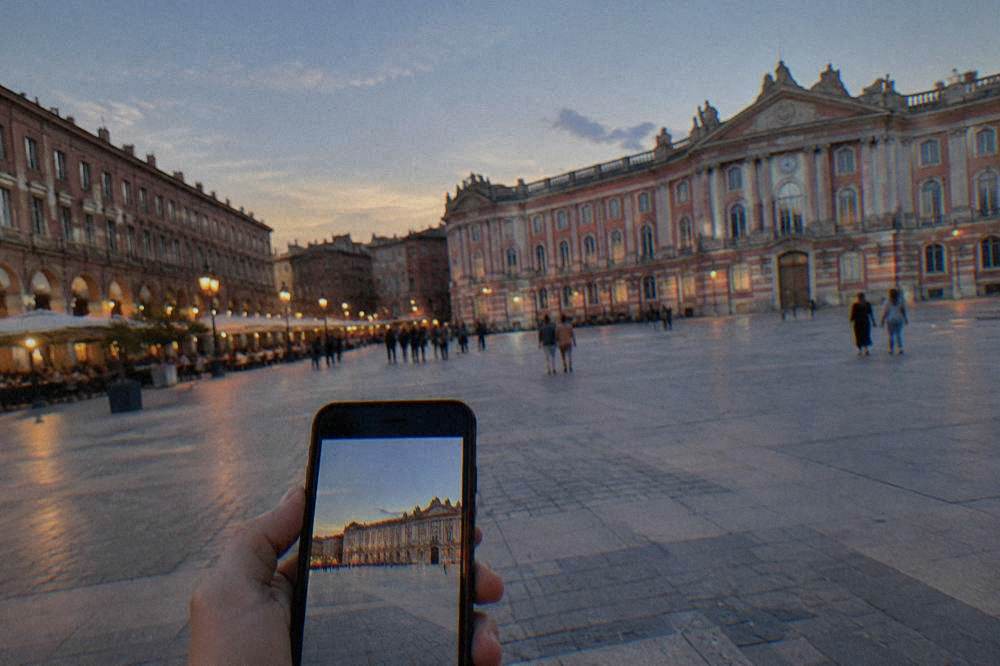
The other reason to stay connected is booking on the move. Toulouse's headline attractions, from the Cite de l'espace to the Aeroscopia aviation museum, sell tickets online, and the city's guided tours fill their small-group slots first. If you are deciding day by day what to do, a working connection at breakfast is what turns a plan into a booking. The Cite de l'espace guide and the Aeroscopia guide cover what each visit involves.
The Cite de l'espace's own homepage lists tickets from EUR 22.50, and the tourist office's Pass Tourisme page gives its normal adult rate as EUR 29 with a discount, not free entry, for pass holders. Booking ahead from your phone is the difference between walking in and standing at a desk working out fares.
Which Apps Should You Download Before Landing In Toulouse?
Download your transit app, a maps app with an offline map of Toulouse, your airline's app, and any booked tour's confirmation before you land, because airport wifi is slow and the terminal is not the place to be creating accounts. The Tisseo network of metro, tram and bus is the one transit system you will use, and its tickets are cheapest bought in advance rather than on board.
The Tisseo e-boutique catalogue gives the fares that matter. A single trip costs EUR 1.90 bought in advance, but EUR 2.50 if bought last-minute on board, so having the app or a ticket ready saves money on every ride. The full price list:
| Tisseo Ticket | Price |
|---|---|
| Single trip (bought in advance) | EUR 1.90 |
| Single trip (bought on board, last minute) | EUR 2.50 |
| 10 trips | EUR 16.00 |
| Day pass | EUR 7.20 |
| 3-day pass | EUR 14.30 |
| Airport single (network plus Navette aeroport) | EUR 9.50 |
Note that there is no 2-day pass on the catalogue. For a two-night stay the arithmetic favors single tickets or the day pass, and for three days the 3-day pass at EUR 14.30 undercuts ten singles. The getting around Toulouse guide goes deeper on the network itself.

Beyond transit, the apps worth having are the ones tied to your bookings. If you have booked a guided walk or a canal cruise, the operator's confirmation email and meeting-point details live on your phone. The same goes for the tourist office's Pass Tourisme, which costs EUR 26 for stays of one to three days and includes a free guided tour from the tourist office, with an optional EUR 10 add-on for ten public-transport trips. The Toulouse Pass Tourisme guide works out when it pays off, which the office itself says is from the third activity onward.
| Pass Tourisme Detail | Figure |
|---|---|
| Price (1 to 3 days) | EUR 26 |
| Transport add-on (10 trips) | +EUR 10 |
| Free guided tour from the tourist office | Included |
| Break-even point | From the 3rd activity |
The pass covers the museums the tourist office lists at their normal rates, which is where the savings stack up:
| Museum Or Monument | Normal Rate | With The Pass |
|---|---|---|
| Fondation Bemberg | EUR 12 | Free |
| Museum de Toulouse | EUR 12 | Free |
| Les Abattoirs | EUR 12 | Free |
| Musee des Augustins | EUR 5 | Free |
| Couvent des Jacobins | EUR 5 | Free |
| Cite de l'espace | EUR 29 | Discounted |
Does Airport Wifi Replace An eSIM At Toulouse-Blagnac?
Airport wifi covers you only for the minutes you spend inside Toulouse-Blagnac, and it does not help with the 20 to 40 minute bus ride into the center, with finding your hotel, or with anything you need the next morning. An eSIM is the connection that follows you from the terminal to the Place du Capitole, which is why airport wifi is best treated as a backup rather than a plan.
The airport's public transport options are worth knowing before you land, because the tram is not one of them. Tram T2 to the airport has been closed since 5 June 2023 and stays closed until the end of 2026 for the metro Line C works. The Navette aeroport runs one departure every 15 minutes, takes 20 to 40 minutes to the center, and the Navette to the Matabiau bus station takes about 25 minutes. Buses 30 and 31 take about 45 minutes to the Capitole with changes. The airport single on the Tisseo catalogue is EUR 9.50. Other pages covering the same trip are gathered on Toulouse Travel Guide.
| Airport Transport | Frequency Or Time | Notes |
|---|---|---|
| Navette aeroport to center | Every 15 minutes, 20 to 40 minutes | Airport single EUR 9.50 |
| Navette to Matabiau bus station | About 25 minutes | Same ticket family |
| Buses 30 and 31 to Capitole | About 45 minutes | With changes |
| Tram T2 | Closed | Closed since 5 June 2023, until end of 2026 |
The Toulouse airport guide and the airport to city center guide cover the full range of options including taxis and car hire, and the car hire in Toulouse guide is the one to read if your eSIM is going to be powering a navigation app from the driver's seat.

How Does Weather Affect Your Data And Planning In Toulouse?
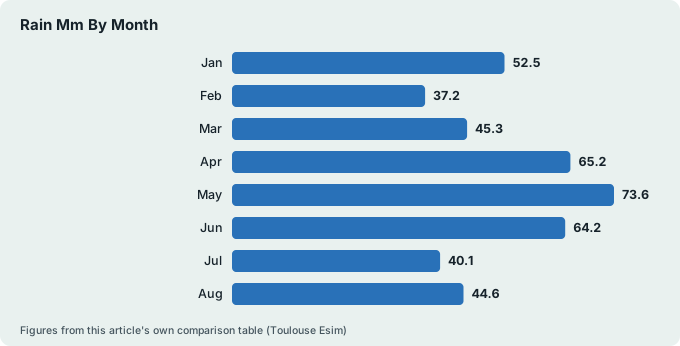
Toulouse's climate is mild enough that a data connection is a convenience rather than a lifeline, with annual averages of 627 mm of rain over 95.8 rain days and 2,075.1 hours of sun, but the rain is not where you expect it. May is the wettest month at 73.6 mm, almost double February's 37.2 mm, so spring visitors are the ones most glad of an indoor-option list on their phones.
Meteo-France's 1991-2020 normals for Toulouse-Blagnac give the monthly picture, and the surprise for visitors is that the wet months cluster in late spring, not winter. July is the sunniest month at 258.6 hours of sunshine with just 40.1 mm of rain, and there are 11.5 days a year above 30C. The records, from 1947 to June 2025, run from 42.4C on 23 August 2023 down to -19.2C on 15 February 1956.
| Month | Mean Temp C | Rain Mm |
|---|---|---|
| Jan | 6.3 | 52.5 |
| Feb | 7.1 | 37.2 |
| Mar | 10.3 | 45.3 |
| Apr | 12.7 | 65.2 |
| May | 16.4 | 73.6 |
| Jun | 20.3 | 64.2 |
| Jul | 22.6 | 40.1 |
| Aug | 22.8 | 44.6 |
| Sep | 19.3 | 45.7 |
| Oct | 15.3 | 54.3 |
| Nov | 9.9 | 55.0 |
| Dec | 7.0 | 49.3 |
What this means for connectivity is simple: a rainy May afternoon is when you will be searching for covered things to do, and a hot July afternoon is when you will be searching for shade and a cold drink. Both searches go better with data. The Toulouse weather guide and the best time to visit guide turn the same numbers into month-by-month advice, and the rainy day in Toulouse guide is the list to pull up when the sky opens.
Which Toulouse Experiences Are Worth Booking From Your Phone?
The experiences that sell out first in Toulouse are the small-group food tours, the canal cruises on the UNESCO-listed Canal du Midi, and the guided visits tied to the aerospace industry, so a working data connection at breakfast is what secures a same-day or next-day slot. Anything with a live guide and a capped group size benefits from early booking, while large attractions are more forgiving.
The Canal du Midi was inscribed by UNESCO in 1996 under criteria i, ii, iv and vi, and a cruise with commentary is one of the city's signature outings. The Canal du Midi guide covers the waterway and the canal boat trips guide covers the cruise options.
For a different angle on the region, a private sightseeing flight above Toulouse and the Pyrenees turns the phone in your pocket into a camera platform over the pink rooftops and the mountains roughly 100 km to the south. The tour card below carries the operator's live listing with current availability, and the day trips from Toulouse guide places the flight in the wider context of the region's mountain outings.
Food is the other category where booking ahead matters. Toulouse's cassoulet, markets and sausage culture are covered in the Toulouse food guide, and a guided food tour with tastings is the structured way into both. The card below shows the tasting walk's live listing, and the Victor Hugo market guide profiles the market that anchors several of them.
For seeing the city itself, a bike tour is the efficient middle ground between walking and transit. The card below carries a bike highlights tour's current details, and the three days in Toulouse itinerary shows what a full visit can hold.

What Should You Check On Your Phone During Your Toulouse Stay?
Toulouse's museum calendar has moving parts in 2026: the Musee des Augustins is fully closed from 21 September to 2 October 2026, reopening its Gothic halls on 3 October 2026, and the Musee Saint-Raymond, closed for works since 3 November 2025, reopened on 3 April 2026. A minute on the museum's own site saves a wasted walk.
The Couvent des Jacobins, by contrast, is open, with roof restoration under way on the church and visits adjusted for safety. It is free on the first Sunday of the month, except when a temporary exhibition is on, a rule stated for the Jacobins specifically rather than for every municipal museum. The Couvent des Jacobins guide and the Toulouse museums guide carry the details.
| Museum | Status In Late 2026 |
|---|---|
| Musee des Augustins | Closed 21 Sep to 2 Oct 2026, Gothic halls reopen 3 Oct 2026 |
| Musee Saint-Raymond | Reopened 3 April 2026 after renovation works |
| Couvent des Jacobins | Open, roof works under way, free first Sundays except during exhibitions |
Events are the other thing to check from your phone, because Toulouse's calendar has firm dates worth planning around. Piano aux Jacobins runs 8 to 30 September 2026, the 31st Toulouse les Orgues festival runs 7 to 18 October 2026 with its opening concert on 7 October at Notre-Dame de la Daurade, and the Christmas markets on the Place du Capitole, the allees Jean-Jaures and the square Charles-de-Gaulle run 26 November to 27 December 2026. Rio Loco returns 9 to 13 June 2027 with the theme Noctiluca.
| Event | Dates |
|---|---|
| Piano aux Jacobins | 8 to 30 September 2026 |
| Toulouse les Orgues (31st edition) | 7 to 18 October 2026 |
| Christmas markets (Capitole, Jean-Jaures, Charles-de-Gaulle) | 26 November to 27 December 2026 |
| Rio Loco | 9 to 13 June 2027 |
The Toulouse events guide and the Christmas market guide expand on these, and the Toulouse at night guide covers the evenings between them.

Do You Still Need An eSIM If Your Home Plan Roams In France?
If your home plan includes EU roaming at no extra charge, you may not need a separate eSIM for Toulouse at all, but check your plan's fair-use cap before relying on it, because roaming allowances are often lower than domestic ones. An eSIM is the backup that guarantees a known amount of data at a known price, which matters if your roaming cap is small or your trip is long.
The decision comes down to three questions. Does your plan include France in its roaming zone? What is the roaming data cap, and what happens when you exceed it? And how long is your stay? A short city break inside a generous roaming plan needs nothing extra. A longer stay, a work-heavy trip, or a plan with a tight cap is where a dedicated eSIM earns its place.
There is also the two-number case. Keeping your home SIM active for bank verification codes while running a local data plan is exactly the scenario eSIMs were built for, and it removes the choice between connectivity and security. Whichever way you go, the practical preparation is the same: offline maps downloaded, transit app installed, and bookings confirmed before you land.
The Albi and Cordes-sur-Ciel day trip in the trio above pairs well with a connected visit, since the medieval hilltown of Cordes-sur-Ciel rewards a photo-heavy day, and the Albi guide covers the UNESCO-listed cathedral town at the other end.
Common Questions About eSIMs In Toulouse
Quick answers to what planners ask most about staying connected in Toulouse.
Does an eSIM work in Toulouse?
Yes. France is in the EU and the Schengen area, and an eSIM plan covering France connects to the local networks in Toulouse the same way a physical SIM would, from the moment you activate it.
When should I activate my eSIM for Toulouse?
Install it before you fly and activate it when you land at Toulouse-Blagnac, or in airplane mode as the plane taxis to the gate. Most plans start their validity clock at first data use, not at purchase.
Can I use airport wifi instead of an eSIM?
Airport wifi covers only your time inside the terminal. It does not help with the 20 to 40 minute Navette bus ride into the center or with anything after you arrive, so treat it as a backup rather than a plan.
Will my EU roaming plan cover Toulouse?
Many home plans include France in their EU roaming zone at no extra charge, but roaming data caps are often lower than domestic ones. Check your plan's fair-use limit before relying on it for a whole trip.
What apps should I download before landing in Toulouse?
A maps app with an offline map of Toulouse, the transit app for Tisseo tickets, your airline's app, and any booked tour's confirmation. A single Tisseo trip costs EUR 1.90 bought in advance but EUR 2.50 on board, so the transit app saves money from your first ride.
With your connection sorted before you land, the rest of a Toulouse trip is the easy part: a day pass at EUR 7.20 covers the metro, tram and bus network, the pink-brick center is walkable between them, and the city's museums, markets and canal cruises are all bookable from the phone in your pocket.