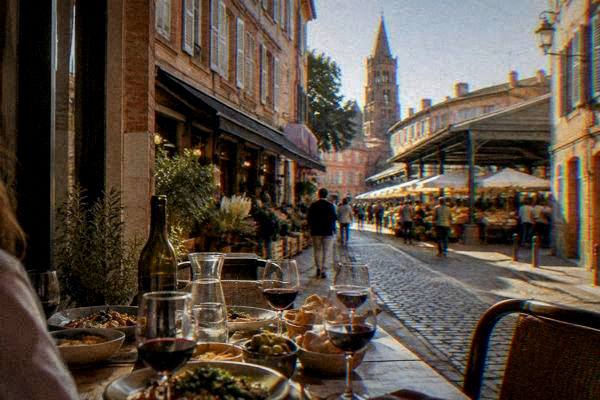
Croustade And The Sweet Side Of Toulouse: A Desserts And Sweets Guide
Croustade is the signature pastry of the Toulouse region, a thin-layered apple tart that belongs to the Gascon countryside just beyond the pink bricks, and it opens a sweet trail through the city's markets, confectioners and cafés.
Short answer
Croustade is a thin, layered pastry filled with apples, sugar and often a splash of Armagnac, traditional to the Gascon countryside around Toulouse. In the city itself you find it in traditional bakeries and market stalls, alongside violet sweets, candied fruit and the pastries of the Christmas market on Place du Capitole.
Croustade is the dessert that anchors this guide, a thin, golden, many-layered pastry filled with apples and sugar that belongs to the Gascon countryside surrounding Toulouse, the pink-brick city on the Garonne in the Occitanie region of southwestern France. The city itself has a sweet identity of its own, built on violets, candied fruit, market stalls and the pastry counters of neighborhoods like Saint-Aubin and the Carmes. This page walks through the croustade first, then the rest of what a sweet-toothed visitor should be looking for, with the practical context that turns a list of desserts into an actual eating plan.
The starting point matters because Toulouse is not usually thought of as a dessert city. It is famous for cassoulet, for aerospace, for the pink bricks that earned it the nickname La Ville Rose. Yet the surrounding region, Gascony and Languedoc, is one of the great orchard and pastry landscapes of France, and the city sits at the center of it, collecting apples from the orchards, prunes from Agen, Armagnac from the distilleries and violets from the farms that once supplied the confectioners. The Toulouse food guide covers the savory side of this inheritance. This page is the other half.
What Is Croustade, And Why Is It The Signature Sweet Around Toulouse?
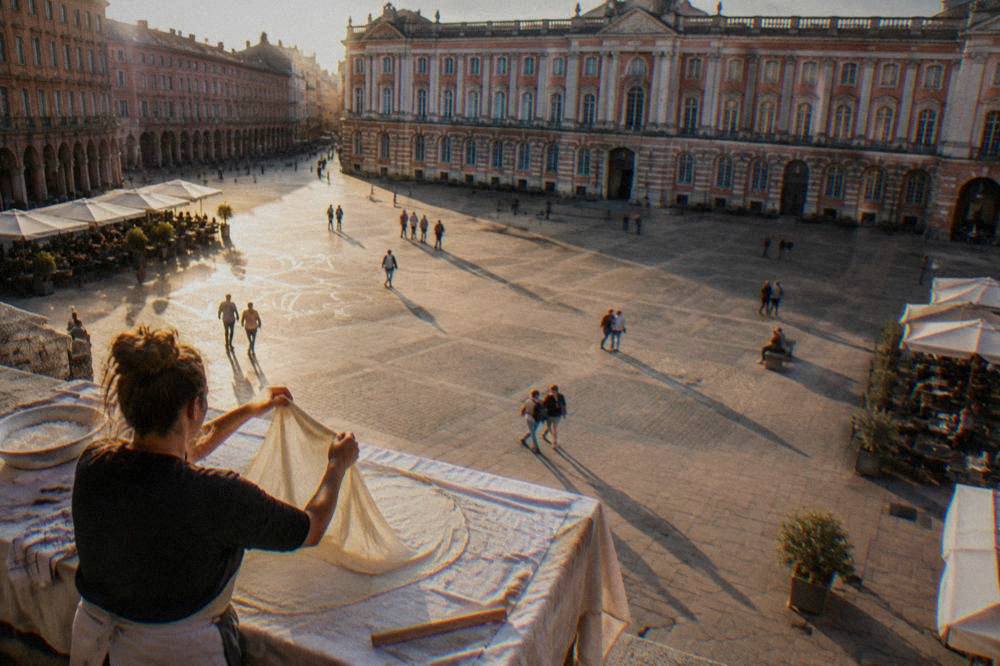
Croustade is a traditional Gascon pastry made from very thin sheets of dough stretched by hand, layered with sliced apples, sugar, butter and often a little Armagnac, then baked until the top shatters into crisp, caramelized leaves. It is the dessert of the orchard country that begins just outside Toulouse, and it appears in the city's traditional bakeries and market stalls, especially in autumn when the apple harvest comes in.
The pastry is closer in spirit to a strudel than to a French tarte, and that is no accident. The stretched-dough technique traveled through the southwest along trade routes that connected Gascony to the wider world, and the local orchards gave it its filling. The version to look for around Toulouse is the croustade aux pommes, apple croustade, sometimes called pastis in neighboring Gascon areas, a word that has nothing to do with the Provençal drink.
What separates a good croustade from a mediocre one is the dough. The sheets must be thin enough to read through, brushed with butter and stacked so the finished pastry flakes in distinct leaves rather than collapsing into a single dense layer. The apples should keep some shape after baking, soft but not dissolved, and the sugar should have caramelized at the edges into dark, almost bitter threads. A splash of Armagnac, the brandy of the region, is traditional in many recipes and appears in the versions sold in traditional pâtisseries.
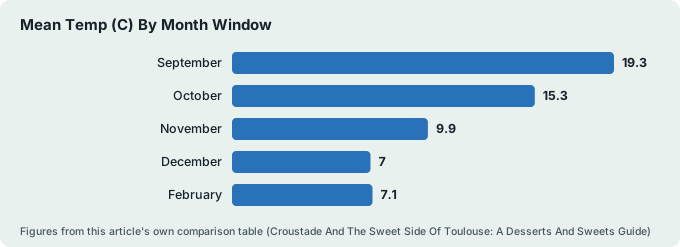
The apple harvest is the natural season. Apples come in from late summer, and the croustades in market stalls are at their best from September through winter. Meteo-France's 1991-2020 climate normals for Toulouse-Blagnac show September averaging a mean temperature of 19.3 C with 45.7 mm of rain, weather that keeps the market stalls stocked and the baking ovens welcome. By December, with the mean down to 7 C, a warm slice is one of the better reasons to be outdoors at all.
| Croustade Feature | What To Look For |
|---|---|
| Dough | Hand-stretched sheets, thin enough to see light through, layered with butter |
| Filling | Sliced apples that hold their shape, sugar caramelized at the edges |
| Aromatic | A splash of Armagnac in traditional versions |
| Season | Best from the apple harvest onward, September through winter |
| Texture | The top should shatter into crisp leaves, not collapse into one dense layer |
Where Do You Find The Best Croustade In Toulouse Itself?
The honest answer is that croustade lives in traditional bakeries, market stalls and the pâtisseries that keep Gascon recipes, rather than in any single famous address, and the two places to hunt systematically are the covered markets and the old-quarter bakeries around the Carmes and Saint-Aubin neighborhoods. Look for a counter where the croustade is sold by weight, cut from a whole round, which is the traditional way it is sold in the region.
The covered markets are the reliable first stop. The Marché Victor Hugo is the city's best-known market hall, and its stalls and surrounding shops carry the regional pantry: confit, foie gras, cheeses and, in season, the pastries of the surrounding countryside. The Saturday and Sunday morning markets in the Carmes and Saint-Aubin neighborhoods work the same way, smaller and more local, with producers who bring in from the orchard towns.
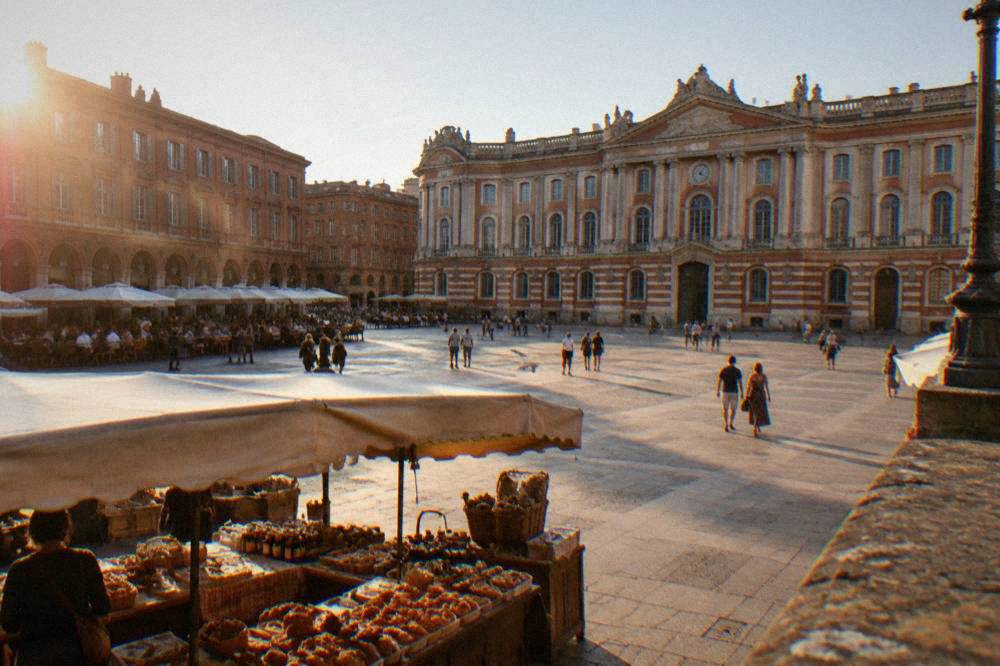
A practical note on timing: market stalls sell out. A croustade bought at 9 in the morning is a different object from the last wedge at 1 in the afternoon, and the best ones go first. The same applies to the pâtisseries of the old quarter, where the morning bake is what people queue for. If dessert is the point of the walk, plan the route around the morning rather than the afternoon.
If you would rather have the sweet trail organized for you, a guided food walk is the efficient version: the tastings come to you, and the guide carries the neighborhood knowledge that would otherwise take several visits to assemble. The Toulouse: Guided Food Tour with Tastings is the established option, and there is a market-centered version built around Victor Hugo, the Toulouse Victor Hugo Market Small Group Tasting Tour. Details and availability are on each listing.
If you would rather have the tastings organized for you, book a market tasting tour here.
| Sweet Stop | Neighborhood | What It Carries |
|---|---|---|
| Marché Victor Hugo | Around the Capitole | Regional pantry stalls, pastries, market-hall cafés |
| Carmes market | Carmes | Local producers, smaller stalls, neighborhood bakeries nearby |
| Saint-Aubin market | Saint-Aubin | Sunday-morning market, producer stalls, café terraces |
| Old-quarter pâtisseries | Saint-Étienne and the rue des Arts | Morning bake, traditional Gascon pastries |
What Are The Other Desserts And Sweets Toulouse Is Known For?
Beyond croustade, the sweet identity of Toulouse rests on four things: violet confectionery, from candied violets to violet-flavored bonbons; candied and dried fruit, especially the prunes and apricots of the southwest; the pastries of the Christmas market on Place du Capitole; and the everyday pâtisserie counters, from brioche to pain perdu, that fill the city's bakeries. Each has its own address and season.
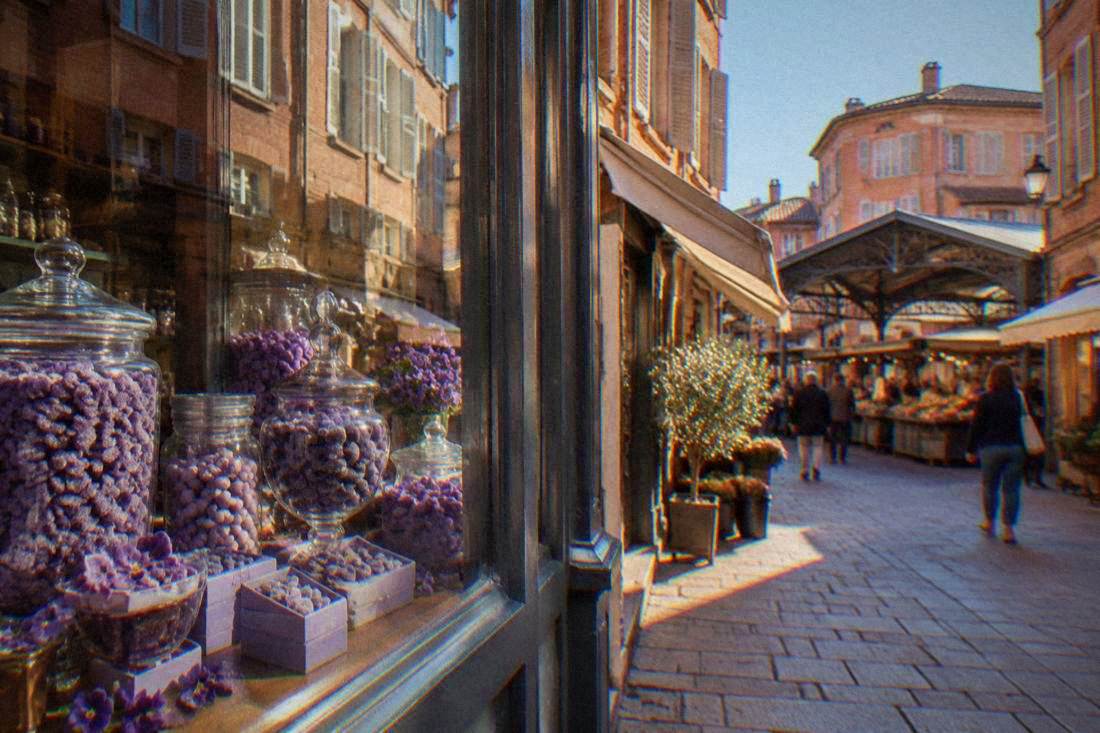
The violet is the one that surprises people. Toulouse has a long history of violet cultivation, and the flower appears in candies, syrups, crystallized petals and even liqueur. The Toulouse violets guide covers the full story, but the short version for a dessert hunter is that candied violets and violet bonbons are sold by the city's traditional confectioners and make the most portable souvenir on this page. They are also one of the few sweets that genuinely exists nowhere else in France in the same form.
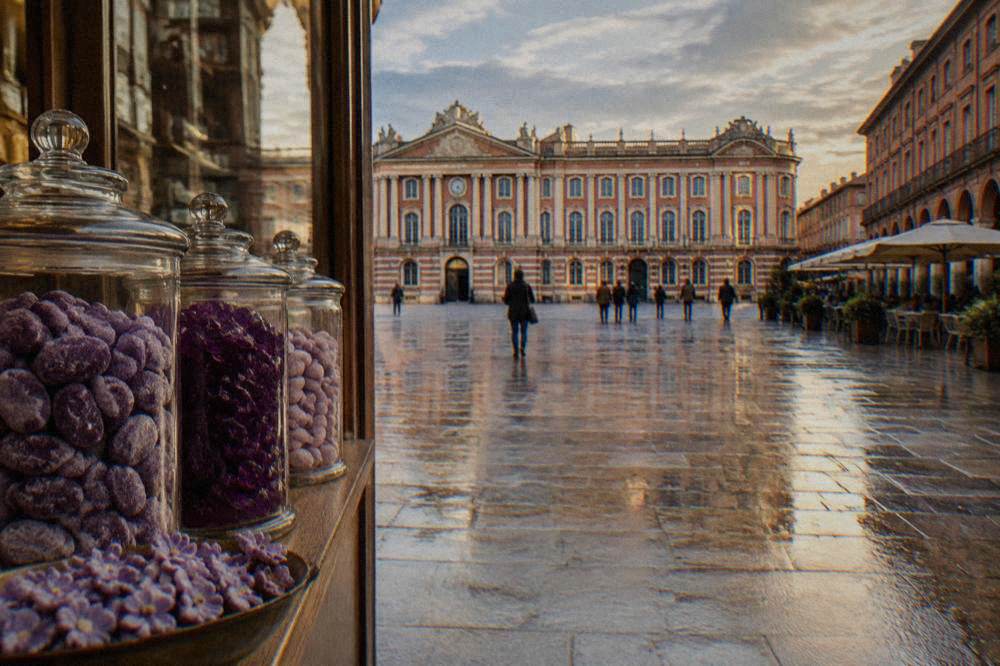
Candied fruit is the quieter tradition. The southwest is plum country, and the pruneaux d'Agen, the prunes of the Lot-et-Garonne orchards, appear plain, stuffed, chocolate-dipped and soaked in Armagnac. Apricots and melon follow the same candied route. These travel well, which makes them the practical choice for anyone taking sweets home rather than eating them on a bench by the Garonne.
The Christmas market is the seasonal centerpiece. The city's Christmas markets on Place du Capitole, the Ramblas of the allées Jean-Jaurès and the square Charles-de-Gaulle run from 26 November to 27 December 2026, and they bring the winter sweets: the marchés de Noël carry the crêpes, the waffles, the mulled wine and the regional pastries that turn the Capitole square into an open-air dessert counter. The Toulouse Christmas market guide covers the full layout.
| Sweet | What It Is | Best Season | Where To Look |
|---|---|---|---|
| Candied violets | Crystallized petals, violet bonbons, syrups | Year-round | Traditional confectioners |
| Prunes d'Agen | Plain, stuffed, chocolate-dipped or Armagnac-soaked prunes | Year-round | Market stalls, regional shops |
| Croustade | Thin-layered apple pastry with Armagnac | September to winter | Bakeries and market stalls |
| Christmas-market sweets | Crêpes, waffles, mulled wine, pastries | 26 November to 27 December 2026 | Place du Capitole and allées Jean-Jaurès |
| Brioche and pain perdu | Everyday pâtisserie counters | Year-round | Neighborhood bakeries |
How Do Violets Become Candy, And Where Did The Tradition Come From?
Toulouse's violet tradition grew from flower farms that once ringed the northern edge of the city, and the confectioners who crystallized the petals in sugar created a candy that became the city's edible emblem, sold today as candied violets, violet bonbons, syrup and liqueur by the traditional sweet shops of the old quarter. It is the rare sweet that carries a city's name and identity in a single bonbon.
The flower was cultivated commercially in the Toulouse area for the cut-flower trade before confectioners turned it into candy, and the city still celebrates it: the Fête de la Violette has run in past editions in February, the quietest month on the Toulouse calendar. Meteo-France's normals put February at a mean of 7.1 C and just 37.2 mm of rain, the driest month of the year, which makes a February visit a low-crowd, low-rain proposition even if it is a cold one. The Toulouse weather guide has the full month-by-month picture.
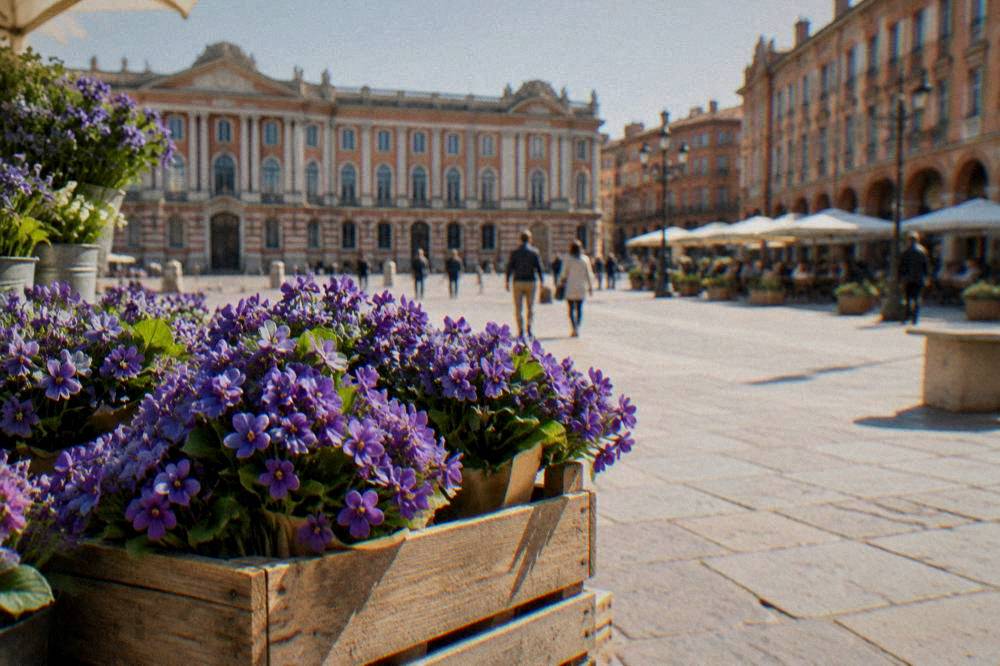
For a buyer, the distinction that matters is between the crystallized petal, a single violet preserved in sugar, and the violet-flavored bonbon, a fondant or chocolate candy flavored with the flower. Both are sold by the traditional confectioners. The syrup and the liqueur are the pantry versions, and a spoon of violet syrup in a glass of sparkling water is about as Toulousain as a soft drink gets.
The violet is also the thread that connects the sweet trail to the rest of the city. A walk that links a confectioner in the old quarter to the riverbank and the Pont Neuf is a walk that earns its dessert, and the classic way to do it is with a guide who knows the shortcuts. The Toulouse Must-See Highlights with a Guide walk covers the monuments in a single loop, and the sweet stops slot in along the way.
The guided walk is also the answer to a practical problem: the sweet trail and the sightseeing trail compete for the same mornings. A highlights walk that covers the Capitole, the Jacobins and the riverbank in one loop leaves the rest of the day free for the markets, and the guide's route usually passes within a street or two of the best pastry counters anyway.
Which Towns Near Toulouse Have Their Own Signature Sweets?
The countryside around Toulouse carries its own dessert map: Gaillac is wine country with a sweet, sugared pastry tradition; Cordes-sur-Ciel is a hilltown of craft confectioners; Lautrec is the pink-garlic town whose sweets lean on the local harvest; and the Gascon orchard towns supply the apples and Armagnac that go into the croustade itself. Each is a day trip, and each pairs its sweet with a walk.
The day trips from Toulouse guide lays out the practical logistics. The sweet-specific shortlist is below. The pattern to notice is that every town's dessert comes from what its land produces: apples and Armagnac where the orchards are, wine and pastry where the vineyards are, and flowers where the farms were.

| Town | Its Sweet Connection | The Day Trip |
|---|---|---|
| Gaillac | Vineyards and a sugared-pastry tradition | Gaillac wine route |
| Cordes-sur-Ciel | Hilltown craft confectioners and medieval lanes | Cordes-sur-Ciel |
| Lautrec | Pink garlic country, harvest sweets and syrups | Lautrec |
| Albi | Cathedral city with old-quarter pâtisseries | Albi |
| The Gascon orchard belt | Apples and Armagnac for the croustade | Day trips from Toulouse |
The guided versions of these runs take the planning off the table. A private day tour links Albi and Cordes-sur-Ciel with the countryside between them, and the Albi and Cordes sur Ciel Private Day Tour from Toulouse is the comfortable version. For something wilder, the St Cirq LaPopie and Pech Merle Cavern Tour from Toulouse pairs one of the region's most beautiful villages with a painted cave, a day that earns whatever pastry follows it.
What Should You Eat With Coffee, And What Does A Toulouse Café Dessert Look Like?
The everyday Toulouse dessert is less about plated pâtisserie and more about the counter: a slice of croustade, a brioche, a canelé or a chocolate tart ordered at the bar or on a terrace, with coffee in the morning or a glass of the region's sweet white after dinner. The café culture here is a terrace culture, and the dessert follows the terrace.
The southwest produces sweet wines that were built for dessert, and the local pairing logic is simple: a late-harvest or sweet Gaillac with an apple pastry, a fortified wine with the chocolate end of the counter. The Toulouse wine guide covers the bottles. For the non-wine drinker, violet syrup in sparkling water is the local answer, and a coffee with a canelé is the universal one.
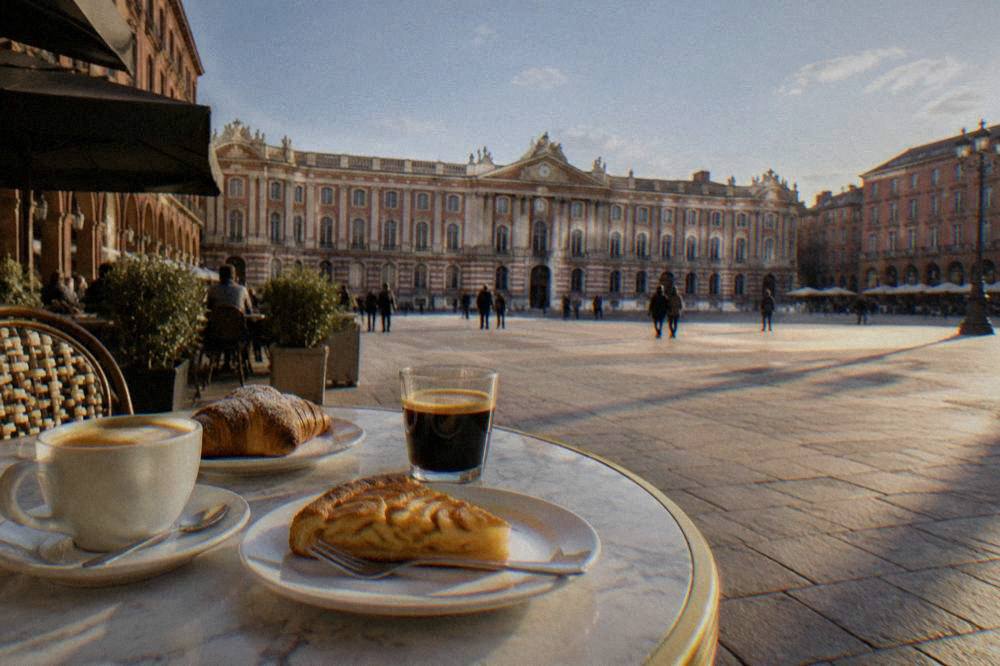
The Toulouse restaurants guide covers where to sit down for a full meal, and the cassoulet guide covers the main course that precedes all of this. The dessert-first strategy is legitimate too: order the pastry at a counter in the morning, walk it off along the Garonne riverside, and call it breakfast.
| Time Of Day | The Sweet | The Drink |
|---|---|---|
| Morning | Brioche, pain perdu, a croustade slice | Coffee |
| Afternoon | Canelé, chocolate tart, candied fruit | Sparkling water with violet syrup |
| After dinner | Croustade or Armagnac-soaked prunes | Sweet Gaillac white or Armagnac |
| Christmas season | Market crêpes and waffles | Mulled wine at the Capitole stalls |
Is There A Best Season For The Sweet Trail In Toulouse?
The two best windows are the apple-harvest autumn, when the croustade counters are at their fullest and the September and October temperatures are still terrace-friendly, and the run-up to Christmas, when the market on Place du Capitole turns the city center into a five-week dessert event from 26 November to 27 December 2026. May is the one month to plan around, because it is the wettest of the year.
Meteo-France's 1991-2020 normals for Toulouse-Blagnac make the case with numbers. May averages 73.6 mm of rain, the wettest month of the year and almost double February's 37.2 mm. September, by contrast, averages 45.7 mm with a mean temperature of 19.3 C and 210.1 hours of sunshine, and October follows at 54.3 mm and 15.3 C. For a walking-and-eating itinerary, that autumn window is the strongest on the calendar.
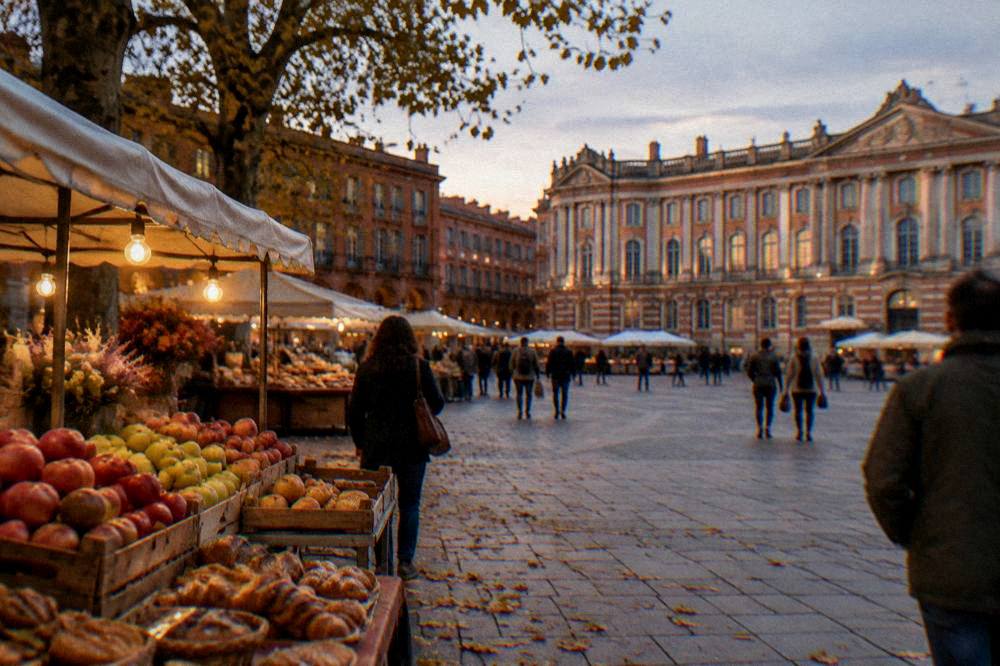
The best time to visit Toulouse guide has the full seasonal breakdown for the city as a whole. For the dessert trail specifically, the table below pairs each season with what the counters carry.
| Month Window | Mean Temp (C) | Rain (mm) | The Sweet Reason |
|---|---|---|---|
| September | 19.3 | 45.7 | Apple harvest, first croustades of the season |
| October | 15.3 | 54.3 | Full pastry counters, Toulouse les Orgues concerts from 7 to 18 October 2026 |
| November | 9.9 | 55.0 | Christmas market build-up from 26 November |
| December | 7.0 | 49.3 | Christmas market sweets to 27 December 2026 |
| February | 7.1 | 37.2 | Violet season, the driest month of the year |
How Do You Build A Dessert Walk Through The City In One Morning?
A workable sweet walk starts at the Marché Victor Hugo for the market pastries, crosses to the old quarter for a confectioner's candied violets, pauses at a café terrace near the Capitole for coffee and a canelé, and finishes along the Garonne, a loop that fits inside a morning and needs no transport beyond your own feet. The city center is compact, and the sweet stops sit on the same streets as the monuments.
The order matters less than the timing. Markets are strongest before noon, the confectioners keep regular shop hours, and the café terraces fill after the market empties. Anyone who wants the loop with the history attached can take the guided highlights walk and slot the stops in around it, or browse the Toulouse walking tours guide for the self-guided versions.
| Stop | What To Buy | Rough Timing |
|---|---|---|
| Marché Victor Hugo | A croustade slice, candied fruit | First, before the stalls thin out |
| Old-quarter confectioner | Candied violets, violet bonbons | Mid-morning, shop hours |
| Café near the Capitole | Coffee and a canelé or chocolate tart | Late morning, after the market |
| Garonne riverside | Nothing, just the walk | Last, to finish the loop |
For a longer stay, the 3 days in Toulouse itinerary makes room for the sweet trail alongside the aerospace museums and the Canal du Midi, and the Toulouse Pass Tourisme guide explains when the city's sightseeing pass pays off, which is from the third activity onward at EUR 26 for stays of one to three days.
Common Questions About Toulouse Desserts And Sweets
Quick answers to what sweet-toothed planners ask most about Toulouse.
What Is A Croustade?
A croustade is a Gascon pastry of very thin, hand-stretched dough layered with sliced apples, sugar, butter and often Armagnac, baked until the top is crisp and caramelized. Around Toulouse it is the signature regional dessert, sold by weight in traditional bakeries and market stalls.
Where Can I Buy Candied Violets In Toulouse?
Candied violets and violet bonbons are sold by the traditional confectioners of the old quarter and in shops carrying regional products around the covered markets. They are the most portable sweet souvenir the city produces.
What Sweets Are Sold At The Toulouse Christmas Market?
The Christmas markets on Place du Capitole, the allées Jean-Jaurès and the square Charles-de-Gaulle run from 26 November to 27 December 2026 and carry crêpes, waffles, mulled wine and regional pastries in the open-air stalls.
Is Croustade The Same As Apple Pie?
No. A croustade uses stretched paper-thin sheets of dough stacked in layers, closer to a strudel technique, while a classic French apple pie uses a single pastry crust. The croustade's top should shatter into crisp leaves rather than hold a solid lid.
What Wine Goes With A Toulouse Dessert?
The local logic pairs a sweet or late-harvest Gaillac white with apple pastries and Armagnac with chocolate or prune-based desserts. The Gaillac vineyards sit within day-trip range of the city.
When Is Violet Season In Toulouse?
Violets are celebrated in February, the driest month of the year on the 1991-2020 Meteo-France normals with 37.2 mm of rain, though candied violets and violet confectionery are sold year-round by the city's traditional shops.
The croustade is the headline, but the full sweet map of Toulouse runs from the apple orchards of the surrounding Gascon countryside to the violet farms of its own history, and every stop on it is within an ordinary morning's walk of the pink-brick center that this site, Toulouse Travel Guide, exists to help you explore.