Living In Toulouse
Toulouse, the pink-brick city on the Garonne in southwestern France, has become one of Europe's aerospace capitals, and that has changed what it is like to live there. Here is what daily life actually involves: the fares, the neighborhoods, the weather by month and the paperwork.
Short answer
Living in Toulouse means life in a compact, walkable city of 514,819 inhabitants in southwestern France, built around an aerospace economy, a two-line metro and a climate that is sunnier than Paris. The Tisseo network sells a single trip at EUR 1.90 and a day pass at EUR 7.20, the tourist tax on non-classed rentals is 5% of the nightly price, and the wettest month of the year is May, not winter.
Toulouse, the pink-brick city on the Garonne in the Occitanie region of southwestern France, is one of those places people move to for a job and stay in for the light. The commune counts 514,819 inhabitants according to INSEE's 2023 population figure, and its economy turns on aerospace: Airbus builds its wide-body aircraft here, and the city's museums, suburbs and even its tourist offer reflect that. This guide covers what the move actually involves, from the price of a metro ticket to which month dumps the most rain on your terrace.
What Is It Really Like Living In Toulouse?
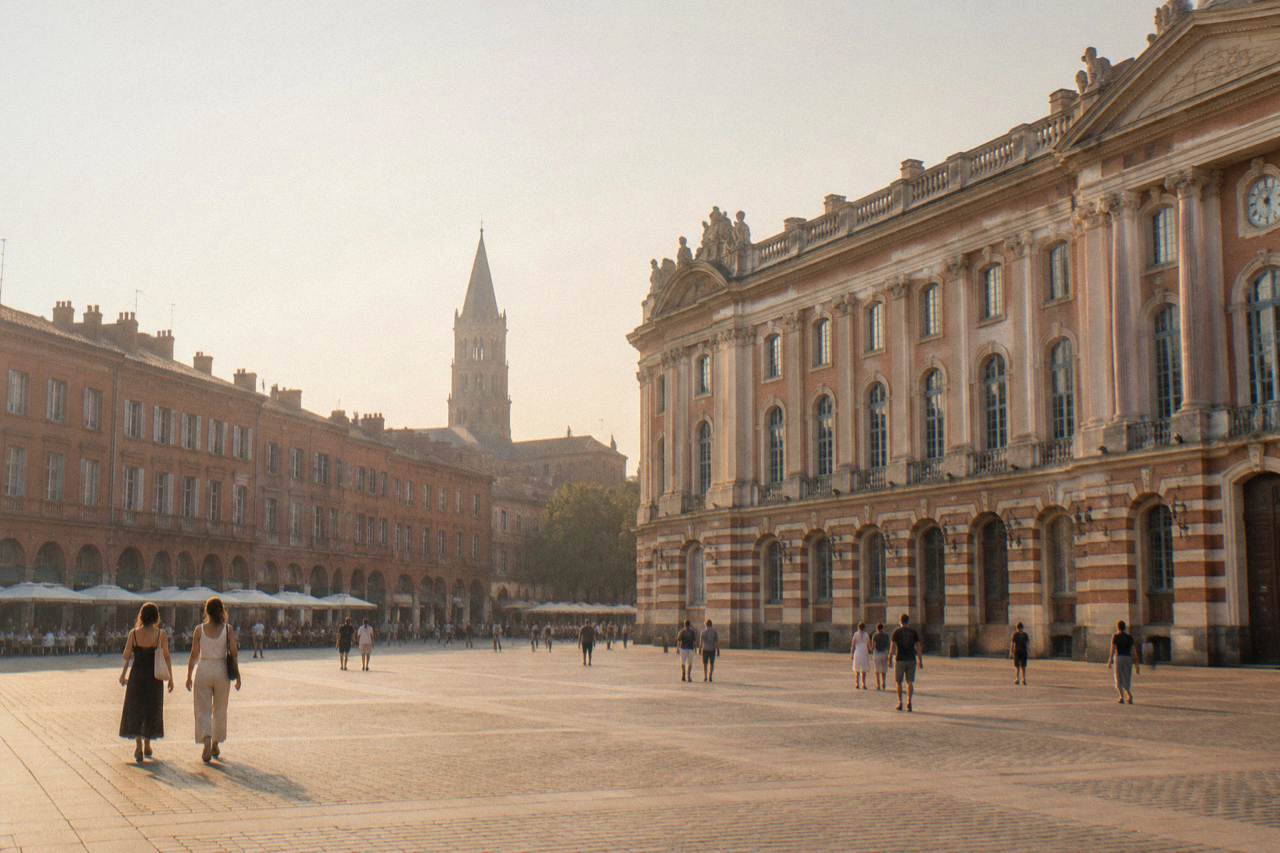
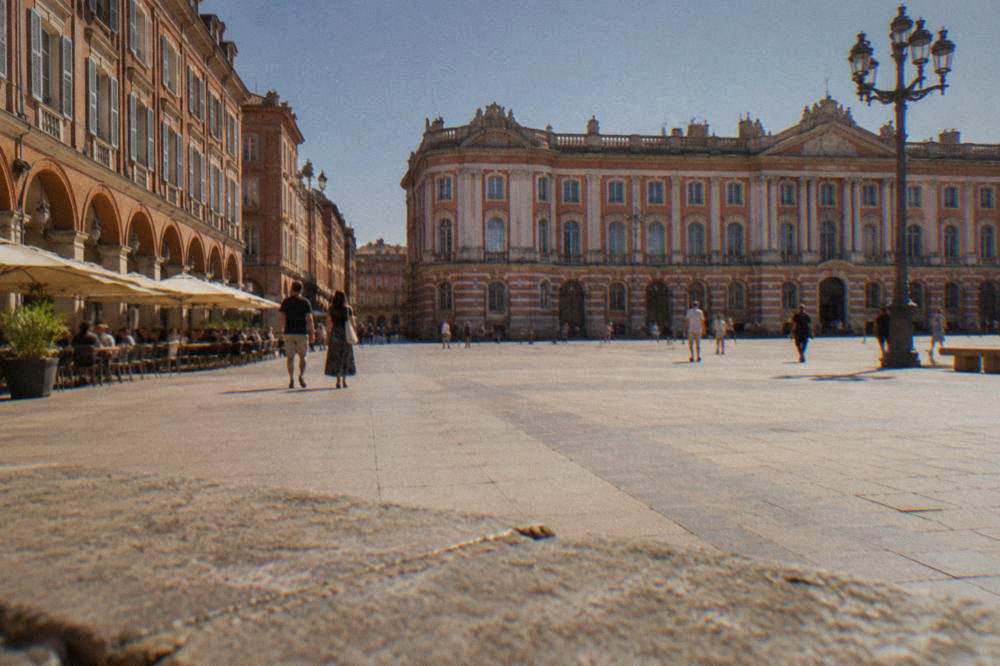
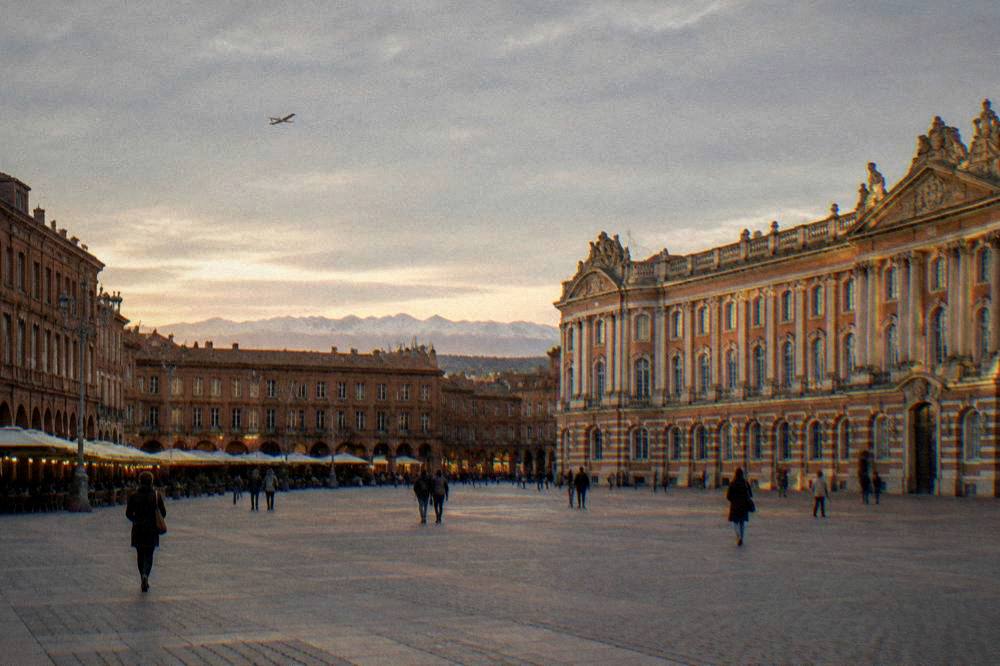
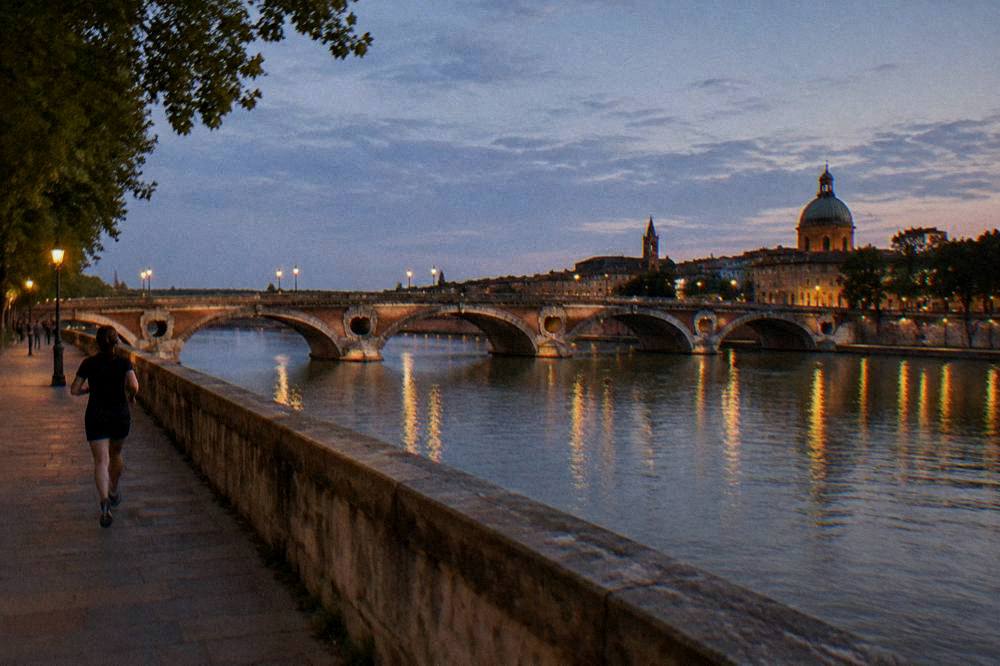
Living in Toulouse means daily life in a compact, warm-toned city where the historic center is small enough to cross on foot and the aerospace industry keeps the population young and international. The city is nicknamed La Ville Rose for the color of its brick, sits on the Garonne river and the Canal du Midi, and combines a student-heavy old town with modern residential districts along the metro lines.
The first thing that shapes daily life here is scale. With 514,819 inhabitants in the commune, Toulouse is big enough to have two metro lines, an airport handling 7,621,409 commercial passengers in 2025 and a full cultural calendar, yet the center around the Capitole, Saint-Sernin and the Garonne is genuinely walkable. The Toulouse Travel Guide homepage covers the full sightseeing picture if you are still deciding whether the city suits you, and our piece on what Toulouse is famous for explains the aerospace-and-cassoulet identity in depth.
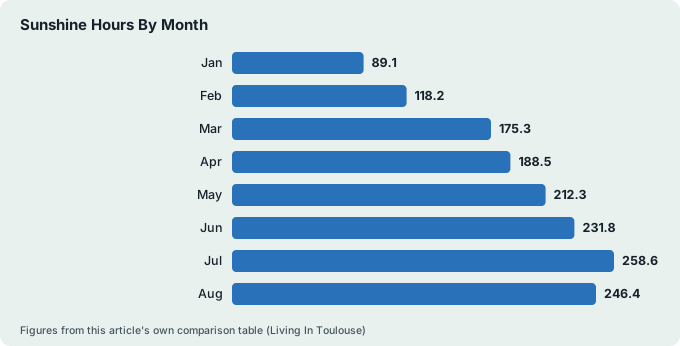
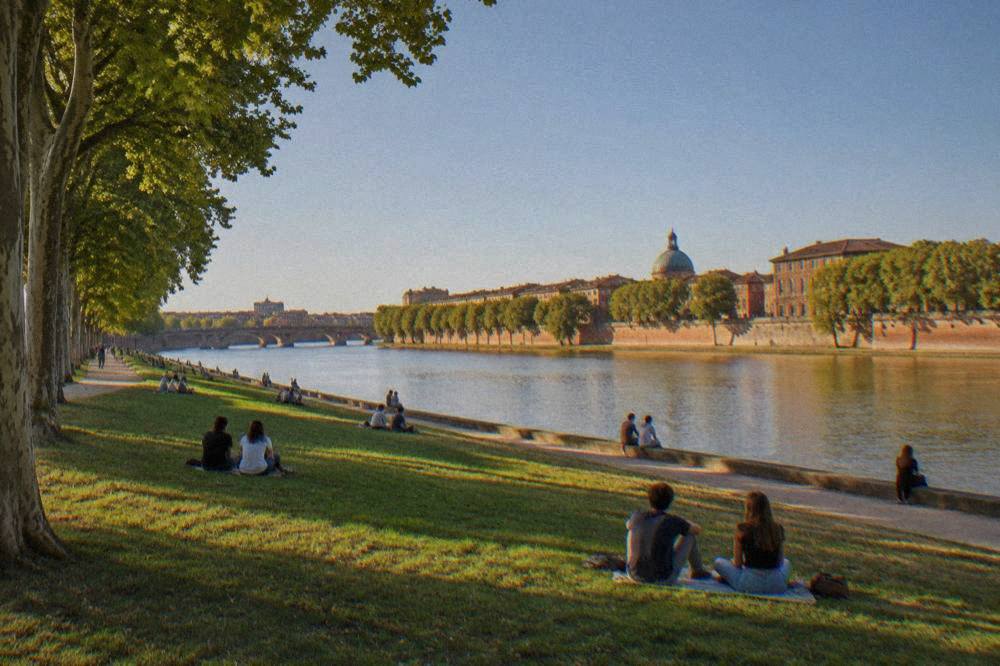
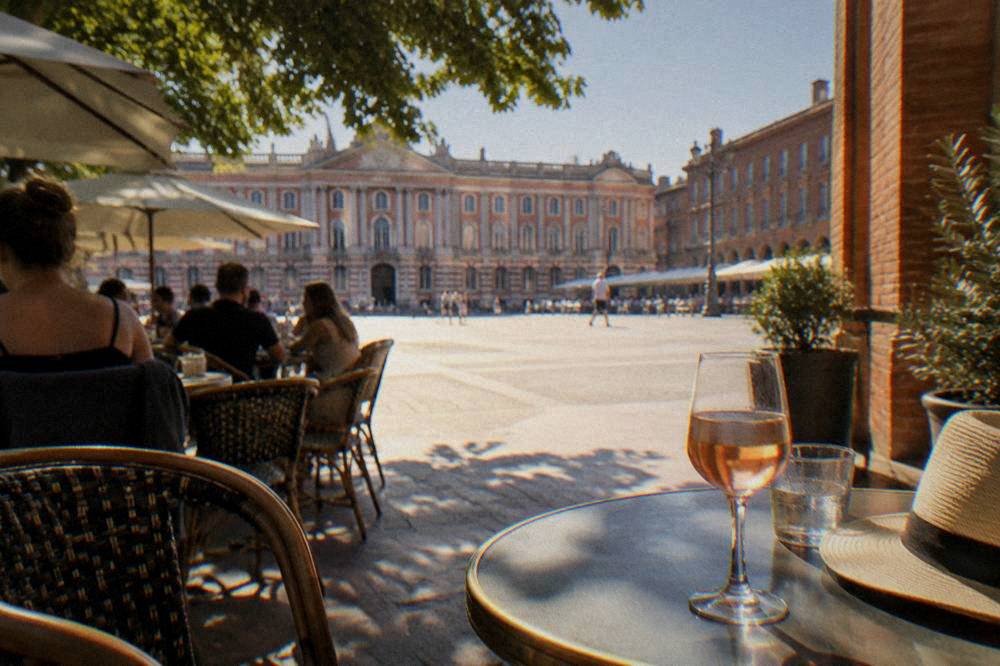
The second thing is the sun. Meteo-France's 1991-2020 normals for the Toulouse-Blagnac station record 2,075.1 hours of sunshine a year, with July alone averaging 258.6 hours. Locals plan their evenings around terraces, the Garonne quays and the Prairie des Filtres lawn in a way that northern French cities simply do not, and the best time to visit Toulouse logic applies to residents too: spring and early autumn are the sweet spots.
The third thing is work. Airbus and its supply chain, plus the Cite de l'espace and the Aeroscopia museum, anchor a large engineering population. That means English is more common in professional circles than in many French cities of similar size, and it means the suburbs stretch west toward Blagnac and the aircraft factories. If you are weighing the city against its regional rival, our Toulouse versus Bordeaux comparison may help.
How Much Does Everyday Life In Toulouse Cost?
Everyday costs in Toulouse run on the euro, and the figures that matter most are transport and culture: a Tisseo single trip is EUR 1.90, a day pass is EUR 7.20, the three-day pass is EUR 14.30, and the tourist office's Pass Tourisme is EUR 26 for stays of one to three days. Housing costs vary by district and no nightly or monthly rent figure is published on this page, so treat rent as something you research on the ground.
The Tisseo e-boutique catalogue gives the full fare structure, and it is the reference a resident actually uses. There is no two-day pass, which surprises people who have lived in Lyon or Paris: you either load a carnet of ten trips or you buy the day pass from the third journey onward.
| Tisseo ticket | Price | Notes from the catalogue |
|---|---|---|
| Single trip | EUR 1.90 | Standard fare bought in advance |
| Single, last minute on board | EUR 2.50 | Costs more if bought from the driver |
| 10 trips | EUR 16.00 | Works out cheaper per journey |
| Day pass | EUR 7.20 | Unlimited same-day travel |
| 3-day pass | EUR 14.30 | No 2-day pass exists |
| Airport single | EUR 9.50 | Tisseo network plus the Navette aeroport |
Culture is cheaper than most newcomers expect. The tourist office's Pass Tourisme page lists the normal rates at the museums it covers: Fondation Bemberg at EUR 12, the Museum at EUR 12, Les Abattoirs at EUR 12, the Musee des Augustins at EUR 5 and the Couvent des Jacobins at EUR 5, all free with the EUR 26 pass. The pass pays off from the third activity, and adding EUR 10 buys ten public-transport trips on top. Our full Pass Tourisme guide breaks down when it is worth it, and the Toulouse museums page covers the permanent collections.
One cost that platform-rental hosts and long-stay visitors both hit is the tourist tax. Toulouse Metropole's tax site states that non-classified or pending-classification lodging, which includes most short-term platform rentals, pays 5% of the pre-tax nightly price per person. The per-star flat rates for classified hotels are not figures this site can print, so check the metropole's own tax page for those.
If you are hosting visiting family rather than living as a tourist yourself, the trio of bookable experiences below covers the outings most residents end up recommending to guests anyway: a private flight over the city and the Pyrenees, and two coach day trips into the region's medieval hill towns.
For guests who want the stories behind the streets, book a free walking tour here.
How Do You Get Around Toulouse Without A Car?
Getting around Toulouse without a car is realistic for daily life because the Tisseo network runs two metro lines, trams and buses on a single fare system, with a single trip at EUR 1.90 and a day pass at EUR 7.20. The one thing to know before you arrive is that tram T2 to the airport has been closed since 5 June 2023 and stays closed until the end of 2026, so airport access runs on the Navette bus.
The airport detail catches everyone. Toulouse-Blagnac handled 7,621,409 commercial passengers in 2025, down 2.8% on 2024, and while the tram T2 line used to serve it, the airport's own access page states the T2 has been interrupted since 5 June 2023 for the works on the new airport line, with service expected in late 2026. Until then the Navette aeroport runs one departure every 15 minutes, taking 20 to 40 minutes to the center, and the Navette to the Matabiau bus station takes about 25 minutes. Buses 30 and 31 take about 45 minutes to the Capitole with changes.
| Airport to center option | Time | Notes |
|---|---|---|
| Navette aeroport | 20 to 40 minutes | One departure every 15 minutes |
| Navette to Matabiau bus station | About 25 minutes | Direct bus station link |
| Buses 30 and 31 | About 45 minutes | To Capitole, with changes |
| Tram T2 | Closed | Closed since 5 June 2023, until end of 2026 |
The big construction story is Metro Line C, the third line. The metropole's project page gives it as 27 km and 21 stations, running from Colomiers through Blagnac, Toulouse and Labege, with opening scheduled for the end of 2028. A Line B extension toward Labege is planned but has no confirmed opening date this site can print. For everyday routing today, the getting around Toulouse guide covers the metro, tram and bus network in practical detail, and the airport to city center page handles the arrival logistics.
For residents who want to see the region on weekends without owning a car, the Albi and Cordes day trip by coach with audio guides is the kind of excursion that leaves from the center and needs no vehicle of your own. Read our day trips from Toulouse roundup for the full menu of destinations reachable without driving.
Where Should You Live In Toulouse?
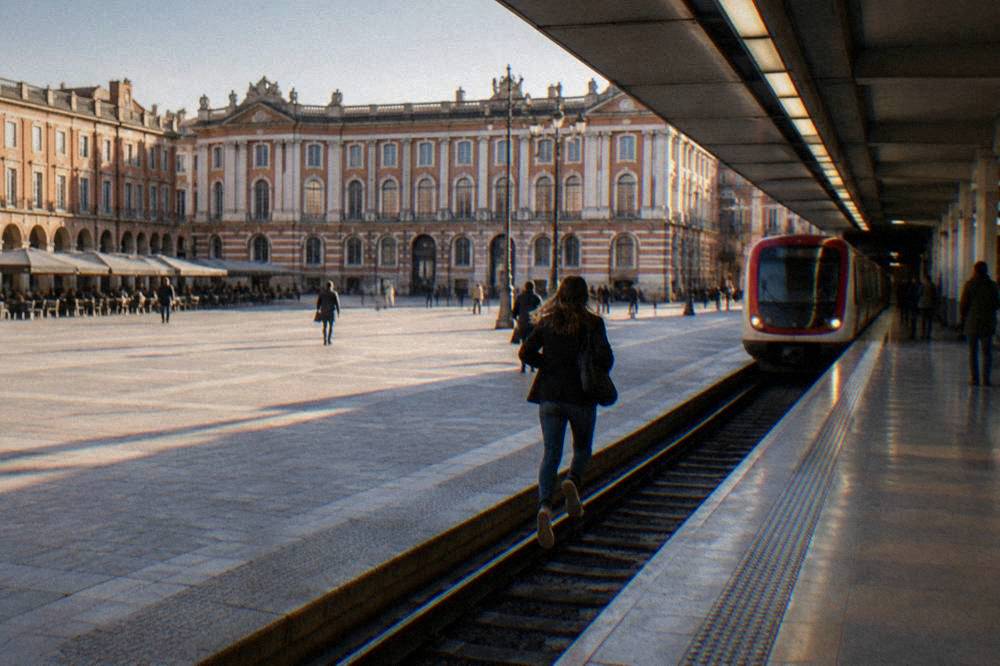
Choosing where to live in Toulouse comes down to whether you want the historic center's pink-brick streets, the quieter rive gauche districts across the Garonne, or the western suburbs toward the aerospace sites, and the practical anchor for each choice is metro access rather than distance, because the city's two lines and its fare structure make a well-placed home more valuable than a large one. No rent figure by district is published on this page, so treat the neighborhood choice as a lifestyle decision first and a budget decision second.
The center around the Capitole and Saint-Etienne puts the Capitole, the cathedral and the main shopping streets on foot, at the cost of older buildings and thinner rental stock. Saint-Cyprien on the left bank and the Carmes on the right are the districts locals name when they want the same pink-brick character with slightly more everyday life and fewer tourists. Further out, Compans-Caffarelli and the Minimes sit on the metro and mix residential blocks with green space.
For newcomers, our where to stay in Toulouse guide maps the districts for a first visit, which doubles as a scouting trip: a weekend in the Carmes tells you more about living there than any listing. If you are weighing the city against its bigger rivals, the Toulouse versus Lyon comparison covers the housing and transport trade-offs.
One practical note that affects renters of short-term furnished places: the 5% tourist tax on non-classified lodging applies per person per night, so a longer classified rental is structured differently from a platform booking. That distinction matters more for people doing a one-to-three-month trial of the city than for permanent movers.
What Is The Weather Like Year-Round In Toulouse?
Toulouse has a mild, sunny climate by French standards, with an annual mean maximum of 18.8C, an annual mean minimum of 9.6C, 627 mm of rain over 95.8 rain days and 2,075.1 hours of sunshine a year, according to Meteo-France's 1991-2020 normals for the Toulouse-Blagnac station. The surprise most newcomers do not expect is that May, not a winter month, is the wettest month of the year.
May averages 73.6 mm of rain, ahead of April at 65.2 mm and June at 64.2 mm, while February is the driest month at 37.2 mm. Summer is hot rather than merely warm: July averages 28.2C as a daily maximum with 11.5 days a year at or above 30C, and the all-time record high is 42.4C, set on 23 August 2023. The record low, minus 19.2C on 15 February 1956, is a reminder that cold snaps do reach the Garonne valley, even if they are rare.
| Month | Mean max C | Mean min C | Rain mm | Sunshine hours |
|---|---|---|---|---|
| Jan | 9.7 | 2.9 | 52.5 | 89.1 |
| Feb | 11.2 | 3.1 | 37.2 | 118.2 |
| Mar | 15.0 | 5.5 | 45.3 | 175.3 |
| Apr | 17.6 | 7.9 | 65.2 | 188.5 |
| May | 21.4 | 11.4 | 73.6 | 212.3 |
| Jun | 25.7 | 15.0 | 64.2 | 231.8 |
| Jul | 28.2 | 17.0 | 40.1 | 258.6 |
| Aug | 28.5 | 17.1 | 44.6 | 246.4 |
| Sep | 24.8 | 13.9 | 45.7 | 210.1 |
| Oct | 19.7 | 10.9 | 54.3 | 155.2 |
| Nov | 13.5 | 6.3 | 55.0 | 99.9 |
| Dec | 10.4 | 3.6 | 49.3 | 89.7 |
What this means for daily life is simple: plan terraces and riverbank evenings for June through September, expect the odd soggy May, and do not assume winter is the rainy season, because it is not. The full month-by-month picture, including what to pack and when the festivals land, sits in our Toulouse weather guide.
How Do You Spend Weekends Living In Toulouse?
Weekends in Toulouse split between the city's own cultural calendar, which runs from the Piano aux Jacobins festival in September to the Christmas markets from 26 November to 27 December 2026, and day trips into the surrounding region, with Carcassonne, Albi and the Pyrenees all reachable without a car. The city's festival calendar is dense enough that weekends from September through the end of the year often hold something official.
The 2026 and 2027 dates worth putting in a resident's calendar: Piano aux Jacobins runs 8 to 30 September 2026 in the Couvent des Jacobins cloister, Toulouse les Orgues holds its 31st edition from 7 to 18 October 2026 with the opening concert on 7 October at Notre-Dame de la Daurade, and the Christmas markets on the Place du Capitole, the allees Jean-Jaures and the square Charles-de-Gaulle run 26 November to 27 December 2026. Looking further out, Rio Loco takes the Prairie des Filtres from 9 to 13 June 2027 with the theme Noctiluca.
| Event | Dates | Venue |
|---|---|---|
| Piano aux Jacobins | 8 to 30 September 2026 | Couvent des Jacobins cloister |
| Toulouse les Orgues, 31st edition | 7 to 18 October 2026 | Multiple venues, opening at Notre-Dame de la Daurade |
| Christmas markets | 26 November to 27 December 2026 | Place du Capitole, allees Jean-Jaures, square Charles-de-Gaulle |
| Rio Loco | 9 to 13 June 2027 | Prairie des Filtres |
For the weekends without a festival, the region does the rest. The full-day coach excursion to Albi, Carcassonne and Cordes-sur-Ciel with lunch included is the single trip that covers three of the region's headline towns in one go, and it is the one residents tend to book for visiting family.
The aerospace side of the city is a weekend option too. Aeroscopia's practical page lists adult admission at EUR 16, reduced at EUR 13, open daily 9:30-18:00 with last entry at 17:00, closed 25 December, 1 January and 7 May 2026, and notes that the exhibition hall is neither heated nor air-conditioned, so dress for the season. The Airbus factory tours run by Manatour cover the A350 and A321 lines, cost EUR 18 for an adult, and require an original passport or ID card, no photocopy and no phone image, with arrival 30 minutes early and no cameras allowed. Our Airbus factory tour guide walks through the whole visit.
And then there is the view from above. The private sightseeing flight over Toulouse and the Pyrenees is the resident's flex: it puts the Garonne, the pink-brick center and the mountain wall to the south in a single frame. Check availability if you want the city from that angle.
What Practical Things Should New Arrivals Know About Toulouse?
New arrivals should know three practical facts: the currency is the euro and France is in the EU and the Schengen area, the Couvent des Jacobins is free on the first Sunday of the month except when a temporary exhibition is on, and two of the city's museums have had recent works that affect visits, with the Musee des Augustins temporarily closed from 21 September to 2 October 2026 before its Gothic halls reopen on 3 October 2026.
The Augustins situation is worth understanding because it shows how the city's museum landscape is moving. The museum partially reopened in December 2025 after major renovation, its Gothic halls, the sacristy, the Notre-Dame de Pitie hall and the chapter house, reopen to the public on 3 October 2026 from 10:00. The Musee Saint-Raymond closed on 3 November 2025 for renovation and modernization works and reopened on 3 April 2026.
| Museum or monument | Admission | Status notes |
|---|---|---|
| Couvent des Jacobins | EUR 5 | Free on the first Sunday of the month, except during temporary exhibitions |
| Musee des Augustins | EUR 5 | Closed 21 September to 2 October 2026, Gothic halls reopen 3 October 2026 |
| Fondation Bemberg | EUR 12 | Free with the Pass Tourisme |
| Les Abattoirs | EUR 12 | Free with the Pass Tourisme |
| Museum de Toulouse | EUR 12 | Free with the Pass Tourisme |
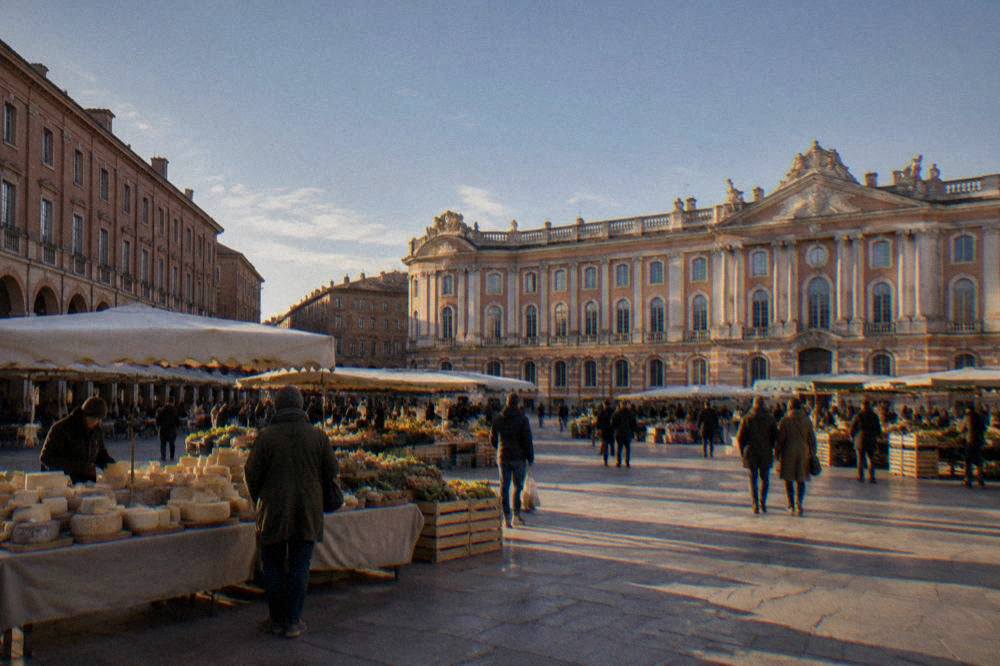
Food is the other practical daily matter, and it is the one Toulouse takes most seriously. Cassoulet is the signature dish, the Victor Hugo market anchors the eating culture, and the Toulouse food and cassoulet guides cover what to cook, order and drink with it. For the restaurant landscape itself, start with our Toulouse restaurants page.
For longer-stay practicalities, the Toulouse airport guide covers arrivals and departures, and the flights to Toulouse page lists the direct routes if you will be commuting back to the UK or elsewhere regularly.
Is Living In Toulouse The Right Choice For You?
Living in Toulouse suits people who want a warm, walkable, mid-sized French city with a strong jobs engine in aerospace, a dense festival calendar and easy access to both the Mediterranean-facing countryside and the Pyrenees, roughly 100 km to the south. It suits you less if you need a megacity's scale, a coastline on your doorstep, since Toulouse is inland with no sea and no beach, or a northern climate's long grey winters, which this city does not have.
The honest trade-off list looks like this. You get 2,075.1 hours of sun a year and a July that averages 28.2C, but you also get a May that averages 73.6 mm of rain and occasional heat pushing toward the record 42.4C. You get a compact historic center and a cheap, simple fare system, but you get a major construction phase: the airport tram is closed until the end of 2026 and the third metro line does not open until the end of 2028. You get a city that works for both a three-day visit, see our is Toulouse worth visiting assessment, and for a three-year posting.
If the balance tips in favor, the practical order of operations is: scout the districts on a weekend trip, sort the metro-rent trade-off before signing anything, and put the September-to-December festival calendar in your calendar before the tickets go. The city rewards people who arrive knowing what the wettest month is.
For the trips that make the weekends work, these are the three experiences this site recommends most often to people who have just moved here and want to show off their new region to the first wave of visitors.
Common Questions About Living In Toulouse
Quick answers to what planners ask most about living in Toulouse.
Is Toulouse expensive to live in?
No rent or cost-of-living figure is published on this page, but the costs that frame daily life are modest by big-city standards: a Tisseo single trip is EUR 1.90, a day pass is EUR 7.20, and museum admission runs from EUR 5 at the Musee des Augustins and the Couvent des Jacobins to EUR 12 at Fondation Bemberg, Les Abattoirs and the Museum.
Do you need a car living in Toulouse?
No. The Tisseo network runs metro, tram and bus lines on one fare system, the historic center is walkable, and coach day trips cover Carcassonne, Albi and Cordes-sur-Ciel without a vehicle. The one exception is reaching remote villages, where regional buses and tours fill the gap.
How do you get from Toulouse airport to the center?
The Navette aeroport bus runs one departure every 15 minutes and takes 20 to 40 minutes to the center, or about 25 minutes to the Matabiau bus station. Tram T2 to the airport has been closed since 5 June 2023 and stays closed until the end of 2026, so do not plan around it.
What is the rainiest month in Toulouse?
May. Meteo-France's 1991-2020 normals for Toulouse-Blagnac put May at 73.6 mm of rain, ahead of April at 65.2 mm and June at 64.2 mm, while February is the driest month at 37.2 mm.
Is Toulouse a good city for English speakers?
The aerospace industry brings a large international workforce, and English is common in professional circles. Daily life still runs in French, and the city's official pages, transport signage and market culture reward at least basic French.
What is the tourist tax in Toulouse?
For non-classified or pending-classification lodging, including most platform rentals, Toulouse Metropole charges 5% of the pre-tax nightly price per person. Classified properties pay flat rates that this site cannot print as confirmed figures, so check the metropole's tax page for those.