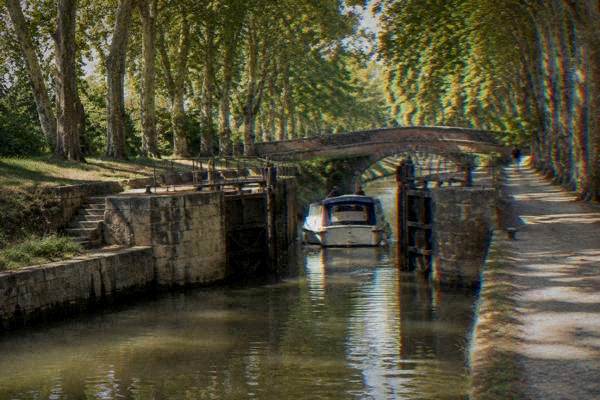
Can You Swim In The Canal Du Midi?
Swimming in the Canal du Midi near Toulouse is not allowed and not safe, but the UNESCO-listed waterway offers cruises, bike paths and riverside alternatives. Here is what to know before you go.
Toulouse, the pink-brick city on the Garonne in the Occitanie region of southwestern France, is also the city where the Canal du Midi begins. The canal is one of the region's great landmarks, inscribed by UNESCO in 1996, and its plane-tree-lined banks are a favorite walking and cycling route. But it is not a swimming spot, and every summer visitors ask the same question. The short answer is no, and the reasons are worth understanding before you plan a day on the water.
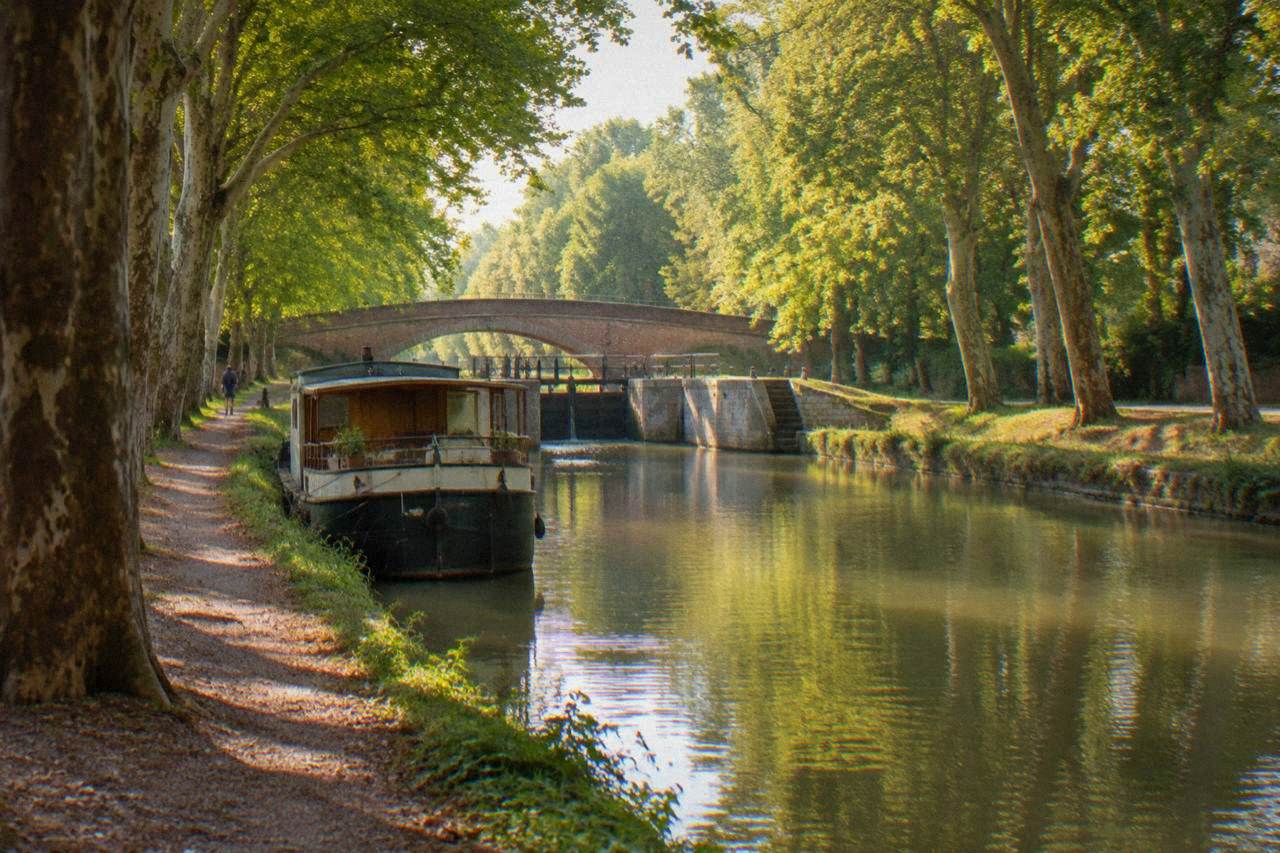
Can You Swim In The Canal Du Midi?
No, you cannot swim in the Canal du Midi. The canal is a working navigation channel, managed for boats and its UNESCO-listed heritage, and swimming in it is prohibited. The water is slow-moving, silty and shared with boat traffic, so a dip is both against the rules and genuinely unsafe. The canal's banks near Toulouse are for walking, cycling and boat trips, not for bathing.
The Canal du Midi was inscribed on the UNESCO World Heritage list in 1996, under criteria (i), (ii), (iv) and (vi), as a masterpiece of civil engineering and a historic working waterway. That status is not decorative. The canal is maintained as a functioning navigation channel, with locks, moored boats and commercial and private traffic along its route, and its management rules treat it accordingly. Swimming in a navigation channel is prohibited under French regulations that govern inland waters, and the canal is no exception.
There is also the practical reality of the water itself. The canal is slow-moving, which means sediment and plant growth accumulate rather than flushing away. Boat engines, mooring lines and the slippery, silty banks make entry and exit hazardous. None of this is obvious from the pretty banks, which is exactly why the question comes up so often. If you want the full story of what makes this waterway special, read why the Canal du Midi is famous, and for the practical side of getting onto the water, see the Canal du Midi boat trips guide.
Why Swimming In The Canal Du Midi Is Not Allowed
Swimming is prohibited because the canal is a regulated inland navigation channel, not a bathing site. French inland-water rules forbid swimming in canals used by boat traffic, and the Canal du Midi carries boat traffic along its entire route. Its slow, silty water and soft banks make it unsuitable for bathing even where no boat is passing. The rules exist for safety, heritage and water-quality reasons together.
Three reasons stack on top of each other. First, the legal one: canals that carry navigation are closed to bathing under French inland-water regulations, and signage along the towpaths near Toulouse says so where access is easy. Second, the safety one: a channel built for boats has mooring lines, propellers and vertical stone edges, and a swimmer in the water is invisible to a helm approaching a lock. Third, the water-quality one: slow-moving canal water sits in a tree-lined channel, warm in summer, full of sediment and organic matter, and it is not monitored as bathing water the way a designated swimming site must be.
The canal's UNESCO status adds a fourth layer. The 1996 inscription covers the engineering and landscape of the waterway itself, and the authorities who manage it prioritize keeping the channel navigable and the banks intact over any recreational use that damages either. That is why the towpaths teem with cyclists and walkers in summer while the water stays empty of swimmers.
| Reason swimming is off | What that means in practice |
|---|---|
| Working navigation channel | Boats and locks operate along the route, and swimmers are a hazard to traffic |
| French inland-water rules | Bathing is prohibited in canals used for navigation |
| Water quality | Slow, silty water that is not monitored as a designated bathing site |
| Bank conditions | Soft, slippery edges that make getting out difficult |
| Heritage protection | UNESCO-inscribed since 1996, managed for navigation and landscape |
If the question behind your question is simply "what is the water like," the honest answer is that it is beautiful to look at and better left untouched. The canal is at its best experienced from a boat, from a bike on the towpath, or from a bench under the plane trees. A cruise with commentary, like the UNESCO-listed Canal du Midi cruise tour, puts you on the water the way the canal was designed to be used; you can Check availability on the operator's live listing.
Where Can You Swim Around Toulouse Instead?
Toulouse has no sea and no beach, it is an inland city on the Garonne, but swimming in summer is still possible at designated sites rather than in the canal. The city and its metropole run public pools, and supervised lake and river bathing spots exist in the wider Haute-Garonne area. The rule is simple: swim only where bathing is officially designated and supervised, and check the current season's opening details before you go.
The honest advice is to treat any swimming plan around Toulouse as something to confirm locally, because opening dates, supervision hours and water-quality status change every season. The metropole's own listings and the tourist office's pages carry what is open in a given summer. What does not change is the underlying geography: the Garonne flows fast and deep through the city and is a river to respect, not to bathe in, and the Canal du Midi is closed to swimming along its whole length. More of these guides are collected on Toulouse Travel Guide.
For visitors, the practical answer is a city pool for a swim and the canal for everything else. The towpaths make an excellent hot-weather walk, shaded by the plane trees that line much of the route, and a boat trip or a bike ride uses the waterway the way it was built to be used. Cyclists will find route ideas in the Canal du Midi by bike guide, and anyone comparing on-water options can start with how much a Canal du Midi cruise costs.
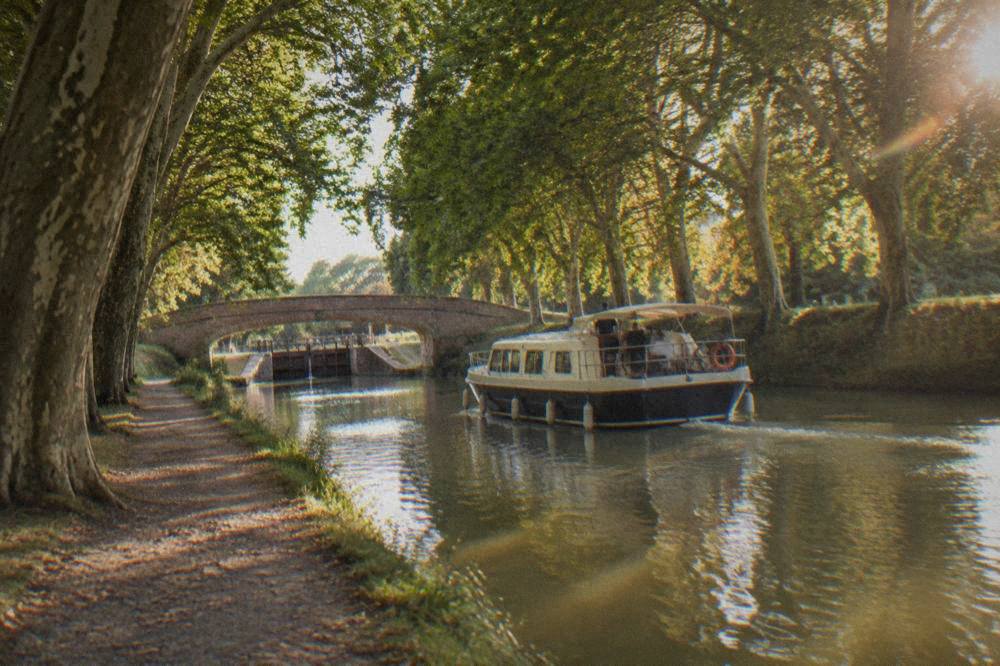
What Can You Do On The Canal Du Midi Instead Of Swimming?
You can cruise it, cycle its towpaths, walk its banks and watch its locks work, and all four are better uses of the waterway than a swim. Boat trips run on the canal from Toulouse, including cruises with live commentary, and the flat towpath is a cycling route in its own right. The canal was engineered for boats, and being on one is the closest you will get to the water.
A cruise is the headline option. Trips depart along the canal with commentary on the waterway's engineering and history, and the canal's UNESCO inscription in 1996 is exactly the kind of story a good guide tells while you drift under the plane trees. Some visitors prefer a narrated cruise for the relaxed pace; others pair the canal with a wider look at the city. The attractions page for the Canal du Midi lays out the options in one place.
Cycling is the second pillar. The towpath is flat, shaded and traffic-free, which makes it one of the most pleasant rides in the region, and guided bike tours cover it without you needing to plan a route. If you want to see the canal and the city in one loop, a guided ride takes the planning off your hands.
For a slower afternoon, pick a stretch of bank near the city center, walk out to a lock and watch the boats pass through. The locks are the canal's working heart, and watching one fill and empty explains more about why this waterway earned its UNESCO status than any swim ever could. Travelers hunting the scenic highlights can also read up on the most beautiful part of the Canal du Midi before choosing a stretch.
When Is The Best Time To Enjoy The Canal Du Midi?
July and August are the warmest and sunniest months to enjoy the canal, with mean daily maxima of 28.2 and 28.5 degrees C and roughly 258.6 and 246.4 hours of sunshine respectively, on Meteo-France's 1991-2020 normals for Toulouse-Blagnac. May is the wettest month at 73.6 mm of rain, so late spring walks can be damper than visitors expect. September offers warm days with fewer crowds.
The climate record for the Toulouse area holds a genuine surprise for canal planners: the wettest month is not in winter but in late spring. May averages 73.6 mm of rain, with April at 65.2 mm and June at 64.2 mm close behind, while February, often assumed to be the soggy month, is the driest in the record at 37.2 mm. Summer then dries out, and July combines the year's peak sunshine, 258.6 hours, with only 40.1 mm of rain and an average of 11.5 days a year reaching 30 C.
| Month | Mean daily max (C) | Rain (mm) | Sunshine (hours) |
|---|---|---|---|
| May | 21.4 | 73.6 | 212.3 |
| June | 25.7 | 64.2 | 231.8 |
| July | 28.2 | 40.1 | 258.6 |
| August | 28.5 | 44.6 | 246.4 |
| September | 24.8 | 45.7 | 210.1 |
| October | 19.7 | 54.3 | 155.2 |
Source for every figure: Meteo-France's 1991-2020 climate normals for the Toulouse-Blagnac station.
What this means for the canal is straightforward. July and August are prime cruising and cycling weather, but also the busiest weeks on the towpaths. June delivers nearly as much warmth with a bit more rain. September keeps mean daily maxima near 24.8 C while the holiday crowds thin out, which makes it a strong pick for a boat trip. Whenever you go, the water itself stays off-limits, so plan for shade, water bottles and a hat rather than a swimsuit.
Common Questions About Swimming In The Canal Du Midi
Quick answers to what visitors ask most about the canal and the water.
Can you swim in the Canal du Midi?
No. The canal is a working navigation channel and swimming in it is prohibited and unsafe. Its slow, silty water and boat traffic make it unsuitable for bathing anywhere along its route, including the stretches through Toulouse.
Is the Canal du Midi clean enough to swim in?
It is not monitored or managed as bathing water, so the question does not really arise: swimming is prohibited regardless. The canal is maintained for navigation and heritage purposes, not for swimming.
Can you swim in the Garonne in Toulouse?
The Garonne is a fast-flowing river through the city and is not a designated bathing spot. Swim only at officially designated and supervised sites, and check the current season's openings with the metropole or tourist office before planning a swim.
Why is the Canal du Midi a UNESCO site?
The canal was inscribed by UNESCO in 1996, under criteria (i), (ii), (iv) and (vi), as a masterpiece of civil engineering and a working historic waterway. Its locks, tree-lined banks and engineering heritage are what the listing protects.
What is the best way to see the Canal du Midi from Toulouse?
A boat trip with commentary puts you on the water the way the canal was built to be used, and the flat towpath is excellent for cycling. Both are covered in detail in the site's canal guides.
The canal rewards visitors who treat it as what it is: a historic engineering marvel to ride, walk and cycle along, not a place to bathe. Save the swim for a designated spot, and give the waterway your attention from a boat deck or a towpath bench instead.