What Is The Most Beautiful Part Of The Canal Du Midi?
The most beautiful part of the Canal du Midi, the UNESCO-listed waterway that starts in Toulouse in southwestern France, and how to see it by boat, bike or day trip.
The Canal du Midi begins its run to the Mediterranean at Toulouse, the pink-brick city on the Garonne in the Occitanie region of southwestern France, and the question of which part of it is the most beautiful is one every visitor to the city ends up asking. The canal was inscribed by UNESCO in 1996, one of the first works of civil engineering to receive that recognition, and its banks are lined for long stretches with plane trees that meet over the water. This page answers the question directly, stretch by stretch, and explains how to see each one from Toulouse by boat, bike or coach.
What Is The Most Beautiful Part Of The Canal Du Midi?
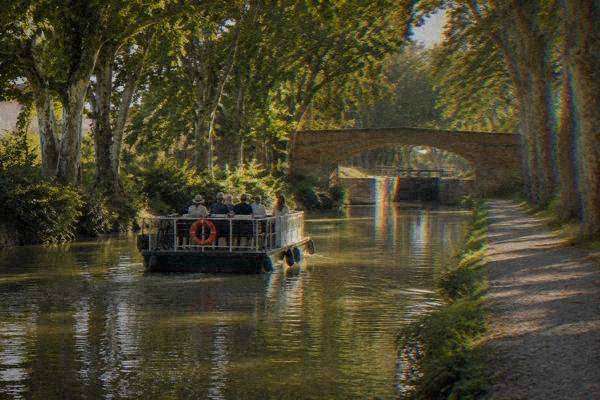
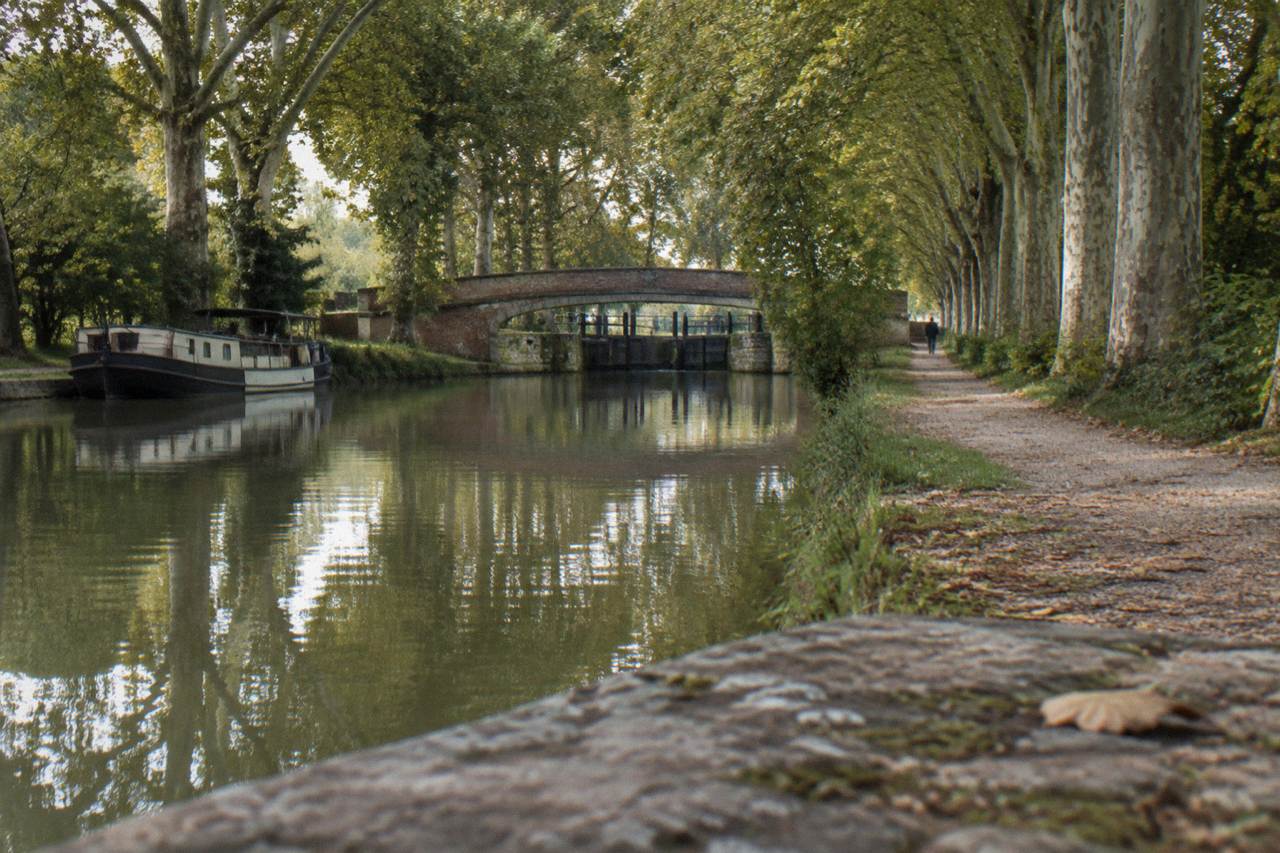
The stretch that deserves the title is the plane-tree-shaded pound east of Toulouse, running through the Lauragais plain toward Castelnaudary and Carcassonne, where the canal runs arrow-straight between double rows of trees, the water stays mirror-still and the towpath is quiet enough to hear a boat coming a kilometre away. The section inside Toulouse itself, where the canal meets the Garonne in the city center, is the most convenient and the most atmospheric at golden hour.
Both stretches have a claim, and they suit different travelers. The city section costs nothing to walk: you can step off a metro train, be on the towpath within minutes and watch houseboats slide past the brick bridges. The eastern pound is the postcard version, the one that appears in the tourist board's photography, and it is the stretch a cruise from Toulouse reaches within an hour of leaving the dock.
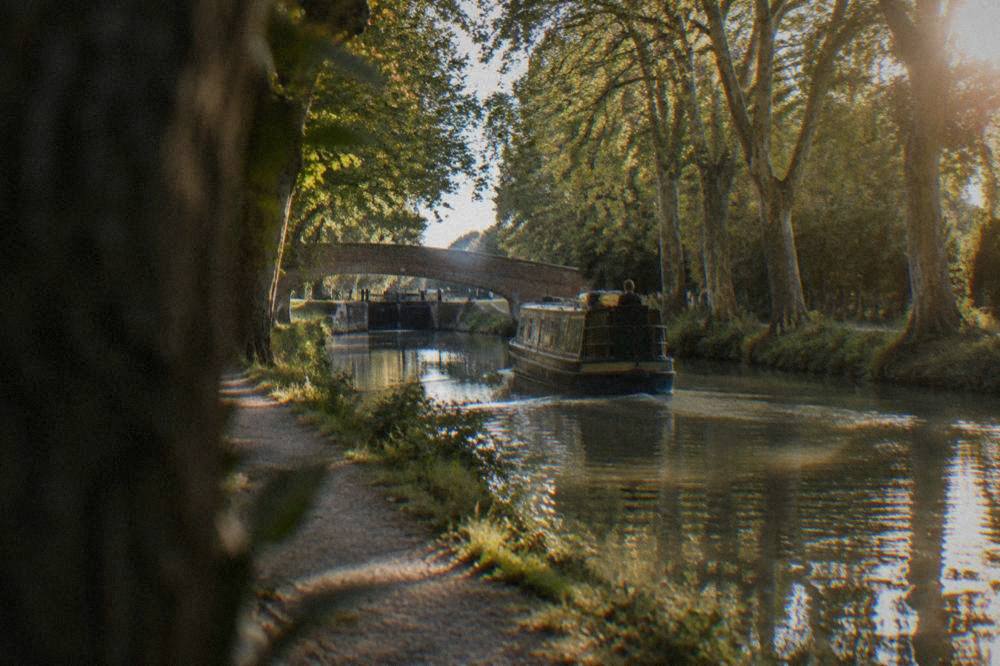
What makes the eastern pound work visually is simple geometry. The canal was built in dead-straight sections, and the plane trees on both banks close overhead in summer, forming a green tunnel that reflects in the water. Under that canopy the light goes soft and green even at midday, which is why so many of the canal's famous photographs come from this stretch rather than from the busier sections near the Mediterranean end.
There is also a seasonal argument worth knowing before you plan. The tree tunnel is at its densest from late spring through early autumn, when the canopy is full and the reflection on the water is unbroken. In winter the same stretch is bare and the photographs are flatter, though the towpath is quieter and the light lower, which suits walkers who want the path to themselves. If your trip to Toulouse falls in the colder months, the city stretch, with its brick bridges and moored boats, holds up better in grey weather than the open eastern pound does.
How Do You See The Most Beautiful Stretch From Toulouse?
The easiest way is a cruise: a commented boat tour leaves from the Toulouse side and covers the canal's opening miles in about ninety minutes, with a guide explaining the engineering as you drift under the trees. The second-best way is by bike on the towpath, which is flat, car-free and continuous, and the third is a coach day trip that follows the canal east to Carcassonne and lets you see the long straight pounds from the road.
For a first visit, the cruise is the one to book, because the canal is genuinely better from the water than from the bank: the tree tunnel closes over your head and the commentary turns what looks like scenery into a story about one of the great engineering projects of its age. The Check availability link goes to the operator's live listing for the UNESCO-listed Canal du Midi cruise tour with commentary, which is the tour this site features for the canal. If you would rather plan a full day on the water, the Canal du Midi boat trips guide covers rental options and routes.
Curious to see the tree tunnel from the water? Book a historic center discovery cruise ticket here.
Cyclists should read the Canal du Midi by bike guide before committing: the towpath is flat and the distances between villages are long, so the right section matters more than the right bike. And if your interest in the canal is more general, the why is the Canal du Midi famous answer explains how the waterway ended up on the World Heritage list at all.
Getting to the towpath from anywhere in central Toulouse is cheap, and the Tisseo fares below are the official catalogue prices.
| Tisseo ticket | Price | Best for |
|---|---|---|
| Single trip | EUR 1.90 | One ride to the canal and a walk back |
| Day pass | EUR 7.20 | Hopping between canal access points all day |
| 10 trips | EUR 16.00 | A family or a multi-day stay |
| 3-day pass | EUR 14.30 | A weekend of canal walking and city sightseeing |
What Makes The Canal Du Midi A UNESCO Site?
The Canal du Midi was inscribed on the UNESCO World Heritage list in 1996 under criteria i, ii, iv and vi, recognized as a masterpiece of human creative genius and an exceptional example of civil engineering that shaped the landscape it crosses. The listed property covers 2,007 hectares, and the citation treats the canal as a whole, not as a set of separate beauty spots, which is why every stretch from Toulouse eastward carries the same inscription.
That matters for the "most beautiful" question, because UNESCO did not pick a winner. The inscription covers the entire works, from the Toulouse end through to the Mediterranean, so the shaded pound east of the city and the grander set pieces further along the line are protected as one continuous monument. The Canal du Midi attraction page on this site summarizes what that means for a visitor.
| UNESCO detail | Record |
|---|---|
| Year of inscription | 1996 |
| Criteria | i, ii, iv, vi |
| Listed property | 2,007 hectares |
| Nearest other listing | Routes of Santiago de Compostela in France, inscribed 1998, including the Basilique Saint-Sernin in Toulouse |
The engineering story is the reason the canal looks the way it does. Its builder had to move water across a landscape with no natural river route, which meant feeding the canal from a purpose-built reservoir and threading it through the Lauragais in long, level pounds. Those dead-straight, perfectly flat sections are exactly the ones people photograph, so the beauty and the engineering are the same thing seen from two angles. More of these guides are collected on Toulouse Travel Guide.
Which Other Stretches Are Worth The Trip From Toulouse?
Beyond the eastern pound, the stretch around Carcassonne is the one most day-trippers combine with the canal, because the medieval city and the waterway arrive together, and the Albi and Cordes-sur-Ciel route to the north-east gives you a UNESCO-listed town and a hilltop village in one long loop. Both are reachable from Toulouse as coach day trips, and both let you walk canal-side sections in the morning and be back in the city by night.
Carcassonne is the natural pairing. The coach route from Toulouse runs through the same Lauragais countryside the canal crosses, so you see the tree-lined banks from the road before you reach the fortified city itself, and the is Carcassonne worth visiting answer covers what to do once you are there. The Albi and Cordes-sur-Ciel day trip goes the other way, toward the Tarn, and is covered in the beautiful towns near Toulouse answer.
For visitors with more time, the honest advice is to treat the canal as a multi-day object rather than a single viewpoint. The first day belongs to the Toulouse end, the second to the eastern pound by bike or boat, and the third to Carcassonne. The how many days is enough for Toulouse answer helps you fit the canal into a wider itinerary, and the best canal trip in France answer puts the Midi up against the country's other famous waterways.
When Is The Canal At Its Best, And What Should You Bring?
Late spring through early autumn is when the eastern pound earns its reputation, because the plane-tree canopy is full and the green tunnel over the water is unbroken; Meteo-France's 1991-2020 normals for Toulouse-Blagnac show July as the sunniest month at 258.6 hours, with only 40.1 mm of rain, so a summer morning on the towpath is close to a safe bet. Bring water, flat shoes and a hat, because the shade ends wherever the trees do.
The climate data is worth reading before you pick a date. May is actually the wettest month in Toulouse at 73.6 mm of rain, ahead of April at 65.2 mm and June at 64.2 mm, while February is the driest at 37.2 mm. That surprises visitors who assume southern France is at its greyest in winter, and it means a May bike ride on the towpath is more likely to meet a shower than a February one. The annual figures, 627 mm of rain across 95.8 rain days and 2,075.1 hours of sun, describe a place that is dry by northern European standards but not rain-free.
| Month | Mean temperature | Rain | Sunshine hours |
|---|---|---|---|
| February | 7.1 C | 37.2 mm | 118.2 |
| May | 16.4 C | 73.6 mm | 212.3 |
| July | 22.6 C | 40.1 mm | 258.6 |
| October | 15.3 C | 54.3 mm | 155.2 |
For practical purposes, the towpath is a walking surface rather than a hiking trail: it is level, it is continuous, and it needs nothing more than ordinary shoes. The featured cruise remains the simplest way to sample the most beautiful stretch if you only have one afternoon in the city, and the listing carries current times and availability.
Common Questions About The Canal Du Midi
Quick answers to what planners ask most about the canal and its best stretches.
What is the most beautiful part of the Canal du Midi?
The plane-tree-shaded pound east of Toulouse, running toward Castelnaudary and Carcassonne, is the stretch most often called the canal's most beautiful, with the section where the canal meets the Garonne in central Toulouse as the convenient runner-up.
Can you swim in the Canal du Midi?
The canal is a working navigation and swimming is not what it is for; the dedicated can you swim in the Canal du Midi answer on this site covers the details.
How much is the Canal du Midi cruise?
Cruise pricing depends on the operator and the departure you choose; the how much is the Canal du Midi cruise answer breaks down what you pay and what is included.
Where does the Canal du Midi start?
The canal starts in Toulouse, where it leaves the Garonne, and runs from there toward the Mediterranean through the countryside of the Occitanie region.
Is the Canal du Midi worth seeing from Toulouse on a short visit?
Yes. The tree-lined opening stretch is reachable from the city center in minutes by metro or bus, and a commented cruise covers the most photogenic section in a single outing without giving up the rest of your day.
Whichever stretch you choose, start from Toulouse: the canal's most beautiful miles are the ones closest to the city, and they are the easiest to reach, the cheapest to walk and the ones a boat tour can show you before lunch.