Chateau D Eau Toulouse
The Chateau d'eau in Toulouse is the pink-brick city's home for photography exhibitions, sitting in the Saint-Michel district a short walk from the Garonne. Here is how to plan a visit: transport fares, what the Pass Tourisme covers, nearby sights and the best time of year.
Short answer
The Chateau d'eau in Toulouse is the city's photography exhibition space, housed in a former water tower in the Saint-Michel district. A single Tisseo trip costs EUR 1.90, the day pass is EUR 7.20, and the site sits within easy reach of the Garonne riverside and the Musee des Augustins.
Toulouse, the pink-brick city on the Garonne in southwestern France, keeps its photography life inside a building that once served a very different purpose. The Chateau d'eau in the Saint-Michel district is the city's gallery space dedicated to photography, and it gives the surrounding neighborhood a quiet, cultural anchor that first-time visitors walk straight past. This guide lays out the practical side of a visit: how to get there on the Tisseo network, what the tourist office's Pass Tourisme does and does not cover, which sights sit close enough to combine on the same afternoon, and how the city's climate should shape your timing.
What Is The Chateau D Eau In Toulouse?
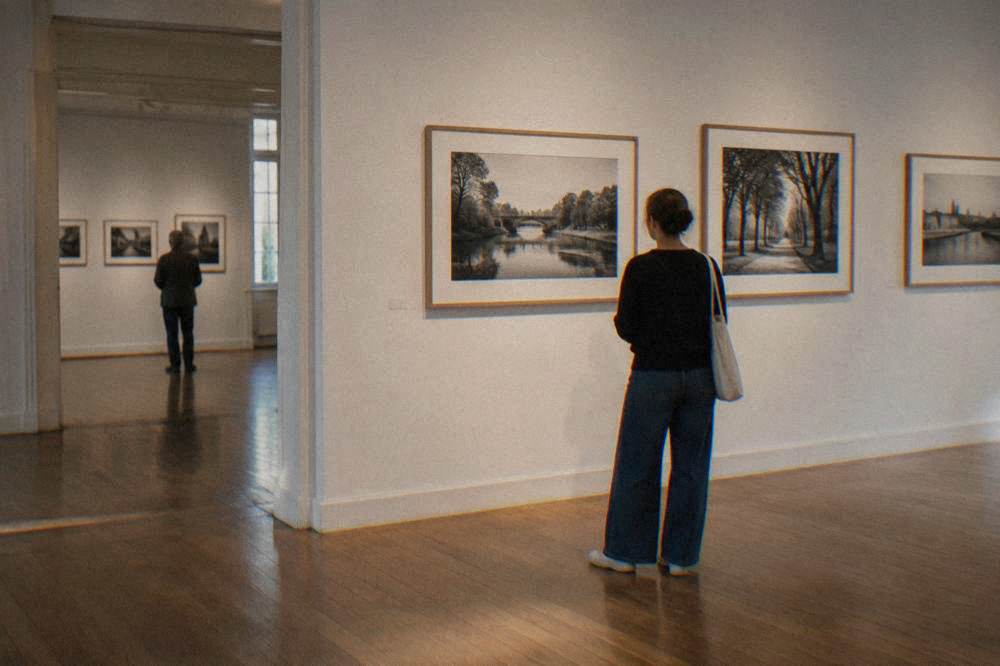
The Chateau d'eau in Toulouse is the city's dedicated photography gallery, installed in a former water tower in the Saint-Michel district, south of the city center. It shows temporary photography exhibitions rather than a permanent collection, so what is on the walls changes across the year, and a visit is built around the current show rather than around a fixed set of objects.
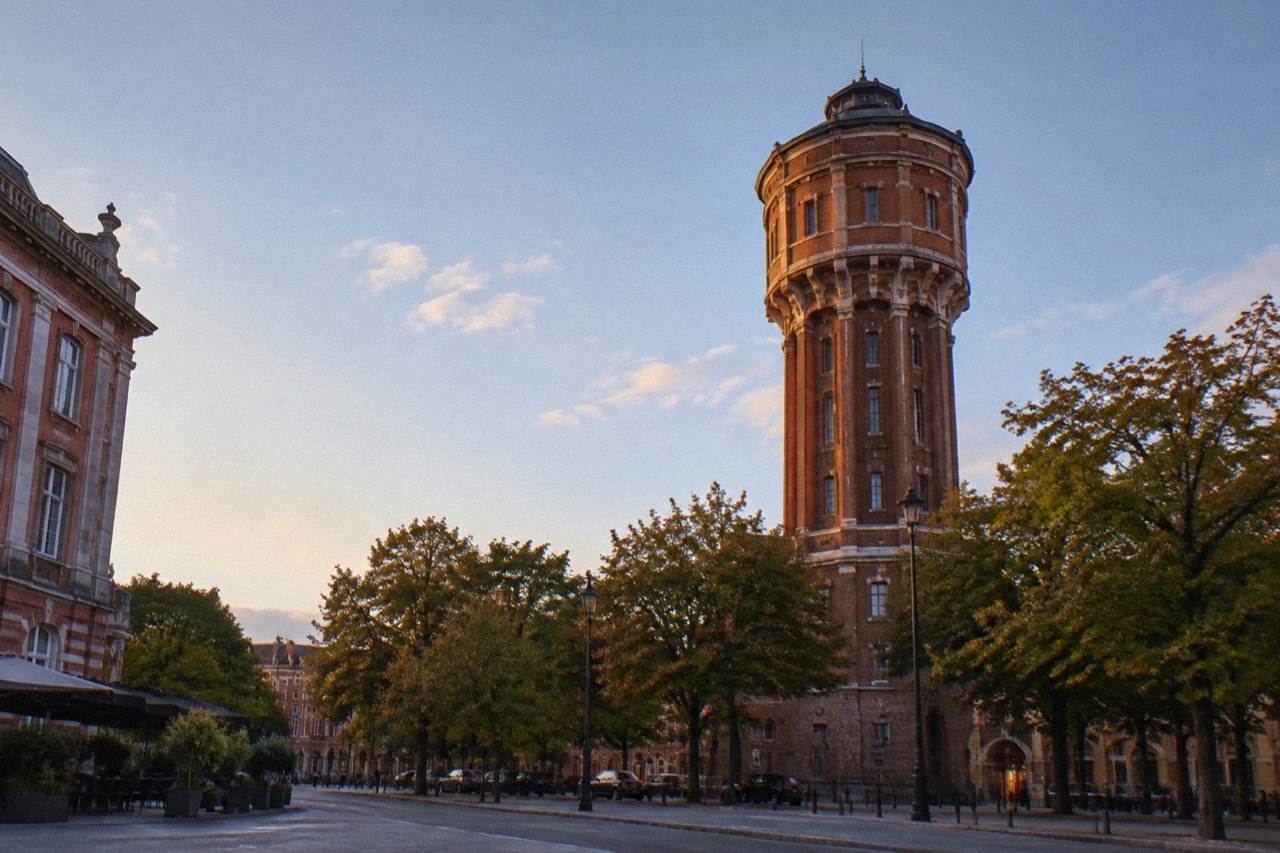
The building's name says what it was built to be: a chateau d'eau is a water tower, and this one spent its working life holding water for the growing city before being converted to cultural use. The gallery that occupies it today focuses on photography, with a program of rotating exhibitions. Because the shows change, the honest planning advice is simple: check the current program before you set out, since the name of the artist on the walls this month will not be the one there next season.
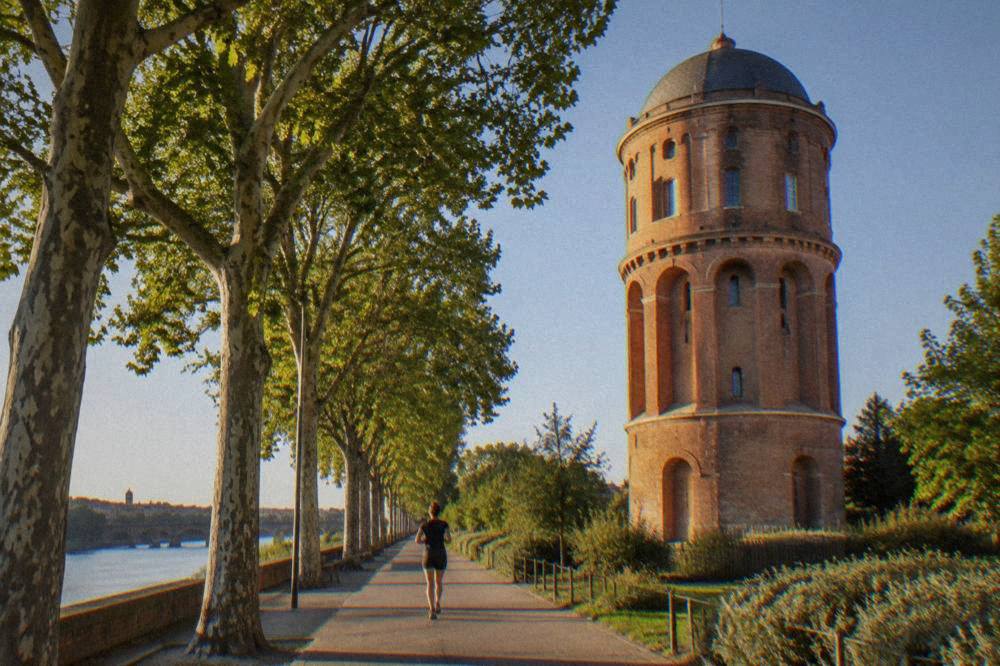
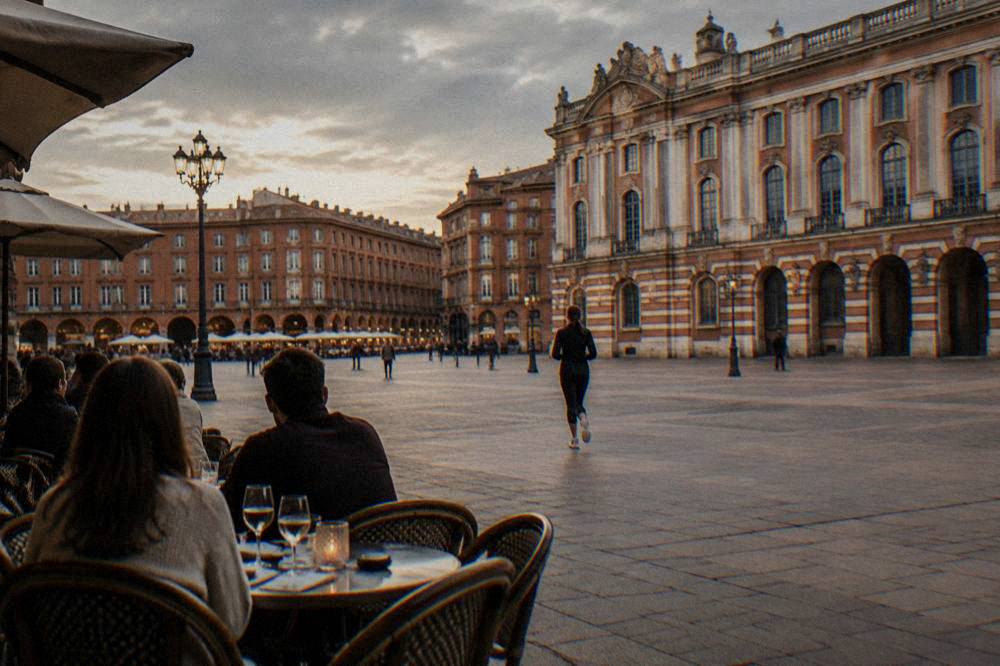
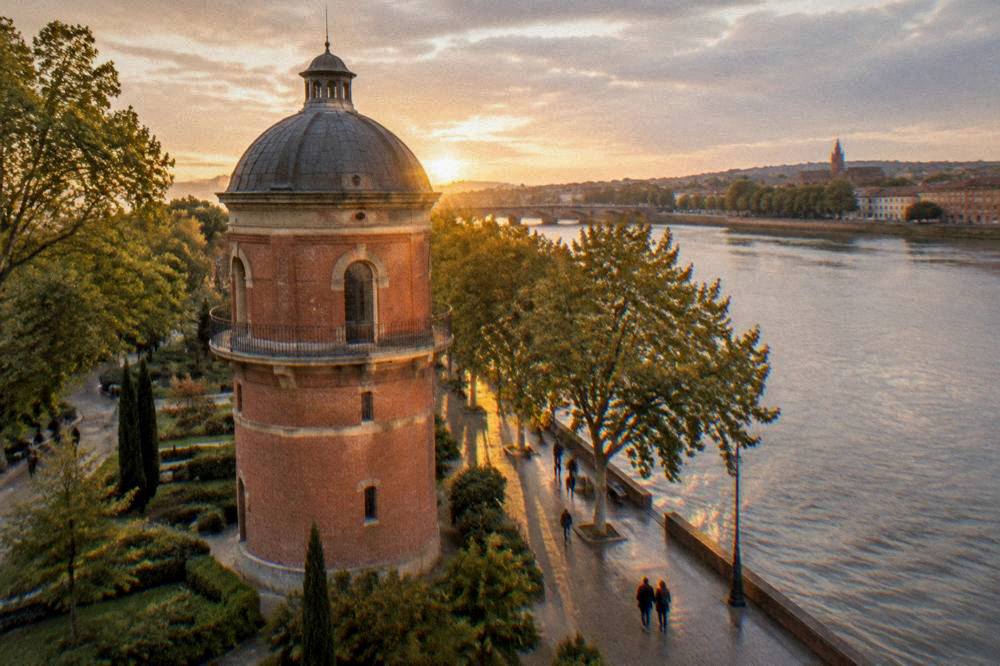
What does not change is the setting. The tower stands on place Laganne at the Saint-Cyprien end of the Pont-Neuf, on the Garonne's left bank. Visitors who come only for the major monuments tend to skip this stretch entirely, which is precisely why it rewards the traveler who has already seen the Capitole and the Basilica of Saint-Sernin and wants a slower afternoon.
The gallery also fits a pattern that runs through Toulouse's cultural scene: the city is generous with small and mid-sized exhibition spaces, from the fine-arts rooms of the Musee des Augustins to contemporary art at Les Abattoirs. The Chateau d'eau is the photography entry on that list, and it is the one most often paired with a wander along the Garonne riverside, which is close enough to reach on foot.
How Do You Get To The Chateau D Eau In Toulouse?
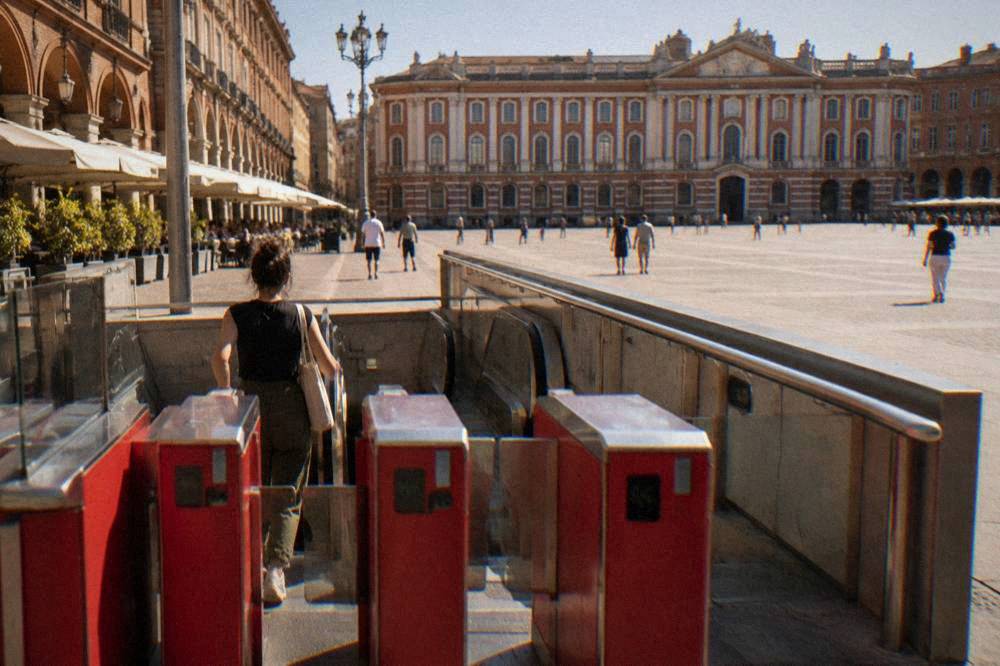
The Chateau d'eau sits in the Saint-Michel district, close to the Garonne, and Tisseo's metro and bus network covers it with the standard city fares: a single trip costs EUR 1.90, a day pass EUR 7.20, and a 10-trip ticket EUR 16.00. Walking from the Capitole area is also realistic for visitors who like to explore on foot, since the tower stands just south of the historic center.
The Tisseo catalogue gives the fares plainly. A single trip is EUR 1.90 if bought in advance, EUR 2.50 if bought last-minute on board, so the honest rule is to buy before you board. A 10-trip carnet is EUR 16.00, which suits a stay of a few days with several rides a day. The day pass, called Journee, is EUR 7.20, and a 3-day pass is EUR 14.30; there is no 2-day pass in the catalogue, so a two-day visitor chooses between singles, the carnet or the day pass.
| Tisseo ticket | Price | Best for |
|---|---|---|
| Single trip (bought in advance) | EUR 1.90 | One-off journeys |
| Single trip (bought on board) | EUR 2.50 | Emergency rides only |
| 10 trips | EUR 16.00 | A multi-day stay |
| Day pass (Journee) | EUR 7.20 | A day of hopping between sights |
| 3-day pass | EUR 14.30 | A long weekend |
| Airport single (network + Navette) | EUR 9.50 | Arriving from Toulouse-Blagnac |
For orientation, the tower's district lies south of the center, and the Garonne runs along its western edge. The Pont Neuf and the riverside quays give the pleasant approach for anyone walking down from the historic core. If you are arriving from the airport, the Navette aeroport runs one departure every 15 minutes and takes 20 to 40 minutes to the center; the airport single covering the Tisseo network plus the Navette is EUR 9.50. Note that tram T2 to the airport has been closed since 5 June 2023 for the Line C metro works and stays closed until the end of 2026, so the shuttle bus is the public-transport link.
A word on the city's big transport change: Metro Line C, the 27 km third line with 21 stations running from Colomiers through Blagnac, Toulouse and Labege, opens at the end of 2028. Until then, the existing metro lines and buses carry everything, and the fares above are the ones that apply to every journey you make around the gallery and its neighborhood.
If you would rather have someone else handle the route-finding, a guided walk covers the city's layout and landmarks with a local at your side.
What Does The Chateau D Eau Cost, And Does The Pass Tourisme Help?
The Chateau d'eau is a city cultural venue, and the tourist office's Pass Tourisme is the tool that decides your museum budget: at EUR 26 for stays of one to three days it includes free entry to the municipal museums the office lists, plus a free guided tour from the tourist office, and it pays off from the third activity. For the gallery itself, check the current exhibition's terms before you go, since shows and conditions change.
The Pass Tourisme page lists what the pass covers at the city's cultural sites. The normal rates the office publishes are: Fondation Bemberg EUR 12, the Museum EUR 12, Les Abattoirs EUR 12, Musee des Augustins EUR 5 and Couvent des Jacobins EUR 5, all free with the Pass. Cite de l'espace, normally EUR 29, is discounted rather than free. Adding EUR 10 to the pass buys 10 public-transport trips on the metro, bus and tram, which is a different product from the EUR 16.00 Tisseo carnet and worth comparing if you plan to ride a lot.
| Attraction | Normal adult rate | With the Pass Tourisme |
|---|---|---|
| Fondation Bemberg | EUR 12 | Free |
| Museum de Toulouse | EUR 12 | Free |
| Les Abattoirs | EUR 12 | Free |
| Musee des Augustins | EUR 5 | Free |
| Couvent des Jacobins | EUR 5 | Free |
| Cite de l'espace | EUR 29 | Discounted |
Two timing notes matter for anyone building an itinerary around the pass. The Musee des Augustins is temporarily closed from 21 September to 2 October 2026 for great-cloister works, and its Gothic halls, the sacristy, the Notre-Dame de Pitie hall and the chapter house, reopen on 3 October 2026 from 10:00. The Couvent des Jacobins is free on the first Sunday of the month except when a temporary exhibition is on; that rule is stated for the Jacobins, so do not generalize it to every museum in the city.
Because the Chateau d'eau's exhibitions rotate, the practical approach is to treat it as one stop on a cultural circuit rather than the day's single destination. Pair it with the Augustins if the reopening date has passed, or with the Fondation Bemberg and its painting collection, and the EUR 26 pass starts doing real work.
Curious to explore the pink city at your own pace? Book a self-guided audio tour here.
If aerospace is also on your list, and for visitors to this city it is, the Aeroscopia aviation museum sits within the same planning conversation.
What Can You See Near The Chateau D Eau?
The Chateau d'eau's Saint-Michel location puts the Garonne quays, the Musee des Augustins, the Carmes district and the Marche Victor Hugo all within a walkable circuit, so a half day around the gallery easily becomes a full afternoon of sightseeing. The riverside is the natural connector, and the museums of the historic core sit a short stroll beyond it.
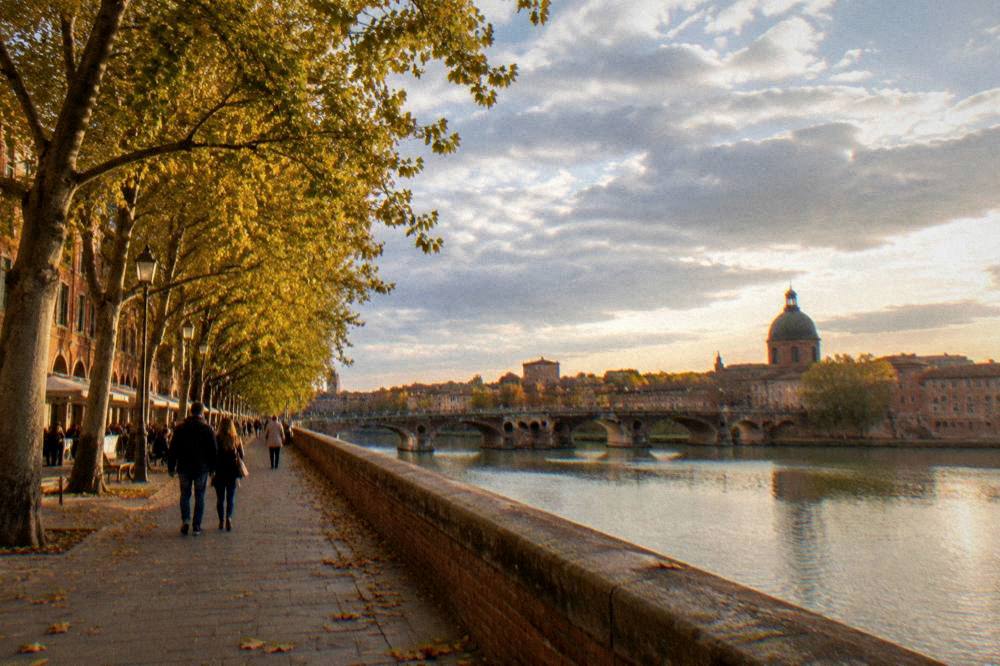
Working outward from the tower, the closest companion is the river itself. The Garonne quays are the city's open-air promenade, and walking north along them brings you to the Pont Neuf and the views across to the Dome de la Grave area on the other bank. Heading back inland, the Carmes district and the Saint-Etienne quarter give narrow streets, squares and the Saint-Etienne church as landmarks.
The museum cluster of the historic core is close enough to combine with the gallery on the same outing. The Musee des Augustins holds the fine-arts collection in a former convent, and the Musee Saint-Raymond next to the Basilica of Saint-Sernin is the city's archaeology museum; Saint-Raymond closed on 3 November 2025 for renovation and modernisation works and reopened on 3 April 2026.
| Nearby sight | Segment | Type of visit |
|---|---|---|
| Garonne riverside | Quays and bridges | Free walking route |
| Musee des Augustins | Fine arts museum | Ticketed, free with Pass |
| Les Abattoirs | Contemporary art | Ticketed, free with Pass |
| Fondation Bemberg | Paintings, Hotel d'Assezat | Ticketed, free with Pass |
| Marche Victor Hugo | Food market | Free to wander |
| Couvent des Jacobins | Gothic convent | Ticketed, free with Pass |
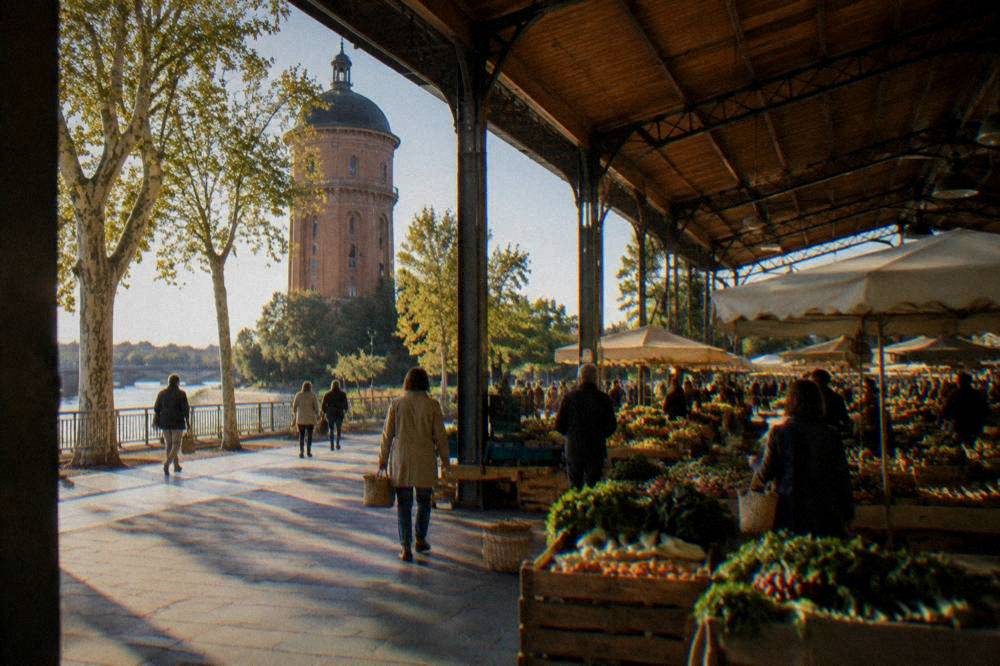
Food is the other reason this part of the map rewards time. The Marche Victor Hugo is the city's covered market and the place to see the produce, charcuterie and cassoulet ingredients of the region laid out stall by stall. A tasting walk built around the market pairs well with a gallery morning, and the toulouse food picture, cassoulet, Toulouse sausage and the region's wines, is worth reading up on before you order.
For a fuller sweep of the city's sights with a guide choosing the route, a private walk can be shaped around exactly this kind of neighborhood-and-monument mix.
When Is The Best Time To Visit The Chateau D Eau In Toulouse?
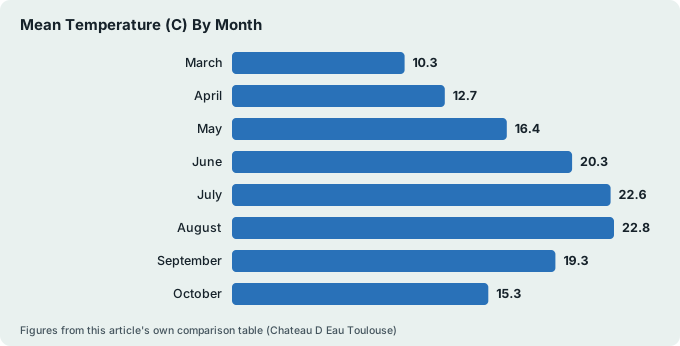
The best time to visit the Chateau d'eau is spring or early autumn, when Toulouse's climate is at its most forgiving: the Meteo-France 1991-2020 normals for Toulouse-Blagnac show an annual mean maximum of 18.8C and 2,075.1 hours of sunshine a year, with July the sunniest month at 258.6 hours and May, surprisingly, the wettest at 73.6 mm of rain.
The climate table rewards a close read, because Toulouse's rain does not follow the pattern visitors expect. The wettest month is May, at 73.6 mm, with April at 65.2 mm and June at 64.2 mm close behind; February, in the middle of winter, is the driest at 37.2 mm. Summer then turns dry and hot: July gets just 40.1 mm of rain and averages 11.5 days a year above 30C. The record high, 42.4C, was set on 23 August 2023.
| Month | Mean temperature (C) | Rain (mm) | Sunshine (hours) |
|---|---|---|---|
| March | 10.3 | 45.3 | 175.3 |
| April | 12.7 | 65.2 | 188.5 |
| May | 16.4 | 73.6 | 212.3 |
| June | 20.3 | 64.2 | 231.8 |
| July | 22.6 | 40.1 | 258.6 |
| August | 22.8 | 44.6 | 246.4 |
| September | 19.3 | 45.7 | 210.1 |
| October | 15.3 | 54.3 | 155.2 |
For an indoor gallery these numbers matter less than for a riverside itinerary, which is an argument for the Chateau d'eau in any season: it is a reliable rainy-day stop, and the city's rain is concentrated in the spring months visitors often assume are dry. Pair it with the rainy day guide if you are building a wet-weather plan.
The calendar adds a few fixed points. Piano aux Jacobins runs 8 to 30 September 2026, Toulouse les Orgues, its 31st edition, runs 7 to 18 October 2026 with the opening concert at Notre-Dame de la Daurade, and the Christmas markets on the Place du Capitole, the allees Jean-Jaures and the square Charles-de-Gaulle run 26 November to 27 December 2026. An autumn visit therefore lands in the middle of the city's festival season, with the gallery as a quiet counterweight to the concert halls.
How Does The Chateau D Eau Fit Into A Day In Toulouse?
The Chateau d eau Toulouse works best as the cultural anchor of a half day: a morning in the Saint-Michel district and the gallery, lunch from the Marche Victor Hugo or a nearby restaurant, then an afternoon among the museums of the historic core, all connected on foot or with single Tisseo trips at EUR 1.90 each. The city is compact enough that no leg of this circuit needs a car.
A sample shape for the day: start at the gallery when it opens, give the current exhibition an unhurried hour, then walk north through Saint-Michel toward the river. Cross or follow the Garonne, take in the quays and the Pont Neuf, then cut inland to the Musee des Augustins or Les Abattoirs. By mid-afternoon you are in the Carmes and Capitole quarter, where the Couvent des Jacobins and the Place du Capitole close out the route.
The one-day and multi-day itineraries on this site give the fuller version of that route, with the one day in Toulouse plan the tightest and the 3 days in Toulouse plan the one with room for day trips. The gallery slots most naturally into the slower plans, where a changing photography exhibition earns its place alongside the permanent monuments.
| Time of day | Activity | Cost basis |
|---|---|---|
| Morning | Chateau d'eau exhibition | Check current show |
| Late morning | Walk north to the Garonne quays | Free |
| Lunch | Marche Victor Hugo or nearby | Pay as you eat |
| Afternoon | Musee des Augustins or Les Abattoirs | EUR 5 or EUR 12, free with Pass |
| Late afternoon | Couvent des Jacobins, Place du Capitole | EUR 5, free with Pass |
If the day runs long and hunger becomes the agenda, the city's food tours turn the same streets into a tasting route, with a full meal and drinks built into the walk.
Is The Chateau D Eau Worth Visiting?
The Chateau d'eau is worth visiting for travelers who want more from Toulouse than the headline monuments: it is the city's photography venue, it sits in a genuinely local district, and it costs little in time or transport, a EUR 1.90 single each way at most. It is not worth the trip for a visitor with only one day and a first-time checklist, for whom the Basilica of Saint-Sernin and the Capitole come first.
The honest case for the gallery is the case for depth. A first visit to the city belongs to the Basilica of Saint-Sernin, a UNESCO-listed stop on the Routes of Santiago de Compostela inscribed in 1998, and to the Capitole and the riverside. A second visit, or a long first one, is when the Chateau d'eau earns its slot: a photography show in an unusual building, in a district where the crowd is local rather than touristic.
The case against is equally honest. The exhibitions rotate, so the experience is variable in a way a permanent collection is not, and the site is a single-venue stop rather than a half-day filler on its own. Treat it as one card in the deck, played alongside the museums and the market, and it pays. Treat it as a destination and you may come away underwhelmed.
For travelers whose interests run to the city's aerospace identity, the same half-day logic applies to Aeroscopia, the aviation museum open daily 9:30-18:00 with last entry at 17:00, adult admission EUR 16, closed on 25 December, 1 January and 7 May 2026. Its exhibition hall is not heated or air-conditioned, which is worth knowing in the height of summer and the depth of winter alike.
For a broader sweep of what the pink city offers beyond this one venue, the Toulouse Travel Guide homepage collects the city's sights, tours and day trips in one place, and it is the natural next stop once this page has done its work.
Common Questions About The Chateau D Eau In Toulouse
Quick answers to what planners ask most about the gallery and its district.
What Is The Chateau D Eau In Toulouse?
The Chateau d'eau is Toulouse's photography gallery, housed in a former water tower in the Saint-Michel district south of the historic center. It shows temporary photography exhibitions, so the program changes across the year and the current show decides what is on the walls.
How Do I Get To The Chateau D Eau?
The gallery sits in Saint-Michel, close to the Garonne and within walking distance of the historic core. Tisseo's network covers the district at the standard fares: a single trip is EUR 1.90 bought in advance, EUR 2.50 on board, and the day pass is EUR 7.20.
Does The Pass Tourisme Cover The Chateau D Eau?
The Pass Tourisme, EUR 26 for one to three days, includes free entry to the municipal museums the tourist office lists, among them the Musee des Augustins at a normal EUR 5 and Les Abattoirs at EUR 12, plus a free guided tour from the tourist office. For the gallery's own exhibitions, check the current show's terms, since they rotate.
What Is Near The Chateau D Eau?
The Garonne riverside and the Pont Neuf, the Marche Victor Hugo food market, the Musee des Augustins, Les Abattoirs and the Carmes district all sit within a walkable circuit of the gallery, which is why a half day in Saint-Michel easily becomes a full afternoon of sightseeing.
When Is The Best Time To Visit?
Spring and early autumn suit the city best, but the gallery itself is an indoor stop that works in any weather. Note that Toulouse's wettest month is May, at 73.6 mm of rain in the 1991-2020 Meteo-France normals, so a spring visit should carry an indoor plan such as this one.
Is The Chateau D Eau Worth Visiting?
For a second or long first visit to Toulouse, yes: it is a low-cost cultural stop in a local district, a EUR 1.90 single trip each way at most. For a one-day first visit, the Basilica of Saint-Sernin, the Capitole and the riverside come first, and the gallery can wait for a return trip.