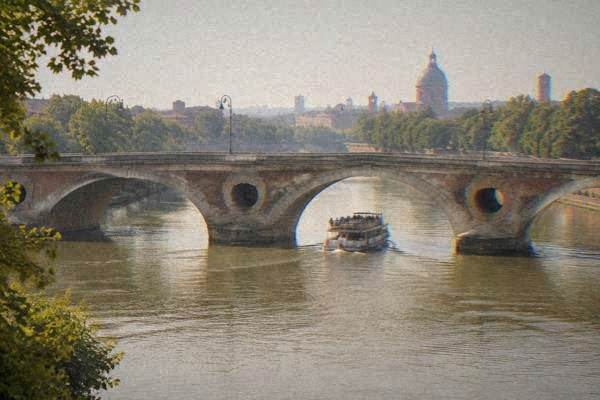
Le Bazacle
Le Bazacle is the shallow rocky shelf on the Garonne that made Toulouse fordable, and the riverbank around it is one of the most pleasant stretches of the city. Here is how to visit, what surrounds it, and when to go.
Short answer
Le Bazacle is the historic crossing point of the Garonne in Toulouse, in the Occitanie region of southwestern France. A single Tisseo ticket costs EUR 1.90, the riverside walk to it passes the Pont Neuf, and the site sits within walking distance of the Capitole and Saint-Sernin.
Toulouse, the pink-brick "La Ville Rose" on the Garonne in southwestern France, grew up around one practical fact of geography: the river was shallow enough here to cross. That shallow stretch is the Bazacle, and the bank around it is still one of the most rewarding parts of the city to walk. This guide from Toulouse Travel Guide covers what the site is, how to reach it with the city's transit network, what to see within a short stroll, and the seasons and events that shape a visit.
What Is Le Bazacle And Why Does It Matter In Toulouse?
Le Bazacle is the shallow rocky shelf on the Garonne that made the river fordable at Toulouse, and it is the reason the city sits where it does. The crossing point shaped the settlement on both banks, and the name today attaches to the riverside site and the quarter around it, a short walk downstream of the Pont Neuf and the pink-brick old town.
The Garonne comes down from the Pyrenees, roughly 100 km to the south, and by the time it reaches Toulouse it is a broad, powerful river. It is not a river that invites casual swimming or wading, and the city's position depends on the few places where crossing was ever practical. The Bazacle was the natural one. Every account of the city's early growth points back to this stretch of water, and the bridges and quays that followed it inherited its logic.
What you see today is a working riverbank rather than a monument behind a ticket booth. The water runs fast after rain in the mountains, the current shifts over the rocky bed, and the site reads as a piece of living geography rather than a museum piece. Treat it as an orientation point: once you understand the Bazacle, the layout of the old town, the Garonne riverside and the bridge network starts to make sense.
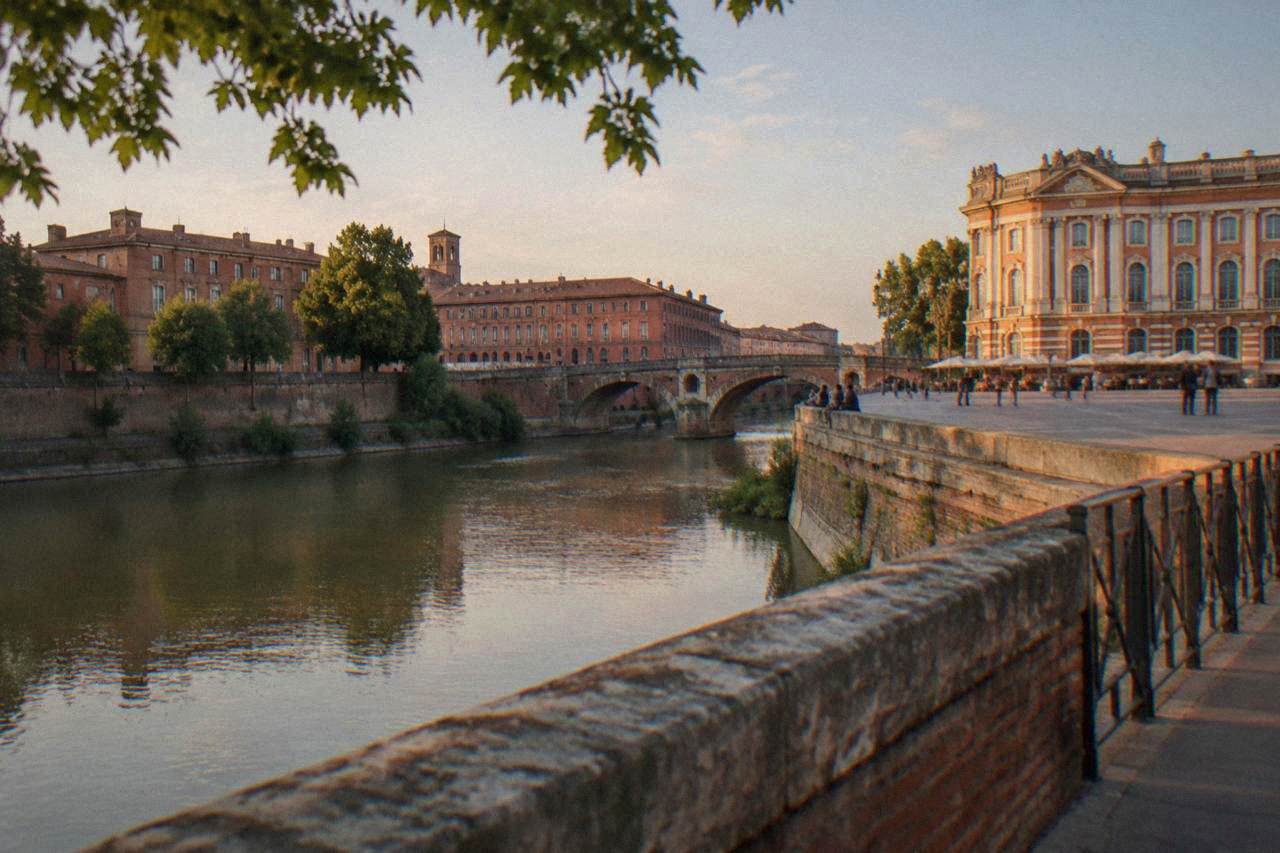
The quarter around it is quiet by Toulouse standards. Pink-brick facades, narrow streets climbing away from the water, and views back across the river to the Pont Neuf make the walk here worthwhile in itself. There is no single attraction to queue for, which is precisely the appeal for anyone escaping the busier squares near the Capitole.
How Do You Get To Le Bazacle By Public Transport?
A single Tisseo ticket costs EUR 1.90 and covers the metro, tram and bus network that serves the riverbank, and a day pass at EUR 7.20 covers unlimited travel for a full day of sightseeing. The site sits within the fare zone that includes the whole city center, so no special ticket is needed. The Tisseo e-boutique catalogue lists every current fare option.
Toulouse runs a two-line metro with tram and bus lines feeding it, and the riverbank is served by surface routes rather than by the underground lines themselves. The practical pattern is simple: take the metro toward the center, then walk the last stretch to the water. The city is compact, and the walk from the Capitole down to the river takes only a few minutes on foot.
| Tisseo ticket | Price | What it covers |
|---|---|---|
| Single trip | EUR 1.90 | One journey on metro, tram or bus |
| Single bought on board | EUR 2.50 | Last-minute purchase on the vehicle |
| 10 trips | EUR 16.00 | Ten journeys, shareable |
| Day pass | EUR 7.20 | Unlimited travel for one day |
| 3-day pass | EUR 14.30 | Unlimited travel for three days |
| Airport single | EUR 9.50 | Tisseo network plus the Navette aeroport |
Two things worth knowing before you ride. First, there is no 2-day pass in the catalogue, so for a two-day stay the choice is between two day passes or the 3-day pass. Second, if you are flying in, the tram line to the airport has been closed since 5 June 2023 and stays closed until the end of 2026 for the Line C metro works, so the Navette aeroport bus is the public transport link, running a departure every 15 minutes and taking 20 to 40 minutes to the center.
The other transit fact that shapes planning is the future: Metro Line C, 27 km and 21 stations from Colomiers through Blagnac, Toulouse and Labege, opens at the end of 2028. Until then, the existing network is what you use, and it is more than adequate for a riverside visit. Our getting around Toulouse guide covers the network in more depth.
What Can You See Within A Short Walk Of Le Bazacle?
The Bazacle sits on a stretch of bank that links several of Toulouse's headline sights on foot, including the Pont Neuf, the Capitole, the Basilica of Saint-Sernin and the Musee des Augustins, all reachable without a vehicle. The walk along the quay is flat, and the old town rises behind the bank in a compact grid of pink-brick streets.
Want the riverbank and the old town explained in one loop? Book a guided walking tour here.
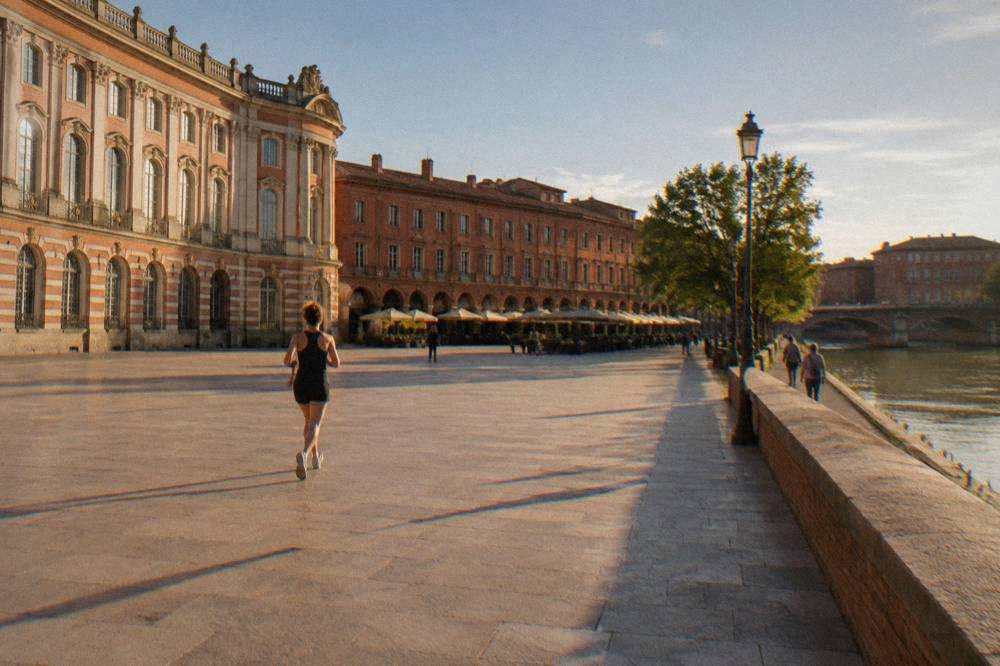
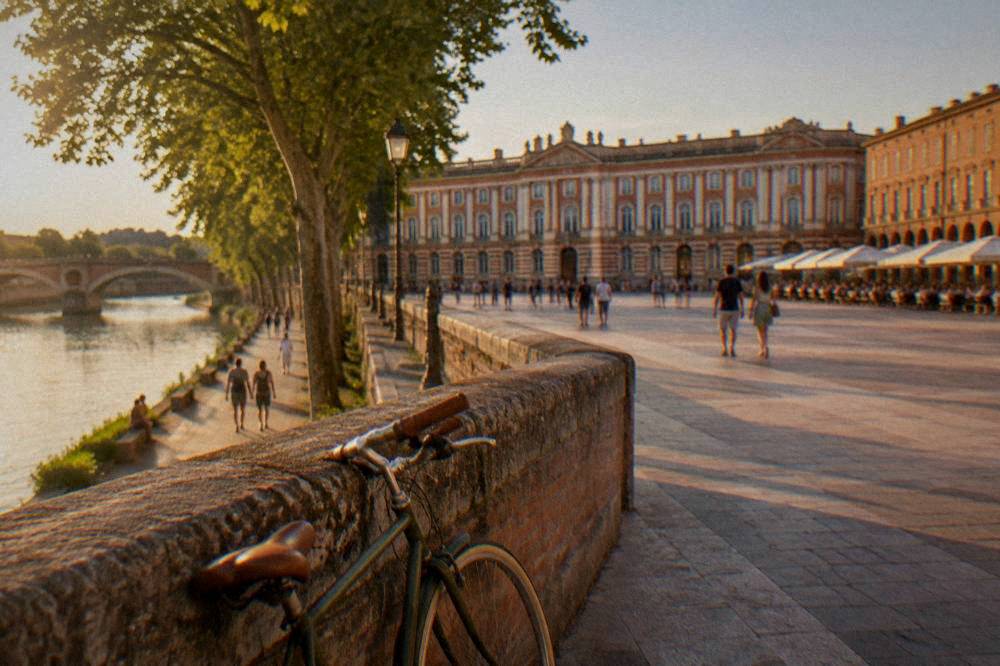
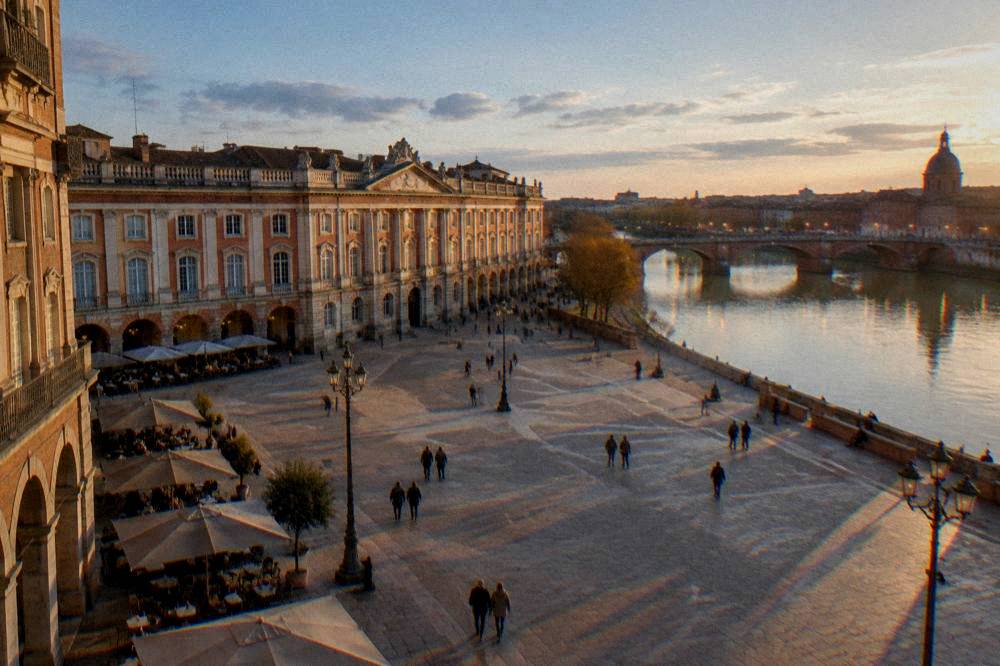
Start downstream at the Pont Neuf, the bridge that anchors every riverside walk in the city. From there the bank path leads along the water, and the Bazacle stretch continues the same line. The views across the river change with the light: pink brick glows warm in the late afternoon, and the water carries the reflection of the bridges.
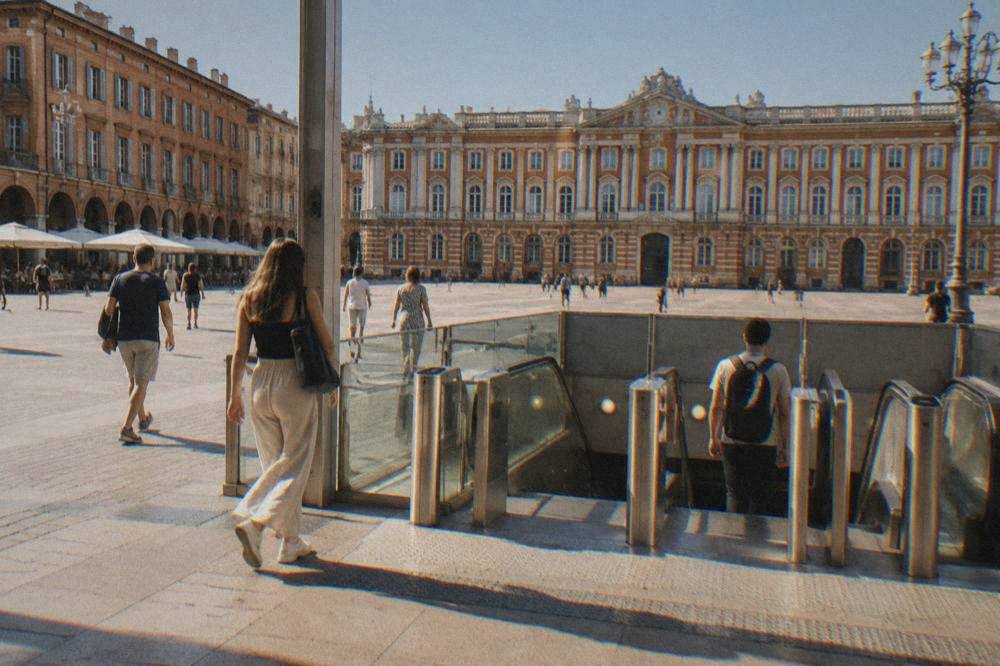
Behind the bank, the old town climbs toward the Capitole, the city's grand municipal building and the square in front of it. From there it is a short walk to the Basilica of Saint-Sernin, listed since 1998 as part of the UNESCO "Routes of Santiago de Compostela in France" and a major stop on the Via Tolosana. It is the largest church on this bank of the itinerary and the single most important historic building within walking distance of the river.
| Sight | Direction from the riverbank | Admission from the tourist office's listed rates |
|---|---|---|
| Pont Neuf | On the river, downstream | Free public bridge |
| Capitole | Uphill into the old town | Free public building and square |
| Basilica of Saint-Sernin | North of the old town | Free to enter |
| Musee des Augustins | Old town center | EUR 5 normal rate |
| Couvent des Jacobins | Old town center | EUR 5 normal rate |
| Fondation Bemberg | Old town center | EUR 12 normal rate |
| Les Abattoirs | Upstream along the bank | EUR 12 normal rate |
One planning note that matters in 2026: the Musee des Augustins is temporarily closed from 21 September to 2 October 2026 for great-cloister works, and its Gothic halls, the sacristy, the Notre-Dame de Pitie hall and the chapter house, reopen on 3 October 2026 from 10:00. If your visit falls in that window, plan the museum for later in the trip and give the riverbank walk the time instead.
Is Le Bazacle A Good Place To Watch The Garonne?
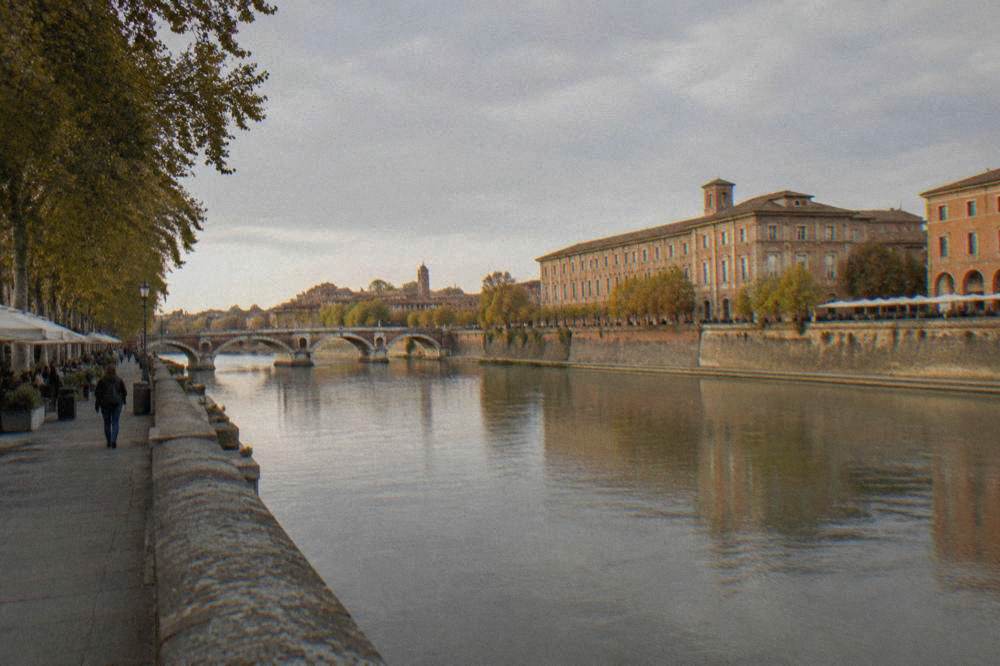
Yes, the Bazacle stretch is one of the best places in Toulouse to watch the Garonne work, because the rocky shelf and the fast current make the river visible and audible rather than a static backdrop. The bank path runs right along the water, and the views upstream to the Pont Neuf and across to the far bank are wide and open.
Rivers are the reason Toulouse exists, and the Garonne rewards attention. The flow here is not gentle: the water comes down from the Pyrenees and moves with real force, and after wet weather in the mountains the river rises visibly within days. Watching it from the bank gives a sense of why crossing was such a big deal, and why the shallow shelf mattered so much to the city's early history.
The light matters too. Meteo-France's 1991-2020 normals for Toulouse-Blagnac give the city 2,075.1 hours of sunshine a year, with July the sunniest month at 258.6 hours. Late afternoon is the hour when the pink brick on the far bank catches the sun, and the river carries the color. Photographers will find the upstream and downstream views equally productive; our photography spots in Toulouse guide places the riverbank high on the list.
Practical advice is simple. Stay off the rocks and out of the water: the current is strong, the banks are not a swimming spot, and the city's own pages treat the river as something to watch, not to bathe in. Comfortable shoes, a bottle of water in summer, and a willingness to walk are all the equipment the site demands. There is no ticket, no queue and no time limit.
Does The Pass Tourisme Pay Off Around Le Bazacle?
The tourist office's Pass Tourisme costs EUR 26 for stays of one to three days and includes a free guided tour from the office, plus free entry to the museums around the old town; the office's own page says it pays off from the third activity, and adding EUR 10 buys ten public-transport trips on top. For a riverbank-and-museums itinerary, the math works from the third paid museum onward.
The pass covers the municipal and partner sites that cluster within walking distance of the river. The tourist office's Pass Tourisme page lists the normal rates it replaces: Fondation Bemberg at EUR 12, the Museum at EUR 12, Les Abattoirs at EUR 12, the Musee des Augustins at EUR 5 and the Couvent des Jacobins at EUR 5. Cite de l'espace, at a normal rate of EUR 29, is discounted rather than free with the pass.
| Pass Tourisme item | Figure | Source note |
|---|---|---|
| Pass, 1 to 3 days | EUR 26 | Tourist office Pass Tourisme page |
| Transport add-on | +EUR 10 for 10 trips | Metro, bus and tram |
| Free guided tour | Included | From the tourist office |
| Break-even point | From the 3rd activity | Tourist office's own statement |
| Cite de l'espace | EUR 29 normal, discounted with pass | Tourist office rates table |
The pass pairs naturally with a riverbank day. Walk the Bazacle stretch in the morning, then spend the afternoon in one or two of the museums behind the bank, and the pass quietly pays for itself. The free guided tour from the tourist office is a good way to anchor the history before you walk the river on your own. Our Pass Tourisme guide works through the arithmetic in detail.
One caution: the Couvent des Jacobins is free on the first Sunday of the month, except when a temporary exhibition is on, and that rule is stated for the Jacobins only. Do not assume it extends to every municipal museum. Check each museum's own page before counting on a free Sunday.
When Is The Best Time Of Year To Visit Le Bazacle?
The best months for a riverbank visit in Toulouse are late spring and early autumn: May and June bring the sunniest shoulder-season weather, and September combines warm days with the start of the festival season. Meteo-France's 1991-2020 normals show July as the sunniest month at 258.6 hours, but May is the wettest month at 73.6 mm, so pack for showers either side of the sunshine.
The climate table is worth reading carefully, because Toulouse does not follow the pattern visitors expect. The wettest month is May, not a winter month: 73.6 mm of rain across the 1991-2020 period, almost double February's 37.2 mm. April follows at 65.2 mm and June at 64.2 mm. Then the rain eases, and July gets just 40.1 mm alongside its 258.6 hours of sunshine.
| Month | Mean daily max (C) | Mean daily min (C) | Rain (mm) | Rain days |
|---|---|---|---|---|
| Jan | 9.7 | 2.9 | 52.5 | 9.2 |
| Feb | 11.2 | 3.1 | 37.2 | 7.8 |
| Mar | 15.0 | 5.5 | 45.3 | 8.2 |
| Apr | 17.6 | 7.9 | 65.2 | 9.3 |
| May | 21.4 | 11.4 | 73.6 | 9.9 |
| Jun | 25.7 | 15.0 | 64.2 | 7.1 |
| Jul | 28.2 | 17.0 | 40.1 | 5.7 |
| Aug | 28.5 | 17.1 | 44.6 | 5.9 |
| Sep | 24.8 | 13.9 | 45.7 | 6.6 |
| Oct | 19.7 | 10.9 | 54.3 | 7.5 |
| Nov | 13.5 | 6.3 | 55.0 | 10.0 |
| Dec | 10.4 | 3.6 | 49.3 | 8.7 |
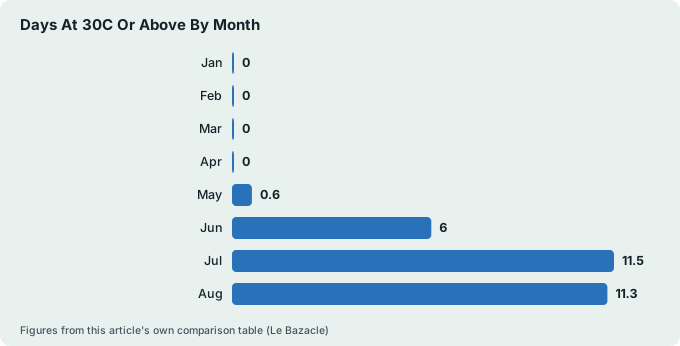
Summer heat is real but contained. The city averages 11.5 days a year at or above 30C in July and 11.3 in August, and the record high for the station, 42.4C, was set on 23 August 2023. Winter is mild rather than bitter, with January's mean daily minimum at 2.9C and the record low of -19.2C dating back to 15 February 1956. For a walking-heavy riverbank itinerary, the shoulder months give the best balance.
| Month | Sunshine (hours) | Days at 30C or above |
|---|---|---|
| Jan | 89.1 | 0 |
| Feb | 118.2 | 0 |
| Mar | 175.3 | 0 |
| Apr | 188.5 | 0 |
| May | 212.3 | 0.6 |
| Jun | 231.8 | 6 |
| Jul | 258.6 | 11.5 |
| Aug | 246.4 | 11.3 |
| Sep | 210.1 | 3.5 |
| Oct | 155.2 | 0.1 |
| Nov | 99.9 | 0 |
| Dec | 89.7 | 0 |
What Events Bring The Riverbank Around Le Bazacle To Life?
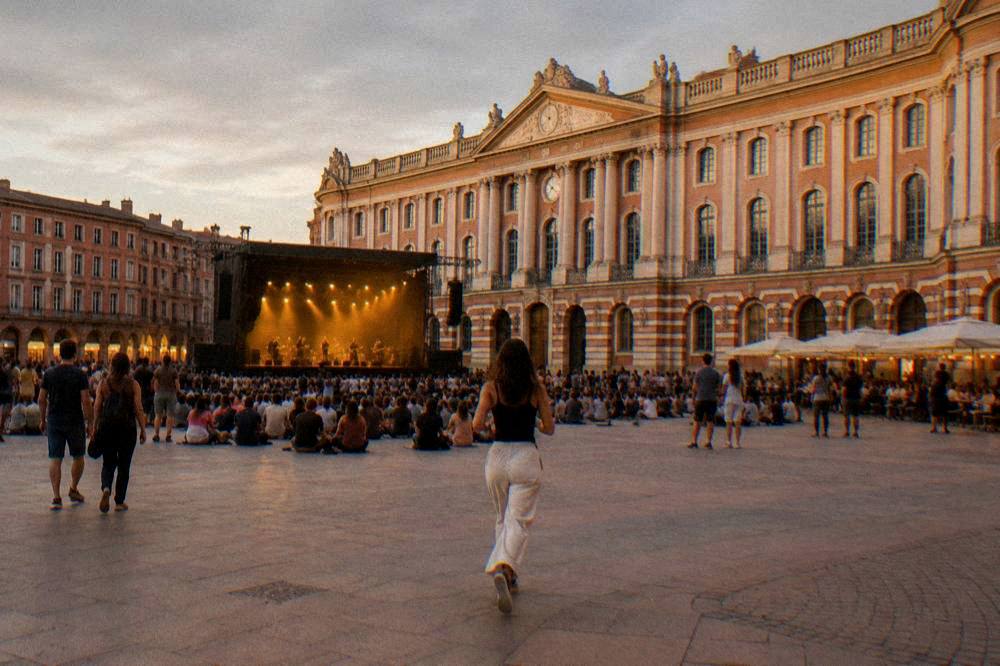
The verified events calendar around the river includes Piano aux Jacobins from 8 to 30 September 2026, Toulouse les Orgues from 7 to 18 October 2026 and the Christmas markets on Place du Capitole, the allees Jean-Jaures and square Charles-de-Gaulle from 26 November to 27 December 2026, all within reach of the bank on foot or a short ride.
Autumn is the strongest season for festival programming. Piano aux Jacobins fills the Jacobins cloister and other venues with concerts through late September, and Toulouse les Orgues, in its 31st edition, opens on 7 October 2026 with a concert at Notre-Dame de la Daurade, itself a riverside church a short walk downstream. Both festivals sit within the same compact river-and-old-town zone as the Bazacle stretch.
| Event | Verified dates | Venue zone |
|---|---|---|
| Piano aux Jacobins | 8 to 30 September 2026 | Couvent des Jacobins and other venues |
| Toulouse les Orgues (31st edition) | 7 to 18 October 2026 | Multiple venues, opening at Notre-Dame de la Daurade |
| Christmas markets | 26 November to 27 December 2026 | Place du Capitole, allees Jean-Jaures, square Charles-de-Gaulle |
| Rio Loco | 9 to 13 June 2027 | Prairie des Filtres, on the river |
Rio Loco deserves a special mention for this page specifically: the festival takes over the Prairie des Filtres, a riverside meadow on the Garonne, for its June edition. The 2027 edition runs 9 to 13 June 2027 with the theme "Noctiluca", and the 2026 edition ran 10 to 14 June. If your trip lands in June, the riverbank around the festival becomes the center of the city's musical life.
Winter visitors get the Christmas markets, spread across three sites from 26 November to 27 December 2026, with the Capitole site the closest to the river. Our Toulouse events guide tracks the full calendar, and the Christmas market guide covers the winter edition in depth.
Can You Pair Le Bazacle With A Guided Tour Of Toulouse?
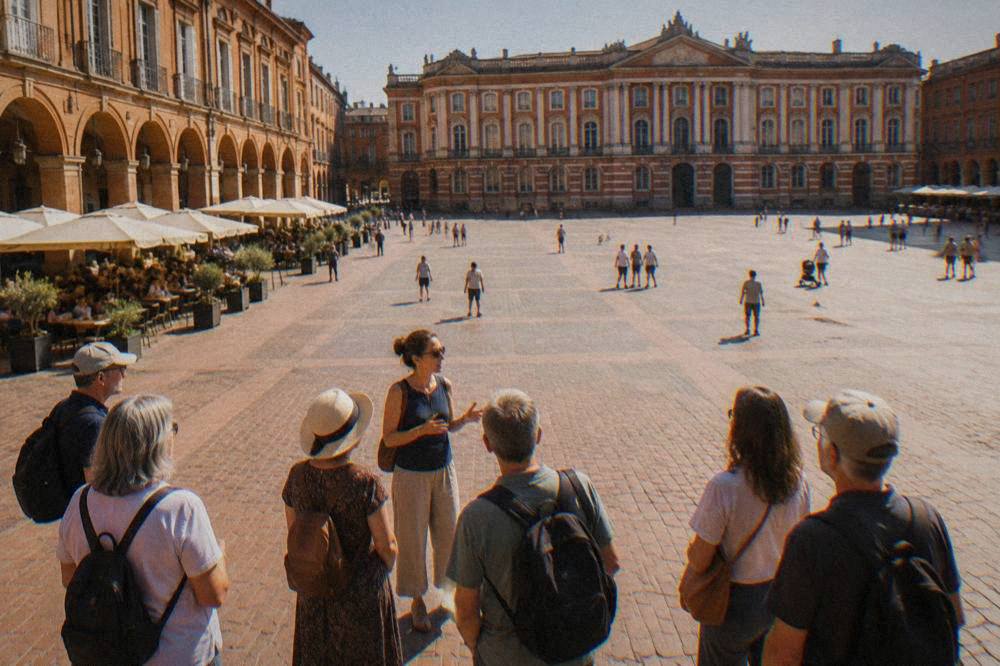
Yes, and the pairing works well because the riverside stretch is a natural stop on the city's walking circuits: a guided walk covers the old town and the river in one loop, while themed tours, from food walks to an 18th-century immersion experience, use the same geography. The tours below all operate in the city center within reach of the bank.
A guided walk is the most efficient first move in Toulouse if the city's layered history feels abstract. The old town, the river and the aerospace story are three different threads, and a good guide braids them together in a way a self-guided wander does not. The walking tours in Toulouse guide compares the options, including the free, tip-based walks listed on GuruWalk, which cost nothing upfront and are paid by tip at the end.
For a different angle, the Garonne itself can be seen from the water. The Canal du Midi, inscribed by UNESCO in 1996, meets the river zone on the city's itineraries, and canal cruise products run with commentary on the UNESCO-listed waterway. Our canal boat trips guide covers those options, and the cruise products in our listings run from the city's central embarkation points.
If aviation is the reason you are in Toulouse at all, the pairing is straightforward: spend the morning on the riverbank and the afternoon at the aviation sites north of the city. The Aeroscopia museum, adult admission EUR 16 per its practical page, open daily 9:30-18:00 with last entry at 17:00, sits near the airport, and the Cite de l'espace space park, tickets from EUR 22.50 per its homepage with a normal adult rate of EUR 29, is the other headline science attraction. Both pair with a relaxed morning by the Garonne.
Where Can You Eat And Drink Near Le Bazacle?
The streets climbing from the riverbank toward the old town hold the eating options closest to the Bazacle stretch, and the Marche Victor Hugo, the city's covered market, sits within the same walkable zone; name a dish to look for rather than a single restaurant, and let the market and the quarter do the work. Cassoulet and Toulouse sausage are the two plates the city is famous for.
Toulouse food is hearty, brick-oven country cooking, and the two names to know are cassoulet, the slow-baked bean and meat casserole, and Toulouse sausage, the thick fresh pork sausage that goes into it and onto grills everywhere. Our cassoulet and Toulouse sausage guides explain both dishes, and the Marche Victor Hugo is the place to see the raw ingredients before you eat the finished plates.
The covered market is also the anchor for the city's food tours. A guided tasting walk through the market and the surrounding streets turns the quarter into the meal itself, and the guided food products in our listings run with multiple tastings included. For the evening, the wine bar scene in the old town is strong, and a guided wine bar walk with a local expert is the most sociable way into it.
One honest note on planning: this site does not rank restaurants, because specific prices, hours and standings for individual establishments were not verified for these pages. The reliable pattern is the market by day, the old town's small plates and wine bars by night, and a cassoulet somewhere in between. The Toulouse restaurants guide explains how the city eats and when, including the local dinner hour.
Common Questions About Le Bazacle
Is Le Bazacle free to visit?
The riverside stretch itself is a public bank with no ticket, no gate and no set hours, so walking it costs nothing. The site reads as a piece of working geography rather than a ticketed museum. Any paid experience around it, such as a guided walking tour, is booked separately.
How far is Le Bazacle from the Capitole?
The Capitole sits uphill behind the riverbank in the compact old town, and the walk between them takes only a few minutes on foot through the pink-brick streets. No verified walking time was published for this exact route, so treat it as a short central stroll rather than a timed journey.
Can you swim in the Garonne at Le Bazacle?
No. The Garonne at Toulouse is a fast, powerful river carrying water down from the Pyrenees, and the banks are for walking and watching, not bathing. Stay on the path, off the rocks and out of the water.
What is the closest metro or bus access to Le Bazacle?
The riverbank is served by Toulouse's surface transit rather than by a metro station on the bank itself; the practical pattern is to ride toward the center and walk the last stretch to the water. A single Tisseo ticket costs EUR 1.90, and a day pass costs EUR 7.20.
Is Le Bazacle worth visiting with kids?
Yes, as part of a riverside walk rather than as a standalone attraction. The water, the bridges and the flat bank path hold children's attention, and the walk links naturally to the Pont Neuf and the old town. For a full family day out, the Cite de l'espace, tickets from EUR 22.50, is the city's headline kid-friendly site.
What else should you see on the same day as Le Bazacle?
The Pont Neuf on the river, the Capitole and its square, the Basilica of Saint-Sernin, a UNESCO-listed stop on the Via Tolosana, and the Musee des Augustins, whose Gothic halls reopen on 3 October 2026 after the September closure, all sit within the same walkable zone behind the bank.
The Bazacle is not an attraction you photograph once and leave; it is the reason the city is where it is, and the bank around it is the walk that explains Toulouse to itself. Go in late spring or early autumn, ride the Tisseo network to the center, walk the water with the sun on the pink brick, and let the museums and the market fill the hours the river leaves open.