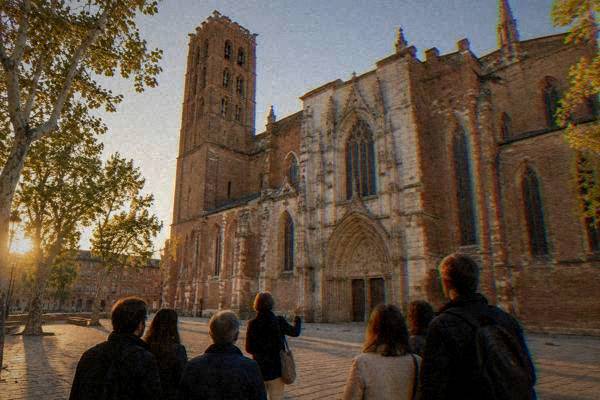
Why Is Toulouse So Famous?
Why is Toulouse so famous? Pink brick, Airbus jets, UNESCO landmarks and cassoulet: the honest reasons this southwestern French city keeps its nickname, La Ville Rose.
Toulouse, the pink-brick city on the Garonne in the Occitanie region of southwestern France, is famous for reasons that reinforce each other. The terra-cotta brick of its old buildings gave it the nickname La Ville Rose. The same warm stone shapes a historic center anchored by the Basilique Saint-Sernin, a stop on the pilgrim route to Santiago de Compostela and part of a UNESCO World Heritage listing since 1998. Around the city, Airbus assembles wide-body aircraft, and in the city's restaurants, cassoulet is served in the region that claims it. This page unpacks each of those claims, with the figures the official sources actually give.
Why Is Toulouse So Famous?
Toulouse is famous for its pink brick old town, which gave the city the nickname La Ville Rose, for being the European home of Airbus aircraft assembly, for UNESCO-listed heritage including the Basilique Saint-Sernin and the Canal du Midi, and for cassoulet, the slow-cooked bean and meat dish the region claims as its own. Each of these four claims traces to something checkable, and together they explain why a mid-sized inland French city keeps drawing visitors, students and aerospace engineers.
The commune of Toulouse counted 514,819 inhabitants in the 2023 INSEE population figures. That is a big city by French standards, but not a metropolis, and its fame is out of proportion to its size. The rest of this page takes the four pillars one at a time, starting with the brick.
The Pink Brick That Gave Toulouse Its Nickname
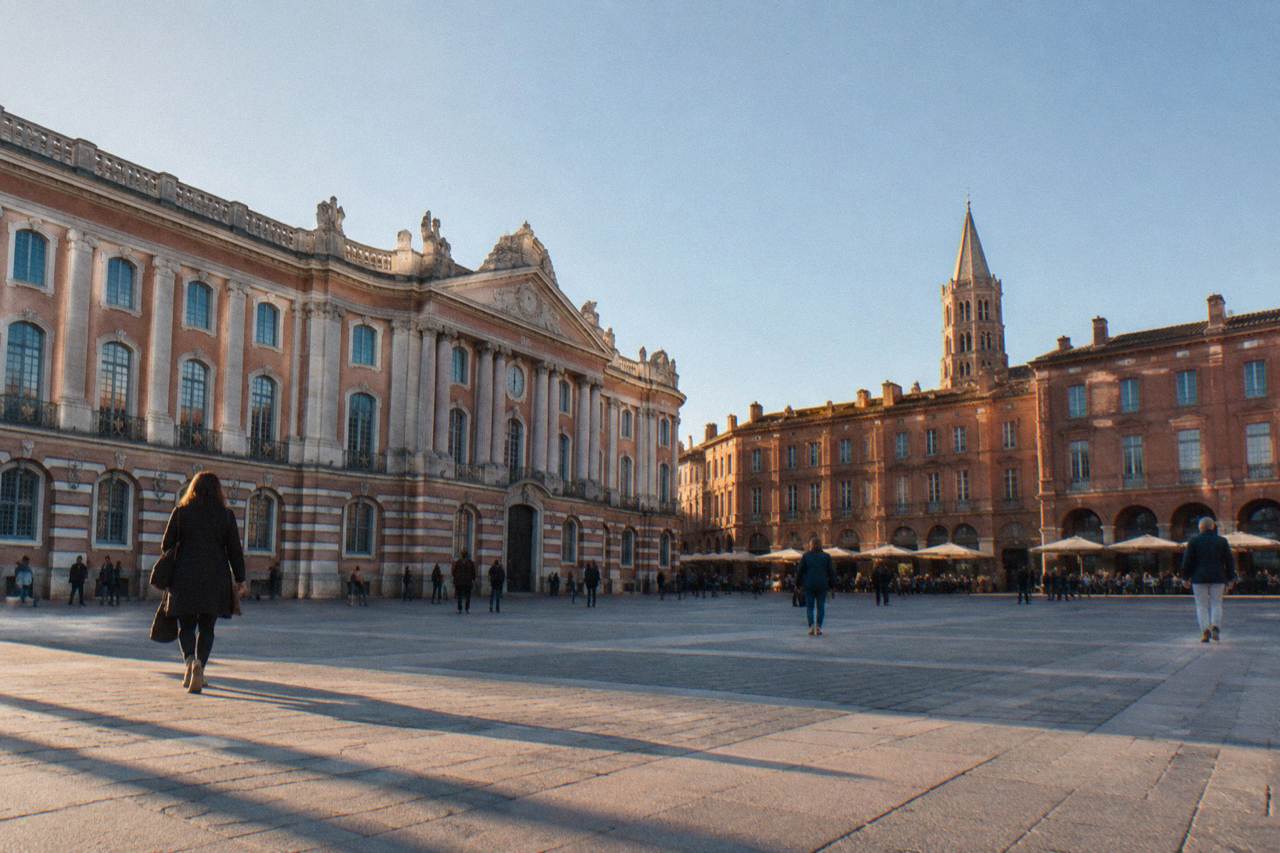
The pink brick of Toulouse's old buildings is the single most photographed thing about the city and the source of its well-known nickname, La Ville Rose, because the same warm terra-cotta stone runs continuously through the churches, mansions and warehouses of the historic center rather than appearing on a few showcase facades. Walk the streets around the Capitole, the Jacobins or the Garonne riverbank and the walls glow warm orange at sunset, which is where the nickname comes from. The city's own tourist materials use the nickname freely, and the site's longer guide to what Toulouse is famous for goes deeper into the individual landmarks.
The brick is not just decoration. It is the ordinary building material of the historic center, used for churches, mansions and warehouses alike, so the color runs continuously through the old town rather than appearing on a few showcase facades. The Capitole, the city hall with its famous facade and square, the Couvent des Jacobins with its palm-tree vault, and the riverside quays are all in the same warm stone.
What the brick does for a visitor is practical: it makes the city unusually coherent to walk around. A first afternoon spent between the Place du Capitole, the rue du Taur and the Garonne gives you the essential Toulouse without needing a single ticket, and the evening light on the riverbank near the Pont Neuf is when the nickname makes most sense.
Prefer to hear the stories as you wander the pink streets? Book a self-guided audio tour here.
If walking is not your plan, the tuk-tuk option exists. The city's electric tuk-tuk tour with photo stops and audio commentary is a way to cover the pink-brick highlights without planning a route, and you can Check availability on the operator's live listing.
Those three options cover the famous city from three angles: the tuk-tuk circuit for the pink-brick streets, the Aeroscopia entry ticket for the aircraft side of the city's fame, and a private day tour to Albi and Cordes-sur-Ciel for the heritage that radiates beyond the city limits. Which one fits depends on whether your interest is brick, jets or the wider region.
Airbus And The Aerospace Capital
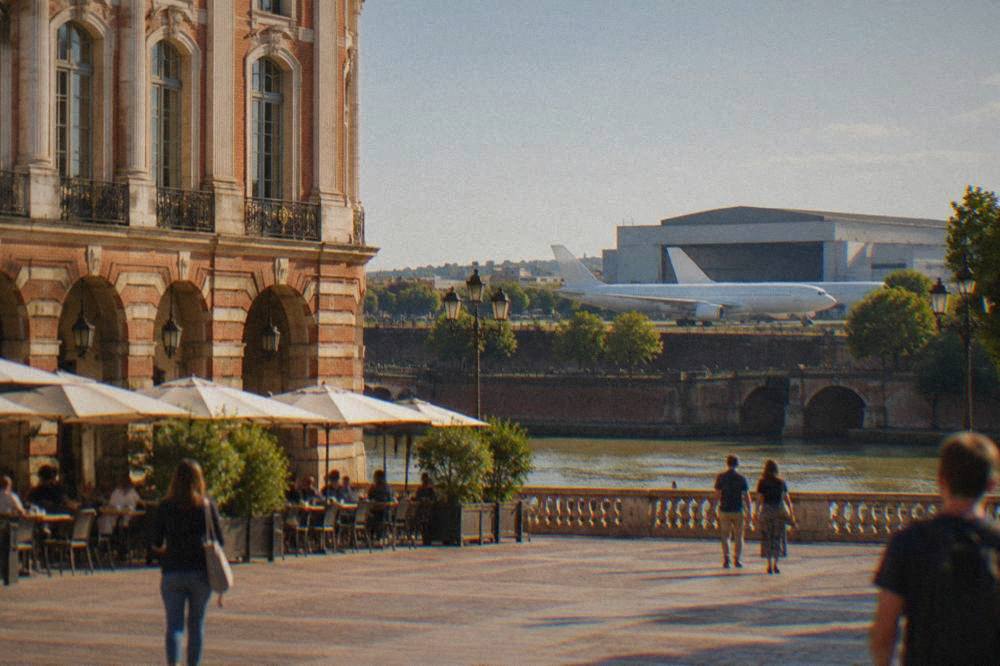
Toulouse is famous as the city where Airbus assembles its aircraft, and aerospace is the industry most tightly bound to the city's modern identity, from the assembly plants north of the city to the Aeroscopia museum beside the airport and the Manatour factory tours of the A350 and A321 lines. The industry's presence explains both the city's student population and its airport traffic: Toulouse-Blagnac handled 7,621,409 commercial passengers in 2025, according to the airport's own press release, a figure down 2.8% on 2024.
Two visits serve the aerospace interest. The Aeroscopia aviation museum, next to the airport, displays full-size aircraft in its exhibition hall; the museum's practical page lists adult admission at EUR 16, reduced at EUR 13, an annual pass at EUR 26 and a family pass at EUR 80, with daily opening 9:30-18:00 and last entry at 17:00. The museum's page also notes that the exhibition hall is not heated or air-conditioned, worth knowing in winter and in the July heat.
The factory tours are run by Manatour. The operator's page lists A350 and A321 tours of 1h30 each, plus an Airbus Kids program, with adult tickets at EUR 18 and reduced at EUR 15, free for children under 6. The same page is strict about the rules: an original passport or ID card is required, with no photocopy or phone image accepted, visitors must arrive well before the tour starts, and neither cameras nor pets are allowed on the tours.
The aerospace story also reaches into the city itself. Cite de l'espace, the space theme park east of the center, is the family-facing side of the same industry; the park's homepage lists tickets from EUR 22.50, and the tourist office's rate table gives the normal adult rate as EUR 29, discounted rather than free with the Pass Tourisme. The site's dedicated guide covers Cite de l'espace in full.
UNESCO Heritage: Saint-Sernin And The Canal Du Midi
Toulouse carries two UNESCO World Heritage connections: the Canal du Midi, inscribed in 1996 under criteria i, ii, iv and vi, and the Basilique Saint-Sernin, listed since 1998 as part of the Routes of Santiago de Compostela in France. The basilica, a Monument Historique since 1840, is a major stop on the Via Tolosana, the pilgrim road that carried medieval travelers toward Santiago. No other Toulouse monument carries the UNESCO label, so treat these two as the complete list.
The Canal du Midi, which begins its long run toward the Mediterranean from the city's edge, is the other half of the pair. UNESCO's listing entry gives the property 2,007 hectares, and the canal is the reason boat tours depart from the city at all; the question of why the Canal du Midi is famous has its own page. The site's guides to Canal du Midi boat trips and to the basilica of Saint-Sernin cover both landmarks in detail.
The table below gathers the admission figures the tourist office and museum pages actually publish, which is useful when the UNESCO pair is the reason for your trip.
| Site | Normal adult rate | Notes from the official page |
|---|---|---|
| Couvent des Jacobins | EUR 5 | Free on the first Sunday of the month, except when a temporary exhibition is on |
| Musee des Augustins | EUR 5 | Temporarily closed 21 September to 2 October 2026 for great-cloister works |
| Fondation Bemberg | EUR 12 | Listed on the tourist office's Pass Tourisme page |
| Museum de Toulouse | EUR 12 | Listed on the tourist office's Pass Tourisme page |
| Les Abattoirs | EUR 12 | Listed on the tourist office's Pass Tourisme page |
| Cite de l'espace | EUR 29 | Discounted, not free, with the Pass Tourisme |
| Aeroscopia | EUR 16 | Open daily 9:30-18:00, last entry 17:00 |
The Pass Tourisme ties several of these together. The tourist office's page lists the pass at EUR 26 for stays of one to three days, includes a free guided tour from the office, and pays off from the third activity; adding EUR 10 buys ten public-transport trips on top.
Cassoulet, Violets And The Food The City Is Known For
Toulouse is famous for cassoulet, the baked bean and meat casserole whose Toulouse version carries the city's own sausage, and for violets, the flower grown around the city and turned into sweets and liqueurs, with the Marche Victor Hugo covered market as the working heart of the whole food culture. The dish is the region's signature, and the city's name is attached to one of its key ingredients, the Toulouse sausage. The site's pages on the signature dish of Toulouse and on what exactly a cassoulet is unpack the dish properly.
The food fame is not just one plate. The Marche Victor Hugo, the covered market near the Place du Capitole, is the working heart of the city's food culture, and several guided tasting tours of the city run through it. The drink side has its own page on what drink Toulouse is famous for, and the local wine country, from Fronton to Gaillac, sits close enough for day trips.
Violets are the quieter half of the food story. The flower has a long history in the region and shows up in candied form, in sweets and in liqueur; the site's guide to Toulouse violets covers it. Between cassoulet, the market and the flower, the city's food identity is specific enough that it could only belong to this corner of France.
The tuk-tuk circuit suits the food day too, since it drops you near the market streets with your legs intact for the tastings. Food tours of the market run regularly, and the tuk-tuk format means the pink-brick sightseeing and the eating can share one afternoon without wearing out the group.
How Big Is Toulouse, And What Is It Like To Visit?
Toulouse is a city of 514,819 inhabitants in the commune proper, an inland city on the Garonne with a metro, buses and trams, warm dry summers and its wettest month in May, and a compact pink-brick center that rewards walking. The INSEE figure for 2023 is the only population number the official statistics office publishes for the commune, and no metropolitan figure was sourced for this site, so none is given here.
Getting around is cheap by big-city standards. The Tisseo e-boutique catalogue lists a single trip at EUR 1.90, or EUR 2.50 bought last-minute on board, ten trips at EUR 16.00, a day pass at EUR 7.20 and a three-day pass at EUR 14.30. There is no two-day pass in the catalogue. The airport single, covering the Tisseo network plus the Navette aeroport bus, is EUR 9.50.
| Tisseo ticket | Price |
|---|---|
| Single trip | EUR 1.90 |
| Single trip bought on board | EUR 2.50 |
| 10 trips | EUR 16.00 |
| Day pass | EUR 7.20 |
| 3-day pass | EUR 14.30 |
| Airport single (network plus Navette) | EUR 9.50 |
Two transport facts matter for 2026 and 2027 visitors. The tram line T2 to Toulouse-Blagnac airport has been closed since 5 June 2023 and stays closed until the end of 2026 because of the metro Line C works; the airport's own access page says the Navette bus runs one departure every 15 minutes and takes 20 to 40 minutes to the center. The new metro Line C itself, 27 km and 21 stations from Colomiers to Labege, opens at the end of 2028.
The climate shapes when the fame is easiest to enjoy. Meteo-France's 1991-2020 normals for Toulouse-Blagnac give the city 2,075.1 hours of sun a year and 627 mm of rain over 95.8 rain days. The surprise in the record is that May, not a winter month, is the wettest, at 73.6 mm, with April at 65.2 mm and June at 64.2 mm close behind; July, the sunniest month at 258.6 hours, gets just 40.1 mm. The site's guide to the best time to visit Toulouse works the calendar through.
| Climate figure, Meteo-France 1991-2020 normals | Value |
|---|---|
| Annual sunshine | 2,075.1 hours |
| Annual rainfall | 627 mm |
| Rain days (1 mm or more) | 95.8 days |
| Wettest month | May, 73.6 mm |
| Sunniest month | July, 258.6 hours |
| Record high | 42.4 C, 23 August 2023 |
| Record low | -19.2 C, 15 February 1956 |
The city's calendar adds to the draw. The metropole's agenda confirms the Christmas markets on the Place du Capitole, the allees Jean-Jaures and the square Charles-de-Gaulle from 26 November to 27 December 2026, the Toulouse les Orgues festival from 7 to 18 October 2026, and Piano aux Jacobins from 8 to 30 September 2026. The site's guide to Toulouse events lists more.
The fame also radiates outward. Albi, with its own UNESCO-listed cathedral city an easy day trip away, and Carcassonne, the walled city whose fame arguably outstrips Toulouse's own, both sit in the wider region; the site's pages on what Albi is famous for and on Carcassonne cover them. The Pyrenees lie roughly 100 km south, which is why the city also serves as a jumping-off point for mountain trips, a role covered in the guide to day trips from Toulouse.
Whichever of those three you pick, the underlying reasons do not change: the brick, the jets, the pilgrim heritage and the cassoulet are what the city is known for, and every one of them is easiest to reach from the compact center described above.
Common Questions About Why Toulouse Is Famous
Quick answers to what planners ask most about the city's fame.
Why is Toulouse so famous?
Toulouse is famous for its pink brick old town, the nickname La Ville Rose, Airbus aircraft assembly, UNESCO-listed heritage in the Basilique Saint-Sernin and the Canal du Midi, and cassoulet with the city's own sausage.
Is Toulouse famous for Airbus?
Yes. Airbus assembles its aircraft at the plants north of the city, and the related visitor offer includes the Aeroscopia museum and the Manatour factory tours of the A350 and A321 lines.
Is the Canal du Midi in Toulouse UNESCO-listed?
Yes. The Canal du Midi was inscribed on the UNESCO World Heritage list in 1996, and the canal's course begins at the city before running toward the Mediterranean.
What food is Toulouse most famous for?
Cassoulet, the baked bean and meat dish whose Toulouse version includes Toulouse sausage, plus violets in candied and liqueur form and the produce of the Marche Victor Hugo.
Why is Toulouse called La Ville Rose?
Because of the pink terra-cotta brick used across its historic center, which gives the old town's walls and towers their warm color, especially in evening light along the Garonne.
Is Toulouse worth visiting for a weekend?
Yes. The pink-brick center, the Saint-Sernin basilica, the Jacobins convent and the Garonne riverbank are all walkable in two days, and the site's itineraries for a weekend in Toulouse lay out a realistic plan.
The four pillars hold up together: brick, jets, pilgrim heritage and a bean dish. Few cities of half a million people can claim that combination, and none of it requires a sea, because Toulouse, as this Toulouse Travel Guide keeps noting, is an inland city whose river and canal do the work a coastline would do elsewhere.