Where Do Locals Eat In Toulouse?
Where locals eat in Toulouse: the markets, dishes and neighborhoods that feed the pink-brick city on the Garonne, from cassoulet to the Victor Hugo market stalls.
Toulouse, the pink-brick "La Ville Rose" on the Garonne in the Occitanie region of southwestern France, feeds itself differently from the way the guidebook rows suggest. Locals buy at covered markets, eat cassoulet and Toulouse sausage in old bistro corners, and take visitors to the same half-dozen dishes the city has cooked for generations. This page lays out where those tables actually sit, what is on them, and how a short walk through the Victor Hugo market can put you on the eating side of the city rather than the sightseeing side of it. The Toulouse Travel Guide covers the monuments elsewhere; this one is about dinner.
Where Do Locals Eat In Toulouse?
Locals in Toulouse eat at the covered markets, above all the Victor Hugo market near the Capitole, at the bistros of the Carmes and Saint-Etienne quarters, and at the wine bars and cassoulet tables of the old center. The eating follows the food, not the view: a market stall, a corner bistro, a square with plastic chairs, all of it built around cassoulet, Toulouse sausage and the Fronton and Gaillac wines poured beside them.
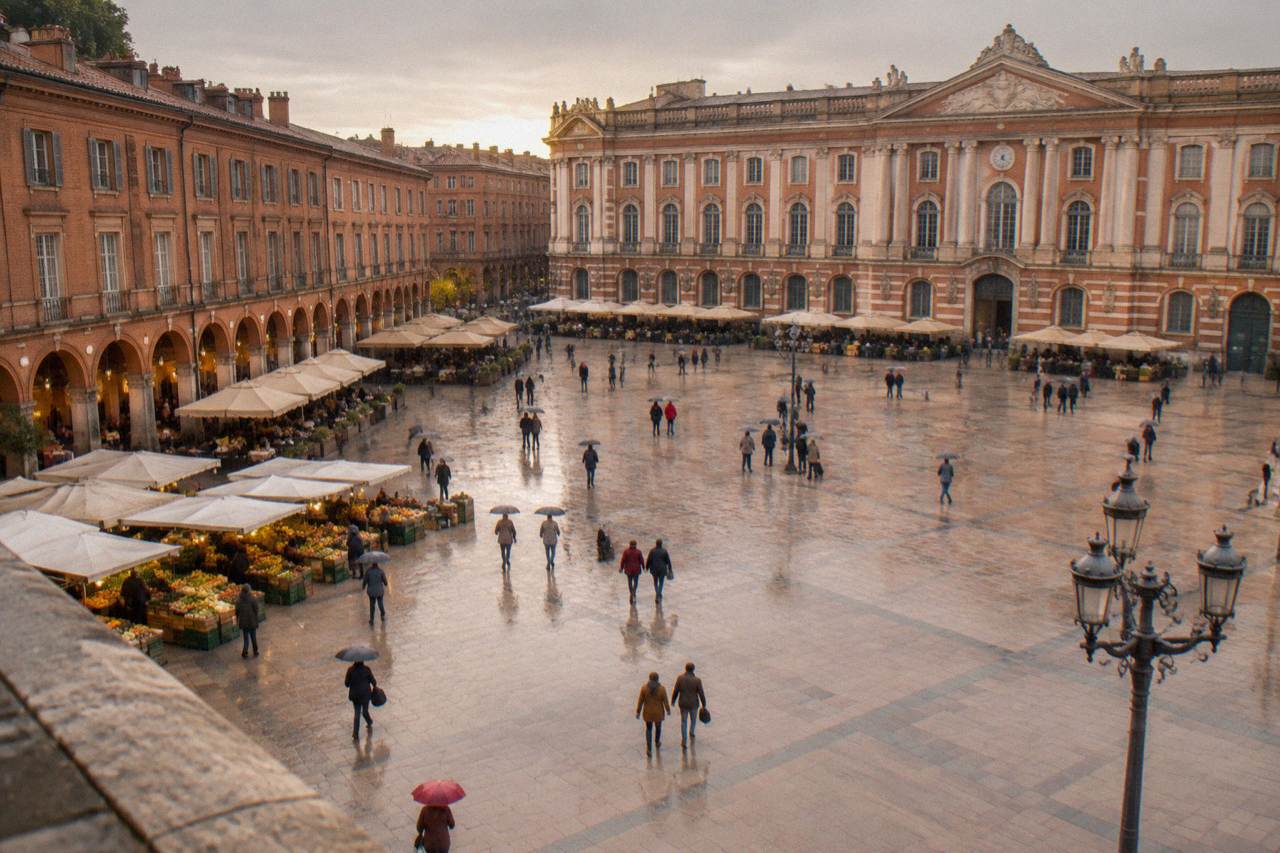
The honest answer starts with a distinction. The rows of restaurants facing the Capitole and lining the Rue du Taur feed the city's visitors, and locals know it. The tables locals actually keep are one or two streets off that axis: the Carmes quarter south of the center, the streets around Saint-Etienne, and the covered markets where people shop first and eat second. Nothing about this is secret, it is simply a different map from the postcard one.
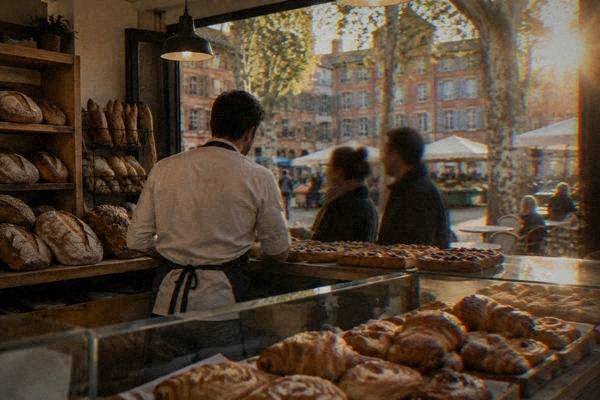
The covered market is the load-bearing wall of local eating. The Victor Hugo market, an art deco hall a short walk from the Place du Capitole, works as the city's pantry: cheese, charcuterie, poultry, oysters and the raw ingredients of cassoulet all trade under one roof, and the bars around its edge serve food from the same stalls. Locals shop there, then eat there, which is the pattern to copy. If you want the deeper background on the city's signature dish, read what exactly is a cassoulet before you order one.
What locals order is not a mystery either. Cassoulet, the slow white-bean and meat casserole, is the city's signature dish, and Toulouse sausage, the thick plain-pork sausage the cassoulet itself is built on, appears grilled on its own. Beyond those two, the table fills with garlic soup, duck in its several forms, the cheese of the nearby Pyrenean dairies, and the violet-flavored sweets the city is known for. The full list of the must-eats sits on the must-eat in Toulouse page.
Which Neighborhoods Feed Toulouse Every Day?
The everyday eating map of Toulouse runs through the Victor Hugo market and the Carmes quarter, the streets around Saint-Etienne, and the Saint-Aubin and Saint-Cyprien sides of the river, each with its own character. Carmes and Saint-Etienne carry the bistros and wine bars of the old bourgeoisie, Saint-Aubin the Sunday brunch tables, and Saint-Cyprian's the quieter neighborhood kitchens across the Garonne.
Start with Carmes, just south of the center. The quarter keeps the kind of small bistro where the menu is short, the cassoulet arrives in its individual dish, and the wine list leans on the local Fronton red, a grape grown north of the city. Saint-Etienne, around the cathedral of the same name, is the city's more polished eating quarter, with wine bars that pour Gaillac, one of France's oldest vineyard areas, an hour's drive away. For the story of that grape country, the Gaillac wine route guide covers it in full.
Cross the Pont Neuf and the character changes. Saint-Cyprien, on the left bank of the Garonne, is the neighborhood locals mean when they say "where we actually live", and its eating is correspondingly unpolished: market squares, neighborhood pizzerias, and the kind of place where the plat du jour is written in felt pen. Saint-Aubin, east of the center along the canal, is the weekend quarter, and Sunday around its church square is the closest thing Toulouse has to a brunch scene.
None of these quarters requires a car. The city center is compact and the walk from the Capitole to Carmes or Saint-Etienne takes only a few minutes on foot, which is one reason locals eat out as often as they do. The question of how many days is enough for Toulouse usually answers itself the same way: enough days to eat in more than one quarter.
What Dishes Do Toulouse Locals Actually Order?
The local order in Toulouse is built on cassoulet, grilled Toulouse sausage, garlic soup, duck confit and the cheeses and wines of the surrounding region, with violet sweets as the city's own dessert signature. These are not tourist dishes dressed up as local ones, they are the dishes the city's own cookbooks were written around, and they appear on neighborhood menus as often as on postcard ones.
Cassoulet is the head of the table. The dish is a slow bake of white beans with confit duck, pork and Toulouse sausage, and arguing about which town makes it correctly is a local sport in itself. The sausage is the second pillar: a coarse, plain-pork link with no herbs worth mentioning, grilled and served with simple potatoes or lentils. If you want the full anatomy of the bean dish, what is the signature dish of Toulouse breaks it down, and what do the French eat with cassoulet covers what belongs on the table beside it.
Below the two pillars sits a supporting cast. Garlic soup, duck confit on its own, foie gras from the southwest, and the washed-rind and Pyrenean cheeses that finish a local meal. The wine poured with all of this is regional by default: Fronton red, Gaillac in red, white and sparkling, and the Cahors malbec from down the river. What to drink with the bean dish has its own answer on the cassoulet wine page.
The sweet note is the violet. Toulouse has grown and candied violets for longer than anyone eating there today can remember, and the flower turns up in sweets, liqueur and macarons. It is the gift locals bring back when they have been away, which is the surest sign a food is genuinely local.
| Dish or drink | What it is | Where locals eat it |
|---|---|---|
| Cassoulet | White beans baked with confit duck, pork and Toulouse sausage | Carmes bistros, old-center tables |
| Toulouse sausage | Coarse plain-pork link, grilled | Market bars, neighborhood grills |
| Garlic soup | The city's old workers' soup, often with an egg | Simple old-quarter menus |
| Duck confit | Preserved duck leg, the cassoulet's partner dish | Bistros across the center |
| Fronton red | The local red grape grown north of the city | Wine bars, by the glass |
| Gaillac white and sparkling | Wine from one of France's oldest vineyards | Saint-Etienne wine bars |
| Candied violet sweets | The city's flower, crystallized or in liqueur | Sweet shops, market stalls |
When Do Locals Eat In Toulouse?
Locals in Toulouse follow the standard French rhythm: a proper midday lunch, a later evening meal, and a café or market snack in between, with the weekend lunch stretched long into the afternoon. The city's covered markets do the shopping in the morning, the aperitif fills the hour before dinner, and Sunday is the day the family table wins over the restaurant.
The rhythm matters to a visitor for one practical reason: kitchens close. A bistro that serves lunch will typically stop serving mid afternoon and reopen for dinner, and arriving between the two means eating from a bakery instead. The details of the evening hour are on what time do people eat in Toulouse, which is worth reading before you plan a 7 p.m. dinner and find the room still empty.
The aperitif is the meal locals defend hardest. The hour before dinner, in a bar with a glass of Fronton or a local sparkling Gaillac and something small to eat, is when the city's food culture is most itself. The Sunday version runs longer, and the Saint-Aubin square and the Victor Hugo market bars are where it plays out.
Can A Market Walk Show You Where Locals Eat In Toulouse?
A guided tasting walk through the Victor Hugo market is the fastest way onto the local side of the table, because the guide buys from the same stalls locals buy from and the tastings are the city's own foods rather than a curated menu. The small-group Victor Hugo market tasting tour is built exactly this way, and a private walk with a local or a winery visit with transfer extends the same idea beyond the city.
The Victor Hugo market small-group tasting tour is this site's featured pick for the question, and it fits the question precisely: the walk works the stalls of the covered market, tastings come from the producers there, and the guide's job is the same as a local friend's would be, deciding what is worth stopping for. You can Check availability on the operator's live listing.
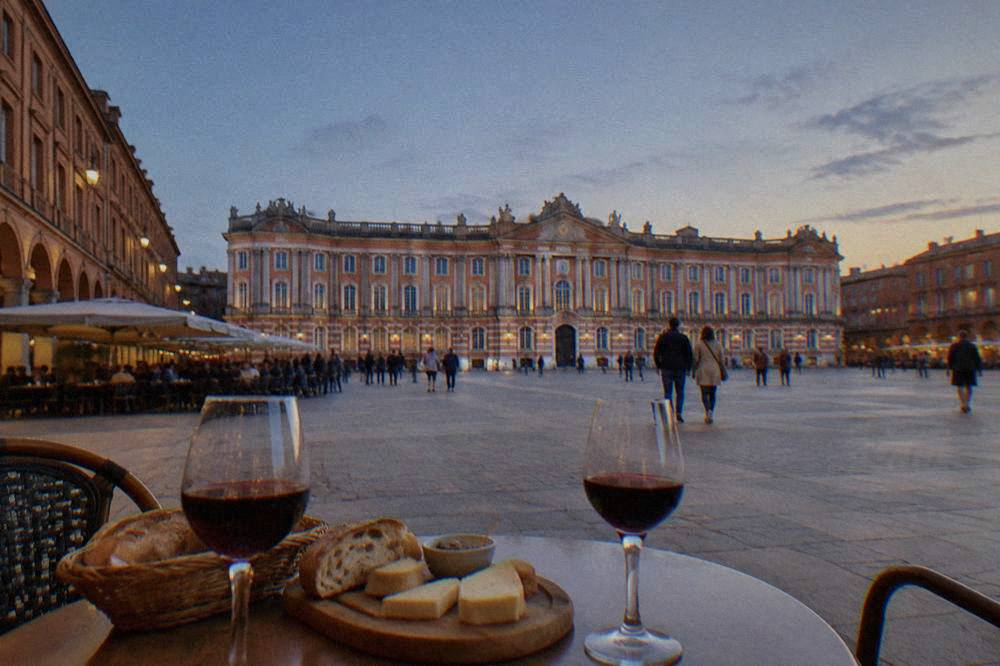
Two other formats answer the same question from different angles. A private walking tour with a local guide can be pointed at food, and the winery visit with transfer takes the local table out to the vineyard and back. Whichever you choose, the test is the same one this page has been arguing all along: the eatery should be full of people who live here, and the food should be the food the city cooked before you arrived.
If the market walk has already filled the lunch slot, the evening is the hour to hand over to a guide who eats here nightly. A food tour with tastings covers the same ground after dark, from the old center's cassoulet tables to the wine bars that pour Fronton by the glass, and it pairs naturally with the market walk rather than duplicating it. Between the two, the question this page asks answers itself in practice, not just on a map.
Common Questions About Where Locals Eat In Toulouse
Quick answers to what planners ask most about eating like a local in the pink city.
Where do locals eat in Toulouse?
Locals eat at the covered markets, above all the Victor Hugo market, at the bistros of the Carmes and Saint-Etienne quarters, and at the wine bars and cassoulet tables of the old center, with Saint-Cyprien and Saint-Aubin carrying the neighborhood kitchens across and along the river.
Is it expensive to eat out in Toulouse?
Compared with Paris and the Cote d'Azur, eating out in Toulouse is moderate, and the market bars and neighborhood bistros where locals eat are the cheapest end of the city's range. The full cost comparison sits on the site's eating-out cost page.
What is the one dish locals would say defines Toulouse?
Cassoulet, the slow bake of white beans with confit duck, pork and Toulouse sausage. The sausage itself, grilled on its own, runs it a close second.
Do locals eat at the restaurants around the Capitole?
Sparingly. The rows facing the Capitole and the Rue du Taur serve the visitor trade, and locals keep their regular tables a street or two off that axis, in Carmes, Saint-Etienne or at the market bars.
Can you eat well in Toulouse without speaking French?
Yes. Menus in the eating quarters are short and the dishes repeat, and English is workable in the center, though a greeting in French opens every door. The site's page on English in Toulouse has the fuller picture.
The short version of everything above: shop where the city shops, order what the city has always cooked, and sit one street back from the postcard. Do that in Toulouse and you will be eating with the people who live there rather than beside them.