What Do The French Eat With Cassoulet?
What the French serve alongside cassoulet in Toulouse, from green salad and bread to the red wines of Fronton and Gaillac, plus how the city's signature dish reaches the table.
Cassoulet is the signature dish of Toulouse, the pink-brick city on the Garonne in southwestern France, and the French treat it as a complete meal rather than one course among many. That single fact shapes everything that lands on the table beside it. A dish this rich, this slow-cooked and this filling does not invite competition, and the accompaniments the French actually choose, in Toulouse and across the cassoulet belt of the Occitanie region, are chosen to cut through it, not to pad the plate.
What Do The French Eat With Cassoulet?
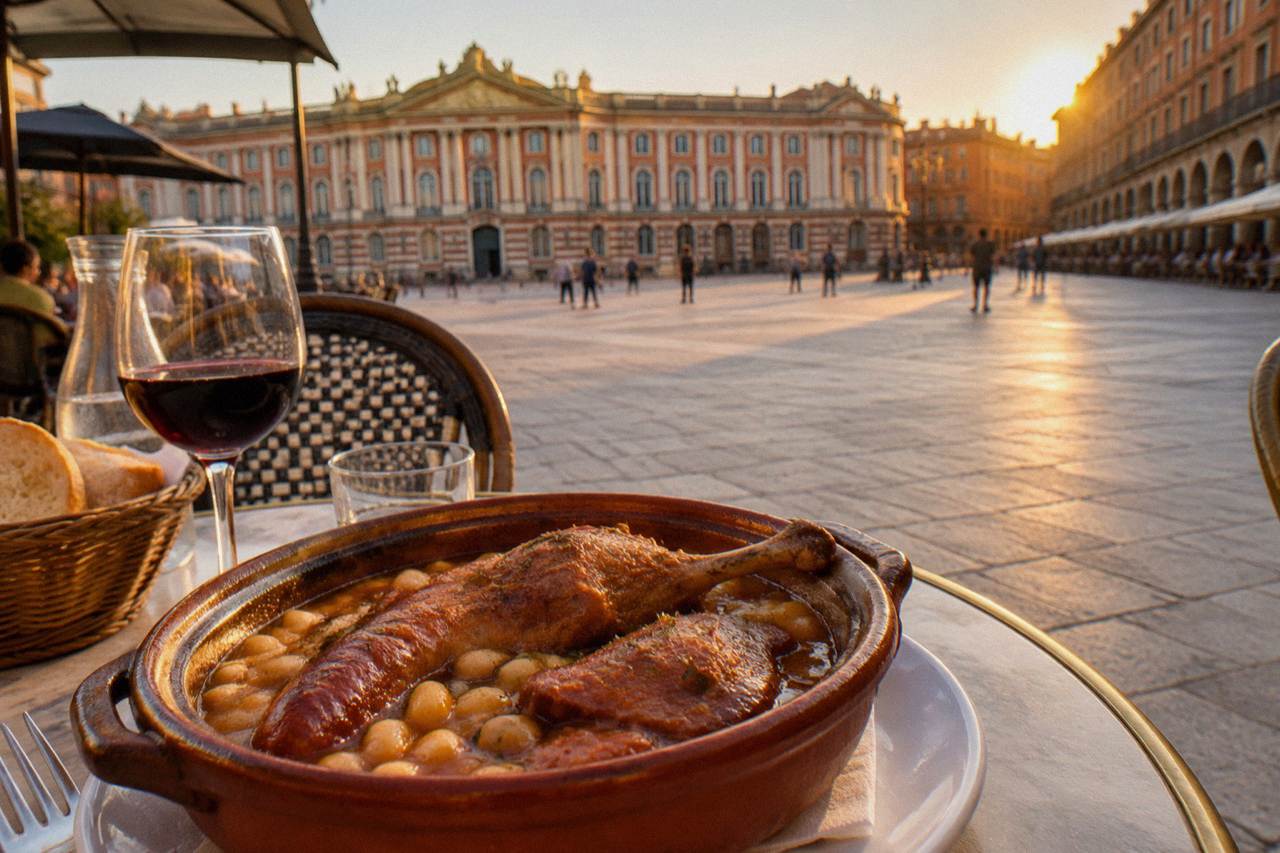
The French eat cassoulet with a simple green salad, crusty bread, and a regional red wine, and very little else. The salad's vinegar dressing cuts the richness of the beans and confit, the bread is for the crust, and in Toulouse the wine is usually a local red such as Fronton or Gaillac. Dessert is typically something light, often fruit or a small sweet, never another heavy course.
That answer surprises people who expect a multi-course spread. The logic is appetite management: cassoulet is a casserole of white beans cooked slowly with duck confit, Toulouse sausage and pork, and it arrives at the table bubbling in its cooking dish. In its home region the dish itself is the event. A plain vinaigrette salad, dressed with mustard and a sharp vinegar, is served either alongside or after the cassoulet, and its acidity is the whole point. Bread appears too, but not for mopping in the casual sense: the prized part of a cassoulet is the crust that forms on top during baking, and diners break bread to accompany spoonfuls of the dish rather than to replace any element of it.
The wine question has its own answer page in depth at what wine to drink with cassoulet. In short, the local tradition favors the reds grown in the hills around the city: Fronton, whose vineyards sit just north of Toulouse, and Gaillac, a wine route east of the city toward Albi. These are the wines of the same terroir that produced the dish, and the pairing is geographic before it is anything else.
If you are still building the basics of the dish itself, start with what exactly a cassoulet is and the full guide to cassoulet in Toulouse.
The table below sums up the standard accompaniments and the role each one plays.
| What Is On The Table | Role With The Dish | When It Is Served |
|---|---|---|
| Green salad, mustard vinaigrette | Acidity to cut the beans, sausage and duck fat | Alongside, or after the cassoulet |
| Crusty bread | To accompany spoonfuls; the dish's own crust is the prize | Throughout the meal |
| Local red wine (Fronton, Gaillac) | Regional pairing from the same terroir | Throughout the meal |
| Cheese board (modest) | A light savory bridge before dessert | After the main |
| Fresh fruit or a small sweet | A light finish that does not repeat the richness | End of the meal |
Why Is The Salad Served After The Cassoulet?
In the Toulouse tradition the green salad often arrives after the cassoulet rather than before it, as a palate cleanser between the main dish and dessert or cheese. The sharp mustard vinaigrette resets the mouth after the rich beans and duck fat. Serving salad last is a longstanding southwestern French habit, not a restaurant quirk.
This ordering confuses visitors, because in much of the English-speaking world salad opens the meal. In southwestern France the salad course traditionally follows the main, and with a dish as dense as cassoulet the sequence makes practical sense. By the time the cassoulet is finished, the appetite wants something clean and bitter, and a handful of dressed greens does that job without adding weight. Some tables serve the salad on the same plate as the cassoulet's last spoonfuls, others bring it separately; both are ordinary.
The dressing matters more than the leaves. A vinaigrette built on mustard, a good vinegar and a neutral oil is the classic choice, and the vinegar is not shy. Sharpness is the function. Frisee, lamb's lettuce or plain butter lettuce all appear; no specific leaf is required by tradition.
What never appears beside the dish is another hot main, a starch or anything creamy. The French table around cassoulet is deliberately spare. For more on how the dish is built and why it is so filling, see the secret to a good cassoulet.
What Do The French Drink With Cassoulet In Toulouse?
In Toulouse the French drink local red wine with cassoulet, above all Fronton and Gaillac, the two wine regions closest to the city. A dry white from Gaillac or a light regional rosé also works in summer. Water is always on the table, and the meal is not traditionally finished with a digestif tied to the dish.
Fronton is the closest red to the city, a vineyard area just to the north whose wines have long been linked with the local table. Gaillac, east of Toulouse on the way toward Albi, makes reds, whites and sparkling wines and gives its name to a recognized wine route that makes a rewarding day trip. Both are the everyday answer to the pairing question in the city's restaurants and homes, and the logic is straightforward: the dish and the wines come from the same corner of France, and each was built for the other.
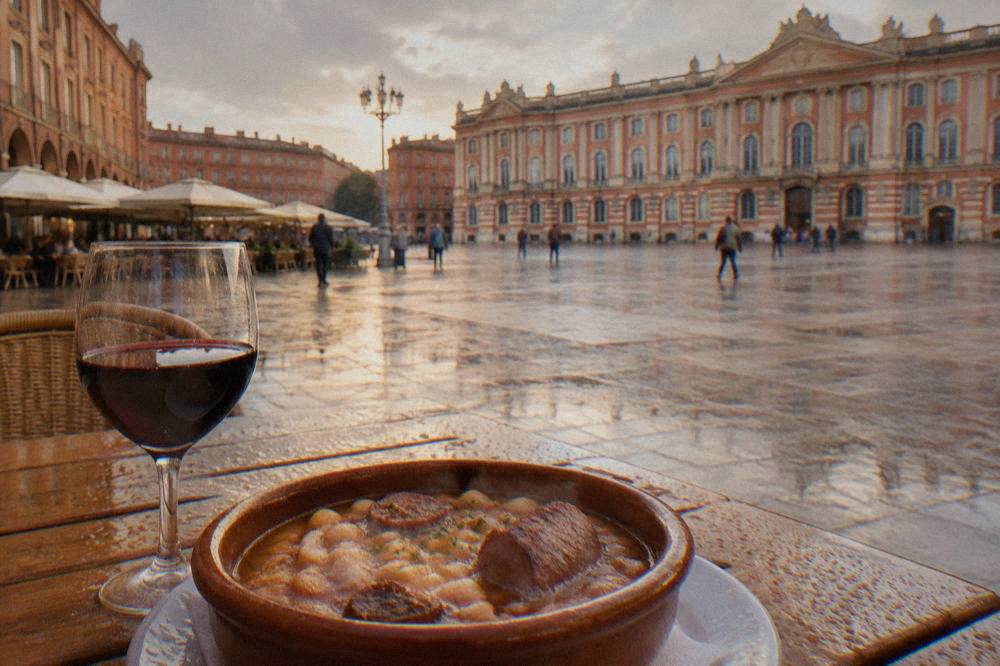
One honest way to taste that pairing in context is a guided winery visit. The Toulouse Winery, Wine & Food Tasting with Transfer pairs regional wines with food at a winery outside the city, with transport included, so you can taste the local reds against the region's cooking without organizing a car. Check availability
For planning around meals generally, the dinner hour in Toulouse runs later than visitors expect, and what time people eat dinner in Toulouse covers it.
Is Cassoulet A Main Course Or A Whole Meal?
Cassoulet is a main course so substantial that the French treat it as the whole meal: a starter before it is rare, and the courses around it are limited to salad, cheese or a light dessert. In Toulouse it is eaten at lunch and dinner alike, and a single cassole dish is shared by the whole table.
The dish's structure explains this. White beans, duck confit, Toulouse sausage and pork are protein and starch in one pot, slow-cooked until the beans absorb the fat and the crust forms on top. There is no room left for a first course, and nobody in the region would serve one. A typical sequence is the cassoulet, then the salad, then cheese or dessert, then coffee. The dessert, when it appears, is deliberately light: fresh fruit, a fruit tart or a small regional sweet rather than anything rich. Other pages covering the same trip are gathered on Toulouse Travel Guide.
The city's own sweet traditions fit that slot. Toulouse is known for its violets, and the Toulouse desserts and sweets tradition leans toward light pastries and candied treats that sit comfortably after a heavy main. A Toulouse food tour is one way to sample that range in a single afternoon.
Curious to taste the local table for yourself? Book a market tasting tour here.
Do The French Eat Cassoulet At Home Or In Restaurants?
The French eat cassoulet both at home and in Toulouse restaurants, but the home version is the heart of the tradition: the dish began as a family casserole cooked in a cassole, the earthenware pot that gives it its name. Restaurants in Toulouse serve it year-round, and it is a Sunday and winter dish at home more than an everyday one.
The cassole matters. The wide, shallow earthenware dish is what the cooking method depends on, because its shape lets the crust form across the top while the beans stay moist below. Families in the region keep theirs for decades, and the pot is part of the recipe in a way a saucepan never would be. At home the dish is a project: beans soaked, meats assembled, the pot in the oven for hours, the crust broken back into the beans several times during baking.
Restaurants in the city serve it as a fixture of regional menus, and it is the dish visitors most want to try, as covered in the must-eat in Toulouse. For what the meal costs in practice, including how a cassoulet lunch compares with other local eating, see is Toulouse expensive to eat out.
What Dessert Do The French Serve After Cassoulet?
After cassoulet the French serve a light dessert: fresh fruit, a fruit tart, or a small regional sweet, because anything heavy would be wasted after the main dish. In Toulouse the local options include pastries and sweets built on the city's famous violet. Cheese is the other common finish, offered before the sweet course.
The pattern across the cassoulet region is consistent. The main dish has already delivered richness in quantity, so the end of the meal goes the other way. A plain apple or pear, a thin slice of fruit tart, or a coffee with a small sweet is the usual landing. The cheese board appears in many homes and restaurants between the main and the dessert, and it is kept modest for the same reason.
Toulouse gives the dessert course a local accent. The city is famous for its violets, and candied and crystallized violet sweets are a specialty; the Toulouse violets tradition turns the flower into sweets and treats that suit exactly this moment in the meal. Visitors assembling a full food itinerary will find more in where locals eat in Toulouse.
The wine choices pair differently with each stage of the meal, and the short table below matches the glass to the course.
| Stage Of The Meal | What Is Served | The Wine Poured With It |
|---|---|---|
| Main course | Cassoulet from the cassole | Fronton or Gaillac red |
| Salad course | Green salad, mustard vinaigrette | The same red, or water |
| Cheese course | A modest regional board | Gaillac red or a dry Gaillac white |
| Dessert | Fresh fruit, fruit tart or a violet sweet | A light finish, or coffee |
Common Questions About Eating Cassoulet In Toulouse
Quick answers to what planners ask most about the table around cassoulet.
What do the French eat with cassoulet?
A green salad with a sharp mustard vinaigrette, crusty bread, and a local red wine such as Fronton or Gaillac. The salad is often served after the cassoulet, and dessert is kept light, usually fruit or a small sweet.
Do you serve a starter before cassoulet?
Rarely. Cassoulet is treated as a complete main, so the meal usually goes straight to the dish, followed by salad, then cheese or a light dessert.
What wine do the French drink with cassoulet in Toulouse?
Reds from the nearest vineyard areas: Fronton just north of the city and Gaillac to the east. A dry Gaillac white or a light rosé also works in warm weather.
Is bread served with cassoulet?
Yes, but as an accompaniment to the dish rather than a substitute for it. The most valued part of a cassoulet is the crust that forms on top during baking, and the beans and meats are the substance of the meal.
What comes after cassoulet for dessert?
Something light: fresh fruit, a fruit tart, or a small regional sweet. In Toulouse, sweets made with the city's famous violet fit the moment, and a modest cheese board often comes before the dessert.
Is cassoulet a lunch dish or a dinner dish?
Both. In Toulouse restaurants it appears on lunch and dinner menus alike, and at home it is most often a weekend or winter dish, when the long cooking time suits the day.
The table around cassoulet is a lesson in restraint, and it is one of the clearest windows into how Toulouse eats: one generous regional dish, a sharp salad, local wine, and a light finish. Plan the meal that way and you will eat it the way the French do.