Cimetiere De Terre Cabade
The Cimetiere de Terre Cabade is one of Toulouse's historic cemeteries, a quiet, tree-shaded corner of the pink-brick city that rewards visitors who want to slow down between the Capitole and the Canal du Midi.
Short answer
The Cimetiere de Terre Cabade is a historic cemetery in Toulouse. A single Tisseo ticket costs EUR 1.90 and covers the metro, bus and tram network that serves the city, and the cemetery is free to enter. Pair it with the same day's visits to the Garonne riverside or the Canal du Midi, both part of the city's UNESCO-listed heritage.
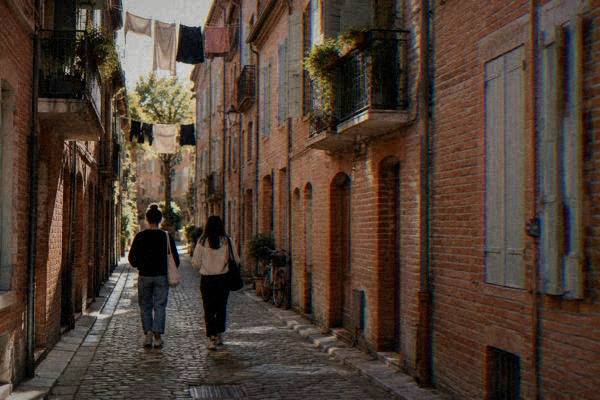
Toulouse, the pink-brick "La Ville Rose" on the Garonne in southwestern France, is usually sold on its food, its aerospace industry and its UNESCO-listed Canal du Midi. But the city also has a quieter register, and the Cimetiere de Terre Cabade sits right in it. This is one of the historic cemeteries where generations of Toulousains are buried, and a walk through it tells the story of the city in stone: the same pink brick and pale stone you see at the Capitole reappear here as family tombs, chapel-crypts and long tree-lined avenues. This guide from Toulouse Travel Guide covers what the cemetery is, how to reach it with the city's public transport, what a visit involves, and how to fold it into a wider day in Toulouse.
What Is The Cimetiere De Terre Cabade In Toulouse?
The Cimetiere de Terre Cabade is a historic cemetery in Toulouse one of the burial grounds where the city's families have interred their dead for generations. Its lanes are lined with stone and brick tombs rather than the flat lawns of newer cemeteries, and it belongs to the same family of quiet, planted spaces as the city's gardens. It is a place of local memory rather than a headline attraction. The basilica of Saint-Sernin, a listed monument and a major stop on the Via Tolosana pilgrimage route, holds the city's most famous relics, but the cemeteries hold its ordinary history: merchants, builders, bakers, the people who actually raised the pink-brick houses of the old center.
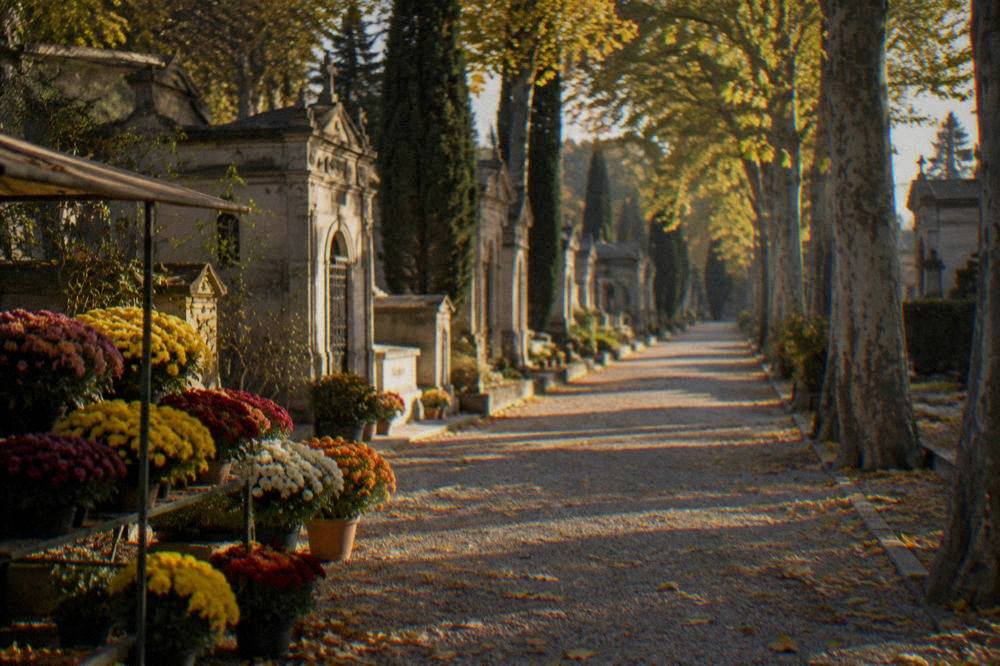
Cemetery visiting is a real tradition in France, and Toulouse is no exception. In November, families across the country tend graves for the Toussaint holiday, and chrysanthemums appear on every florist's cart in the city. Outside that week, cemeteries like Terre Cabade stay open to anyone who wants to walk them, and they are among the few places in a busy city where nobody hurries you.
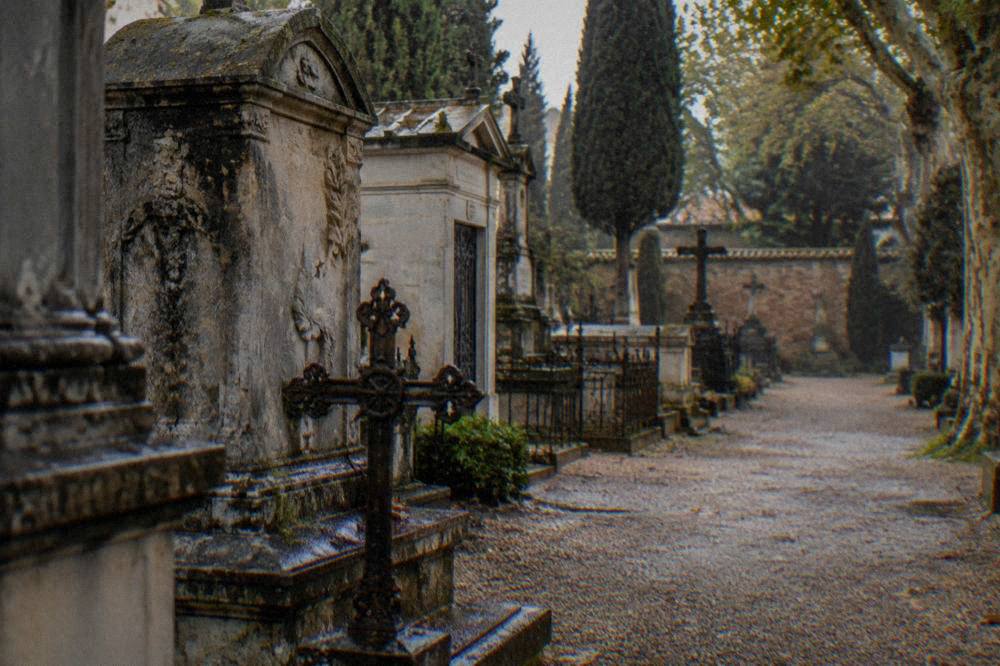
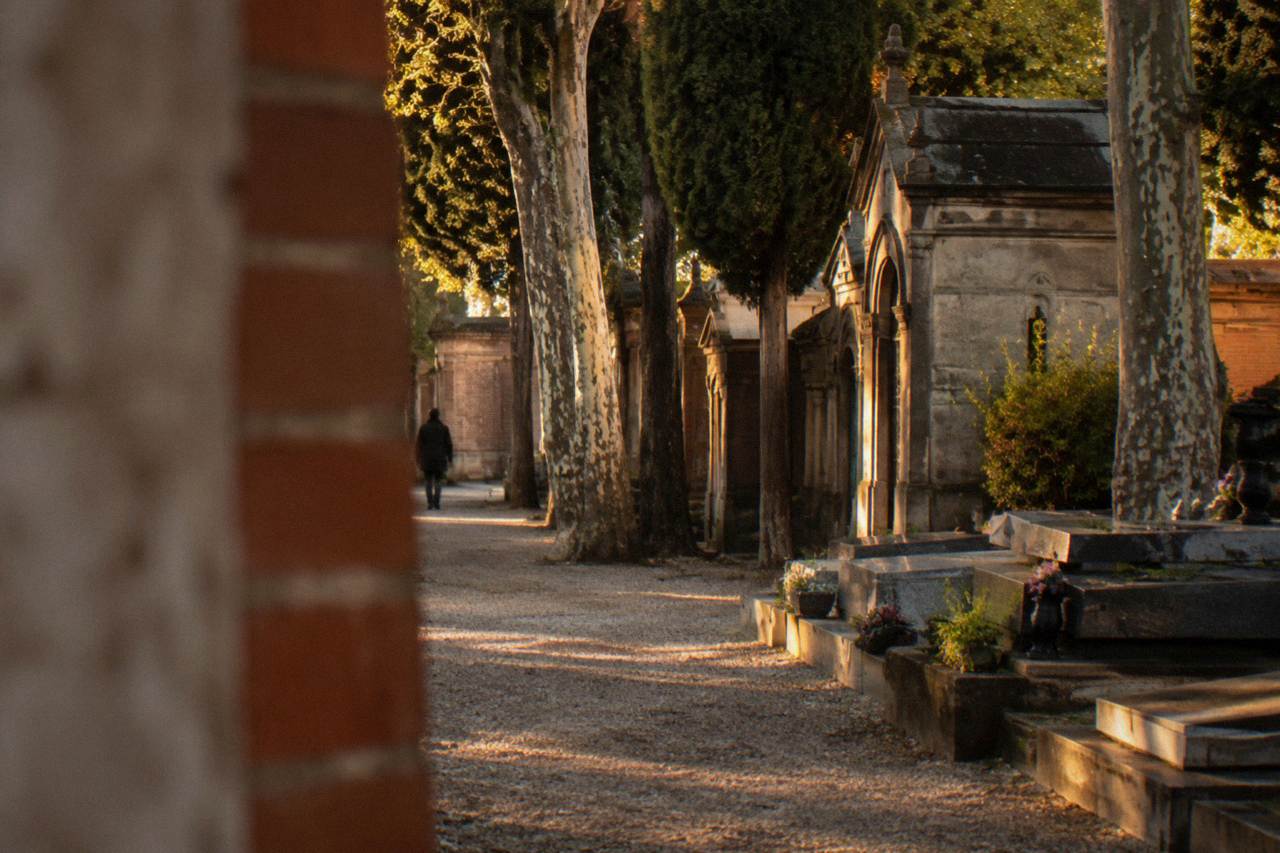
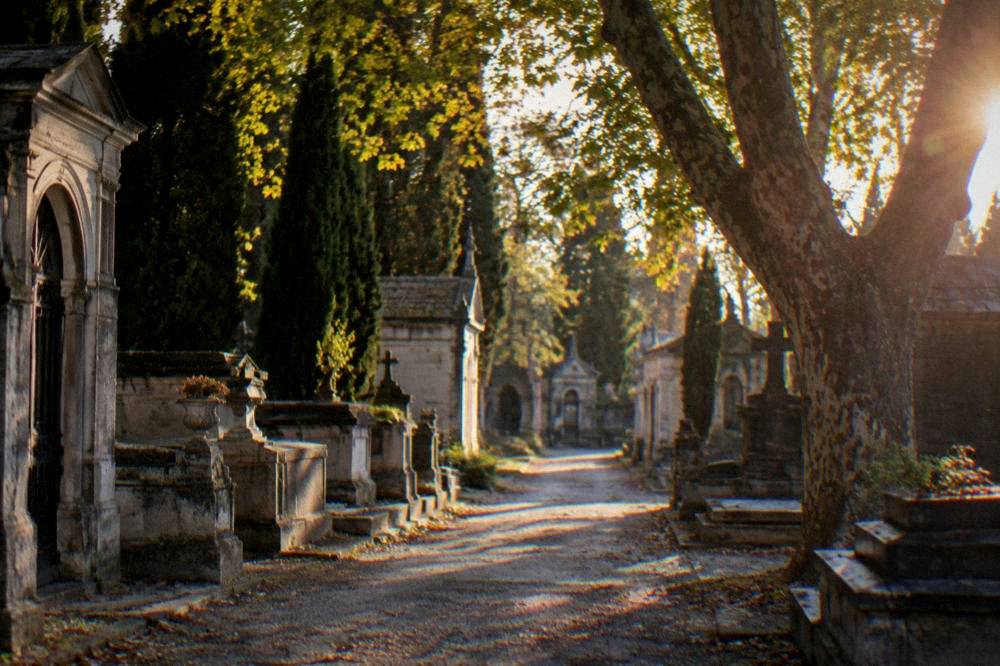
What you notice first is the material. Toulouse is nicknamed La Ville Rose for the color of its brick, and that palette follows the city into its cemeteries: warm terracotta walls, pale limestone slabs, cypress and plane trees filtering the southern light. The look is closer to the Mediterranean than to the gray-stone churchyards of northern France, which is one reason photographers and slow travelers put a cemetery walk on their list alongside the Garonne riverside.
A visit here also pairs naturally with the city's spiritual landmarks. The Couvent des Jacobins, with its famous palm-tree vault and its free first-Sunday-of-the-month entry (except when a temporary exhibition is on), and the Notre-Dame de la Daurade church on the riverbank both belong to the same story of Toulouse as a religious center on the road to Santiago de Compostela.
How Do You Get To The Terre Cabade Cemetery In Toulouse?
A single Tisseo ticket costs EUR 1.90 and covers the metro, tram and bus network that serves the whole of Toulouse, including the routes that reach the city's cemeteries. A day pass costs EUR 7.20, a 3-day pass EUR 14.30, and ten trips cost EUR 16.00 if you are moving around repeatedly. Those fares come from the Tisseo e-boutique catalogue, the network's own price list, and they are the same whether you are heading to the Capitole or to a quiet corner like Terre Cabade.
Tisseo runs Toulouse's two metro lines, its tram lines and its bus network. One thing to know before you plan anything around the tram: the T2 tram to the airport has been closed since 5 June 2023 and stays closed until the end of 2026 because of the Line C metro works. A new metro Line C, 27 km long with 21 stations, is under construction and opens at the end of 2028. For the airport itself, the Navette aeroport bus runs a departure every 15 minutes and takes 20 to 40 minutes to the center, with a single airport ticket at EUR 9.50.
| Tisseo ticket | Price | What it covers |
|---|---|---|
| Single trip | EUR 1.90 | One journey on metro, tram or bus |
| Single bought on board | EUR 2.50 | Same journey, last-minute purchase |
| Day pass | EUR 7.20 | Unlimited travel for one day |
| 3-day pass | EUR 14.30 | Unlimited travel for three days |
| 10 trips | EUR 16.00 | Ten journeys, shareable over time |
| Airport single | EUR 9.50 | Tisseo network plus the Navette aeroport |
Walking is the other answer. Toulouse's historic center is compact, and a stroll along the Pont Neuf and the riverbank gives you the city's best free scenery.
If you would rather have a guide than a map, a self-guided audio walk of the pink city covers the historic center at your own pace, and the trio above also includes a full day out to St-Cirq-Lapopie and the Pech Merle cavern, one of the region's most striking day trips.
What Can You See Inside The Cimetiere De Terre Cabade?
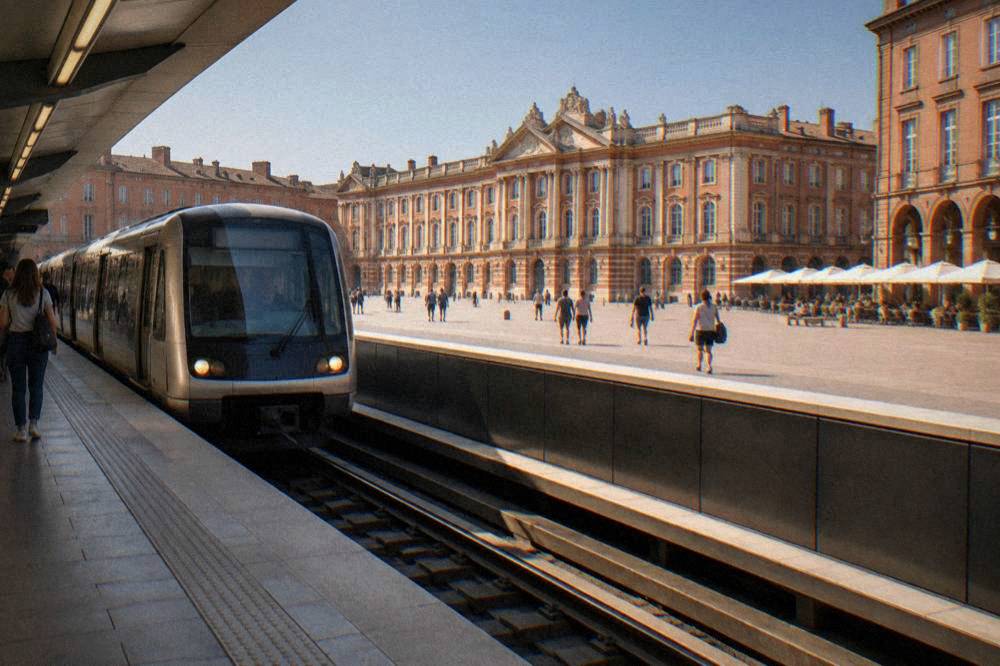
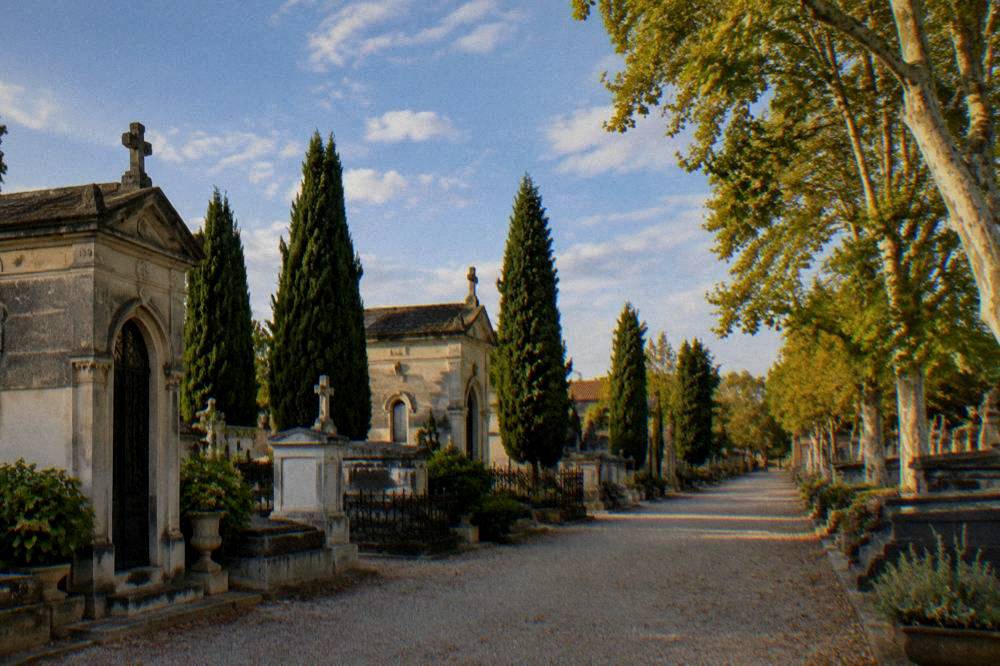
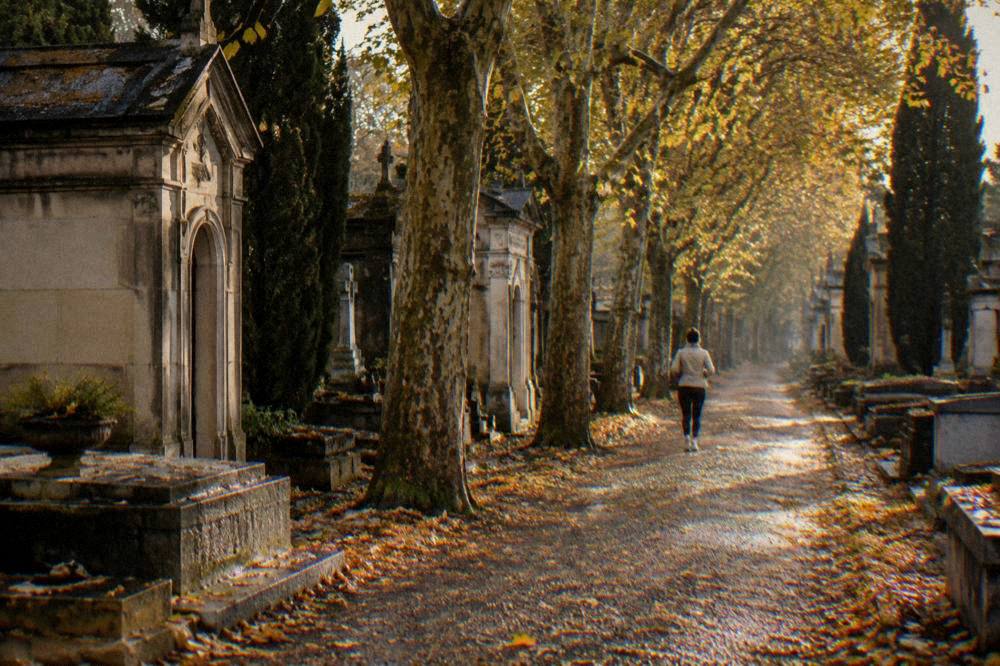
Inside the Cimetiere de Terre Cabade you walk lanes of family tombs, vaults and planted avenues: the funerary architecture of a southern French city, built in the same pink brick and pale stone as Toulouse's houses and churches. There are no turnstiles and no tickets; like France's municipal cemeteries it is a public space, open to visitors who behave with the respect the place demands. The pleasure of the visit is slow looking: carved names, ironwork gates, the way moss and lichen soften stone in the humid Toulouse climate.
French cemeteries reward visitors who know what they are looking at. The classic family tomb, the caveau, is a stone chest with a slab and often a small cross or stele; wealthier families built chapel-tombs you can walk inside. Inscriptions record not just names but professions, military service and family grief, and the dates trace the city's harder chapters. Bring nothing but your eyes and quiet shoes.
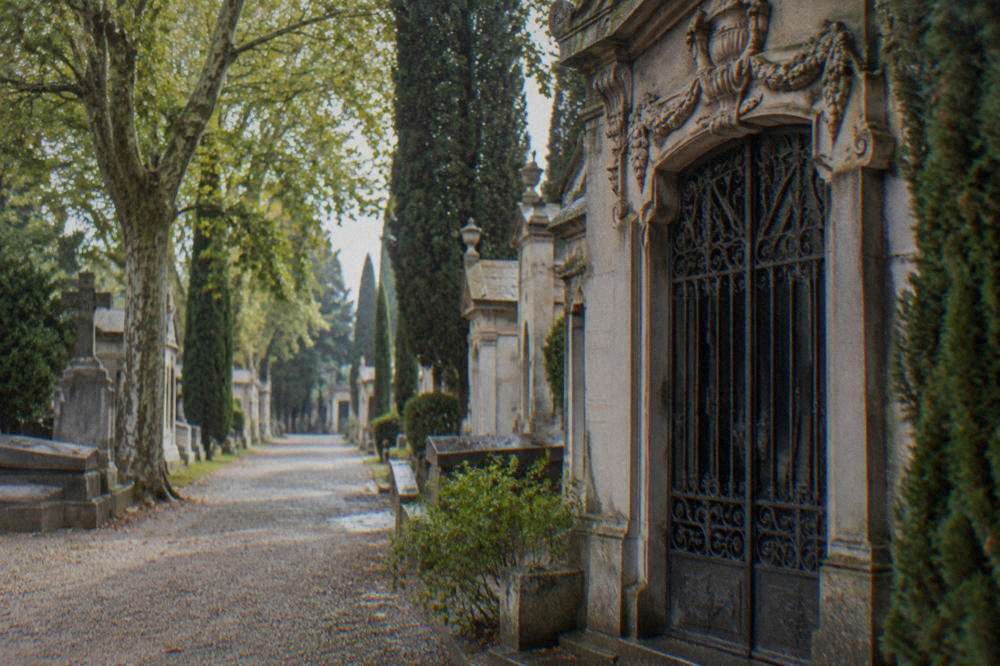
The vegetation matters as much as the stone. In the Meteo-France 1991-2020 climate normals for Toulouse-Blagnac, the city gets 627 mm of rain across 95.8 rain days and 2,075.1 hours of sunshine a year, which is exactly the mix that keeps cemetery greenery lush: cypress, plane trees, ivy on the older vaults. May is the wettest month at 73.6 mm, so lanes can be soft underfoot in spring; July, the sunniest month at 258.6 hours, dries everything out and bleaches the brick.
| What to look at | Why it rewards a slow walk |
|---|---|
| Family vaults (caveaux) | The standard southern French tomb, often three or four generations deep |
| Chapel-tombs | Larger private structures that show a family's standing |
| Iron gates and crosses | Local metalwork, often rusted into lace-like patterns |
| Inscriptions and dates | The city's history told in stone, name by name |
| Trees and planting | Cypress and plane shade that frames the pink brick |
Photographers should keep one rule in mind: this is an active place of mourning, not a film set. Ask before photographing people tending a grave, avoid the busy Toussaint week if you want quiet, and skip tripods. The respectful visitor is always welcome; the tourist treating graves as props is not.
After a morning among the tombs, the loudest possible antidote is the Halle de la Machine, where the city's mechanical creations, including its famous walking spider, stomp and steam through a former aeronautics hall. It is the same city's other face: Toulouse builds aircraft at Aeroscopia and rockets at the Cite de l'espace, and it also knows how to honor its dead in silence.
What Else Is Near The Cimetiere De Terre Cabade In Toulouse?
A visit to Terre Cabade fits easily into a day that includes Toulouse's museums and green spaces, all of them reachable on the same EUR 1.90 single or EUR 7.20 day pass. The Museum de Toulouse, the Jardin des Plantes district and the Japanese Garden cluster in the southeast, while the Capitole, the Jacobins and the Augustins sit in the historic center. Nothing in Toulouse is far from anything else; the commune counts 514,819 inhabitants (INSEE, population in 2023), and its attractions are packed into a walkable core.
Museum lovers have a strong bench. The tourist office's Pass Tourisme costs EUR 26 for stays of one to three days, pays off from the third activity, and includes a free guided tour from the office; adding EUR 10 buys ten public-transport trips. The normal rates the office lists are Fondation Bemberg EUR 12, the Museum EUR 12, Les Abattoirs EUR 12, the Musee des Augustins EUR 5 and the Couvent des Jacobins EUR 5.
| Museum or monument | Normal adult rate | With the Pass Tourisme |
|---|---|---|
| Fondation Bemberg | EUR 12 | Free |
| Museum de Toulouse | EUR 12 | Free |
| Les Abattoirs | EUR 12 | Free |
| Musee des Augustins | EUR 5 | Free |
| Couvent des Jacobins | EUR 5 | Free |
| Cite de l'espace | EUR 29 | Discounted, not free |
Two timing notes matter for 2026. The Musee des Augustins is temporarily closed from 21 September to 2 October 2026 for great-cloister works, and its Gothic halls (the sacristy, the Notre-Dame de Pitie hall and the chapter house) reopen on 3 October 2026 from 10:00. The Musee Saint-Raymond closed on 3 November 2025 for renovation and modernisation works and reopened on 3 April 2026.
For green-space pairing, the Japanese Garden offers a completely different register of calm: raked gravel, bridges and maples rather than tombs and cypress. And for a walk with history attached, the Canal du Midi, inscribed by UNESCO in 1996 under criteria (i)(ii)(iv)(vi), runs through the city and out toward the vineyards; a canal-side stroll or a cruise is the classic Toulouse afternoon.
When Is The Best Time Of Year To Visit Toulouse's Cemeteries And Gardens?
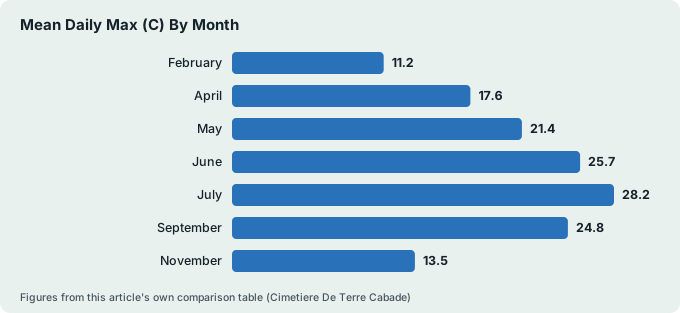
The best months for a quiet outdoor visit to Toulouse are May, June and September: Meteo-France's 1991-2020 normals show May at 21.4C mean daily maximum with 212.3 hours of sun, June at 25.7C with 231.8 hours, and September at 24.8C with 210.1 hours. July and August are hotter, at 28.2C and 28.5C mean maximums, and July alone averages 11.5 days at or above 30C, which makes long unshaded walks heavy going.
The surprise in the data is where the rain falls. May, not a winter month, is Toulouse's wettest month at 73.6 mm, ahead of April at 65.2 mm and June at 64.2 mm; February is the driest at 37.2 mm. Anyone who assumes southern France is dry in spring and grey in winter has the pattern backwards here, and the cemetery avenues after a May shower are the proof.
| Month | Mean daily max (C) | Rain (mm) | Sunshine (hours) |
|---|---|---|---|
| February | 11.2 | 37.2 | 118.2 |
| April | 17.6 | 65.2 | 188.5 |
| May | 21.4 | 73.6 | 212.3 |
| June | 25.7 | 64.2 | 231.8 |
| July | 28.2 | 40.1 | 258.6 |
| September | 24.8 | 45.7 | 210.1 |
| November | 13.5 | 55.0 | 99.9 |
The records frame the extremes: Meteo-France's fiche for Toulouse-Blagnac lists a record high of 42.4C on 23 August 2023 and a record low of -19.2C on 15 February 1956. Neither is a normal day, but they explain why locals schedule outdoor walks for morning in summer and midday in winter.
Autumn has one unmissable cultural hook. The Piano aux Jacobins festival runs 8 to 30 September 2026 in the Jacobins cloister, and Toulouse les Orgues, its 31st edition, runs 7 to 18 October 2026 with the opening concert on 7 October at Notre-Dame de la Daurade. A morning in a cemetery and an evening of piano or organ music in a Gothic cloister is about as Toulouse as a day gets.
What Does A Visit Cost, And How Does Terre Cabade Fit A Toulouse Budget?
Entry to a municipal cemetery in Toulouse costs nothing; the real budget lines are transport and the museums you pair it with. A single Tisseo ticket is EUR 1.90, a day pass EUR 7.20, and the Pass Tourisme at EUR 26 covers the big museums and pays off from the third activity, so a cemetery-plus-museums day can run on a very small amount of money. The tourist tax side is worth knowing too: non-classified or pending-classification lodging, which includes most platform rentals, pays a 5% tourist tax on the pre-tax nightly price per person in Toulouse Metropole.
For context on the paid end of the city's offer, Aeroscopia, the aviation museum, charges EUR 16 for an adult, EUR 13 reduced, with an annual pass at EUR 26 and a family pass at EUR 80, and it is open daily 9:30-18:00 with last entry at 17:00. The Cite de l'espace lists tickets from EUR 22.50, with its normal adult rate at EUR 29. These are the headline attractions; a cemetery walk is the free counterweight that balances a Toulouse itinerary.
| Budget line | Figure | Source |
|---|---|---|
| Cemetery entry | Free | Municipal space |
| Tisseo single | EUR 1.90 | Tisseo e-boutique catalogue |
| Tisseo day pass | EUR 7.20 | Tisseo e-boutique catalogue |
| Pass Tourisme | EUR 26 | Toulouse tourist office |
| Tourist tax (non-classified lodging) | 5% of pre-tax nightly price | Toulouse Metropole |
| Aeroscopia adult | EUR 16 | Aeroscopia practical page |
If your budget stretches to a guided experience, the trio below covers three registers: a ticket to the Halle de la Machine, a self-guided audio tour of the pink city, and a full-day trip to St-Cirq-Lapopie and the Pech Merle cavern. Each is a different way of seeing the same region, from mechanical theater to prehistoric cave art.
How Does Terre Cabade Compare With Other Quiet Corners Of Toulouse?
Terre Cabade belongs to a small family of slow Toulouse experiences: the cloister of the Jacobins, the Japanese Garden, the riverside paths along the Garonne and the Canal du Midi's towpaths all offer the same low-volume alternative to the Capitole's crowds. What distinguishes a cemetery is its honesty about the city's past; every other quiet space in Toulouse is curated, while a cemetery is simply kept. For travelers who liked the medieval lanes of the Carmes or the views from the Dome de la Grave, it adds a register most itineraries skip.
It also connects to the city's deeper religious geography. The Basilique Saint-Sernin has been part of the UNESCO "Routes of Santiago de Compostela in France" inscription since 1998 and is a major stop on the Via Tolosana, one of the historic pilgrimage roads. Cemeteries like Terre Cabade are where that same rooted, religious culture lived at street level, family by family, rather than in monuments.
If the cemetery whets an appetite for day trips into older and stranger places, the region delivers. The trio below includes the St-Cirq-Lapopie and Pech Merle cavern tour, and the site's day-trip pages cover Carcassonne, Albi and the Pyrenees, all reachable from the city. A short train ride or a coach tour turns a cemetery morning into a full regional day.
Common Questions About The Cimetiere De Terre Cabade
Is the Cimetiere de Terre Cabade in Toulouse free to visit?
Yes. Like France's municipal cemeteries it is a public space with no entry charge. The only costs are getting there, at EUR 1.90 for a single Tisseo ticket, and anything you pair it with.
How do I get to the Cimetiere de Terre Cabade with public transport?
Tisseo's metro, tram and bus network serves the whole city. A single trip costs EUR 1.90, a day pass EUR 7.20 and a 3-day pass EUR 14.30. Check the Tisseo network map for the stop nearest the cemetery on the day you travel, since the Line C metro works are changing parts of the network.
When is the best time of day to visit a cemetery in Toulouse?
Morning is the safest choice in summer: July averages 28.2C mean daily maximum and 11.5 days at or above 30C, so unshaded lanes get hot by midday. In winter, midday light is best; January averages 9.7C mean daily maximum.
Is cemetery visiting a normal thing to do in France?
Yes. Cemeteries are public spaces and visitors are welcome provided they behave respectfully. Around Toussaint in early November they are especially busy with families tending graves and placing chrysanthemums.
Can I combine the cemetery with other Toulouse attractions in one day?
Easily. A day pass at EUR 7.20 covers unlimited travel, and the Pass Tourisme at EUR 26 includes the big museums, including the Fondation Bemberg, Les Abattoirs and the Musee des Augustins, from the third activity onward.
What should I avoid when visiting a cemetery in Toulouse?
Avoid photographing mourners, walking on graves, and visiting during the Toussaint week if you want quiet, since that is when families gather. Otherwise, ordinary courtesy is all the place asks of you.