Occitan Language
Toulouse sits in the heart of the area where Occitan was historically spoken, and the modern Occitanie region takes its name from the language. This guide explains what Occitan is, where it surfaces in the city today, and how to build a visit around it.
Short answer
Occitan is a Romance language traditionally spoken across southern France, including the area around Toulouse, and the Occitanie region is named after it. In Toulouse today you meet it mostly in place names, cultural events and museum interpretation rather than everyday conversation, though the language remains a living part of the city's identity.
Toulouse, the pink-brick city on the Garonne in the Occitanie region of southwestern France, stands in the heart of the territory where the Occitan language was historically spoken. The region's very name is a modern nod to that linguistic heritage: when the administrative region was created, it borrowed the name of the language that once covered the whole of the south. For a visitor, Occitan is less something you will hear spoken on the metro and more a thread running through street names, festival programs and museum walls, and following that thread is one of the more rewarding ways to read the city.
What Is The Occitan Language?
Occitan is a Romance language of southern France, a sister to French and Catalan rather than a dialect of French, and Toulouse sits inside the zone where it was historically the everyday tongue. The modern Occitanie region takes its name from it. In the city today it survives mainly in place names, cultural programming and signage, not in daily street conversation.
The language belongs to the same family as French, Spanish and Italian, and it was traditionally spoken across a broad southern swathe of the country, from the Atlantic to the Alps. Within that zone, different areas had their own varieties, and the Toulouse area belonged to one of them. The region you are visiting, Occitanie, was named for the language when today's administrative region was formed, which is why the name on your train ticket and the name of the language are the same word.
What trips visitors up is assuming Occitan is a dialect of French. It is not. It developed from Latin along its own path, with its own grammar and vocabulary, and a French speaker with no exposure finds it no easier to read than Spanish. The clearest everyday proof is in the landscape of names: villages, streets and squares around Toulouse carry Occitan forms that follow different spelling rules from standard French, and once you can spot the pattern you start seeing the language everywhere, even though you may go a whole trip without hearing it spoken.
The practical takeaway for a traveler is simple. You do not need a single Occitan word to enjoy Toulouse, the tourist infrastructure works entirely in French and largely in English too. But knowing that the region is named for a living language, not just an old word, changes how you read the places you pass through, and it gives you a better question to ask in museums than "what is this room", namely "what was this room called, and by whom".
Where Does The Occitan Language Show Up Around Toulouse?
Around Toulouse, Occitan shows up mostly in written form: street and place names, the names of neighborhoods and villages, occasional bilingual signage, and the interpretation panels in museums and at monuments. Spoken Occitan exists in cultural settings such as festivals and classes, and a traveler's most likely encounter is a name on a sign rather than a conversation.
Start with names, because they are the most accessible layer. Neighborhood names around the city, and village names across the surrounding countryside, follow Occitan spelling and sound patterns, and the same is true of market squares and smaller streets away from the tourist core. Once you know the region's name itself comes from the language, you have the key: the Occitanie label on your map and the words on the old signs belong to the same tradition.
Museums are the second place the language surfaces. Interpretation at historic sites in and around Toulouse regularly references the region's linguistic past, and the city's own museum pages and monument listings sit within a regional administration that treats Occitan as part of its cultural remit. If you want the language to be part of your visit rather than background, the museums in the Toulouse museums guide are where the historical context is laid out most directly.
The third place is cultural programming. Occitan songs, classes and themed events appear in the region's cultural calendars, and festivals across the south include Occitan-language elements. You cannot count on stumbling into one on a given weekend, but if the language is your specific interest, checking what is programmed during your dates is worthwhile, and the general rhythm of the city's year is covered in our broader what Toulouse is famous for guide.
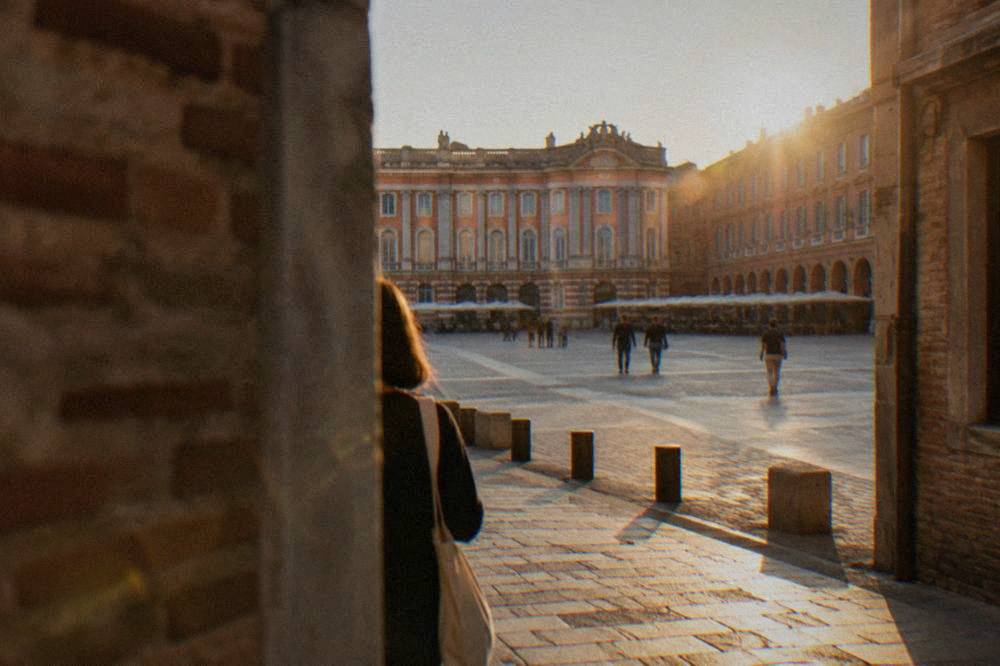
For grounding the visit in something more hands-on, a guided experience helps. The immersive 18th-century walk listed below places you in the Toulouse of a period when the city's linguistic world was very different from today's, and the narrator does the historical heavy lifting for you.
A self-guided audio option covers the same ground at your own pace, and a private tour to Lourdes reaches into the broader Occitan-speaking south, where the language's footprint extends beyond the city.
How Does The Occitanie Region Connect To The Language?
The Occitanie administrative region was named after the Occitan language, deliberately reviving a historical name for the southern half of France where the language was spoken. Toulouse is the region's prefecture, so the city you are standing in is the administrative heart of the area that carries the language's name.
The naming is the single most useful fact for a visitor, because it explains a puzzle many travelers arrive with: why does the region share a name with a language? The answer is that the modern region's name was chosen to evoke the historical Occitan-speaking area, and Toulouse, as the prefecture of Haute-Garonne within it, sits at the center of that story. When you see "Occitanie" on road signs, airport boards or your hotel address, you are reading the language's name used as a place name.
That connection is not just ceremonial. The regional and city administrations fund cultural work connected to the language, and public institutions in the region treat it as living heritage rather than a museum piece. For a traveler this means the infrastructure of your trip, the tourist office, the museums, the metro, operates in French while quietly carrying a name and a cultural policy rooted in something older.
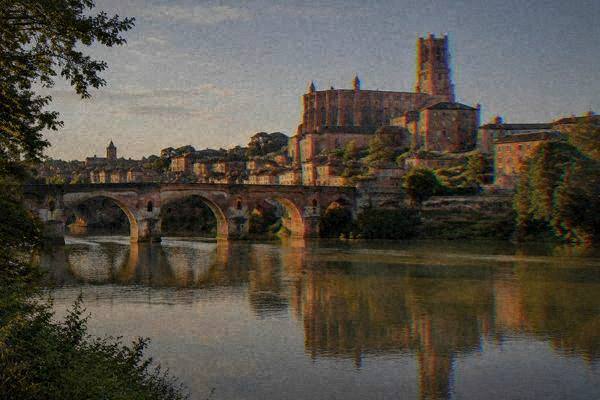
It also frames your day trips. The Occitan-speaking zone historically stretched well beyond the city, and the destinations around Toulouse, Carcassonne, Albi, the Gaillac wine country, all sit inside it. Our day trips from Toulouse guide maps the practical options, and the same Occitan thread runs through every one of them, from the walled citadel to the hilltop bastide towns.
To see that wider Occitan country, book a wine day tour here.
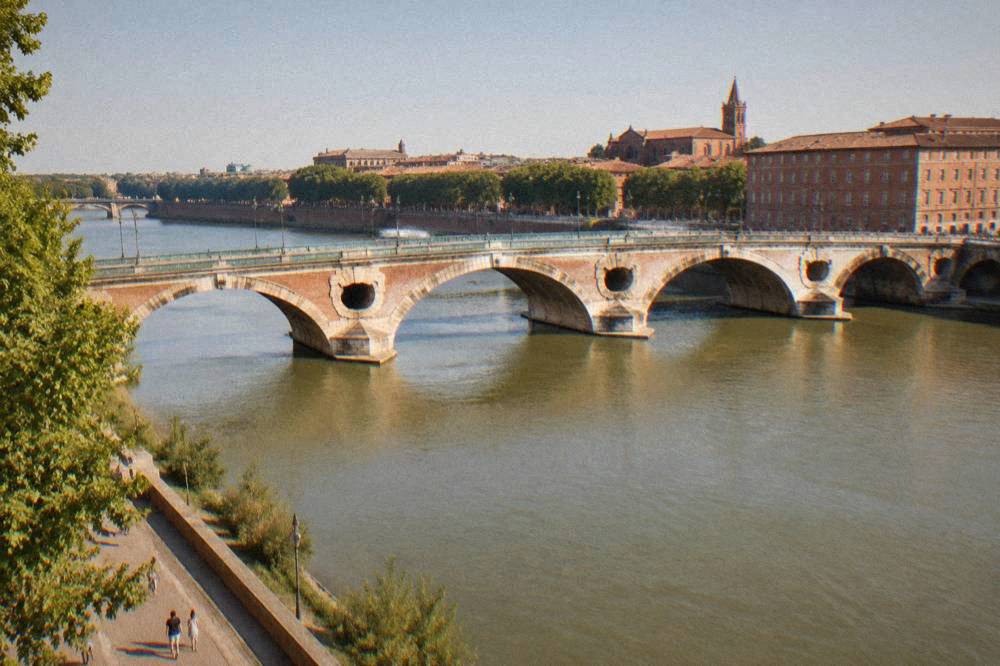
The region's name is easiest to explore with a guide in front of you rather than a guidebook, and the options below suit different paces and budgets.
The walk above is the natural companion to this page's theme, and the in-app audio tour in the trio band earlier covers the same city at a self-guided tempo.
Can You Hear Occitan Spoken In Toulouse Today?
Honestly, not often by chance. Spoken Occitan in Toulouse today lives in cultural spaces: language classes, choirs and folk groups, themed festival programming and occasional public events, while daily life runs in French. A short visit will almost certainly not include overhearing Occitan, but seeking out cultural programming makes an encounter possible.
Daily life in the city is conducted in French, full stop. Shop transactions, metro announcements, museum audio guides: all French, with English widely available in tourist settings, a point covered in more detail elsewhere on this site. The Occitan you encounter without looking for it is written, on signs and in names.
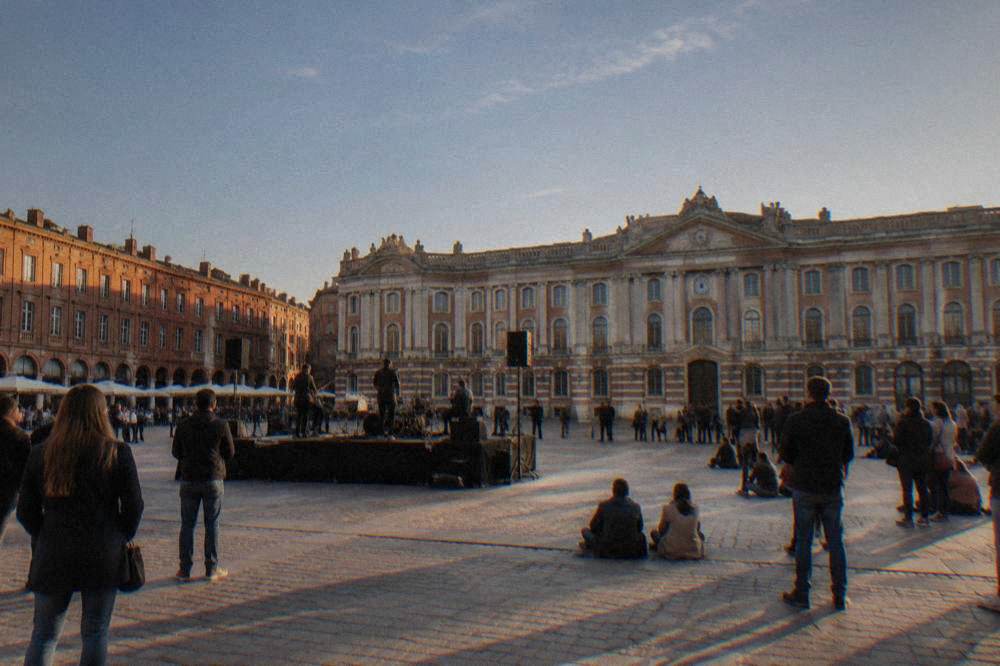
Spoken Occitan is kept alive by people who work at it. The region supports teaching and cultural transmission, and the language appears in song at festivals and in organized cultural events across the area. If hearing it matters to you, the practical move is to look at what is programmed during your stay rather than hoping for a lucky encounter. The city's autumn calendar is dense with festivals, and the events below are the ones with confirmed dates.
| Event | Confirmed dates | Venue anchor |
|---|---|---|
| Piano aux Jacobins | 8 to 30 September 2026 | Couvent des Jacobins and other venues |
| Toulouse les Orgues (31st edition) | 7 to 18 October 2026 | Multiple venues, opening concert at Notre-Dame de la Daurade |
| Christmas markets | 26 November to 27 December 2026 | Place du Capitole, allees Jean-Jaures, square Charles-de-Gaulle |
| Rio Loco | 9 to 13 June 2027 | Prairie des Filtres |
None of these is an Occitan-language festival as such, but they are the moments when the city's cultural calendar is at its fullest, and regional-language programming is most likely to appear in and around them. The Jacobins, which hosts the piano festival, is itself a monument worth visiting on language grounds alone: the Couvent des Jacobins guide covers it, and the church's roof restoration is under way with the site staying open to visitors.
How Do You Plan A Visit Around Occitan Heritage?
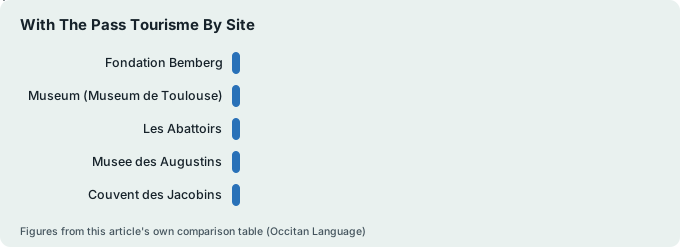
Plan around three anchors: the museums and monuments that interpret the region's past, the old neighborhoods whose names carry Occitan forms, and the day-trip towns across the region where the linguistic heritage is most visible in the built environment. The Pass Tourisme at EUR 26 for stays of one to three days covers several of the museum anchors and pays off from the third activity.
The Pass Tourisme is the practical spine of a heritage-focused visit. The tourist office's Pass Tourisme page lists it at EUR 26 for stays of one to three days, it includes a free guided tour from the tourist office, and adding EUR 10 buys ten public-transport trips on the metro, bus and tram. The office itself says the pass pays off from the third activity, so a museum-heavy itinerary is exactly the use case it was built for.
| Site | Normal adult rate | With the Pass Tourisme |
|---|---|---|
| Fondation Bemberg | EUR 12 | Free |
| Museum (Museum de Toulouse) | EUR 12 | Free |
| Les Abattoirs | EUR 12 | Free |
| Musee des Augustins | EUR 5 | Free |
| Couvent des Jacobins | EUR 5 | Free |
Two timing notes matter for this itinerary. The Musee des Augustins is temporarily closed from 21 September to 2 October 2026 for great-cloister works, with its Gothic halls reopening on 3 October 2026 from 10:00. And the Couvent des Jacobins is free on the first Sunday of the month except when a temporary exhibition is on, a rule stated for the Jacobins only, so do not assume it applies elsewhere.
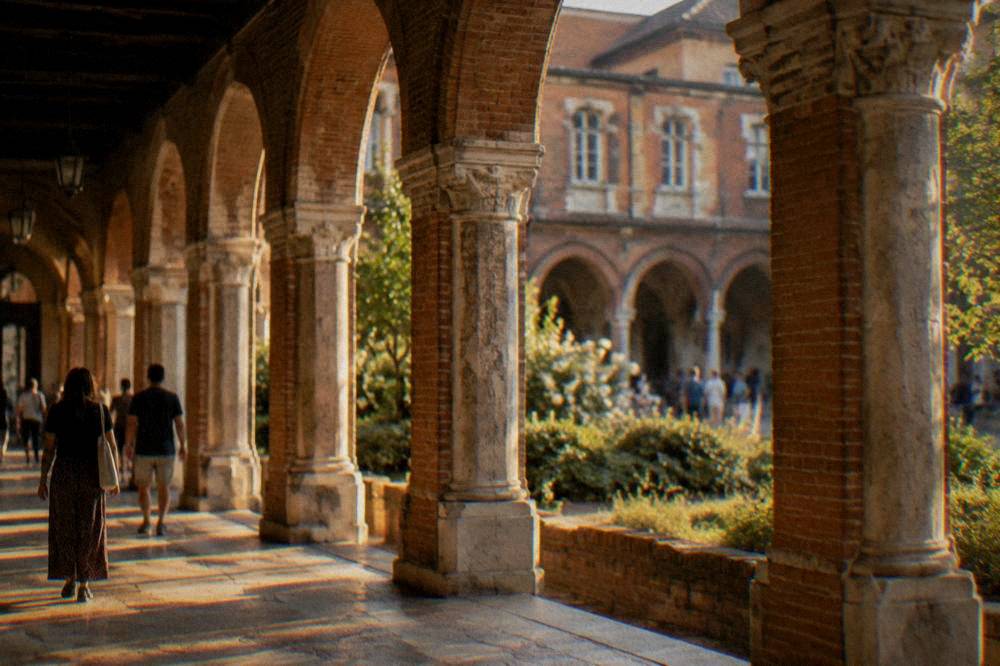
For the neighborhood layer, walk the older quarters and read the names. The Carmes, Saint-Etienne and Saint-Aubin guides on this site each cover a district whose character, and whose names, predate the modern city. And for the day-trip layer, the region's towns are where the language's footprint is most visible in stone: Carcassonne, Albi and Cordes-sur-Ciel each sit inside the historical Occitan zone and each rewards a full day.
Getting between these anchors is cheap. The Tisseo e-boutique catalogue gives the fares below, and a day pass often beats single tickets once you make a third or fourth journey.
| Tisseo ticket | Price |
|---|---|
| Single trip | EUR 1.90 |
| Single trip bought on board | EUR 2.50 |
| 10 trips | EUR 16.00 |
| Day pass | EUR 7.20 |
| 3-day pass | EUR 14.30 |
| Airport single (network + Navette) | EUR 9.50 |
There is no 2-day pass in the catalogue, so for a two-night stay the arithmetic is between the day pass repeated and the 3-day pass. The full system, including the airport connection, is covered in our getting around Toulouse guide, and note one hard fact if you are flying in: tram T2 to the airport has been closed since 5 June 2023 and stays closed until the end of 2026, so the Navette bus, one departure every 15 minutes, is the public-transport link, as detailed in the airport to city center guide.
When Is The Best Time To Visit For A Culture-Focused Trip?
Late September through October is the strongest window for a culture-focused Toulouse trip: the festival calendar is at its densest, the summer heat has passed, and the city's museums and monuments run their full schedules. Meteo-France's normals for Toulouse-Blagnac put August as the warmest month at a 22.8 C mean and July as the sunniest at 258.6 hours, so early autumn trades a little sun for a lot of programming.
The climate data for the city comes from Meteo-France's 1991-2020 normals for the Toulouse-Blagnac station, and it upends one common assumption: the wettest month is not in winter. May averages 73.6 mm of rain, almost double February's 37.2 mm, with April at 65.2 mm and June at 64.2 mm close behind. Then the rain eases, and July, the sunniest month at 258.6 hours, gets just 40.1 mm.
| Month | Mean temperature | Rain | Sunshine |
|---|---|---|---|
| May | 16.4 C | 73.6 mm | 212.3 hours |
| July | 22.6 C | 40.1 mm | 258.6 hours |
| August | 22.8 C | 44.6 mm | 246.4 hours |
| September | 19.3 C | 45.7 mm | 210.1 hours |
| October | 15.3 C | 54.3 mm | 155.2 hours |
For a trip built around language and heritage, programming matters more than sunshine. The festival table earlier in this guide shows why early autumn wins: Piano aux Jacobins runs through late September, Toulouse les Orgues fills the first half of October, and the Christmas markets open on 26 November. The full seasonal picture, including the trade-offs month by month, is in our best time to visit Toulouse guide.
What Should A Day Of Occitan Heritage Look Like On The Ground?
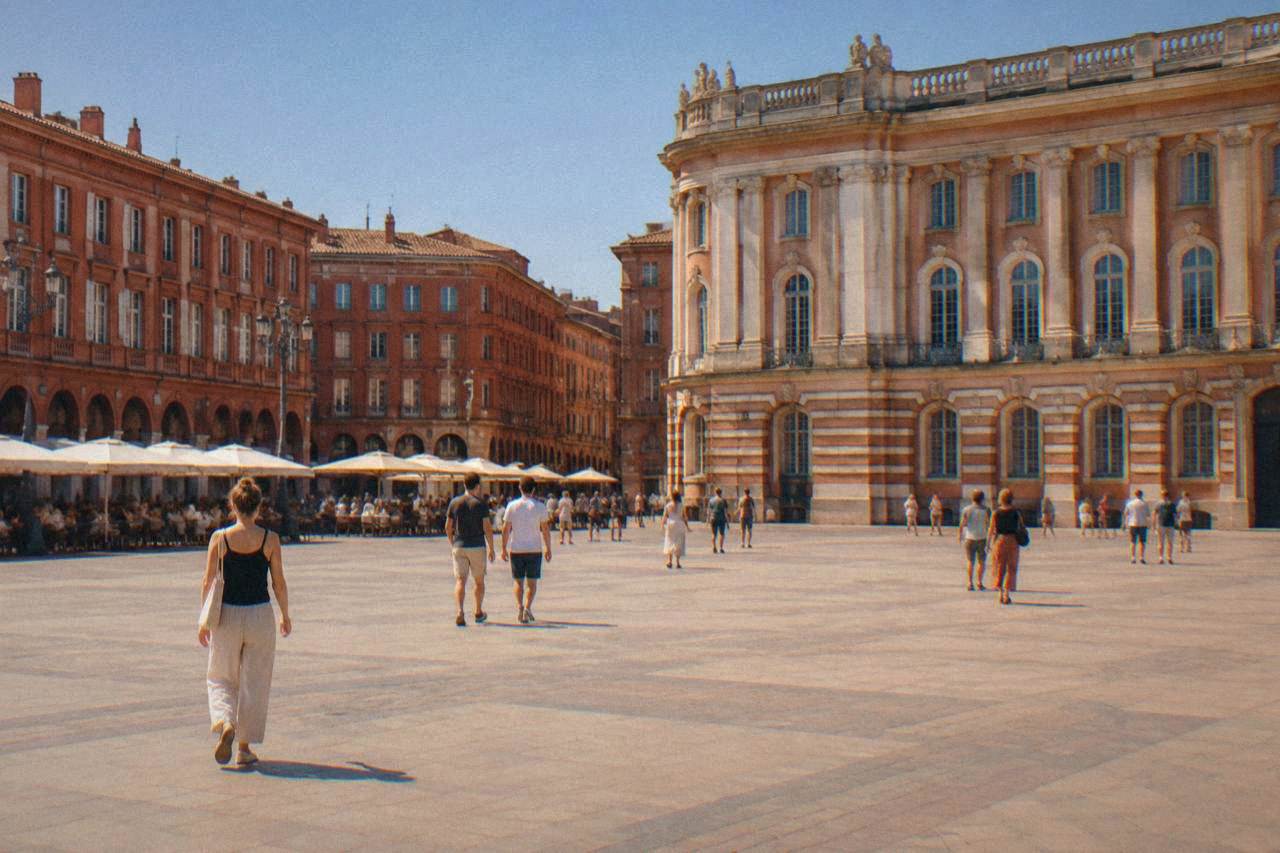
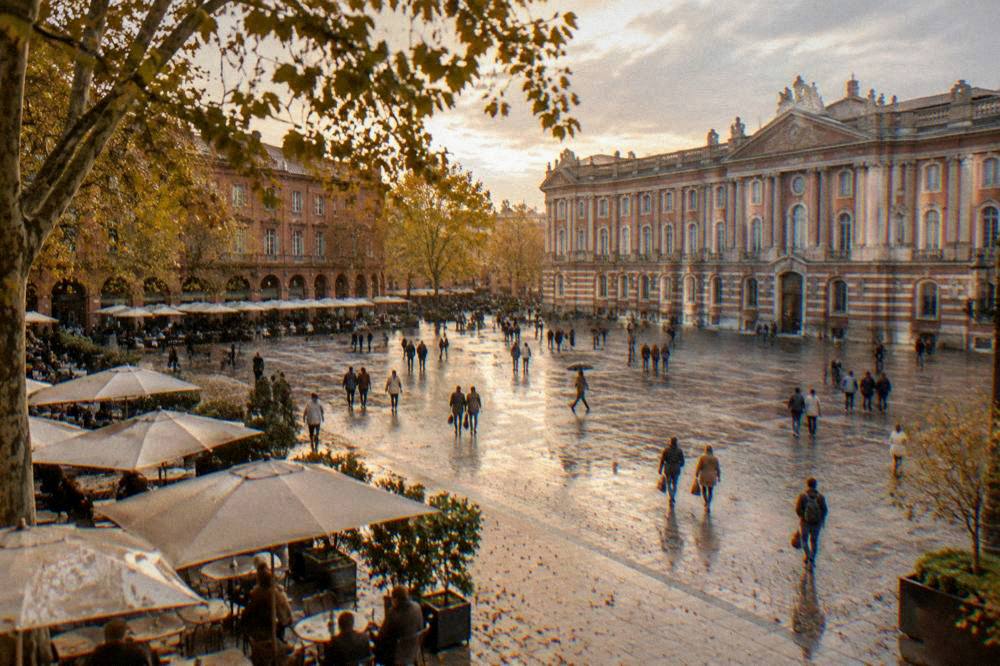
A good single day pairs one monument with a museum and a walk through named streets: the Couvent des Jacobins or the Musee des Augustins in the morning, the old quarters around the Capitole at midday, and a guided or audio-led walk in the afternoon that puts the history in context. With the Pass Tourisme, that day costs less than the sum of its parts and includes a free guided tour from the tourist office.
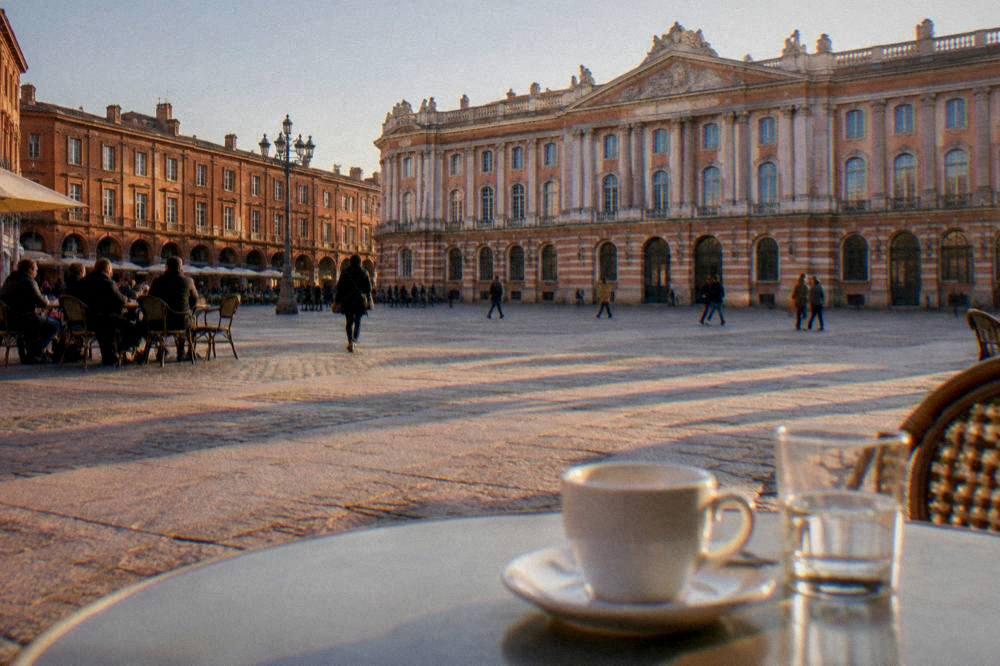
Start at the Jacobins, where the free-first-Sunday rule and the EUR 5 normal rate make it the gentlest entry point on the list, and where the ongoing roof restoration means the visit doubles as a look at how the city maintains its medieval fabric. From there the walk to the Capitole passes through streets whose names carry the region's linguistic history, and the Capitole de Toulouse guide covers what to look for once you arrive.
Afternoon is the moment for interpretation. The self-guided audio tours in the roster below let you move at your own pace while a narrator supplies the context, and the in-app secrets tour is built exactly for walkers who want the city's layered past unpacked street by street.
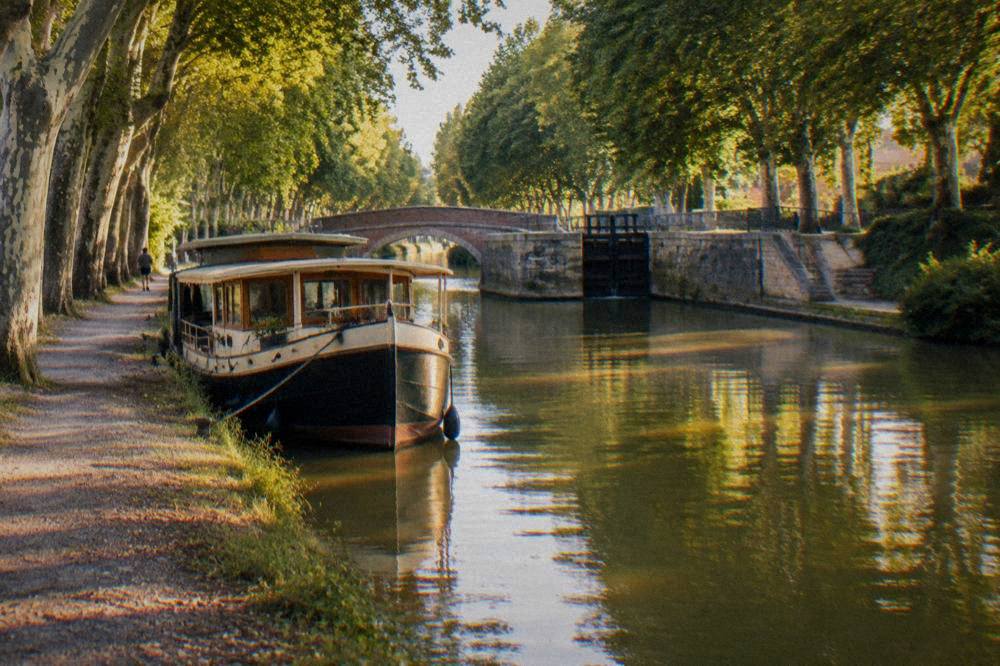
If your day stretches into the evening, the Garonne riverside is the closing act. The Garonne riverside guide maps the walks, and a cruise on the UNESCO-listed Canal du Midi, inscribed in 1996, adds a water-level view of the engineering heritage that shaped this whole region.
For travelers who want the region's linguistic heritage explained rather than simply seen, a guided walk with a live narrator is the strongest format, and the free, tip-based walks in the city are a legitimate way to get one. Harry's Free Tour on GuruWalk runs three hours and is exactly the kind of city overview that puts names and neighborhoods into historical order. It is free and tip based, and you can See This Free Tour On GuruWalk directly.
Common Questions About The Occitan Language In Toulouse
Quick answers to what planners ask most about Occitan and the Occitanie region around Toulouse.
Is Occitan still spoken in Toulouse?
Not as an everyday street language. Daily life in Toulouse runs in French, while Occitan survives in cultural settings such as classes, choirs and festival programming, and in written form on signs and place names across the region.
Why is the region called Occitanie?
The administrative region was named after the Occitan language, reviving a historical name for the southern half of France where the language was traditionally spoken. Toulouse is the prefecture of Haute-Garonne within that region.
Is Occitan a dialect of French?
No. Occitan is a separate Romance language that developed from Latin along its own path, with its own grammar and vocabulary. It is closer to a sister language of French than a variety of it.
Do I need any Occitan to visit Toulouse?
No. The tourist infrastructure of Toulouse operates in French, with English widely available in visitor settings. Occitan enriches a visit as context, not as a practical requirement.
Where can I see Occitan heritage on a day trip from Toulouse?
The towns across the region, including Carcassonne, Albi and Cordes-sur-Ciel, all sit inside the historical Occitan-speaking zone and reward a full day each. The day trips from Toulouse guide on this site covers the practical options.
Does the Pass Tourisme help with a heritage itinerary?
Yes. The tourist office lists the Pass Tourisme at EUR 26 for stays of one to three days, free entry to several municipal museums and monuments, a free guided tour from the tourist office, and an optional EUR 10 add-on for ten transport trips. The office says it pays off from the third activity.
The Occitan language will not greet you at the door in Toulouse, but its name is on the region, its forms are on the signs, and its history is in every cloister and market square you walk through. Plan the visit around the museums, the old quarters and one good guided walk, and the language stops being an abstract label and becomes the best explanation of why this corner of southwestern France looks and sounds the way it does, as Toulouse Travel Guide covers across its city and day-trip pages.