Jardin Des Plantes Toulouse
The Jardin des Plantes is Toulouse's botanical garden, a green escape in the pink-brick city on the Garonne in the Occitanie region of southwestern France. This guide covers how to reach it, when to go, and what to pair it with.
Short answer
The Jardin des Plantes is Toulouse's botanical garden, best reached on the Tisseo network with a EUR 1.90 single ticket. May is the wettest month in Toulouse at 73.6 mm, so late spring blooms come with a chance of rain; July is the sunniest at 258.6 hours. Confirm current opening arrangements on the city's pages before you go.
Toulouse, the pink-brick "La Ville Rose" on the Garonne in the Occitanie region of southwestern France, keeps its botanical heart in the Jardin des Plantes, a garden planted with trees, themed beds and quiet paths a short ride from the center. The city of 514,819 inhabitants (INSEE, population in 2023) treats the garden as a neighborhood institution rather than a headline monument, which is exactly why it rewards travelers who build a slow half-day around it. This guide from Toulouse Travel Guide covers what the garden is, how to reach it on the Tisseo network, when the Meteo-France climate data says the weather is on your side, and what to combine it with, from the natural history collections to the Canal du Midi.
What Is The Jardin Des Plantes In Toulouse?
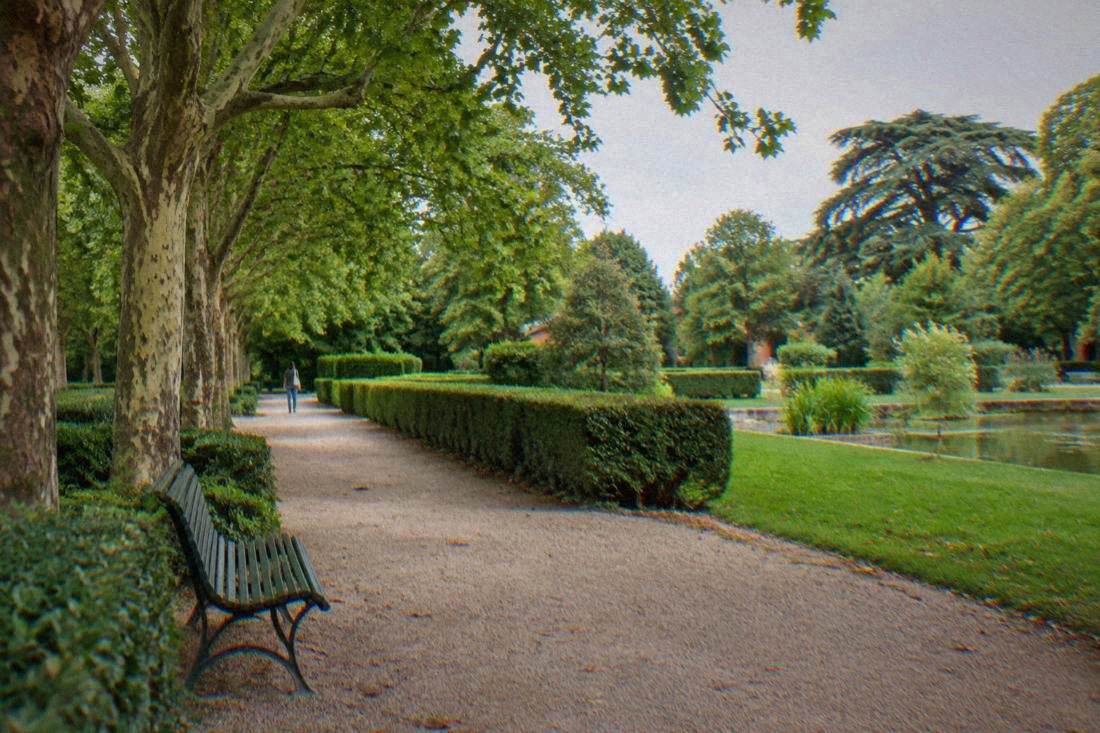
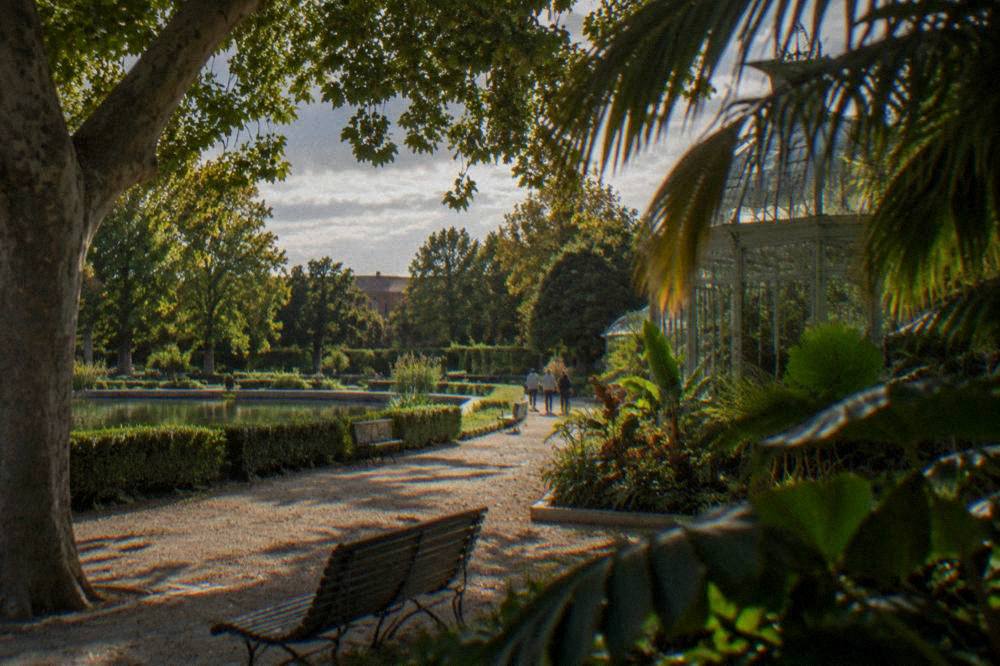
The Jardin des Plantes is Toulouse's botanical garden, a planted public green space whose role is to display trees, themed plantings and quiet walking paths rather than to house a single famous monument. It belongs to the same family of city gardens as the Jardin Royal and the Japanese garden, and it sits in the part of Toulouse where museum-going and green space sit side by side. The garden's identity is botanical: expect labeled plantings, mature shade trees, lawns and gravel alleys rather than fountains and sculpture gardens. Because no element of this page's sourced facts covers the garden's own opening hours, entry conditions or layout, treat the city's official pages as the authority on those practical details and check them before you set out.
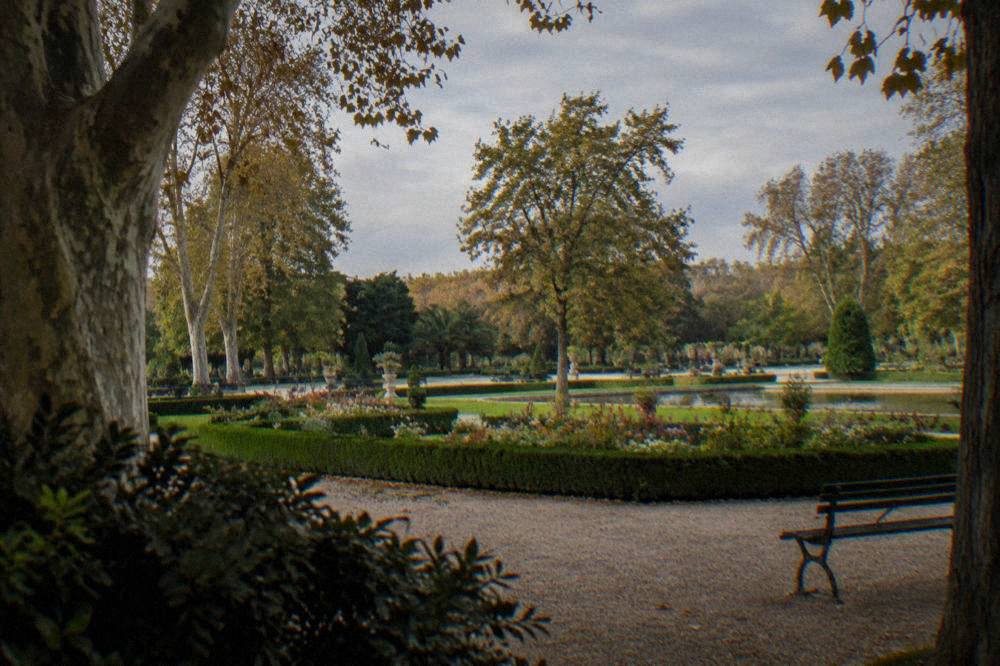
What makes a botanical garden worth planning around, in any city, is that it changes completely with the seasons. Meteo-France's 1991-2020 normals for Toulouse-Blagnac show a climate with warm summers, mild winters and a distinctive rain pattern: the wettest month is May at 73.6 mm, and February is the driest at 37.2 mm. That single fact shapes when the garden looks its best and when you are most likely to be sheltering under a tree. The rest of this guide builds the visit around those numbers.
A word on what the garden is not. It is not one of Toulouse's UNESCO-listed sites: the Canal du Midi was inscribed in 1996, and the Basilique Saint-Sernin is part of the "Routes of Santiago de Compostela in France" property inscribed in 1998, but the garden carries no such listing. Its appeal is local and unhurried, closer in spirit to the Japanese garden than to the grand monuments around the Capitole.
How Do You Get To The Jardin Des Plantes On Public Transport?
A single Tisseo ticket costs EUR 1.90 and covers one trip on the metro, bus or tram network, which is the standard way to reach the garden from the center of Toulouse. A day pass at EUR 7.20 or a 3-day pass at EUR 14.30 covers unlimited travel if the garden is one stop on a fuller day. There is no 2-day pass in the Tisseo catalogue. The Tisseo e-boutique catalogue gives every fare below, and those are the figures to plan with. Buy before you board: a single bought last-minute on board costs EUR 2.50.
| Tisseo ticket | Price | What it covers |
|---|---|---|
| Single trip | EUR 1.90 | One journey on the network |
| Single bought on board | EUR 2.50 | One journey, last-minute purchase |
| 10 trips | EUR 16.00 | Ten journeys, shareable planning option |
| Day pass | EUR 7.20 | Unlimited travel for one day |
| 3-day pass | EUR 14.30 | Unlimited travel for three days |
| Airport single | EUR 9.50 | Tisseo network plus the Navette aeroport |
Two network facts matter for anyone arriving in Toulouse in 2026. Tram T2 to the airport has been closed since 5 June 2023 and stays closed until the end of 2026 because of the Line C metro works, so the airport link is the Navette aeroport bus, one departure every 15 minutes, taking 20 to 40 minutes to the center. Metro Line C, the third line, is a 27 km line with 21 stations running Colomiers, Blagnac, Toulouse and Labege, and it opens at the end of 2028. Neither changes how you reach the garden today, but both explain why transport advice for Toulouse dated before 2023 is unreliable.
If you are staying several days and planning to move between the garden, the museums and the riverside, the tourist office's Pass Tourisme is the other number that matters: EUR 26 for stays of one to three days, with an optional EUR 10 add-on for ten public-transport trips. The office's own page states the pass pays off from the third activity, so a garden-plus-museums day is exactly the case it was built for. The getting around Toulouse guide unpacks the network in more depth.
What Can You See Inside The Garden And Beside It?
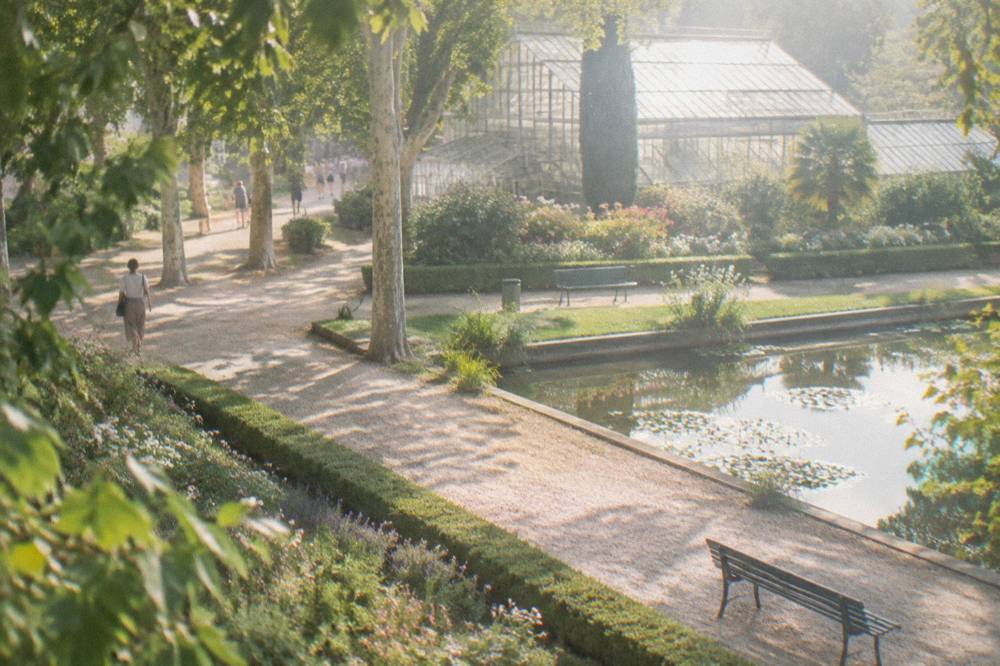
Inside the Jardin des Plantes, the draw is botanical: labeled plantings, mature trees, seasonal beds and quiet alleys built for slow walking rather than ticking off monuments. Beside it, the natural history museum shares the same green quarter, and the pair makes a natural half-day of plants and collections.
The neighboring museum is the Museum de Toulouse, the natural history museum, whose collections sit closest to the garden in both geography and spirit. The tourist office's Pass Tourisme page lists the Museum at a normal rate of EUR 12, free with the pass, which makes the garden-plus-museum combination one of the cleaner uses of the EUR 26 pass. Other museums in the same pass table, each free with the pass at its listed normal rate, are set out below.
| Museum or monument | Normal rate | With the Pass Tourisme |
|---|---|---|
| Fondation Bemberg | EUR 12 | Free |
| Museum de Toulouse | EUR 12 | Free |
| Les Abattoirs | EUR 12 | Free |
| Musee des Augustins | EUR 5 | Free |
| Couvent des Jacobins | EUR 5 | Free |
| Cite de l'espace | EUR 29 | Discounted, not free |
One closure to know about if museums are on your list: the Musee des Augustins is temporarily closed from 21 September to 2 October 2026 for great-cloister works, and its Gothic halls, the sacristy, the Notre-Dame de Pitie hall and the chapter house, reopen on 3 October 2026 from 10:00. The Musee des Augustins page has the detail. And a scheduling tip that is verified for exactly one site: the Couvent des Jacobins is free on the first Sunday of the month, except when a temporary exhibition is on. That rule is stated for the Jacobins only, so do not assume it elsewhere.
If the garden has you in a green-space mood, Toulouse offers more of it. The Garonne riverside and the Pont Neuf give the river version of the same slow walk, and the Canal du Midi adds a UNESCO-inscribed waterway to the mix, inscribed in 1996 on criteria (i)(ii)(iv)(vi).
Is The Jardin Des Plantes Good For Kids And Families?
Yes, as a green space to run in and as half of a family pairing with the natural history museum next door, and with two strong family attractions in greater Toulouse to build a full day around: Cite de l'espace, whose tickets start from EUR 22.50 with a normal adult rate of EUR 29, and Aeroscopia, whose adult ticket is EUR 16. The garden's contribution to a family day is the unstructured part: lawns, shade and space between the museum and the rest of the itinerary. The sourced figures below are the ones to plan a family budget around, and every product price on this site renders from its own listing rather than from memory.
| Family attraction | Verified admission figure | Source detail |
|---|---|---|
| Cite de l'espace | From EUR 22.50 | Homepage; normal adult rate EUR 29 per the tourist office |
| Aeroscopia | Adult EUR 16, reduced EUR 13 | Family pass EUR 80, annual pass EUR 26 |
| Airbus factory tours (Manatour) | Adult EUR 18, reduced EUR 15 | A350 and A321 tours, free under 6 |
| Halle de La Machine | EUR 14.98 per person | Priced in EUR on its listing |
Two family-relevant warnings come straight from the official pages. Aeroscopia's exhibition hall is not heated or air-conditioned, so dress for the season, and the museum is open daily 9:30-18:00 with last entry at 17:00, closed 25 December, 1 January and 7 May 2026. The Airbus factory tours require an original passport or ID card, no photocopy, no phone image, and no cameras or pets. Both sit in the aerospace cluster covered in depth on the Aeroscopia page.
For families who want the garden plus a guided structure, the electric tuk-tuk tour below covers the city with photo stops and an audio guide, a format that works when small legs are tired. The Toulouse with kids guide widens the list further.
When Is The Best Time Of Year To Visit The Garden?
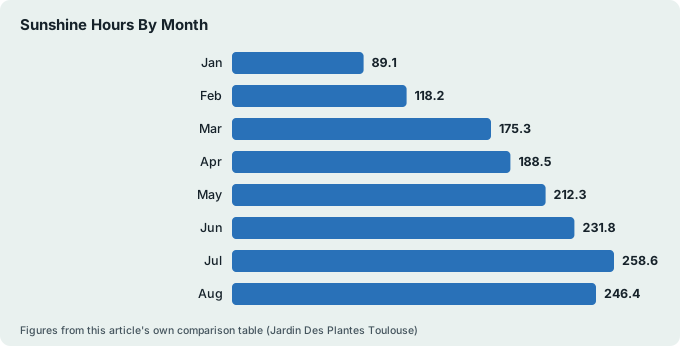
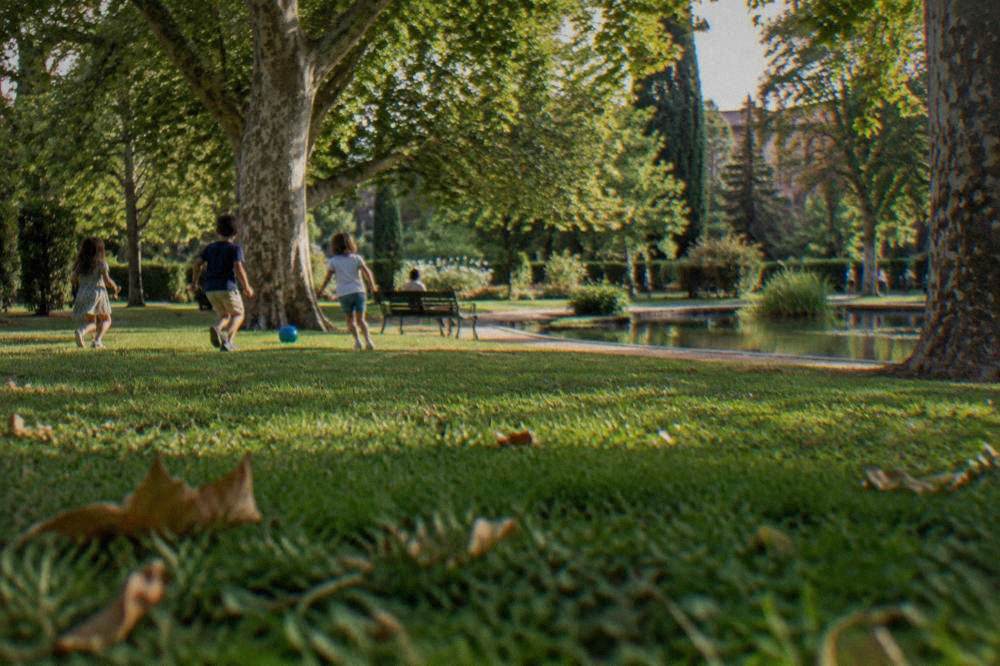
Late June through July is the sweet spot for the Jardin des Plantes: July is Toulouse's sunniest month at 258.6 hours of sunshine with only 40.1 mm of rain, while May, the wettest month at 73.6 mm, delivers the spring blooms with a real chance of a soaking. Meteo-France's 1991-2020 normals for Toulouse-Blagnac give the full picture: 627 mm of rain a year across 95.8 rain days and 2,075.1 hours of sun. The surprise in the data, and the detail a first page of search results rarely mentions, is that the wettest month is May, not a winter month. April follows at 65.2 mm and June at 64.2 mm, then the tap turns off: July drops to 40.1 mm.
| Month | Mean temperature C | Rain mm | Sunshine hours |
|---|---|---|---|
| Jan | 6.3 | 52.5 | 89.1 |
| Feb | 7.1 | 37.2 | 118.2 |
| Mar | 10.3 | 45.3 | 175.3 |
| Apr | 12.7 | 65.2 | 188.5 |
| May | 16.4 | 73.6 | 212.3 |
| Jun | 20.3 | 64.2 | 231.8 |
| Jul | 22.6 | 40.1 | 258.6 |
| Aug | 22.8 | 44.6 | 246.4 |
| Sep | 19.3 | 45.7 | 210.1 |
| Oct | 15.3 | 54.3 | 155.2 |
| Nov | 9.9 | 55.0 | 99.9 |
| Dec | 7.0 | 49.3 | 89.7 |
August is technically the warmest month at a 22.8 C mean, fractionally ahead of July at 22.6 C, and it carries 11.3 days a year above 30 C against July's 11.5. For a garden built around walking in the open, that argues for mornings in high summer and for May or September if you want green growth without peak heat. The records frame the extremes: 42.4 C on 23 August 2023 is the all-time high, and -19.2 C on 15 February 1956 the all-time low, both from the Meteo-France fiche covering 1947 to June 2025.
| Season | Garden experience | Planning note from the climate data |
|---|---|---|
| Spring | Peak growth and flowering | May is the wettest month, 73.6 mm, pack rain gear |
| Summer | Full canopies, long evenings | July sunniest at 258.6 hours, 11.5 days above 30 C |
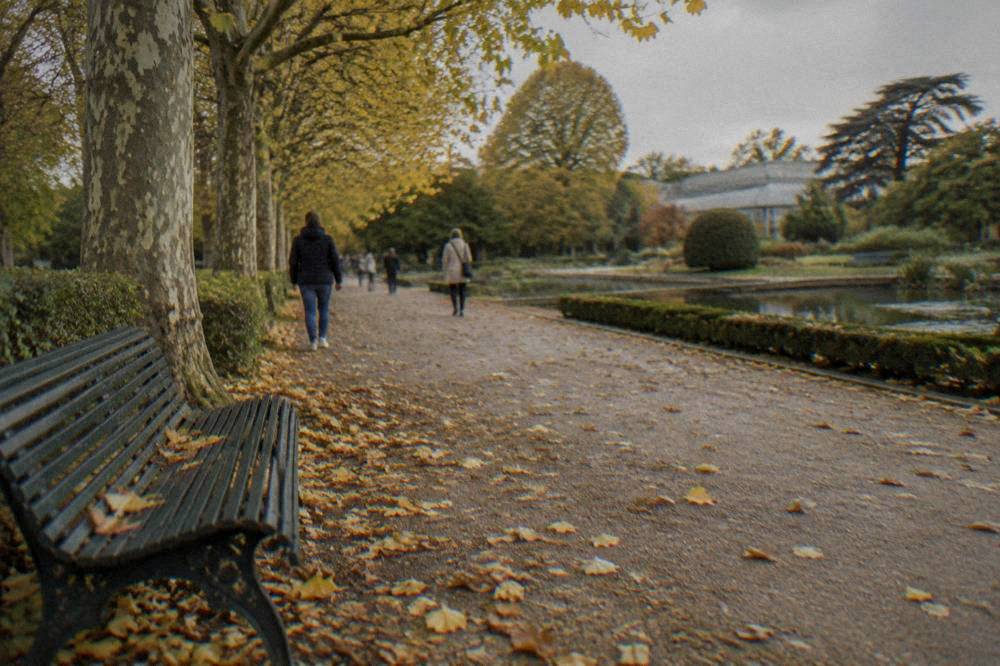
| Autumn | Late color, softer light | September still 210.1 hours of sun, 45.7 mm rain |
| Winter | Bare trees, quiet paths | January coldest at 6.3 C mean, 89.1 hours of sun |
Does The Jardin Des Plantes Cost Anything To Visit?
A day that pairs the garden with two or three pass-listed museums is the standard arithmetic in which the pass pays off from the third activity, as the tourist office's own page states.
The tourist tax is the one lodging figure worth knowing while you plan: Toulouse Metropole charges 5% of the pre-tax nightly price per person for non-classified or pending-classification lodging, which includes most platform rentals. Per-star flat rates are not verified on the official page, so no star-by-star figure belongs on any page of this site. The Toulouse cost guide goes deeper on budgeting.
What Else Should You Combine With A Garden Visit?
The strongest pairing is the natural history museum beside the garden, followed by a walk to the Garonne riverside or the Victor Hugo market for food, with the Capitole and Saint-Sernin as the monument half of the day. A guided option stitches the highlights together if you would rather not navigate alone, and the trio of tours below covers the formats that fit a garden day best. The immediate green-space circuit is the garden, the Japanese garden and the riverside; the monument circuit is the Capitole, Saint-Sernin and the Jacobins; and the food anchor is the Victor Hugo market, the covered market whose stalls supply the city's cassoulet tables.
To stitch the garden, the riverside and the monuments into one loop, book a sightseeing minibus tour here.
| Pairing | What it adds | Verified detail |
|---|---|---|
| Museum de Toulouse | Natural history collections | EUR 12 normal rate, free with the Pass Tourisme |
| Capitole de Toulouse | The city's civic heart | See the Capitole page |
| Basilique Saint-Sernin | UNESCO-listed since 1998 | Part of the Santiago Routes property |
| Garonne riverside and Pont Neuf | River walking | See the riverside page |
| Victor Hugo market | Food and local produce | See the market page |
If you are in Toulouse across a festival window, two verified event dates can anchor the timing. Piano aux Jacobins runs 8 to 30 September 2026, and Toulouse les Orgues, its 31st edition, runs 7 to 18 October 2026 with the opening concert on 7 October at Notre-Dame de la Daurade. The Christmas markets on Place du Capitole, the allees Jean-Jaures and square Charles-de-Gaulle run 26 November to 27 December 2026. A garden visit in early October lands between the piano and organ festivals, which is a pleasant coincidence of the calendar rather than a promise about the garden itself.
For travelers who want a guided spine to the day, the highlights walk below covers the city's must-sees with a live guide, and the Toulouse walking tours guide compares every format on the site, from the free GuruWalk tip-based walks to private options. A live guide also answers the questions a garden cannot: why the brick is pink, where the cassoulet is best, and how the Canal du Midi earned its UNESCO listing in 1996.
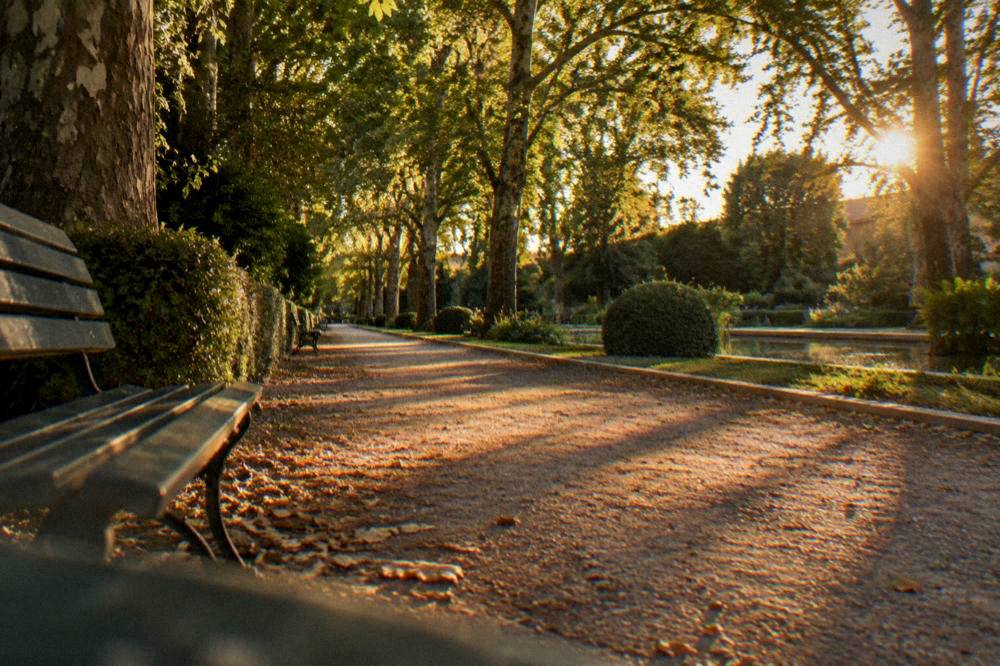
Whichever guided format you choose, the garden still earns its place as the quiet hour of the day. Arrive early, before the museums open, or late, after they close, and you get the alleys almost to yourself, with the shade trees doing the work that air-conditioning does elsewhere in this warm city. The trio below gathers the three formats that pair most naturally with a green-space day in Toulouse.
Common Questions About The Jardin Des Plantes In Toulouse
Is the Jardin des Plantes in Toulouse free to enter?
What is verified is the cost of reaching it: EUR 1.90 for a single Tisseo trip, EUR 7.20 for a day pass.
How do I get to the Jardin des Plantes from Toulouse city center?
The Tisseo network, metro, bus and tram, is the standard way, with a single ticket at EUR 1.90 and a day pass at EUR 7.20. The tourist office's Pass Tourisme at EUR 26 offers an optional EUR 10 add-on for ten public-transport trips.
What is the best month to visit the Jardin des Plantes?
July, per Meteo-France's 1991-2020 normals: it is Toulouse's sunniest month at 258.6 hours of sunshine with only 40.1 mm of rain. May is the wettest month at 73.6 mm, so spring blooms come with a real chance of rain.
Can I combine the garden with a museum visit?
Yes. The natural history museum sits in the same green quarter, and the tourist office lists its normal rate at EUR 12, free with the Pass Tourisme. The pass pays off from the third activity, per the tourist office's own page.
Is the garden suitable for children?
As a green space for running and resting, yes, and it pairs with family attractions: Cite de l'espace from EUR 22.50 with a EUR 29 normal adult rate, and Aeroscopia at EUR 16 adult admission, open daily 9:30-18:00 with last entry at 17:00.
How far is the garden from Toulouse's main monuments?
The garden sits within the same city as the Capitole, Saint-Sernin and the Garonne riverside, all covered on this site's own pages, but no verified walking distance for the garden appears in this site's facts, so plan with the Tisseo fare table rather than a stated walking time.
The Jardin des Plantes is the quiet half of a good Toulouse day: botanical, seasonal, and best timed to the city's own climate numbers, with the museum pass arithmetic and the riverside walk doing the rest.