Which Saint Is Buried In Toulouse?
Which saint is buried in Toulouse? Saint Saturninus, the city's first bishop, rests in the Basilique Saint-Sernin, a UNESCO-listed stop on the pilgrimage road to Santiago de Compostela.
Toulouse, the pink-brick city on the Garonne in the Occitanie region of southwestern France, is built around a tomb. The saint buried here is Saint Saturninus, known in French as Saint Sernin, the first bishop of Toulouse, and his resting place gave the city one of its greatest monuments: the Basilique Saint-Sernin. The basilica is listed as part of the "Routes of Santiago de Compostela in France", a UNESCO World Heritage property inscribed in 1998, and it stands as a major stop on the Via Tolosana, the pilgrimage road that runs from the Mediterranean toward Santiago. This page answers the question directly, then explains who the saint was, what happened to him, and what a visitor can actually see today.
Which Saint Is Buried In Toulouse?
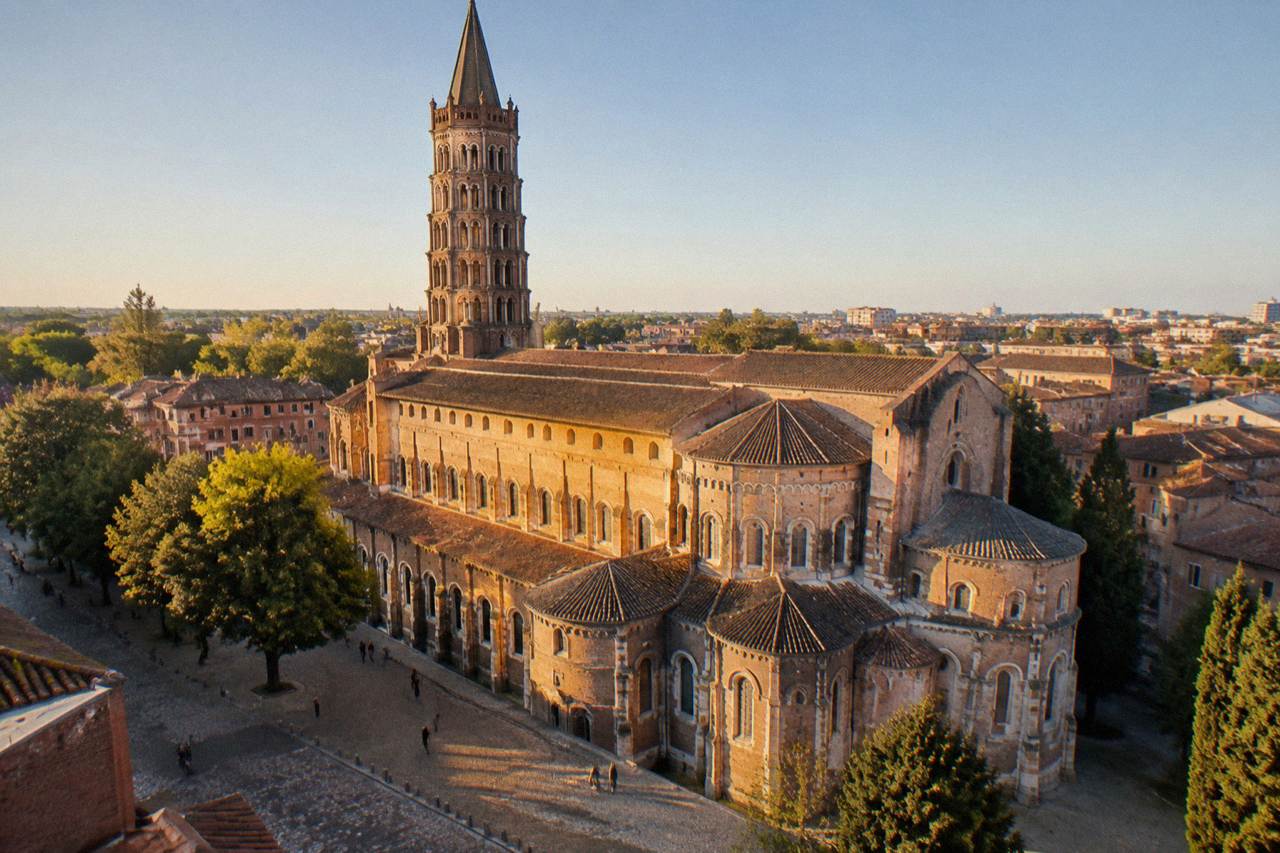
Saint Saturninus, called Saint Sernin in French, is buried in Toulouse. He was the first bishop of the city, and his tomb sits in the crypt of the Basilique Saint-Sernin, the large Romanesque church that carries his name. The basilica is part of the UNESCO World Heritage property "Routes of Santiago de Compostela in France", inscribed in 1998, and it is a major stop on the Via Tolosana pilgrimage route.
The basilica dedicated to him is the largest Romanesque church in the city and one of the stops that made Toulouse a pilgrimage destination in its own right. The city's tourist infrastructure grew around the flow of travelers heading to Santiago de Compostela, and the church built over the bishop's tomb was sized for that traffic. Today the building is a Monument Historique, listed since 1840, and it remains the most complete statement of medieval Toulouse's ambition.
If you want to build a full day around the site, the basilica sits at the edge of the historic center, within walking distance of the Capitole and the Musee Saint-Raymond. A relaxed plan is covered in how many days is enough for Toulouse, which lays out what fits into a short stay.
Who Was Saint Saturninus, The First Bishop Of Toulouse?
Saint Saturninus was the first bishop of Toulouse, sent to lead the city's early Christian community. In French he is called Saint Sernin, and the Basilique Saint-Sernin takes its name from him. Tradition holds that he was martyred in Toulouse, tied to a bull and dragged through the streets, and that his body was buried just outside the Roman city wall, where the great basilica later rose over the tomb.
The story of his martyrdom became the founding legend of Christian Toulouse. The place where he was said to have fallen became a site of devotion, and a small shrine grew into a church, then into the vast Romanesque basilica that stands today. Pilgrims on the road to Santiago stopped at the tomb, prayed at the crypt, and carried the saint's reputation back across Europe.
The route that brought them here still exists as a named path. The Via Tolosana, one of the four historic French pilgrimage roads to Santiago de Compostela, passes through Toulouse specifically because of this tomb, and the basilica's UNESCO listing under the "Routes of Santiago de Compostela in France" recognizes that role. The property was inscribed in 1998, and the Basilique Saint-Sernin is listed as a component of it.
The surrounding neighborhood rewards a slow walk. The basilica stands near the Saint-Etienne area, and the streets around it mix medieval religious architecture with the ordinary life of a modern city. The Saint-Aubin district lies a short stroll away on the other side of the historic core, with its Sunday market and village feel.
What Can You Actually See Of The Tomb Today?
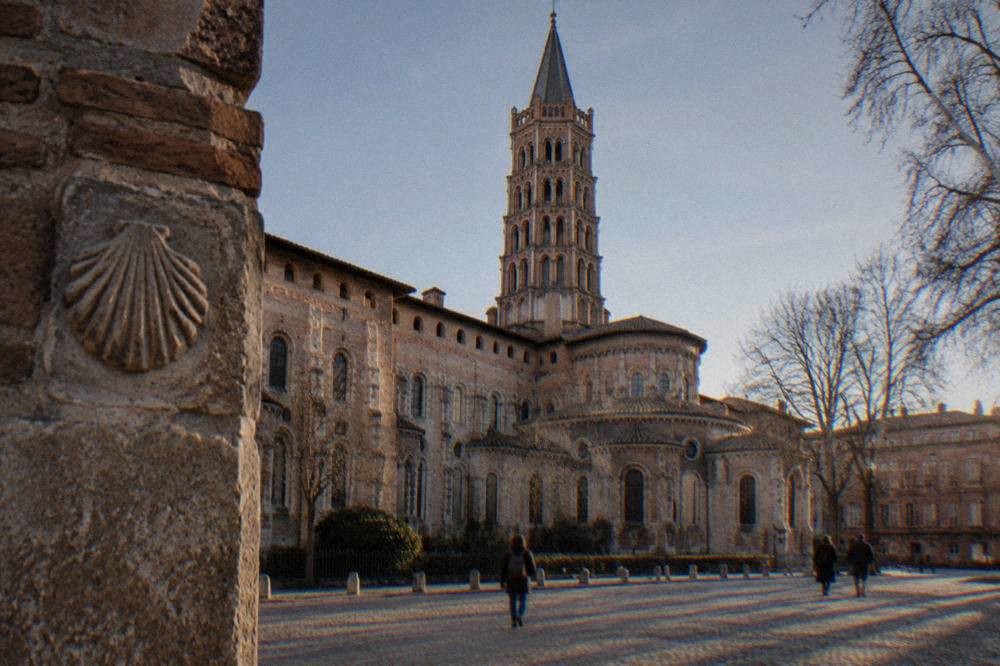
The tomb of Saint Saturninus lies in the crypt of the Basilique Saint-Sernin, below the main choir. Visitors can walk down into the crypt and see the shrine space that medieval pilgrims traveled to reach. Above it, the church keeps its Romanesque core, including the ambulatory and the radiating chapels that were designed so that crowds of pilgrims could circle the tomb without disturbing the services in the nave.
The basilica is open to visitors and remains a working church, so dress and behavior standards apply. The building's scale is the first thing that registers: the brick tower, the long nave, and the ambulatory all speak the language of a major pilgrimage stop. The essentials of the site, its history and its UNESCO status, are covered in the Basilica of Saint-Sernin guide, which goes deeper into the architecture.
Across the square from the basilica sits the Musee Saint-Raymond, the city's archaeology museum. The museum was closed for renovation and modernisation works from 3 November 2025 and reopened on 3 April 2026. When open, it holds the Roman sculptures and artifacts that tell the other half of the story: the Toulouse that existed before the bishop, before the basilica, and before the pilgrimage road.
A practical note on the wider visit: the Toulouse Pass Tourisme covers several municipal museums and monuments, and the tourist office's Pass Tourisme page lists free entry to the Musee des Augustins at EUR 5 normal rate, the Couvent des Jacobins at EUR 5, the Fondation Bemberg at EUR 12, the Museum at EUR 12 and Les Abattoirs at EUR 12, all free with the pass. The pass costs EUR 26 for stays of one to three days and pays off from the third activity, according to the tourist office's own page.
How Did A Tomb Become A UNESCO World Heritage Site?
The Basilique Saint-Sernin is part of the UNESCO World Heritage property "Routes of Santiago de Compostela in France", which was inscribed in 1998. The property recognizes the network of churches, hospices and roads built to serve pilgrimage to Santiago de Compostela, and the Toulouse basilica is listed as a component of it. The Canal du Midi, Toulouse's other major UNESCO link, was inscribed separately in 1996 under criteria i, ii, iv and vi.
The two listings tell different stories about the same city. The Canal du Midi, which begins its journey west from Toulouse, is an engineering achievement of the early modern period. The Routes of Santiago listing is about faith and movement: the tomb of Saint Saturninus made Toulouse a destination and a waypoint, and the church built over the tomb is the physical record of that.
For visitors who want the full UNESCO pair in one trip, the canal is easy to reach from the center. The Canal du Midi guide covers the Toulouse end of the waterway, and a cruise on the canal is one of the more popular ways to see it. The best canal trip in France question, answered elsewhere on this site, puts the Toulouse stretch in its national context.
The pilgrimage theme also extends beyond the city. Pilgrims leaving Toulouse headed south and west toward the Pyrenees, and several of the towns on that route make strong day trips. Saint-Bertrand-de-Comminges is one of them, a cathedral town in the foothills with its own Roman and medieval layers.
Where Else In Toulouse Do Saints And Relics Matter?
Saint Saturninus is the saint buried in Toulouse, but the city's religious geography spreads well beyond his crypt. The Notre-Dame-du-Taur church stands on the street where tradition says the martyrdom ended, the Couvent des Jacobins holds the Gothic interior that made the Dominican order central to medieval Toulouse, and the cathedral of Saint-Etienne preserves the seat of the later archbishops. Together they form a compact circuit that can be walked in a single day.
The Notre-Dame-du-Taur church, on the street that bears the same name, marks the traditional site connected to the end of the saint's story, and it sits on the direct line between the Capitole and the Basilique Saint-Sernin. The walk between the two churches takes in the densest stretch of the historic center. The Notre-Dame-du-Taur guide covers the church in detail, and the Notre-Dame-de-la-Daurade guide covers the riverside church that hosts the opening concert of the Toulouse les Orgues festival, which runs from 7 to 18 October 2026 for its 31st edition.
The Couvent des Jacobins, a short walk south, is free on the first Sunday of the month except when a temporary exhibition is on, according to the city's page for the convent. Its normal rate is EUR 5, as the tourist office lists. The convent's roof is under restoration, and the site remains open to visitors while the works continue.
For the practical side of seeing all of this, the getting around Toulouse guide explains the transit system and fares, and the is Toulouse a walkable city answer addresses the question directly. The short version: the historic core is compact, and the main religious sites cluster within it.
How Do You Plan A Visit Around The Basilica?
The Basilique Saint-Sernin sits at the northwest edge of the historic center, a short walk from the Capitole and the main squares of Toulouse. The most efficient plan is to walk the axis from the Capitole up the rue du Taur to the basilica, visit the crypt, then cross to the Musee Saint-Raymond if it is open, and finish in the streets of the Saint-Michel or Saint-Cyprien districts across the river. The whole route is flat and fits comfortably into half a day.
A table helps to order the sites connected to the saint and the pilgrimage story:
| Site | Connection to Saint Saturninus | Practical note |
|---|---|---|
| Basilique Saint-Sernin | His tomb, in the crypt | UNESCO listed, part of the Routes of Santiago property inscribed 1998 |
| Notre-Dame-du-Taur | Marks the traditional site of the martyrdom's end | On the walking axis between the Capitole and the basilica |
| Musee Saint-Raymond | Archaeology of Roman Toulouse, across the square | Reopened 3 April 2026 |
| Couvent des Jacobins | Dominican heart of medieval Toulouse | EUR 5 normal rate, free first Sunday except during temporary exhibitions |
| Notre-Dame-de-la-Daurade | Riverside church on the pilgrimage axis | Opening concert of Toulouse les Orgues, 7 October 2026 |
For the day-tripper with more time, the pilgrimage country around Toulouse opens outward. Saint-Cirq-Lapopie and Rocamadour are both stops on the broader network of pilgrim roads, and each makes a full day from the city. Closer to home, the Saint-Cyprien district offers the view back across the Garonne toward the spires of the old city, one of the classic photo angles of Toulouse.
The question of who is buried in Toulouse Cathedral, as distinct from the basilica, is answered separately in who is buried in Toulouse Cathedral. The cathedral and the basilica are different buildings with different histories, and mixing them up is the most common confusion visitors bring to the city.
Common Questions About The Saint Buried In Toulouse
Quick answers to what planners ask most about Saint Saturninus and the Basilique Saint-Sernin.
Which saint is buried in Toulouse?
Saint Saturninus, called Saint Sernin in French, is buried in Toulouse. He was the first bishop of the city, and his tomb lies in the crypt of the Basilique Saint-Sernin, which is part of the UNESCO World Heritage property "Routes of Santiago de Compostela in France", inscribed in 1998.
Is the Basilique Saint-Sernin a UNESCO World Heritage Site?
Yes. The basilica is listed as a component of the "Routes of Santiago de Compostela in France", a UNESCO property inscribed in 1998. The city's other major UNESCO link, the Canal du Midi, was inscribed separately in 1996.
Can you visit the crypt where the saint is buried?
Yes. The crypt of the Basilique Saint-Sernin is open to visitors during the church's opening hours, and it holds the shrine space associated with the tomb of Saint Saturninus. The basilica is a working church, so visitors should dress and behave accordingly.
What is the difference between the Basilique Saint-Sernin and Toulouse Cathedral?
The Basilique Saint-Sernin is the Romanesque pilgrimage church built over the tomb of Saint Saturninus, northwest of the Capitole. Toulouse Cathedral, dedicated to Saint-Etienne, is the seat of the archbishops and stands in a different part of the historic center. They are separate buildings with separate histories.
How do I get to the Basilique Saint-Sernin from the city center?
The basilica sits at the northwest edge of the historic center, a short walk from the Capitole along the rue du Taur. The walk is flat and passes the Notre-Dame-du-Taur church on the way, which marks the traditional site connected to the saint's martyrdom.
Are there other saints' sites to see in Toulouse?
Yes. The Couvent des Jacobins, the Notre-Dame-du-Taur church and the Notre-Dame-de-la-Daurade all belong to the same religious circuit, and all sit within or just beside the historic center. The Musee Saint-Raymond, across from the basilica, adds the Roman layer of the city's story when open.
The tomb of Saint Saturninus is the reason the largest Romanesque church in Toulouse exists, and the reason the city appears on the UNESCO map of the pilgrimage roads to Santiago de Compostela. Walk the rue du Taur from the Capitole, descend into the crypt, and you have reached the point around which Toulouse Travel Guide suggests the rest of the city arranges itself.