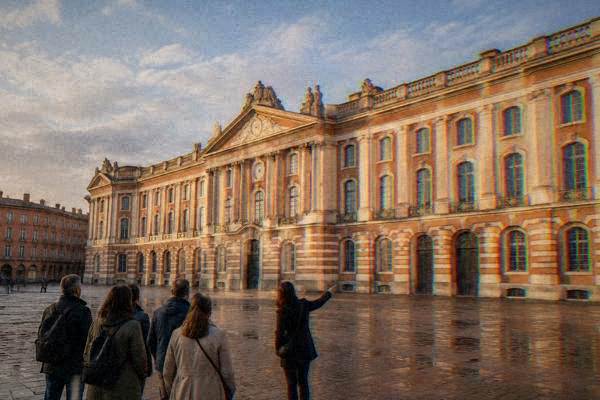
Where Not To Go In Toulouse?
An honest answer to where not to go in Toulouse: which districts deserve care after dark, which spots waste a short visit, and how to get back safely, with verified transport figures.
Toulouse, the pink-brick city on the Garonne in southwestern France, does not have a district that visitors should refuse to enter, and any guide claiming otherwise is overselling danger. The honest answer is smaller than that: a handful of outlying areas feel less welcoming after dark, a few spots quietly waste time on a short stay, and the rest of the city, from the Capitole to the Carmes and Saint-Étienne quarters, is relaxed at almost any hour. This page sets out what the caution list actually is, what to skip when days are short, and how the city's transport network gets you back to your hotel late without a taxi.
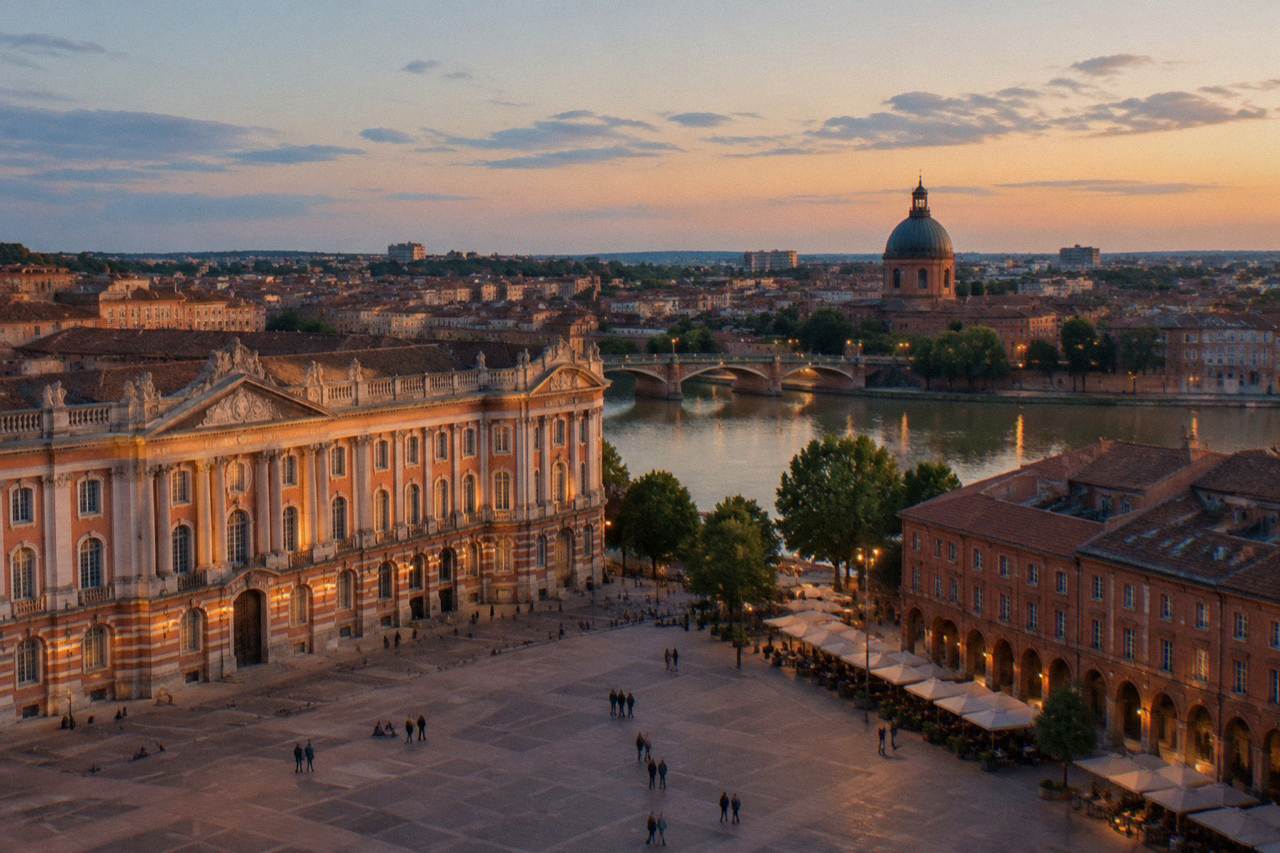
Where Not To Go In Toulouse?
No district in Toulouse is a genuine no-go area, and the city does not publish an official list of places to avoid. The cautions that do exist are modest: the streets around Matabiau train station and a few of the far-south housing estates such as Empalot and Bellefontaine feel less comfortable after dark, while the historic core, the Garonne banks and the museum quarters stay calm through the evening. Treat the city as safe, and apply ordinary big-city judgment at night.
That answer surprises visitors who arrive expecting a rough industrial city. Toulouse is an aerospace and university town of 514,819 inhabitants in the commune itself, per INSEE's population figure for 2023, and its street life reflects that: students, researchers and families dominate the center, and the evening pace is closer to a large town than a capital. The nickname "La Ville Rose", from the pink brick of its buildings, belongs to a city that spends its evenings outdoors.
The distinction worth making is between discomfort and danger. Nobody should plan an itinerary around the outer residential estates of any French city, and Toulouse is no exception, but none of them is a tourist destination either, so the practical advice is simply that there is no reason to go looking. The areas a visitor actually wanders into, the Capitole and Saint-Sernin quarter, the Carmes, Saint-Étienne, Saint-Aubin, Saint-Cyprien across the river, are all fine on foot in the evening. For a fuller picture of the city's character, see the answer to why Toulouse is so famous.
Which Areas Deserve A Second Thought After Dark?
The streets immediately around Matabiau station and the outlying southern housing estates of Empalot, Bellefontaine and Reynerie are the areas where the evening atmosphere changes, and they are the only ones worth naming. None of them carries an official warning, and none is dangerous in daylight, but they combine empty streets, late-night transit hubs and low foot traffic in a way the historic quarters do not. A visitor with no reason to be there after dark loses nothing by skipping them.
Matabiau deserves a specific note because it is unavoidable, not avoidable. The station is the city's main rail hub, and the answer to is there a bullet train from Toulouse to Paris runs through it. Arriving there is fine; the caution is only about lingering on the surrounding blocks late at night with luggage, which is the same advice that applies around most major stations in Europe. Walk ten minutes south toward the Capitole and the streets fill again.
The southern estates sit on the metro's line to the stadium and the university hospitals, so a wrong line B or a football crowd can deliver a visitor there by accident. If that happens, nothing bad follows: ride one stop back toward the center and the pink brick returns. Reynerie has a lake and park that locals enjoy by day, and nothing on any official page marks these districts as off limits, which is itself the point. The city's own tourism material names no "avoid" zone, and neither does this page beyond the honest cautions above.
For sleeping arrangements rather than evening strolls, the dedicated answer to where not to stay in Toulouse covers hotel locations in detail, and the companion answer on the nicest part of Toulouse makes the positive case for the Carmes and Saint-Étienne.
How Do You Get Back Safely At Night?
The Tisseo network runs the metro, trams and buses on a single ticket, with a single trip at EUR 1.90, a day pass at EUR 7.20 and a 3-day pass at EUR 14.30, per the official Tisseo catalogue. The practical night rule is simple: know your last metro time before dinner, keep EUR 2.50 for a last-minute on-board ticket, and if the network has stopped, use a licensed taxi rather than a long walk through empty streets.
The fare table below is drawn from the Tisseo e-boutique catalogue, and it is the full set of figures a visitor needs. Note that there is no 2-day pass: the choice is a day pass or the 3-day version. More of these guides are collected on Toulouse Travel Guide.
| Tisseo ticket | Price | What it covers |
|---|---|---|
| Single trip | EUR 1.90 | One journey, metro, tram or bus |
| Single bought on board | EUR 2.50 | One journey, last-minute purchase |
| 10 trips | EUR 16.00 | Ten journeys, shareable |
| Day pass | EUR 7.20 | Unlimited travel for one day |
| 3-day pass | EUR 14.30 | Unlimited travel for three days |
| Airport single | EUR 9.50 | Tisseo network plus the Navette aeroport |
Two network facts matter for evening planning. Tram T2 to Toulouse-Blagnac airport has been closed since 5 June 2023 for the Line C metro works and stays closed until the end of 2026, so the airport link is the Navette bus, one departure every 15 minutes, taking 20 to 40 minutes to the center. And the new metro Line C, 27 km with 21 stations from Colomiers to Labège, opens at the end of 2028, so nothing about the night network changes for a visit before then.
The airport Navette reaches Matabiau bus station in about 25 minutes, and buses 30 and 31 take about 45 minutes to the Capitole with changes. For arrival logistics in full, the guide to getting around Toulouse covers it. One more reassurance: the metro is well lit, staffed and used by students late into the evening, so the ride itself is not the risky part of a night out in Toulouse.
What Should You Skip On A Short Visit?
Skip the outer estates, the industrial fringe north of the ring road, and the long detours to attractions that are already covered better inside the city, if the trip is two days or less. Toulouse rewards depth over spread: the Capitole, Saint-Sernin, the Jacobins, the Garonne banks and one canal cruise fill a short stay completely. A rushed half-day chasing distant suburbs costs an afternoon and returns very little.
The answer to how many days is enough for Toulouse suggests that the city's core rewards at least two full days, and the "skip" list follows from that. The industrial and airport zones north and northwest of the center have no visitor function. The stadium and the exhibition districts are worth the trip only on match or event days. Everything else that is genuinely worth seeing sits inside a walkable triangle between the Capitole, Saint-Sernin and the river.
The one category of "skip" that saves real money is the tourist-trap restaurant strip. The answer to where locals eat in Toulouse points to the neighborhoods where food is taken seriously, and the answers on the signature dish of Toulouse and what exactly a cassoulet is explain what to order once there. A bistro three streets off the Capitole serves the same cassoulet at a saner price than a terrace facing it.
For orientation on a first day, a guided walk solves the "which streets" problem in one stroke. The Toulouse Must-See Walking Tour covers the essential core with a live guide, and Check availability before committing the first morning to it.
Where Is Better To Go Instead?
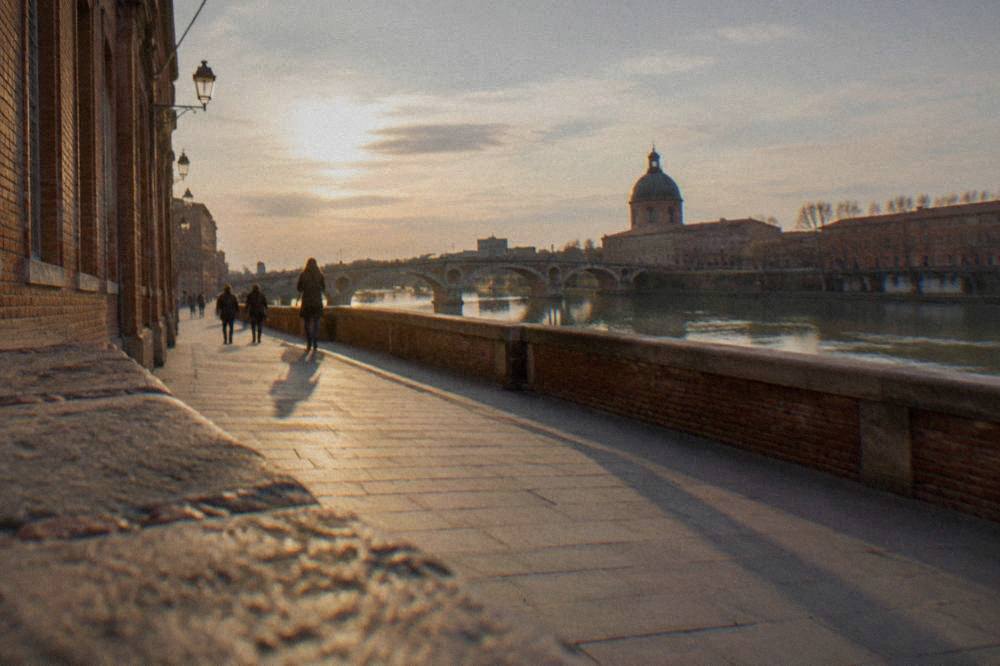
Go instead to the Carmes and Saint-Étienne quarters for evenings, the Saint-Aubin and Saint-Cyprian districts for river walks and local life, and the Capitole and Saint-Sernin quarter for the first day's sightseeing. These are the areas that repay the hours the caution list takes away, and every one of them is walkable, lit and busy. The positive map of Toulouse is much larger than the negative one.
The Carmes quarter, with its covered market streets and bistro density, is where the city eats late. Saint-Étienne, around the cathedral, is quieter but equally central, and its side streets hold some of the best-preserved pink-brick facades. Across the Pont Neuf, Saint-Cyprian gives the classic postcard view back toward the dome of La Grave and the rooftops of the center, and it costs nothing but the walk.
For daylight hours, the heritage core holds the essentials: the Capitole, the Basilique Saint-Sernin, a UNESCO-listed monument as part of the Routes of Santiago de Compostela, and the Couvent des Jacobins, whose church roof restoration runs through summer 2026 while the convent stays open. The Canal du Midi, itself UNESCO-listed since 1996, starts its navigable run at the city's edge, and the answer on the best canal trip in France covers the cruise question. A shared guided walk or a canal cruise fills the gap between the museum hours.
Timing matters as much as geography. Meteo-France's 1991-2020 normals for Toulouse-Blagnac show May as the wettest month at 73.6 mm of rain, with April at 65.2 mm and June at 64.2 mm close behind, while July is the sunniest at 258.6 hours with only 40.1 mm. A rainy evening is the evening to stay in the center rather than crossing the city.
| Month | Mean temperature (C) | Rain (mm) | Sunshine (hours) |
|---|---|---|---|
| January | 6.3 | 52.5 | 89.1 |
| April | 12.7 | 65.2 | 188.5 |
| May | 16.4 | 73.6 | 212.3 |
| July | 22.6 | 40.1 | 258.6 |
| October | 15.3 | 54.3 | 155.2 |
Common Questions About Where Not To Go In Toulouse
Where not to go in Toulouse?
No district is a true no-go. The modest cautions are the blocks around Matabiau station and the far-south housing estates such as Empalot, Bellefontaine and Reynerie after dark. The historic core, the Garonne banks and the museum quarters stay calm in the evening.
Is Toulouse safe to walk around at night?
Yes, in the areas a visitor actually uses. The Capitole, Carmes, Saint-Étienne and Saint-Aubin quarters are busy and well lit late. The ordinary precautions are knowing the last metro time and using a licensed taxi rather than a long walk through empty streets.
Are the outer districts of Toulouse dangerous?
No official source marks them as dangerous, and the city's tourism material names no avoid zone. They are simply residential areas with no visitor attractions and low evening foot traffic, so there is no reason to be there. Reynerie's lake and park are enjoyed by locals in daylight.
Where should you not stay in Toulouse?
The hotel-location question is separate from the street-safety question, and the dedicated answer on where not to stay in Toulouse covers it in detail. In short, the center and the Carmes quarter put every evening highlight within a short walk.
What is the best area for a first visit to Toulouse?
Anywhere inside the triangle between the Capitole, Saint-Sernin and the Garonne. From there the basilica, the Jacobins, the cathedral, the river and the covered markets are all reachable on foot, and the metro's day pass at EUR 7.20 covers anything farther out.
Do you need to avoid any part of the transport network?
No. The metro, trams and buses are staffed and used late into the evening. The only network caution is factual, not safety-related: tram T2 to the airport is closed until the end of 2026 for Line C works, so the airport link is the Navette bus, running every 15 minutes.
The short version of this whole page: Toulouse has no districts to fear, only districts to skip when time is short, and the city gives back every saved hour in the Carmes, on the Garonne banks, or over a slow cassoulet within sight of the Capitole.