What Is The Nicest Part Of Toulouse?
The nicest part of Toulouse is the compact historic core between the Capitole, Saint-Sernin and the Garonne. Here is what each district offers, what entry costs, and how long to give it.
Toulouse, the pink-brick "La Ville Rose" on the Garonne in the Occitanie region of southwestern France, is compact enough that its nicest parts sit within a short walk of one another. The question of which single quarter takes the prize has a fairly clear answer, and it rests on what the city itself lists: the dense cluster of the Capitole, the Basilique Saint-Sernin, the Couvent des Jacobins and the riverside quays, all connected by lanes of pink brick. This page works through the answer, the runners-up, the entry costs the tourist office publishes, and how many days to give it all.
What Is The Nicest Part Of Toulouse?
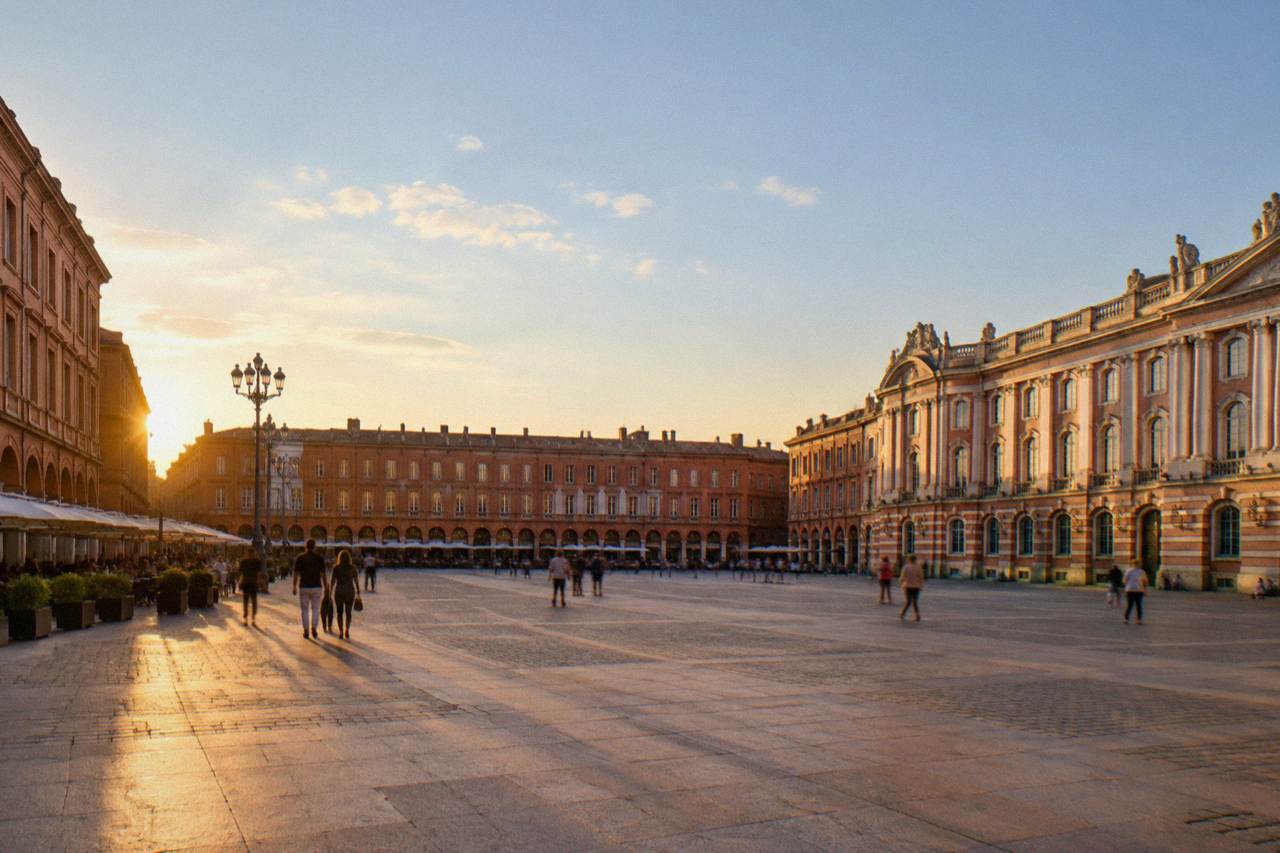
The nicest part of Toulouse is the historic core that runs from the Place du Capitole to the Basilique Saint-Sernin and down to the Garonne riverbank, taking in the Couvent des Jacobins and the Rue du Taur between them. It is the one zone where the pink brick, the UNESCO-listed basilica, the cloister and the riverside quays all sit within a walk of one another, and it carries the highest concentration of the sights the tourist office groups together.
That answer is not a matter of taste alone. The metropole's own listing for the Basilique Saint-Sernin records it as a Monument Historique since 1840 and, since 1998, a component of the UNESCO World Heritage property "Les chemins de Saint-Jacques-de-Compostelle en France", a major stop on the Via Tolosana. The Couvent des Jacobins sits a few streets south, and the Capitole anchors the whole quarter from its square. Between them runs the Rue du Taur, linking basilica to main square.
What makes this zone the pick rather than any single monument is the density. The tourist office's Pass Tourisme page, which bundles the municipal museums and monuments, draws almost entirely on places inside or on the edge of this core: the Musee des Augustins, the Couvent des Jacobins, the Fondation Bemberg, Les Abattoirs just across the river. A visitor based here can reach every one of them on foot.
It is also the part of the city that photographs the way people expect Toulouse to photograph. The pink brick of the Capitole's facade and the lanes around the Rue du Taur is the material that earned the city its nickname, and no other quarter concentrates it with the same effect.
Why The Capitole To Saint-Sernin Stretch Feels The Most Toulouse
The stretch between the Capitole and the Basilique Saint-Sernin feels the most Toulouse because it stacks the city's civic heart, its largest religious monument and its most-photographed lanes into one straight walk of a few hundred meters, with the Couvent des Jacobins and the Musee des Augustins just off the axis. Every building on the route is the pink brick the city is nicknamed for, and the basilica at the end carries the city's UNESCO listing.
Start at the Place du Capitole, the square the metropole uses for its biggest public events, including the Christmas market that runs there from 26 November to 27 December 2026. The Capitole building itself houses the city's administration and, per the metropole's pages, the Salle des Illustres inside. From the square, the Rue du Taur runs almost directly north to the Basilique Saint-Sernin, past cafe fronts and brick facades in the warm terracotta tones that give La Ville Rose its name.
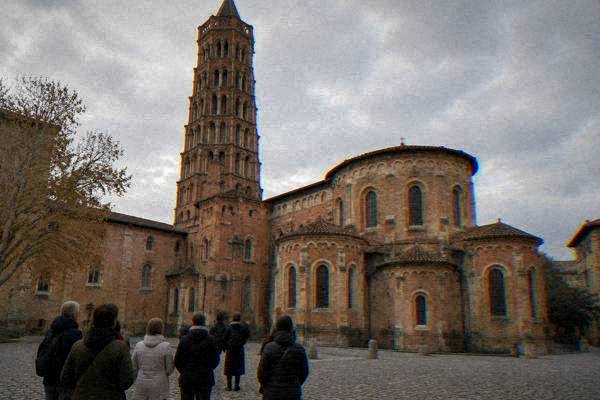
The basilica is the quarter's anchor. The metropole's listing records it as a major stop on the Via Tolosana, the pilgrimage road toward Santiago de Compostela, and as part of the UNESCO property inscribed in 1998. It is the largest Romanesque building the city has, and its bell tower closes the view down the Rue du Taur from the square.
A block east of the axis, the Couvent des Jacobins holds the city's most striking monastic interior, with its famous palm-tree vault over the church. The metropole's page for the convent notes that roof restoration work on the church is under way, with the site staying open to visitors with adjustments, and that entry is free on the first Sunday of the month except when a temporary exhibition is on. The Musee des Augustins, the fine-arts museum, sits a short walk south; the museum is temporarily closed from 21 September to 2 October 2026 for great-cloister works, and its Gothic halls, the sacristy, the Notre-Dame de Pitie hall and the chapter house, reopen on 3 October 2026 from 10:00.
For a first orientation of this axis before walking it, the open-top sightseeing bus loops the main sights with an audio guide, and the Toulouse Sightseeing Bus Tour is the one to book for that first hour.
If the bus ride sells you on the core, the walking version goes deeper. The sightseeing loop above covers the same axis from a seat; on foot you notice the brick, the shopfronts and the small squares the bus skips. Either way, the Capitole to Saint-Sernin stretch is where a first day in the city should start.
Which Other Neighborhoods Deserve The Word Nice
Three other quarters deserve the word nice after the historic core: the Carmes and Saint-Etienne quarter for its food shops and elegant square, the Saint-Aubin and riverside quarter for its Sunday market and canal-side atmosphere, and the Saint-Cyprian bank of the Garonne for Les Abattoirs and the view back across the river. Each is a short walk from the Capitole, and each has a distinct character the core does not.
The Saint-Etienne quarter, around the city's cathedral, is the most refined of the three: narrow streets, antique dealers and the elegant Place Saint-Etienne opening off them. The Carmes quarter just south mixes the same brick architecture with a livelier evening scene, and it is the zone most locals point to when asked where to eat. For the food side of these quarters, see where locals eat in Toulouse, and for the district to avoid booking a hotel in, the honest counterweight is where not to stay in Toulouse.
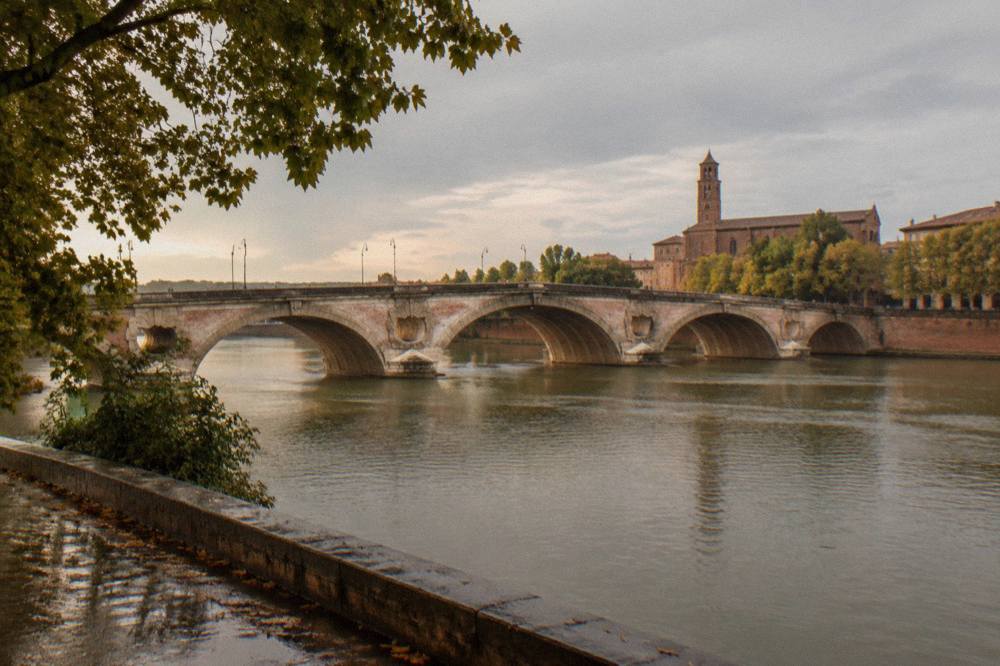
Across the Garonne, the Saint-Cyprian bank holds Les Abattoirs, the modern and contemporary art museum in the old slaughterhouses, and the Dome de la Grave beside it. The view from that bank back toward the Pont Neuf and the spires of the core is one of the city's best, and the walk across the river takes only minutes. The Fondation Bemberg, the fine decorative-arts collection in a Hotel d'Assezat courtyard, sits inside the core itself. Everything else covered here is indexed on Toulouse Travel Guide.
Further out, the Saint-Aubin quarter spreads from its church toward the Canal du Midi, with a Sunday morning market in its square and a village feel that the core lacks. The canal itself, the UNESCO World Heritage property inscribed in 1996, begins its journey at the city's edge; for the stretch worth traveling for, read the most beautiful part of the Canal du Midi.
Deciding where to base yourself is really a choice between the core and these three quarters, and the answer depends on what kind of nice you are after. The core gives you the monuments on your doorstep. Carmes and Saint-Etienne give you the evening life. Saint-Aubin gives you the canal and the market, at the price of a slightly longer walk in.
Deciding which quarter to sleep in. Book a hotel search here.
What The Nicest Parts Cost To Visit
Entry across the nicest parts of Toulouse is cheap by big-city standards: the tourist office's Pass Tourisme page lists the Couvent des Jacobins at EUR 5, the Musee des Augustins at EUR 5, and the Fondation Bemberg, the Museum and Les Abattoirs at EUR 12 each, while the Pass Tourisme itself costs EUR 26 for a stay of one to three days and pays off from the third activity. The basilica's listing and the riverside quays cost nothing to see from outside.
The tourist office's Pass Tourisme page gives the normal rates it lists, and the pass makes all of the ones below free. The pass also includes a free guided tour from the tourist office, and adding EUR 10 to it buys ten public-transport trips on the metro, bus and tram network. For a two- or three-day visit built around the core, that arithmetic works out from the third museum onward.
| Place | Quarter | Normal adult rate (tourist office) | Free first Sunday |
|---|---|---|---|
| Couvent des Jacobins | Historic core | EUR 5 | Yes, except during temporary exhibitions |
| Musee des Augustins | Historic core | EUR 5 | Not stated for this museum |
| Fondation Bemberg | Historic core | EUR 12 | Not stated |
| Les Abattoirs | Saint-Cyprian, across the Garonne | EUR 12 | Not stated |
| Museum de Toulouse | Jardin des Plantes edge | EUR 12 | Not stated |
Two timing notes matter for the core's museums. The Musee des Augustins is closed from 21 September to 2 October 2026 for cloister works, reopening its Gothic halls on 3 October 2026 at 10:00, so a visit in that fortnight needs a substitute. And the free-first-Sunday rule the metropole states applies to the Couvent des Jacobins specifically; do not assume it for the others, whose own pages are the place to check before turning up.
For the paid sights further out, Cite de l'espace lists tickets from EUR 22.50 on its homepage, with the tourist office giving its normal adult rate as EUR 29, discounted rather than free with the pass. Aeroscopia, the aviation museum out toward the airport, lists adult entry at EUR 16 and is open daily 9:30-18:00 with last entry at 17:00, closed on 25 December, 1 January and 7 May 2026. Both are covered in more depth on their own pages.
How Many Days The Nicest Parts Need
The nicest parts of Toulouse need two full days for a comfortable visit: one for the Capitole to Saint-Sernin axis with the Jacobins and the Musee des Augustins, and one for the Carmes and Saint-Etienne quarters, the Garonne banks and either the Saint-Aubin canal side or one museum across the river. A single day covers the core's highlights at a brisk pace, and a third day opens up the day-trip towns beyond the city.
The two-day shape is the one the city rewards. Day one stays inside the core: the Capitole square in the morning, the walk up the Rue du Taur to the basilica, the Jacobins after lunch, and the riverside quays at golden hour, when the pink brick earns its reputation. Day two spreads outward into the quarters named above, with a market morning if it is a Sunday and a museum afternoon if the weather turns.
The climate record argues for flexibility. Meteo-France's 1991-2020 normals for Toulouse-Blagnac show May as the wettest month at 73.6 mm of rain, well ahead of February's 37.2 mm, while July is the sunniest at 258.6 hours with only 40.1 mm of rain. The annual totals come to 627 mm across 95.8 rain days and 2,075.1 hours of sun. In short: a museum-heavy day two is a useful insurance policy in late spring, and less necessary in high summer.
For the timing question in full, including what a rushed single day can absorb, see how many days is enough for Toulouse. And if a third day appears, the standouts beyond the city are the Albi and Cordes-sur-Ciel combination to the northeast and Carcassonne to the southeast, both reachable as organized day trips.
The bus loop earns its place on a short trip precisely because the nicest parts are spread across a walkable but not tiny area. An hour on the open-top route maps the core, the riverbank and the quarters beyond it, which makes the walking choices on day two much easier to plan.
Common Questions About The Nicest Part Of Toulouse
Quick answers to what planners ask most about the city's best quarter.
What is the nicest part of Toulouse?
The historic core between the Place du Capitole, the Basilique Saint-Sernin and the Garonne riverbank, taking in the Rue du Taur, the Couvent des Jacobins and the Musee des Augustins. It holds the city's UNESCO-listed basilica, its main square and its most characteristic pink-brick lanes within a single walkable zone.
Is the historic center of Toulouse walkable?
Yes. The Capitole, the basilica, the Jacobins and the riverside quays all sit within a short walk of one another, and the Carmes and Saint-Etienne quarters are just south of the core. The Saint-Cyprian bank of the Garonne is a bridge crossing away.
Which Toulouse museums are in the nicest part?
The Musee des Augustins and the Fondation Bemberg sit inside the historic core, and Les Abattoirs stands across the Garonne on the Saint-Cyprian side. The tourist office lists normal adult rates of EUR 5 for the Augustins, EUR 5 for the Jacobins and EUR 12 each for the Fondation Bemberg, the Museum and Les Abattoirs.
Where should a first-time visitor stay in Toulouse?
Inside or on the edge of the historic core, between the Capitole and the Garonne, puts every major sight within walking distance. The Carmes and Saint-Etienne quarters add evening life a few minutes south, and the Saint-Aubin quarter suits visitors who want the canal-side atmosphere.
Is one day enough for the nicest part of Toulouse?
One day covers the Capitole, the Rue du Taur, the Basilique Saint-Sernin, the Couvent des Jacobins and the riverside quays at a steady pace. Two days are more comfortable, leaving room for the Carmes and Saint-Etienne quarters and a museum.
Whatever your final pick of quarter, the practical rule is simple: base yourself inside the pink-brick core, walk everywhere within it, and treat the other nice quarters as an easy extension rather than a separate expedition. That single decision shapes a Toulouse stay more than any other.