Is The Train From Barcelona To Toulouse Scenic?
Is the train from Barcelona to Toulouse scenic? A straight answer on what the rail journey offers, plus verified Toulouse arrival planning facts.
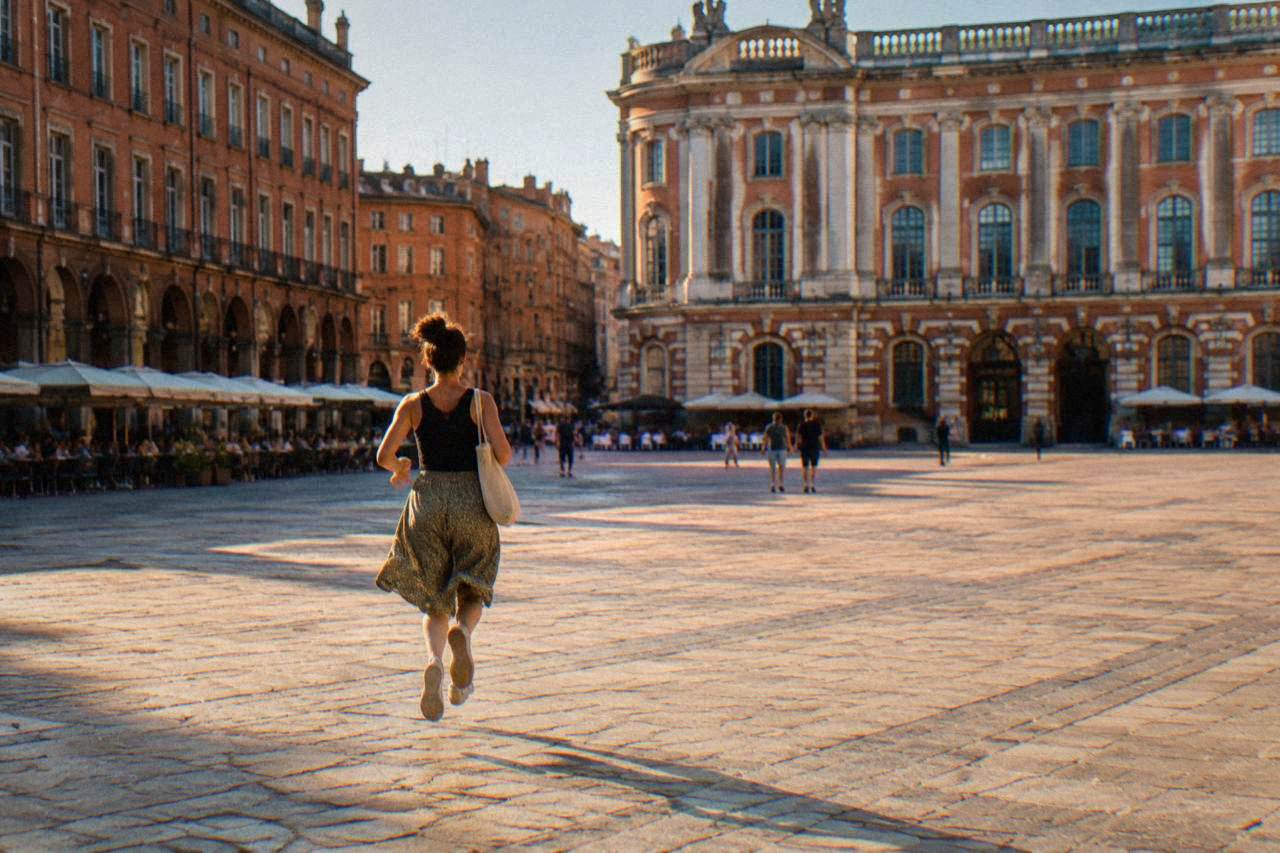
Toulouse, the pink-brick "La Ville Rose" on the Garonne in southwestern France, is well connected to Barcelona by rail, and travelers planning that crossing often ask one thing before booking: is the ride itself worth watching, or is it just transfer time? The honest answer is that the journey is pleasant and easy to sit through, with rural French and Catalan landscapes rolling past the window, but it is not the dramatic mountain-line experience some travelers imagine when they hear "Pyrenees". What you see depends on the service you take, the season, and whether you are on the correct side of the carriage when the good stretches arrive. This page answers the question directly, then covers the practical Toulouse end of the trip: what to do the moment you step off at Matabiau, how to get moving on the city's transit network, and how to turn arrival day into a proper first evening.
Is The Train From Barcelona To Toulouse Scenic?
Partly, yes. The train from Barcelona to Toulouse is a comfortable cross-border journey with genuinely pleasant stretches of countryside, small towns and farmland, but it is not a continuous mountain-panorama ride, and anyone expecting dramatic Pyrenees scenery for the whole way will be disappointed. Treat it as an easy, sit-back journey rather than a sightseeing trip, and pick a daylight departure if the view matters to you.
The fairest way to frame it: the route is scenic in the way a long regional rail journey through southern France and northern Catalonia is scenic. Fields, wooded hills, river valleys and the ordinary, lived-in landscape of the borderlands pass by at rail speed. What it does not offer is a sustained sequence of postcard vistas, and the most dramatic mountain terrain in the region sits well away from where the fast services run. Travelers who want the mountain-rail experience in this corner of Europe are looking at a different kind of journey altogether, slower and more deliberate, and that is a separate decision from simply getting between the two cities efficiently.
Daylight matters more than anything else you can control. A departure that crosses the border and rolls into Occitanie in the middle of the day gives you the full palette of the landscape; the same miles after dark give you a reflection of the carriage ceiling. If your schedule allows, choose the timing so the French half of the ride, generally the longer half, happens in daylight.
One more honest point. Plenty of travelers take this train purely as transport and are entirely satisfied, because the alternative, flying or driving, trades a relaxed seat and a border crossing without airport security for a longer, more stressful door-to-door experience. The scenery is a bonus that arrives in stretches, not a headline feature, and knowing that in advance is the difference between a pleasant ride and an over-promised one. For the specifics of fast versus slow services on this corridor, the companion page on Barcelona to Toulouse rail options goes deeper.
Which Side Of The Train Has The Better View?
There is no single "scenic side" that holds for the whole Barcelona to Toulouse journey, because the interesting views come in short stretches that alternate between the two sides as the line curves through the countryside. The practical advice is simpler than a seat map: sit on the side facing away from the aisle when you board, and be willing to move or lean across when the landscape improves.
Rail lines in this region were built to follow the easiest ground, which means the views you get are the views the terrain offered the engineers: river valleys, gentle hills and open farmland rather than cliff-edge ledges. Because the line turns regularly, locking yourself mentally to one side usually means missing half of what the journey offers. The travelers who enjoy the ride most are the ones who treat it lightly, watching when there is something to watch and reading when there is not.
A few habits help. A window seat is worth the small effort of choosing it at booking. Morning light travels with northbound and eastbound trains in a way that flattens the landscape less, so mid-morning departures tend to show the countryside at its best. And the approach into Toulouse itself is a nice final act: the city announces itself in brick, with the Garonne appearing as the train closes on the urban core. It is a low-key scenic payoff, but it lands well after hours of fields, and it sets up arrival day nicely.
Keep expectations calibrated for the season too. Meteo-France's 1991-2020 normals for Toulouse-Blagnac show what the light will be doing: the region averages 2,075.1 hours of sunshine a year, with July the sunniest month at 258.6 hours and December the dimmest at 89.7 hours. A summer ride and a midwinter ride on the same tracks are two different experiences purely because of daylight length and cloud cover. The climate table further down this page gives the month-by-month numbers.
What Is Arrival At Toulouse Matabiau Actually Like?
Arrival at Toulouse Matabiau is straightforward: the station sits close to the city center, the metro and bus network connects it to the main sights, and a single Tisseo ticket costs EUR 1.90, so the transfer from train platform to pink-brick Toulouse takes minutes rather than hours. The station is a practical, well-signed terminus, not a sight in itself.
Matabiau places you within an easy transit hop of the Capitole, the Basilique Saint-Sernin and the Garonne riverside, which is the whole reason arrival day in Toulouse tends to go smoothly. The Tisseo network covers metro, tram and bus with a single fare structure, and the tourist office's Pass Tourisme adds museum entries on top of transit if you plan a full first day. The verified fare table below gives the numbers you actually need at the ticket machine.
| Tisseo ticket | Price | What it covers |
|---|---|---|
| Single trip | EUR 1.90 | One journey, metro, tram or bus |
| Single bought on board | EUR 2.50 | Same journey, last-minute purchase |
| 10 trips | EUR 16.00 | Ten journeys, shareable in practice with companions |
| Day pass | EUR 7.20 | Unlimited travel for one day |
| 3-day pass | EUR 14.30 | Unlimited travel for three days |
Two planning notes on those figures. There is no 2-day pass in the Tisseo catalogue, so for a two-night stay the honest comparison is two day passes against the 3-day pass. And if your itinerary continues onward, the airport single, which combines the Tisseo network with the Navette aeroport bus, is EUR 9.50; the airport's own access page still quotes EUR 9, and the Tisseo catalogue is the seller's current price, so budget for EUR 9.50.
The station area itself is functional rather than charming, which is fine, because the point of Matabiau is how quickly it hands you over to the city. Drop your bags if you need to, then head straight for the center. A good first move is a loop of the old streets on an electric tuk-tuk tour with photo stops, which covers the must-see core while your legs are still in travel mode; the Toulouse walking tours guide lists the on-foot alternatives if you would rather burn the journey off.
Is The Train Or The Plane The Better Way To Make This Trip?
For travelers making the Barcelona to Toulouse crossing, the train wins on comfort and on the quality of the arrival: it deposits you at Matabiau minutes from the center with no airport transfer at either end, and the ride itself, while not spectacular, is calm and watchable. The plane wins only when a schedule is genuinely tight, and even then the door-to-door comparison is closer than it looks.
The reason is the geometry of each option's endpoints. A flight means getting to Barcelona's airport, clearing security, flying, landing at Toulouse-Blagnac and then covering the last stretch into the city, where the airport connection is currently a bus, not a rail link: tram T2 to the airport has been closed since 5 June 2023 for the metro Line C works and stays closed until the end of 2026, so the Navette aeroport bus, one departure every 15 minutes, is the public-transport link, taking 20 to 40 minutes to the center. The train skips nearly all of that overhead at both ends. Everything else covered here is indexed on Toulouse Travel Guide.
The train also gives you your day back. Airport procedures eat the useful hours of a morning; a rail departure lets you leave a city-center location at a civilized time and arrive in another city center with the afternoon in front of you. For a short trip, that difference is the difference between one evening in Toulouse and two.
None of this makes the train "scenic" in the way the question hopes. It makes it sensible, and the scenery, in its modest, intermittent way, comes free with the sensibleness. Travelers with more time on this corridor sometimes build the rail journey into the trip itself, and the question of how much time is enough for Toulouse is worth settling before you book either mode.
When Should You Ride For The Best Views And Light?
Ride between late spring and early autumn, on a mid-morning departure, if the view is the point: those months carry the year's longest daylight and its sunniest weather, with July averaging 258.6 hours of sunshine and only 40.1 mm of rain at Toulouse-Blagnac, so the odds of a bright, watchable ride are at their best. Avoid midwinter if scenery matters, because daylight is short and December averages just 89.7 hours of sun.
The climate record for the region tells the story month by month. One detail surprises visitors: the wettest month here is not in winter. May averages 73.6 mm of rain, ahead of April at 65.2 mm and June at 64.2 mm, while February is the driest month at 37.2 mm. Summer rides are bright but can be hot, with 11.5 days a year reaching 30C or more in July, and the all-time record high of 42.4C set on 23 August 2023 a reminder that mid-August travel deserves a water bottle.
| Month | Mean temp (C) | Rain (mm) | Sunshine (hours) |
|---|---|---|---|
| January | 6.3 | 52.5 | 89.1 |
| April | 12.7 | 65.2 | 188.5 |
| May | 16.4 | 73.6 | 212.3 |
| July | 22.6 | 40.1 | 258.6 |
| September | 19.3 | 45.7 | 210.1 |
| December | 7.0 | 49.3 | 89.7 |
Read that table as a light-and-weather planner, not a forecast. May gives the greenest countryside but the wettest averages; July and August give the brightest rides; September is the quiet compromise, with 210.1 hours of sunshine and moderate rain. Whatever the month, book the departure that puts the French half of the journey in daylight, and the scenery question mostly answers itself.
What Should You Do With Your First Hours In Toulouse?
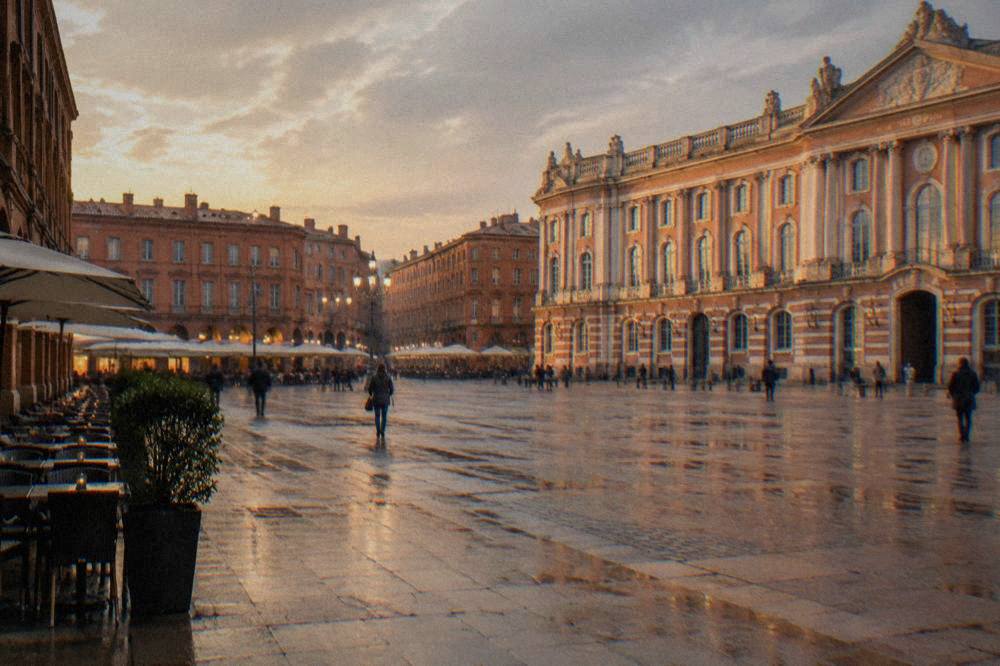
Spend your first hours in Toulouse walking the compact brick core between the Capitole, the Basilique Saint-Sernin and the Garonne, because all of it sits within a short transit hop of Matabiau and none of it needs a car; then, if you want the city's signature laid-back payoff, end the day on the riverside as the pink brick catches the evening light. Arrival day in Toulouse rewards low ambition and good walking shoes.
The practical anchors are these. The tourist office's Pass Tourisme costs EUR 26 for stays of one to three days, includes a free guided tour from the office, and pays off from the third activity; adding EUR 10 buys ten public-transport trips. It covers entries the office lists at their normal rates: Fondation Bemberg at EUR 12, the Museum at EUR 12, Les Abattoirs at EUR 12, the Musee des Augustins at EUR 5 and the Couvent des Jacobins at EUR 5. Check current opening status before you plan around any single museum, since individual houses close temporarily for works.
For the evening, the local food culture is the reason many travelers book Toulouse at all, and the cassoulet question has its own answer on what exactly is a cassoulet. If your arrival day falls on a weekend, so much the better: the streets around the Capitole are where the city shows itself off, and the walk from plate to river is short. The signature dish of Toulouse page handles the food planning in depth.
And if the train has left you wanting more time on the water rather than less, the Canal du Midi, UNESCO-inscribed since 1996, begins its journey in this city, and the question of the most beautiful part of the Canal du Midi is a natural next read. The canal is the genuinely scenic asset of this region, and unlike the rail line, it was built to be looked at.
Common Questions About The Barcelona To Toulouse Train
Quick answers to what planners ask most about this rail journey.
Is the train from Barcelona to Toulouse scenic?
Partly. It is a pleasant, comfortable ride through countryside and small towns, with some genuinely nice stretches, but it is not a continuous mountain-panorama journey. Choose a daylight departure and treat the scenery as a bonus rather than the headline.
Is there a high-speed train between Barcelona and Toulouse?
The corridor is served by cross-border rail, and the fast options are covered in detail on the page about high-speed trains from Toulouse to Barcelona. No journey-time figure is quoted here because no official timetable was verified for this article.
Which side should I sit on for the best views?
Neither side wins for the whole route. The interesting views arrive in alternating stretches as the line curves, so take a window seat and be willing to shift your attention, or your position, when the landscape improves.
How do I get from Toulouse Matabiau station to the city center?
Matabiau sits close to the center and connects to the Tisseo metro, tram and bus network. A single trip costs EUR 1.90, a day pass EUR 7.20 and a 3-day pass EUR 14.30, per the official Tisseo catalogue.
What is the best time of year to make this train journey?
For light and scenery, late spring through early autumn, with mid-morning departures. July is the sunniest month at 258.6 hours of sunshine on the 1991-2020 Meteo-France normals; December, at 89.7 hours, is the least rewarding for views.
Should I fly from Barcelona to Toulouse instead?
Usually not, unless the schedule is very tight. The train connects two city centers with no airport transfers, while the flight adds security lines at one end and the Navette aeroport bus, 20 to 40 minutes to the center, at the other, since the airport tram link remains closed until the end of 2026.
The train from Barcelona to Toulouse is best booked as a relaxed, sensible crossing whose scenery arrives in pleasant bursts, and the city waiting at the end of it, pink brick glowing by the Garonne, is the part of the journey travelers actually remember.