Is There A High Speed Train From Toulouse To Barcelona?
Straight answer on train service between Toulouse and Barcelona, what the journey involves, how it compares with flying, and what to do in Toulouse before or after the ride.
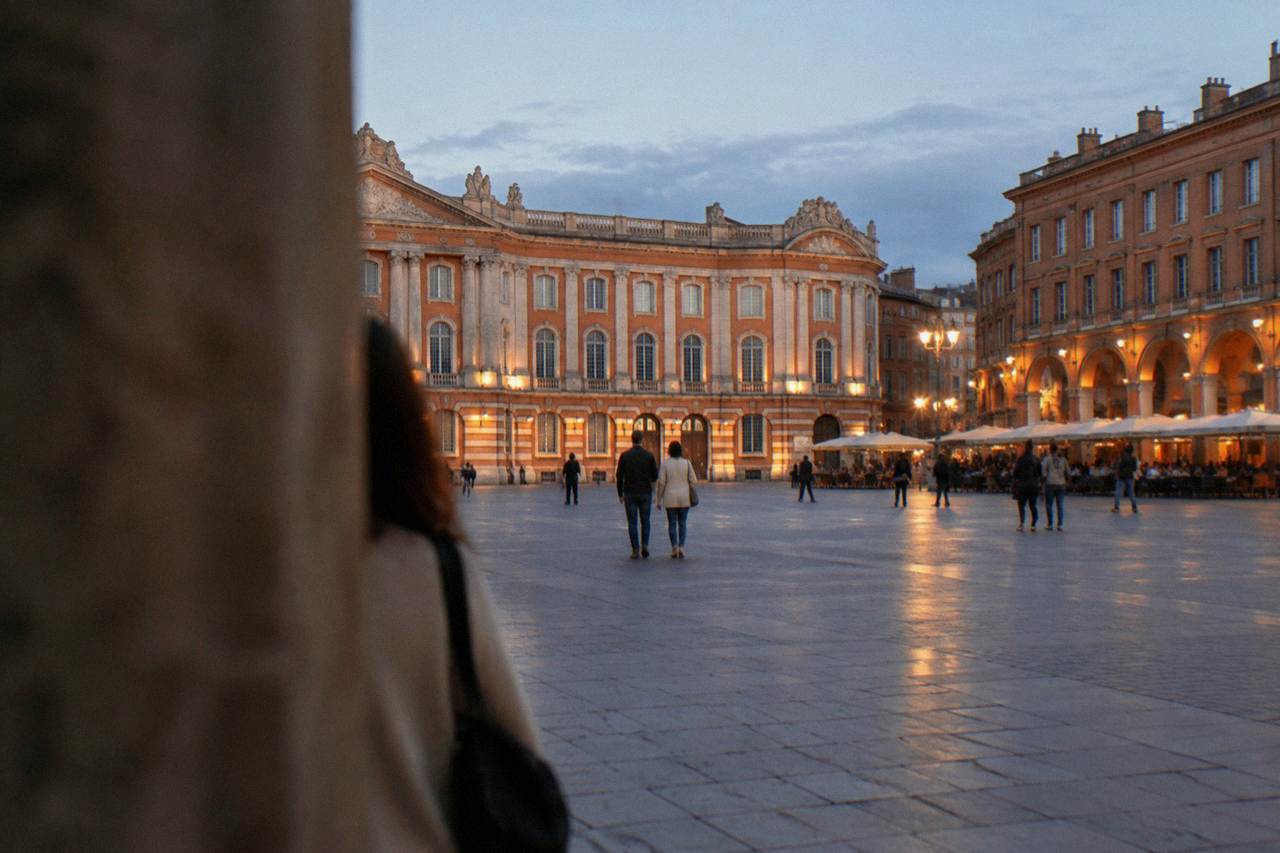
Toulouse, the pink-brick city on the Garonne in southwestern France, is one of the few French regional capitals with a direct rail link across the Pyrenees into Spain. Travelers planning a two-country trip ask one question more than any other about that link: is there a high speed train from Toulouse to Barcelona? The answer is more nuanced than a yes or a no, because the route mixes fast and conventional track, and because the cross-border section has been the subject of investment plans for years. This page answers the question directly, then covers what the journey actually involves, how it compares with flying, and what is worth doing in Toulouse on either side of the trip.
Is There A High Speed Train From Toulouse To Barcelona?
Yes, a direct train runs between Toulouse and Barcelona, but only part of the route uses high speed track, so the service is not a pure high speed line end to end. The journey crosses the border near Latour-de-Carol or via the coastal corridor depending on the service, and no verified timetable figure for the total travel time can be quoted here.
The practical takeaway is that you can board a train at Toulouse-Matabiau station and step off in Barcelona without changing, which is the part travelers care about most. What you cannot assume is TGV-at-home speeds for the whole distance. The French high speed network reaches down the Atlantic and Mediterranean corridors, and the mountain crossing into Catalonia has always been the slow segment. Spain and France have both committed to improving the cross-border link, and work on a new line has been discussed for years, but as of the current timetable the direct service remains a conventional-speed international train for much of its run.
That still makes the train a serious option. You avoid the airport shuffle at both ends, you arrive in the center of Barcelona rather than a suburban terminal, and the scenery through the foothills is something a plane cannot offer. If you want the full picture of the route in both directions, the companion page Is The Train From Barcelona To Toulouse Scenic? covers the view from the Spanish side, and the planning guide at Toulouse To Barcelona walks through the whole crossing, train, car and bus options included.
How Does The Train Compare With Flying From Toulouse To Barcelona?
The train wins on city-center convenience and the experience of the crossing, while flying wins on schedule frequency, because Toulouse-Blagnac airport handled 7,621,409 commercial passengers in 2025 and maintains a dense short-haul network. Neither option can be quoted a journey time here, so compare them on structure rather than minutes.
Think about what each mode actually asks of you. A flight means getting to Toulouse-Blagnac, clearing security, flying, then crossing a city from Barcelona's airport into town. The train means getting to Toulouse-Matabiau, which sits within the Tisseo metro and tram network, and arriving at Barcelona's main station already inside the city. For a traveler with luggage or a tight connection in either center, that difference often outweighs raw speed.
The airport numbers give a sense of scale. Toulouse-Blagnac recorded 7,621,409 commercial passengers in 2025, down 2.8% on 2024, and the airport remains the region's main hub. Its public transport link is currently the Navette aeroport bus rather than the tram, because tram T2 to the airport has been closed since 5 June 2023 for the Line C metro works and stays closed until the end of 2026, with the Navette running one departure every 15 minutes and taking 20 to 40 minutes to the center. If you fly rather than ride, factor that transfer in.
| Factor | Direct train | Flying from Toulouse-Blagnac |
|---|---|---|
| Departure point | Toulouse-Matabiau station, central | Toulouse-Blagnac airport, northwest of the city |
| Arrival point | Central Barcelona station | Barcelona airport, then a transfer into the city |
| Border crossing | Rail border near the Pyrenees | Schengen-area flight, no land border |
| Getting to the departure point | Tisseo metro or tram to Matabiau | Navette aeroport bus, one departure every 15 minutes, 20-40 minutes to the center |
| Verified timetable figure for this page | None available | None available |
One more planning note: France and Spain are both in the Schengen area, so neither the train nor the flight involves a passport check of the kind you would face flying to London, though carriers on both modes can ask for ID. If your trip starts in Paris instead, the question changes shape, and Is There A Bullet Train From Toulouse To Paris? covers that corridor separately.
What Should You Know Before Booking The Toulouse To Barcelona Train?
Book at the operator's own site for the live timetable, carry your passport for an international journey even inside Schengen, and plan your arrival at Toulouse-Matabiau around the Tisseo network, where a single trip costs EUR 1.90 and a day pass EUR 7.20. Those fares come from the official Tisseo catalogue and are the figures that matter for getting to the station.
The booking itself is straightforward: international trains between France and Spain are sold through the operators' own channels, and prices move with demand the way airline fares do, so the listing at the time you book is the only price that counts. No fare figure for the Barcelona train can be printed here, and inventing one would mislead you. What can be stated with confidence is the cost of reaching the station in Toulouse, which is a Tisseo matter and fully documented.
The Tisseo e-boutique catalogue lists a single trip at EUR 1.90, rising to EUR 2.50 if bought last-minute on board, a 10-trip carnet at EUR 16.00, a day pass at EUR 7.20 and a 3-day pass at EUR 14.30. There is no 2-day pass. If you are spending a few days in the city before heading to Spain, the tourist office's Pass Tourisme at EUR 26 for stays of one to three days covers museums and monuments, pays off from the third activity, and can add 10 public-transport trips for EUR 10 more, which would cover your ride to Matabiau on departure day.
| Tisseo ticket | Price | Best for |
|---|---|---|
| Single trip | EUR 1.90 | One ride to the station |
| Single bought on board | EUR 2.50 | Emergency only, buy ahead |
| 10 trips | EUR 16.00 | A longer stay with daily rides |
| Day pass | EUR 7.20 | A full day of sightseeing by metro |
| 3-day pass | EUR 14.30 | A long weekend without a car |
| Airport single | EUR 9.50 | Tisseo network plus the Navette aeroport |
Timing matters too. International trains depart from specific platforms at Matabiau and the station is compact, but arriving with margin is simple common sense rather than a rule that can be quantified here. If you are coming from the airport that morning, remember the Navette to Matabiau bus station takes about 25 minutes, while buses 30 and 31 take about 45 minutes to Capitole with changes, so the Navette is the sensible link when a train departure is fixed.
What Can You Do Around Toulouse Before Or After The Train?
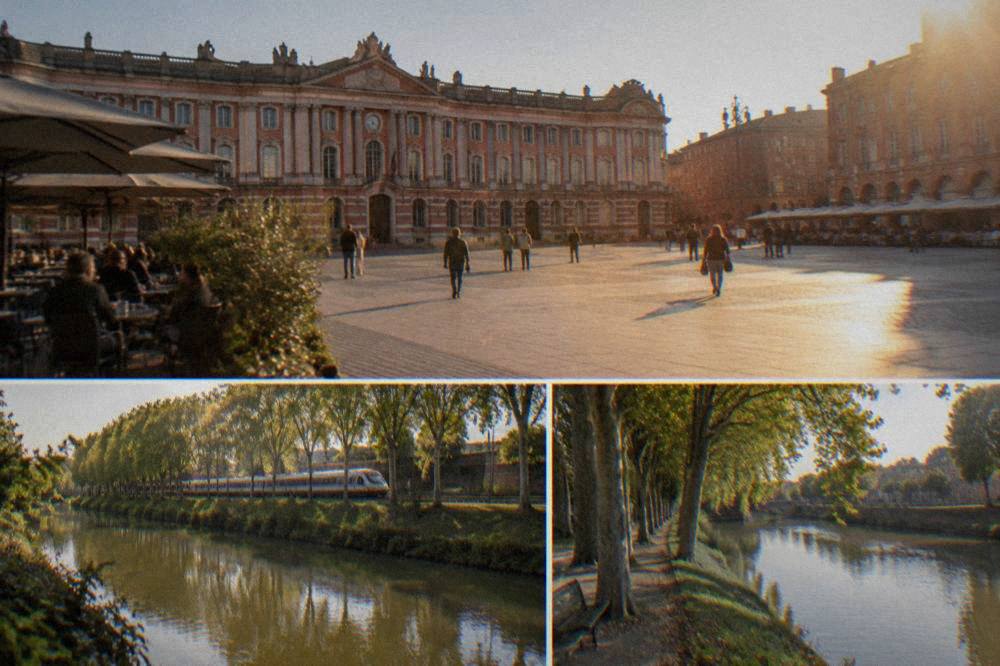
Toulouse rewards at least a full day before you leave for Spain: the Basilique Saint-Sernin is listed as part of the Routes of Santiago de Compostela in France, a UNESCO property inscribed in 1998, and the Canal du Midi was inscribed in 1996 in its own right. Both are reachable on foot or by a short ride from Matabiau, and both turn a rail stopover into a real visit.
The Saint-Sernin connection is worth pausing on. The basilica is a major stop on the Via Tolosana, one of the historic pilgrimage routes toward Santiago de Compostela, and pilgrims have been walking that path for centuries before anyone rode a train along it. If your Barcelona trip has a pilgrimage flavor, arriving in Toulouse puts you on the same axis the walkers use, which is a satisfying thought on the platform at Matabiau.
The Canal du Midi is the other headline. The canal was inscribed by UNESCO in 1996 under criteria i, ii, iv and vi, and a narrated cruise on the water is one of the most relaxed ways to see it, with the listing's own page carrying the current price and availability: Check availability. For a city overview without walking the whole distance, an electric tuk-tuk tour with photo stops is another listed option, with full details on its own tour page.
And if a day trip tempts you in the opposite direction, toward the Pyrenees rather than across them, a private tour to the Lourdes sanctuary covers the grotto and basilica with a dedicated guide, transport included. The full listing sits at Lourdes Sanctuary Private Tour from Toulouse, and live pricing renders on the tour's own page.
For deeper planning, the editorial desk at Toulouse Travel Guide keeps a full set of resources, including How Many Days Is Enough For Toulouse? if you are deciding how long to stay before the train, and Does Toulouse Airport Have A Train Station? if your journey starts with a flight into the city.
When Is The Best Time Of Year To Make The Crossing?
July is the sunniest month at Toulouse-Blagnac with 258.6 hours of sunshine and only 40.1 mm of rain, while May is the wettest month at 73.6 mm, ahead of April at 65.2 mm and June at 64.2 mm, so late summer into early autumn combines the most reliable weather with the shoulder-season calm that suits a long rail journey.
Those figures come from Meteo-France's 1991-2020 climate normals for the Toulouse-Blagnac station, and they overturn the common assumption that rain in southern France peaks in winter. February is actually the driest month at 37.2 mm. The trade-off in high summer is heat: the station's records, kept from 1947 to June 2025, show an all-time high of 42.4C on 23 August 2023, and July averages 11.5 days a year above 30C. A train carriage in a heatwave is not where you want to spend a border crossing, so June or September balances the numbers better than August.
| Month | Mean temperature (C) | Rain (mm) | Sunshine (hours) |
|---|---|---|---|
| February | 7.1 | 37.2 | 118.2 |
| May | 16.4 | 73.6 | 212.3 |
| July | 22.6 | 40.1 | 258.6 |
| September | 19.3 | 45.7 | 210.1 |
Seasonal events can anchor the timing too. Piano aux Jacobins runs 8 to 30 September 2026, and Toulouse les Orgues holds its 31st edition from 7 to 18 October 2026, with the opening concert on 7 October at Notre-Dame de la Daurade. If you would rather travel around a festival than around a forecast, those two windows put music in the city before your train south.
Common Questions About The Toulouse To Barcelona Train
Quick answers to what planners ask most about the rail link between Toulouse and Barcelona.
Is there a high speed train from Toulouse to Barcelona?
A direct train connects the two cities, but only part of the route runs on high speed track, so it is not a pure high speed service end to end. No verified timetable figure for the total journey can be quoted on this page; check the operator's live timetable when booking.
Do you need a passport on the train between France and Spain?
Both countries are in the EU and the Schengen area, so there is no routine border control, but international carriers can ask for ID and carrying a passport is the safe choice on any cross-border journey.
Where does the train leave from in Toulouse?
Trains toward Barcelona depart from Toulouse-Matabiau, the city's main station, which is served by the Tisseo metro and tram network. A single Tisseo trip costs EUR 1.90 and a day pass EUR 7.20 per the official catalogue.
Is the train better than flying to Barcelona?
The train gives you center-to-center travel and the scenery of the Pyrenean foothills, while flying offers more schedule frequency out of Toulouse-Blagnac, which handled 7,621,409 commercial passengers in 2025. The right choice depends on where in each city you start and finish.
What is there to do in Toulouse before the train?
The Basilique Saint-Sernin, part of the UNESCO-listed Routes of Santiago de Compostela in France, and the Canal du Midi, UNESCO-inscribed in 1996, are both close to the center. A narrated canal cruise or a guided walk fills a spare half day comfortably.
When is the best month to travel?
June or September balances the verified climate numbers best: July is the sunniest month at 258.6 hours but averages 11.5 days above 30C, while May is the wettest month at 73.6 mm. September also brings Piano aux Jacobins, running 8 to 30 September 2026.
Whatever you decide on the rail question, the crossing itself is half the pleasure of a Toulouse to Barcelona itinerary, and the pink city on the French side of the border deserves at least a day of your attention before you board.